
👉100% Discount for all who register
👉Become the top 1% professional by learning AI today
⭐️ Think School’s flagship Communication course with live doubt sessions :
https://thethinkschool.com/sp/communication-masterclass/
VIDEO INTRODUCTION:
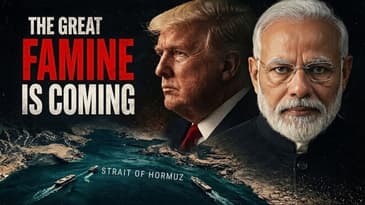
Ladies and gentlemen, on April 12th, 2026, the President of the United States posted six words on Truth Social that sent shockwaves through the Indian market: the United States will be blocking all ships from the Strait of Hormuz. We already saw a glimpse of the consequences during the LPG crisis, but if this strait is blocked for long, India could even face a food crisis. That sounds shocking because India is an agricultural nation and agriculture is supposed to be the backbone of the country. But every crop grown in India depends on three nutrients—Nitrogen, Phosphorus, and Potassium—and India controls almost none of them. Around 50% of these fertilisers come through this 21-mile seaway.
When we look at India’s agricultural data since 1951, the numbers are alarming. In 1951, India applied just 0.49 kg of NPK fertiliser per hectare and produced 536 kg of grain. Today, we apply 139 kg per hectare and produce 2,515 kg. While yields rose 5×, fertiliser use rose 280×. To protect farmers, the government led by Narendra Modi buys fertiliser at ₹2,200 per bag but sells it at ₹242, meaning taxpayers pay ₹1,958 per bag. Since the Russia–Ukraine war, the Government of India has spent ₹6.77 lakh crore on fertiliser subsidies—more than spending on education and healthcare.
But soil health data from Punjab, Haryana, and Uttar Pradesh reveals something terrifying: this massive subsidy is not saving Indian agriculture—it is slowly destroying it. Cheap fertiliser has created a doom loop where soil gets damaged, farmers need more fertiliser every year, imports increase, and subsidies keep rising. Large parts of farmland are on track to become barren within decades, groundwater is already contaminated, and no subsidy can revive dead soil. This raises a critical question: if agriculture is India’s backbone, why is the country not self-reliant in fertilisers, and what billion-dollar business opportunity is hidden inside this crisis?
Our Best Indian Business Case Studies:
1. Dhirubhai
https://youtu.be/bSx6hDjALkQ?si=wE6PGMgiv7PpHdla
2. Milky mist
https://youtu.be/-98fnc4VAo8?si=NtKHTWjvtr_9V8ne
3. Old Monk
https://youtu.be/GQPymbqa08A?si=BXhcZhDPXt9wTxO4
4. Waaree
https://youtu.be/T1PLEPTbXc4?si=3VbRKyBnd-3Trfqt
5. Blinkit
https://youtu.be/OGs2YsqvWDg?si=bZ_AqkdGEsl2X3xW
✅Study Materials:
https://www.scribd.com/document/909950958/NPK-India
https://www.theguardian.com/world/2026/apr/04/india-fuel-crisis-fertiliser-shortage-farming
https://www.ebsco.com/research-starters/earth-and-atmospheric-sciences/haber-bosch-process
https://icrier.org/pdf/De-risking-Fertiliser-Supplies-for-India-amid-Rising-Geopolitical-Risks.pdf
https://monthlyreview.org/articles/origins-of-the-food-crisis-in-india-and-developing-countries/
Think School is a Digital School that we all deserved, but never had
►►Check out Think School's Online courses: https://www.thethinkschool.com
#thinkschool #businesscasestudy #geopolitics
Credits: CNN-News 18, WION, NBC News, Money control pro, Business standard, TV18,Business Today, ABC news, CNBC, ET now ,Bloomberg originals, Financial Times, DW documentary, AL Jazeera English, BBC news, Firstpost.