
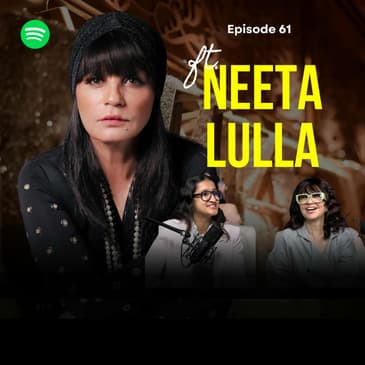

Interviewed the only Indian designer to win an award at Cannes Film Festival for Samantha Ruth Prabhu’s dress in the movie Shaakuntalam.
Not just this, this legendary designer is also the only one to win FOUR National Film Awards for designing costumes in films like Devdas, Jodhaa Akbar, Lamhe, Balgandharva!!
Meet Neeta Lulla - in the most unfiltered conversation with Radhika Bajoria.In our conversation we spoke about Neeta Lulla’s unconventional journey which will leave you spellbound.
➡️ From getting married at the age of 16, to having a kid at a tender age of 20, to buying her first sewing machine by selling sandwiches - Neeta has completed 40 successful years in fashion in 2024!
Neeta and I spoke on our channel wiping_out_the_norm about,
✅ Designing Aishwarya Rai Bachchan’s wedding dress
✅ Working with Sanjay Leela Bhansali for Devdas
✅ Being called a “costume technician” by the Late Yash Chopra
✅ Neeta’s equation with Juhi Chawla n movie sets
✅ How she got married to not study further, and got into fashion unknowingly.
✅ How does inventory in the fashion business work, how did Neeta get work in movies, how does pricing work in couture designs, and much more!
[00:00:01] How to become a actress
[00:00:05] We are Neeta Lulla, Welcome Neeta to our show, Wiping Out The Norm
[00:00:12] Thank you so much, that was such a sweet introduction
[00:00:15] Everybody knows about your journey, you've completed 40 years in the industry
[00:00:19] So, had to be a little different, you know
[00:00:21] I have a very interesting question that people usually wait till they complete their education
[00:00:27] and then get married, you did something completely different
[00:00:31] You married at the age of 16, just so that you could not study
[00:00:35] You mean you were not scared of marriage or you were very scared of studies
[00:00:39] Why did you choose to marry so soon?
[00:00:41] I was not scared of marriage or studies, I just didn't want to study
[00:00:45] And why was that?
[00:00:46] It was not my calling at all
[00:00:48] My calling was playing through wall, playing badminton, table tennis
[00:00:53] Play acting and stuff like that
[00:00:56] But studying was never something that I...
[00:00:59] I mean, you know, you meet all kinds of people
[00:01:01] Some say I'm very dyslexic, I always say that I'm dyslexic
[00:01:05] I hear people, I observe, I listen
[00:01:07] But why were people called you dyslexic?
[00:01:10] No, I called myself because I hate studying
[00:01:12] I pick up a book and I fall asleep
[00:01:15] And that was the only reason why you decided to get married
[00:01:19] I was quite a tromboy and my dad once told me
[00:01:21] If you don't study, I'll get you married
[00:01:24] I said, right now
[00:01:26] He was quite shocked, he said
[00:01:28] I mean, are you okay with getting married?
[00:01:30] I said, yeah, if you're going to make me study, I don't want to study, I want to get married
[00:01:34] But how are you so bold enough to say yes to something like a marriage
[00:01:37] which involves so much of responsibility?
[00:01:40] It takes all kinds to make the world listen to that
[00:01:42] I know, that's why you're here today
[00:01:44] Thank you
[00:01:45] Tell me, what is the difference between a tailor or designer
[00:01:48] because everybody who is stitching dresses or designing
[00:01:51] thinks that okay, they can be a brand and they can become big
[00:01:55] but only a few people can become designers like you are today
[00:01:58] So what's the difference?
[00:02:00] You took me back to 1989-1990
[00:02:06] when I just finished doing clothes for Jhura
[00:02:10] And I got a call from the South Indian production
[00:02:14] and they said, hello, can I speak to Neeta Lola Taylor?
[00:02:20] And I was so offended, I was like, Taylor
[00:02:24] I mean what did I study for fashion design?
[00:02:26] Why did I do fashion design?
[00:02:28] But then I realized that people don't
[00:02:31] at that point in time it was very primitive
[00:02:33] fashion was primitive
[00:02:35] and they didn't understand the difference in tailoring
[00:02:38] and fashion design as a career
[00:02:40] Designers were just ebbing at that time
[00:02:42] Which year was this?
[00:02:43] This was around 1989-1990
[00:02:45] Okay, long back
[00:02:47] So they wanted me to do clothes which were
[00:02:51] for Govinda I remember
[00:02:53] and they said can I speak to Neeta Lola Taylor?
[00:02:56] So I said yeah this is fashion designer Neeta Lola
[00:02:59] and I took a lot of pride in saying that
[00:03:01] How did you start your concept as a designer
[00:03:04] and what was it to be like a designer in those times
[00:03:07] in 1990s?
[00:03:08] So there was never a concept of being a designer
[00:03:11] at that point in time because it was very primitive
[00:03:14] and very nascent
[00:03:15] but for me once I did fashion design
[00:03:20] I thought I was getting into a hobby
[00:03:22] you know that I would just learn tailoring
[00:03:24] and make new clothes
[00:03:26] I was admitted into S&DT which was a college
[00:03:29] for fashion design
[00:03:30] and I took up the course
[00:03:31] and post my graduation I realized
[00:03:34] this was a full-fledged career
[00:03:36] even then I wasn't into fashion design
[00:03:39] I was into fashion choreography
[00:03:41] two years I worked with
[00:03:42] What was that? How is that different?
[00:03:44] Fashion choreography is shows
[00:03:46] show direction
[00:03:47] the holistic advent of putting things
[00:03:50] for a fashion show
[00:03:51] creating a fashion show
[00:03:52] creating the dramatics around a fashion show
[00:03:55] at that point in time also
[00:03:57] we did a whole lot of magnanimous shows
[00:03:59] we never did just straight work
[00:04:01] there was dance, there was drama
[00:04:03] there was a whole lot of backdrops
[00:04:05] and visuals that were used to create a fashion show
[00:04:08] and they were done in the most exotic locations
[00:04:10] I remember we did a show on a ship
[00:04:12] and working with stalwarts
[00:04:15] like Jeanne Eroji and Heyman
[00:04:17] for fashion shows
[00:04:18] I started learning and directing shows under them
[00:04:21] and then suddenly I got an opportunity
[00:04:24] to do a film and I did that
[00:04:26] and at the same time
[00:04:27] when I started working on films
[00:04:30] I did my first full-fledged bridal
[00:04:34] outfit
[00:04:37] my career started on this two-pronged trajectory
[00:04:41] which I didn't realize where it was leading me
[00:04:45] and at that point in time
[00:04:47] I was working with outsourcing from tailors
[00:04:51] and then I realized that I needed to do this for myself
[00:04:55] and create an in-house workshop
[00:04:58] because I had two kids
[00:05:01] really tiny kids
[00:05:03] and I needed to be at home
[00:05:04] How old were you?
[00:05:05] I was about 20
[00:05:07] Oh my God
[00:05:08] and you were a mother of two at 20?
[00:05:10] At 20, 21
[00:05:11] Yeah
[00:05:12] So yeah
[00:05:13] and then I opened this workshop at home
[00:05:15] and the deed that I was
[00:05:17] I, you know
[00:05:19] because you must have understood when dad said
[00:05:22] no, you study, I'll get you married
[00:05:24] so I didn't want to ask anybody
[00:05:26] for any money
[00:05:28] to buy my machine
[00:05:30] So what I did was
[00:05:31] I started to make sandwiches
[00:05:33] I sell sandwiches to school kids
[00:05:35] I stay very close to a school
[00:05:37] so I made my first 500 rupees
[00:05:39] and bought my first second-hand machine
[00:05:41] and I shook up the garments
[00:05:43] and I had a machinist who used to stitch it
[00:05:45] and then I realized that work was getting
[00:05:47] even more hectic
[00:05:48] so I bought another machine
[00:05:50] with the kind of money I made
[00:05:52] and I kept a master
[00:05:54] so I used to explain to him
[00:05:56] and then I had to even travel out
[00:05:58] because shoots and photo shoots
[00:06:00] and styling was taking up a lot of time
[00:06:02] so I was moving out of the house
[00:06:05] and bringing in more and more machines
[00:06:08] Of course I was at home
[00:06:10] work was happening from home
[00:06:12] till I had about six machines
[00:06:14] and it couldn't fit into the house anymore
[00:06:16] And that's when you got your first space
[00:06:18] When I got my first space
[00:06:20] People can't imagine now that they can sell sandwiches
[00:06:22] and start a business
[00:06:24] So 500 rupees I got a brother machine
[00:06:26] which was for a second-hand machine
[00:06:28] which was brilliant
[00:06:29] and I was so happy
[00:06:30] I still have that machine
[00:06:32] Oh you do?
[00:06:33] Who works on that?
[00:06:34] Nobody works on that
[00:06:36] It's too precious
[00:06:37] Like put it in a museum
[00:06:38] So yeah that's how the tailoring
[00:06:40] stint started and went into becoming
[00:06:42] a fashion design stint
[00:06:44] And what was the kind of money that
[00:06:46] fashion designers were making
[00:06:48] back in those times
[00:06:49] in 1990s
[00:06:51] I think they were taking me to back in time
[00:06:53] That's my job
[00:06:54] I really don't remember
[00:06:57] But
[00:06:58] I would have been making some
[00:07:00] 10 to 15 thousand a month
[00:07:03] Okay
[00:07:04] But again spending a lot of money
[00:07:06] on making clothes for styling shoots
[00:07:09] So I used to invest all that back into the business
[00:07:12] and back into my work
[00:07:13] Did you always have this ambition
[00:07:15] of making your designs
[00:07:17] as a brand?
[00:07:18] I never had this in mind
[00:07:20] No you were just enjoying the work that you had
[00:07:22] I was just enjoying the work
[00:07:23] For me that process was amazing
[00:07:25] And at the time when I started my career
[00:07:28] there was never a full-fledged plan in place
[00:07:32] You know like today I teach fashion
[00:07:35] I've been teaching for the last 36 years
[00:07:37] I interact with a lot of students
[00:07:39] I'm in a 22 year old student
[00:07:41] who's telling me
[00:07:42] you know I have to make a business plan
[00:07:44] because once I graduate
[00:07:45] I have to do this
[00:07:46] and then I have to do that
[00:07:47] and then I have to do this
[00:07:48] and I'm like whoa whoa whoa
[00:07:49] hold on hold on hold on
[00:07:50] Finish your graduation
[00:07:52] understand what you're good at
[00:07:54] you know
[00:07:55] introspect on that first
[00:07:57] and then go ahead
[00:07:59] and learn a little more in it
[00:08:01] and then plan
[00:08:02] The point is that
[00:08:03] for any student
[00:08:05] initially to go with the flow
[00:08:07] when you are getting yourself educated
[00:08:09] is very important
[00:08:10] especially because today
[00:08:12] we are not at a nascent stage
[00:08:14] we are not at a developing
[00:08:16] or progressing stage of fashion
[00:08:18] We are at the hilt of fashion
[00:08:20] where everybody is out there
[00:08:24] and at the click of a button
[00:08:26] you know what's going on
[00:08:28] world over
[00:08:29] Earlier it was like
[00:08:30] Okay, the girl is sitting at home
[00:08:31] let's go and do tailoring
[00:08:33] then she'll get married
[00:08:34] or if you're doing fashion designing
[00:08:36] then it will be a little glamorous
[00:08:37] and she'll get married
[00:08:39] This was the case
[00:08:41] even up till I remember 1998
[00:08:44] when I was teaching students
[00:08:47] when they said
[00:08:48] we've come into fashion design
[00:08:49] because we have to get married
[00:08:50] we need a
[00:08:52] you know it's like
[00:08:53] I'm going to get a good husband
[00:08:54] because I've done fashion design
[00:08:56] I think
[00:08:57] in that way
[00:08:58] when you look at
[00:08:59] people who are getting into fashion
[00:09:02] need to come with an open mind
[00:09:04] and an open thought process
[00:09:06] It's about
[00:09:07] a lot of learnings
[00:09:09] and a lot of giving
[00:09:10] to the industry
[00:09:12] expertise
[00:09:14] You know we have
[00:09:15] thousands of students
[00:09:16] who graduate every year
[00:09:19] out of them how many become designers
[00:09:22] So how can we culminate that
[00:09:24] interest into a full fledged
[00:09:26] vocation
[00:09:27] is so important today
[00:09:29] But you have a problem
[00:09:31] that someone has asked you
[00:09:33] whether you're a designer
[00:09:34] but what do you do
[00:09:35] I must give you a very funny anecdote
[00:09:37] in the industry
[00:09:38] what happened was
[00:09:40] we had this complete disconnect
[00:09:42] from mainstream fashion
[00:09:43] and film fashion
[00:09:44] So filmy
[00:09:46] You don't wear filmy costumes
[00:09:48] No, we don't
[00:09:49] We don't need filmy costumes
[00:09:51] But then
[00:09:52] eventually the call to action was
[00:09:54] that you will make this film a blouse
[00:09:56] you know
[00:09:57] make it a mirror's off shoulder
[00:09:58] make it a blouse
[00:09:59] or a dark off shoulder
[00:10:00] make it a blouse
[00:10:01] which is made of rice
[00:10:02] but that used to come
[00:10:04] However
[00:10:05] at that point in time
[00:10:06] we had a lot of
[00:10:07] star sisters
[00:10:09] friends who were doing clothes
[00:10:10] for the actors
[00:10:12] and very few
[00:10:14] stalwarts who actually knew the work
[00:10:16] you know like
[00:10:18] like Bhanu Hathayaji
[00:10:19] or like Shalini Shyamani Robadi
[00:10:21] these were
[00:10:22] the big ones
[00:10:24] So I remember meeting
[00:10:26] Bhanu Ji at one shoot
[00:10:29] and she thought
[00:10:31] I was the star
[00:10:33] friend who was there
[00:10:34] who was making clothes
[00:10:36] and she sat with me
[00:10:37] and she said
[00:10:38] do you know what goes into
[00:10:39] fashion design
[00:10:40] do you even realize
[00:10:42] you guys
[00:10:43] make this in a fun business
[00:10:45] and
[00:10:46] there is so much seriousness to
[00:10:48] what comes on the screen
[00:10:49] because it remains for years together
[00:10:51] and
[00:10:53] just because you want to
[00:10:55] pursue this as a hobby
[00:10:56] you just take it up
[00:10:58] and you create
[00:10:59] sometimes you create a mess
[00:11:01] you see the colors
[00:11:02] color use
[00:11:03] the structure use
[00:11:04] and I was quietly listening to her
[00:11:06] I'm like oh my god
[00:11:08] I was getting
[00:11:10] a full load on
[00:11:12] the whole structure
[00:11:14] of the industry at that point in time
[00:11:16] and she said
[00:11:17] we as designers who are
[00:11:19] educated in this
[00:11:21] sometimes it's very frustrating to
[00:11:23] see you people mess it up like this
[00:11:25] Oh god
[00:11:26] she was telling you all of this
[00:11:28] and I was like
[00:11:29] very humbly listening to her
[00:11:31] and very quietly and then I said
[00:11:33] ma'am
[00:11:34] I'm not
[00:11:35] her friend or sister
[00:11:37] or anybody I've studied fashion
[00:11:39] and I have just started
[00:11:41] my career and
[00:11:44] you know
[00:11:45] I've understood how costuming works
[00:11:48] so she
[00:11:49] there was a very warm smile on her face
[00:11:51] and she said yes because that is what's
[00:11:53] important in the industry
[00:11:54] and the need of the hour of this
[00:11:56] industry is to have people who
[00:11:58] are educated
[00:12:00] and who understand techniques of clothes
[00:12:02] you know and
[00:12:03] if that is what you are doing
[00:12:05] you will really go a long way
[00:12:07] and today
[00:12:08] the industry calls me a costume technician
[00:12:10] more than a fashion designer
[00:12:12] or a costume designer
[00:12:13] what's the difference between a technician
[00:12:15] and a designer
[00:12:17] a technician is someone who knows
[00:12:19] the holistic
[00:12:21] work
[00:12:22] and if I'm
[00:12:23] put onto
[00:12:24] a situation on the set
[00:12:26] and I have to make something I will make it
[00:12:28] on the spot
[00:12:29] I can cut it I can stitch it
[00:12:31] I know exactly what technique is required for
[00:12:33] the type I know what colors will go with
[00:12:35] with the background that's
[00:12:37] been suggested I can suggest
[00:12:39] that I can hear a song and create
[00:12:41] a costume
[00:12:43] sketch
[00:12:44] listening to the song
[00:12:45] this was very fondly
[00:12:47] this costume
[00:12:49] technician
[00:12:50] the name was given to me very fondly
[00:12:52] by the lady Shri Yastuapra Ji
[00:12:54] and Manmohan Singh Ji
[00:12:57] Yastuapra reminds me of
[00:12:59] a time
[00:13:00] which I heard
[00:13:02] you say in one of your interviews
[00:13:04] that
[00:13:05] when you went to meet him
[00:13:08] he looked at you and then
[00:13:10] Shri Devi Kodne called
[00:13:12] and then he's like
[00:13:13] what will she make of her clothes
[00:13:14] this is the western thing
[00:13:15] he called her in front of me
[00:13:17] in front of me
[00:13:18] tell us more about that
[00:13:19] what was the setting like
[00:13:21] so
[00:13:22] Shri Devi sent me to
[00:13:24] meet with him
[00:13:25] and
[00:13:27] she wanted me to do
[00:13:29] clothes and
[00:13:31] I went and I met him
[00:13:33] and I was in my regular
[00:13:35] work clothes which is a suit
[00:13:37] and he looked at me and he said
[00:13:40] do you know how to make desi clothes
[00:13:42] I said
[00:13:43] I looked at him and at first
[00:13:44] I was dumbstruck
[00:13:45] I didn't know what to say to him
[00:13:46] so I kept quiet
[00:13:48] and then he called Shri Devi
[00:13:50] you sent this girl
[00:13:52] what will she make of her clothes
[00:13:54] she came in the suit
[00:13:56] so she must have known
[00:13:58] how to make clothes
[00:14:00] so I don't know what the conversation was there
[00:14:03] and then
[00:14:04] he said let's try
[00:14:06] and this was all in front of you
[00:14:08] he was in front of me
[00:14:09] and then what were the words of
[00:14:10] Yash Chopra after seeing your products
[00:14:12] he just patted me on the back
[00:14:14] and he was like fantastic
[00:14:16] you know
[00:14:17] and subsequently the films
[00:14:19] I did Lamee and Dar
[00:14:21] Dar also we had a similar situation
[00:14:23] but he was always
[00:14:25] if there was anything he required
[00:14:27] he would just pick up the phone
[00:14:29] and tell me that this dress needs to be made in 2 hours
[00:14:31] 2 hours
[00:14:33] and I would make it
[00:14:35] just in 2 hours
[00:14:36] 2 and a half hours yes
[00:14:38] can you tell us about one of these incidents
[00:14:40] so we were shooting for Dar
[00:14:42] the Tandav song of Juhi
[00:14:44] in the film
[00:14:46] that 10 minute thing
[00:14:48] and I think initially
[00:14:50] we had decided that
[00:14:52] Juhi would wear the outfit
[00:14:54] that was wearing in the previous scene
[00:14:57] and then
[00:14:59] I think Manvon Singh Ji
[00:15:00] and he decided that no
[00:15:02] it should be something different
[00:15:04] because it's from her perspective of
[00:15:06] her thought process
[00:15:08] so
[00:15:10] I get this call
[00:15:12] at about
[00:15:14] 12 in the afternoon
[00:15:16] Kao
[00:15:18] I said I am at home sir
[00:15:20] I am just getting things ready
[00:15:22] and he said ok
[00:15:24] you come to Kamala Murari Studios
[00:15:26] I said ok I went there
[00:15:28] and Manji and he was sitting there
[00:15:30] having tea
[00:15:32] and they said
[00:15:33] dress bani I said ok sir
[00:15:35] you thought that it is ok
[00:15:37] I was like ok
[00:15:39] so he is like
[00:15:41] he is asking me to have tea
[00:15:43] I said no and Manvon Singh Ji
[00:15:45] was laughing
[00:15:46] Manji was the cameraman
[00:15:48] and
[00:15:50] he said
[00:15:52] he will make this dress
[00:15:54] I said yes sir why are you asking me this
[00:15:56] Singh Ji we are shooting after lunch break
[00:15:58] I looked at both of them
[00:16:00] Manji was still laughing about it
[00:16:02] and he said
[00:16:04] you go and start
[00:16:06] sir
[00:16:08] come by 2.30
[00:16:10] at 3.30 in the morning
[00:16:12] and this chatting was at 12 o'clock
[00:16:14] yeah this was at 12
[00:16:16] and mind you we have no
[00:16:18] phones nothing at that point in time
[00:16:20] so I called my office
[00:16:22] and made a call from there
[00:16:24] and I spoke to them
[00:16:26] and those days whenever you were shooting
[00:16:28] inside the studio
[00:16:30] wherever the producer
[00:16:32] and the director used to sit
[00:16:34] when they were outside the studio
[00:16:36] they used to be a phone over they kept
[00:16:38] on a little table or something
[00:16:40] and the connection was done
[00:16:42] so I called and I told them
[00:16:44] what to get ready
[00:16:46] for the next few minutes
[00:16:48] because from there to drive to my house
[00:16:50] my workshop is about 20-25 minutes
[00:16:52] so we have to make it
[00:16:54] and when we got the dress ready
[00:16:56] and I reached
[00:16:58] at 2.30 to 4.45
[00:17:00] back with the dress
[00:17:02] that's the kind of work we used to do
[00:17:04] but what all did you do in these
[00:17:06] 2 hours to get it ready
[00:17:08] and then if it takes only 2 hours
[00:17:10] then how do you manage to do it
[00:17:12] suppose a longer time
[00:17:14] I am one of the designers
[00:17:16] who has worked on almost 200 films
[00:17:18] up until
[00:17:20] Hamdil Le Chukya Sanam
[00:17:22] where I had one assistant
[00:17:24] and Devdas where I had 4 assistants
[00:17:26] and the assistant
[00:17:28] therapy of work started
[00:17:30] only around that time
[00:17:32] and I was the only designer
[00:17:34] who used to travel abroad
[00:17:36] to pick up accessories
[00:17:38] and outfits
[00:17:40] so Jodhva
[00:17:42] TV number one
[00:17:44] and all these kind of films that I have done
[00:17:46] is only on the basis of
[00:17:48] being able to prep clothes
[00:17:50] and being able to style them
[00:17:52] because of my background of
[00:17:54] styling
[00:17:56] so you know how to put things together
[00:17:58] and everything at that point in time
[00:18:00] I used to have everything ready
[00:18:02] at hand like I said
[00:18:04] I always invested in my money
[00:18:06] into buying things
[00:18:08] for my work
[00:18:10] I had to keep some fabrics ready
[00:18:12] with me at all times
[00:18:14] so whites were always there
[00:18:16] lycra was always there
[00:18:18] and sequences were always there
[00:18:20] so I used to
[00:18:22] coordinate and mix and match
[00:18:24] and make things and whatever was not there
[00:18:26] immediately
[00:18:28] somebody was sent
[00:18:30] to pick it up and come back
[00:18:32] or I would drive myself
[00:18:34] to go pick it up and come back
[00:18:36] so we used to have one or two
[00:18:38] boys and that's about it
[00:18:40] but has there been a time
[00:18:42] when people have come to know
[00:18:44] that you make dresses in only 2 hours
[00:18:46] so they also started demanding
[00:18:48] that we should also wear dresses
[00:18:50] oh yes
[00:18:52] Gungad Ki Aar Se Song
[00:18:54] for Hameer I Pyaar Ke Over Night 3 Outfits
[00:18:56] the industry knew that
[00:18:58] whatever we have to make
[00:19:00] we can tell her to make and she will do it
[00:19:02] have you ever tried to get in a car
[00:19:04] or did you go somewhere
[00:19:06] and you were in a backseat stitching
[00:19:08] really? oh yes we have also sat
[00:19:10] outside the airport
[00:19:12] and stitched
[00:19:14] when was this and what was this for
[00:19:16] this was quite some time
[00:19:18] back and
[00:19:20] I was making clothes for this
[00:19:22] south Indian film called Jagadika Veerudu
[00:19:24] Atiloka Sundari
[00:19:26] that's a very big name
[00:19:28] yes, Armi Urabsara
[00:19:30] you must see it
[00:19:32] some of the most cutting edge clothes
[00:19:34] even today have become
[00:19:36] a source of inspiration for many directors
[00:19:38] so yeah that was a film
[00:19:40] and we could not
[00:19:42] finish the costume on time
[00:19:44] because there is a lot of detailing in that
[00:19:46] lot of detailing
[00:19:48] so the construction
[00:19:50] had to be it was stacked
[00:19:52] it had to be just finalized
[00:19:54] and
[00:19:56] my master G
[00:19:58] was sitting with one car he got in the backseat
[00:20:00] and they were stitching
[00:20:02] till the car was standing
[00:20:04] and they were still stitching
[00:20:06] till the time the cops came and told us
[00:20:08] that the car had to be removed
[00:20:10] so I had to get them out
[00:20:12] we all three ran
[00:20:14] to the airport
[00:20:16] outside the airport they were sitting on the footpath
[00:20:18] and stitching it
[00:20:20] let's just finish it on time
[00:20:22] and we did
[00:20:24] why were you all sitting at the airport
[00:20:26] waiting for
[00:20:28] the team to arrive
[00:20:30] and we had to complete the clothes
[00:20:32] till the time the team
[00:20:34] didn't arrive we had that much 5 minutes
[00:20:36] or 4 minutes every second
[00:20:38] counted so we were just finishing all the last
[00:20:40] minute things and packing it
[00:20:42] in the bag and giving it away
[00:20:44] I mean there is crazy amount of
[00:20:46] things that you do when you have to complete
[00:20:48] clothes on time so yeah
[00:20:50] this was one of those
[00:20:52] this is good that you could do it
[00:20:54] on time
[00:20:56] sometimes it happened that
[00:20:58] you had to give it on time but it didn't happen
[00:21:00] and then what was the outcome of it
[00:21:02] no such thing never happened
[00:21:04] touch wood
[00:21:06] never there is a lot of
[00:21:08] technicality that goes into
[00:21:10] even cutting the garments
[00:21:12] and stitching it in a way
[00:21:14] that you can speed in that process
[00:21:16] if you don't have time
[00:21:18] when you have time sky is the limit
[00:21:20] you were going to be fired
[00:21:22] from Bollywood when you started
[00:21:24] so tell us about that story
[00:21:26] so
[00:21:28] my first was Tamacha
[00:21:30] and my first costume which was
[00:21:32] a very very extensive
[00:21:34] song
[00:21:36] 100 people on the set dancers
[00:21:38] and Amrita Singh
[00:21:40] and Bhanupriya
[00:21:42] and Kimi Kathkar
[00:21:44] all of them and the first
[00:21:46] day was only
[00:21:48] Kimi Kathkar shooting and
[00:21:50] I had sketched this gorgeous
[00:21:52] white outfit with a lot
[00:21:54] of mirror work and stuff like that
[00:21:56] and she they loved the sketch
[00:21:58] so
[00:22:00] I made the outfit and
[00:22:02] I come from a mainstream fashion
[00:22:04] background so the cut was
[00:22:06] according to what
[00:22:08] you know you me or anybody could wear it
[00:22:10] and I took the outfit
[00:22:12] on set
[00:22:14] 9.30 in the morning and
[00:22:16] the dress went in
[00:22:18] and Kimi Kathkar's mom came out
[00:22:20] and she said come here
[00:22:22] I went in and she
[00:22:24] said is this how you make an
[00:22:26] outfit don't you know the difference
[00:22:28] in what is required in film costumes
[00:22:30] and what is this you've done
[00:22:32] I mean
[00:22:34] my daughter cannot wear this
[00:22:36] and the shoot got cancelled
[00:22:38] and I was like
[00:22:40] I didn't know what to do I
[00:22:42] took the dress and I was almost
[00:22:44] like I think my careers ended
[00:22:46] before it even started as I came out
[00:22:48] I had tears in my eyes my face
[00:22:50] so I just read and
[00:22:52] there was this old master
[00:22:54] who was standing there and he
[00:22:56] because by then everybody had heard
[00:22:58] about this and they didn't know
[00:23:00] what to do because she had to be cancelled
[00:23:02] so he came to me and said
[00:23:04] what happened
[00:23:06] I showed him the dress
[00:23:08] I didn't say anything I just showed him the dress
[00:23:10] he looked at it and he said
[00:23:12] you made the dress
[00:23:14] for ordinary people
[00:23:16] it's not for film costume
[00:23:18] so he said
[00:23:20] you come to my workshop
[00:23:22] and I'll show you what's to be done
[00:23:24] I was like
[00:23:26] I was like
[00:23:28] you think I'll be able to come here tomorrow
[00:23:30] and
[00:23:32] you know so
[00:23:34] anyway around 4 for 30
[00:23:36] I went to his workshop
[00:23:38] in the evening and he had
[00:23:40] opened up the whole piece very carefully
[00:23:42] he had opened it out and he showed me
[00:23:44] see this is the way it's to be cut
[00:23:46] this is mainstream cut
[00:23:48] and this is how you have to do a costuming cut
[00:23:50] you know and he showed me that
[00:23:52] and I sat with him
[00:23:54] because I was so intrigued
[00:23:56] I had never seen something like this
[00:23:58] I sat with him through the night
[00:24:00] at 9 in the morning the next day
[00:24:02] I took the outfit
[00:24:04] for shoot
[00:24:06] she took it in and again she called me
[00:24:08] she said come here
[00:24:10] wait wait what did you anticipate
[00:24:12] I was anticipating the worst
[00:24:14] I said
[00:24:16] again she's called me
[00:24:18] in the same way
[00:24:20] she said you got this done
[00:24:22] I said yes ma'am
[00:24:24] any problem so she says
[00:24:26] it's wonderful the fit is absolutely perfect
[00:24:28] and she kissed me on my forehead
[00:24:30] and she said you will go a long way
[00:24:32] so
[00:24:34] since then till today
[00:24:36] I'm hoping another more 40 years
[00:24:38] to go yeah I'm sure the legacy
[00:24:40] will continue
[00:24:42] it will for sure
[00:24:44] but for the legacy to continue
[00:24:46] would you want others to stitch
[00:24:48] in your brand name
[00:24:50] or would you
[00:24:52] think that till I get to the point
[00:24:54] that this brand should be made by me
[00:24:56] I think the legacy is all about
[00:24:58] the brand going forward without you
[00:25:00] I still have to find
[00:25:02] like minded
[00:25:04] individuals
[00:25:06] who are not fearful
[00:25:08] of the work that comes to them
[00:25:10] you haven't found yet
[00:25:12] I haven't found yet
[00:25:14] but I don't think it's a difficult
[00:25:16] task I should be able to find
[00:25:18] all the students hearing
[00:25:20] the fashion students
[00:25:22] because I think
[00:25:24] it's about
[00:25:26] fearlessly getting into a conviction
[00:25:28] that you have about your
[00:25:30] work you know it really
[00:25:32] gave me goosebumps when you said
[00:25:34] the story of how your first interaction
[00:25:36] was and how the next day
[00:25:38] changed your own destiny
[00:25:40] you know you didn't rely on
[00:25:42] what was being told to you and then
[00:25:44] go home and just sit over it
[00:25:46] you were like okay how can we do this
[00:25:48] I think Radhika overnight
[00:25:50] I learnt a whole new
[00:25:52] world
[00:25:54] of costumes
[00:25:56] even on set like on Manikarnika
[00:25:58] in half an hour I cooked up
[00:26:00] a whole armor on set
[00:26:02] just half an hour?
[00:26:04] yeah in half an hour
[00:26:06] I don't know how I did that but yes
[00:26:08] we were shooting in Sambar
[00:26:10] for Jodha Akbar
[00:26:12] three hours away from Jaipur
[00:26:14] and nothing over there except
[00:26:16] one Tinka Petey
[00:26:18] and Ashur realized
[00:26:20] Ashutosh Kewarikar the director
[00:26:22] realized that he needed on that day itself
[00:26:24] he needed the commander
[00:26:26] in chief to be there as well
[00:26:28] in the army
[00:26:30] although he was supposed to be there the next day
[00:26:32] so he said what can we do
[00:26:34] he said okay give me some time let me just
[00:26:36] think about it
[00:26:38] and I
[00:26:40] he's like
[00:26:42] let me just think
[00:26:44] so my dress man was there
[00:26:46] I told him
[00:26:48] he said
[00:26:50] I cut up the Petey
[00:26:52] and I made an armor out of the Petey
[00:26:54] you still see it in the film
[00:26:56] I can't believe this
[00:26:58] Ashutosh must be shocked
[00:27:00] everybody there was shocked
[00:27:02] because it was being done in front of their eyes
[00:27:04] oh god
[00:27:06] and the Kari girls were thinking
[00:27:08] that you will make something from inside the Petey
[00:27:10] there was only a dress man
[00:27:12] myself and one or two other dress men
[00:27:14] oh my god you converted the Petey
[00:27:16] into the dress itself
[00:27:18] your stories are like next level
[00:27:20] I don't think so they exist today
[00:27:22] yeah so even
[00:27:24] Mohenjo Daro
[00:27:26] we were shooting at Inbuj
[00:27:28] and I was just walking around
[00:27:30] and I saw all these little
[00:27:32] trinkets
[00:27:34] must have been thrown around
[00:27:36] and then I saw because
[00:27:38] it was Mohenjo Daro
[00:27:40] there were some little skulls
[00:27:42] and little
[00:27:44] dried flowers and stuff which was there
[00:27:46] and feathers and stuff
[00:27:48] which had fallen on the whole
[00:27:50] expanse of the field
[00:27:52] I picked those up and I made
[00:27:54] accessories out of it in fact
[00:27:56] Pooja Higre is wearing that whole headgear
[00:27:58] was done with all the junior artists
[00:28:00] beads and all the stuff that I found
[00:28:02] on the floor and Ashutosh
[00:28:04] loved it so much that he
[00:28:06] actually did a song with that
[00:28:08] whole look
[00:28:10] don't tell me conceptualized
[00:28:12] a song because he loved the look so much
[00:28:14] in fact even Subhash Ji
[00:28:16] Subhash Ghai
[00:28:18] in Tal
[00:28:22] conceptualized the entire
[00:28:24] look of his
[00:28:26] initial his introduction of the song
[00:28:28] on Aishwarya because
[00:28:30] he found the back of the gown
[00:28:32] very interesting
[00:28:34] he was like, he is not singing
[00:28:36] but I am going to put it and
[00:28:38] if you see the song
[00:28:40] her back is to
[00:28:42] the screen
[00:28:44] and you see the entire detail of her back
[00:28:46] and then the song starts
[00:28:48] Wow and you also
[00:28:50] worked with Sanjay Leela Bansali in Devdas
[00:28:52] I mean he is known for his details
[00:28:54] so sometimes it happens that
[00:28:56] you have made all the costumes
[00:28:58] he is like
[00:29:00] you have made it very well
[00:29:02] but can you change the color of this thread
[00:29:04] can you make something else
[00:29:06] with Sanjay you can expect anything
[00:29:08] so Hamdil Dejukesanam
[00:29:10] was
[00:29:12] a cakewalk
[00:29:16] compared to Devdas
[00:29:18] so Devdas the finale
[00:29:20] where Paaro is running
[00:29:22] down the steps and the Paalo is burning
[00:29:24] so
[00:29:26] all our clothes were ready
[00:29:28] it was a puja sari
[00:29:30] it was a red and white sari
[00:29:34] we had just finished
[00:29:36] filming dola re dola
[00:29:38] next day we were supposed to do this
[00:29:40] so
[00:29:42] at about 9 am in the night
[00:29:44] he said let us see the next day's costume
[00:29:48] we got it because it was ready
[00:29:50] and
[00:29:52] he looked at it and said
[00:29:54] I know I told you it has to be a cotton sari
[00:29:56] but the thing is that I have just
[00:29:58] kind of visualized her running down
[00:30:00] the stairs with this paalo burning
[00:30:02] so I need a silk sari
[00:30:04] for the flutter
[00:30:06] and I need
[00:30:08] expanse so I need at least
[00:30:10] 15 meters or whatever
[00:30:12] on this and that was the only
[00:30:14] sari the puja sari that we had done
[00:30:16] a 5.5 meters the rest
[00:30:18] all the sari is in devdas
[00:30:20] about 16 meters 12 meters
[00:30:22] and he said I need 2
[00:30:24] because one burns the other one is there
[00:30:26] I said okay
[00:30:28] he said but what are we going to do now
[00:30:30] how will we manage it
[00:30:32] I said I don't know but can I leave
[00:30:34] so he was like
[00:30:36] but what do you plan to do
[00:30:38] I said I don't know can I leave
[00:30:40] and this is happening in filmistan studio
[00:30:42] go to gao
[00:30:44] no phones no mobiles nothing
[00:30:46] and
[00:30:48] only we had pages
[00:30:50] those days
[00:30:52] so I
[00:30:54] in front of me
[00:30:56] Aishwarya and he have called up Kiran
[00:30:58] Kiran ji Kiran kheer
[00:31:00] and everybody to find out if
[00:31:02] they had 2 identical puja sari
[00:31:04] and all this while I am saying
[00:31:06] Sangeh can I leave
[00:31:08] he said
[00:31:10] okay then they realized that it was
[00:31:12] not available
[00:31:14] by this time it was around 10
[00:31:16] 10 30 at night
[00:31:18] he said okay
[00:31:20] but can I shoot tomorrow
[00:31:22] I said you can shoot tomorrow
[00:31:24] and I left from there I went out
[00:31:26] I went to a phone booth
[00:31:28] and I had paged
[00:31:32] this guy who owns a shop on
[00:31:34] linking road I said
[00:31:36] I am calling you so please pick up
[00:31:38] give me a number he sent me a number
[00:31:40] I called him up
[00:31:42] he said see I need a whole
[00:31:44] thana white fabric I need a silk
[00:31:46] I need 10 meters
[00:31:48] of red silk and I need
[00:31:50] some
[00:31:52] other fabrics so I am coming to your store
[00:31:54] and please open the store
[00:31:56] so he says ma'am I can't open the store
[00:31:58] I am partying
[00:32:00] not in
[00:32:02] Bandra I am in town
[00:32:04] and I can't even go home
[00:32:06] to pick up the keys
[00:32:08] because I am partying
[00:32:10] my father will see me
[00:32:12] I am like
[00:32:14] down a few shorts and stuff
[00:32:16] I said but you now you are done
[00:32:18] if you don't go and get the keys
[00:32:20] I am going to tell your father
[00:32:22] you picked up his soft spot
[00:32:24] I had no other go
[00:32:26] so I said now you decide
[00:32:28] so he said okay okay
[00:32:30] I will do what has to be done
[00:32:32] I have sent my wife up to get the keys
[00:32:34] I said I don't know
[00:32:36] I am reaching from Goregaon
[00:32:38] I will wait there
[00:32:40] you page me when you are
[00:32:42] when you have got the keys or whatever
[00:32:44] and you come
[00:32:46] he came there by 12, 12, 13
[00:32:48] I took the fabrics
[00:32:50] and in the
[00:32:52] interim I had already called
[00:32:54] my embroidery team
[00:32:56] and they had started stitching these small
[00:32:58] borders and sleeves and everything
[00:33:00] we finished everything at
[00:33:02] 6 in the morning to Saari's
[00:33:04] and I reached back in the morning
[00:33:06] for shoot 9.30
[00:33:08] is when we used to always start shoot
[00:33:10] and that's how
[00:33:12] this shoot happened
[00:33:14] what was Anjali Lavan Salli's words
[00:33:16] when you got the
[00:33:18] Saari and he didn't know what would you do
[00:33:20] when you said that I want to leave
[00:33:22] yeah so
[00:33:24] he was obviously ecstatic
[00:33:26] pat on back
[00:33:28] they know then that's how
[00:33:30] they know that you can
[00:33:32] count on this technician
[00:33:34] you seem to be like a
[00:33:36] go-getter
[00:33:38] you also don't know how would you do it
[00:33:40] but you know somewhere that you will do it
[00:33:42] I will do it for sure
[00:33:44] and was this the guy whom you asked to open
[00:33:46] the store familiar with you already
[00:33:48] yeah yeah absolutely
[00:33:50] if there was something new then you feel
[00:33:52] that he would open the store
[00:33:54] no I am not asking you
[00:33:56] but if you know who
[00:33:58] he is not available
[00:34:00] because of my work I used to go to
[00:34:02] and pick up fabrics so people knew
[00:34:04] that's an important point actually
[00:34:06] and how is it that I could
[00:34:08] do so much work in such a little
[00:34:10] span of time
[00:34:12] and no assistance
[00:34:14] I used to go there look at the shop
[00:34:16] all the racks
[00:34:18] and there were times when I used to call and tell them
[00:34:20] your this rack
[00:34:22] on the left side
[00:34:24] this is the rack with 2 numbers
[00:34:26] I want this
[00:34:28] you had a picture memory
[00:34:30] I still do that
[00:34:32] but how is it to work like
[00:34:34] you know with actors
[00:34:36] like Ashwarya and Shri Devi
[00:34:38] you know what was their aura
[00:34:40] because it said that celebrities
[00:34:42] when they enter a room
[00:34:44] they carry an aura with them
[00:34:46] and there is something different about them so how was it
[00:34:48] when you met them or saw them for the first time
[00:34:50] I know that you wouldn't be like
[00:34:52] don't know
[00:34:54] I remember all my assistants
[00:34:56] of Jodhaag Barsingho God
[00:34:58] Ma'am you
[00:35:00] can you come and
[00:35:02] dress them up or whatever I said
[00:35:04] please do to see them transform
[00:35:06] from
[00:35:08] these real people to
[00:35:10] characters to these
[00:35:12] beautiful characters that you see on screen
[00:35:14] is a treat
[00:35:16] that's the one aspect
[00:35:18] that I think
[00:35:20] I see in my interaction with people
[00:35:22] especially we used to see it a lot
[00:35:24] in Shri Devi Ji and
[00:35:26] Ashwarya and a lot more
[00:35:28] other people as well
[00:35:30] Banu Priya, Kimi Khadkar
[00:35:32] simple to the core
[00:35:34] even when they should come to work
[00:35:36] dressed very simply
[00:35:38] but the minute they were in this
[00:35:40] entire look
[00:35:42] bam you know it was
[00:35:44] another world you had entered
[00:35:46] yeah
[00:35:48] but how is it to design for Jodhaag Bhar
[00:35:50] because you had to travel back in time
[00:35:52] and see like what the real
[00:35:54] designs were
[00:35:56] Jodhaag Bhar we could not use a lot of silks and
[00:35:58] brocades you know because
[00:36:00] the cameraman Ketan was
[00:36:02] doing all the work
[00:36:04] on just basic lighting
[00:36:06] there was no artificial lighting
[00:36:08] so if
[00:36:10] we had
[00:36:12] brocades it would shine
[00:36:14] and make the whole look garish
[00:36:16] so we actually
[00:36:18] worked on mull fabric
[00:36:20] and did a lot of detail
[00:36:22] for Jodhaag's
[00:36:24] lehingas
[00:36:26] so we had a very matte finish
[00:36:28] to the lehinga so it wouldn't
[00:36:30] glare out
[00:36:32] and that's how the fabrics were
[00:36:34] made as well so this is
[00:36:36] an interpretation
[00:36:38] that we brought to the table
[00:36:40] and that's probably why you called us costume technician
[00:36:42] because designers won't
[00:36:44] exactly know how this would work
[00:36:46] because you have to really be on the sets
[00:36:48] and understand the effect of everything
[00:36:50] of experience and a lot of learning
[00:36:52] that you get from being
[00:36:54] there doing so much work
[00:36:56] that
[00:36:58] today it comes naturally to me
[00:37:00] like on the set I remember
[00:37:02] that
[00:37:04] Juhi Chawla she used to take care of
[00:37:06] your child
[00:37:08] when you would come on the set so how was that equation
[00:37:10] with Juhi Chawla?
[00:37:12] fabulous equation she was
[00:37:14] very lovely person
[00:37:16] very very lovely
[00:37:18] she was fond of my daughter Nishka
[00:37:20] and my daughter's
[00:37:22] affinity to pinks is thanks to Juhi
[00:37:24] every time
[00:37:26] she travelled out for shoot she would bring something
[00:37:28] pink for her
[00:37:30] and a pink dress, a pink bag
[00:37:32] pink something florals
[00:37:34] so
[00:37:36] Nishka's entire
[00:37:38] demeanor
[00:37:40] and statement is very girly
[00:37:42] it's very like Juhi
[00:37:44] and all her style statement is all about
[00:37:46] opinion and flowers and everything
[00:37:48] Juhi was one person who would look at
[00:37:50] an outfit on a hanger and say
[00:37:52] I am not wearing this
[00:37:54] and I was like atleast wear it
[00:37:56] and see if it looks good or not
[00:37:58] so we used to have a lot of difference of opinion
[00:38:00] like that so
[00:38:02] even if she was upset
[00:38:04] or she was
[00:38:06] waiting for me to do something
[00:38:08] she was busy
[00:38:10] talking to Nishka or playing with Nishka
[00:38:12] so that was the kind of equation we had
[00:38:14] why would she do it? did you ask her?
[00:38:16] no
[00:38:18] I mean there is no reason
[00:38:20] for her to reject it
[00:38:22] and there is no reason for her to accept it
[00:38:24] it's all about the aesthetics
[00:38:26] right? after she wore the dress
[00:38:28] she said no it looks good
[00:38:30] I wear it
[00:38:32] and you had to convince her to please wear it
[00:38:34] and see how it looks
[00:38:36] so this was the only one person
[00:38:38] with whom this
[00:38:40] would happen but the rest
[00:38:42] we would discuss with them
[00:38:44] like even Jui once you discussed
[00:38:46] there were times when she used to say you wear the outfit
[00:38:48] and show me if it looks good I will wear it
[00:38:50] I am like what's wrong with you
[00:38:52] so that is the kind of conradery
[00:38:54] we had
[00:38:56] and you also designed the wedding dress
[00:38:58] of Aishwarya
[00:39:00] which people assumed is like
[00:39:02] crores of rupees
[00:39:04] actually I did so much money
[00:39:06] and why did you do that?
[00:39:08] what was the reason for that dress?
[00:39:10] there was no reason for that
[00:39:12] there was no reason for that
[00:39:14] I mean it is a regular kanji but I am sorry
[00:39:16] and there is a regular blouse
[00:39:18] with little bit of
[00:39:20] zari work so you do the math
[00:39:22] tell me how does this equation
[00:39:24] work with celebrities
[00:39:26] when they actually want you
[00:39:28] to design for their personal occasions
[00:39:30] like weddings which is like the biggest
[00:39:32] in life
[00:39:34] so how did your equation with Aishwarya
[00:39:36] start was it with the movie Devdas
[00:39:38] where she got to know about you and your designs?
[00:39:40] no
[00:39:42] my equation with her started when
[00:39:44] I
[00:39:46] styled her for her first
[00:39:48] look test
[00:39:50] with Yash Chopra ji
[00:39:52] okay which was for which movie
[00:39:54] she was supposed to do Dhar
[00:39:56] then she went off for the Miss World pageant
[00:39:58] and then after that when she came back
[00:40:00] because of my
[00:40:02] interaction and making her understand
[00:40:04] the kind of work
[00:40:06] that was required
[00:40:08] she asked me to do her first
[00:40:10] her first film was Iruvar with Mani Ratnam sir
[00:40:12] second film was Jeans
[00:40:14] she asked me to do jeans for her
[00:40:16] but do you think working back then was more easier
[00:40:18] than now when there are too many
[00:40:20] structures in place?
[00:40:22] we were challenged with not having brands
[00:40:24] we were challenged with not having accessory brands
[00:40:26] to easily
[00:40:28] get to style a shoot
[00:40:30] or to style a magazine cover
[00:40:32] everything had to be made from scratch
[00:40:34] it gave us a lot of insight
[00:40:36] into how to do things
[00:40:38] on the job
[00:40:40] it was more hands on approach
[00:40:42] today everything is available
[00:40:44] and it's so easy
[00:40:46] to get things but then the competition
[00:40:48] is on how do you make those things look different
[00:40:50] because everybody has got access to it
[00:40:52] once you become a brand everybody
[00:40:54] wants to use your name to sell
[00:40:56] it into the retail market
[00:40:58] so as I Kaviyu I
[00:41:00] I see people are selling
[00:41:02] you your own first copies only
[00:41:04] so
[00:41:06] Kuli number one I was
[00:41:08] told
[00:41:10] at a small little shop
[00:41:12] that new sarees have come
[00:41:14] you will like it a lot
[00:41:16] no one wants to wear it
[00:41:18] now tell me
[00:41:20] till the time the owner
[00:41:22] of the shop came and gave him one on his head
[00:41:24] and said he made it
[00:41:28] and Dev Das I was in
[00:41:30] the store and I went to the store
[00:41:32] to pick up something for
[00:41:34] the kids
[00:41:36] they told me there are
[00:41:38] these new sarees that have come
[00:41:40] Dev Das and Neeta Lulla personally gives it to us
[00:41:46] every 15 days we get
[00:41:48] new Dev Das sarees you should
[00:41:50] see ma'am come let me show you my collection
[00:41:52] so I said all right
[00:41:54] and I said when you get your next collection
[00:41:56] I gave him my card I said please let me know
[00:41:58] what was his reaction
[00:42:00] after seeing the card
[00:42:02] you can imagine his reaction it's okay
[00:42:04] so it happens very often
[00:42:06] I mean it's okay
[00:42:08] have you also seen people open shops
[00:42:10] in your name
[00:42:12] so there was this little
[00:42:14] shop in Mahiim which said
[00:42:16] Taylor for Neeta Lulla
[00:42:20] till I had to actually tell him
[00:42:22] Bhai tum nikal doh hu naam
[00:42:25] when was this
[00:42:27] about 10 years back I took a
[00:42:29] young
[00:42:31] master
[00:42:33] to do
[00:42:35] clothes for men
[00:42:37] and he was out of
[00:42:39] he was very close to the workshop
[00:42:41] and I started giving him work
[00:42:43] the next thing I see is after 2 months
[00:42:45] he has got Taylor for Neeta Lulla
[00:42:47] oh god
[00:42:49] it happens I mean there's
[00:42:51] all kinds of experiences you have
[00:42:53] it must be so funny for you to watch your own name
[00:42:55] like that
[00:42:57] I was in shock at that point in time I was livid
[00:42:59] so how can you do this
[00:43:01] today I am laughing about it
[00:43:03] but in your bridal collection
[00:43:05] which is very expensive for
[00:43:07] certain category of people yet very aspirational
[00:43:09] so it has happened
[00:43:11] that people have said that
[00:43:13] we have put our honeymoon budget
[00:43:15] in your lehenga
[00:43:17] because we had to wear your Neeta Lulla lehenga
[00:43:19] in marriage
[00:43:21] it happens I am not going to say no
[00:43:23] I am a
[00:43:25] consumer's designer
[00:43:27] in the sense that if you spend that much
[00:43:29] I will not allow you to waste it
[00:43:31] how?
[00:43:33] people come and say
[00:43:35] oh this is expensive
[00:43:37] but what is the trend
[00:43:39] we will make it from that
[00:43:41] it's not about that
[00:43:43] it's about understanding
[00:43:45] what you will look good in
[00:43:47] what is the color that you will wear later
[00:43:49] and what is it that
[00:43:51] after removing it from 20 years later
[00:43:53] from your wardrobe also you want to wear it
[00:43:55] you like it
[00:43:57] and that's what a lot of
[00:43:59] brides who have dressed
[00:44:01] even after 20 years I may not recognize the face
[00:44:03] will come and say you made this outfit then
[00:44:05] and I still wear it and it still look good
[00:44:07] it looks good and it's still
[00:44:09] in fashion it's only because
[00:44:11] of the fact that I work with the style
[00:44:13] statement of the consumer
[00:44:15] and I keeps an element of
[00:44:17] classicism in the clothes
[00:44:19] because these expensive clothes are like jewelry pieces
[00:44:21] yeah
[00:44:23] and you want to wear it
[00:44:25] you want to hand me down to your daughter
[00:44:27] or your son or your
[00:44:29] grandchildren
[00:44:31] there is still a lot of institutional bias
[00:44:33] for people who have done it from the nifty
[00:44:35] they will get to work with big designers
[00:44:37] there are some people
[00:44:39] who only choose people with that degree
[00:44:41] how is that with you
[00:44:43] what kind of team members do you hire
[00:44:45] what pedigree do you look at
[00:44:47] I am asking you this seriously
[00:44:49] is that so
[00:44:51] as an academician
[00:44:53] I will tell you that
[00:44:55] there are two sets
[00:44:57] classical sets of students
[00:44:59] students coming from
[00:45:01] metro cities
[00:45:03] Amor
[00:45:05] business, styling
[00:45:07] design inclined
[00:45:09] and students coming from
[00:45:11] tier 2 and tier 3 cities
[00:45:13] Amor craft inclined
[00:45:15] and that is the scheme of requirements
[00:45:17] for people who can work with you
[00:45:19] I know bold and rebel is one
[00:45:21] that's a given
[00:45:23] what skill sets do you look at
[00:45:25] common sense and the ability to
[00:45:27] just go forward with
[00:45:29] a conviction to do it
[00:45:31] complete a task
[00:45:33] would I hire a person who comes and tells me
[00:45:35] I am very happy to work with you
[00:45:37] but I want to work on this
[00:45:39] this this this
[00:45:41] or would I pick up a student
[00:45:43] I know about this about your brand
[00:45:45] and I am
[00:45:47] I have understood the ethos
[00:45:49] and the ethics of the brand
[00:45:51] and I am ready to work with it
[00:45:53] which one would you pick up
[00:45:55] yeah of course the latter
[00:45:57] so that's what it is
[00:45:59] have you ever thought of taking private equity money
[00:46:01] into your business like Anita Dongresh
[00:46:03] she has grown it into a very
[00:46:05] big brand taking money
[00:46:07] from private equity giants like
[00:46:09] General Atlantic
[00:46:11] and I am noticing your business growing in that segment
[00:46:13] so I am
[00:46:15] featuring this
[00:46:17] in the scheme of things
[00:46:19] for going forward
[00:46:21] and I think we should be doing it very soon
[00:46:23] oh lovely so how many stores
[00:46:25] do we have now Pan India
[00:46:27] we had two stores
[00:46:29] two flagship stores
[00:46:31] and we retail out of a whole load of
[00:46:33] stores
[00:46:35] but now we have one store
[00:46:37] Mumbai and we are in the process
[00:46:39] of getting into more stores
[00:46:41] there are stores like Purnias popup
[00:46:43] which is like some total
[00:46:45] of all the brands do you think that
[00:46:47] putting your brand there
[00:46:49] makes it more visible and you get more
[00:46:51] sales from there or having your own
[00:46:53] exclusive store
[00:46:55] is more better in terms of
[00:46:57] making the sales
[00:46:59] from where is the revenue more
[00:47:01] so depends on what
[00:47:03] part of your brand you are retailing
[00:47:05] out of there
[00:47:07] a Neetha Lulla Kuttyour will not be at any of the brands
[00:47:09] just only at your store
[00:47:11] but a Nishkva Neetha Lulla will be in all these
[00:47:13] brands
[00:47:15] because anyway the sweet spot
[00:47:17] of your sale is a particular
[00:47:19] price point
[00:47:21] and if it is
[00:47:23] adhering to the same price point
[00:47:25] with the retail
[00:47:27] stores that you work with
[00:47:29] then you work with them
[00:47:31] do you think people ultimately would want to touch and feel
[00:47:33] your product before buying
[00:47:35] Kuttyour Garment is always about
[00:47:37] touch and feel
[00:47:39] because you will not buy jewelry online
[00:47:41] you won't spend 6
[00:47:43] lakhs and 10 lakhs
[00:47:45] 20 lakhs on jewelry online
[00:47:47] you want to go feel it
[00:47:49] feel it here look at it
[00:47:51] make 10 people see it
[00:47:53] and get it approved and then so it's the same
[00:47:55] how much pressure do you have
[00:47:57] to reinvent
[00:47:59] as per the changing trends
[00:48:01] and the fast moving world
[00:48:03] I had a pressure of not reinventing
[00:48:05] I never had a pressure of reinventing
[00:48:09] because I am a person who gets
[00:48:11] very bored with
[00:48:13] stagnancy
[00:48:15] of creating the same thing over and over
[00:48:17] season after season after season
[00:48:19] in fact I remember
[00:48:21] I had a few
[00:48:23] people from the media
[00:48:25] saying that oh she
[00:48:27] doesn't know what
[00:48:29] to make so she is constantly
[00:48:31] making different things
[00:48:33] but as a Kuttyour
[00:48:35] reinventing is what is important
[00:48:39] you are not making mass produced clothes
[00:48:41] you can't make 100 of one
[00:48:43] outfit and then sell it
[00:48:45] and say it's Kuttyour
[00:48:47] because Kuttyour is a completely different ball game
[00:48:49] you are dealing with a client
[00:48:51] you are dealing with innovative
[00:48:53] silhouettes and structures and fabrics
[00:48:55] and cuts and finishes
[00:48:57] and that is what it is
[00:48:59] I have a certain philosophy
[00:49:01] which is constant
[00:49:03] which is stagnant
[00:49:05] which has started
[00:49:07] ever since I was in college
[00:49:09] what my calling is
[00:49:11] like I say you have to introspect and understand
[00:49:13] what your calling is
[00:49:15] my calling was always about
[00:49:17] incorporating Edwardian romantic silhouettes
[00:49:19] like ruffles, frills
[00:49:21] off shoulders
[00:49:23] and necklines
[00:49:25] and stuff with a lot of
[00:49:27] renaissance motifs
[00:49:29] and colours
[00:49:31] and making it Indian at heart
[00:49:33] which is my label
[00:49:35] as well which is Neetarula
[00:49:37] Indian at heart or proudly Indian
[00:49:39] which has
[00:49:41] Indian elements
[00:49:43] of fabric like a brocade
[00:49:45] but the motifs on the brocade
[00:49:47] will be renaissance inspired
[00:49:49] and the cuts
[00:49:51] on the Gleinga will be offshouldered
[00:49:53] or corseted
[00:49:55] these are the kind of things that
[00:49:57] I work with
[00:49:59] what is the season like for you
[00:50:01] for me right now it is about
[00:50:03] bold is beautiful
[00:50:05] romantic is
[00:50:07] flirty and sensuous
[00:50:09] so my coming Gleinga's are going to be
[00:50:11] working
[00:50:13] towards that
[00:50:15] you also did a campaign around
[00:50:17] girls being magical and wonderful
[00:50:19] which you presented at Lakmay Fashion Week
[00:50:21] because you are out there in the glamour field
[00:50:23] it is important that you
[00:50:25] voice
[00:50:27] certain
[00:50:29] issues or statements that the society
[00:50:31] is facing
[00:50:33] so I have done a lot of shows
[00:50:35] which have been inspired
[00:50:37] by issues
[00:50:39] that women face
[00:50:41] whether it is female fetus side, women empowerment
[00:50:45] women power
[00:50:47] a lot of these
[00:50:49] kind of topics I have touched upon
[00:50:51] those have been my inspirations
[00:50:53] what kind of waves does it create
[00:50:55] after you do that
[00:50:57] it creates a lot of ripples
[00:50:59] what is the outcome of it
[00:51:01] my collection for female fetus side
[00:51:03] that I had done
[00:51:05] was so well received
[00:51:07] that
[00:51:09] the media in London wrote about it
[00:51:11] and I was invited to Rome to showcase the
[00:51:13] collection
[00:51:15] at the Rome Fashion Week
[00:51:17] I also wanted to touch on this topic
[00:51:19] which Urfi Javed
[00:51:21] is
[00:51:23] portraying into the media
[00:51:25] what is your take on her fashion
[00:51:27] it is a new look
[00:51:29] I think Urfi has a very strong
[00:51:31] statement to make
[00:51:33] I think what she is doing
[00:51:35] creatively what she is trying to bring
[00:51:37] to the table for her own
[00:51:39] work
[00:51:41] for her own style statement
[00:51:43] I think she is very strong
[00:51:45] and her carriage is fabulous
[00:51:47] with so much style
[00:51:49] and so much confidence
[00:51:51] it is commendable
[00:51:53] why do we not have
[00:51:55] any Indian label
[00:51:57] become as big as what Prada is now
[00:51:59] it was also started by
[00:52:01] a young women designer
[00:52:03] when she started out
[00:52:05] why don't we have an aspirational brand coming from India
[00:52:07] which is known globally now
[00:52:09] like Neera Modi in his time
[00:52:11] although leaving the scam aside
[00:52:13] he had created that global image for himself
[00:52:15] and all his posters also on Times Square
[00:52:17] it was an aspirational brand
[00:52:19] what will it take for us to showcase
[00:52:21] our Indian designs
[00:52:23] globally in a way that people want to
[00:52:25] buy it like they want to buy Louis Vuitton
[00:52:27] why is it that international designers
[00:52:29] don't have weaving
[00:52:31] yeah that's our culture
[00:52:35] so we have grown up
[00:52:37] to that culture right
[00:52:39] now
[00:52:41] internationally they have grown up to the culture of
[00:52:43] design
[00:52:45] they have not grown up to the culture of weaving
[00:52:49] now a lot of international designers
[00:52:51] are using woven fabrics
[00:52:53] which are coming out of
[00:52:55] India embroideries that are being
[00:52:57] sourced out of India
[00:52:59] so the awareness is there
[00:53:01] so it's only a matter of time
[00:53:03] when the awareness to Indian designers
[00:53:05] is going to be out there
[00:53:07] and a company will probably
[00:53:09] pick them up and bring them on
[00:53:11] on the international scenario
[00:53:13] and we are coming of age
[00:53:15] and that is the reason I always say
[00:53:17] that India
[00:53:19] needs an industry that is supportive
[00:53:21] through the craft
[00:53:23] and how is your inventory like
[00:53:25] how do you decide
[00:53:27] this collection has to be off the shelf
[00:53:29] we now work with
[00:53:31] season to season
[00:53:33] earlier we used to work with spring
[00:53:35] summer, autumn
[00:53:37] like they did in
[00:53:39] internationally
[00:53:41] but now we work with our bridal season
[00:53:43] because if you are a kothya brand
[00:53:45] you are working bridal season to bridal season
[00:53:47] if you are a thread brand
[00:53:49] you are working summer and winter
[00:53:51] on that note I really thank you for coming
[00:53:53] and giving your time
[00:53:55] and I also want to ask
[00:53:57] people who come here
[00:53:59] who are authors they get the books
[00:54:01] people who are chefs they get macarons
[00:54:03] have you brought a dress for me
[00:54:05] I haven't got your address
[00:54:07] Radhika but yes you are most welcome
[00:54:09] to pick up something from nature
[00:54:11] I am kidding I am just kidding
[00:54:15] Thank you for listening to this conversation
[00:54:21] I hope it allowed you to dive deep
[00:54:23] into the mind of a senior women leader
[00:54:25] we are hopeful to see more such women
[00:54:27] leaders in the future
[00:54:29] who have piped up the norm
[00:54:31] if you loved this episode please share it with your friends
[00:54:33] who might be fundraising or building a business
[00:54:35] also tell us if you have any questions
[00:54:37] that you would like us to ask our women leaders
[00:54:39] till then stay tuned for our episodes
[00:54:41] where we speak with global women leaders
[00:54:43] from countries like Palestine
[00:54:45] Argentina, Mexico, America
[00:54:47] India and others
[00:54:49] Thank you for listening why
[00:55:00] we hope this conversation was helpful
[00:55:02] and allowed you to deep dive into the mind
[00:55:04] of a senior women investor
[00:55:06] we are certain that we will soon see
[00:55:08] more women wiping out the norm
[00:55:10] and becoming senior leaders in investing
[00:55:12] if you think you derived great learnings
[00:55:14] from us in this podcast
[00:55:16] please share it with your friends who might be fundraising
[00:55:18] or are just wanting to get that push
[00:55:20] to get started also tell us
[00:55:22] if there is any questions you would want us
[00:55:24] to ask our transnational women leaders
[00:55:26] in our next interviews
[00:55:28] till then stay tuned for our other episodes
[00:55:30] where we speak with women investors
[00:55:32] from places like Palestine
[00:55:34] Brazil, Argentina
[00:55:36] Mexico and others