
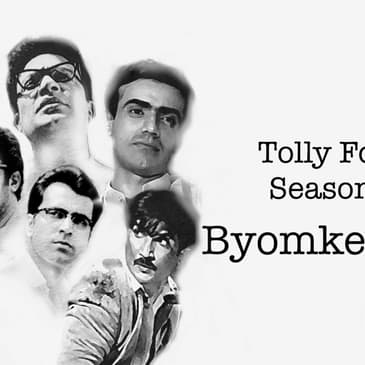
In Episode Two we discuss the Hindi adaptations of Byomkesh - mainly Dibakar Banerjee's Detective Byomkesh Bakshy! (2015) starring Sushant Singh Rajput but also the TV series starring Rajit Kapoor (1993-97). Although this movie proved controversial amongst Bengalis, it is perhaps the one adaptation that comes closest to the novels' pulp roots. Anchored by excellent performances, a vibrant score, and inspired direction, DBB is perhaps this podcast's favorite Byomkesh movie.
Subscribe to our Upodcast: Bollywood Edition feed so you don’t miss Amrita, Sujoy and Beth’s new limited Podcast series by clicking here. Follow and subscribe to Amrita's Youtube Book channel by going here!
Find us on Apple Podcasts! and Stitcher! and AudioBoom! and iHeartRadio! and Spotify! and CastBox! Follow us on Twitter! Like us on Facebook!
You can follow all of us on @AmritaIQ, Sujoy on @9e3k and @bethlovesbolly
Sujoy’s instagram which has amazing shots can be found here, we strongly recommend you follow him!
[00:00:00] Hello and welcome to TOLLY FOLLY, a limited series podcast. We are on season 2 and this is episode 2 where we will be talking about the two Hindi adaptations of Detective Byomkesh Bakshi or Satyamveshi Byomkesh Bakshi. I'm as always joined by my co-hosts Amrita and
[00:00:35] Beth. Hello. Hello. Hi Sujoy. We are talking about the only two non Bengalis playing Detective Byomkesh Bakshi on this episode. Out of what I reckon 75 Byomkesh Bakshi is out there, out of TVs and movies and theatre adaptations etc., I saw this on like an interview with Divakar
[00:00:58] Banerjee and Sushant Singh when they were promoting this movie and they were quite nervous and also excited when this movie was about to get released. So we will be talking about Divakar Banerjee and Yesh Raj Production 2015 movie called Detective Byomkesh Bakshi and
[00:01:15] later on in this episode we will be talking about the much loved 1993 show by Basu Chatterjee and starring Rajat Kapoor as Byomkesh Bakshi. So kicking off the show, we will be talking about the Sushant Singh movie. Beth, over to you for the plot synopsis.
[00:01:35] One of the things I noticed on this re-watch is just really how this is such a great example of my favorite micro genre within Indian cinema which is looking for things in Calcutta. Which this whole podcast series is really. But one of the things that's notable
[00:01:49] about this film I think is that everybody is looking for things in Calcutta and not just the detective. So often in detective stories, the detective is detecting and other people are evading and that's their primary motive and that's not true here there are a lot
[00:02:02] of people looking for a lot of things and that's one of the reasons it's complicated. Okay so first of all we have the World War II setting with ongoing Japanese attack on Calcutta. We have the Indian independence movement. We have opium smuggling with links to China
[00:02:15] and we have Ajit's missing father. Those are the four I think most major things happening in this and they kind of ebb and flow with importance. First two mainly self-explanatory except we also are going to meet a local politician named Sikdar and his nephew
[00:02:30] Sukumar who are both involved with the Indian independence movement and the nephew is breaking away from his uncle's political party and that's how we meet Satyavati because Sukumar is her brother. We have the Chinese opium smugglers which is how
[00:02:42] the film opens with that big attack in the very beginning scene where someone is blinded and then also early on of course we meet Ajit who approaches Bionkesh in the India coffee house to look for his missing father and that
[00:02:55] takes a while to get going because Bionkesh is kind of an ass and Ajit won't have it but he also really needs help finding his father and he doesn't really reveal a whole lot of information up front or at least not as much as
[00:03:08] Bionkesh would wish but the basic gist is of course that his father Bhuvan is a chemist. He's been living in a boarding house run by Dr. Guha and he has a very important pawn box. Over the course of the movie Bionkesh realizes
[00:03:22] he's wrong about several of the assumptions he's made about how these different people fit together and of course we also learn over the course of the film that at least three people maybe more aren't really who they say
[00:03:32] they are and that includes the femme fatale and one of the other boarding house residents whom I know we'll talk about later. These four threads all do weave together in the end eventually culminating with the realization that Bhuvan has created untraceable opium remnants of which are in his
[00:03:47] pawn box and that a map of spring day political events is actually a map of how the Japanese are going to attack Calcutta and by the end we find out who everyone really is and what their motives actually are.
[00:03:59] It's a very simplified version of the joy that this movie is. Yes. So Amrita, what did you think about Detective Bionkesh Vakshi? Can I just say like this is probably the best adaptation that I have ever seen
[00:04:13] and I know this is going to piss off all the Bengalis out there who are going to be like no but you know you have to watch this Bengali version you have to watch that Bengali version but honestly like this is
[00:04:23] the most cinematic adaptation and I was actually thinking about that as I was watching the Pasuchata G TV series and we'll talk about that in a little bit but there is a joy to this film like every single frame has so much going
[00:04:39] on and even the ones that aren't crowded because it gives you this really great glimpse of a grand colonial city you know which is something that we don't really think about Calcutta being anymore and I'm talking about Bengalis
[00:04:54] too you know like you talked to a few Bengalis and they love Calcutta maybe but they'll also talk about you know how it can be parochial, how it can be you know this sort of shabby dilapidated city that's sort of falling
[00:05:05] into rack and ruin but you see the vibrancy of Calcutta in this. It's not just a crowd but it's a teeming city that is bustling at the heart of an empire and I think that's what Dibakar really does like he really brings Calcutta alive as a colonial city.
[00:05:26] Yeah. Beth and I have talked about this before I think in that we don't often talk about how Calcutta must have been a really cosmopolitan city back in the day and you really get a sense of that when you're watching this film you
[00:05:41] know like the Japanese and the Chinese and the Indians and the British and you see a little bit of every single one of these people's culture and you see like everybody sort of you know sort of melded in.
[00:05:55] There's no explanations of like oh like this person is Chinese therefore they have like this certain thing going on and this is part of their culture or this person is Japanese and why do they have a temple in the middle of the
[00:06:07] city it just is you know it's a cosmopolitan colonial city and Calcutta for a great many years was like it was it was basically the premier city of the British empire which is something that a lot of people
[00:06:20] forget or don't really know and you see a lot of that in this in this film and it's a very Calcutta film but it's a very unique Calcutta film in that it shows you that. It's the most cinematic version of Bionkessha story I think it comes with
[00:06:37] what it can afford to show you know it comes with the Yasharaj production backing it so he just let it fly and like I have heard I've watched a lot of making interviews and post-production when they were doing the publicity of
[00:06:56] Bionkessha Bakshi when it's about to release and Deepakar Vananjee said this is my imagination of 1940s Calcutta what I had when I was 14 and reading through the pages of Surdendu this is what I thought you know because
[00:07:10] and like he's trying to fill in the gaps with all the production and in most of the adaptations of Bionkessha story we don't get to see the environment that these stories were set in. It's all pretty much indoors or he's traveling through trains or tangas and
[00:07:30] then he's in Haveli he's talking to Zamindars but we don't get to see the political environment that he's the story is set in. I don't think I've seen a British person in a Bionkessha story when
[00:07:43] actually the Bionkessha stories have ranged from 1930s to 1970s so it sort of chronicles that whole era and this is probably the only one. And again like I don't want to cause any offence but the Bengali versions have an inherent Bengali quality to them
[00:08:03] in that they are you know they're like these are basically pulpy novels right like if you're writing you know a detective novel that's genre fiction and it has like a pace to it and I've heard people who have
[00:08:20] read the books and they talk about like how exciting it is and how scandalous it could be and you get that idea of it but then when it's adapted to film they try to elevate it do you know what I mean like
[00:08:35] they're trying to make like cinema out of it and I'm not saying that that's a bad thing except like the Bengali version of cinema with a capital C also comes with a certain hermetic quality and a certain
[00:08:50] there's a staid feeling to a lot of the action that happens you know and I don't mean like kind of kind of like taken for granted that this is how the grammar and syntax and yeah how people are going to interact
[00:09:03] and that is completely broken because this is like a 2015 movie with with very contemporary ways of how characters interact with each other right but in a 1940s setting you know and it's very like it's very true to its pulpy roots like what you're seeing like 1940s
[00:09:21] it actually harkens more to the kind of Hollywood detective films that were coming out in the 1940s you know like the hard-boiled you know like bogot kind of movies you know like the Maltese Falcon and stuff like it has that sort of noir sort of feel to it
[00:09:39] and that energy to it where you have like all these dangerous women and you have these mysterious men and you have you know a detective at the heart of it who's sort of bumbling his way through and is probably too smart for his own good
[00:09:53] and there's an energy to it that is like so vibrant and it mirrors the energy of the of the city that they're in and it is just fabulous like I enjoy it so much I love this film
[00:10:08] you can pause at any moment in the film and just look at everything on the screen and it's so textured and it's so rich and it's so fascinating and you feel like someone thought carefully about everything that you see and not just in an overall like I want
[00:10:25] the feel of what I imagined when I was 14 in the 80s or when at whatever age he is but that and it is I'm sure it is largely imagined but it's rooted in something yeah and you see just the
[00:10:39] care in this movie is through the roof and yes it has the budget behind it to do that and probably the shooting schedule in some ways and other things like that but someone had multiple someone's had visions for this film and they made those happen
[00:10:54] and it's as a viewer it's just it's a it's a treat it's a gift it's it's so special yeah and in the making they talk about how they recreated how they made like actual live locations era appropriate by age aging buildings and bringing back old
[00:11:10] trams and washing the streets and making sure that the boardings are of products that are available in the time etc you know and like those are definitely Easter eggs as you said you pause a frame and
[00:11:24] you can point and you know everybody is on a hunt of their own and I think this movie gives the buckler and the that freedom to explore those areas that he's really nerdy about and and it it's still trying to tell a coherent story
[00:11:43] through those but it it's such a joy that all these things are married by a story that is just like amazing and of course we'll talk about the performances as well as well but coming back to debocker's direction and his technical team what stood out for you like
[00:12:00] what would be your pick beth I think it's the set design the physical items or the digital versions of physical items that are everywhere yeah i'm thinking about like ungray devi's the femme fatale's car you know that when boom cash is in that car
[00:12:17] he's going to notice something and you see what he notices but at first it could be anything because even in her car there's multiple things to choose from for what might be a clue you know and let alone like her dressing room on the
[00:12:29] movie set can we talk about that movie set for a second it's basically a throwaway moment you need to see her dressing area but you don't really need to see what she's filming and yet you do see what she's filming she has a whole separate character
[00:12:42] there's music that goes with it she's acting like that wasn't necessary but it's that's the kind of world he wanted to create where there was something to see everywhere she's this femme fatale diva show business kind of character and she's playing a devotional meet a vye
[00:12:58] kind of role in the movie completely sort of tells even like debocker in his own interviews of he says that swastika mukherjee is definitely not like how anguri devi is in this and she's just like brilliantly playing a completely
[00:13:15] detached character of like how she is in real life and i guess that underscores the fact that she's an actor right that she that anguri devi can project one face and then act in another way which becomes more important later but but it's still it's like
[00:13:30] it doesn't have to be there but it is there and it's so great yeah what about you amrita what what's really impressed you i mean the set design obviously because like the care and research with which
[00:13:42] they have done the whole movie is just like it's on screen you know like you can't like you'd have to be blind not to see it but the cinematography is fabulous my god that introduction scene for
[00:14:02] for swastika mukherjee where you know like you see him walking up to that abandoned building and it's just him and then it's just the vastness of that place and you immediately get the feeling that there's something eerie and there's something important about it
[00:14:19] but you don't know what and he's sort of gazing like you know off he's not really looking at the building he's sort of looking off the building and then you see him like walking up to that ramp and then she is filmed at the end of that ramp
[00:14:35] and then he he gets that shot you know up the ramp and then you have like all those things going on you know like it is fabulous just absolutely fabulous like i i literally had to stop the film and like gasp at it because it was just so
[00:14:52] amazing do you remember that that piku does that exact same framing yeah it's still good there but it's not as good and then there's also like how they use music all throughout this uh about this
[00:15:09] yeah just kind of triggering you how to react to it but not in a very throwaway kind of film it's very very subtle and the thing is like the music of this film is it's by sneha khanvelkar who needs to do like more work
[00:15:22] like i don't know what he doesn't get hired more but she's done like each of her albums is mean just amazing and uh she like i love the album of this film like i listened to it on rotation like i haven't stopped since
[00:15:36] the movie came out and uh there are points in the film where you just hear a couple of bars because it doesn't have like you know they don't really do the whole like filmy song
[00:15:48] sequence thing in this film but you hear a couple of bars of like these different songs and uh again like i just had to pause because they were just so perfect and i some like there's a there's a point
[00:16:04] where like you know like i had to go and like listen to like all the songs again and then come back to like watch the film because i just couldn't stop myself um it's fabulous and then the the opening
[00:16:16] shot like you know where you have the title credits and uh you're having that song about Calcutta and it is fabulous like i hadn't like first uh that is not a song that i pay a
[00:16:28] lot of attention to on the album and then i was just listening to the lyrics this time and i was just i you know like this is how good this movie is i sat through the title credits i usually always skip through the
[00:16:41] title credits unless it's something you know fantastic it's just brimming with details yeah just brimming with details like the the Janam track right when he was on the tram and the newspaper opens up and the
[00:16:53] headlines and everything oh my god so much love you know years ago when when we three talked about Talash for the Khandan podcast i was thinking that that you know um that opening song kind of came to mind yeah this one
[00:17:07] this one's even better right there are other people who do similar things like that one too kind of set the noirish mood and whatever but this one's better it's so good so much better i would like to add like the cinematography as well by
[00:17:23] what's his name Nikos Andritzakis i'm i'm hoping i have not butchered his name but uh like i try to double in photography and i know how much challenging low light photography is and because this is noir
[00:17:38] the exposure is way lower and there's lots of scenes set in those dark alleys and the dark uh restaurant china china town restaurants and the the lights are harshly you know little uh there are harsh shadows everywhere and it's amazing to look at and
[00:17:54] yeah like the aesthetics of noir in this are spot on and yeah those were my big highlights of this along with the music uh that accompanied all those scenes i would like to quickly talk about diva kars
[00:18:08] filmography uh i think beth you um you you mentioned how i think i read your review a long time ago on your website beth loves bollywood.com for those who are listening uh you said about uh how his movies are very male-centric and how even in
[00:18:27] byumkesh bakshi satyavati and anguri devi are just side plots rather than why there are there is not more of them would you like to say more yeah uh yeah i mean i was thinking about that this time through as well and
[00:18:43] i mean the women who are here are feel fully realized and all but this is again a director who doesn't seem particularly interested in interested in women characters however those four you know the three four-part director projects through
[00:19:02] netflix and all have have expanded that in a way that is that i that i find um i don't know that helps with that a little bit although i haven't seen the ghost one because i'm too scared but
[00:19:15] i do think you know there were could he have made more women characters sure um but at least he did something with the ones that he had yeah um i mean looking at his filmography love sex or dhoka Shanghai Bombay talkies
[00:19:33] which was kind of a collab again and then byumkesh bakshi i think this was his biggest last big movie and and then and then we had sandeep or pinky furar which was supposed to release this year i don't
[00:19:46] know where it is right now but uh i don't really have any hopes from that movie which is kind of sad because yeah i look forward to debakur of energy really eagerly oh yeah i mean he's my favorite working director for sure
[00:20:01] and and yet we haven't seen a good like a feature length movie in a really long time from him the reaction to this movie seems to have been a real issue and i
[00:20:10] don't i wish that that weren't true i would love to see him get to do more stuff with his yashraj money yeah i mean yashraj acquired all the hindi rights to beumkesh all the 34 stories of beumkesh for hindi yeah movie that's promising
[00:20:28] but then all the disasters that have happened since you know wouldn't it be interesting for them to approach two or three other directors and say you each get one and make their own little set but it's done really differently kind of like someone might do a season of
[00:20:44] shakespeare adaptations or something right it'd be great to do a slate of beumkesh adaptations by a whole bunch of different people and let's you know like bring in you know one thing i i'm not aware if there are any south indian adaptations of beumkesh at all
[00:20:58] even on stage or anything like let's do that that'd be interesting uh i i saw this interview with anubama chopra who brought in debakur and susan and rajit kapoor was also on that panel just before the release and towards the end of the
[00:21:16] the interview uh anubama asked what are the future plans for beumkesh are we going to see a sort of a franchise being kicked off you know kicked off from this and the the plan was where he was
[00:21:33] like debakur was just ranting but he was ambitious about it and he said that if a sequel were to happen it you know based upon the success of this movie he plans on a cameo by rajit kapoor in the
[00:21:47] sequel as a as a character and that would have been oh my god moment for me if i have to cast that you know i'm so bitter that there wasn't a sequel to this film like i was just
[00:21:59] watching it all throughout and i was like this is an amazing origins tale because we've we've seen like different versions of the origins beumkesh another version yeah and this is by far the best like it really really
[00:22:14] tells you who he is um but also like the thing that this movie does is that it it does the best job by far of explaining the roles of the supporting characters so like rajit in most other versions
[00:22:29] is just there you know like he's basically just writing about beumkesh like beumkesh is doing everything and then rajit just shows up to like say random lines and then the most of his work happens off screen where he's like
[00:22:43] writing about it but here like one of the great joys of this film is that rajit is the muscle um he like he is basically honey badger you know like he doesn't care like he'll like fight anyone
[00:23:01] and there is an ongoing joke as well that beumkesh keeps on reminding him don't get into a fight yet because rajit is so eager to you know um beat people up and also like he keeps flinching every time rajit like steps towards him
[00:23:18] which cracks me up um it's such a great little thing and especially because rajit has like glasses and he's talking about like how his father was disappointed in having him for the son
[00:23:30] and he just wants to be a writer and you would think he'd be like this nerdy sort of you know bag of dough but he's actually like fighting half like a pehelwa like doing push-ups in the
[00:23:44] in the hostel room right and he's also beating up like half of kakata's police force by himself i don't actually think that that's true that rajit doesn't do things in the other adaptations
[00:23:56] it was true in the utton one that we watched and it but it's not true in the anjan data ones right sujoy yeah yeah i mean shashrata is way too good for just being a side character you know
[00:24:07] this is kind of the thing i feel that those if they had the budget that debucker had would be getting towards a lot of what we like about this so that the idea of like inherently bangali isn't going to be
[00:24:21] what is like lively or something as we like about this one i'm not sure i agree with that but i do think budget is a question i also think like it does a really good job of introducing satyavati and
[00:24:32] like she like obviously she doesn't have like a giant role in this film but she also has like she's smart you know like she thinks on her feet and she's not afraid to use her class
[00:24:45] privilege in order to get things done for the greater good and i i don't know why she disintegrated at the end to becoming like a damsel in distress again actual damsel in distress but
[00:25:00] except she's not more in distress than boom caches yeah she doesn't get in a bed with a rock so but yeah like i i enjoy the fact like satyavati was like a person in this as well let's bring back
[00:25:17] to susanth and and bionkish and his bionkish like the vision is that this is a genesis story of bionkish pakshi which was adapted from many other bionkish stories because in this story we also have
[00:25:33] satyavati which actually happens in a later story in in sarodendu's literature but we are obviously seeing an adaptation of the very first story which is satyam reshi aware he visits the the the hostel to find out what's going up with anukul guhas lodge you know and the opium
[00:25:55] being sold and then there are murders etc but he's also married other adaptations that we come across with satyavati story and the story of her brother sukumar being a suspect and oh and there there are lots of controversies and people were not happy that you know debaker went
[00:26:20] and adapted why wasn't he really faithful to the text what would you say yeah because all the faithful adaptations are boring as hell like that's why girl stop the bong's gonna get
[00:26:37] yeah it's not like we haven't seen the other like faithful adaptations yeah you are making a two hour long movie right you can't just say like anukul guhas is the baddie and then that's it but there's
[00:26:52] got to be more to it but how what did you think about sushan as bionkish in this i thought he was fabulous i don't have any problems whatsoever with this i think if you're going to make a lively
[00:27:05] energetic film you need an energetic actor and he for sure does that you know that song picturization that's not in the film but where he's in his regular modern day stuff and he kind of has
[00:27:18] this he's in the parking garage and he gets gripped by the spirit of bonkash or whatever and he transforms in that song that song is a film in itself and you know you you see um the scene
[00:27:33] when he just kicks the the football back to the kids for example like he has opportunity to be i want to say like fully physical within the role and it's very to me it seems perfectly
[00:27:44] appropriate and he does it really well but he's also not like a kid running around crashing into things or anything it's it's all very appropriately done and he portrays the the youngness of this character the youth of this character in it yeah and that that switch between
[00:27:59] supreme confidence but also readily will admit when he's wrong and and acts to to rectify it so like when he runs off you know half-shaven into the cab to go to the police officer
[00:28:10] you know things like that i just feel that there's a youth to this he's very enthusiastic and curious about things oh yeah and he's like koon boy koon boy koon boy and he's happy about
[00:28:19] that koon has happened and then uh yeah but there's also like this is the first case of gyamkesh bakshi um and and that's what we are being told right but there's also some sort of a
[00:28:32] reputation that this guy has and that's why ajit approaches him right in the india coffee house when before even we get to see him this guy just approaches him uh ajit and says
[00:28:50] as in like if i when i see him i just want to punch his face it's actually is very clear like you know from like what leela's husband says and like what other people say that he has this
[00:29:00] reputation of being really obnoxiously smart and he's been offered the post of being a maths lecturer so obviously if you're in if you're in calcutta and like you have been offered the post of a maths
[00:29:12] lecturer i feel like you must be obnoxiously smart like that's not something that just falls in your lap but he's also like yeah like uh like beth was saying like the youthfulness of this character
[00:29:25] so upfront and central um he is like and you really see that in his scenes with um you know with swastika mukherjee like she's like he's so shy around her you know like that scene where
[00:29:39] she takes off her wrap and she is standing in her swimsuit before she leaps into the water and he he literally aborts his eyes and it is so cute and then uh you know like she's sort of
[00:29:53] teasing him uh all throughout the film you know and he literally has no idea how to deal with her um and he he is sort of like half in love with her as well because he is this older woman to us whom
[00:30:05] he's not just attracted but he also wants to save and he has all these complex feelings and Sushant is really great at portraying those things um he is cocksure and he is tactless and he is shy
[00:30:20] and he's unsure and uh he's idealistic and he you know that point where Anukul Guha figures out that he's lying to him at the very first meeting oh so good and and Sushant you know like immediately
[00:30:36] like you know says oh like he's so impressed by the fact that this man figured out like his lie within like 30 seconds yeah he's like i've got a counterpart now you know yeah you deserve to be
[00:30:48] my friend you know something like that and in a great many ways this film sort of suggests that Anukul Guha is basically uh Byomkesh's mentor and he teaches him to think in a real life way
[00:31:02] that nobody else has up to that point it takes a very classic uh you know uh protagonist versus villain dynamic and then turns it on its head and turns the villain into a mentor for the
[00:31:19] protagonist and sets him up for the rest of the series so i really really enjoyed it like i love that dynamic between the two of them and i thought Neeraj Khabi and Sushant Singh Rajput like both of
[00:31:33] them have like this amazing chemistry between the two of them you know like every single scene that they were in together i couldn't take my eyes off them yeah so good so good well let's let's
[00:31:45] talk more about Neeraj Khabi then like obviously this movie came out in 2015 we have tried to keep it as spoiler free till now but we can't discuss Neeraj Khabi without obviously going into the spoiler
[00:31:58] territory so over to you beth what did you think about Neeraj Khabi i think this is the first film i remember seeing him in and he's he's truly wonderful i was just reading this morning that
[00:32:10] apparently Amir was considered for this role and he chose doom three instead and i think we can all be glad about that i don't think that that would have worked i don't know enough about
[00:32:22] the differences between film and theater acting to really say this with confidence but i do feel he brings some sort of measured stage presence to this in a way that makes sense for like Amrit was
[00:32:35] saying like a mentor an elder sort of figure not all that much older in years but the the knowledge that this character has and how it travels out over the course of the of the film and
[00:32:46] all the different things he pretends to be and all the different ways he acts like to go from this sort of mild manner doctor trying to to save a freedom fighter with the walking steak right to
[00:32:57] being completely unhinged at the end of the film is really fantastic also what amrit i would add on her behalf i would say that nirish kabi is taller which makes a lot of sense right i think
[00:33:18] that that's what it is like as anukul guha he's walking with the stick so that he sort of slouches and everybody thinks he's kind of a vulnerable old man but when he just takes it off the the whole
[00:33:30] other persona of young one well yeah and i love the i love the um this sort of dastardliness of pretending to be a freedom fighter when you're really an opium dealer yeah that is that is the
[00:33:44] ultimate betrayal one of the things i thought about this time that i hadn't really noticed before is that the the corrupting influence comes from the east in this film so you have
[00:33:55] japanese attack and you have chinese opium and india of course is also trying to over get get rid of the british so it's like this quest for independence from several different directions and that is another really amazing part of this film because like in most things like you
[00:34:13] know we've sort of internalized the whole uh occidentalist sort of narrative of just looking towards uh europe and like thinking about like how we figure in terms with the west
[00:34:27] but in this movie we're really looking at the east and we're looking at like all the things that are happening in our neighborhood and how it affected like how we affect each other um and that was
[00:34:38] like a big thing for me and i really like the character of wilkie like the commissioner he's just dry you know like i really enjoy the things that he says um and am i remembering correctly
[00:34:56] but did we once find out that he actually learned to speak hindi really well and then he showed up and debakka was like please you need to like mess up your hindi a little bit more he is in a bunch
[00:35:08] of movies so i feel like that's quite possible yeah um but yeah like he like he does like a pretty good job like he can't hit the hard consonants uh but he does a pretty good job otherwise like he
[00:35:21] really like i think he does like a pretty good hindi accent to be honest even though like he like you know the cadence is off and he uh but like most of the characters like you know
[00:35:34] like we're talking about like calcutta chinese we're talking about chinese chinese we're talking about uh people from uh from rangoon from japan uh and we're talking about like china and japan and japan and like that rivalry like all these different things it's so complicated complicated
[00:35:53] and intricate and uh interesting and we don't see those stories told in our cinema and i wanted to see so much more and i'm so sad that we will never see it um i just want debakka to make more
[00:36:08] of these i just want him to spend the rest of his life making these impossible not to forget there is also a punjabi immigrant who is a taxi driver in calcutta right yeah but to bring back niraj kabi
[00:36:23] i would just like to mention one thing that the opening scene where we only get to hear his laughter and that sort of foreshadows in the later scene that same laughter there there what you said about
[00:36:36] stage presence there's a fine line between just you know going and hamming it up to 11 but he's like eating scenery but also he looks evil when he just there is a transformation like the camera
[00:36:48] pans around the the final uh discussion table where all the exposition is happening their final reveal and we see the we entered the scene of of byumkesh narrating the story
[00:37:02] and we see him as anukul guha but by the end of that narration he's turned into young one and he's just laughing his eyes out so good so good in hindi cinema maybe others too there's this very
[00:37:15] strong tradition of focused hamming and that's what he's doing and so when you think about like amrish puri or someone like that like it's bananas but it's very very focused in how it's done
[00:37:29] or what it's directed at or anything like that and he i feel like he can join the ranks of of hindi film villains very nicely with this film so it's it's fantastic i would also like to talk
[00:37:40] about the relationship between like anukul guha's character and swasika makoji's character because it is one of my all-time favorite cinematic relationships i think um because this and you know like in this particular version like i have spoken about this before but there's this uh this
[00:38:00] is seen in which um he lends sushan's character he lends bumkesh uh a coat of his to wear to amen i saw that yeah to anguli devi's house and uh sushan shows up and is escorted to
[00:38:16] her bathroom where she's in the bath and uh queue a lot of bumbling and awkwardness and then they sit down they you know have this conversation and then uh anguli devi has this moment where she
[00:38:30] she leans close to him spells the code yeah she leans close to him and takes like this big whiff of him and uh you think that she's flirting with him you know when you see that
[00:38:41] scene yeah and uh she's just like really close to him and then she repeats that you know in a later scene where um the sikdhar character is dying in the in the dining room table and she
[00:38:54] doesn't want to let bumkesh get to him before he dies and then again you know she um she's sort of like plastered up against bumkesh and she's again like she's not like she kisses him but she's not
[00:39:09] really focused on kissing him she's again just like smelling him and she's just try and you can see on her face that it's not the same and she steps back because
[00:39:19] bumkesh is wearing his own clothes at that point um and this time around when I was watching the film I saw the point where bumkesh in his first uh like private audience with uh with anguli devi
[00:39:36] he has stolen these letters from her purse and he's showing them to anakul guha's character and uh there's a point where they're trying to decipher as much as they can from the letters
[00:39:49] and anakul guha picks up one of the letters and sniffs it and I had never seen I had never paid attention to that before it is so perfect like immediately I was just like ooh that's what's
[00:40:04] happening um and they are like so like you know the way that they describe like she describes her relationship with him and how much she yearns for him and how she would do anything um
[00:40:20] and you see like bumkesh trying to understand that and he literally cannot like he does not have the emotional range at that time to understand what she is talking about like he just doesn't get it
[00:40:36] and maybe that's why at the beginning we see the scene of his girlfriend saying I'm marrying someone else yeah which again doesn't feel like a strictly necessary scene but he has experienced a woman who
[00:40:47] loves him being like I'm gonna marry someone else anyway and here is a woman who loves somebody who will murder for him even though he's destroyed her family and her home it's so
[00:41:01] do you think by the end Anguri Devi has sort of had a change of heart or she's like I've lost all I have nothing I I just want you to change for the sake of me otherwise you know no because
[00:41:15] like for me like when she says that to him and then you know it ends in tragedy like she literally was hoping because she's had that moment where you know she's basically enthralled to this
[00:41:28] man right like she yeah she is absolutely emotionally and psychologically dependent upon this man and she still has that hope that they can have a happy ending and then what happens you know
[00:41:45] this is what and to me like this is why she says that line to Brahm Kesh earlier while Siktaar is dying where he says that if it wasn't for you none of this would have happened um yeah and I think
[00:41:58] that is what happens to her at that ending scene uh Brahm Kesh happens to her and suddenly there's like you know like the the melody in her head has a jarring note and she's like wait what is
[00:42:12] happening here like what are we doing like where are we going like what happens next and then she reaches out for reassurance but he can't give it to her because you know like he has other
[00:42:28] ambitions that are much more um I want to say like they consume him you know the way that he consumes her his ambitions consume him so you know he can't he can't put that aside to
[00:42:44] like reassure her any more than she can put him aside to reassure Brahm Kesh and so what happens is you know there's no other way for that story to resolve itself and it's oh it's just fantastic
[00:42:57] there's also some sort of a symbolism in the way that the story ends at the point when young one or Anukul whoever you want to choose to call him we never get to know his real name but
[00:43:10] he's decided to stab his own eyes so his his his sort of perspective is very single-eyed he's cyclops by it and he is completely now driven by revenge and he needs to come back as
[00:43:24] young one rather than you know the the other perspective of the other facet of his life is gone completely um that's how I read it I don't know if that's true yeah that's that's a very smart
[00:43:36] reading I think yeah moving ahead with Ajit as we talked about the the physicalness of Ajit played by what's the artist's name Anand Tiwari I think the beauty of this is that in most of the
[00:43:56] especially in Satyanveshi as well Bjonkesh happens to Ajit but in here Ajit is the one who brings the story to him you know without Ajit nothing of this would have happened and I think
[00:44:10] that's a very smart switcheroo that Divakar has done um but also like the whole there's a lot physical comedy that Ajit brings to the show yeah um like the when they visit Watanabe's dentist
[00:44:27] whatever and he's like my friend he's got a toothache and he's like figuring out and like a second later he's like ah you know it's so good it's so good but also like this is very
[00:44:41] sweet moment where um you know Bjonkesh is high off his tits and he um he wakes up Ajit in the middle of the night and then like very sweetly like curls up in his lap and goes to sleep
[00:44:56] and I thought like that was like really sweet and um it did like a really good job of showing their friendship without making it like creepy and weird which a lot of adaptations do in my
[00:45:10] opinion and he also asked like do you think Satyavati is beautiful yeah I have thought many times on watching this that there's something about the sort of Atomkumar look that has been put onto this
[00:45:27] character and especially in that Doti Tying scene when he wants to go to the movies I thought that was so funny and there's something I don't I think it's his hair because obviously the glasses
[00:45:38] are different but there's something about the way they've styled that actor that reminds me of the more Hader Lok sort of vibe that we get in other adaptations of I mean he's a Banerjee right so he's
[00:45:50] he's a Brahmin and and so like I think at this point Amrita would shout put on your shirt you naked boy but that was actually really funny where like Satyavati shows up at the lodge and everybody's covering up they're all scrambling
[00:46:09] and all the men are just like no and unlike a lot of comedy also comes from Putiram yeah as essential to the plot as anything else and he's like the shaken mess of this whole track um let's talk a bit about Kanai played by
[00:46:32] me and but would you like to say something about him I just really like that character and I like his sort of quiet competence that like the first time I saw this I had no idea that was coming
[00:46:44] that was a nice reveal for me and I like his sort of easy breeziness about like yeah Indians can't say my name so this is what I call myself it's like that it's very I just I think that's
[00:46:53] a really nice little role and he does a good job and and also that whole bit about do you know Ching Ling that being a code it's there's so many details that you discover it with every single rewatch it's it's brilliant um
[00:47:12] like we earlier talked about the soundtrack but what what's your favorite track in this movie oh god I can't choose I have one very strong one like all of them are great but I have a very
[00:47:25] very big oh which one I think I like the Beyomkesh in love that track that because it's got that whole pop alt rock kind of thing going on but then there's the whole ala that the lady sings usri
[00:47:38] banerjee I think that's the singer that's been credited but she sings the jiao jiao say yamore or something like that and and it's really such a great fusion track and I simply love and that
[00:47:50] plays under the fight at the end right it's just so funny like when you think about the name of the song and what's happening with the contrast yeah the anguridevi like she's letting letting go of her love
[00:48:04] you know that that's that's the theme and also like Calcutta case is such a that's my favorite it is so stylish and evocative um and I wish there were a little more of it in the film but I
[00:48:15] understand why there isn't and um I just love it it's so catchy what about you on rita you haven't I think Calcutta kiss would be like just like a tiny bit of a edge honestly like it's very hard for me
[00:48:32] to choose because they're all so amazing it's an amazing album like everyone should listen to it like if you if you haven't heard it then get it today because it's absolutely fabulous
[00:48:42] it's a real argument in favor of having different composers and musicians work on a on a soundtrack because they all bring something different to it and I mean for some people maybe it's a lack of
[00:48:52] cohesion and they don't like it but I thought it worked so well to mirror the cosmopolitan nature of the city the complex nature of the story all these different characters like there's just so much happening in the film why shouldn't that be reflected in the music that
[00:49:04] they use what was your favorite scene in this in this movie um and what was your least favorite scene or what didn't work for you as much for me this time it's when boomkesh bluffs his way into
[00:49:21] siktar's house during the political rally by just pretending to be special brand and I think it's so funny his confidence is really really enduring and funny I also like a similar scene where he he barges into the to the fancy dress party with wilkie and wilkie's
[00:49:39] literally above them on the stairs and so you're reminded of the hierarchy that exists between them you can call yourself a truth seeker however much you want but you're still not the chief
[00:49:47] of police in kakada but then someone else cuts wilkie down to size by commenting on how good his costume is and he's like it's my uniform that scene always cracks me up like I so good
[00:49:59] I had completely forgotten about it no I really enjoy the way that he has his long suffering expression on his face and he's just like it's my uniform yeah this cracks me up
[00:50:12] just another day in wilkie land yeah I didn't remember the part where um boomkesh barges into wilkie's office trying to clear siktar and uh the he has this officious adal who's just like well you
[00:50:29] can't just like and he calls him babu in this like really like awful you know tone like you know it's clearly meant to be like some sort of dig um and he's like babu you can't go in there like that's
[00:50:42] the barasai's office and boomkesh is like trying to talk his way in and like he literally picks up the newspaper and says look I'm famous but it's like there's so many like tiny little scenes in this
[00:51:00] film that just uh that every time you watch you have like a different favorite um I didn't understand that part about the woman in the balcony outside this window like what is that supposed to be
[00:51:14] I don't know there might be a throw away to something I've wondered that too because that happens like three times yeah I counted I didn't see it you know paying off you know why that scene
[00:51:26] is yeah me either like I was just like I was waiting for it to like lead up to something I thought that maybe I'd miss something like my favorite I think we've already discussed one of them which is when
[00:51:37] boomkesh comes to the lodge and he gets to like a we are introduced that he's afraid of blood when he sees the yeah the student getting his um bandage done by anukul guha and be like we
[00:51:50] established the relationship straight away that anukul guha is way smart and out of his league you know and he gets to realize that and that's just brilliant and how he deduces it and it's
[00:52:00] done in such a playful way and we get to see you know shan's face light up completely and I think the second one would be the introduction of yonkesh because agit just revolves around that
[00:52:15] carrom board and we are not shown his face until yonkesh starts deducing what could it could have been the possibilities of the fate of you know boob and banerjee and it's such a really well
[00:52:29] crafted introduction it's not you know bam bam here's yonkesh bakshi entering the room but it's it's so good so good and also you don't expect him to get like decked in the face like that you
[00:52:41] know he really gets your attention it's the opposite of a hero introduction yeah yeah I think I think like debaker has also talked about you know initial drafts having a more hero walla entry where
[00:52:57] there is a murder happening and somebody's knocking on the door and cut to somebody knocking on the door the door opens and yonkesh is actually in some other location which when he's entering the lodge
[00:53:09] so that's the intro that he actually wrote in for a previous draft but he said that was just an intro it didn't move anywhere from there you know so this was a much better one which I appreciate
[00:53:21] you asked about scenes that don't work and there's a thing I've never understood and maybe you both can help me with this the Japanese character confuses me and I don't understand
[00:53:34] why we would assume he would be part of the Indian independence movement I think it might have something to do with Netaji Subhash Chandra Bose who was at that time was allied with the Japanese
[00:53:48] because like this is one year before the famine pretty much right after this film is when the famine would hit Bengal and so I think like it's a time when there's like a bunch of different things
[00:54:03] in flux in you know in politics and in society so he could be from the culture that's currently bombing Calcutta but not agree with it obviously that would be completely reasonable but I just
[00:54:16] I feel like we don't quite get enough of him to make him make sense for as much as he's actually in the film what about you Amrita is there anything that didn't work for you or why do you think that
[00:54:29] this movie didn't work at the box office I think it was a it didn't spoon feed enough for a lot of people I think there's like because there's literally so many things happening all at once
[00:54:46] it's kinetic it like it moves from one scene to another without any loss of time it yeah so much densely like Bionkesh asks uh he's opening the box you know it's just so so uh brutally cut it's it's it's a thing of beauty
[00:55:09] and also like it's um like I feel like India doesn't really do a lot of detective fiction like we do a few like mysteries here and there but they don't tend to be like
[00:55:23] detective fiction I think that's a honestly like I've only ever seen Bengalis do it as a genre thing more than like and the whole association like sort of a childhood nostalgic thing yeah comes from Bengali literature is very Bengali centric and this kind of also pissed off the
[00:55:42] Bionkesh purists as well so oh my god you know the Bionkish purists are insane like I I remember there was this entire debate online about aloo bhaja and whether it looked like aloo
[00:55:56] bhaja why did it look like why the witches yeah like what was that uh why the kiss and how like you know the bark of energy is a deadly Bengali and he's not enough of a Bengali like all that kind
[00:56:09] of stuff uh that came out in the wake of this movie it was just ridiculous I think the whole problem was the big reveal about Anuku Guha being young one and just a whole like people didn't expect so
[00:56:23] much to be thrown into the platter including like the Japanese the Japanese invasion the opium and and heroin everything into a murder mystery kind of a story they were just because we were expecting
[00:56:36] Bionkesh Bakshi of Rajat Kapoor which we will segue into in a while um that's the Bionkish that they are familiar with and then this becomes on a sort of a global story rather
[00:56:47] than just stuck to the alleys of Calcutta I suppose it's true that if you don't watch Bengali movies you haven't seen Bionkesh since that 90s tv version right yeah yeah yeah that's
[00:57:01] unfortunate so rewinding time we go back to the summer of 1993 where a tv show called Bionkesh Bakshi aired on Durudarshan national channel and it's thanks to coronavirus it also got telecasted in Durudarshan this year and lots of people apparently binge watched this on youtube and
[00:57:25] it's still very very popular and people talk about it fondly um Ritha do you want to intro this show yeah so Bionkesh Bakshi aired on Durudarshan between 1993 and 1997 there were actually two seasons and there were 34 episodes of about 40 minutes each so not not like super long and
[00:57:47] the series was directed by Basu Chatterjee who also adapted the episodes from the novels and it's basically structured like every episode was adapted from one particular novel except for like maybe I think there were like a couple of novels that were adapted as a two-part series and
[00:58:05] Chudiyakana was one of those um and it starred Rajat Kapoor as Bionkesh and K.K. Reina as Ajit and if you don't know who K.K. Reina is you should look him up and he's definitely one of those you
[00:58:16] know uh that guy characters that you'll see in Hindi film and it is generally held to be one of the best critically reviewed adaptations of Bionkesh Bakshi by Bengalis and by Hindi speakers alike
[00:58:32] it holds a very nostalgic and affectionate place in people's memories of it um and it's generally held to be part of you know the golden age of Indian TV and a lot of people even today when you
[00:58:46] ask them what's their favorite adaptation of Bionkesh they will automatically go back to this particular series. But how true is that though? Yeah like I personally didn't grow up watching it like I and I've always wondered why I didn't watch it because I love detective fiction um I
[00:59:03] I did watch a bunch of Dudaashan serials when they were coming up like you know I remember Buniya then Nukkad and uh Yeh Jo Hai Zindagi and Humlog and all these things Wagli Ki Duniya
[00:59:16] like I remember all of these so I was like why don't I remember watching Bionkesh Bakshi. The bongs wiped your memories. I watched the first episode recently and I immediately understood why I didn't watch it as a child.
[00:59:38] I wish because then at least we had like a little bit of energy to it. I'll tell you what was interesting about this series to me um I really appreciated the fact that
[00:59:49] it uh it showed the inherent nuttiness of a young amateur detective going up to the police and being like hey I'm gonna help you solve a case. And the police just gets convinced in two sentences
[01:00:09] what a wonderful world we live in. And it's a deeply insane like you know the idea of a gentleman amateur detective um it is inherently insane like if you and I walked into
[01:00:25] the police station we were like hey I am a truth seeker and I am gonna like find the truth of like whatever murder is going on. Like in the modern context you would immediately be suspect
[01:00:38] number one because uh you know most killers like to involve themselves in the police investigation um I found that out by watching criminal minds thank you very much. But you have to have a certain amount of self-confidence and delusion to be frank to basically set yourself
[01:00:59] up in that way but he also like the fact that Bionkesh doesn't describe himself as a detective and then like calls himself a truth seeker. I mean how pretentious is that? It's he's a very privileged Bhodrolok you know. Yes. Like a Dhoti wearing smart ass and
[01:01:24] he can afford that. I think like one of the things that I really enjoyed about that scene at the police station in the film is that uh when the English policeman asks him are you a detective
[01:01:37] and he starts off by saying no because you know he's a truth seeker and then he realizes it'll be completely lost on this white person and he's like yes I'm a detective and it's just an amazing
[01:01:53] little piece of like cultural clash but yeah like I I didn't really care for the tv series I'm sorry. I grew up watching it and so there's a lot of um nostalgia attached to it obviously and also
[01:02:08] the whole theme music which is done by the late Anand Shankar is stuck in my memory as one of those you know early childhood memories of you know tv show tunes you know it's kind of
[01:02:20] electronic but also not quite modern there's like Dholaks and Mridangam's playing it's it's out there and I think the beauty of Biyumkesh Bakshi why it is you know why people consider it such a favorite
[01:02:34] is because of Rajit Kapoor he's such a great actor he's a great narrator and he makes it so easy for people to consume information everything else that surrounds the show from the way it's
[01:02:48] being shot to the the bad sound editing the the camera angles the the lights everything is completely just retro in a way in a in a very bad way and it's not aged well I think that that's the problem
[01:03:04] what I have even when I see a the Chiriyakana episode the actors there's a lot of actors as we have discussed in the Chiriyakana episode and all of them are bad all the supporting actors are bad you know like barring Rajit Kapoor who is just exceptional he is
[01:03:25] Biyumkesh Bakshi for a lot of people and that's why we hold him in such high regard but the show it by itself like the Anukul Guha episode which is the first one Satyamveshi and when
[01:03:38] the reveal happens that Anukul Guha is the murderer there is a scene where Biyumkesh and Ajit catch him red-handed right and he's got a big knife trying to stab but it's not Biyumkesh's corpse
[01:03:52] and he's stuck in that frame for like a whole five seconds you know stuff like that like Biyumkesh is explaining and it's like literally a meat cleaver like it's not even like a stabbing knife
[01:04:06] yeah yeah and there's this another trope of like Biyumkesh is able to tell who's entering his flat just by hearing who is walking you know up the stairs and the sound editing is so bad
[01:04:18] that they have actually inserted sound recordings of someone walking on heels or on you know a leather boot or whatever and Biyumkesh is like yeah that sounds like Putiram is coming or whatever
[01:04:31] yeah things like that just take you out of that whole experience of being in a detective story it's very leisurely paced as well. Beth did you watch any of the episodes? I watched about 10
[01:04:42] minutes of that one and I just my relationship with Indian television is the direct opposite of my relationship with Indian cinema it just doesn't it doesn't do anything for me here and now at
[01:04:56] all. Nostalgia is a funny thing because like I remember you know when I was little because I grew up in Delhi we used to get Pakistani channels and I remember watching like we used to get
[01:05:09] Bangladeshi channels and I remember watching like Pakistani dramas and in my memory they were like super funny and like I just remember like how engaged I was in like in them and then I go back
[01:05:22] and I watch them on YouTube and I'm and it's like some of them are like literally just this literal stage place like it's not even like you know the camera doesn't move it's like literally
[01:05:34] there's a stage and like people are entering and exiting off the stage like it's insane like I'm just watching it and I'm just like but in my memory it's so different and it feels so different
[01:05:47] because you watched it at a much different point in your life and you were much more you were much more accepting of a lot of things or rather gullible yeah that too my final question to you both to wrap things about
[01:06:02] Gyankesh Bakshi on this episode is why the unibrow I have no idea why why why well when I started the tv show I instantly thought that Rajat Kapoor does not exactly have an
[01:06:16] unibrow but it's really close and to me it looked like that's what they were doing so I've heard Deepakar's explanation and it is basically to make people sort of disassociate with Sushant Singh their actor and be invested in this you know completely visually different person who is
[01:06:39] Gyankesh Bakshi on screen he's done that before with Imran Hashmi in Shanghai with his brown teeth and all that I feel like that was basically counterproductive because when I first saw this film it's quite distracting isn't it but like eventually you settle into the movie and it
[01:06:56] takes you over and you forget about it and you sort of accept it like by the end of the movie I didn't even notice it but the first I would say like 15 minutes or so of the film the first
[01:07:06] time I watched it I was just staring at his unibrow like I was just like what is that thing between his eyes like why is it there and it was very distracting so I don't I don't really buy it
[01:07:19] So final thoughts on both Gyankesh Bakshi Sushant, Deepakar of Energy whatever you want to say on this episode I want more Deepakar films that there is Bombayish and I'm very sad that we won't
[01:07:32] we probably won't get to see another Bombayish film from Deepakar because I think he just knocked it out of the park and if you haven't seen this film you absolutely absolutely must
[01:07:43] watch it because it is fabulous but I would just be happy to watch Deepakar make any film to be honest like I I just want to see more work from him. I completely agree with all of that and Amrita
[01:07:56] and I have discussed before and I'll say it again to keep manifesting it for the universe we would like a Deepakar rom-com starring Shahrukh. Yes please thank you for your attention to this matter. For me I would like to see another Bhayamkesh movie being made by Deepakar
[01:08:15] and that would be the Agni Van story because that will also tie together with Anukul Guha returning to the story because that's what is in the canon who else could play Deepakar Banerjee's Bhayamkesh Bakshi? I mean those are like pretty big shoes to fill
[01:08:32] yeah. He's very good at casting I think or whoever works with him on casting because I keep thinking back to Shanghai which is not a film I've actually revisited but I love Farukshake in that film so if you can do something like that with Farukshake I think
[01:08:47] that you can come up with somebody else to play Bhumkesh. Yeah. By that time we get such a film if we ever do it's going to be basically 10 years since this one and I think the very
[01:08:57] legitimate very real grief over Sushant will have maybe passed a bit and whatever disappointment this film seemed to give to certain people maybe those will be over and we could we could get a
[01:09:10] great new film. So that's been the episode two of Tolly Folly on Bhumkesh Bakshi. Beth where can people find you? I am on Beth Loves Bali at Twitter and as Sujoy nicely pointed out I do
[01:09:21] have a blog where I talk about Bengali detectives and others BethLovesBollywood.com. Where can people find you Amrita? You can find me on Twitter at Amrita IQ but I also have a YouTube
[01:09:32] channel in which I talk about books and sometimes about film and other things and it's called Amrita by the Book. And I'm Sujoy and I'm on Instagram and Twitter at the rate 93K. Do listen to our other podcast, Khan Daan Podcast with me, Asim and Amrita where we
[01:09:51] talk about all things Khan and all things Bollywood. Thank you for listening and we'll catch you next time.