
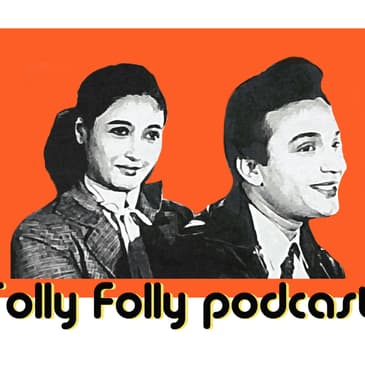

Join us as we discuss two vastly different performances that live and die on the basis of the famed Uttam-Suchitra chemistry. First up is Saptapadi (1961), a classic melodrama about individual freedom and culture clash that occupies a unique spot in Bengali film. Next is Chaowa Pawa (1959), a breezy remake of the Hollywood classic, It Happened One Night.
Subscribe to our Upodcast: Bollywood Edition feed so you don’t miss Amrita, Sujoy and Beth’s new limited Podcast series by clicking here. Follow and subscribe to Amrita's new Youtube Book channel by going here!
Find us on Apple Podcasts! and Stitcher! and AudioBoom! and iHeartRadio! and Spotify! and CastBox! Follow us on Twitter! Like us on Facebook!
You can follow all of us on @AmritaIQ, Sujoy on @9e3k and @bethlovesbolly
Sujoy’s instagram which has amazing shots can be found here, we strongly recommend you follow him!
#TollyFollyE02 - Tolly Folly - Saptapadi - Chaowa Pawa
[00:00:13] Hello and welcome to the Tolly Folly podcast, a limited series podcast where we talk about things that are a bit tolly and sometimes folly. I am Sujoy, your host for this episode and I'm joined by my friends and co-hosts. I'm Ritha and Beth. Hello and welcome.
[00:00:29] Hello Sujoy. Hello. Hello. Hello Beth. So this is episode number two and we received quite a lot of feedback for our first episode that was on Ogni Purika and Shomapti and we also talked about Choti Simulaka.
[00:00:45] If you haven't checked it out, please do on the U-Podcasting stream on all major podcasting platforms or on YouTube. You can search for Tolly Folly and on episode two we will continue with the
[00:00:57] Uttam Suttitra movie series and we have 30 movies to choose from and we will be chatting and discussing about possibly two of the most obvious choices on that list. Shaptapodi, the 1961 film directed by Ajay Kaur and Chawa Pawa made in 1959, directed by Sachin Mukherjee, Dilip Mukherjee,
[00:01:17] Tarun Majumdar aka Jatrik. So let's begin with Shaptapodi and before we start discussing the specifics about the movie, I'm Ritha over to you for the plot synopsis. Okay, so Shaptapodi is a 1961 film starring Uttam Suttitra as a young interfaith couple caught up
[00:01:40] in the social changes transforming India in the 1940s as the country moves from the days of empire to independence. At a deeper level you could say that it's about the freedom of the individual in a culture that doesn't really understand the concept against the background
[00:02:00] of a country that seeks freedom. So you know the country wants freedom but the individual like what about their freedoms? In the movie Uttam places young atheist medical student from a conservative Bengali Hindu family who falls for this Spitfire Anglo-Indian woman played by
[00:02:20] Suttitra and there are religious differences you know her dad wants him to convert to Christianity, her dad's white by the way and Uttam's dad just doesn't want this marriage because she's half white and she's Christian. So then the two of them are separated because
[00:02:43] Suttitra is really troubled by her father's demand that Uttam convert to Christianity and also his dad shows up and leans on the emotional manipulation so the two of them part ways and
[00:02:57] then years later we see Uttam who is now a priest and also a doctor and he finds Suttitra passed out drunk in a military hospital at the tail end of the war and most of the movies told in
[00:03:14] flashback as he remembers their relationship and how they met and fell in love and were separated and kind of like thinking about how they arrived at this point. So and I think the question
[00:03:31] right is when we were choosing this movie is like from the 30 movies that we have to choose from from Uttam Suttitra's long list of filmography. Shoptu with these standards stands out as one of
[00:03:44] the classics like people consider it as a classic and do you have any after having seen it in 2020 does it come across as a classic? I'll let Beth go first. Yeah a lot of what I have to say
[00:04:00] about this movie is informed by if Asim were here he would put on his monocle because I have read this really interesting very academic book on Bengali cinema called Bengali Cinema and Other Nation spelled A-N space other nation by I apologize for my pronunciation. Sharmishta Guptu that came
[00:04:23] out in 2010 and this film was discussed quite a bit in that book of course and she makes some points about how this like Amrita was saying this film in particular but they're pairing overall as
[00:04:36] its own genre or micro genre anyway really speak to the tension between traditional and modern as India becomes independent and Bengal in particular is wrangling with as we talked about a little bit
[00:04:51] last week the the sort of burden of of anglicization and what that's going to look like for them in a new in a new era and with the refugee crisis and Bengal as well which is not discussed in this
[00:05:07] movie but it's obviously a background of the time period that this is set in and of the time period that these films emerge in my understanding from this book is that these two as a romantic
[00:05:17] pair really speak to trying to have both tradition and modernity modernity being being represented primarily as romantic love and that the the two characters go through an emotional and sort of idealistic crisis in most of their films often represented medically with mental health and
[00:05:37] other medical issues and they have to make ethical decisions before they can be fully united and you know sort of represent a way forward so I think it must be a lot of those
[00:05:50] things that are really speaking to the mainstream Bengali audience in a very significant way in a way also that Hindi films don't so Bengal had a had a need for its own you know its own stories
[00:06:02] its own faces its own language its own music and all those kinds of things that people who know a lot more than I do can tell us about but that's the understanding I'm getting from
[00:06:11] my reading what do you think Amrita I understand the arguments that that was talking about from the from the film I mean from the book and I can see that in this film you know and in the films
[00:06:24] that we saw for the last episode as well that push pull against modernity that's very central to this movie as well but I honestly think the reason why this is a classic is really centered
[00:06:39] on the chemistry between Uttar Mansoor Chitra I think if you didn't have that chemistry between the two of them if you didn't have Uttar Mansoor Chitra play such idealized versions of the Bengali man and the Bengali woman even though she's playing you know an Anglo Indian in this
[00:06:57] film but she is just so beautiful and she's so sassy in this film at least you know even when she's in the second part where she's playing this sort of hopeless drunk she is just so beautiful and she's so tragic in this particularly melodramatic elegant way that I
[00:07:21] think a great deal a great number of film cultures really appreciated and I think like Bengali cinema in particular really appreciated that kind of elegant suffering and these two really pull it
[00:07:39] off like this nobody who pulls off elegant suffering better than these two you know and I say that having watched Somethra do his thing which is amazing as well but the two of them together
[00:07:54] like I've seen them in suffering in other films and they're very effective but when they're together they're just the supernova of like pleasurable pain you know and I think that's cinematic elegant pleasure it's just it just draws the audience in I think and it gets you
[00:08:17] really emotionally involved with these two and they're suffering and I think that's what people remember you know even if they don't remember what actually happened in the film because I've
[00:08:29] seen this film you know speaking I mean I'll speak for myself but I've seen this film a few times and I never remember what happened in the film because every time I go back to it I remember
[00:08:41] like certain things but like the giant bits of this film where I'm just like wait did that happen like I don't remember that happening and I say that every single time and it's not
[00:08:52] that I have a particularly bad memory it's just that you're so caught up in the emotions of this film and the flow of it that it becomes almost immaterial like what are the specifics of that suffering
[00:09:06] and I feel like that has a great deal to do with why this movie is considered a classic because it can't be the story itself because the story itself is kind of terrible
[00:09:16] I mean it kind of draws you in right I mean we don't even know the backstory yet and the opening shot is just for like when these two characters meet for the first time in the movie's
[00:09:29] chronology it's like four still shots he's holding her there's a wide shot he's got a handful of water that he's splashing on her face and it's just her wet unconscious face just those four frames just convey so much drama into the frames it's beautiful and you are
[00:09:49] absolutely drawn by their on-screen chemistry as you said the elegant suffering of Utam Shatithra that's a keyword like my theory is like other than the obvious like sparkling chemistry between these two I don't think Indian cinema has many classics in the way that the Hollywood wartime
[00:10:14] romance has like Casablanca or Dr. Jivago or Gone with the Wind and this is probably the closest that comes to fill that void and also the replayability of that song Tobek Amanoto that
[00:10:30] kind of keeps it going for generations to to rewatch it even if so in fragments that's why Shoptu Vili continues to be a classic even though as we said like the story itself isn't that really
[00:10:45] significantly entertaining or great I don't think you tend to see movies with an Anglo-Indian lead all that often especially one who's Christian right is that I feel like that's fairly unusual and so we are used to religious you know people a romantic pair comes from different
[00:11:07] religious backgrounds but this is not the pairing that we usually get so that that's kind of different and I think I assume that because it was a former capital Calcutta in particular has sort of
[00:11:18] cultural or angst around Anglo-Indians right that that maybe other parts of India have less so and in different ways obviously and also this movie has the we talked about this last week too
[00:11:33] the freedom from parents in a kind of a different way and that the the way the parents are sort of disposed of in different ways that we can talk about more and then of course you get a
[00:11:44] another convenient coincidence when we learn a little bit more about her parents with a nice midfilm a midfilm reveal oh yeah but I think that I think also another feature that we have to talk
[00:11:55] about is that is the song on the motorcycle you cannot read about 50s Bengali cinema without seeing an image of this or in the early 60s without seeing an image of this song you can
[00:12:06] even even if you don't hear this song you see a shot of them on the motorcycle which is the header image that Sujoy made for our podcast series like that alone is iconic I mean it's as iconic as
[00:12:18] it gets right absolutely absolutely I mean it's as iconic as you know Apu holding his son on his shoulders at the end of upper Sun sorry you know it's this is the this is the coupling image that
[00:12:29] you see it's the Raj Kapoor holding the Swinning Nargis of Bengali cinema arcane films logo yeah yeah definitely but how reckless was that driving shot though in the white shop and there
[00:12:43] it's like the the strunt drivers doing the the act it was so reckless I was so fearful for stuntwoman Chutitra the flashback takes us back to their days in medical college when they're studying and they are doing everything else but studying they are playing mixed doubles tennis
[00:13:03] they're playing football do not seek medical care from these people I mean it's wartime so you know yeah needs must but yeah well what are your thoughts about the the extracurricular activities that they are doing including the Othello play I love these I mean
[00:13:22] it's it establishes a youthfulness that obviously is in contrast to the older grizzled wartime bearded drunken when we first meet them so the that football match in the beginning again like when we were talking about Sajjan and I was like awesome you just haven't seen enough Bengali movies
[00:13:40] know that football is a thing in movies but her screaming on that football field is just amazing to me Clayton Clayton the way she looks is such a big deal because before we've almost always
[00:13:58] seen her with long hair in the sari and here she's wearing like a button-up shirt and a skirt and she has her hair in a ponytail and she's had a haircut for this film and she's just she's so what like
[00:14:10] vicious and vehement and again it draws you in just on that point on assim assim tweeted today that before we started talking or a time he thought it's just one person that is so on brand that ass that ass that assim and student reminded me of some filmy
[00:14:40] story about Ismail Darbar and he took his assistant to a recording studio and the t-series guy just kept talking to both of them as one person and he kept addressing one guy as Ismail
[00:14:53] the other guy's Darbar at the end of the conversation Ismail Darbar says like I am Ismail I am Darbar as well but coming back to Shota for me Amrita were you impressed by Utham Kumar's Othello
[00:15:18] so I can't discuss the Othello thing without discussing the race aspect of this film like not to harsh everybody's mellow but like it is it's so odd you know watching the tone of the racial politics in this film I mean there is no subtlety in this
[00:15:40] upfront calls him blackie like she's like blackie blackie blackie and then like I saw this movie without subs and my Bengali is sort of like so so but I think like he quips back to her like
[00:15:57] don't call me blackie there's only one blackie for us Bengalis and that's Kalima and I started laughing because I was like what what the heck kind of retort is that it's very inappropriate
[00:16:12] I like sitting here in like 2020 and like listening to that entire exchange I'm just like what is happening like who like what but also like pretty much my reaction to the entire movie to be honest
[00:16:34] but like there's just so many different things like I have all these notes where I'm just like cataloging all her insults to him where she's like you goon da you brute God will punish you
[00:16:49] and he's just like well God can't punish me because I'm an atheist ha ha ha and I'm just like I don't understand anything in this movie um there's a staging of Othello in the middle of this
[00:17:02] movie that just comes very abruptly for no good reason and apparently they're staging it without ever having practiced it like they've literally never gone to practice for it but they're just like hey impromptu Othello no no no so they have been rehearsing but Clayton chickens out because he
[00:17:19] can't remember the lines and then the the the director of the play he's been searching for a replacement on the day of the staging and he's like Krishnandu you are the guy yeah and you put some the black maker
[00:17:35] makes no sense but like by the way Utam Kumar is a Bengali um and I'm not saying that he is particularly dark skin but he could have played this role without blacking up his face
[00:17:48] like you know it was perfectly fine for him to do this role without black face but it's probably perfectly fine for anyone to do this role without black face pretty much but I'm just saying you know Othello was a more and like Indians and more is like
[00:18:06] we are fine like we don't need to like put on black face to play boards and Ajay they've been did it without anything you know but um and this is by the way not the first time or I mean or maybe not the last
[00:18:21] time that Utam Kumar would do like black face because he also does like yellow face later on and Chiria Khanna for Satyajit Ray but uh that's a whole other conversation but this state particular
[00:18:32] staging of Othello that's where he and Adrina fall in love during this particular uh staging and apparently like all the girl wanted was a little bit of you know light strangling and that
[00:18:43] was it like she is totally in love with him so this particular part of the film was apparently directed by Utpal Dutt yeah and he dubs for Utam Kumar as well which I understand why because
[00:18:59] Utam Kumar like I've said before you know he invented Mumblecore and he just can't help but like Mumble um which is by the way like that's not meant to be like uh it's not a slam like I actually
[00:19:11] do appreciate the way he mumbles his Bengali because it sounds very conversational it sounds very lived in it sounds very authentic but you don't want to mumble your way through Shakespeare
[00:19:21] like that's not that's not a thing you have to project right yeah she is voiced by Jennifer Kendall Kapoor right oh wow really yes yes so that is someone who grew up in India doing Shakespeare and this is what she came out with yep
[00:19:42] then heaven have mercy on me that's what she says oh my god um yeah it's a very weird scene and I don't really know why they had the scene in the first
[00:20:01] place like yeah I keep trying to understand why like in context like what is the purpose of that scene is it that he just gets his hands on her for the first time and like that's the first
[00:20:12] point that's his way in but why oh hello why that scene like why not Romeo and Juliet why not why not Romeo Juliet like Karanjawa you know just to keep things contemporary I yeah I don't understand yeah I don't understand why they had
[00:20:33] that scene or why people really love it or like it's it's clearly something that and that has a great deal of cultural significance it's just that nobody's ever been able to explain it
[00:20:45] adequately to me um I keep hearing about it and I'm just like okay and and I just don't have the answer so if there's anybody out there who knows why this was like such a why this has like such a
[00:20:58] sacred place in Bengali pop culture history then I would love to hear from you now I think it's quite redundant also in the narrative because they have the mixed doubles tennis competition after that when he lets her win and she is like she finds out and she's angry
[00:21:15] about it how can he like let me win and then she goes to confront him and then he is aware she gets a letter that his mom passes away so that's those two moments let them bond even further and then
[00:21:31] couple of months later he gets the medical certificate and everything and they do the song and they're finally together you know so it's kind of I don't know why the old fellow scene was required
[00:21:41] other than let's do Shakespeare in the park you know my my guess pure gas please don't think that I know this is that perhaps either watching and or even performing Shakespeare at least readings
[00:21:56] in a classroom setting are some kind of part of Badr-Loch education so that people in the audience for this film initially would have related to maybe even particularly that play for some reason
[00:22:12] like that they have performed it themselves in some way or other or been part of an audience for it or and and or that it is a marker of a certain kind of education a certain kind of
[00:22:24] what of social class of intellectual class and stuff like that so I can see why Shakespeare but that still doesn't answer the question of why a fellow and why that scene from a fellow in
[00:22:33] particular and that's another thing you know the fact that she's an Anglo-Indian and she's a Christian and the movie doesn't do to her what a lot of like for example Hindi movies do to their Christian or
[00:22:51] Anglo-Indian characters which is just turn them into like caricatures but it does do things with her that I feel like are related to the fact that she is an Anglo-Indian and she is a Christian
[00:23:03] you know the decision to turn her into an alcoholic and the fact that you know their first the first time that she shows up at his door wearing a saree and she's very clear that she's wearing it for him
[00:23:16] and then when his dad comes to lean on her he she surprises him by being able to understand Bengali like I feel like these are all like tiny and the fact that she was first dating
[00:23:29] this white guy called Clayton and she's clearly like more at home with white people than she is with Bengalis and she keeps calling him like all these racial slurs when they first meet
[00:23:45] so there's like all this stuff going on but I there's a sense of like incompleteness like I don't the movie has all these things that are dispersed through it but it never quite brings them together
[00:24:00] to make a statement about something or even to inform anything about these characters I feel in a very real way so it's just sort of left there for you to react to it and maybe that's sort of
[00:24:12] cultural coding and if you were a 1950s 1960s Bengali person watching this movie you would understand the context in a way that three of us don't and don't need that stuff to be
[00:24:28] brought together in an additive sense but to me like it's just it just seems like wasted material do you not think it has to do it underscores the sacrifices that are being made to me that's
[00:24:41] what it's about that he he's willing to renounce his um what sort of his he calls himself an APS his father is super Hindu so like the the faith that he was what raised in or affiliated with or
[00:24:58] whatever he's willing to sacrifice that she's willing to run away from her her own family eventually so I think those things are coding just how much how many choices these people have to make
[00:25:12] in a way that supports their romantic union the elegant suffering as we call it again yeah I feel like the suffering is actually kicked off by her rather than him because he makes it very clear that it doesn't really matter to him whether he changes his religion
[00:25:32] or not because he's just like yeah like I'm a Hindu and I'm an atheist then I'll be a Christian and it may be us like it doesn't make any difference to me um and she's the one with principles and she's
[00:25:43] the one who's like no like we can't we can't do that to you and I think like conversion is again like a topic that um I mean it's a pretty big topic in India right now for the Hindu right wing
[00:25:57] and I think it must have been like just as big of a deal in Bengal at the time because Bengal saw all these reform movements and they had um the missionaries as well and they had a lot of these
[00:26:10] reform movements that were actually in um in reaction to Christianity and their uh their contact with Christianity so you know there are there are um there are culture who have spent quite a lot of time talking about like religion and religious reform and conversion
[00:26:28] and stuff like that so the idea that her father would want him to convert to Christianity and the fact that he's an atheist those are definitely cultural coded uh scenes but uh sitting here in
[00:26:42] 2020 I'm not exactly sure what those cultural codes are is what I'm saying what I don't understand is the the sequence of events in the in that did he convert to Christianity just despite his own father
[00:26:58] or doesn't it that her father I mean her father has said you can marry my daughter if you convert and she doesn't want him to give she doesn't want him to make that sacrifice but he's like
[00:27:09] like I meant to say I'll be I'll be a Christian atheist instead and he he clearly it takes root because when we meet him in the beginning he's wearing a clerical collar he is a
[00:27:21] faith professional of some kind he's like an Anglican priest or something oh yeah yeah yeah so the nurse in the end who's a nun she refers to him as Reverend Mukherjee yeah so I mean what I
[00:27:32] don't understand is I guess what made him convert then because he was clearly not getting married to um uh to be so I thought that he had already converted when she told him that she wasn't married
[00:27:49] he was late yeah I feel like or too early when is that scene of him sitting outside on the grass outside that huge church in Calcutta when does that happen because that to me is one of the
[00:28:02] images I hold in my head of that film I think just because it's aesthetically pleasing to me um but when does that happen because it's got that towering background um uh so he is like quite
[00:28:15] quite depressed about things so that's when uh the the father the christian and this father and arena have met and she's and when he goes to meet her she gaslights him basically like how can you
[00:28:30] convert a religion for a woman and yeah that's that pretty much ends their relationship in the college times and then they go their separate ways and she becomes uh this alcoholic but yet
[00:28:46] she's a medical professional as well um and then he becomes a reverend and then they their paths converge uh sometime in the future and they sometime in the wow I don't know 1940s and then
[00:29:04] what happens after that so they start talking to each other about their past the the ways that they have led their lives in the past and he tries to sort of make her understand that religion is
[00:29:17] integral to a person's identity and she says she has no religion and she has had no religion or identity when she was born because she uh she then has the reveal of the story of her mother
[00:29:31] which is one like this is the point where I go this is movies banana pants you know like what was the point of that that story like uh that particular subplot we're gonna talk about
[00:29:45] it you should tell the you should tell the audience okay so this the the reveal is basically that she gets to realize uh uh she after denouncing Krishna Hindu as her husband she says that I'm going
[00:29:58] to become a nun and I'm going to pursue religion and her father says like how can you be a nun when you were born without any religion and she's like I'm so shocked what are you talking about dad
[00:30:11] he's like the the maid that has been taking care of you for so long she is your mother and she's totally outraged and you know she's like you gotta marry my mom today and announce to the world
[00:30:24] that you know what her real identity is and then he shoots her then he shoots her her being the mother not not the teacher I mean she he was trying to shoot the the daughter
[00:30:39] and the mother comes in the way in the most melodramatic way dodging I mean the bullet for her and taking the bullet for her um yeah that that's when I went to Nana pants
[00:30:51] so what was the whole point about this subplot my thought is that again this is setting up um well obviously it's setting up things for them to overcome in their own thought processes
[00:31:04] in their own conception of self and I guess the film is saying that in the end you can be anyone it doesn't matter and what matters are the choices that you make as you go forward and I think
[00:31:18] the at least in the version of the upload I was able to get to play by the way there's no good upload of this film anywhere especially not with subtitles there used to be a good subtitled one
[00:31:30] on the angel digital channel it is no more so good luck trying to watch this movie when the film closes they are walking into the background of the film right there they're walking
[00:31:45] with their backs to us ahead yeah and maybe those are the seven steps right that they are that they are moving forward and that that is what matters not any sense of the identity that
[00:31:56] you may or may not have been born with what matters is the choices that you make which is a lovely idea if that's what they're after I like that yeah um I have a question about the ending
[00:32:08] I know that we briefly touched upon this in our private correspondence but what happens at the end and is it a happy ending or is it not because I could swear like when I first saw this movie I
[00:32:20] I was completely certain that the two of them get together at the end somehow and then you guys started talking and I was like wait is that not what happens like my theory is like there's
[00:32:32] he convinces her to convert into a nun and they're walking towards the church like I don't even know at this point that would be the worst I so if he's an Anglican wicker then he or an Anglican priest he's allowed to marry correct yeah I don't know correct
[00:32:53] she's too alcoholic for him so maybe not I honestly think the church is there in the background of the of the very final frames unlike the church in the scene I was mentioning before
[00:33:06] I think that one is sort of just visually pleasant and to mark sort of an uh some sort of point on that path that they appear to be going on I mean it's too bad it's not a hospital because that's where they need to go but
[00:33:22] seven seven steps to the hospital seven steps to 12 steps my friend what do we think about her alcoholism I I think that's really interesting again I feel like we
[00:33:35] don't see many heroines who hit the bottle so hard yeah I mean she's she's very she's got sort of a dev das wallowing sort of deal but wallowing in while also serving people which of course dev
[00:33:48] das would never do they still let her be you know quote unquote worthy of this idealistic romantic partner even though she's an alcoholic that's amazing I think the she couldn't take the mom's death like other than christian endu denouncing christian endu's love in her life and then the
[00:34:07] mother realizing who her mother is and the mother dying she just couldn't take it like fuck this I'm gonna drink that's a lot to do with yeah I will say that su chitra sends a portrayal
[00:34:20] of a drunk person is miles better than what most of her male contemporaries were doing at the time but I also think like her the choice to show her as an alcoholic has to do with the fact
[00:34:36] that she's christian and yes anglo-indian yes yeah um so any other standout moments that you would like to discuss from shop the body can we talk about the the merry go round song and then the
[00:34:48] sort of song battle joy tara joy kali when I first watched this film and she is supposed to be in some kind of either sophisticated or hip or both party where people are singing with a merry go
[00:35:05] round as the as the metaphor and they're they're medical students I think I actually paused it and was like wait what and I have a theory that whenever you say the words rock and roll in a song it indicates
[00:35:19] that you are not at all rock and roll which is also what's happening here and then so that alone is really blew my mind I still don't understand what we're supposed to comprehend about her
[00:35:32] because of that song or why that song was I assume it was written for this film I don't actually know but like I don't understand what's going on there and then this amazing song battle
[00:35:41] where he is studying nearby to where this party is and he comes out it's a devotional song right yeah praising kalima so they're like it's shout singing at each other it's a really interesting
[00:35:54] you know again traditional versus modern blah blah blah kind of thing but it it clearly is this emotional climax and I think it's a stand-in for you know what but it's it's pretty amazing I've never
[00:36:07] seen a sequence like that in any other Indian film I want to just mention since with this is an episode that's all about the uttamsu chathara chemistry I just want to mention the way the two of them
[00:36:19] stare at each other so many times but also like I don't think there's a single Indian like in any of the languages that I have seen and I've seen like old movies I've seen new movies I've seen
[00:36:35] 80s movies and I don't think I've ever seen two people stare at each other the way uttamsu chathara stare at each other I mean you get this feeling that they could just stare at each other for hours
[00:36:48] and it would be it almost looks too personal for you to be looking at which is I think the point you know like they're just so they're so intensely into each other and they're so involved
[00:37:04] with each other that you feel like you're you're intruding on a private moment and it's incandescent like it is just amazing to watch the two of them together the one standout moment is for me in
[00:37:18] this movie is uttankumar moment where well um sujithrasen is also in that moment as well it's when he's trying to uh convince her uh about the that religion does not matter to him and he pretty much says like forget religion forget my father's demands forget all of those
[00:37:39] keep them on the side but can you deny that you're not my woman and she's shy is away that was so cute that was so cute uh reverend mukherjee knows the ways
[00:37:52] when she's packing packing his suitcase when he has to go home there are some yes tiny little moments in this film of kind of that kind of everyday comfortableness that are so magical and to bring
[00:38:05] everyone back to earth I just want to shout out to the many times that we see uttankumar in the in the corridors of his college where he's trying to get from like place a to place b and there's all
[00:38:19] these people who are walking in a straight line and refuse to move out of the way so he's just like bumping into them and that is just a peak Indian culture and I'm happy to note that 70 years on
[00:38:31] nothing has changed people still be able to be exact the same way uh kewing is not our forte baju hurt so that's pretty much what we thought about shoptapati I guess we can move on to the next
[00:38:52] movie it's called chawa power a 1959 film uh directed by the director trio called jatrik Beth do you want to go for the snapsys so this is a remake of it happened one night it is
[00:39:06] changed somewhat and we'll get into that um and this is a trivia note this is one of at least eight Indian remakes if it happened one night which I think is fascinating and I know Armitah
[00:39:17] has things to say about that so chitra san is the daughter of a newspaper publisher played by how do you say his name chabi vicious who plays uttams father in the film we just discussed
[00:39:28] and I think we should talk about him because he is a towering presence as a character actor in a lot of these films he's magnificent oh yeah but so he plays her father in this film
[00:39:36] he's a newspaper editor uttam works for him um unsuccessfully so he basically fires at him at the beginning of the film he is trying to marry her off to some you know son of a friend of his
[00:39:49] out in the boonies somewhere he takes her on the train because they're going to go visit this friend and like see the plot of land that the dad has bought the the intended groom
[00:39:59] shows up as a surprise she's not having it so she jumps out of the first class compartment she's in and goes to the you know the back of the train and that's where uttam is and they meet cute
[00:40:10] and they go through the various modes of transport going across the countryside as as you see and it happened one night there is no hitchhiking leg scene just so you know they did not try to
[00:40:22] set that into the 1950s Bengali context unfortunately I don't think such a trip would have agreed to that no I'm sure not a ponytail is one thing but uh leg is too far and meanwhile her
[00:40:36] father has posted a reward in the newspaper for 10 000 rupees and so uttam is trying to get to decide what to do about that while also protecting them from other people trying
[00:40:45] to find out who she is and get that money they they first stay in a small sort of rundown hotel the hotelier there is played by a man whose name I forget but he is in um boros pothor by re and he's
[00:40:59] also a delightful character actor they keep calling him a chokotty yes yes of course this whole time they're pretending they're married um they go to one of uttam's friend's house where
[00:41:09] they start to realize some feels and then uh so titra writes to a friend and says she's going to go stay with her friend um and eventually um her father reappears and things happen yeah pretty much so question one uh how much is 10 000 rupees in 1959 convert to 2020 money
[00:41:36] does anybody have an idea yes that's a good question about inflation and everything no I will look it up while you talk so question for Amrita to start with how do you compare the two sujitras or the reena reena brown from shoptavadi versus manju chotri from chawa power
[00:42:00] so they're actually both very sassy right they're both like little spitfires and they're just both you know troublemakers and they're both strong willed and they won't take shit from anybody but um
[00:42:14] I feel like saptapadi like it really ends up punishing reena for her agency but in this one you know there's all these scenes where uttam is oh my god okay first of all I just have to
[00:42:31] mention that uttam in this film is delicious like second bet sent me a text where she was just like uttam in this movie and then hot eyes hot eyes hot eyes that is so right um he is he's just beautiful
[00:42:51] in this movie like young uttam kumar okay do I do I let you we have a moment wait wait it gets much worse um there's like all these points where he's smoking in the film and I
[00:43:10] literally have it in my notes but I'm just like hot that sexy energy like he just really does it for me in this film what is life what is what is faith so there's like points in this film where
[00:43:31] sutra not being a dummy you know like looks at all this gorgeousness and she's just like and he's like wait you know that this is all play acting right like we're not actually
[00:43:45] we're not actually married and that's another thing by the way like uttam does the fake marriage trope really well and I really enjoy watching that in movies and I don't think anybody does it
[00:43:56] better than uh uttam to be honest because he's like in ektirat and nai ka sangbhad I'm butchering the pronunciation of all these movies I'm sorry but they're like delightful and um like uttam has to
[00:44:13] keep reminding her that this is play acting and they're not actually married and she's like yeah but I really like this play acting and she's she knows what she wants and she's like really into it
[00:44:25] and she's really into him and she doesn't make a secret out of it like she's not coy about it she's very vocal about the fact that she finds him attractive I love that don't you yeah I do it's so much
[00:44:39] it's so refreshing and it's something that I don't really find in movies even today and from like 1959 that's just revolutionary and um I really like that for her as a character you know and
[00:44:54] I think the movie gives her like a happy ending at the end of it and not an ambiguous one as we find in sapthapadi which is like you will be a nun and we'll like look at each other
[00:45:09] I mean she gets her agency like uh what you're gonna do I'm gonna hug you and you can't leave you know but I really enjoy suchitra sense character in this movie like she's just so light and airy
[00:45:29] and fun and strong willed and like there's a tendency for this character to be shrill and annoying in some of the um other adaptations and suchitra is neither like she's she's fun
[00:45:43] and she's feisty and um I really enjoy her she's also violent oh yeah but but her violence is limited to like the cups and saucers you know I haven't seen it happen one night and I don't know like seven
[00:45:59] or eight years I don't remember if that's in the in the original but the the throwing things is a really interesting touch because I feel like it makes her we were talking last time about
[00:46:09] one of her characters seeming like not unstable but unpredictable and that's really ramped up in this one like she she does almost hit people in the face with her servants are clearly terrified
[00:46:20] of her too they're all just like oh no oh yes but I think that that whole arc is also beautiful of how her transformation takes place like before it comes to her as second nature that if she's
[00:46:36] angry she will throw the nearest thing that's next to her and then by the end she's almost like you know in this play of being a couple she's like wearing the goongat and everything and she's
[00:46:49] thinking twice before throwing but she still has like uh agency over her like I'm feeling like it could come off as a taming of the shrew sort of thing but that is not how it felt to me
[00:47:01] while I was watching it it felt like maturity yeah she's always supposed to be like the spoiled princess like that's the um that you get just before when when she goes to jahanabad to meet mitha right she
[00:47:16] thinks that she's going to meet mitha and by this time this is probably the final scene the the setting for the final scene and you would think that she must have been tamed by now but
[00:47:27] no she's like where are the servants to take my luggage and she throws it around where's everybody where am I going to keep my luggage but also you know like there's like so many tiny details that
[00:47:39] su chitra brings to this role like um but you were saying about like her putting on the goongat I giggled so hard like every time she did that because she has this look on her face where
[00:47:51] she's just like a little girl just playing dress up where she's like oh I'm now going to be a married woman and when she puts the pallu over her head and it's such a mockery of the entire thing like it
[00:48:06] just cracks me up it's just funny utam is trying to plot this right and for when he is like oh the second or third time he's like goongat goongat do it again and she was like no never I will never
[00:48:19] do it and I was also like this time around when I was watching um when I was watching the train scene where she's like running away from her uh intended I actually wrote in my notes you know
[00:48:32] like that guy doesn't know how lucky he is to have that escape because she and he took his ring yeah he seems overwhelmed by her even in the train car right he's like there's a moment where his eyes get kind of big like oh
[00:48:55] her father says right why did you throw away the newspaper and he she says I wanted to scream but couldn't throw away the newspaper instead that resonates I know she's rich but she's still a woman
[00:49:08] in the 1950s I think the other point that I wanted to make is that the the the foley part of our tolly foley comes from the sound of money coins when raja treats the habit
[00:49:23] yes like what is that do we need a cube that he's he's like seeing dollar signs and it goes on for a while too it's not like you know he has a little few tinkling coins it's like no no no
[00:49:40] for the next two minutes we just really hear a coin sprinkling and that happens like three times across the movie I mean it's showing his ongoing moral tension over what he should be doing because it's
[00:49:57] been established that he is jobless and broke and she doesn't you know she doesn't even think about his ability to pay for everything that they're doing because she of course has no money with her
[00:50:08] I think it's sort of weaving in and out really well over you know her expectations because she doesn't even stop to think about it and and I think people could probably make
[00:50:20] different arguments about when it is in the film that he decides he's not in it he's not gonna take the money yeah I think it's like literally in the climax where you know she because when
[00:50:35] Suchitra Sen is disappointed in you as a human being you are disappointed in yourself as a diso- as a human being because that is just some serious contempt but you kind of see him
[00:50:51] fight himself you know like his better nature fight his base of nature and also like he's not he's not a bad person like the fact that he's taking her like he's taking her home like
[00:51:03] that's all he's doing and he can clearly see that she's not equipped for a world outside like she's she's sassy and I like her but she's a bit of an idiot and she doesn't know anything about anything
[00:51:14] you know she doesn't know how anything works she just ran away without money she's papa's yeah basically um and he can he can see that you know she's basically lost in the world if
[00:51:28] she doesn't go back home or she doesn't have somebody to support her and like help her so he's not doing anything intrinsically bad the only thing is that it becomes a bit more gray because she falls
[00:51:40] in love with him and he falls in love with her as well because who wouldn't fall in love with Suchitra in this movie because she's just she's just amazingly fun and just beautiful so let's talk about it happens one night in in the context of chara power
[00:51:59] chara power like what what makes it happens one night so repeatedly translated into indian cinema okay so my theory is that it plays really well to certain established tropes in like character tropes um in the indian imagination which is you have this
[00:52:23] boorish hero who's like uh like very manly and like very um you know will stand up to a woman and like be a bit of a flirt and a bit of a smooth chocker and like that kind
[00:52:38] of stuff and then it also has a female heroine who is very unlike the usual Madonna types that we see um as heroines in indian films so she's actually like a fun character she has personality
[00:52:55] she has opinions she has agency and it allows for an interesting dynamic to develop where the audience can see these two banter and bicker and it's fun but at the end of it you know she
[00:53:09] transforms into you know in most adaptations she transforms into like a good wife basically yeah she's not too out there it's not like they're running away to live in sin or anything but uh
[00:53:23] and he's a good person so you know like the two of them are fine yeah intrinsically yes um so it just allows the so it's not like that foreign an idea and also like and this is my bias talking 100
[00:53:38] percent but the fake marriage trope is fun like it just allows so many different situations to develop that are fraught with sexual tension but also you know because we've established that the hero
[00:53:52] however much of a smarter like he might be is also a good person you know like she's not at risk so it just allows you to enjoy those situations rather than be afraid for her i think i really
[00:54:04] enjoy the fact that you know when uh uh rajat calls uh manju as jhorna and she really likes it you know she likes that identity of being married as jhorna to this rajat guy um and yeah i i totally get it
[00:54:21] like why she is so much uh you know besotted in love by this guy um what do you think beth i'm sure at some point some of these remakes are remakes of the the first indian iterations not of
[00:54:37] right it happened one night so someone's remaking chorey chorey they're not remaking it happened one night and you'd have to watch all of them to really find those threads i think um what's
[00:54:47] interesting to me is that it's over 20 years before the first of these appears as far as i could discover from wikipedia and imdb um which is so that you know it happened one night was this huge
[00:55:00] smash in in the mid 30s and it's not until the the 50s that chorey chorey comes out so i'm wondering if it is so resonant there's there's clearly something different happening in time that's
[00:55:12] not a judgment like history is different in different places it finds a footing at a certain point and then is established and some at least one of these is made since 2000 so it's not
[00:55:22] like it's gone away completely and to do it now obviously cell phones and stuff make make some of the twists of this plot a lot harder to do as i'm talking about this i'm feeling a little bit like
[00:55:33] harry mutts sigel has a little bit of this element to it and you know there's serious sort of road road trippy movies that have elements of this to it and i don't want to besmirch it happened
[00:55:44] one night or any of its good remakes with when harry met sigel but i think we can see echoes of it in other places too still and that's probably true of american films too right i'm not saying
[00:55:54] it's unique tindia what bothers me though that it happened one night is like it was released when 1934 and in 2013 it went through the digital restoration we have a criterion collection blu-ray release it was scanned from 4k it's been restored and everything and we don't have any
[00:56:17] such things for any of the remakes you know we have all we have is like shemaru release of chori chori which is terrible and then like nothing of the bengali movies it's probably because that
[00:56:29] film stock doesn't exist right they don't have the material to work with yeah yeah to make it it's not that nobody wants to make it that they don't have the the raw material to do sometimes
[00:56:40] i'm sure that's not true all the time but that's a real problem i'm just begging any bengalis who are like listening to this podcast to just do something you know like i don't like it's just so
[00:56:53] unfathomable to me when i watch these movies because they're so they're so amazing and clearly like the love of them hasn't disappeared because if you go to youtube and you see the scenes that
[00:57:05] are posted or the songs and the comments under it yeah and it's like people from bangladesh and from bangal who like still really connect to these stories and to these films and to the people who
[00:57:19] played these characters and so the love of the fans has never ended and there's like new generations coming up who discover these movies and fall in love with them for the love of god like clean
[00:57:31] it up a little bit put in some subtitles like it's not that difficult i mean we used to know people like beth and i knew people who used to do it for a hobby you know um and like just put in
[00:57:45] like a tiny bit of cash and like clean up the print so that people can watch it like we're not asking for like too much it's just a little bit of effort so here's the fact the it happened one night
[00:58:02] print was cleaned and digitally treated at prasad studios in hyderabad you believe it wow so and and the legal copy the digital streamable copy of shabtapudi that i watched was on bone flicks which is terrible it has a giant thumbnail of data bazaar dot media
[00:58:26] whatever on the right hand side there are no subtitles and you know what if i want to resume the movie from where i left it doesn't allow me to do so so i have to remember
[00:58:41] yeah so these are the the the obstacles that we have to go through the elegant suffering that we have to go through towards these movies i just want to echo what amrita said which is these movies are lovely they are fascinating they have beautiful music they have wonderful
[00:58:59] performances they have humor that translates well i think like because i find them funny and i clearly don't know bangali i'm not saying this is anyone's fault but it is a loss to us all who
[00:59:10] like indian cinema that these films are not more available and i really wish they were because i think people who haven't seen them already would really like them and if any of you want recommendations
[00:59:21] please tweet at me i'm very happy to share what i've seen and point to where i think you can find it the angel digital youtube channel is a treasure trove although it oddly does not have
[00:59:33] shabtapudi on it at all let alone with subtitles so it is a challenge but you can you can find things and they are really really wonderful and if you're just interested in some of the
[00:59:44] hindi films of the same decade you've got a lot of people who are going back and forth between the two industries you've got a lot of bangali stories that are being adapted into hindi you've got a lot
[00:59:53] of technicians who are bangali going and working in bambé so there there are connections to the thing you already know and love that are really interesting um so like i'm i'm sure that it's fair that you know race movies are picked up by criterion collection and they're remastered
[01:00:09] but we are definitely missing out if we if there is no remastering of these old works that are from the not so art cinema quote unquote um section of bangali cinema in the 1950s and the 60s
[01:00:25] we are missing out on the commercial side of uttan kumar what he what he did with all his brilliant timing and brooding as amrita said um speaking of which which do you prefer between
[01:00:38] the two the uttamsa chitra of shabtakodi versus uttamsa chitra in chawa pava oh this one 100% i'm sorry what yeah this is my favorite of their pairings that i have seen i i feel like the sort
[01:00:54] of iterations of their chemistry that you get in this film for me are just the most pleasurable the most fun the most yeah they're they're super entertaining they really play that their strengths
[01:01:06] as comedians amrita said that uttam kumar and you said itself in the newsroom seem delicious as you said and and and as such a tross and is just firecracker in this in this movie she's brilliant
[01:01:22] i absolutely i really enjoy the fact that in this movie you know like he's playing like this guy who's like oh yeah like i'm a man of the world i know what's up like you just stick with me kid but
[01:01:33] like the moment that alone together she is absolutely sexually dominant like she's just bringing all this sexual tension and he does not know what to do with it and i mean the character
[01:01:47] you know like he's just like wait like that's not what's happening here and she's like i love you you i want you i totally sex you up you gotta tell me by this evening or no never never gonna happen
[01:02:06] really funny to me because like you know she's um she's making all these overtures to him and he's just like sort of mincing away and he's just like nope nope nope that's not what we're about remember
[01:02:18] i'm just taking your places we're not a thing and she's like yes we are look and it's really funny because that and then the end of the film she's correct yes yeah what i also love is the banter between them like in the beginning when when they
[01:02:44] rent the first sort of in from chakroti and she's like i've explained you're you my situation very well i hope you don't take i hope you won't try to take advantage of it and he says that means
[01:03:00] you'll take all the advantages and if you're required you will need to behave with me as well i also feel like the suffering that you see in this film like you know like and it's just a tiny
[01:03:14] bit where they're suffering you know like when um uh they have their little fights in the middle where you know she's like why don't you love me and he's like i don't know how to tell you that
[01:03:24] but i just want the money and but he also wants her so they're like all conflicted and then at the end you know no no he also says like i am a panhoti like i have been born with very bad stars
[01:03:39] when i go to the train station the train leaves five minutes early that's an actual line in the but also like at the end you know where she's disappointed in him and she's just like get
[01:03:54] out of my sight and then he's like listening to the coin stinking and the two of them are just like heartbroken in separate rooms um but the suffering in this movie to me is so much more
[01:04:06] effective than the suffering in um sapthapadi uh just because in sapthapadi is just like you know it's a very uh dramatic very studied kind of suffering you know it's just uh it's very classical suffering if you want to call it something you know it's like
[01:04:29] it's an art form of suffering whereas uh here you know you've seen these two be so natural with each other and you kind of see them be almost like like i said you know they're so real with each other
[01:04:43] and the tension that they share and you believe in them so much as a couple that when you think that they might be um they might be separated because of misunderstandings your heart really breaks
[01:04:56] for them because you're like no you're meant to be together come back together and kiss you know the number of times that i when i watch this movie that i'm just like now kiss like i just
[01:05:07] scream at the screen like all the time um i had the realization when he realizes that he's going to give up on the money and that is i don't know if he meant to keep the the
[01:05:24] his his watch um not spin so that he couldn't tell the time and she misses the train that's what i i sort of read that scene as that makes sense yeah i bet you're right
[01:05:38] so uh any more scenes that you want to discuss about chava pala i want to give a little attention to how they meet on the train because she they're in you know a crowded compartment
[01:05:48] and she's they're both sleeping and she's kind of leaning on him and it was like that just sets up exactly how the relationship is for the rest of the thing and of course like he ends up paying
[01:05:58] for a ticket and blah blah blah and there's an older gentleman on the other side of him who's like who basically says like what's with her and put them as like you don't even want to know
[01:06:07] it's like what deals with these kind of ladies on a daily basis like this again to everybody out there like you know if you want to watch a fun utam kumar movie you need to search out the ones where he's doing the fake marriage trope uh whether it's
[01:06:30] this one or naika sambad or ektirat or any of those because he is delightful in each and every one of them that's the episode of tolly folly uh beth where can people find you i am on beth loves bolly at twitter
[01:06:46] and also if you want to read more about any of these films from me you can go to the bangali tab on my blog beth loves bollywood.com uh amrita where can people find you you
[01:06:56] can find me on twitter at amrita iq or you can find me on youtube where i talk about books uh at amrita by the book and i'm sojoy i'm at 93k on twitter and instagram this is the second episode
[01:07:10] of the tolly folly podcast you can find us on new podcasting streams and on youtube search for tolly folly thank you for listening and we will catch you next time see ya