
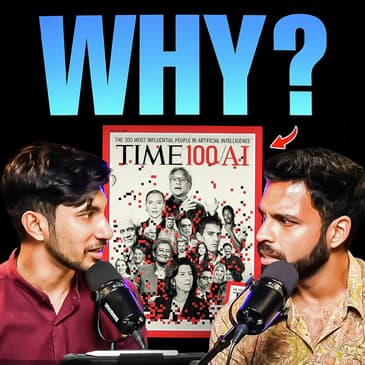

In this episode of the Startup Operator Roundup, Roshan and Gunjan celebrate Startup Operator's top ranking on Chartable and discuss significant events and trends in India's startup ecosystem. They cover highlights from the Global FinTech Festival in Mumbai. Then they delve into Time Magazine's 100 most influential people in AI, the arrest of Telegram's CEO Pavel Durov, and Insurance Dekho's new SaaS platform. Additionally, they discuss upcoming IPOs in the FinTech sector, notable fundraisers by Rapido and Zepto, and unique consumer tech innovations. The episode ends with a discussion on the founder mode versus manager mode in startups and a light-hearted segment on OnlyFans' staggering financial performance.
00:00 Introduction
00:10 Celebrating #1
01:14 Global FinTech Festival Highlights
01:51 Time's 100 Most Influential in AI including Anil Kapoor
02:21 Arrest of Telegram CEO
02:51 Insurance Dekho's New SaaS Platform
03:28 Upcoming FinTech IPOs
03:39 Angel Investing Success Stories
23:43 InfoEdge's Impressive Portfolio
23:59 Rapido Joins the Unicorn Club
26:29 Zepto's Remarkable Fundraising
28:00 Quick Roundup of Fundraisers
28:36 SSI's Billion Dollar Seed Round
31:43 OnlyFans' Financial Success
33:15 Boldcare's Viral Marketing Stunt
35:25 Innovative Consumer Tech Products
38:08 Shopify's Market Insight
42:30 Founder Mode vs. Manager Mode
48:08 Conclusion and closing comments
-------------------------------------
Click here to get regular WhatsApp updates:
https://wa.me/message/ZUZQQGKCZTADL1
-------------------------------------
Connect with Us:
Linkedin: https://www.linkedin.com/company/startup-operator
Twitter: https://twitter.com/OperatorStartup
-------------------------------------
Talk of the Town Tweets:
Consumer Tech: https://x.com/ritwikpavan/status/1832061056447033377
OnlyFans Revenue: https://x.com/ParikPatelCFA/status/1832126344177791011
Tobi Lutke : https://x.com/StartupArchive_/status/1828399599415107809
1x Neo : https://x.com/minchoi/status/1829931741219602739
Boldcare Marketing: https://x.com/oneandonlyrk/status/1830585560060289428
Paul Graham's Founder mode essay: https://x.com/paulg/status/1830146241054834858
If you liked this episode, let us know by hitting the like button and share with your friends and family. Please also remember to subscribe to our channel and switch on the notifications to never miss an episode!
[00:00:00] Hello and welcome to the Startup Operator Roundup. I am Roshan Karyapa and I am Gunjan Saha and together we break down the biggest headlines of India's growing startup ecosystem.
[00:00:10] Gunjan, did you know what was the number one top trending podcast last week?
[00:00:15] Oh that was hard to miss. It was none other than the Startup Operator.
[00:00:23] Man it was really great seeing that we were number one trending on chartable and chartable accumulates podcast across platforms.
[00:00:32] Amazing, we beat devotional content, horror, romance, some other shady stuff as well which is usually popular on audio platforms.
[00:00:41] It was awesome to see that Startup Content figured number one. Thank you so much for your support guys and don't forget to subscribe, share and do all the good stuff.
[00:01:13] We got this roundup with the key takeaways from the recently concluded global fintech festival in Mumbai.
[00:01:19] Wow, so I think 80,000 people attended the event.
[00:01:22] Oh yeah 85,000 people.
[00:01:23] Amazing, I heard it was like super crowded.
[00:01:25] It was a swarm of people but you know I was fortunate enough to watch the Prime Minister's address in the event along with Mr. Piyush Goel's address as to what the future of fintech looks like in India.
[00:01:37] So Gunjan has got that name right after like 14 attempts I think.
[00:01:41] We went through all kinds of names, Goel, Bansal, right?
[00:01:46] Anyway, more on the blooper reel.
[00:01:49] Then last week Time also released the annual list of 100 most influential people in AI.
[00:01:56] While it includes your regular names like Satya Nadeela, Sundar Pichai, Sam Altman, this one also has.
[00:02:02] My name is Luckan.
[00:02:05] Yeah Anil Kapoor was featured in the list, can you imagine?
[00:02:08] Dude I mean.
[00:02:09] But I did some digging like what was his right to be on the list and okay that is some really great reasons as to why.
[00:02:17] So stay tuned we'll talk about that.
[00:02:19] Then the CEO of Telegram, the messaging app Pavlo Durov was arrested.
[00:02:24] Pavlo Durov.
[00:02:26] Okay yeah this is what we've been dealing with for the last like 20 minutes but yeah go on.
[00:02:30] So Pavlo Durov was arrested when he landed at Paris Airport on August 24, 2024.
[00:02:37] He was returning from Azerbaijan and well that's this whole incident kind of sets precedence for what it's like to be a tech founder.
[00:02:45] Yeah got beat right by a baddie from what I hear.
[00:02:49] Insurance Zeko has launched a brand new SaaS platform in India to stream that operations for insurance distributors.
[00:02:55] Well you have worked in the you know insurance distribution space for a while.
[00:02:58] I thought you were going to say you've been an insurance agent.
[00:03:01] Have you?
[00:03:01] I've not come on such times yet but yeah I mean this is pretty interesting right.
[00:03:07] I mean we have what LIC itself I think has about 10 lakh agents or maybe more right and it is one of the top you know financial services jobs right for most people in India.
[00:03:20] So yeah amazing I mean anything that can optimize distribution, streamline all of this is fantastic.
[00:03:25] Yeah also along the lines of FinTech and in short tech we have a list of FinTech starters.
[00:03:31] That are soon expected to go public. We'll do a quick rundown of that and talking about public markets one of the early angel investors in Daikar has backed a 160x return multiple on a 4 million dollar investment.
[00:03:45] You calculate how much money that should find the person and get a party right.
[00:03:48] We never get parties guys come on no Flipkart party, no Swiggy party, no anything party I mean at least let's like you know pitch to the angel investor.
[00:03:59] We are having a party.
[00:04:02] Speaking of public markets again right sorry to use your segue but I was like my mind was blown looking at the number of start-ups you're looking at in the next 18 months or you know couple of years right.
[00:04:14] The number you can guess right now and we'll tell you if you're right in that section yeah.
[00:04:19] Yeah along with that we have some really interesting fund raise announcements and a very exciting talk of the town section so make sure you stay with us right till the end.
[00:04:27] This is going to be a fascinating conversation.
[00:04:29] Yeah you're going to go full founder mode.
[00:04:33] Alright so let's start off with Global FinTech Festival this was held from August 28th to 30th in Geo convention center in Mumbai and fun fact here Geo does not work in Geo convention center.
[00:04:45] There were lot of product announcements I think over 100 of them and I think few stood out to me quite a bit.
[00:04:53] NPCI has been busy in one of our earlier round us we talked about the UPI circle which allows you know to delegate your payment accounts to your friends and family but along with that I think the highlight was the launch of the
[00:05:05] Bharat Bill Pay system.
[00:05:07] Now unlike the traditional BVPS which are used to pay your credit card in utility bills now this model is going to get expanded across businesses in India so you don't have to keep chasing for invoices it's all going to be automated with tech.
[00:05:19] Amazing so I saw a tweet by Amrish who's the PineLab CEO saying that you know Global FinTech Festival is where all the FinTechs gather with super excitement and then realize that NPCI has built everything.
[00:05:34] Along with that you also had Zoho that launched a B2B payment solution then Visa has partnered with HDFC and PTM to launch new sound boxes and NFC enabled devices.
[00:05:45] Razer Pay has had something really interesting they introduced a biometric card authentication which enhances security of online transactions along with that PineLab also had a host of new announcements something really exciting is coming up on the UPI front in the next few months so keep it up.
[00:06:01] I can't stop plugging it but Zoho man I mean god damn it I mean I think they have what like 50 plus products or something right I mean it's insane maybe more I am always blown away by companies of that size right Zoho is perhaps doing a billion in revenue right now right that
[00:06:22] continue to ship product right because I mean scale is just like you know efficiency is inversely proportional to scale right and to get anything done in a large corporation or company I mean it's super difficult so again props to these folks right I mean Figma, Zoho, Shopify to a degree right all of these folks I mean are furiously shipping away I mean it's a great inspiration for startups I mean if Zoho can why can't you you know.
[00:06:51] I think that's also one of the biggest advantage which any startup would have over that's like a Google or a meta right is the piece at which you can.
[00:06:59] Absolutely you have nothing to lose right I mean you have absolutely nothing to lose you can decide to do things a different way on a whim right there are no boards and committees and consensus building and stuff like that right I mean people are rather I mean I myself underestimated how difficult it is to get stuff done as you scale right I mean.
[00:07:20] It's just so much more difficult. Yeah, always beyond founders mode.
[00:07:25] We'll talk about that.
[00:07:28] Also last week Time Magazine released its annual Time 100 AI list which features influential leaders across domains from technology entertainment and policy who are shaping the future of artificial intelligence.
[00:07:40] Now of course the list has called out some regular names like Satya Nadella Sam Altman Sundar Pichai and Sam Altman on the list.
[00:07:47] Oh yeah. Okay. But guess was also there on the list.
[00:07:52] My name is. Yes, Anil Kapoor was also featured in the list and when I came across this news I had no idea like what was his contributions to AI but upon digging I realized that he has been featured due to his significant legal victory concerning the unauthorized use of his
[00:08:10] lackliness in artificial intelligence applications.
[00:08:13] He has challenged the unauthorized use of his image and various AI generated content such as distorted videos and gifs and this legal battle highlighted the growing concerns around the misuse of personal lackliness in the AI space.
[00:08:26] Now while AI is all cool and shiny right now but he touched upon a really important topic like imagine there's a video of you doing what not circulating online.
[00:08:36] Hey. Shubh Shubh Bholu.
[00:08:40] So at first when I heard this whole news about Anil Kapoor featuring Time Magazine's AI100 I thought it's one of those random news items like Shraddha Kapoor talking about AI and banking or something like that or connected services or something.
[00:08:55] But yeah, this is significant. You know this is one of those things that will get more and more prevalent.
[00:09:01] The use of people's likeliness in these videos and what not. I mean we've all seen random videos of Elon and Trump and Kamala Harris and you know Prime Minister Modi and so on on our Twitter timelines or X timelines.
[00:09:17] Yeah, I mean it's something to think about for sure right and yeah you know Mr. Lakan makes his way to the Time 100 list amazing.
[00:09:30] I think it's something about the Kapoor's AI. Yeah, I mean this guy doesn't age man. I mean he still looks the same. He looks 35. I mean I think he was born 35 basically I think.
[00:09:39] It's crazy. But speaking of random shit right yesterday I mean I got to know that Daniel Day Lewis retired to become a cobbler.
[00:09:48] Yeah, he studied shoe making in Italy. You know imagine having a couple of Oscars and then you know going and becoming like a full time craftsman right I mean amazing.
[00:10:01] Do you have any such plans?
[00:10:03] I want to become a carpenter. No kidding. I just want to take up like wood carving and stuff like that. Yeah. Alright let's get back. Let's continue yeah.
[00:10:14] Pavel Deurov the CEO of Telegram he was arrested in France as part of an investigation into alleged criminal activities associated with the platform.
[00:10:23] He was detained on August 24, 2024 after he arrived from Azerbaijan.
[00:10:28] The arrest globally has sparked a lot of political backlash particularly in Russia where officials have labeled it as politically motivated.
[00:10:36] Telegram responded by asserting its compliance with EU regulations and ongoing efforts to improve content moderation and they have completely rejected accountability for third party misuse of its platform.
[00:10:47] Now this is a growing concern like a tech CEO that runs a social media platform can he or she be held liable for the content on the platform?
[00:10:56] Which other people are posting?
[00:10:57] Well they have to act in a legal manner obviously right look I mean there's this whole freedom of speech debate which is separate from the fact that you have to be you have to abide by the rules of the land right wherever you choose to operate that is.
[00:11:15] So obviously I mean child pornography and abuse and so on and so forth is outside the law right and if you know Telegram was someone to explain some of this stuff and they didn't do enough then I can understand right.
[00:11:30] Obviously you know some of these platforms can't act like super national entities and be like above the rule of law as such right.
[00:11:38] But there's there's just more to it I think you know there was one hypothesis I was reading that you know apparently Telegram app is the most favored among you know folks in Russian folks in the war right and they've been able to communicate
[00:11:56] and that is somehow pissing off NATO and then there's another theory that apparently Telegram has been hurting Francis military operations in Africa and so on right.
[00:12:06] So I mean there's just so many theories guys I mean apparently the girl or his girlfriend supposedly has sort of outed him right with you know sharing his location and what not and apparently also I've used apparently four times know because all of these are theories right.
[00:12:26] We don't know.
[00:12:28] Emmanuel Macron invited him for dinner and had him arrested.
[00:12:32] What a what a guy man what a guy anyway so so there's just a lot of theories here and I would encourage everyone to check out that interview of Elon Musk with Don Lemon right who's a prominent you know anchor in the US right and they speak about this particular aspect which is censorship and so on and
[00:12:58] Elon basically corners Don Lemon right on the fact that you know when you talk about responsible speech and so on and so forth right I mean you're essentially somehow watching for censorship right because freedom of speech doesn't count unless there is freedom to talk about things you don't like from people who you don't
[00:13:26] think outside of the law I don't think it can be tolerated so yeah I don't know what's happening at this point I mean I don't know if he's out he is I'm sure his lawyers have appealed and so on there's another connection right which is I mean the fifth apparently right which is that
[00:13:41] the UAE has cancelled a four billion dollar military purchase from France right because so again Pavel is close to the UAE crown prince is I mean one of the sons I suppose right and so yeah he got he got the top haunches in the
[00:14:00] UAE government to like do that is one theory right and he's a citizen of UAE as well right so I think he holds multiple citizenships France UAE something else as well yeah
[00:14:12] but so Mr Pavel also one Mr worldwide of course yeah Pavel also tweeted right I think as he put out a statement on Twitter he said that he you know the EU authorities were not really coordinating with telegram
[00:14:30] regulatory departments and this arrest came as an absolute surprise I don't trust the EU one bit right I mean they're just shady guys man these bunch of folks in Brussels who sit and like you know dictate terms
[00:14:42] I mean we've seen some of these guys like post on Twitter and like threaten Elon and stuff right I mean yeah who takes these guys seriously okay but anyway this challenges the safe harbor protections which
[00:14:54] tech CEOs enjoy for against user generated content but I think this will be it's no longer user generated you can't you can't hide behind the thing called user generated content anymore right I mean see we've discussed this
[00:15:08] where long past the time where these platforms can act like platforms they become publishers now right and that's a long precedence for that so they will end up taking responsibility for the content of their platforms irrespective right so they can't hide behind that veil anymore
[00:15:24] okay let's come closer home insurance they go has launched a new SaaS platform named HEP which is designed to streamline operations for insurance distribution in India
[00:15:35] HEP is built around four core modules D2C point of sale persons lending and embedded insurance as a result all of this enables businesses to efficiently build and manage customized insurance offerings
[00:15:47] currently it is integrated with 49 insurers and provides access to a 650 insurance products across various categories now both of us have worked you know in our company which sells to the insurance sector to help them drive distribution
[00:16:01] and we know insurance is severely under penetrated in the country yeah now insurance is one of the largest you know insurance distribution entities in the country and this SaaS platform just kind of
[00:16:14] democratizes the playbooks they had yeah it's pretty amazing see nobody wakes up one day and decides that they need insurance right it's not an impulse purchase
[00:16:25] and mostly insurance is sold right not bought and you know I mean vehicle insurance obviously is mandatory health insurance has grown in prominence post covid for sure people have realized that it's essential
[00:16:37] but things like life insurance and so on right I mean it's still not as popular right and it reflects in the penetration numbers as well
[00:16:46] so anything that kind of optimizes distribution is a plus one for the ecosystem right even the IRDA keeps talking about penetration right insurance penetration and that's the number one goal for them
[00:16:59] so yeah I mean this is helpful for sure and even from an independent agent or an agency perspective as well right I mean long before they were you know this whole gig workers gig economy and so on and so forth insurance agents were the original version of that right
[00:17:15] so anything that makes life easier simpler for them is good because from their perspective as well right I mean now if you are an agent and you've sold a policy you are that one throat to choke for the customer right
[00:17:28] and oftentimes we've realized that they don't have all of the information required to kind of support the customer either in terms of you know what is the best products for them or even in terms of let's say claims so on and so forth right
[00:17:41] so anything that kind of streamlines this whole thing and gives them the information at the fingertips is helpful for sure
[00:17:49] in fact I think a lot more innovation needs to happen on the distribution front yeah one brilliant example which I can think of is the partnership between ACCO and OLA
[00:17:59] imagine a one rupee insurance that ensures your cab ride right and I think the kind of skill they witnessed just because of that was massive
[00:18:07] yeah ACCO's partnership with you know these rideshare platforms right OLA I think they have a partnership with OU also I'm not sure it's fantastic it's good for the industry as overall
[00:18:21] and this phenomenon of embedded insurance right which is the kind you referenced which is that I am going on a ride and you know I buy this insurance at that point
[00:18:31] I think that will become a lot more prominent right you're going to have this sachet sized, bite sized sort of insurance for various activities travel insurance we're used to anyway
[00:18:42] but I think we'll see other types evolve yeah
[00:18:45] buy an expensive Samsung phone get an insurance for that
[00:18:48] yeah yeah it happens
[00:18:51] cool talking about insuretex, fintechs and what not we have a list of IPO candidates in this industry that are expected to go IPO in the next couple of years
[00:19:01] across domains of payment lending tech fintech, insuretex, wealth tech and others and some of the prominent companies we have on the list are phone pay, pine labs, razor pay, pay you
[00:19:12] bank bazaar, perfios, zopper, insurance deco, upstocks, open ones, all of that what not
[00:19:19] yeah how many companies would you better
[00:19:22] well we did ask you how many companies you think would go IPO
[00:19:26] the answer is close to 50 right which is again a fantastic number really to think about it
[00:19:34] I saw this tweet that VC had you know had posted on X that you know earlier it used to be that people would say that hey we'll raise from someone else
[00:19:47] but now the threat is the founder says that we'll go IPO right
[00:19:51] 100 crore business right threatening that we'll go IPO
[00:19:54] yeah I mean it's amazing it's really amazing people have kind of woken up to the fact that their retail investors are hungry for start-up investments
[00:20:02] right so this is awesome in fact I mean we'll be hosting the founders of infinite club joy and Ankita on the podcast shortly they're
[00:20:13] democratizing alternate investments which include start-up investing to a wider base of folks
[00:20:19] so who knows I mean you could be that Nika Angel who made 160x return right who knows
[00:20:25] of course none of this is financial advice
[00:20:28] okay thanks for the brilliant segue
[00:20:31] Harinder Palsing Bagga also known as Harry Bagga he's the founder chairman CEO of the Carvel Group
[00:20:38] he's setting records in the start-up ecosystem with his Nika Angel round investments
[00:20:42] he made a significant investment in Nika in 2014 Angel funding round and he contributed a majority stake in the 20 crore
[00:20:49] fundings they had at a 120 crore valuation
[00:20:53] of course yes his office has taken part in subsequent more investments which was total of around 4 million dollars
[00:21:00] to date he has realized 240 million dollars in cash exits and his remaining stake is valued at 380 million dollars
[00:21:07] this is a 160x return on investment man like 4 million dollars into 160 how much
[00:21:15] crazy some really big number what would you do with that much money
[00:21:19] how would you spend it let's say you even a 500 million dollar lottery what will you do
[00:21:25] I don't know 500 million seems like a arbitrarily large number right but this is amazing right look I mean with Angel investing
[00:21:34] we often hear of these cases right someone made 160x someone made like 50x and so on and so forth
[00:21:40] and a lot of people are tempted to sort of become angels as well but it's absolutely like I mean it's got the worst of the worst power loss
[00:21:50] right you know literally 90% of your investments will go to shit right and the remaining 10% don't expect the exorbitant returns that you know we're talking about 160x and so on and so forth
[00:22:02] so yeah I mean as platforms evolve that you know make you invest in these startups for 2 lakhs 5 lakhs 4 lakhs and what not right
[00:22:13] you also have to you know have that understanding that this is an extreme power law game
[00:22:19] I think that averages around 20-30% or maybe more
[00:22:23] what the average return you get on your portfolio
[00:22:26] the average return well I mean it really depends right I mean because you cannot talk averages when the data points are all over the place
[00:22:35] I mean it's crazy it's really crazy like I'm sure Mr. Harry Baga would have invested in 50 or 100 startups right and one of those made this 160x kind of a return
[00:22:46] right it very very very rarely almost never happens that you invest in one or like five and then you make this kind of return right I mean it absolutely doesn't
[00:22:55] you also have to have that kind of deal flow that you're able to get into some of these lucrative deals right and have the capital to sort of double down as well
[00:23:04] right I'm sure that he didn't invest 4 million at once right he had to invest it in subsequent rounds and so on so hats off to him I mean he had the sort of conviction to you know double down as well
[00:23:16] right so yeah angel investing is looks lucrative but I mean it's actually hard business it's really really hard yeah do your
[00:23:25] very few people has really hit it out of the park when it comes to angel investing right there is the co-founders of snap drill Kunal Baal and Rohit Bunsell's bet on urban company and mama earth
[00:23:36] then info edges investment in somato but majority of them go for a loss yeah info edge is amazing right I mean even if you look at like
[00:23:44] somato insurance they go a bunch of others right I mean a few of them have gone on to become IPOs also right so yeah fantastic stuff
[00:23:54] with this let's move on to some of the interesting fund raises of the week Rapido has officially entered the Unicorn Club they raised 200 million dollars in a series e-down at a valuation of 1.1 billion
[00:24:05] this round was led by Westbridge capital with participation from new investors like think investments and inverse opportunities along with their existing investor nexus venture partners
[00:24:16] now Rapido has seen like really tremendous scale I think now they're averaging around 2.5 million rides in the country and this is giving stiff competition to the likes of olas and movers
[00:24:27] and what really sets Rapido apart is the innovative ways they're experimenting on driver payouts I think that is one of the key reasons for the success
[00:24:36] see this is one of those I think Peter Thiel had this concept of come in last and capture the market or something of that sort right
[00:24:45] so Rapido was not the first to the market and they've come in at a time when clearly Ola and Uber have sort of tapered off right in terms of what innovation they can do and how much market growth they can have
[00:24:57] and Rapido has done tremendously well for a time I mean they were like a distant cousin to these platforms and now I mean everyone seems to have the Rapido app right if not the Namaia 3 as well
[00:25:09] so yeah ties to an interesting point I was making with someone today that I was talking to right that you know somebody's turn can be your entire business you know
[00:25:21] if you think about it right software especially I mean gets super commoditized very quickly and we often worry about hey you know I'm going to build this it's a market with so much churn so on so forth
[00:25:33] now unless you are a 10 million 50 million dollar incumbent in that you know market even if you are a 50 million incumbent you can benefit greatly from the churn from a conventional you know company in that space right a legacy company
[00:25:50] if you look at some of these larger success stories right what fix for example benefited tremendously from churn from you know what is that walk me right likewise
[00:26:02] think of Salesforce churn right how many companies have benefited from Salesforce I think multi 100 million dollar companies are made out of Salesforce churn so yeah I don't think you should worry too much about that when you're getting into the market right I mean that's a huge opportunity as well for you
[00:26:15] I've seen a few folks I mean one person in the sales enablement space do really well on high spot churn right so yeah something to think about
[00:26:26] another interesting fund is from the week was Zepto 340 million dollar round good God they are valued at 5 billion dollars but throughout of 2024 Zepto has re-issued over 1 billion dollar in funding
[00:26:41] now of course I had my doubts as to here if you're burning so much cash like why are you trying to raise more and like what is really giving Zepto the edge over the likes of you know Swiggy Instamart or a blink it
[00:26:51] but then I learned that 70% of Zepto's dark stores are now fully abit up positive and I think that's a pretty remarkable feat
[00:27:00] yeah I mean look at the kind of metrics we are now looking at right I mean we're past the time where we're talking about GMV and so on I mean I heard Adit talk about free cash flow and stuff
[00:27:08] right I mean free cash flow it's not stuff that you hear startups talk about right but that's the amazing thing about having a downturn right I mean you go back to the basics
[00:27:21] and you think through all of these very you know stringent sort of metrics right from a business health perspective Zepto has done tremendously well they went to 5 billion dollars from a 3.0 something billion in the matter of 2-3 months
[00:27:35] right and apparently they've grown about 20% or so in the 2 months itself right and at their scale I mean that's tremendous growth they're opening up in you know all kinds of places Nashik for example
[00:27:49] and they went to 1000 orders in less than 2 weeks or so right so yeah amazing man Zepto seems to be kicking ass
[00:27:58] okay we have some really big fund raise announcement coming up but before that let's do a quick roundup of the other fund raises
[00:28:05] Specialty coffee chain Blue Tokai has raised 35 million dollars from Berlin and West Anikot Capital and A91 partners
[00:28:13] Sunshore Energy raised 226 rupees or 27 million dollars from Tata Capital
[00:28:18] Justo Real FinTech raised 7 million dollars from Arbor Investments and Sports Nutrition Retailer Neutrabar raised 5 million dollars from RPSG Capital Ventures and Quota Coordinate Asset Managers
[00:28:29] but the biggest headlines in the fund raise space was taken by none other than SSI and this is a startup started by Ilya Satskever who was part of the OpenAI team
[00:28:39] This AI startup has raised 1 billion dollars at a 5 billion dollar foundation and if you think this number is crazy well they don't have a product yet they are 4-5 months old and they're still in the process of building their team
[00:28:52] so that's essentially a billion dollar seed round
[00:28:56] yeah exactly I mean that's insane right
[00:29:00] there's that line in the social network right where who's a Justin Timberlake's character says you know what's cooler than a million dollars
[00:29:09] exactly right
[00:29:10] million dollars isn't cool you know what's cool
[00:29:12] a billion dollars
[00:29:19] I mean it kind of sounds like that
[00:29:22] but look I mean Ilya Satskever was you know one of the brains or the brains behind OpenAI right I mean the guy is like a legit genius
[00:29:34] and look man I mean in the AI world that we're living in I think all numbers are like you know we'll have to revisit all of these right
[00:29:42] what's a billion dollars when there's like 100 billion or maybe more like 500 billion on the table right so that's really how we have to think about it because of the wide scale impact that something like this can have right
[00:29:55] and at this point I mean it's not just your average VC fund that's sort of investing in these guys I mean there are all kinds of people right I mean hedge funds and you know sovereign funds and so on and so forth directly investing in this kind of stuff right
[00:30:12] and this VC activity on the whole in the world of finance itself is like a tiny tiny thing it's probably about 5% or so right
[00:30:20] so yeah I mean this is fantastic stuff and really looking forward to what these folks end up building and I hope it is safe if not super intelligent
[00:30:30] wait the definition of safe over here and even super intelligent is kind of vague
[00:30:35] but I think what will be really critical for the SSI team is to manage the expectations that these markets have from them right
[00:30:42] but also this one billion dollar number kind of peels in comparison because if you remember a few months back Sam Altman you know in one of the interviews said that he's planning to release 5 trillion dollars to scale AI
[00:30:54] and man I can't imagine how 5 trillion dollars would look like
[00:30:58] you know what's cooler than a billion dollars?
[00:31:00] yeah but it's yeah it's insane man
[00:31:04] interestingly on the time magazine AI 100 guess the two names that I'm missing
[00:31:11] Elon and Ilya
[00:31:13] I mean think about it right
[00:31:16] Elon missing from the AI 100 is observed right it also tells you like how these magazines are just so dated they're so redundant I mean like really really redundant
[00:31:28] this is as good as like winning a India BAFTA not India BAFTA India film fair what was something
[00:31:35] okay anyway let's move on to the talk of the town section
[00:31:39] let's start with something interesting by talking about only fans
[00:31:43] familiar with the platform Russian
[00:31:45] Gunjan's favorite
[00:31:46] are you own only fans?
[00:31:51] hey you never know man with all this side gig and hustle culture like you know who knows
[00:31:56] wait let's let's get to the kicker only fans generated around 6.6 billion dollars in payments
[00:32:02] 1.3 billion dollars in revenue and 658 million dollars in profits before tax in 2023
[00:32:08] this is bigger and better run company that 99.9999% of VC backed hyper growth startups don't achieve
[00:32:16] I mean what can I say they've just hit that product market fit right I mean no pun intended you know
[00:32:23] those numbers are crazy those numbers are crazy and
[00:32:29] I mean I weep from a societal perspective that this is the most popular but it's always been the case right I mean
[00:32:37] yeah I mean it's the oldest
[00:32:38] exactly exactly right but
[00:32:43] yeah it's just crazy I mean like I saw this tweet by someone that says you know forget about AI
[00:32:51] only fans did it with ASS right so I mean those numbers are crazy those numbers are absolutely crazy and
[00:33:03] yeah I don't know I mean these are these are insane times that we're living in for sure yeah absolutely
[00:33:08] but then even closer home we have bold care right I mean of course bold care did it round with the whole Ranveer Singh and Johnny Sint film
[00:33:18] but the whole Christian who is a co-founder of Bold Care on Twitter he went on to disclose his credit card number the expiration date and
[00:33:25] the CVV number and asked people to make purchases right of course within thousand bucks and when people ask for the OTP online on the twitter said he actually disclosed it
[00:33:35] now I don't know what to call this mark is it genius is it what or is it just for vitality I don't know
[00:33:42] I mean it's it's it's crazy right I mean so I think he ended up spending about four or five lakhs and I don't know how many million
[00:33:52] impressions that we got 2.4 million at last count apparently and he got 15,000 subscribers or something or followers on twitter now
[00:34:03] I don't know how much that will translate to you know orders on Bold Care per se right but think of it as a branding exercise
[00:34:11] I mean the guys forever gonna be remembered as the fellow who shared his credit card details publicly right so yeah
[00:34:17] I doubt I mean while so I have my reservation we might have him on the podcast so we'll we'll point that question to him right
[00:34:26] no I mean vitality versus shelf life right I think that is something which I'm particularly interested in like viral content is great
[00:34:34] like people are talking about it but do people really remember it is what I want to you spoke about the Johnny sins ad with
[00:34:42] Ranveer Shah Ranveer Singh who's that guy man Ranveer Singh Ranveer Singh sometime back right that that came out I think maybe like three four months back
[00:34:50] we're still talking about it and then you're gonna be talking about this credit card thing for another three four months let's say or maybe a couple of months
[00:34:55] right I mean it gives but it's making me wanna check out Bold Care I mean he does this often enough I mean who knows right who knows
[00:35:03] one of those lonely nights you might just like
[00:35:05] then I would definitely not in Bold Care but something else
[00:35:08] only fans
[00:35:11] to eat his own I did talk about societal impact and so on so
[00:35:17] okay let's come back we have a great roundup on some of the latest offerings in consumer tech right let's go through them
[00:35:28] we have this headband which apparently is a new way of treating ADHD
[00:35:33] we have an AI powered dumbbell set that automatically tracks your reps and workouts and your calorie burn
[00:35:40] we have a tablet which has the e-ink technology makes it feel like you're writing on paper
[00:35:46] we have a you know an AI powered drone that follows you wherever you go and what not right
[00:35:51] these consumer products are really blurring the lines between you know consumer software and hardware
[00:35:58] and it's insane man like what the next five seven years down the line can really look like
[00:36:02] this is a very good thread by this person right
[00:36:06] Ritvik Pavan yeah he writes regularly on consumer yeah I think you guys should definitely go check it out and perhaps follow him as well
[00:36:14] it's a good bunch of products that he's listed out
[00:36:17] I'm really waiting for that one killer consumer tech product that you know all of us are going to start like raving about you know
[00:36:25] I thought it was gonna be that Apple Vision Pro
[00:36:28] it's kind of tapered off I think
[00:36:30] but I mean that's the usual case of AR VR but what talking about vision pro right
[00:36:35] I'm really surprised why the meta Ray-Ban collaboration is not seeing the kind of popularity you know we hoped it would have
[00:36:42] because that has some real practical life use cases
[00:36:46] I'm sure well if anyone of you has a
[00:36:50] Meta powered Ray-Ban please send it would love to review it on the podcast
[00:36:55] and then also talking about hardware there's this company called Neo
[00:37:00] and they have a robot that replaces your house
[00:37:03] this was freaky actually yeah take a look at this video
[00:37:07] I mean they have like clothing for these robots
[00:37:11] yeah
[00:37:22] imagine you wake up and the robots standing around you
[00:37:25] yeah
[00:37:29] you know what are we really amazing like get on this robots
[00:37:32] and of course it has a display for a face right
[00:37:35] put another arm
[00:37:40] adoption would go up
[00:37:42] before you get into your other fantasies
[00:37:45] let's cover the other topics
[00:37:47] enough of jokes
[00:37:49] we also got this video by the CEO of Shopify Tobi Lutke
[00:37:55] he explains what the VCs who passed on Shopify got wrong
[00:37:59] we'll let you take a look at the video for yourself
[00:38:02] I was in Santhair we were out pitching like 2008-19
[00:38:05] and I was with some VCs
[00:38:09] and they were seriously looking at a company but ended up not investing
[00:38:12] and the reason they gave me is because they thought that the addressable market was too small
[00:38:17] for online stores
[00:38:18] they said at this point there was about 40-50,000 online stores
[00:38:22] so if you would get 50% of that it should not be a big enough business
[00:38:25] and I actually met with a partner
[00:38:27] same partner recently a couple years ago
[00:38:28] and he asked me like what did you miss there
[00:38:31] and I pointed out saying no you had it right
[00:38:34] like you're actually correct what you didn't realize
[00:38:36] is Shopify was a solution to the very problem that you identified
[00:38:39] there was only 40,000 online stores
[00:38:41] because it was hard expensive and everyone who tried
[00:38:44] ran into all these breakwars of complexity
[00:38:45] which then Shopify once after another smoothed over made it simple to do
[00:38:49] what a lot of sort of free market thinkers don't understand
[00:38:52] is that between the demand and eventual supply lies friction
[00:38:59] I actually think that friction is probably the most potent
[00:39:01] for us for shaping the planet
[00:39:03] that people are just generally not acknowledged
[00:39:06] we need more, entrepreneurs are amazing
[00:39:07] we need more of it usually the solution is like some kind of incentive package
[00:39:09] right funding, some accelerators
[00:39:11] obviously it's not bad
[00:39:13] it's just a problem is they try to increase the demand side
[00:39:15] I think the demand side is so big
[00:39:17] but the friction in the middle is a problem
[00:39:19] so that was my theory
[00:39:21] and then I turned, that's not what it's going to be
[00:39:23] for Shopify there was a lot of more people like me
[00:39:26] except there was too much friction which we needed to solve
[00:39:28] and so Shopify has proven out every single time
[00:39:30] we make the process simpler
[00:39:31] or setting up a small consumption
[00:39:33] at this point we have a million merchants on Shopify
[00:39:36] which is like a mind blowing number
[00:39:37] so friction is a major component I think
[00:39:39] it's something that's software is uniquely good
[00:39:41] at reducing the friction
[00:39:43] so what he's essentially talking about is
[00:39:49] you know maybe to push a product
[00:39:50] you don't necessarily need to create more demand for it
[00:39:53] but rather how can you make it much more easier
[00:39:56] for the demand side to get access to supply
[00:39:58] how do you remove the friction between supply and demand
[00:40:00] see there is this thought
[00:40:02] there was this thought that was super relevant
[00:40:04] maybe like 20-25 years back
[00:40:06] which was the whole build it and they will come
[00:40:09] you build something
[00:40:10] and then enough people will kind of aggregate
[00:40:13] and so on
[00:40:13] and this was at a time when
[00:40:16] software itself was very nascent
[00:40:18] there were not many viral
[00:40:21] networks and so on and so forth
[00:40:23] so if you build something
[00:40:25] significant people would notice somehow
[00:40:27] I mean just like pure word of mouth
[00:40:29] and so on
[00:40:32] and so forth
[00:40:33] and that whole build it
[00:40:34] and they will come sort of a phase got replaced
[00:40:36] by this entirely lean startup
[00:40:39] mode of working where you know
[00:40:40] you do customer research
[00:40:41] you ask people what they want
[00:40:43] etc etc and then you build something
[00:40:45] and then you scale it
[00:40:46] and the late-stage effect
[00:40:49] of that lean startup mentality
[00:40:51] has been to just over engineer
[00:40:53] on growth
[00:41:01] and then you talk to any
[00:41:02] not even a founder
[00:41:03] you talk to any product person
[00:41:04] I mean the person will ask you like 100 questions
[00:41:07] about business and which is fine
[00:41:09] but then at the end of the day
[00:41:11] you'll feel like
[00:41:13] let's just build
[00:41:16] and I think that's what
[00:41:19] I kind of relate to with the Toby story
[00:41:22] which is that
[00:41:23] when he spoke to those VCs
[00:41:25] and they said that
[00:41:26] thing has been done before
[00:41:31] I mean yeah they didn't have
[00:41:33] that seamless option
[00:41:34] that Shopify provides
[00:41:36] for them to have adoption
[00:41:38] and markets grow man
[00:41:40] markets grow and compound
[00:41:43] Viva was a small business
[00:41:44] OCTA was a small business
[00:41:46] Salesforce at some point of time
[00:41:48] was valued at some 2 billion dollars
[00:41:50] so on and so forth
[00:41:51] and all these businesses
[00:41:53] have grown tremendously
[00:41:54] Salesforce today has 30 billion dollars
[00:41:56] revenue which is pretty damn insane
[00:42:01] so yeah don't give up on
[00:42:03] don't give up on the convection
[00:42:05] I mean if you think that
[00:42:07] there is an underserved need in the market
[00:42:09] and you are building a 10x solution
[00:42:11] I think you should just back yourself
[00:42:12] yeah speaking off
[00:42:15] speaking off
[00:42:16] yeah in this conversation
[00:42:17] we have seen both Roshan and I referenced to
[00:42:20] something called the founder mode
[00:42:21] that came from
[00:42:23] interesting essay which Paul Graham wrote
[00:42:27] this was summary of his conversation
[00:42:29] with Bransh Chesky
[00:42:32] where he talks about the difference
[00:42:33] of being in a founder mode
[00:42:35] versus being in a manager mode
[00:42:37] Roshan you want to explain what that means
[00:42:39] yeah this was a great essay
[00:42:41] and also I am looking forward to
[00:42:43] like maybe getting a video
[00:42:46] of Bransh Chesky's talk
[00:42:47] actual talk at this event that Paul
[00:42:49] talks about right
[00:42:52] look I think for a while
[00:42:54] startup building became
[00:42:55] about okay the founder does 0 to 1
[00:42:57] and then you hire all of these
[00:42:59] execs to run independent functions
[00:43:01] and the founder just manages these execs
[00:43:03] right
[00:43:04] and maybe manages investors
[00:43:05] maybe has a product vision and so on
[00:43:07] right I mean this is a very
[00:43:09] hands off kind of an approach
[00:43:10] and it made sense to an extent
[00:43:14] because obviously you know
[00:43:15] things are scaling
[00:43:17] and if you are in that hyper growth
[00:43:18] mode you cannot be micromanaging
[00:43:20] everything you can't be that single
[00:43:22] point of failure for all of the
[00:43:24] activities in the startup so on
[00:43:29] things that only a founder knows
[00:43:32] and can do as well right
[00:43:34] nobody can build us a decision
[00:43:36] like a founder can right
[00:43:37] nobody has the deep insight
[00:43:39] about the product and market
[00:43:41] like the founder can forever and
[00:43:43] forever right I am sure even now
[00:43:45] Mark Benioff after like 20 25
[00:43:48] years of running Salesforce
[00:43:49] will still have the deepest insight
[00:43:51] about Salesforce's product and
[00:43:53] market than perhaps someone else
[00:43:55] true right all things wait
[00:43:57] right so I think founder
[00:43:59] founder mode is a clarion call
[00:44:01] for the founder to drive
[00:44:03] the day-to-day operations of a
[00:44:05] business even at scale
[00:44:06] okay and this is something that
[00:44:09] you know Brian Chesky has pioneered
[00:44:11] at Airbnb and they've done
[00:44:12] phenomenally well right
[00:44:14] I mean I quote weighted this
[00:44:16] and said that Indian businesses
[00:44:17] forever and forever have existed
[00:44:19] in this founder mode itself
[00:44:21] right it's not uncommon to see
[00:44:23] a large Indian conglomerate
[00:44:26] where you know the
[00:44:27] founder CEO chairman is kind of
[00:44:30] calling the shots and I gave this
[00:44:31] example of reliance right
[00:44:34] so 97 98 the reliance plant
[00:44:38] in Jamnagar has been commissioned
[00:44:40] and you know by that time
[00:44:43] the Dubai had retired
[00:44:45] right I mean the Dubai was around
[00:44:46] 65 years at that time had
[00:44:47] retired maybe like 10 12 years
[00:44:49] before that he was like an
[00:44:50] honorary chairman
[00:44:53] for the for the group
[00:44:54] and you know so so Mukesh Ambani
[00:44:58] and Anil Ambani are you
[00:45:00] know driving things
[00:45:01] they get the world's best civil
[00:45:03] engineers all kind of
[00:45:06] construction experts all and
[00:45:07] so forth to present a plan
[00:45:09] and the plan makes an allowance
[00:45:12] for an earthquake level
[00:45:13] of six on the Richter scale
[00:45:15] Gujarat before that had
[00:45:18] never had an earthquake
[00:45:20] higher than a 5.7
[00:45:22] right that was the highest
[00:45:23] for about 100 years or so
[00:45:25] they said okay you know what
[00:45:27] let's keep it at a 6
[00:45:29] seems safe enough
[00:45:31] and they take it to Dubai
[00:45:32] and all is wisdom
[00:45:35] looks at it and says
[00:45:36] no make it
[00:45:39] tolerant to an earthquake
[00:45:40] level of Richter 6
[00:45:42] Richter 8
[00:45:45] and obviously both the brothers
[00:45:46] are you know bit surprised
[00:45:51] and they say that look come in
[00:45:53] it's going to cost us a few
[00:45:54] tens of thousands of crores
[00:45:55] or at least few thousands of crores
[00:45:57] to sort of do this
[00:45:58] why do we need this right
[00:46:00] and the Dubai says no
[00:46:01] you know make it resistance
[00:46:03] resistant to an earthquake
[00:46:05] level of you know 8 on the
[00:46:08] Richter scale 2001
[00:46:10] Buge happens the Buge
[00:46:12] earthquake and you know I'm
[00:46:14] old enough to remember the
[00:46:15] kind of destruction that it
[00:46:20] was perhaps more
[00:46:21] and while all structures
[00:46:24] crumbled the reliance plant
[00:46:25] was the only one standing
[00:46:27] okay you can't replace wisdom
[00:46:30] you can't replace data or anything
[00:46:32] you just can't
[00:46:33] that founder intuition is unparalleled
[00:46:36] it's absolutely unparalleled
[00:46:38] right
[00:46:39] and yeah so this is
[00:46:42] more or less how most of
[00:46:43] the Indian businesses kind of exist
[00:46:45] today
[00:46:45] and oftentimes the valley will
[00:46:51] articulate what we have always been doing
[00:46:53] right they'll give it a new nice name
[00:46:56] more brand friendly name
[00:46:57] and that's good I mean I'm not
[00:46:59] knocking on them for
[00:47:01] this stuff right I mean
[00:47:02] I think it's good right because
[00:47:04] it codifies all of this stuff
[00:47:06] into best practices and benchmarks
[00:47:09] and things that you know maybe
[00:47:11] like a younger generation can relate to
[00:47:13] so yeah do check out that
[00:47:15] thread that I made on this
[00:47:16] I mean we'll link to it in the
[00:47:18] description but yeah founder mode
[00:47:20] Zindabad a lot of operators
[00:47:22] are rightly worried
[00:47:24] thinking that the founders
[00:47:26] will get in on their business
[00:47:27] but hey I mean
[00:47:29] I don't think the founder mode
[00:47:32] is restricted only to founders
[00:47:34] per se right I mean if you
[00:47:36] function as a founder
[00:47:37] and if you've thought through
[00:47:39] every aspect of what you're doing
[00:47:41] and you have
[00:47:42] at least you act like
[00:47:44] you have the most skin in the game
[00:47:46] well you don't really need the title
[00:47:48] to act like the founder
[00:47:51] damn
[00:47:53] alright I think that's a great
[00:47:55] note to end this conversation
[00:47:56] so really fascinating do let us know
[00:47:58] in the comments what you really liked
[00:48:00] in this conversation and thank you
[00:48:02] for staying with us right till the end
[00:48:04] if you've done so do give a thumbs up
[00:48:06] to this video share this with your
[00:48:07] friends and family spread the word
[00:48:10] read this episode on your favorite
[00:48:11] podcast platform it really helps
[00:48:15] to get more exciting content
[00:48:16] conversations in the days to come
[00:48:19] keep sending us your feedback
[00:48:21] we are trying to improve as to
[00:48:23] the best as we can
[00:48:24] and yeah see you again next week
[00:48:26] with more exciting updates from
[00:48:28] India's startup ecosystem
[00:48:29] wait let us know who you want to
[00:48:31] feature on the podcast as well
[00:48:33] you know could be founders operators
[00:48:35] they're particularly biased
[00:48:37] bit towards the deep tech and
[00:48:39] manufacturing side as of now
[00:48:41] so let us know if there are
[00:48:45] any other topics you would like to
[00:48:46] share with us and look I know last
[00:48:47] week was an aberration I don't
[00:48:48] think we'll beat the devotional
[00:48:50] content or music and horror
[00:48:51] anytime soon or romance
[00:48:55] but we'd love for it to happen
[00:48:56] again so if you're listening
[00:48:57] to it on an audio platform
[00:48:59] don't forget to rate and review
[00:49:01] and also share it with your
[00:49:03] friends so on that note
[00:49:05] thank you so much for joining
[00:49:06] us and see you soon
[00:49:08] have a great week guys bye bye