
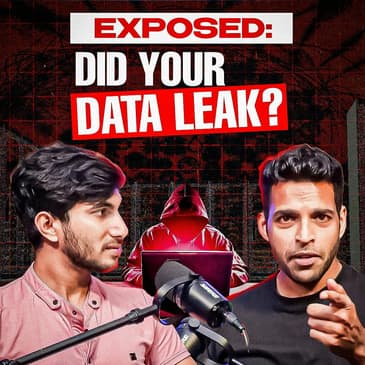

In this roundup, Roshan and Gunjan delve into the evolving landscape of India's startup ecosystem. They honor the late Ratan Tata, reflecting on his monumental contributions and the lasting impact of the Tata brand. The conversation shifts to India's ambitious plans to become a global semiconductor hub by 2025. They then discuss Elon Musk's technological advancements, like Starship and autonomous cybercabs, and their implications for India's labor market. Concerns over India's technological lag and Security issues, highlighted by data breaches like DotPay and Star Health Insurance are also discussed. It concludes with humorous insights on cultural events such as BookMyShow's Coldplay concert ticket fiasco and the significance of choosing the right partner.
Topics:
(00:00) Introduction
(01:04) Reflecting on Ratan Tata's Legacy
(08:39) Elon Musk's Latest Innovations
(14:43) India's Technological Challenges and Opportunities
(18:24) Rethinking Innovation Culture in India
(20:07) Data Breaches and Security Concerns
(23:28) The Fall of Topline and Startup Struggles
(25:37) Big Fundraisers and Success Stories
(29:12) Operator Talent Density Problem in Startups
(32:34) Concluding Thoughts and Life Advice
-------------------------------------
Relevant Links:
Lt. Gen Hooda's Tweet: https://x.com/LtGenHooda/status/1844384368338551250
Balaji Srinivasan's Tweet: https://x.com/balajis/status/1762777110626914509
Roshan's Tweet: https://x.com/RoshanCariappa/status/1844643870409359671
-------------------------------------
Connect with Us:
Linkedin: https://www.linkedin.com/company/startup-operator
Twitter: https://twitter.com/OperatorStartup
-------------------------------------
If you liked this episode, let us know by hitting the like button and share with your friends and family. Please also remember to subscribe to our channel and switch on the notifications to never miss an episode!
[00:00:00] Hello and welcome to another episode of The Startup Operator Roundup. I'm Roshan Kariyapa.
[00:00:04] And I'm Gunjan Saha. And together we break down the biggest headlines of India's growing startup ecosystem.
[00:00:10] If this is the first time you're tuning into the channel, then please consider subscribing to it for We Talk Everything Startups
[00:00:16] and have some fantastic conversations with founders, investors and operators.
[00:00:20] If you're a regular listener, you know what to do. Like this video, share it with your friends and family and rate us on your favorite podcast platform.
[00:00:34] We are back after two weeks. Dashera is on, a lot of things happening in the ecosystem, a lot of big headlines in the news as well.
[00:00:43] Roshan, what have you been up to? First of all, I hope you guys had a fantastic Dashera. It was certainly something in Bangalore, a lot of Pandals and everything.
[00:00:52] Did you go Pandal hopping this time? Not this time. I think I really took this time off to just recharge back at home.
[00:00:59] Sounds like a Gen Z thing to do. But yeah, Dashera was fine. Sadly though, the nation lost Ratan Tata, the doyen of the Tatas and really like an inspirational figure, like a father figure to the industry, I would say.
[00:01:17] And just reading about his life, his stories and so on and so forth, the last two, three days.
[00:01:23] The loss feels personal, I think for everyone in a really low, kind of a low trust society that we live in.
[00:01:31] Right. We don't trust as easily.
[00:01:34] The one brand that we really trusted with everything, from salt to steel to software was the Tatas.
[00:01:42] And just reading more about the challenges, the obstacles that Mr. Tata faced.
[00:01:49] Even from his young age, you know, I mean, one may think that he was born with a silver spoon, but then, you know, he had his own challenges as well.
[00:01:58] Like he wanted to go to the US and study, you know, architecture, whereas his father was very much insistent on, you know, him studying engineering and going to the UK.
[00:02:08] You know, his parents separated when he was still young and that was cause for a lot of bullying in school and so on.
[00:02:16] Right. He's not had it easy, but then he had a certain dignity and grace.
[00:02:21] Right. Which which is, you know, very rare for, you know, billionaires as such.
[00:02:26] Right. Of course, I mean, the Tatas are, you know, famously philanthropic.
[00:02:29] They've given away 100 billion plus.
[00:02:32] 65 percent of all his earnings given to charity.
[00:02:35] Yeah. All their fortunes, you know, for cancer hospitals, schools, so on and so forth.
[00:02:39] You only have to visit Jamshedpur to see how they've kind of developed the city itself.
[00:02:44] Right. I mean, it's it's really a very big loss, I would say.
[00:02:48] And I hope his spirit inspires all of us to do better.
[00:02:52] You know, there are many stories of Mr. Tata, but the one that comes to mind is the whole Jaguar Land Rover acquisition.
[00:02:58] So the story goes that in 1998, the Tatas had come out with the first diesel hatchback Indica and, you know, initial sales were not that good.
[00:03:09] And so, you know, Mr. Ratan Tata flew all the way to the U.S. to perhaps offer the factory to the Ford company instead.
[00:03:17] Right. And Bill Ford, who was the Ford CEO at that time, had some not so nice things to say and allegedly said that, you know, Tata shouldn't have even bothered building cars in the first place.
[00:03:28] Right. Mr. Tata came back very dejected, but also determined to sort of prove him wrong.
[00:03:34] And, you know, seven or eight years later, the Indica flew off the shelves.
[00:03:38] Right. Literally off the showrooms and was doing about one point one point four two lakh cars sales in Asia, Europe, Africa, etc.
[00:03:49] And this time around, around 2008, the Ford company was struggling during the global financial crisis.
[00:03:56] And had it not been for the government bailout, I mean, there would have been in even more trouble.
[00:04:01] And Mr. Tata was, of course, watching all of this with a keen eye.
[00:04:05] He moved in and he offered to buy up Jaguar Land Rover from Ford, both these iconic brands.
[00:04:13] And of course, I mean, you know, he had his moment.
[00:04:17] Right. And, you know, JLR initially struggled.
[00:04:21] But then after that, I think last financial year, they had their highest sales ever in about 10 years time.
[00:04:26] So a story that goes to show that you can be fiercely competitive, but still fair.
[00:04:34] Yeah. That was the type of person Mr. Tata was.
[00:04:38] And that's also how most stories start off in Italy. Right.
[00:04:41] I mean, think of Lamborghini, Ferrari.
[00:04:43] Yeah.
[00:04:43] Yeah.
[00:04:45] Man, like when you hurt someone, that becomes a very big motivation.
[00:04:50] It just becomes a fuel to go and do stuff. Right.
[00:04:52] Yeah. Lamborghini famously used to manufacture tractors.
[00:04:56] Tractors.
[00:04:56] Right. Before the Ferrari guy gave him the finger. Right.
[00:04:59] So, you know, what the story kind of illustrates is that you can be fiercely competitive, but you can also be fair.
[00:05:06] Right.
[00:05:07] You know, we're living in a time where, you know, it's growth at all costs.
[00:05:12] Right. And the ends matter more than the means.
[00:05:14] But, you know, people like Mr. Tata just embodied a certain way of doing things. Right.
[00:05:22] Even the fact that, you know, when 2611 happened, he was outside the hotel.
[00:05:26] You know, for three days he was outside the hotel.
[00:05:29] And, you know, the staff who were injured or, you know, sadly were killed.
[00:05:34] All of the families were taken care of.
[00:05:36] And to inspire people in a way that, you know, like case studies have been written about, you know, how the staff at the Taj evacuated the guests, even, you know, putting their own lives in danger.
[00:05:50] Right. I mean, phenomenal.
[00:05:52] So, yeah, the Tata name will live on forever and in no small part to its ratan, I would say.
[00:06:00] Right. So, absolutely. Even like as a country, I think there's so much of debt owed to the Tata.
[00:06:06] Absolutely.
[00:06:07] Think about, you spoke about the Taj, this iconic hotel in India.
[00:06:12] India, Air India. Right. Thanks to Tata.
[00:06:15] I think as a nation, like whenever we have pioneered something as a country, Tata's have always been there.
[00:06:22] Yeah. And it's not an easy thing building a business of that size, scale and complexity in India. Right.
[00:06:27] I mean, you know, these folks have been operating for 100 plus years. Right.
[00:06:31] And they've had to build, you know, during the colonial era, they've had to build during the license raj and have had to adapt, you know, to tremendous change post liberalization as well.
[00:06:42] Right. And they've stayed relevant.
[00:06:45] That brand, that brand has a certain ethos that I don't think will go away very easily. Right.
[00:06:51] So he really built an institution, I should say.
[00:06:54] And the great work is also continuing now.
[00:06:57] Tata has announced plans for two new semiconductor fabrication plants in India.
[00:07:01] One is in Gujarat and other one is in Hotsur. Right.
[00:07:05] And major phone manufacturing has already started in India.
[00:07:09] By 2025, I think all phones in India will be manufactured here only.
[00:07:14] Exports, imports are going to stop.
[00:07:16] And iPhones, Pro, Pro Max models are manufactured here.
[00:07:19] All of Samsung's flagship phones are manufactured in India.
[00:07:22] And I think the way Tata's are investing and not only Tata's, other players in the industry as well.
[00:07:28] Very soon, India might just might become one of those global hotspots for semiconductor manufacturing.
[00:07:34] See, it's also, you know, when you talk about nationalism, right?
[00:07:38] I mean, stepping in and taking that punt on a new market because it's important in the nation's interests.
[00:07:44] Right. Whether it's airlines, whether it is semiconductors, whether it is building a one lakh car.
[00:07:49] Right. I mean, think about it. Right. It's the cheapest car ever.
[00:07:53] And despite all of the production challenges they had, they had to actually move away from Singur and move to Sanand.
[00:07:59] Right. Which again set off a series of events that, you know, led to finally Mr. Modi becoming the prime minister,
[00:08:06] I would say chief minister and then prime minister, I would say, arguably.
[00:08:10] You know, they've always taken a role in nation building.
[00:08:13] And God knows India needs nation builders. Yeah.
[00:08:17] Well, in other part of the world, we also have Elon Musk, right?
[00:08:20] Who I think in this past few days, he just went rampage like starship.
[00:08:27] Imagine catching a rocket that is coming from the sky.
[00:08:30] Cyber cabs, completely autonomous.
[00:08:33] Uber, Ola.
[00:08:34] Doors are open like this.
[00:08:36] And then wait, but the kicker of it all was the announcement of Optimus, right?
[00:08:40] Robot that can do anything is what they're claiming.
[00:08:45] And what I'm excited about probably what a roundhouse will look like in 2025 now.
[00:08:49] Insane.
[00:08:50] Imagine like a robot did this or a robot did that.
[00:08:52] Some new reports coming up and whatnot.
[00:08:55] Yeah. Maybe like robots could do our job also.
[00:08:57] Right. Who knows?
[00:08:59] But hopefully people like us, I mean, they keep watching us.
[00:09:02] Don't forget to subscribe and share.
[00:09:04] I mean, we only have a few months, perhaps years before the robots take over.
[00:09:08] So you're watching the last human presenters, folks.
[00:09:12] You're making history.
[00:09:13] You kind of make it sound very morbid though.
[00:09:15] Yeah.
[00:09:16] I mean, it is.
[00:09:19] Hey, if they're serving drinks already,
[00:09:21] and if they're like playing like Pictionary and stuff,
[00:09:23] I mean, it's only a matter of time before they tell like really bad jokes on the roundup, right?
[00:09:28] So I'm saying it like it is.
[00:09:31] Okay. All right.
[00:09:32] But what did you think of those announcements?
[00:09:34] Like, did you see the video for Optimus?
[00:09:36] Yeah, I saw them and, you know, it's phenomenal, man.
[00:09:39] I mean, look, Elon is really the goat.
[00:09:42] Okay.
[00:09:44] Balaji Srinivasan had this post on Twitter sometime back, right?
[00:09:48] X, sorry.
[00:09:50] On how building in hardware is like many orders of magnitude,
[00:09:55] just way more complex, right?
[00:09:57] You can't recall products.
[00:09:58] A simple, you know, some malfunction here and there,
[00:10:00] and you recall something and gone.
[00:10:02] I mean, you're nearly bankrupt, right?
[00:10:04] Supply chains are so damn complicated.
[00:10:06] And you've had so many of these supply chain disruptions,
[00:10:09] whether it is, you know, this whole trade embargo with China or the,
[00:10:14] you know, COVID and so on and so forth.
[00:10:16] And still, you know, they've managed to ship tremendously well, right?
[00:10:20] And look at everything the guy is doing, right?
[00:10:22] I mean, just with Tesla, he could have been a legend,
[00:10:24] but he's got Tesla, SpaceX, you know, Starlink and a bunch of other things, right?
[00:10:30] Neuralink, SolarCity, I mean, boring company.
[00:10:33] Good God.
[00:10:34] I mean, you know, Elon is like a once in a, not, I won't even say once in a century, right?
[00:10:40] I mean, I think once in a thousand years sort of a phenomena when it comes to inventors.
[00:10:44] Really?
[00:10:44] Really?
[00:10:45] I mean, we're going to look back at this and think of him as some kind of a demigod, for sure, right?
[00:10:52] Because he's just changed everything.
[00:10:54] And just when you thought that, you know, your Chinese manufacturers were,
[00:10:58] you know, actually catching up with Tesla and so on,
[00:11:00] he goes and does this, right?
[00:11:03] With Optimus and like, you know, these self-driving cars and whatnot.
[00:11:07] I mean, the trajectory in which, you know, he's headed, anything is possible.
[00:11:12] So I saw a bunch of news on X again saying that, you know, this is niche and, you know,
[00:11:16] perhaps these cars, you know, won't work in India or these robots will be redundant here.
[00:11:21] I mean, we have plenty of labor and so on and so forth.
[00:11:24] But, you know, it's, everything starts as a niche, right?
[00:11:27] Your mobile phone was a niche.
[00:11:28] I mean, there was a time in the 90s which you, you know, carried a mobile phone.
[00:11:32] I mean, you stood out.
[00:11:34] I mean, you could actually, you know, hit someone on the head with that, right?
[00:11:37] So, but it's particularly, you know, I won't say worrisome, but it's concerning for India.
[00:11:45] I mean, you think about India with, you know, 1.4 billion people, right?
[00:11:49] Now, if, you know, an optimist in about three, four, five years is going to catch up in capabilities
[00:11:56] and in cost and in applicability to a point where, you know, human, you know, does not
[00:12:03] have to do simple things like plumbing, electrical, right?
[00:12:06] Or, you know, forget about those technical things, right?
[00:12:09] Even things like, you know, serving in hotels, right?
[00:12:13] And other things like driving and so on.
[00:12:15] Healthcare, right?
[00:12:16] I mean, I think like, imagine like there are robots placed in the hospital, like already
[00:12:20] it's burdened.
[00:12:21] I think there is one doctor for every 88,000 Indians or so.
[00:12:24] The number is something like that.
[00:12:26] And it's not just doctors.
[00:12:28] You need nurses, you need, you know, radiologists and so on.
[00:12:32] Yeah, that's the optimistic case, right?
[00:12:34] But what do you do with all these people?
[00:12:36] The scope of impact you can have in these kind of industries is massive for a country like
[00:12:40] India.
[00:12:41] Yeah, yeah, for sure, right?
[00:12:42] I mean, see, wherever there is a people skills and capability shortage, I think, you know,
[00:12:46] we can definitely solve it through these.
[00:12:48] But then, I mean, you also have this, you know, manpower, right?
[00:12:51] What are you going to do with these?
[00:12:52] I mean, we have a window right now where we need to like simply upskill these folks by
[00:13:00] many, you know, I would say like, you know, to the next level as soon as possible, you know?
[00:13:06] Because, yeah, I mean, the future is really uncertain, I would say, in that sense, you
[00:13:13] know?
[00:13:14] Yeah.
[00:13:15] But man, what a company.
[00:13:17] Like, what a company.
[00:13:18] I mean, they're just like, they're at the frontier, I would say.
[00:13:20] Would you compare, would you compare Elon to, sorry, rather, would you compare Bhavish
[00:13:24] to Elon?
[00:13:27] I mean, Bhavish has to bring his receipts, you know?
[00:13:31] I would say, I mean, yeah, sure, you know, I mean, he's got, he's got something to show,
[00:13:36] right?
[00:13:36] Ola is a significant achievement.
[00:13:38] Ola Electric is a work in progress at this point of time.
[00:13:41] And I think, you know, while we dunk on him for the terrible service and like all of
[00:13:45] the manufacturing problems they've had and so on and so forth, I know that it will get
[00:13:50] better, right?
[00:13:51] It will converge on some goodness at some point of time, right?
[00:13:55] But still, man, Elon is like incomparable.
[00:13:59] Like, forget about Bhavish.
[00:14:00] I think he's probably like surpassed jobs at this point.
[00:14:04] Wow.
[00:14:04] Yeah.
[00:14:05] Folks, let us know what you think in the comments, right?
[00:14:08] How do you compare, Elon?
[00:14:11] Okay, let's talk about how we are doing as a country also in terms of technology, right?
[00:14:17] During a recent lecture, the chief of DRDO, Mr. Samir V. Kamath, he expressed concerns
[00:14:23] that as a country, we are 10, 15 years behind than the countries that we aspire to be, right?
[00:14:29] And one of the biggest reasons he cited for that is that various organizations in the country
[00:14:34] operate in their own silos.
[00:14:35] There is not much collaboration happening.
[00:14:38] We are not investing enough in research and academia.
[00:14:41] So how do you see this translate in the years to come?
[00:14:44] We had a longer conversation at SSS Defense.
[00:14:48] You know, we'll publish the podcast maybe in the next one or two weeks, right?
[00:14:53] And we spent half a day at their facilities and we got to understand a lot more about how
[00:14:58] this defense procurement and R&D innovation, et cetera, works, right?
[00:15:02] Now, if you look at defense in India, I mean, it's largely left to DRDO, the ordinance factories
[00:15:08] and, you know, few other affiliate organizations.
[00:15:11] That's about it, right?
[00:15:12] And these are dated.
[00:15:14] I mean, they have a bit of an incentive problem in the sense that, you know, they don't have
[00:15:19] that real incentive to innovate, produce more and so on, right?
[00:15:25] Produce different and so on.
[00:15:28] But that's not going to cut it, right?
[00:15:30] I mean, we are looking at Atmanarbar Bharat.
[00:15:33] We want to indigenize.
[00:15:34] And our hearts are in the right place.
[00:15:36] But then, I mean, really our minds and bodies have to follow, you know?
[00:15:40] I mean, we really have to put in time and effort on these fundamental technologies.
[00:15:44] And I am optimistic even given the statement that, you know, I'm 15 years behind because
[00:15:49] we tend to jump curves, right?
[00:15:51] I mean, we jumped the desktop curve into the mobile curve, right?
[00:15:55] And we have a similar opportunity to, like, jump ahead and, like, be the, if not leaders,
[00:16:02] at least contenders in this whole AI world, right?
[00:16:04] If we start making investments at this point of time, at a large scale, I'm not talking
[00:16:09] about, like, you know, a few billions.
[00:16:11] I'm talking about a few hundreds of billions to begin with, at least, right?
[00:16:14] We have a fighting chance to be real contenders, right?
[00:16:19] I was listening to a story about, you know, Lieutenant General Huda on the ANI podcast with
[00:16:24] Smitar Prakash.
[00:16:25] And, you know, this was, you know, some years ago.
[00:16:29] And Lieutenant General Huda was trying to use open source in the army, right?
[00:16:37] And get away from the Microsoft OSS that we were using.
[00:16:41] But the people who were supposed to do that were kind of, like, pulling a wool over his
[00:16:45] eyes, right?
[00:16:46] And not really doing the work required, right?
[00:16:50] So they used to, like, fake their demos and whatnot, right?
[00:16:53] And this is shocking.
[00:16:54] It's absolutely shocking.
[00:16:55] I mean, I heard that and I was, like, really stunned, you know?
[00:16:59] This is the army we are talking about.
[00:17:00] This is the army that we are talking about.
[00:17:02] And, you know, he's a Lieutenant General, right?
[00:17:04] Right?
[00:17:06] And if this can happen at such a basic level, which is to shift from one voice to another,
[00:17:11] right?
[00:17:11] I can't even imagine, like, if that kind of attitude continues elsewhere, what it would
[00:17:16] be, right?
[00:17:17] You know, I used the word Jugaad almost accidentally in the SSS conversation.
[00:17:22] And both the founders, right?
[00:17:24] I mean, they had, like, a visceral reaction, right?
[00:17:27] That will not cut it.
[00:17:29] And I really, you know, applaud them, right?
[00:17:33] Because we definitely need to build that manufacturing culture, right?
[00:17:37] Emphasize on, you know, R&D, innovation, true R&D and true innovation, right?
[00:17:42] Not, like, using a pressure cooker to bake a cake kind of R&D, right?
[00:17:45] Or innovation.
[00:17:47] Jugaad will not cut it, for sure, right?
[00:17:48] I mean, it can help us at the margins.
[00:17:51] And, of course, you know, like, innovating with what you have is something that you will
[00:17:57] continue to have to do.
[00:17:58] But, man, for any fundamental innovation, I think we need to rethink the culture, for sure.
[00:18:04] So, in the lecture, he also mentioned that India needs its own equivalent of DARPA.
[00:18:11] DARPA is the, you know, research and innovation wing of the US Army.
[00:18:15] And DARPA also gave us the internet as we know it, right?
[00:18:19] Towards that, the Ministry of Defense has approved what is called the Technology Development Fund,
[00:18:25] right?
[00:18:25] This fund's sole objective is to fund high-risk projects in India, right?
[00:18:30] And, of course, there are things like IDEX, right?
[00:18:34] The Indian Innovation Defense Fund.
[00:18:36] Lot of talks about, you know, how can startups collaborate better with defense?
[00:18:40] It's happening.
[00:18:41] But I think the ball really needs to start moving on these.
[00:18:43] See, funding is obviously welcome, for sure.
[00:18:46] But I think if you fix the incentive problem, right?
[00:18:50] Again, make acquisition a lot more streamlined.
[00:18:53] The industry is more than capable of, like, coming in and, like, you know, building stuff
[00:18:57] for us, right?
[00:18:58] If you just figure out that incentive problem.
[00:19:00] If you make it hard and if you make it almost prohibitive for people to build something,
[00:19:04] lo and behold, people are not going to do that, right?
[00:19:07] Forget about, like, machine guns and whatnot.
[00:19:09] I mean, we won't even produce spark plugs if that were the case, right?
[00:19:12] And that's how you saw, right?
[00:19:14] I mean, people were happy importing Chinese stuff and reselling here.
[00:19:17] Yes, repackage them.
[00:19:18] Yeah.
[00:19:19] Up until you don't even have to repackage some of these commodity items, right?
[00:19:23] But they were happy until the supply chains got disrupted, right?
[00:19:28] Even now, we have, like, a huge deficit with China on the trade front, right?
[00:19:31] And it's only growing.
[00:19:34] So, yeah.
[00:19:35] I mean, there's a lot of work for us to do, I would say.
[00:19:40] Okay.
[00:19:40] So, last week, we also had a series of data breach in the country, right?
[00:19:45] On top of the news was DotPay.
[00:19:48] DotPay is the QR scanner that we usually use when we go ordering in restaurants.
[00:19:53] I think, like, restaurants should really stop putting QR codes on the table.
[00:19:57] It's annoying.
[00:19:58] COVID is done.
[00:19:59] I think it's high time we move on from that.
[00:20:02] And not only that, like, when you scan the QR code, right?
[00:20:05] One person went to the source code of the page that opens up
[00:20:07] and realized that all information of the restaurant is available.
[00:20:10] How much money they are making, what is the most ordered item and whatnot.
[00:20:13] And sitting from one restaurant, I can place an order in another one.
[00:20:16] Right?
[00:20:16] That is a serious, serious security hole.
[00:20:20] Not only that, more recently, Star Health Insurance had a data leak of 3.1 crore Indians.
[00:20:27] Their personal details, their health records were all made public.
[00:20:29] If you go to Google today and just write index pan, you'll get random pan card numbers of people on the internet.
[00:20:36] Yeah.
[00:20:37] I think this is another, we're talking about AI, we're talking about SaaS and whatnot.
[00:20:41] I think it's high time we start addressing security concerns as well.
[00:20:45] See, it's frustrating, but I'm not surprised, right?
[00:20:48] I mean, in India, we tend to think of data and privacy as first world problems, right?
[00:20:52] And we've somehow resigned to the fate that, you know, once you submit your details, I mean, it's up for use and misuse by people, right?
[00:21:02] Yeah, I mean, the Star Health is particularly shocking because here is the CISO, the Chief Information Security Officer of a large insurer, right?
[00:21:13] Perhaps the top five in the country who is trading all of this data on his official account, right?
[00:21:20] Imagine like the balls to be able to do that, right?
[00:21:23] I mean, that's just ridiculous, like absolutely ridiculous, right?
[00:21:27] And for something like, I think, one and a half crore or something like that, right?
[00:21:33] Again, it's just such an absurd situation, right?
[00:21:37] And if it can happen there, I mean, I'm sure it can happen elsewhere as well, right?
[00:21:41] I mean, we have plenty of financial services companies, right?
[00:21:44] I hope they relook at their systems and processes and technologies, you know.
[00:21:51] But think of what this means, right?
[00:21:53] Like your health insurance, your Aadhaar ban, your bank statements, right?
[00:21:58] They're all tagged into it.
[00:22:00] Now imagine if this falls into the wrong hands.
[00:22:03] We are seeing all of these scams happening, you know, getting a call from custom, getting a call from a police station and whatnot.
[00:22:09] Now imagine if they try to sound official by using these kind of data.
[00:22:12] I don't want to sound like a doomer, but we're already screwed, right?
[00:22:16] Because I'm sure we're compromised at a more fundamental level, at a network or a device level anyway, right?
[00:22:22] You saw, I mean, no, no, you don't even have to do that, right?
[00:22:26] I mean, you saw what people are capable of like a few weeks back when these pages and phones started exploding, right?
[00:22:32] And it's crazy.
[00:22:33] I mean, forget about us.
[00:22:35] The Indian army, for example, right?
[00:22:37] I mean, uses these Oppo or Samsung phones at this point, right?
[00:22:41] We're all Chinese made.
[00:22:44] And we're going to fight a war against them.
[00:22:47] So it's tough, man.
[00:22:49] It's a funny time that we are...
[00:22:51] Yeah, I mean, it truly is exhausting sometimes thinking about all of these challenges.
[00:22:56] But again, hope springs eternal.
[00:23:01] Okay, but that might not be the case for folks in Topline.
[00:23:05] Topline is backed by Tiger Global, Sequoia, all the big names, right?
[00:23:09] But last week they announced that they're winding down operations.
[00:23:11] They're not able to continue.
[00:23:14] What did you make of that?
[00:23:15] Yeah, see, Topline was one of those really hot companies, right?
[00:23:20] In 2021.
[00:23:21] I mean, they raised, I think, $17.5 million.
[00:23:24] Again, from market investors, Sequoia and, you know, Tiger.
[00:23:29] And we tried to get Rishan on the podcast some time back as well.
[00:23:33] It's really unfortunate, you know.
[00:23:34] I mean, they were pegged to that whole product-led growth wave.
[00:23:37] They used to help companies like analyze cohorts and like, you know,
[00:23:42] improve retention, engagement, so on.
[00:23:45] And considering how the whole PLG motion itself has sort of capped out, right?
[00:23:50] And also, I mean, there isn't as much money right now to spend on experimental technologies, right?
[00:23:56] You're either a need or a nice to have.
[00:23:59] And if you aren't like a burning need at this point of time,
[00:24:02] I mean, people are really rethinking your expenses as such.
[00:24:05] So I suppose, I mean, they couldn't find that deep product-market fit required, right?
[00:24:11] I mean, it's unfortunate, really unfortunate.
[00:24:14] And I hope that, you know, the founders come back stronger from this and build a fantastic company after this.
[00:24:20] So our thoughts with the team for sure.
[00:24:24] Winding up a company is one of those really difficult things to do.
[00:24:27] And yeah, it's just sad, I would say.
[00:24:30] Well, but there was some startups.
[00:24:31] It's kind of an end of an era, I would say.
[00:24:34] End of an era for?
[00:24:35] For the 2021-ish startups, you know, I would say.
[00:24:39] And there are plenty of others.
[00:24:41] There are plenty of others who are right now pretty much on life support, right?
[00:24:45] I think, you know, there was a huge proliferation of all of these, I would call experimental tools, technologies, plugins, software, whatever.
[00:24:58] That given the tightening of the belt right now, given that people are relooking their budgets and so on,
[00:25:04] especially over the last year and a half, two years, a lot of these guys are going to have a really hard time.
[00:25:10] Let's talk about some of the big fundraisers, right, from the past couple of weeks.
[00:25:14] So the guys at Watfix must be having a really baller of a time.
[00:25:17] They raised $125 million from Warburg Pincus and SoftBank Vision Fund too.
[00:25:22] But someone who is enjoying even more than them are the folks that open air.
[00:25:26] There is $6.6 billion at a valuation of $157 billion.
[00:25:32] Insane. Only.
[00:25:33] Imagine that.
[00:25:34] Yeah, yeah.
[00:25:36] Look, man, Watfix is a phenomenal story, you know.
[00:25:39] $125 million.
[00:25:42] And I think they did a $50 million ESOP buyback, right?
[00:25:46] I mean, we still won't get a party from these fellows.
[00:25:49] Even though we know quite a few folks from Watfix.
[00:25:51] Yeah, yeah, exactly.
[00:25:52] Right?
[00:25:53] We know folks who are like, you know, from Flipkart, MeShow, Watfix, and we haven't got one party.
[00:25:59] But this is amazing.
[00:26:01] Amazing.
[00:26:02] I mean, Watfix has kind of been at the forefront of this digital adoption platform category, right, DAP.
[00:26:09] And they've had to compete with the likes of WalkMe, which got acquired by SAP.
[00:26:14] Right?
[00:26:14] Kind of a minor victory, I would say.
[00:26:16] Right?
[00:26:16] For Watfix.
[00:26:18] And they're growing really well, man.
[00:26:20] I mean, they're probably at around $60, $65 million ERR at this point.
[00:26:23] And a lot of the revenue comes from the US.
[00:26:25] So, yeah.
[00:26:27] I mean, there could be a $100 million company in the next year, perhaps.
[00:26:31] Right?
[00:26:31] So, fantastic stuff.
[00:26:33] Absolutely fantastic stuff.
[00:26:35] And, yeah.
[00:26:36] Kudos to Khadim and the team.
[00:26:38] They've built a really, really good company, I would say.
[00:26:41] Right?
[00:26:42] Well, what can one say about OpenAI?
[00:26:45] I mean, but I do think, like, how do you motivate these engineers to work?
[00:26:49] Right?
[00:26:49] I mean, they're all worth a few million dollars at least.
[00:26:51] Right, yeah.
[00:26:51] So, they must have, like, some mad retention bonuses.
[00:26:55] Right?
[00:26:55] Otherwise, you just go to competition.
[00:26:57] No, forget about competition.
[00:26:58] You chill, man.
[00:26:59] I mean, like, a few million dollars, I think, yeah.
[00:27:01] A lot of folks would be, like, very happy with that.
[00:27:03] Right?
[00:27:05] Yeah.
[00:27:05] It's crazy.
[00:27:06] I don't know.
[00:27:07] But, see, in this whole AI world, right?
[00:27:09] I've said this earlier also.
[00:27:10] I think all of these numbers will get, like, crazy refactored.
[00:27:14] Right?
[00:27:14] I mean, it's insane.
[00:27:17] You know, in the pre-AI world, a few billion was, like, you know, a big deal.
[00:27:21] Right?
[00:27:22] Maybe in the post-AI world, a few hundred billions are the norm.
[00:27:25] Who knows?
[00:27:26] Right?
[00:27:27] We also had safe superintelligence.
[00:27:29] Ilya's company raised, I think, how much?
[00:27:31] One and a half billion dollars.
[00:27:33] And all they have was, like, a landing page of the website.
[00:27:36] Amazing.
[00:27:37] So, yeah.
[00:27:38] We're going to have to rethink these numbers, I think.
[00:27:41] We're talking about AI.
[00:27:42] Reid Hoffman had posted a video where he's talking.
[00:27:46] Super cool.
[00:27:47] Yeah.
[00:27:47] There is an AI-generated video as well.
[00:27:50] We'll let you take a look at it.
[00:27:51] I can do literally nothing wrong in the next 20 years.
[00:27:55] Wait, that's what you took away from this?
[00:27:57] Hi, Reid Hoffman here.
[00:27:58] You may remember, I created a digital clone of myself, Reid AI.
[00:28:02] Well, I decided to do something new and fun.
[00:28:05] And we made a younger version of Reid AI.
[00:28:07] One that was only trained on materials up to 2004.
[00:28:11] And we set it up as a Skype call through time.
[00:28:15] This will be fun.
[00:28:16] Roshal, would you ever make an AI clone of yourself?
[00:28:19] I'd rather do it myself than have someone else do it, right?
[00:28:22] I mean, I wonder what sick and twisted things they will have do it.
[00:28:26] But, yeah, this is amazing.
[00:28:28] You guys should check out Hejan.
[00:28:29] Hejan AI.
[00:28:31] Right?
[00:28:31] It helps you create digital avatars and you can kind of like program it to speak like you and so on.
[00:28:38] Right?
[00:28:38] So, I'm just trying to sneak one of those into a presentation at some point.
[00:28:42] Right?
[00:28:43] Could be fun.
[00:28:44] Yeah.
[00:28:45] Okay.
[00:28:45] There's a tweet by Nikhil Kumar.
[00:28:48] He says that Indian startup ecosystem has an operator's talent density problem.
[00:28:53] There are far too many young folks leaving optionaries on the table to become founders
[00:28:57] before building the muscle of scaling existing businesses.
[00:29:00] This is one stark difference I see between the Valley and here.
[00:29:03] I think it's a very, very pertinent point, right?
[00:29:06] I mean, we don't have as many operators, if you ask me, right?
[00:29:09] In any of these functions, right?
[00:29:11] Product, marketing, engineering, sales, etc.
[00:29:15] Right?
[00:29:15] I mean, who has seen like 20, 50 million dollar scale?
[00:29:18] Right?
[00:29:19] You'll find handful.
[00:29:20] I mean, like you can perhaps count them on your fingertips, right?
[00:29:23] When I say 50 million, I mean 0 to like 20, 0 to 50 kind of a scale, right?
[00:29:27] I mean, it's very, very difficult to find these folks.
[00:29:30] And, you know, we've seen over the years that the downside of being a founder has like,
[00:29:36] you know, drastically reduced.
[00:29:37] So any of these folks can raise a small round, hire a few people and start a company of their
[00:29:43] own.
[00:29:43] A lot of folks are doing that right now, you know?
[00:29:47] And that's good also, right?
[00:29:49] But the flip side of that is you don't have as many people staying the course and trying
[00:29:54] to build these large companies which already are a little ahead, right?
[00:29:58] It is a real problem.
[00:30:00] And I was talking to someone just last week, right?
[00:30:04] Who's starting up on their own.
[00:30:05] And that was, you know, one of my prime contentions that, you know, maybe they should work for a
[00:30:10] different startup in the same domain for a couple of years and then gain the experience,
[00:30:14] the domain knowledge to like, you know, figure out what to build.
[00:30:17] But, you know, when you have that startup booth, right?
[00:30:21] There's no helping that, right?
[00:30:24] I mean, so people have to go and live out their destinies, I think, right?
[00:30:27] But it is a huge problem.
[00:30:29] It is a huge, huge problem.
[00:30:31] It's also not just the number of operators, right?
[00:30:34] Like, what even I've been noticing when I'm talking to people is that they're just there
[00:30:39] to like kind of like a stopgap solution to a problem.
[00:30:41] It's not thinking about, okay, how can this become 10x maybe in a year or something?
[00:30:46] People are not thinking mindset, right?
[00:30:49] Look, people are not thinking long term, right?
[00:30:51] I mean, you can do reasonably well if you do two years in one company, another two years
[00:30:55] in another company and so on and so forth, right?
[00:30:57] I mean, you could, your salary will appreciate like 20-30% every, you know, every three years,
[00:31:04] every two, three years, right?
[00:31:05] When you shift, you'll get a bunch of equity in a bunch of these startups, right?
[00:31:09] I mean, you will have like a diversified portfolio of equity, so to speak, right?
[00:31:16] But the downside is, I mean, you don't really learn to build for scale, you know?
[00:31:21] And I think that's like cashing in too early, if you ask me, you know?
[00:31:26] I'm not saying you should stay five, seven, eight years at every other company that you
[00:31:30] join, but at least the intent has to be there that, you know, I want to be there for the long
[00:31:35] term, you know?
[00:31:36] And again, on the flip side, right?
[00:31:38] I mean, founders, if you really want your operators to stay, I mean, you should really
[00:31:41] incentivize them, right?
[00:31:42] I think having the right incentives in place really matters a lot.
[00:31:45] Absolutely, absolutely, right?
[00:31:46] Because look, we just mentioned OpenAI, right?
[00:31:49] I mean, all of these folks, why should they stay, right?
[00:31:52] I mean, there needs to be enough incentives for these folks to again stay and like build
[00:31:58] for the long term, right?
[00:31:59] I mean, yeah.
[00:32:00] So, it's a double-sided problem, I would say.
[00:32:02] But it's a very pertinent point.
[00:32:04] So, kudos to Nikhil.
[00:32:06] Okay, let's conclude this conversation by talking about what happened a few weeks back.
[00:32:13] BookMyShow really had a Coldplay, man.
[00:32:18] It was a, what a bugger of a move.
[00:32:20] I mean, I would have loved to attend the Coldplay concert.
[00:32:23] Guess who got tickets?
[00:32:28] Yeah, not really liking this right now.
[00:32:32] But now they announced that they're gonna bring back more tickets for the show.
[00:32:35] So, maybe fingers crossed.
[00:32:37] Guess whose concern it is not.
[00:32:40] Alright, folks, while this chat continues, we hope you have enjoyed the conversation until now.
[00:32:45] If you did, please give us the thumbs up, read this episode on your favorite podcast platform
[00:32:49] and keep those comments coming and we love going through them.
[00:32:53] We have some fantastic episodes coming up in the podcast.
[00:32:56] I want to end with some life advice.
[00:32:58] Okay, go for it.
[00:32:59] I think this is why you should marry the right girl.
[00:33:03] If you want Coldplay tickets.
[00:33:07] Alright guys, I think this is where we cut.
[00:33:09] Have a great week.
[00:33:10] We'll be back again with more exciting updates in the days to come.
[00:33:13] Take care.
[00:33:14] Have a good time.
[00:33:16] Great time.