

In this episode of the Startup Operator Roundup, Roshan and Gunjan delve into key developments in India's vibrant startup ecosystem. They discuss the significance of freedom for startups, the technological advancements in India's digital infrastructure, and the promising updates in UPI's payment system. Highlights include Sarvam AI's innovation in Indian language models, Krafton's plans for an R&D center in India, and significant fundraises by Ather Energy, Fresh Bus, and Skydo. In this week's talk of the town they touch on Google's Eric Schmidt's becoming an arms dealer and Peter Thiel's take on the current state of AI.
00:00 Introduction
00:29 Celebrating Independence Day and Startup Freedom
02:37 Sarvam AI: Revolutionizing Indian Languages
08:00 UPI Circle: Expanding Financial Inclusion
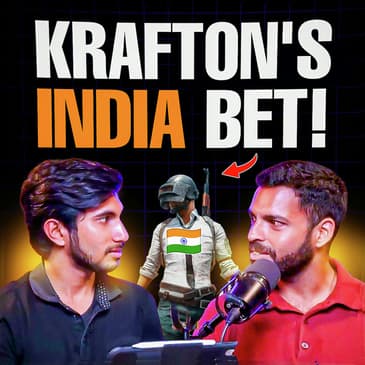
11:20 Krafton's R&D Center in India
12:54 Startup Fundraising Highlights
17:24 AI in Warfare: Eric Schmidt's Vision
23:26 Peter Thiel on AI's Future
25:26 Ghana's Acquisition by Radio Mirchi
26:59 Conclusion and Sign Off
-------------------------------------
Click here to get regular WhatsApp updates:
https://wa.me/message/ZUZQQGKCZTADL1
-------------------------------------
Connect with Us:
Linkedin: https://www.linkedin.com/company/startup-operator
Twitter: https://twitter.com/OperatorStartup
-------------------------------------
If you liked this episode, let us know by hitting the like button and share with your friends and family. Please also remember to subscribe to our channel and switch on the notifications to never miss an episode!
[00:00:00] Hello and welcome to another episode of the Startup Operator Roundup. I'm Roshan Karayapa.
[00:00:04] And I'm Gunjan Saha and together we break down the biggest headlines of India's growing startup ecosystem.
[00:00:16] If this is the first time you're tuning into the channel then please consider subscribing to it for
[00:00:20] WeTalk Everything Startup. And if you're a regular listener you know what to do like, share, subscribe,
[00:00:25] drop, comment, rate, do all the good stuff. This has been a long weekend.
[00:00:31] It was not just Independence Day but Friday was an unofficial off for many also.
[00:00:37] Speak for yourself, I mean I was working. So yeah it is what it is. I hope you guys had a great 78th Independence Day.
[00:00:46] So yeah lots of optimism in this episode as well hopefully.
[00:00:49] Yes, since we're on the topic of freedom let's talk about what freedom means for startups.
[00:00:56] It could mean freedom from high compliance costs, freedom from talent shortages.
[00:01:00] I think over the past few years we have made great progress in building infrastructure.
[00:01:05] So that's freedom from bad infrastructure as well. And slowly and steadily we are moving towards the
[00:01:11] whole Atmanirbhar Bharat vision.
[00:01:14] Yeah, baby steps along the way. I mean I'll add freedom of thinking without constraints.
[00:01:18] I think for too long Indian entrepreneurs were happy you know just solving small local problems.
[00:01:26] I think you know since then our horizons have kind of broadened.
[00:01:30] You know especially when you talk about new technology leaps like AI and so on.
[00:01:34] I think it's important for us to think about large global problems as well being solved out of here.
[00:01:40] So yeah freedom in all respects for us.
[00:01:42] Yeah, and also there have been a lot of population scale problems that have been solved with tech adoption in India.
[00:01:47] See that's the amazing thing about solving for India as well right?
[00:01:51] I mean if you solve for a billion people I mean that's like a sixth or seventh of humanity itself.
[00:01:55] You know so it's a very scalable solution that you could take to other parts of the world.
[00:02:00] On the technology front, Sarvam AI also announced a set of APIs to build on top of you know the India stack.
[00:02:06] Yeah, and they're doing some really brilliant job at it and I think that unlocks a lot of potential.
[00:02:11] We'll talk about that.
[00:02:12] UPI also announced a big update for the first payment infrastructure.
[00:02:17] It introduced what it's called UPI circles and that helps delegate your bank accounts to others in your family or your network.
[00:02:26] Crafton has also announced plans to set up an R&D center in India and we have some interesting fundraisers along the way.
[00:02:33] We'll talk about that as well.
[00:02:34] So let's get started.
[00:02:37] Roshan you have been following Sarvam AI you know closely and we have had founders on the podcast.
[00:02:43] Last week they held an event.
[00:02:45] Nandan Nilekani also attended it and they released a set of APIs which kind of is like ChatGPT 4.0 but for Indian languages.
[00:02:57] The model is fine-tuned to Indian languages.
[00:02:59] India has over 22 official languages over 1600 dialects.
[00:03:03] So when we talk about using tech to solve population level problems, I think this one is a great example.
[00:03:09] Yeah, it's amazing.
[00:03:10] You know we have an English speaking bias all of us, right? City rats.
[00:03:14] But I think about 150 million of us speak English in India.
[00:03:18] Probably around that much, right?
[00:03:20] There's still a whole bunch of people who are native in other languages and there's no shortage of languages in India, right?
[00:03:26] I mean we have like such a diverse population.
[00:03:29] So what Sarvam has been able to do is build compatibility with about 10 languages like Bengali, Kannada, Talgu, Tamil and so on and so forth.
[00:03:38] All the popular ones, Hindi and so on, right?
[00:03:40] So they've open sourced a couple of these models for the public as well to build on top of it.
[00:03:47] One is a text model and the other is this language model called Shukra, I think.
[00:03:51] And then they have a whole bunch of proprietary models as well on specific use cases like legal assist and so on.
[00:03:59] It's fabulous.
[00:04:01] I mean I just saw a demo of the native language model.
[00:04:05] Now, forever and forever, IVRs have been just plain weird in India, right?
[00:04:10] I mean for starters they're in English.
[00:04:13] And to top it, I mean it's not even the kind of English that we speak, right?
[00:04:17] I mean it's a very Angre's English, right?
[00:04:22] I mean it's the kind of English, you know, Gunjan speaks after a couple of rounds of whiskey, right?
[00:04:26] So, I mean what I saw was that even the accent was Indian, right?
[00:04:33] I mean the English that was spoken was in an Indian accent.
[00:04:37] It detects what language is being spoken.
[00:04:39] So if you were to speak in Hindi and say something like, you know Tamil, I mean the reply will be in Hindi, right?
[00:04:48] And then you can start talking Tamil as well.
[00:04:50] Almost like how all of us speak, right?
[00:04:54] We're all bilingual, trilingual, like multilingual when we speak, right?
[00:04:58] I mean there are words in Tamil, there are words in English, Hindi that are spoken about.
[00:05:03] The good thing is that it's able to catch those words, right?
[00:05:07] Reasonably well.
[00:05:08] And reply in a way that you can understand.
[00:05:11] So, fabulous stuff.
[00:05:12] I think this whole sales assistant, customer experience, service assistant, etc.
[00:05:17] This whole IVR technology is going to definitely going to get a leg up with this for sure.
[00:05:24] On the legal side, I think look legal and research, right?
[00:05:29] These are two areas I feel like chat GPT and all of these language models can solve like yesterday, right?
[00:05:36] They have this hallucination problem, which is that they make up shit.
[00:05:41] You know, I mean that is something that everyone is kind of trying to solve right now to minimize that basically.
[00:05:48] But otherwise, I mean just condensing like vast probes of information into like really the essentials is something that, you know, chat GPT and the likes can do, right?
[00:06:00] And Sarvam is really good.
[00:06:03] I mean they made a good attempt at that as well.
[00:06:05] So, yeah, fabulous stuff, man.
[00:06:07] I mean I remember, you know, a year back or something, Sam Altman came and threw the gauntlet that, you know, rather than build an LLM of your own, you guys should build on top of that.
[00:06:17] Build applications or something.
[00:06:19] And people have taken it seriously, you know.
[00:06:22] And again, fabulous to see that, you know, Mr. Nandan Nilekhani has supported this initiative.
[00:06:28] I think, yeah.
[00:06:30] I mean every consequential large-scale problem, you kind of trace it back enough and then you will find Nandan's hand on that, right?
[00:06:37] So, fantastic stuff.
[00:06:39] And hopefully we have the Sarvam AI team on the pod sometime to talk about it at length.
[00:06:44] Yeah.
[00:06:45] So, one of Sarvam's customers is Srimandir app, right?
[00:06:49] Oh, yeah.
[00:06:50] Right?
[00:06:50] And I won't say that we're going to publish it for the third time.
[00:06:54] People will find me and kill me, right?
[00:06:56] I mean, so you guys just have to wait it out.
[00:06:59] Yeah.
[00:07:00] No, but it'll be coming soon.
[00:07:01] Coming soon.
[00:07:02] Hopefully.
[00:07:02] Yeah.
[00:07:03] All depends on the producer.
[00:07:05] Okay.
[00:07:06] So, Srimandir app is one of their customers and they said that they have processed more than 270,000 transactions so far using this voice model.
[00:07:15] Now, what got me thinking is that today when you put your number in policy, you get the spam calls, right?
[00:07:20] Now, if these calls start sounding more and more natural, don't you think like there'll be a lot of other security?
[00:07:28] Yeah, of course.
[00:07:28] I mean, look, I have been fooled more than a couple of times, right?
[00:07:33] Right.
[00:07:35] And, yeah, I mean, it can happen.
[00:07:36] Yeah, then I got a call from a plus one number, US number saying, hi, this is the telecom authority of India.
[00:07:44] Yeah.
[00:07:44] I mean, any of these technologies, right?
[00:07:46] I mean, with new innovation, there is new possibilities of fraud and spam and misuse and so on and so forth.
[00:07:52] But I guess, you know, we'll all have to get smarter and be more cautious.
[00:07:56] That's the only way.
[00:07:57] Savdhan rahi hai hai, satark rahi hai.
[00:07:58] Exactly.
[00:08:00] Okay, let's talk about the big announcement that UPI made.
[00:08:03] They launched what is called the UPI circle feature.
[00:08:06] This is expected to be useful for families where one member owns the bank account, but they want other family members to access it as well.
[00:08:14] This kind of reminded me of a few apps that you use around school, class 11, 12, where you load up a wallet or let's say max 10, 20K, your family would load it up and you would get this debit card, which you could transact from.
[00:08:28] And that account would be managed by my parents.
[00:08:31] And this feature sounds very similar to that.
[00:08:34] It allows the primary UPI user to link trusted secondary users on the UPI app for partial or full delegation of payment.
[00:08:43] It also aims to expand UPI usage to unbanked users, folks who don't have a bank account.
[00:08:50] So when we talk, when we say that, you know, India is really putting an effort to drive financial inclusion, but the financial inclusion is happening from across various angles, not just UPI or, you know, your Jandhan bank accounts, but a lot of motions are in play.
[00:09:04] Yeah, so this is fantastic.
[00:09:06] I mean, see, if you look at UPI growth itself, right?
[00:09:09] I mean, the payment and the transaction aspect of things can grow by volume and value, right?
[00:09:16] And, you know, you can make that more robust with 2.0.
[00:09:20] We saw that, you know, you can make offline payments, you can use it like a wallet and so on and so forth.
[00:09:25] There are two other broad areas that you can kind of look at.
[00:09:29] One is financial services and the other is financial management, right?
[00:09:33] Or money management.
[00:09:34] Let's put it that way.
[00:09:35] Now, financial services in terms of credit and so on and financial management in terms of just giving people the ability to sort of manage their money through like a typical software, right?
[00:09:50] You know, and this, I feel this whole mechanism is on the latter one that I spoke of, right?
[00:09:58] Which is that, hey, there is one account does not have to be constrained by one phone number.
[00:10:02] I can tag it with as many as five phone numbers and there are enough checks and balances to prevent fraud, right?
[00:10:09] And yeah, typical UPI account.
[00:10:12] Let's say if in a family, there is one person who has it.
[00:10:15] I mean, you know, their kids can perhaps use it or elderly parents, so on and so forth.
[00:10:19] So it's awesome.
[00:10:21] It's awesome.
[00:10:21] I mean, it's just going to widen it to a larger base.
[00:10:24] I mean, newer use cases are going to emerge, right?
[00:10:27] And yeah.
[00:10:28] It will also help other companies build on top of this feature, right?
[00:10:32] Money management.
[00:10:33] Yeah.
[00:10:33] I mean, think of like split wise, right?
[00:10:36] With split wise, you're like able to group expenses of other friends.
[00:10:41] I'm pretty sure that, you know, if you look at the roadmap ahead, right?
[00:10:45] I mean, this might figure at some point, right?
[00:10:49] So yeah, exactly on those three lines, right?
[00:10:52] One is transaction, then financial services, and then some kind of money management via this whole app module is perhaps what they're thinking of.
[00:11:01] Fantastic stuff, man.
[00:11:02] I mean, I just hope that there are more business use cases that kind of emerge, right?
[00:11:09] UPI is still not the go-to for businesses as such.
[00:11:11] So I hope people transact more high value things via UPI.
[00:11:17] Let's see.
[00:11:19] Okay.
[00:11:20] Next up, Crafton is planning to set up an R&D center in India.
[00:11:24] Crafton is a developer of PUBG and BGMI.
[00:11:28] The new facility will be creating games that resonate with the Indian culture.
[00:11:32] It's much more contextualized for India.
[00:11:34] And some of the probable locations could be either Bangor or Pune.
[00:11:38] The details are still being finalized.
[00:11:39] In the Independence Day speech, also Prime Minister gave a big focus on future of gaming in India.
[00:11:46] And yeah, I mean, Crafton is one of the big market players.
[00:11:50] They are setting up an R&D.
[00:11:51] Will definitely lead to more jobs in that area.
[00:11:55] And some interesting games as well.
[00:11:57] Maybe we'll see a Bangalore traffic run or something of that sort, right?
[00:12:02] How do you dodge all the potholes and get to your office in like 45 minutes straight?
[00:12:07] So, fantastic stuff.
[00:12:09] I mean, like, look, I mean, there's big enough target segment of gamers here in India and developers here.
[00:12:17] So, it's a no-brainer for all of these folks who have moved here yesterday.
[00:12:21] It's good to see that they're finally like here.
[00:12:24] It's also the gaming dynamic in India is also quite peculiar, right?
[00:12:28] One, of course, there's the games like PUBG and all, which are very popular among college or like the younger folks.
[00:12:34] And then you have the likes of Candy Crush and Farmville, which are hugely popular in like, you know, Middle East folks.
[00:12:42] Yeah.
[00:12:42] So, big option.
[00:12:43] People who are like 30 years older than me.
[00:12:45] At least.
[00:12:47] Happy birthday, by the way.
[00:12:50] That's so random, dude.
[00:12:53] Okay.
[00:12:54] So, a lot of news last week was about the Independence Day celebration, but there are a few startups that made headlines in the fundraising space as well.
[00:13:02] Ather Energy raised 600 crore rupees or 71 million dollars.
[00:13:05] And they're finally a unicorn.
[00:13:07] I don't know like why they weren't before.
[00:13:09] They're a fantastic company.
[00:13:10] Nice.
[00:13:11] Nice.
[00:13:11] And the lead investor in this round was National Investment Infrastructure Fund.
[00:13:16] Then we have mobility startup Fresh Bus that raised around 87.5 crore rupees or 10.5 million dollars from Maniv, Shell Ventures, Altaria Capital and Riverwalk Holdings.
[00:13:28] Then we have Skydo that does international payment management.
[00:13:32] They raised 5 million dollars from Elevation Capital.
[00:13:35] Good.
[00:13:36] I mean, FinTech is always there.
[00:13:38] This Fresh Bus, right?
[00:13:40] When I was reading up about it, it really made me think that it's only because the country has invested in a lot of good road infrastructure that we are now seeing more companies like Fresh Bus and there's Intercity.
[00:13:54] Nice.
[00:13:54] All of these companies come up.
[00:13:55] So, it would be harder for sure, but it's an internal problem to solve, right?
[00:13:59] I mean, with the scale of country that India is for sure.
[00:14:03] Connectivity is like at the heart of everything.
[00:14:06] But, yeah, I mean, people who've flown in from abroad as well, I mean, often are amazed by the kind of roads that we have, the connectivity we have outside of cities and states.
[00:14:20] But, yeah, I mean, sadly, we'll have to really look at our cities and do something about it, you know?
[00:14:25] Yeah, I mean, some of this is like the subject of like this whole federalism and stuff, right?
[00:14:31] It is a state subject and even devolved from that also.
[00:14:36] But, yeah, good stuff.
[00:14:39] And the Aether fundraise is perhaps like a last call for all the investors, right?
[00:14:43] Pre-IPO.
[00:14:43] Pre-IPO.
[00:14:44] So, I'm really looking forward to that.
[00:14:46] I mean, we all saw that Ola Electric IPO'd, right?
[00:14:51] So, Aether will be an interesting one for sure, right?
[00:14:53] Ola also had hosted some Sankalp event recently.
[00:14:57] They announced newer models for its, you know, S1, for its e-scooter lineup, some new battery also, revolutionary battery.
[00:15:07] And they also, Bhavish also in one slide claimed that Ola is the second largest seller of EV bikes, right?
[00:15:15] But some Twitter user pointed out that he has completely left out all Chinese companies in that list.
[00:15:21] I mean, it is what it is.
[00:15:23] So, I saw this weird tweet by Mr. Vivek Vadwa, I mean, who often used to write for Harvard Business Review and so on, right?
[00:15:30] I mean, I remember reading his articles.
[00:15:33] He said Bhavish is like Elon minus the ego issues and something of that sort, right?
[00:15:40] So, I don't know.
[00:15:41] Interesting.
[00:15:42] I mean, people definitely have their hopes upon Bhavish, right?
[00:15:45] I mean, heck, I would bet on him as well.
[00:15:47] So, let's, we need plenty more Bhavish's for India to prosper.
[00:15:52] Nice.
[00:15:53] Cool.
[00:15:53] For the talk of the town section, the good folks at Bloom Ventures have started their podcast.
[00:15:58] Yeah.
[00:15:59] And the first episode, they had Girish Matrabhotam, co-founder and ex-CEO of Freshworks.
[00:16:06] They had a really interesting conversation, right?
[00:16:09] And Girish gave some great analogies on cricket, on how, and if you remember, we also discussed this in the roundup.
[00:16:15] When Freshworks filed for its IPO, there was a big section on like how they see Rajnikan, right?
[00:16:21] And this conversation dives into that as well.
[00:16:23] If you guys haven't already, do take a look at that episode.
[00:16:27] It's out on YouTube.
[00:16:28] Rajan, did you?
[00:16:29] I've saved it for listening later, but yeah, seems like an interesting episode.
[00:16:36] Particularly, I'm interested in the bit where they talk about Madras FC, right?
[00:16:40] Which is Girish's passion project.
[00:16:43] So, I mean, he's put in something like 10 million plus in that apparently, right?
[00:16:48] So, amazing.
[00:16:49] Amazing.
[00:16:50] So, I really, I mean, I get really like emotional about people investing in sporting stuff in India, man.
[00:16:57] This is great, right?
[00:16:58] I mean, like first you are, you're building one of the most iconic sales brands in India.
[00:17:03] Then you take the company public, company does well.
[00:17:08] The money you are, you're getting from there, you're investing it back into society like through sports.
[00:17:12] Yeah.
[00:17:12] Which is why, I mean, you know, I really mean it when I say that we need like 100, 200 more Girish's, Bavish's, you know, Sachin Bansal's and so on and so forth.
[00:17:22] Absolutely.
[00:17:23] Yeah.
[00:17:24] So, last week there was also this headlines of, you know, former Google CEO Eric Schmidt saying that just because, you know, this Russia-Ukraine war is prompting him to become a licensed arms dealer so that he can integrate AI into drones.
[00:17:38] And that's what he's doing with his startup, White Stock.
[00:17:41] This is a cool video we found online where he's talking about it.
[00:17:45] Let's take a look.
[00:17:47] And the idea basically is to do two things.
[00:17:52] Use AI in complicated, powerful ways for these essentially robotic war.
[00:17:56] And the second one is to lower the cost of the robots.
[00:17:59] Now you sit there and you go, why would a good liberal like me do that?
[00:18:03] And the answer is that the whole theory of armies is tanks, artilleries, and mortar.
[00:18:10] And we can eliminate all of them.
[00:18:13] And we can make the penalty for invading a country, at least by land, essentially be impossible.
[00:18:19] It should eliminate the kind of land battles.
[00:18:22] Well, this is a really interesting question.
[00:18:24] Is that does it give more of an advantage to defense versus offense?
[00:18:27] Can you even make that distinction?
[00:18:29] Because I've been doing this for the last year, I've learned a lot about war that I really did not want to know.
[00:18:33] And one of the things to know about war is that the offense always has the advantage because you can always overwhelm the defensive systems.
[00:18:43] And so you're better off as a strategy of national defense to have a very strong offense that you can use if you need to.
[00:18:50] And the systems that I and others are building will do that.
[00:18:54] Because of the way the system works, I am now a licensed arms dealer.
[00:19:01] War in US economy, I think right now is really sustaining itself on manufacturing of armaments and funding the war.
[00:19:10] I mean, see, that could be circular also, right?
[00:19:14] Maybe the whole of the US economy exists to fund the war machine.
[00:19:18] Who knows?
[00:19:18] I mean, it's hard to tell given the number of wars that they're involved in periodically.
[00:19:25] But he's right.
[00:19:26] He's absolutely right.
[00:19:27] I mean, it's just been tanks and artillery and whatnot for 100 years now, right?
[00:19:31] I mean, there is definitely a new innovation that is lying dormant.
[00:19:40] And who knows?
[00:19:41] I mean, AI could probably be that next step, right?
[00:19:44] I mean, I am just like having these visuals of crazy robots running amok on fields and whatnot, right?
[00:19:50] Or perhaps, I mean, it may not even be that.
[00:19:52] I mean, it may just be like a unique way to shut off your power supplies and, you know, blockade your internet and whatnot, right?
[00:19:58] I mean, it's crazy, man.
[00:20:01] And some of the smartest folks have kind of realized that they have to do something about this, right?
[00:20:07] So, you know, famously Oculus founder, Palma Lucky is now, you know, running Anduril, which does all this high-tech equipment manufacture, arms manufacture, basically, for the US military, right?
[00:20:22] So, I guess, you know, some of our smartest folks will have to do something similar with the, you know, the Indian Defense Forces as well.
[00:20:29] So, yeah, it's an interesting time.
[00:20:32] It's definitely an interesting time.
[00:20:34] And, you know, judging by whatever he is speaking right now, you wouldn't guess that he is like a classic liberal type, right?
[00:20:40] I mean, but that's what it is.
[00:20:42] That's what it is, I suppose.
[00:20:44] Have you seen this movie called Wargame?
[00:20:47] It's a 1980s movie.
[00:20:49] No.
[00:20:49] Way before you were born.
[00:20:51] Way before I was born.
[00:20:52] But this movie is about, you know, AI war simulations and how that, then US goes into DEFCON 5 status.
[00:20:59] Pretty interesting.
[00:21:00] We'll link it in the description.
[00:21:01] Watch it.
[00:21:01] Interesting.
[00:21:02] Interesting times.
[00:21:03] So, this is like AI war.
[00:21:04] This is becoming a reality.
[00:21:07] I mean, so, did you guys watch Peter Thiel on Joe Rogan?
[00:21:12] No.
[00:21:13] I just caught, like, you know, snippets of that.
[00:21:17] And it's very interesting when he speaks about nuclear power, right?
[00:21:20] Power plants and so on.
[00:21:23] We had a chance to make real progress on that front and really solve energy supply for the planet.
[00:21:29] Okay.
[00:21:30] And what Thiel feels is that somehow the powers that be thought that there could be, like, massive misuse.
[00:21:38] And which is why, I mean, there are all kinds of theories and whatnot to sort of shut down nuclear, right?
[00:21:44] I mean, of course, I mean, there were all these leaks and whatnot.
[00:21:47] Fukushima people remember and so on.
[00:21:49] But on balance, yeah, I mean, it would have solved energy for us, really, the nuclear stuff, right?
[00:21:59] But, yeah, there's this whole, like, a very uneasy balance right now with this whole mutually assured destruction sort of a thing, right?
[00:22:09] Which is, you have a nuclear, you know, missile.
[00:22:12] I have a nuclear missile.
[00:22:13] We're both going to kill ourselves.
[00:22:14] So, let's not do, let's not escalate things.
[00:22:17] We are on a certain level, right?
[00:22:18] I don't know how long that uncertain piece will, you know, survive.
[00:22:23] I really hope it survives forever and forever.
[00:22:25] I mean, but I'm also not that much of a wishful optimist.
[00:22:29] But there is some sort of optimism.
[00:22:31] I mean, North Korea opened up its borders with all international tourists.
[00:22:36] So, I mean, yeah, you make what you make of it, right?
[00:22:40] Yeah, yeah.
[00:22:41] Let's see.
[00:22:42] Oh, you're talking about Peter Thiel.
[00:22:44] This is another video we found online of Peter Thiel sharing his views as to, like, what AI could look like.
[00:22:51] And he compares this to, you know, the entire internet revolution of the 1990s.
[00:22:56] So, let's take a look at this short clip.
[00:22:58] It's that maybe AI in 2023, 2024 is like the internet in 1999.
[00:23:06] Where on one level, it's clear the internet's going to be big and get a lot bigger and it's going to dominate the economy.
[00:23:14] It's going to rearrange the society in the 21st century.
[00:23:16] Figuring out how to actually apply it, you know, in sort of all these different ways is going to take something like two decades.
[00:23:24] But that doesn't distract from it being a really big deal.
[00:23:28] When Peter Thiel speaks, you better listen.
[00:23:31] Right.
[00:23:31] It makes sense, right?
[00:23:32] I mean, right now we're seeing a lot of this buzz around AI.
[00:23:35] But, yeah, that hype is the reason why people are committing to build on it.
[00:23:42] And it will take some time to match up.
[00:23:44] But I think really cool use cases will emerge out of it.
[00:23:46] Yeah, absolutely.
[00:23:46] I mean, any technology is pretty much the same, right?
[00:23:48] I mean, the version one of it will be very imperfect.
[00:23:52] It will solve ridiculous things and there will be more hype than substance.
[00:23:56] And at some point, the substance will kind of catch up, right?
[00:24:00] I mean, that pretty much happens with everything.
[00:24:02] So, yeah, let's see.
[00:24:03] So, this investing in the AI space has to be a...
[00:24:05] Interesting times, as I said.
[00:24:08] There's another interesting piece of news that came in our radar.
[00:24:13] Ghana was acquired by Radio Mirchi and it's not hot.
[00:24:18] The acquisition was for 25 lakh rupees.
[00:24:20] And at one point, I think Ghana was really valued highly, right?
[00:24:26] They were doing revenues of around 12.5 CR and whatnot.
[00:24:32] But since then, it has really taken the most drive.
[00:24:34] I mean, if that was a buying price, we could have pulled in some cash and bought it ourselves.
[00:24:37] We could have bought it ourselves.
[00:24:38] Just for swag value.
[00:24:41] But, yeah, interesting.
[00:24:42] I mean, people are saying that both these entities have a substantial Times Internet stake in them.
[00:24:50] So, this could have been like an alleged related party transaction, right?
[00:24:56] Where, you know, one party acquires its own entity from, you know, its own entity basically.
[00:25:03] But who knows, right?
[00:25:05] But 25 lakhs is an absurd amount.
[00:25:07] I mean, I think their offices would have been worth more than that, right?
[00:25:12] I mean, seriously.
[00:25:14] But it's tough, man.
[00:25:15] I mean, it's a lesson in the fact that, you know, content business is hard to run, right?
[00:25:20] You always have to keep it exciting, fresh.
[00:25:23] Always make sure that there's engagement and so on.
[00:25:26] And there's just a plethora of choices at this point of time, right?
[00:25:29] So, tough.
[00:25:30] I mean, Ghana spent a lot of cash on, you know, brand and so on and so forth.
[00:25:35] But so, it's still worth, you know, way more than 25 lakhs in my opinion.
[00:25:39] So, let's see.
[00:25:41] Yeah.
[00:25:42] Okay.
[00:25:42] All right.
[00:25:43] Short discussion.
[00:25:45] Folks, we hope you have some interesting takeaways from it.
[00:25:47] And thanks so much for staying with us right till the end.
[00:25:50] Once again, please remember to rate this episode on your favorite podcast platform.
[00:25:54] And if you're listening to this on YouTube, like this video.
[00:25:57] Let us know what you think in the comments.
[00:25:58] And yeah, share it with your friends and family.
[00:26:01] We'll be back again with more exciting news next week.
[00:26:03] Until then, take care and have a great week.
[00:26:06] See you guys.
[00:26:06] Take care.
[00:26:07] Cheers.