
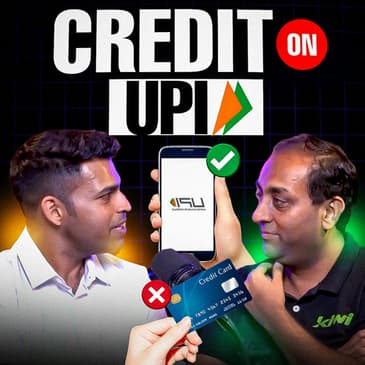

Siddharth Mehta, co-founder of Kiwi, discusses the disruptive innovation of credit on UPI in India. Siddharth, with a rich 20-year background in the cards and merchants sector, shares insights into his transition from CEO of FreeCharge to co-founding Kiwi, emphasizing the unique challenges and learnings in both roles. The conversation explores the potential for credit card growth in India, poised to jump from 40 million to 100 million users, and how Kiwi aims to facilitate this expansion by targeting a segment of 28 to 40-year-old salaried individuals who are heavy UPI users. Siddharth outlines the journey of Kiwi from its inception to the launch of its product, touching upon the role of NPCI in enabling digital transactions, the future of credit access in India, and the importance of adhering to regulatory compliance for fintechs. The episode highlights Kiwi’s vision to be at the forefront of increasing transaction credit access in India.
Topics:
00:00 Introduction
01:43 Siddharth's Journey from Banking to Startup Ecosystem
05:53 The CEO vs. Founder Perspective
08:45 Understanding the Cards Business and Credit Access
16:49 The Game-Changing Potential of Credit on UPI
24:24 The Evolution of Fintech and Its Relationship with Banks
25:14 The Role of Fintech in Disrupting the Banking Sector
29:25 The Founding Story of Kiwi and Its Journey
39:40 The Impact of Digital Payments and Credit Access in India
45:40 Navigating Compliance and Growth in Fintech
49:04 Looking Ahead: The Future of Kiwi and Fintech Innovations
-------------------------------------
Click here to get regular WhatsApp updates:
https://wa.me/message/ZUZQQGKCZTADL1
-------------------------------------
Connect with Us:
Linkedin: https://www.linkedin.com/company/startup-operator
Twitter: https://twitter.com/OperatorStartup
-------------------------------------
If you liked this episode, let us know by hitting the like button and share with your friends and family. Please also remember to subscribe to our channel and switch on the notifications to never miss an episode!
[00:00:00] The larger part was acceptance of transaction credit. If I give you 5000 rupees on a card, you can't do a 20. Your minimum payment is 2000-3000. So after 2 swipes you can't use the card.
[00:00:10] But with credit on UPI, I can do 100 transactions for 20 bucks and my limit will not get over in that sense.
[00:00:18] The way you have to look at cards is it's about technology, it's about people. You need to have the understanding of business.
[00:00:24] You need to know how do you do the business. There are lots of things around the business. In a bank, you can't think like a founder.
[00:00:31] You can't think like the founder because the ecosystem or the organization is not built for experimentation, fail-cost, trying new things, taking calls.
[00:00:42] You have to follow a structure and so on and so forth.
[00:00:45] Hello and welcome to another episode of the Startup Operator podcast. I am Roshan Karyapa.
[00:00:50] My guest today is Siddharth Mehta, who's one of the co-founders of Kiwi.
[00:00:55] Kiwi is pioneering credit on UPI which as we've discussed on multiple roundups is an absolute game changer.
[00:01:03] There are about 40 million credit card users in India today and that number could go up to as much as 100 million in the next few years.
[00:01:11] And this will be a key enabler for India's growth.
[00:01:14] Siddharth has spent about 20 years in the cards and merchants business and understands the space very intimately.
[00:01:22] So I spent this conversation trying to understand the contours of the space, some of the opportunities, challenges and the way forward.
[00:01:29] This is a fascinating episode and I'm sure you'll like it. So let's get started.
[00:01:34] Hey Siddharth, welcome to the Startup Operator podcast. Thank you so much for making the time.
[00:01:46] Thanks Roshan, thanks for having me here. One of my first few, I think the second podcast that I'm doing.
[00:01:52] Oh fantastic. And not in Kiwi but as a lifetime. So hopefully this works out well.
[00:01:57] Oh I'm sure. I mean you have a very interesting experience and I'm also looking forward to learning more about Kiwi and how it's impacting credit access in India.
[00:02:06] But let's get back to your experience. You've been a CEO and a founder. Now those are two different roles that people often conflate.
[00:02:16] I want to talk through the nuances of each of them.
[00:02:20] So how is your life different today as co-founder at Kiwi versus earlier as CEO of Free Charge?
[00:02:28] So that's interesting Roshan and I'll sort of step a little back on how I became CEO of Free Charge.
[00:02:34] And it's a freak accident let me put it that way.
[00:02:37] So I was with Access Bank in 2015 running different products and so on and so forth.
[00:02:42] And in 2017 Access Bank bought Free Charge from Snap Team. It was a slump sale and things were there.
[00:02:50] And my boss in Access Bank moved as the CEO of Free Charge. He was looking for people and I was also in the mood saying let's do something different.
[00:03:00] The startup ecosystem had started growing at that point of time almost by 17 things had looked good.
[00:03:07] There was a lot of stuff going on in the payment space and Free Charge was in the payments business.
[00:03:12] I've spent almost 20 years of my life in payments. I've largely done either on the merchants or on the merchant side and the other side.
[00:03:19] I've done all kinds. I've done prepared. I've done Metro. We were Access and I ran the project was the first bank to actually launch a Metro card with Kochi,
[00:03:30] the full fare collection system, the gates, QR based payments, everything.
[00:03:34] So he asked me, I said, okay, let's take that risk and get into Free Charge.
[00:03:41] We moved into Free Charge and there was a change in management at Access at that point of time. Shekha moved out,
[00:03:47] the startup came in. This was 18, 19. I moved in June 18 and I joined as CBO, first cultural shock.
[00:03:56] You come from a bank. You're used to wearing shirts, formal shirts, pants and you suddenly walk into an office with a jacket for shirt and panties
[00:04:03] and realize people have different dressing. So I had to actually do an overall of my wardrobe because it's not used to jeans.
[00:04:13] I used to hate jeans, right? Yeah. Now I can't. I mean, doesn't suit the weather also. I mean, if you want to say.
[00:04:18] I think it's not about that. It is just generally I didn't like now for the last, I think five, seven years.
[00:04:23] So how the accident happened is Sangram decided to move out in 19.
[00:04:31] And I was there, I had moved from Access Bank and they wanted somebody from the bank to sort of run Free Charge because it was too early for the bank had bought in cultural freight.
[00:04:41] So they asked me saying, will you do it? Why not? Getting a stamp on your resume as a CEO and that's how it became a CEO Free Charge.
[00:04:51] I became in August 19 and COVID happened in 20. So the it was not a great start. We were actually rebuilding ourselves as an organization and so on and so forth.
[00:05:03] So, you know, for the first few, I think one, one and a half years with COVID period, it was more about managing your people, managing the expectations, managing the worries because you know,
[00:05:14] COVID had its own issues around it mindset of people health concerns and so on and so forth. On the other side also managing on what do you do with free charge?
[00:05:24] You know, one of the things that the reason Access bought it was not just run it as a payments company but you know sort of relook at how do you sort of run Free Charge as an organization?
[00:05:33] What do you do with Free Charge? So, you know, at that time when you become a CEO, you have no experience of being a CEO.
[00:05:38] You know, being a leader in a large organization running one business, you have support systems to do everything else. You just need to focus on what you're doing.
[00:05:47] When you become a CEO and I'll come to the founder later, what's the differences? You just cannot say that okay, I'm just going to look at the business side.
[00:05:55] I don't care about everything else. You need to worry about people. You need to worry about systems, processes, compliance.
[00:06:00] You need to worry about your parent which is Access Bank, they need to be convinced that what you're doing is right. You need to worry about HR and so on and so forth.
[00:06:10] So actually initially it was a huge learning experience. Sometimes I used to think, you know, have I taken too much on my plate?
[00:06:20] Being the number two and you know, sometime into 2021 somebody asked me saying, you know, how does it, if you're given a choice, do you want to be in the number one on the number two?
[00:06:30] I said the number two is the best. You don't need to worry about everything is the number one's problem. The number two has to just sort of execute.
[00:06:37] But what the difference between a CEO and founder is and what I've learned and obviously Free Charge helped me think how a founder thinks.
[00:06:46] In a bank you can't think like a founder. You can't think like the founder because you're not, the ecosystem or the organization is not built for experimentation, fail fast, trying new things, taking calls.
[00:06:59] You have to follow a structure and so on and so forth.
[00:07:02] When I came to Free Charge, while the structures were there because you are part of a large bank subsidiary, processes are there, there's a board, you have to sort of work with them and so on and so forth.
[00:07:12] But you largely become a person who has to guide and lead. Not a guy who sort of puts folds his sleeves and gets on with his hands dirty.
[00:07:23] That's what typically you have to sort of look at HR problems, you have to look at how do you sort of, you know, think of building learning and development for an organization and so on and so forth.
[00:07:32] So you get more into processes, you get more into the larger things. You don't get into the sort of nicks and nicks of how you run a business.
[00:07:39] As a founder, the differences are building an organization. You don't have an organization, you're building the organization grounds up.
[00:07:46] You need to get your hands dirty. You can't say that okay there is a guy who's going to look after this part of my business, there's a guy who's going to look after this part of my journey.
[00:07:53] You need to sort of learn yourself. You need to do things yourself. Doesn't mean that you do everything yourself but you need to get into things.
[00:08:00] You can't just, you know, say that there's a customer problem, the customer service guy will handle it.
[00:08:03] You also need to understand what the customer's problem is because it impacts your business, your product and your future. Let me put it that way.
[00:08:12] So that's the difference that a CEO typically will lead guide. You know, look at lot of things together.
[00:08:19] As a founder, you're focused and the CEO mostly will focus on the medium to long term.
[00:08:24] As a founder, you're actually solving for the short term while you sort of build for the medium and long term.
[00:08:27] You sort of focus for now. You build for now. You look at what customers are saying, what feedback you're getting, how do you use it to optimize and make things better?
[00:08:37] Parallel also ensure that your life for your employees is good and so on and so forth.
[00:08:42] And you also become responsible for the employees you're bringing because they come because of you.
[00:08:46] Typically in a medium to large organization they come because of the brand of the organization.
[00:08:50] Kiwi is not a brand as of now. People know about Kiwi but it's not a brand. It can't compare it to free charge or access bank.
[00:08:58] So when they come, they come with trust. So you need to ensure that the trust resides and you help them grow. That's the difference.
[00:09:05] Yeah, I mean very interesting. I also feel like as CEOs, I mean your imperative is predictability as founders, your imperative is innovation.
[00:09:14] And that's a completely different mindset as well. And you're absolutely right. I mean, I think the brand versus the founder difference.
[00:09:23] I mean while you're joining a brand in a mature setup, I mean you're joining the founder really at early stage startup and so on.
[00:09:30] You know, you've spent about 20 years in the cards business. I mean you mentioned on the merchant side and otherwise.
[00:09:36] I want you to give a lay of the land in terms of the opportunities and the challenges because today, I mean I think we have about 80 to 90 million users on the credit side.
[00:09:47] Which probably is about half of let's say debit cards and so on. People sometimes think it's the greatest opportunity that's going to happen.
[00:09:55] And some others think that, I mean this will not be the same way that it grows in the US and elsewhere.
[00:10:01] How do you see this landscape and if you can give a 101 for someone who is listening to this?
[00:10:06] So interestingly, if you look at the cards business and obviously there is credit which is what the core to cards business is because the debit is an add-on product to your savings account.
[00:10:15] Correct. How do you access money is what debit does. When you look at the cards business as such, you know while there are 100 million cards and you know that actually there are only 40 million customers.
[00:10:25] Because on an average everybody carries between 2 to 3 cards.
[00:10:28] Now if you look at country like India, you know the 140 crore people, 150 crore people obviously looks like a large number.
[00:10:35] But if you generally look at it, there will be almost 10 crore people who can get a card.
[00:10:40] As of today, you know 10 years down the line things will evolve, you know as the economy gets better, incomes get better that pool will go up.
[00:10:47] But that's the base. So you still have a growth path of 2 and a half times of what it is today.
[00:10:53] The other interesting part is that if you look at India in the US, you know it's inversely inverse.
[00:11:01] In the US cards is very big, you know it's I think a trillion dollars of outstanding.
[00:11:06] Whereas PL is a very small business. In India PL is almost 6-7 times of the cards business.
[00:11:12] So that clearly shows that there is demand and people need.
[00:11:16] But the accessibility is restricted because you know in India the cards business is largely run by the top 5 banks.
[00:11:22] So what PL means to our users is PL, personal loans.
[00:11:26] This is a problem when you come from banking, you know you just use jargons.
[00:11:32] What has happened in India is the cards business got concentrated between the top 4-5 banks.
[00:11:37] Whereas if you look at there are a lot of banks in India.
[00:11:40] Today cards business is run by Access Bank, HDFC, ICICI, SBI, Kotak these are the big banks that are running it.
[00:11:46] But now let's look at the next level. There is RBL, there is Yes Bank, then there is South Indian Bank and there is Indusint Bank.
[00:11:53] So there are lots of these banks and then there are PSU banks which are really big.
[00:11:57] But none of these guys are actually being able to run sustainable card businesses and they have a large customer base.
[00:12:03] All of them have large customer base.
[00:12:05] So it's very very clear that the opportunity is very big.
[00:12:08] But why do you think they haven't been successful?
[00:12:10] See typically when you run cards business there are, you know the way you have to look at cards is it's about technology.
[00:12:17] It's about people. So you need to have the understanding of business.
[00:12:20] You need to know how do you do the business.
[00:12:23] There are lots of things around the business.
[00:12:25] So giving the card now when you want to give somebody a card what do you do?
[00:12:30] You first check where the guy is coming from.
[00:12:33] Is he a self-employed salary? What does he do?
[00:12:37] What's the kind of income?
[00:12:39] How do you assess income?
[00:12:41] In the traditional world people could come and say give me salary slips, give me ITR and so on and so forth.
[00:12:47] Now in the digital world there is no salary slip ITR because you know there's no way.
[00:12:50] So how do you assess income?
[00:12:52] The way you can assess income most of the big banks what they do is they look at the balance of the behavior you have with the bank.
[00:12:58] And that gives you a good idea. Regular credits, regular debits.
[00:13:01] Where are you spending? You're spending on Amazon this that.
[00:13:04] That gives you a great idea on which you create saying that this guy is good now and his income looks decent.
[00:13:09] So you give him a card.
[00:13:11] That capability typically the PSU banks and all never built because they didn't get that kind of people that kind of thought processes that kind of analytics capabilities.
[00:13:20] And the smaller banks didn't have that kind of customer basis to build on.
[00:13:24] But yeah even the larger banks right what I notice is look I've been banking with ICICF for I think 16 years now, 15-16 years.
[00:13:31] And I've been fairly diligent in terms of keeping a decent amount in the bank balance and also paying off my whatever loan this that everything.
[00:13:41] It always irks me that I'm treated as one of the God knows hundreds of thousands of others that bank with them.
[00:13:51] Why am I not given the credit of being a long time customer, being a loyal customer for so long
[00:13:57] and having a decent amount in the bank.
[00:14:01] So I never get that actually why can't they even if they don't design a scheme of one right I feel like they don't even design something on aggregate for someone like me.
[00:14:12] Yeah see that's the interesting thing and that's changing.
[00:14:15] If you look at it is that you know the investment in analytics this is purely analytics you look at data and you decide.
[00:14:21] Correct.
[00:14:23] Actually was more focused on other things than you know growing your it was more focused on for example growing a PL book and those kind of things because the see the other problem that happens is in a card.
[00:14:35] Let's take an example of a card or a personal loan.
[00:14:38] You've asked for a 5 lakh rupee personal loan I'll give you a 5 lakh rupee personal loan and you know you pay a monthly MIA for 3 years 4 years 5 years.
[00:14:44] In cards what happens is that you might get a 10 lakh rupee line you're using it lets them credit thousand one lakh one and a half lakh.
[00:14:51] You can use the 10 lakh so the bank needs to be very very sure when they're giving them the line of 10 lakhs or something like that.
[00:14:57] You know your ability to pay is there your intent to pay is there because you can go and use the 10 lakhs you know there's no restriction around that.
[00:15:02] So that assessment takes a lot of analytics ability.
[00:15:07] When you say analytics right do you think that maybe the technology is sort of dated and redundant and they're not set up to sort of you know look at it like a typical start up would write in terms of cohorts and do some analysis.
[00:15:21] Is there no intent itself.
[00:15:24] I think things are changing so I'm not saying earlier it was very different things are changing but the problem is that you know there are so many moving parts.
[00:15:32] So think of it as a let's take a bank for example ICICI as you said there are so many products correct.
[00:15:39] There are so many requirements from different businesses coming in.
[00:15:43] So there is a demand supply gap correct.
[00:15:45] The analytics team can only be that much big.
[00:15:47] So how do you prioritize what is more important.
[00:15:48] You prioritize basis obviously what sells better.
[00:15:53] What is important from your outward customer management.
[00:15:57] What makes you more revenue correct.
[00:15:59] That's how you prioritize your processes.
[00:16:01] Now let's look at a print tag or let's take Kiwi example my focus is one product correct.
[00:16:05] I don't have 20 products to focus on.
[00:16:07] So that's why everything that I build is is basis that so that's the difference that happens.
[00:16:13] So you know can banks do better definitely can do but you know there are lots of pulls and pushes because of size of the org the size of the business that types of business you know there is insurance to be sold.
[00:16:26] You have to do analytics whom to sell insurance to then there's mutual fund and there's FD then yeah how hundreds of such products that makes the big difference in saying that you know where do you prioritize.
[00:16:36] And so sometimes the priority might be somewhere else and you lose out because the fact is that if you're a bank there is regulatory pressure on you know you cannot sort of make losses because if you're losing money then you're basically losing depositors money correct.
[00:16:53] So RBI is very very clear that you need to run a logical business the business has to make money and so on and so forth.
[00:16:57] So you have to be very very sure in terms of where do you put your resources and you can't just suddenly come and say that I'll add 10,000 more people in my analytics because I want to do product by product because it might not work from a financial model perspective.
[00:17:12] That's the difference.
[00:17:13] Yeah I think a lot of people have made this point about how there needs to be a rethinking re architecting of how a banks let's say tech stack itself is constructed and so on in order for us in order for them to be able to serve these new users and cater to newer needs and so on and so forth.
[00:17:32] In that sense right I mean UPI is a game changer credit on UPI which was I think part of the UPI 2.0 sort of announcement post that right.
[00:17:42] Why are you paying and so on right I mean it's supposed to be like the thing that's going to increase credit access and whatnot right now again all of us have superficial knowledge on you know what it actually means and how much of a game changer it can be.
[00:17:59] So if you could really explain the significance of that that'll be great.
[00:18:02] Yeah so again let's go back to the history of UPI.
[00:18:06] I think people could move money they were 3-4 ways either there was cash you know to move money or there were cards limited cards and there were limited places where you could use it or the last was that if I'm making a payment I transfer money through IMPS and so on and so forth.
[00:18:25] But doing that was so difficult because you know if I have to transfer money to you I need a bank account number I need IFSC I need all that and bank account numbers were not easy.
[00:18:34] You know they were 16 digits, 19 digits, 20 digits so it's not something that you remember top of your mind.
[00:18:39] When UPI came in interestingly it just simplified the whole process because there is your mobile number add something it's like your email id becomes your handle you will never forget that correct or whatever that.
[00:18:50] But again there see what has happened is where is the money going out of it's going out of a bank account of a bank.
[00:18:58] But where is the customer doing a transaction he's doing it on Google Pay, FUNPay, PtM.
[00:19:04] I think what banks and now banks are obviously far more agile let me put it that way.
[00:19:10] They didn't take this seriously and they didn't realize that you know if they would have invested in this technology and they would have actually invested in customer experience build their own apps.
[00:19:17] You know HDFC just re-branded a pay zap and you see they are pushing it very heavily.
[00:19:23] Possibly this business would have not gone out and the banks would have learned from this and become more agile faster because they would have learned that this adds value correct.
[00:19:30] Consumers are with you, consumers are using you when they start using you get that much more information for transaction.
[00:19:36] So UPI grew crazy both on the consumer side but also on the merchant side everywhere you want to do a 10 rupee transaction at a Samosa guy you can do it.
[00:19:45] You want to buy a T you can do it now through UPI you don't need to carry cash.
[00:19:50] That's what UPI changed as an ecosystem both sides the consumer side and the merchant side.
[00:19:55] Logically you don't need to carry a wallet if you ask UPI solves for everything to that extent.
[00:20:00] Once UPI did this which is got consumers into the habit got merchants into the habit saying that you know payments can happen digitally and money can flow digitally and so on and so forth.
[00:20:12] I think what people what NPCI RBI realized and this is my assumption is that the other problem in India is transaction credit is not grown and the only product on transaction credit was credit cards.
[00:20:26] What I mean by transaction credit is you are using a credit to make a payment correct right to a merchant and so on and so forth.
[00:20:32] You're not taking a loan in your bank account but you're actually paying the merchant directly using your credit to that extent.
[00:20:38] Was not growing in India and there was people who wanted transaction credit but the access was limited because one banks were not able to sort of issue that many cards but that was a small part of it.
[00:20:50] The larger part was acceptance of transaction credit so today if you look at post machines and I don't know if people understand the machine on which you swipe your card or tap your card or tap your card.
[00:20:59] That penetration that penetration grew during demon and you know that but penetration of that and penetration of UPI UPI QR is almost 10x.
[00:21:10] Correct 10 times more 10 times more merchants except UPI digitally digital payments even if you look at the spend patterns that are changing on the online e-commerce site.
[00:21:21] UPI has now become 3035% of the payment mode from consumer perspective.
[00:21:25] So this is solved consumers know how to use it people accepting at this that now this is the best time to actually get credit on this rails because once you get credit so if for example Russian is in Mysore let me take an example or sort of go further down in Kurg.
[00:21:41] Let me take an example of Kurg there are lots of small shops they don't have the machine to take a card but they will take it through UPI.
[00:21:50] So a consumer who works in Kurg correct for him there was no use of a card because he couldn't use it.
[00:21:57] Now if you give him credit on UPI he can actually use that credit to make payments for his daily you know vegetables for his milk for his you know daily shopping going out everything.
[00:22:08] So that's the first take on why credit penetration will now grow in India because you have an end use already there so the infra is there for the end use you don't need to build the end use in from it's about now your ability to give that credit.
[00:22:20] Correct my ability to see if I can make Russian that line or the limit I can give that credit line and all that is what now everybody's looking at how to solve for we in Kiwi are also focusing on that is that how do we work with banks to solve that access.
[00:22:34] For example we do only virtual cards there's no physical card so you can actually start with a 5000 rupee credit line why do you want to do a 10000 rupee 20000 rupee while you give the 10000 20000 but typically banks are not interested because you need to send a physical card there's a cost of doing it.
[00:22:49] All that goes off correct management of the consumer becomes easier because everything is on the app so your experience is fully digital because he's used to that.
[00:22:59] So that is the reason that the credit penetration is bound to grow banks fintechs are partnering together to ensure now this happens.
[00:23:08] Because at Kiwi for example we help banks ensure the consumers are choosing the credit the credit card because we are on credit card and credit card on UPI is what is skilled for now.
[00:23:19] Help banks ensure that help consumers track their spends and everything help consumers in their rewards experience and the whole end to end experience of how you manage your card.
[00:23:31] So today for example let's look at if Roshan wanted a card from ICICI first thing is Roshan had to open an ICICI mobile app apply for a card correct.
[00:23:40] Then either somebody is coming to your home somebody is calling you you are completing the whole journey or getting a card the card gets delivered at a house.
[00:23:45] The next step is Roshan now wants to use the card on UPI and these are only rupee cards that can be used.
[00:23:50] Roshan will then open a Google payphone pay first link a card create an M pin.
[00:23:54] Now Roshan has done that now he starts using it he starts transacting.
[00:23:56] Now if he wants his card statement or his outstanding he has to go back to ICICI's app and start looking at saying what is my outstanding you know how much have I spent you know what is my bill due when is my due date and so on and so forth.
[00:24:09] Now Roshan wants to see how many rewards has Roshan earned and he wants to actually use the rewards again he has to go some other platform of ICICI which will help him do the rewards program and Roshan needs to revoke a repayment.
[00:24:21] Then again he finds a place where he has to go what we are doing is we are saying everything comes together on one place so Roshan doesn't need to go anywhere once he comes here.
[00:24:30] He can do everything on one at one place he doesn't need to go back to any other place to solve for this right and once you start solving for this and make it simplified and easy for the consumer the consumer will also start adopting it because he'll say I don't need to sort of you know do so much of saying you know for applying as you go to tier two to tier three I have to go to the branch to apply I have to you know if I have a chance to do it I have to do it.
[00:24:50] You know I have to go back to the branching I need a statement and so on and so forth.
[00:24:54] So as a user I can transact I can you know analyze any of these transactions etc and I can also get credit via the one interface that I'm using basically also rewards you can manage your rewards on the interface.
[00:25:09] You can manage your statement whatever you transacted you can manage your outstanding you can make your repayments everything on one interface you don't need to get out of the interface to do anything right.
[00:25:17] So you know just taking a step back right I mean there was a lot of promise on FinTechs you know when this whole thing started about let's say 1015 years back right and the entire thing was that hey FinTechs will kill banks and you know you saw the optimism of that time right.
[00:25:33] To now at a point where FinTechs have become a layer on top of whatever the banking is right I mean it's a front end per se and sometimes it's like a customer acquisition for banks per se right.
[00:25:47] I mean do you see FinTechs progressing beyond just being the tip of the spear for banks to actually becoming like you know quasi banking entities and you know being more than a front end basically.
[00:25:59] So I look at it two parts here you're right on the first part see the journey of FinTechs started saying that you know we are sort of here to disrupt the ecosystem.
[00:26:09] Correct that's how it is and they to some extent they've done it so let's take an example of you know PTM and UPI QR payments won't have grown if people were not used to doing PTM wallet payments on QR correct.
[00:26:20] So that's where QR payments started with. So that was the disruption which led to this what we are seeing on UPI.
[00:26:27] So FinTechs have been innovative and have built disruptions in the market and build experiences and the behavior for users but if you look at credit as a space or even payments as a space.
[00:26:39] What you will realize is over a period of time is that you the bank FinTech partnership is the only partnership that can work you cannot fight the bank.
[00:26:48] There are two three reasons obviously there is you know if you are the regulator you're also looking at how do you keep the economy stable how do you keep consumer experience consumer customer service stable because what happens is that if you go overboard you know
[00:27:02] you know over leverage the consumer then there are problems and you've seen a lot of negative news that's happened on the lending side or even on the Chinese loans app and so on and so forth where you know if there's no control people were getting charged 400, 500% interest and so on and so forth.
[00:27:16] So there have to be controls built in place and this is why I think the way the regulatory ecosystem is going and the way it looks like and you know when I was in free charge also we used to talk about this very clearly is that what will work and what is going to grow in the future is the bank and the FinTech partnership.
[00:27:32] And the FinTechs are not just going to be a layer they're going to help banks for example build capabilities build products for example BNPL let's take an example.
[00:27:40] They were only FinTechs who were doing BNPL correct there was no bank doing BNPL.
[00:27:46] Access Bank was the first bank where we charge work with Access Bank to build a BNPL tech stack and a product for the market as a bank.
[00:27:56] Now as a traditional bank you would have said why BNPL why a 500 rupee line 1000 rupee line let me give him a loan correct.
[00:28:04] But that mindset that you can work with a FinTech and build products for consumers is what is evolving and is now the future so it will grow together it's not that you're going to just be a layer you will help them build and you'll build together.
[00:28:19] Also you have to look at three four things in this ecosystem or in India specifically is that you know FinTechs are good at consumer and technology.
[00:28:29] Banks are good at balance sheet management they know how to take deposits how to manage deposits how to manage risk how to manage compliance both have their powers if you join the powers then actually it can be a big disruptor right in the ecosystem.
[00:28:40] So as I say any FinTech which works on the intersection of consumer technology regulation will be far more successful in this country than anybody who's playing on the edges.
[00:28:50] Because we've seen what happens when someone plays on the edges I mean ambiguity can be a mode for you to begin with but then I mean you can see that it just quickly gets destroyed by one or two circulars from the policy.
[00:29:03] But it's not in India you look at the status of BNPL across the globe right.
[00:29:09] It's just sort of it exploded everybody was crazy that future is BNPL and suddenly it just went down.
[00:29:16] So it's not true about India it's true about the world saying it that if you sort of do it right I don't think there's a problem.
[00:29:22] Yes you know you might think that you know it slows you down possibly it's there's no harm sometimes to slow down and rethink on what you're doing and how do you build it.
[00:29:31] So like when we built Kiwi and we went ahead building Kiwi and one of the first things we said is that while we'll build agility we'll build capabilities will try to be innovative in partnership with the banks and build Kiwi there.
[00:29:43] But one of the big things we'll do is we'll sort of build it in such a way that we don't fall on the wrong side of anything which is great.
[00:29:52] We don't sort of reach a situation where we have to pivot suddenly because of the fact that we're doing something differently.
[00:29:58] So we spent a lot of our time thinking about how do we build this what kind of models that you build it what kind of partnerships you do with banks to sort of take this forward.
[00:30:09] So how is the Kiwi journey been for you I mean it's more than a couple of years probably approaching about four years now.
[00:30:17] No the Kiwi is just one and a half years.
[00:30:19] Yeah sorry. Yeah a couple of years into Kiwi right I mean I'd love to understand how that zero to one to end journey has been for you what were the things that you didn't expect right and yeah I mean any growth milestones that you can share.
[00:30:35] So see we're in the zero to one journey so obviously we're not there we just launched on June 30th so we've just eight months off from our product there.
[00:30:44] So the journey has been interesting so one is how did Kiwi happen correct very logically for all of us.
[00:30:52] We are three founders I Mohit Bheri and Anup Agarwal with three founders the common thread is Mohit Bheri for us I knew Mohit Bheri from my city bank days we know each other for 17 days he knew Anup similarly.
[00:31:03] So I and Mohit were chatting saying enough of this let's do something around and you know we're reaching that age that after sometime we'll get old and we'll not want to do something interesting because we sort of I'm 45 he's 46 so you know you
[00:31:18] reach that age where you're saying that you know can you take the risk kind of thing and Mohit and Anup were talking and Anup was also saying that I want to move out of Lazy Bend do something new.
[00:31:27] And we got together and we said okay let's see what we can do and we started debating with ideas and so on and so forth and then just before we thought we'll plan RBI came up with saying that you can now do credit card on UPI using rupee cards.
[00:31:42] So we went and met NPCI we met Dilip and we took his view saying how he's thinking about this because eventually UPI and rupees is NPCI as the core.
[00:31:52] And you need to understand how they're thinking about this house you know how are they thinking about scale of this because then you sort of build accordingly.
[00:32:01] We got a lot of positive feedback from him that he was very serious about this business because he also thought that credit penetration can grow with this you can get into satiation of products so you don't need to give a 70-80 thousand rupee credit limit you can give a 1000 rupee, 2000, 3000 and UPI it works because you can make a 20 rupee payment.
[00:32:20] So you know today if I give you a 5000 rupee line on a card you can't do a 20 your minimum payment is 2000, 3000 so after two swipes you can't use the card.
[00:32:29] But with credit on UPI I can do 100 transactions for 20 bucks and my limit will not get over in that sense.
[00:32:37] So then we came back we were also looking at the MSME side of it you know can we build a business around MSME lending what we realized with my experience in Rihach and we were doing some part of it there was that it's a very people intensive business
[00:32:50] it's not an easy business in that sense because your ability to assess and MSME is still actually not that great.
[00:33:00] There are frameworks that are coming in the country and there are things that will sort of come out and we'll talk about it in some time which will make it easier but today it's not.
[00:33:08] So then we decided let's go to this credit on UPI consumer side of the business and credit card on UPI and that's how we came together.
[00:33:15] We sort of then started obviously bouncing ideas with people saying this is what we're doing this is the opportunity we met a few investors we got a lot of positive we said okay now this is what we sort of double down on and start building now.
[00:33:28] November we incorporated a company we sort of went about our raise and we started hiring our first set of people in December so we started building from December end Jan 1st week.
[00:33:39] Our original plan was to launch in somewhere on August September then we sort of and this is what happens in a typical founder start up against a traditional business that's only one day we said no no why September why can't we launch it in May.
[00:33:55] So let's work backwards and say how to get it in May whatever you need to do in May in a typical if I was in feature I was and no no let's do it till September let's do it right.
[00:34:05] Okay so emphasis is on getting it right versus getting it out there fast getting it out there fast while you work on the right obviously unless you get consumer feedback you don't know what you're doing is right or not.
[00:34:16] You know if you put a score from 1 to 10 you know the 5 you know the 6 you're there but the 6 to 10 gap you will never know unless you put it out and you get feedback and then you optimize we still continue to optimize we still take feedback.
[00:34:28] You know before coming here we had a meeting on saying some people spoke to some consumers we've got some feedback so we're sitting around saying okay you know let's assess on you know this feedback and what we can do with the product.
[00:34:39] So then we said no no we have to launch in May we went backwards we went back to the access bank access bank was our first bank to partner on and we said we want to launch in May they said we've never launched in less than 6 months.
[00:34:51] So we said whatever we'll put the effort but let's do it and you know may we went into CIG we could launch the product we went into CIG and June end is when we actually finally launched the product which was 3 or 4 months before we had originally planned for it.
[00:35:06] And the first obviously months few months have been great we've seen decent traction from a consumer point of view we've seen a decent product market fit I'm not saying we are right we're still there I think we still need to do a lot of effort on sort of improving our product in that sense.
[00:35:20] We have good product market fit you know on an average a consumer spending doing 17 18 transactions on the on credit which are typical credit card is 56 a month we're seeing 17 18 transactions spends are around 20,000 which are not typical credit card the market averages around 15,000.
[00:35:39] So we say that's a lot actually yeah because what's happened is that once you get into the behavior you know you start doing that 20 30 40 repeat transactions you know you've gone down you've done you get into the habit so then you the larger transactions also automatically move to this.
[00:35:54] So who are your typical users any so our target segment is anybody who's 28 to 40 largely largely salaried people and heavy UPI users.
[00:36:05] Because you know if you look at the UPI market share and just for some numbers P2M which is consumer to merchant payments or person to merchant payments which was having happening to savings account because credit has just come in was almost 4 lakh crores.
[00:36:21] And credit card payments or people using credit card to pay merchants was 1,60,000 crores it's always two and a half times that share was there.
[00:36:30] So the idea was that if you're a heavy UPI user, you know why not take a credit card because one you get credit which is 50 day free interest free and so on so what do you get rewards.
[00:36:41] Three, you know things like it doesn't clog your statement. It makes life easier, you know those kind of things you don't need to wait for the post machine you don't need to hand over the card to the thing everything is in your control.
[00:36:51] Right. So that was the idea and you know what we've seen is people who've sort of actually started using it have now sort of switched to saying this is my core product.
[00:37:01] UPI can kind of evolve into some kind of a personal finance app also I feel right I mean in terms of okay I know you know all my spends at least right versus I mean reading a bank statement today which is you know it's some alpha numeric code you're trying to figure like you know where what and how you.
[00:37:17] Yeah so there are a lot of interesting things that will happen on the UPI rails I think over a period of time. So we're in the zero one one we're not at the end we hope in the next two years we reach somewhere there but it's an interesting period you're learning a lot you're getting a lot of feedback and you're actually
[00:37:34] iterating from a consumer perspective. Right. So you mentioned NPCI and so I have to ask right what's it like working with those folks I mean I feel like they've been a complete you know like a blessing for India I should say right with everything that they've done on the payment infrastructure and everything I mean the Indian internet is monetizable only because of them right I mean you're having this
[00:37:58] Sashayik and transactions all of which we take for granted until you know we go out and see what the you know situation is where you get like a bunch of change from your Starbucks or something right. So what's it like working with NPCI.
[00:38:13] It's interesting and to your point Russian you know I think one of the things UPI did was kill the candy industry because you remember you used to get those you know instead of changing to give four yeah yeah mentors or whatever.
[00:38:23] Now you don't actually that's not there you know largely but see NPCI is you know amazing organization you know the way they've sort of been managing this the whole payment ecosystem and the way they've helped grow it so think of it this way that when UPI started NPCI could have said only banks will run this correct.
[00:38:46] But from day one they made it interoperable you know anybody any FinTech can come and actually launch an UPI app and sort of help it grow. Yeah in my view if they won't have done it I don't think UPI would have been at the stage because you know typically the way banks think the banking app is not a payment app it's a fund transfer
[00:39:01] investment account management app you know that's how and even the consumer things of the banking app that way correct. Yeah well banks are actually investing now making the banking app as a payment app but you know because typically what happens is if you realize the payment story you will open the payment
[00:39:18] app more times than your banking app true because of the fact that you know you're paying every day or you know not every day every second day and so on that banking app you'll only open once a week you know if you want to look at a balance or you want to do fund transfer
[00:39:30] now with UPI you don't need to do the fund transfer also unless it's a large ticket size you can just transfer it on UPI I just go and ask you your handle and now I don't need to be in a handle you know and it's the beauty of what NPCI is you all do.
[00:39:42] You put a mobile number you ping NPCI they'll tell you what the handle of Roshan is and you can just pay Roshan so you don't need to even ask Roshan saying you know please give me your handle where I want to pay.
[00:39:52] So NPCI has actually been a big enabler in the payment ecosystem and the agility with their work you know the sort of the products that they're launching and the new and your capabilities they are building clearly shows that you know it's a start up which is I don't know if I should say a humongous start up.
[00:40:11] They actually work like that.
[00:40:12] Yeah, yeah.
[00:40:13] No it's amazing like the open collaborative nature of you know what they've built also right I mean it's just absolutely phenomenal I would say right.
[00:40:25] You know when we look at like increasing credit access in India which is a very key problem because credit is like such a massive enabler for people right.
[00:40:37] Whether it is your you know Kiran or you know flower seller or whoever it is who needs maybe like a few thousand bucks to manage cash flows and payment cycles or whether it is someone who wants to set up a business and you know doesn't have a factory or a machinery to show for collateral or whatever right.
[00:40:53] To many other use cases I think it's what propels an economy forward right when people take risks and then you know use that capital productively versus like you know buying a TV or whatever right.
[00:41:06] So in your opinion you know what will it take for us to increase that credit access in India in a sensible way.
[00:41:14] So actually interesting stuff is happening in that space.
[00:41:19] So let's break it there is the last mile MSME or the micro one small and then the medium to large ones see typically the medium to large ones are getting serviced by an NVFC or by banks and so on so forth because of the fact is that what's happening in the last mile now and banks are also opening up.
[00:41:37] The reason is UPI now for example if you go to any shop at least 30 40 percent of his transactions are digital.
[00:41:47] There is data available in terms of how much business is as you do correct in the old days because it was all cash and the guys to not disclose you know you know this problem of in the less number of income taxpayers and so forth.
[00:42:00] Salary guys it's not difficult to do that because the DS gets deducted and all but in self employed it's that way.
[00:42:07] There are few things happened so UPI made digital payments and merchants started accepting the last mile started accepting digital payments.
[00:42:14] So now you know how much business is you doing so that becomes the first way of assessing saying how much is the ability to pay correct.
[00:42:23] You have bureau and everything because that gives you if he has existing loans and all but just in a basic sense you know what size of business he runs correct.
[00:42:31] With that size of business you can make an assessment on how much loan can you give him the other beauty is that you can also build a capability and we built it in free charge and part page doing it and PTM was doing it
[00:42:41] instead of asking to pay an EMI at the end of month you ask him to pay daily.
[00:42:46] So for a small self employed guy or retailer it is easy to pay everyday 100 bucks instead of paying you know 5000 bucks at the end of the month correct.
[00:42:56] Because his cash flow is working capital is on the go all the time so that is what UPI has solved for because digital payments were there you could sort of pull that money out.
[00:43:06] Now you go to the next step which is account aggregator what massive.
[00:43:11] The other problem is that you don't know how much his bank account has what you know does he operate a bank account you can that's the additional assessment of his ability correct.
[00:43:21] And intend to pay so you then start looking at his bank account vintage of bank accounts account aggregators going to give you information to his financial.
[00:43:28] So you have digital payments you have financial information now with account aggregator then his GST.
[00:43:34] Okay a lot of them don't file because they don't come in the GST bracket but GST will start giving you information of his business because he's buying stuff from vendors.
[00:43:42] So you know how much his goods is he buying because what he's buying is what he's going to sell and so on and so forth.
[00:43:46] So GST then adds another layer of the size of business and his ability to pay.
[00:43:51] And finally there is a lot of work going on something was open credit enablement network OECN which is largely focused on this the micro segment not the medium to the large segment is.
[00:44:04] Is that you build a network where every day you know you can come and say I need 1000 rupees today somebody on the network will ping your bank check you know how much balance is there you know do a rough assessment.
[00:44:17] Look at your digital transactions and say okay here is 1000 rupees for the day and the end of day or next day morning the bank can automatically pull that 1000 rupees without doing anything.
[00:44:28] All this put together in my view is going to change that skill there. The only problem in that space Russian is that they are still not very digitally savvy in terms of the other part of not you P.
[00:44:43] Are there a digital savvy because they know money is coming in and with the sound box and all things have become far more important they know that the money is coming Russian is actually paid and so on and so forth but they're not digitally savvy for the whole experience end to end.
[00:44:56] Which is going to be the challenge in that segment largely because unless they get digitally savvy this enablement will not lead to scale of credit correct so the availability of credit will be there but you'll not be able to scale because the guy if you have to send a foot for.
[00:45:15] One one is applied if as an organization as a bank or an NBFC or whoever a fintech if I need to send somebody to get to a 20,000 rupee loan my cost of acquisition will be crazy.
[00:45:25] Correct though the obviously the thought processes he'll take the 20 he'll pay back and then you're gonna take a 40 and 60 and you'll sort of create the cycle but that cost is too high so that is something that you know with mobile penetration data penetration smartphones are hope is in the next few years in my hope is that this will get solved in the next few years.
[00:45:44] And suddenly that market will become a very big market.
[00:45:47] I think increasing adoption basically is the is the thing I think it's also availability of credit it's not just adoption you know in my view the availability of credit was not there for it was there but not from formal sources it was informal you go to a money lender take a 30 40 50% and so on and so forth.
[00:46:06] So it was an informal sources formal sources availability of credit was not there the availability problem is getting solved by all this.
[00:46:13] It's now his capability let me put it that way to sort of how do you avail that right and access it.
[00:46:20] Yeah I mean certainly exciting times ahead on that front for sure right we're talking at a time when there's this whole massive drama that has unfolded between you know paytm and RBI right I mean of course things have reached some kind of a resolution at this point.
[00:46:36] You know at the time of a recording but it also serves as a sort of a lesson for all fintechs operating right which is that hey I mean growth is great but then not at the cost of compliance right you have to balance both of these things.
[00:46:52] So what is your principles for you know adhering to that.
[00:46:57] So as I said you know when we started we were very very clear that you know we'll sort of do we build Kiwi in a way that you know we build it with the right principles in place we sort of we you know we spend a lot of time on regulations and you know what works what doesn't work and you know we work with banks on solving this as such you know the banks we work with.
[00:47:17] So we were very clear principally saying that we will build it might it might be slow it you might not be able to go very aggressive it's not that you can't grow you know the speed can be there but you'll build it right so you know you'll sort of solve for the right things instead of solving doing something and solving it later because that can also hit you.
[00:47:36] So let's solve it as we build it right and grow when you know you're sure about what you've solved for.
[00:47:43] So that's what we looked at and secondly as I said that the theory of consumer tech and regulation intersection we spend a lot of time on that you know a lot of our conversations are around that between all three of us as founders saying that okay you know new regulations coming in new things we are trying to do how does it fit within the
[00:47:59] purview of the regulation are you on the edge are you inside and then you see how do you make the experience and the innovation better.
[00:48:05] You don't need to be innovative all the time in our view you need to better the experience also sometimes within the regulation if you better the experience also the consumer is very happy correct you don't need to make it innovative all the time so you can focus on experience
[00:48:18] building while also saying that you know how to make it better for the consumer.
[00:48:22] So principally we've taken that stand and we hope to hold it for a long time where we sort of look at every the other thing Russian what happens is we work with banks and we don't work with general payments bank and all because they're very small and they can't do lending and all we are in the
[00:48:41] lending business we are not actually we work with banks and provide lend credit cards to consumers when you look at it you the banks itself are also making sure they know there is the partners are actually within the purview because of the fact is that
[00:48:54] eventually the flag is taken by the bank you know the partner takes the flag is a indirect flag because once the bank gets a flag the bank is the obvious choice for the bank is to shut business with the partner before this sort of reassess everything.
[00:49:09] So you know working with banks also what we've realized is that it's important to sort of ensure that you're within the purview of the regulations isn't it's not that you go crazy about the regulations but you're within the purview and within that you
[00:49:22] you actually experiment innovate and make the experience better for the consumer.
[00:49:27] Right. Right. Yeah I mean so this has been a fascinating conversation on a bunch of things right I mean credit access the card business and so on. I think it gives a good sort of an understanding one oh one for someone to share you know look at the landscape
[00:49:44] and figure what the opportunities challenges are and perhaps you know hopefully they start up at some point as well right in this space before we let you go you know what are you most excited for going forward what's going to happen in the next year 18 months.
[00:49:57] Yeah. Yeah so obviously currently we're living and being TV obviously that's that's our life. I think what we are sort of largely focusing on is now sort of scale of the business and grow this business as such we've sort of
[00:50:13] as I said that you know while we've sort of in the zero to one journey our ideas to get to the one and then move from the one in the next 18 months in that aspect consumers are loving the product but there are obviously things that we need to fix and get things right.
[00:50:29] So our ideas scale the business scale our teams and sort of make give you a brand from a consumer point of view where people say that if they want any credit credit card on UPI they're coming to give you they're not going somewhere else.
[00:50:42] That's our thought process and partly also look at what more can we do in this space overall because our eventual goal is that there are 100 million people who are going to get onto transaction credit and we call it transaction credit because you're using credit to make a transaction
[00:50:58] right. That's why we call it transaction credit. There are 40 million there is 60 more million to come in. How can we be enablers we might not enable for all 60 million but we lead the way for that 60 million to come on to the transaction credit ecosystem.
[00:51:12] Right.
[00:51:13] There will be multiplayer players but we want to be sort of the beacon in that sense for solving for that. Right.
[00:51:19] Awesome. I mean wish you all the best for everything that you have coming up and hope to talk to you again maybe you know where you can share your growth journey and everything.
[00:51:28] Yeah definitely. It was great being here and hopefully people like what we did here.
[00:51:33] Awesome.
[00:51:34] All right folks thank you so much for joining us on this episode if you like the content don't forget to share and subscribe.
[00:51:39] I'll see you on another episode with another interesting story and another interesting founder.
[00:51:49] .