
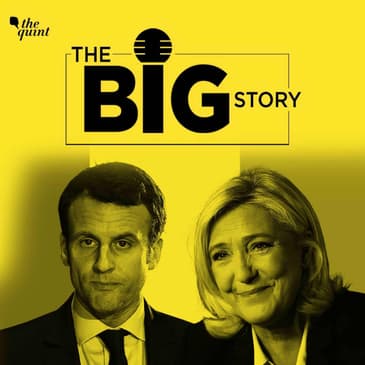

This was the second straight fight between the two politicians and Le Pen’s third shot at presidency.
But there is something deeply unsettling about these results — how close Le Pen, a long-time standard-bearer for the French far-right, got in terms of vote share with Macron.
Le Pen scored better than she ever has, winning about 41 percent of the votes. The last time she stood for elections, in 2017, she earned around 34 percent.
What is also striking about the result is the abstention rate of this elections, which at 28 percent is a slight increase from its level in 2017 but also the highest for a final round of vote since 1969.
The nature of these results raises the question: if these voting trends continue, is France walking on a dangerous path towards electing a far-right president in the next election?
To break down the election results and their significance, we speak to senior journalist and columnist Nabanita Sircar.
Host and Producer: Himmat Shaligram Editor: Saundarya Talwar
Music: Big Bang Fuzz
Listen to The Big Story podcast on:
Apple: https://apple.co/2AYdLIl Saavn: http://bit.ly/2oix78C Google Podcasts: http://bit.ly/2ntMV7S Spotify: https://spoti.fi/2IyLAUQ Deezer: http://bit.ly/2Vrf5Ng Castbox: http://bit.ly/2VqZ9ur
Learn more about your ad choices. Visit megaphone.fm/adchoices
[00:00:00] You are listening to the Quint's podcast. Ashour of another five years in office, French President Emmanuel Macron made history on 25th April by beating his far-right rival Marine Le Pen. This was the second straight fight
[00:00:24] between the two politicians and Le Pen's third shot at the presidency. But there is something deeply unsettling about these results which is how close Le Pen, a long time standard bearer for the French far-right, got in terms of vote share with Macron. Le
[00:00:38] Pen scored better than she ever has winning about 41% of the vote. Last time that she ran in 2017, she earned about 24%. What is also striking about these results is the abstinence rate of the selection which at 28% is a slight increase from its level in 2017 but also
[00:00:55] the highest for a final round vote since 1969. So the nature of these results begs the big question to be asked. If these voting trends continue, is France walking on a dangerous path towards electing a far-right president in the next election? To break down election
[00:01:10] results and their significance, we speak to senior journalists and commoners Namune Taasarkar. You are tuned in to The Big Story, the podcast where we dissect the headline making news for you and I'm your host, Emat. Before we dive into the significance of
[00:01:36] the French election, it's important to understand how the French conduct elections because it is different from how it works in other countries like India or the US. Now to elect a new president, French voters head to the polls twice. In the first vote,
[00:01:48] the candidates which in this election vote 12 run against each other. They qualify for the raise by securing endorsements from about 500 mayors and or local councillors from across the country. If none of the candidates win more than 50% of the vote, the top
[00:02:01] two candidates head to a run-off. What was interesting with the 2022 elections first round is that it seemed like there was a three-pole race in Northe traditional too. Immanuel Macron won 27.8%, Marie Lapin 23.2% and John Luke Milanchine won 22% of the vote. The final
[00:02:17] battle was eventually fought between Macron and Lapin with the former winning the runoff with about 58% of the vote share. Now Macron being re-elected is a big deal given that it is the first time a sitting French president has won an election in 20 years. However,
[00:02:31] the results according to many political analysts are more a reflection of voter rejection for Lapin than voter enthusiasm for Macron. Nabanita Sarkar, a senior journalist based in London, weighs in on Macron's first five years as president and how he has not been able to shake off the
[00:02:44] perception of being a quote-unquote elitist and quote-unquote out of touch with the ground reality. You see what has happened with Macron when he came in 2017? He came with this whole view of radicalizing French politics but that wasn't what was happening. He being
[00:03:00] from the financial world, his closeness to all the top elite of France has caused a lot of problem because you know French citizens are very vocal about their choices. And if you notice and it's not been an easy ride, there's been widespread protests all around the country
[00:03:19] for the last five years and it's been led by huge groups of people who have felt that he doesn't represent their interests. I mean you can call it his dynamic or sometimes a domineering
[00:03:31] style which is actually seen by the voter as being arrogant and that has further aggravated those opposed him including the you know at times the rioters Gilles Jean which is the yellow vest protest and in the last five years every time I've gone to Paris I've noticed
[00:03:49] the rise in the number of protests and this election I think is a chance for Macron to course correct and I think he now recognizes the anger people have against him and he knows
[00:04:01] that the vote was more against Marine Le Pen than him, than for him. He acknowledged that you know when he said in his acceptance speech which was rather somber and he came up alone
[00:04:14] and spoke he said I know that a number of French people have voted for me not to support my ideas but to stop the ideas of the far right. And he called on his supporters to be kind and respectful
[00:04:27] to the others because he noted this that the country was driven and I quote which by so much doubt so much division and said I'm not a candidate or one camp anymore but the president
[00:04:40] of all all of us and during the final two weeks of the campaigning you have to see Macron tried very hard to shake off what he of course feels is unjustly a persistent tag of being
[00:04:54] an aloof president of the rich kind of a person. So he promised to kind of dedicate the next five years to restore France to full employment and he argued that his policies like loosening the French labor laws had already succeeded and that he definitely wanted to put
[00:05:12] the country's decades of mass employment unemployment to rest. And he also promised his own swift package of laws to address the cost of living crisis which I think has plagued the entire Europe and UK and he tempered his frame for kind of raising the retirement age also
[00:05:34] and but again in the final days he focused less on his own manifesto and actually went about talking more on stopping what he called in quotes unthinkable that's the far right and the immigration lupin taking charge of France which is obviously the second biggest
[00:05:54] economy and nuclear power in the eurozone. Now troubles for Macron do not end with the results of the presidential elections the French also holds separate elections for the parliament which is due later this year in June and judging from the vote show lupin garnered this election
[00:06:08] it won't be an easy fight in a concession speech which did not include the traditional congratulations of the winner. She said that the 41% share of the vote represented a quote unquote victory in itself and that she would continue the political fight against Macron.
[00:06:21] She said and I quote that quote unquote I will continue my commitment to France and the French it's not over according to the money the surcar Macron or centrist may have to possibly ally with the right-wing parties to have a chance of winning the parliament elections.
[00:06:35] Yes this is going to be a huge battle right after winning the presidency because don't forget in this election the number of the 7.7 million first round voters for the radical lefts Jean-Luc who actually narrowly missed the reaching the final he said that they felt people felt
[00:07:00] torn over abstaining or voting to keep out le pen like we were talking it was more about keeping out le pen and Macron had leaned to the left in the final days if you notice to try and
[00:07:12] quote quote Jean-Luc his voters and promising to speed up measures against climate breakdown which was very important for the left and expand the environmental policy. So his first ask is also going to be to appoint a prime minister who he said he would do would be
[00:07:31] specifically devoted to addressing the climate crisis okay till now that wasn't the case and the focus will now actually be on the June elections where I think Macron will seek a majority for his centrist grouping but possibly he'll need to expand alliances with the
[00:07:52] right. He had promised in quotes a big new political movement and so that could go as far as maybe rebranding his party I don't know both Le Pen and Jean-Luc are actually looking how to increase
[00:08:13] the number of people they from their parties to be put into the assembly. So without a majority French presidents any French presidents room to maneuvers going to be significantly reduced and if the first round voting pattern does not repeat itself in the parliamentary poll
[00:08:34] Macron will need outside support. So some I mean will doubtless be like coming from the moderate wing of the republicans but the point is if Macron doesn't win this June elections properly
[00:08:51] the country France would be in a you know in a state of paralysis so the game is not quite over as yet. But let's get back to Marie-LaPen because she's the main reason you should be invested
[00:09:05] in the coming elections. Now the Le Pen name carries a lot of baggage her father Jean-Marie Le Pen founded the National Front a far right party which is known for its controversial stands on immigration skepticism of the European Union and position on Islam in France
[00:09:19] and Marie Le Pen who overtook the party from her father in 2011 has been attempting to rebrand the party and soften her image but by and large her stance on most issues has not changed for example
[00:09:29] she has stopped talking about abandoning the euro or exiting the European Union but she has still insisted on ending the European Union law which requires all EU citizens to be treated equally or even her stance on immigration or Islam which has not changed where she still
[00:09:43] wants to make it illegal for women to wear headscarves in public in France. But the softening of rhetoric has shown results for Le Pen given that she only stored 4.6 percentage points behind Macron in the first round. Nambanita Sarkar adds that much of Le Pen's votes come from
[00:09:57] the young voters and socially secure blue collar workers signaling a big shift in the vote banks for the far right party. Marie Le Pen you know when when she conceded defeat she still said
[00:10:09] that it is our victory because she kind of said that the national rally that's the party represented you know new heights because of the vote share increase but again her far right rival Eric Zamor he pointed out that she's ultimately failed because she has failed in
[00:10:35] this is the third time and she's failed and he said that just like her father who preceded her in quotes he said it's the eighth time the Le Pen name has been hit by defeat. So Marie Le Pen I mean
[00:10:48] she took over the party founded by her father Jean-Marie Le Pen in 2011 and in a bit to make it electable. She won more than 13 million votes on Sunday on a platform of tax cuts which she
[00:11:01] moved away from in the last weeks that's why her vote share increased because she moved away from immigration and her anti-Europe integration stance so she went on a platform of tax cuts to tackle
[00:11:13] the high cost of living a ban on wearing the Muslim headscarf became very quiet at the end if she did not go too much into it. So she was talking more of the inflation and those kind
[00:11:27] of common person's problems but as and as I said earlier that Mr Macron has accepted that and he said in so many words that an answer must be found to the anger and disagreements that led many
[00:11:43] of our compatriots to vote for the extreme right it will be my responsibility and of those that are around me. He said all that and that is fine I hope he takes this seriously because if you
[00:11:55] look at the polls for the second round and much of Le Pen's support comes not from that group of nostalgic pensioners who still think of the 50s but the younger voters especially young women
[00:12:11] I mean typically in the age group of 18 to 34 year old they work in skilled semi-skilled or unskilled jobs in the new working class like in sales and services where they found themselves on the wrong side of globalization automation immigration and a new cost of living crisis.
[00:12:32] So this is not just the only shift even ever since the 90s Le Pen's dynasty has been most popular amongst blue collar male workers and recently it has appealed far more to socially secure workers on the lower middle incomes who were squeezed between liberal
[00:12:54] professionals and unemployed much like you know what happened in the UK the skilled and semi-skilled workers who abandoned the Labour Party and went for Boris Johnson for the Conservatives. But Le Pen's future is a bit of a question mark I mean she might find it find great difficulty
[00:13:15] nonetheless in surviving the next five years and as the main leader of the French far right because she and her party will be faced with a renewed challenge from Eric Zimmer and her own
[00:13:29] niece Marielle Marachel. So there's going to be that is also to watch out for and don't forget her three defeats are going to sting her now however close she may have been yeah I can't
[00:13:45] I can see her I mean I can see different faces now coming up on the right what the French left does is another matter to be seen. Now other than a shift in vote banks what is also worrisome is
[00:13:57] a number of people who have refused to vote in the selection more than 12 percent of voters cast a blank or invalid ballot compared to 2.2 percent for the first round the abstention rate was
[00:14:07] also significantly higher in the final vote standing at 28 percent a few points up than that of the 2017 election round which stood at 25.4 percent and this means that Macron won the election with the support of only 38 percent of the total registered voters a sharp decrease compared to the 43.6
[00:14:23] percent in 2017 and these statistics bring up the big question is France walking on a dangerous path towards electing a far right president in the next elections. Numbering the Sarkar Rezin. See there is undoubtedly these results make one thing clear that the French
[00:14:39] society is very divided right now I mean more than one in three voters did not vote for either candidate which is very surprising for a politically aware country like France and the turnout was just under 72 percent which is the lowest in a presidential runoff since 1969 and more than
[00:15:03] three million people cast spoiled or blank votes which is a huge surprise and I think Macron has realized that okay there is the point that much of France was on holiday on the day of
[00:15:19] the vote but the low turnout is actually reflecting on the apathy of voters who've complained that neither candidate represented them and that's been the problem there was nobody that actually represented a huge chunk of voters voters said that they were casting blank ballots because
[00:15:36] they wanted to punish the president that was the sitting president Macron and I think in his speech Macron said that his government would have to answer that choice to refuse to choose and again Jean-Luc also said that he was skating about both the candidates I mean the
[00:15:59] far left leader he said that while it was good views that France had you know refused to place its trust in Marine Le Pen he said that about Macron he said that he's been elected with a
[00:16:10] worse result than any other president and in quotes he said and I quote he floats in an ocean of abstention and blank and spoiled ballots so Macron's challenge now will be to reach the
[00:16:24] absenters the abstainers sorry the abstainers the youth and those who voted for Le Pen because he does does need to soften his approach his charge of against him of arrogance and being an elite
[00:16:39] president he has to really work hard at doing away with that tag. What is clear from the final vote of the presidential elections is that the far right have obtained a voice which has never before seen in France and that the country's political landscape which has traditionally
[00:16:55] worked for a two-party system has radically changed. The parliamentary elections are set for mid-June and for more updates on this story head over to the Quinn's website. If you like listening to this episode please subscribe to the big story for episodic updates
[00:17:09] they're available on Apple, Google Podcasts, Spotify, Geo7 and most of the other popular podcast streaming platforms. For other podcasts please log on to the Quinn website and for any feedback please shoot an email to podcastatthequinn.com. Thanks for listening.
[00:17:41] Log on to the Quinn's website and check out our other podcasts.