
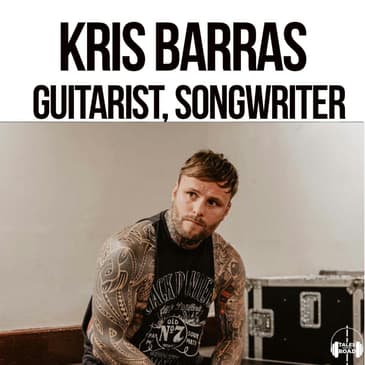

Kris Barras is a British blues rock guitarist and singer.Kris began playing guitar at the age of 5, under the guidance of his musician father, Paul Barras. He performed his first-ever gig with his Dad’s band at the age of 9.
For most of his adult life, Kris used had an unusual side-job alongside his music career. Although now retired, he had a successful 10 year professional Mixed Martial Arts and Muay Thai career, which saw him compete and train in Las Vegas, Thailand and Singapore.
Kris picked up his first guitar aged just five -- two years later he upgraded to an electric and developed his signature style. At the same time, Barras was also training in martial arts, and although his music career saw him playing in various bands, touring the U.S., Europe, and the U.K., he also found himself competing in mixed martial arts contests.
Deciding that fighting wasn’t the direction he wanted to take, he fell back onto his first love, music. In 2014 he formed the Kris Barras Band, playing a mix of blues and Southern and classic rock. The following year they released their self-titled debut mini-album independently and spent the majority of their time playing gigs up and down the UK. The follow-up album, Lucky 13, appeared in 2016, once again self-released. In 2017 Barras signed to Mascot label Provogue and set about recording his third album. The Divine and Dirty.
The success of this album led to tours with artists such as Beth Hart, Joanne Shaw Taylor and GUN. Kris was featured as one of "The 17 Best Blues Guitarists in the World". He was voted number 13, alongside names such as Joe Bonamassa, John Mayer, Kenny Wayne Shepherd, Derek Trucks and Eric Gales.
I caught up with Kris a couple months ago to talk about his bands latest release Death Valley Paradise. We also delved into his songwriting process, his fighting career, his experiences playing live at some of the most iconic venues, life on the road and his frontman duties with Supersonic Blues Machine.
------------------------------------------------------------------------------------------------------
For tour dates and merch - https://www.krisbarrasband.com
Instagram: https://www.instagram.com/krisbarrasband/?hl=en
Facebook: https://www.facebook.com/krisbarrasband
Youtube - https://www.youtube.com/channel/UCx6hSbEY0Xw0_45i0ybcvNw
---------------------------------------------------------------------------------------------------------------
Follow Tales from the Road
Facebook
https://www.facebook.com/talesfromtheroadofficial
Instagram
https://www.instagram.com/talesfromtheroad/
Sign up for our mailing list at
tftrmedia.com
-----------------------------------------------------------------------------------------------------------------
Subscribe on Spotify | Apple Podcasts | Google | Gaana |Audible
You can also read, watch, listen via our website https://www.tftrmedia.com
Hosted & Produced by Vikram Chandrasekar and Moving Pictures Media
[00:00:00] Welcome to the Tales from the Road podcast, where we talk to people from the world of performing arts, from those on stage and on screen to those behind the scenes, about life on the road and the journey behind taking their incredible art to the people.
[00:00:14] I'm Vikram and I'm a music photographer and videographer. Kris Barras is a British blues rock guitarist and singer.
[00:00:21] Kris began playing guitar at the age of five under the guidance of his musician father Paul. He performed his first ever gig with his dad's band at the age of nine.
[00:00:30] For most of his adult life, Kris had an unusual side job alongside his music career. Although now retired, he had a successful 10 year professional mixed martial arts and Muay Thai career which saw him compete and train in Las Vegas, Thailand and Singapore.
[00:00:46] Kris picked up his first guitar aged just five and two years later he upgraded to an electric and developed his own signature style.
[00:00:54] At the same time, he was also training in martial arts and although his music career saw him playing in various bands touring the US, Europe and the UK, he also found himself competing in mixed martial arts competitions.
[00:01:06] Deciding that fighting wasn't the direction he wanted to take, he fell back onto his first love music. In 2014, he formed the Kris Barras band, playing a mix of blues, southern and classic rock.
[00:01:18] The following year they released their self titled debut mini album independently and spent the majority of their time playing gigs up and down the UK. The follow-up album Lucky 13 appeared in 2016 and once again was self-released.
[00:01:33] In 2017, Kris signed to mascot label Provoog and set about recording his third album The Divine and the Dirty. The success of this album led to tours with artists such as Beth Hart, Joanne Shaw Taylor and Gunn.
[00:01:45] Kris was featured as one of the 17 best blues guitarists in the world. He was voted number 13 alongside names such as Joe Bonamassa, John Mayer, Kenny Wainsheper, Direct Trucks and Eric Gales.
[00:01:58] I caught up with Kris a couple of months ago to talk about his band's latest release, Death Valley Paradise.
[00:02:03] We also delved into his songwriting process, his fighting career, his experiences playing live at some of the most iconic venues, life on the road and his frontman duties with Supersonic Blues Machine.
[00:02:16] I don't know if you remember but we met a couple of years ago when I was doing some photography for Supersonic Blues Machine. Yeah, I remember yeah. I think it was that year that I shot your set at Rambling Man as well. Yeah. Was that 2018? 2018, yeah. Yeah.
[00:02:35] Yeah but congrats on the new album Kris, it's absolutely fabulous. I've enjoyed listening to it. Just one? Yeah, just want to dive in. Death Valley Paradise, the album seems a lot heavier than your previous albums and are some of the songs that some of you have heard.
[00:02:54] What is the sort of response to the times that we are living in? Yeah, I think so. I mean I started writing the album actually about six months before the pandemic. It's kind of like October, November 2019 some of the songs.
[00:03:10] But yeah, I mean definitely some of the subject matters and the pandemic obviously affected most people in a fairly negative way. And musicians in particular, we couldn't get out and do what we love.
[00:03:28] The reason I do this band is because I want to play live and I couldn't get out and play live and it was tough times. We've gone to the heavier sound. I don't necessarily think that was in relation to that. It was just what was coming out.
[00:03:42] When I first started writing the album, like I said, that was pre-pandemic and everything I was writing was just coming out heavier. You know, I've always listened to heavier music. I grew up playing in metal bands and stuff like that.
[00:03:54] I've always listened to heavier stuff. So I think it was always kind of itching to come out. And I was writing a bunch of songs and everything was coming out heavy and I thought, hold on a minute, I'm going to have to dial this back a bit.
[00:04:08] And then I was trying to force myself to write more bluesy songs and it just didn't feel natural. So I did up some demos. I spoke to the record label and it was like, look, this is what I'm doing at the moment.
[00:04:22] It's the direction I want to go and what do you think? And they were really supportive. And then I just kind of had free reign just to do what I wanted to do really. And that's the result.
[00:04:35] Yeah, so it was not like a conscious decision to make an album that sounded heavier. It's just the way it came out. Yeah, it's just the way it happened with the songwriting. So each album's kind of gradually got heavier.
[00:04:52] And I think it's just like I said, I've been influenced by so many heavier bands over the years. And so I think it was just itching to come out.
[00:05:05] And then once we knew we were doing a heavier album, we started to think about what producer might be right for that kind of sound. And that's when we chose to go with Dan Weller, who was a guitar player in sixth.
[00:05:18] He produced loads of amazing bands, Monster Truck, Enter Chikari, he's produced Berry Tomorrow, Holding Absence, loads of great bands. And yeah, he was just amazing to work with and really brought out the best in us and helped produce the amazing sound on the album.
[00:05:37] Yeah. Chris, tell me, do you ever think about the commercial viability of a song or is it just stuff that makes you happy and it needs to come out?
[00:05:47] Yeah, I mean, the thing is like, I've always been attracted to catchy songs, hooks, I like that kind of thing. So I've always tried to write songs with catchy hooks and things that people can sing back.
[00:06:01] It's one of my favourite things when we play live is hearing a crowd singing the songs back. So, you know, I think there needs to be catchy in order for that to happen.
[00:06:10] With regards to like commercial, I mean, I'm not even sure how commercial they are really, you know, it's not like stuff that gets played on Radio One, you know, so. Yeah, I just don't really, you know, I don't really think like that.
[00:06:26] I don't force myself. If I force myself to write in a certain way, I think the end result is not good. So yeah, let's go with the flow. Yeah, so tell me a little bit about how the album was recorded, Chris.
[00:06:40] I've seen you play live, you know, I've shot multiple shows. There's so much energy when you play live. So how do you sort of capture that in a studio? Well, we've recorded up at a studio called Vader in Worcestershire in England.
[00:06:57] And it's an amazing studio, really old big manor house and they got an 11th century chapel on the side. It's the live room and it's just an amazing place.
[00:07:09] It was the first time we'd ever gone away for a block period of time to record an album before we've done it like in bits and, you know, be going home and stuff like that.
[00:07:20] But actually like to go away, stay there. We stayed at some cost just on the site and it was just amazing.
[00:07:26] So it was like fully immersed in the album, you know, like we'd finish at the end of the day and we're talking about ideas, you know, even stuff that we've done in that day or ideas for the next day.
[00:07:37] And it was just a really great experience. It's something that was one of the best experiences in my life those few weeks.
[00:07:44] It really was an amazing time. You know, the bands I've got now are just phenomenal. They're all fantastic players and yeah, we really wanted to capture like that energy.
[00:07:57] And the thing is, those guys like, you know, we're just all on the same page and they just play with so much passion, so much power. And when we get together that's just like what comes out.
[00:08:10] And yeah, I mean, like Billy and Kelpie, the drummer and the bass player there, the most recent additions and they've just, you know, breathed a whole new life into the band.
[00:08:22] And I think that's really shown on this album. There's a lot more energy, a lot more raw power. And that's exactly what happens when we're in a room together.
[00:08:35] Yeah, that's so true, right? Because the band I think are a huge part of obviously how the album itself sounds. Yeah. Yeah, that's quite amazing. Tell me a little bit about your songwriting process, Chris.
[00:08:50] Yeah, I mean, lots of different ways really. I mean, there's such the first album where I've collaborated on a few of the songs with some songwriters teamed up with a couple of guys in the States that write with, you know, bands like Blackstone Cherry and Hailstorm and loads of different bands, big bands in the States.
[00:09:12] It was a great experience for me. They like really brought out the best and, you know, sometimes helped me to see like another side, you know, I think, oh, I'm gonna do this.
[00:09:22] And I said, oh, have you thought about this? And it would send me off in another like tangent and I'd get super excited and, you know, it would open up a whole new chapter in my mind.
[00:09:31] And it was a great process, regardless of like how I kind of start with them. I mean, like my parade was one of the first songs that I started writing for this album.
[00:09:44] It was probably one of the last to be finished. I've rewritten that song about six times changing things and the riff ended up being the that version that got recorded that riff was like the last piece of the puzzle.
[00:09:56] I actually wrote that on a plane coming back from the Milan guitar show. I did a spot over there. I was coming back and normally when I sit on a plane, I like to even like jot down like lyric ideas or like try to come up with stuff and, you know, we've always had a bigger song has always been Hail Mary and that's
[00:10:14] always been the one that we've ended the set with and everyone sings along to and we've always this thing like, oh, we need a new Hail Mary. I want a song that everyone can, you know, be a part of and like, you know, sing back to us.
[00:10:27] And that was kind of the idea starting off with my parade. I wanted like, you know, like a big, like a big song that a people could relate to and be wanted to sing a big Chante kind of like chorus.
[00:10:39] And that's why I started off writing and I actually wrote it. I said on a plane come back.
[00:10:44] And I got it down to my dears and I remember I was driving out of Bristol Airport, and I'd only got about a mile down the road and I pulled over. I remember singing the melody and a couple of lyrics change.
[00:10:55] But yeah, that's how that song started life with that big vocal thing. And then I put the chords to it and build it up from there and then I ended up working with a songwriter Blair Daly is amazing.
[00:11:07] Who helped me tweak some things and came up with some ideas for the verse and the bridge section and and it just just brought it to life. Yeah, songs like these voices, for example, are those based off personal stories and personal experiences?
[00:11:23] Yeah, I mean these voices. I was referred to as my Christmas songs. I wrote it over Christmas 2020. What have been Christmas 2020? I started it on on. I started on Christmas Eve. It was finished by like the 27th was over the Christmas tree that was writing it.
[00:11:46] Yeah, I mean, you know, it's just about the sense of doubt those little voices that niggle in your head telling you you can't do something or you shouldn't do something and.
[00:11:58] Yeah, I mean, it's yeah, it's, particularly during the pandemic, you know, it did have some tough times and did struggle with my mental health like most people and yeah that that song was for sure one of the ones that has come out from that.
[00:12:14] Yeah, it seems like an album of contrast almost I mean it's it's a happy album at the same time it's got like this, you know, sort of theme of darkness running through it. Yeah. Yeah, you know, like I said, it's, you know, experience a lot of different emotions.
[00:12:34] I think that's the emotions that things that I hadn't really felt before not not that intense during the pandemic you know, literally questioning my whole future I've always been someone that's always known what they're doing next you know I've always made a plan and been like right I'm doing this okay yeah cool
[00:12:50] I mean, it's kind of always been my motivation ever since I was young I'm always, you know, plan the head and working towards something.
[00:12:58] And then the pandemic here, I had nothing to work towards and you know, there was a period of time where we didn't even know if, you know, we were ever going to get back to normal you know, is music ever going to come back.
[00:13:09] And in the UK, it was certainly the very last thing to be thought of you know after, you know, football matches and all stuff like that.
[00:13:18] You know, the arts is always the last thing that that kind of gets considered and you know it was a worry and I was kind of thinking well, do I need a new career am I going to you know I was thinking of lots of different options that you know roots I didn't really want to go down but
[00:13:33] you know it was, yeah, yeah, you know it's just one of those things is that we've come through it now and it's great to be back.
[00:13:41] Yeah, yeah, you know that's the that's the thing as a as a fan and as somebody who sort of followed your career and that's that's what I really liked about the album and the songs was that there was certain simplicity and a relatability
[00:13:54] to a lot of these songs and that's really what sort of appealed to me the fact that you're able to tell the story through the album. Yeah, that's cool. Yeah, that was so tell me something Chris.
[00:14:06] What is it that you're expecting this album to sort of do for you and your career right without the pressure of sort of making it to a playlist or the charts. Is there something that you hope this album achieves for the band.
[00:14:20] Well, I mean, you know the goal is always to reach more people and get to play to more people and I do think it's an album that we've already kind of started seeing the effects of that I think it is more of a
[00:14:37] like a widespread sounds do you know what I mean I think it's something that will probably appeal to more people than than the stuff I was doing before which was perhaps a bit more niche.
[00:14:46] This is kind of a bit more like mainstream rock and I think it will probably appeal to more people and yeah we've already found we started touring the songs when we played with Blackstone Cherry last year.
[00:14:59] And obviously that was before one we had one thing that Dead Horses was out at that time, my parade was due to be coming out soon after the tour.
[00:15:09] And even then we noticed like playing those songs that people, you know we're really latching on to them more than anything we've done in the past really and yeah you know I think things been added to the download line up this year you know the nice position on the second stage
[00:15:26] and things like that I think it's kind of the albums slidified as more in you know in the rock world as a legitimate rock artist rather than someone that's kind of flitting between rock and blues.
[00:15:41] Yeah and I think you also you spoke earlier about playing live, you played the Albert Hall and you're playing Wembley this weekend lots of iconic big venues right? So what's that been like? What was it like playing at the Albert Hall?
[00:15:57] Yeah I mean it's amazing, I'm so fortunate that I get to do it and I've had these opportunities. Yeah the Royal Albert Hall was just crazy, it was just mad.
[00:16:07] I'd never actually been there before I hadn't seen a show there or anything and I mean just standing in there it's just such a grand place and it's got this history and you know you know think of all the people that are still on that stage.
[00:16:20] So really like it's quite a daunting place when you stand in the state you look at the ceiling so high you kind of like feel like you're in this cavern but it was incredible, someone I'll never forget.
[00:16:32] And yeah we get to do Wembley this weekend opening up for Thunder again that's an amazing place you know it's you know whilst it's not quite got the pizzazz of the Royal Albert Hall you know it's just a bit more of a basic arena
[00:16:47] it's still such a legendary place you know all the bands that have played there over the year and you know I think back to when I used to play in cover bands and if we were like a particularly rubbish night I'd shout out good evening Wembley you know.
[00:17:01] It's been sarcastic about a crap crowd but you know it's just amazing that I actually get to do that for real.
[00:17:08] Yeah but you still sort of get the butterflies and you still feel nervous I mean like this weekend you're playing you're opening for Thunder right and they're like yeah it's a big iconic rock band.
[00:17:20] Yeah they were the very first band that I ever saw live they were one of my favourite bands going up I was like nine years old they were one of my dad's favourite bands and so it's got a big moment for me.
[00:17:31] Yeah I mean nerves wise I don't really get nerves in advance I'll probably you know you know an hour before or something like that half an hour before start to get that kind of feeling but for me I don't really think of it as nerves so it's just you know back to like my fighting days it's
[00:17:48] kind of like if you let the nerves take over it will consume you and you know it'll be detrimental but if you just accept that it's your body getting ready for something big and you're kind of harness that and harness the adrenaline and use it to kind of perform to the best of your abilities you know
[00:18:06] I think it's a skill that's extremely important in the fighting world I've trained many a great fighter that's got in there and they've let the nerves get the best of them and they froze up and end up losing a fight they could have easily won.
[00:18:19] You know I spent a lot of time like mental training learning how to deal with those kind of feelings that it doesn't eat you up and you use it as a positive thing so your body getting ready and so I still have that kind of thing.
[00:18:32] The nervous I've ever been for a gig was one that you were at which was the very first gig in the Shepard's Bush Empire was Super Sonic Booze machine. That was the most nervous I've ever been. It was the one time where it nearly nearly nearly ate me up.
[00:18:47] But you know I couldn't tell I saw you before the gig I saw you at the hotel I saw you backstage and you absolutely killed it right I mean I have all the pictures and it was amazing. I could have never told that you were sort of nervous because I felt like that was where you really came into your element right.
[00:19:08] Yeah and I think that's it like we've said like we're dealing with the nerves. It is understanding that you know your body has a fight or flight mechanism response and it's just learning to kind of just accept that those feelings are going to be there.
[00:19:25] Don't let it you know take over you and just understand it's just your body getting ready for for something big something important and when she learns to deal with that it does help to bring out the best in you and yeah I felt like you know that that night couldn't have gone any better.
[00:19:41] But yeah there was definitely a few moments backstage where I thought I was gonna be sick you know it was quite intense but I don't get like that anymore you know it's just I'm doing what I love to do most of the time.
[00:19:55] It's probably excitement more than anything else you know just wanted to get out there and yeah and do it.
[00:20:00] And you think that sort of state of mind is is it just because you've done it for so long or is it because of your sort of something you learned from your fighting days.
[00:20:09] Yeah I think it's both really. Yeah I think it's both you know with this band now I'm prepared to know the songs and you know I think I was probably most nervous for the supersonic song because I didn't know it as well you know it's my very first show with them I didn't write any of the songs.
[00:20:30] You know coming in playing a 20 song set of other people's songs that you've now got to make your own. Yeah it's quite daunting and you know I think that's part of it.
[00:20:43] You know I think a lot of the time if you haven't prepared then you will feel bad and it will. That's kind of like when you know I know again my fighting days training fighters if I'd had a guy that you know could have done a bit more in fight camp
[00:21:01] you can guarantee that you know when they're getting ready backstage that's going through their head. You know you always want to go into something knowing that you couldn't have possibly done anymore.
[00:21:10] And I'm kind of at that stage now I think with my bands that you know I'm completely comfortable with all the songs we all know what we're doing. I completely trust the band, I completely trust the crew.
[00:21:22] I've got nothing to worry about all I've got to do is just go out there do it and enjoy it.
[00:21:26] Talking about Supersonic what was that like you did a whole tour with Billy Gibbons. What was that like I guess like all of us you must have grown up listening to his music and watching him play and stuff like that.
[00:21:37] Yeah so I've done a couple of tours of him now and yeah he's amazing he's just such a legendary guy, such an icon and there's not really many people like him in the world you know whether it's like a legitimate rock star you know.
[00:21:53] He's up there with everyone all the greats Mick Jagger any of them you know he's that recognisable and you know I just the amazing thing about Billy is just how much he loves it.
[00:22:04] He still loves it. He's been at the absolute top of the game for over 50 years. Yeah it's still like he's going out in you know in his first couple of years of doing it. He's not like an old road dog that's just like oh I can't be bothered.
[00:22:21] And one thing he passed on that sticks with me and we will say it like in my band now is that we don't have to do it, we get to do it.
[00:22:29] So you know those times when you're a little bit tired and you know which it happens you know you have some tough schedules sometimes and only have a few hours sleep and you've got to get on stage again and
[00:22:41] you know catching different flights particularly with the Super Sonic Blues machine we're in a different country every day we're catching you know a couple of different planes, six hour drive up to wherever we're playing.
[00:22:50] You know there were a couple of shows where we really were limited on sleep and a bit tired you know like oh I'm not really feeling it tonight
[00:22:57] and you know I always remember that saying we don't have to do it, get to do it. We're lucky that we get to do this and
[00:23:04] that's something that's just really stuck with me anytime I'm feeling a bit down or a bit tired or you know maybe you're just like under the weather you know we're all human right.
[00:23:13] I just always remember that like lucky to get to do this and that always carries me through. Yeah I think what stood out for me about him was just how humble he was.
[00:23:26] Yeah I mean he's just the coolest dude in there. He's exactly like what you'd imagine him to be like you know and if you get him talking about old guitars or 1950s blues music you know you'll be best friends forever. He loves it. Yeah he's a great guy.
[00:23:45] Yeah yeah you know I want to come back to the album a little bit Chris how sort of obsessed are you with attention to detail when it comes to production.
[00:23:55] Do you go into the studio looking for direction or do you have a clear sense of this is exactly what I want.
[00:24:02] No I'm definitely more open minded than that. I mean one of the reasons I was keen to work with Dan I mean you know I've spoken to a couple of different producers that were all amazing in their own right big big big name producers but kind of felt like when I spoke to Dan and he'd heard some of my demos.
[00:24:21] I felt like everything he was saying is what I was thinking you know we've just completely on the same page with the recording process how he'd want to do it and the kind of sound that he'd want to go for and everything he was saying I was like yes yes yes yes.
[00:24:39] You know but you know when you get in the studio you pay a guy like that a lot of money he knows a lot more than me do you know what I mean it doesn't need me to tell him what to do.
[00:24:50] We're paying him a ton of money I'll do what he says do you know what I mean like I'm not one of those people that like I'm not a control freak or anything like that.
[00:25:01] If I can be someone that's better than me and knows more than me then I'll bloody listen to them.
[00:25:06] What we paid him a lot of money for you know for his expertise so I kind of left everything up to him but at the same time you know we were all chucking in ideas obviously Josiah in the band is a producer himself and very good producer so like he'd have ideas you know everyone would have ideas
[00:25:28] and that's a great thing about Dan is he'd always consider things and you know try to make things work to make the best possible record there was no egos in there you know there's nothing like that and you know like I said I like being able to go in the studio and trust someone else.
[00:25:44] Do you know what I mean? I want to sing it, play guitar, if I hear someone I'm like oh should we try this cool you know or no that's a ridiculous idea yep no worries.
[00:25:53] Yeah like I said you know if you're going to work with someone at that level then you need to trust them right.
[00:26:03] Of course otherwise what's the point? Why go over a guy like that just to have me you know some little idiot trying to tell him what to do.
[00:26:12] It's just stupid you know just leave it to them and there are a lot of you know lower level people that you know I've come across that are exactly like that and you know I know some of my producer friends that have worked with people like that
[00:26:25] and so why are you paying the producer if you want to produce it you produce it yourself. Don't pay someone to then tell them everything you know.
[00:26:32] Yeah Chris you know one of the things you mentioned earlier about you know how difficult the pandemic has been and all of that. You know how sort of you know given that musicians don't really make much money from streaming and things like that.
[00:26:46] How does the economics of it work? How important is sort of touring and merchandise to a band being successful financially? Yeah well I mean it's everything. It's absolutely everything. I mean in my position if I'm not touring I'm not earning any money so it's just simple as that.
[00:27:10] You know we don't have any like songs on adverts or anything like that you know obviously if you get some good sync stuff they've got songs in films or songs in big adverts and things like that then you can make a good living off that.
[00:27:24] But as a live touring band if you're not out there playing you're not earning any money so yeah for me I had to seek other forms of employment.
[00:27:34] I've been doing a lot. I've always done like video stuff on and off over the years mainly just to kind of support the business that I was doing when I was involved in the fight world.
[00:27:44] I used to make promos for fighters and stuff in my gym and when the band started, when we were on a budget I used to make videos there and I still do. I'm still heavily involved with all the video production now with the band.
[00:27:58] And so I just kind of pushed that a bit more and I do a lot of music videos for other bands and I film all sorts of things. I do promos for businesses, little adverts even weddings of how film anything so yeah that's that.
[00:28:16] So I've been kind of fortunate to kind of do that and then you know but yeah if you're not touring you're not really earning anything. Yeah touring and merchandise I think is a big part of it right? Yeah.
[00:28:30] Chris a little bit about your early days you know you've said in many interviews that Gary Moore has been one of your biggest influences. What was it about Gary Moore that sort of you know that you really liked?
[00:28:45] I think I mean it's what I was exposed to at a very early age you know it was my dad's favorite.
[00:28:55] And you know back then obviously we didn't have the internet and I used to listen to, if I wanted to listen to music I'd listen to my dad's collection.
[00:29:02] And I was always, because he was a musician and we used to watch his band and I just got into what he was into.
[00:29:08] And you know for me like Gary Moore like that passion that intensity and you know that's just that's what I loved about it you know just when he'd hit a note he would mean it you know and you'd feel it.
[00:29:22] I had a great singer too and great songs you know the Wild Frontier album was one that I used to listen to non-stop and I used to learn the rifter over the hills and far away.
[00:29:35] That used to be my favorite little piece to play along with the loner that was another one that became kind of my party piece. I used to do it at school talent shows and stuff like that at primary school.
[00:29:47] So yeah it was just you know it was through my dad and you know I had access to that kind of stuff we had some live videos and so forth on the LVHS.
[00:29:59] Yeah, I think that was the first thing that sort of appealed to me as well when I watched Gary Moore. It's just the I think the emotion and the passion with which he played and obviously that huge rock influence.
[00:30:10] Quite amazing. Chris you tell me a little bit about your journey from sort of fighter you lived in Thailand and you were in Vegas and what does that transition like from fighter to musician?
[00:30:23] Well I've kind of always been both so it's you know I started playing guitar when I was five years old I started doing martial arts around the same age. I always did martial arts on and off throughout my life.
[00:30:36] It was just kind of you know when I left college I was hell bent on making it as a musician and I went full steam ahead. You know I really put a lot of effort in and I didn't really get anywhere.
[00:30:51] I had a couple of little things that were quite cool. I got to tour the East Coast of the States a couple of times but ultimately it didn't really get anywhere and it didn't get anywhere. And you know I kind of became a bit like disenchanted.
[00:31:04] You know what I mean? I just had this dream and I was just kind of you know just had no idea how to realise it. And that was really before it was before YouTube you know all this kind of stuff.
[00:31:16] I think YouTube might have just started coming out and certainly not in the way it is now you know. And it was just really hard. I didn't really know you know living in the part of the country I do.
[00:31:28] It's nice if you want to sit by the beach all day but there's no like original music scene is quite hard to break out. And I just didn't really know what to do.
[00:31:36] I know I started training again and you know I really got into it and I kind of had a big lifestyle change. You know I was dieting, I was getting a lot more healthy and you know I was just getting more opportunities without I started competing.
[00:31:50] I was doing well and you know the music stuff wasn't really going anywhere. I'd always kept my hand in, I was always teaching guitar and you know gigging in local bands and stuff like that even whilst I was fighting. I still always kept that going.
[00:32:07] I had a little studio and I'd teach guitar like a couple of days a week and I'd do you know a couple of gigs a month or whatever. But when I stopped fighting in August 2014 I had a fight in Thailand.
[00:32:24] I won stadium title out there and then I was like just in Phuket and Bangla stadium. I think everyone's one at some point if you fight in Thailand. But yeah I did that and I just kind of felt like I wanted to do something else you know.
[00:32:42] When you're fighting all the time and train all the time like that it's hard, it's tough and I kind of felt like I wanted to start earning a bit more money and doing that kind of thing.
[00:32:54] So then I put more effort into coaching fighters and running the gym and that kind of thing and show promotions in order to be able to save up and buy a house. I kind of did all that but I was missing kind of like an outlet you know.
[00:33:10] Like the fighting for me I think was always just a bit of an outlet and I just sat down one day and just started writing some songs and it was literally outside and then got a little band together.
[00:33:22] It was a couple of mates of mine we'd you know been jamming kind of like bluesy rock stuff. And like a pub band and things and started bringing in the original stuff and then it just kind of spiralled from there.
[00:33:33] And it got to a point in well it was 2018 just before I met you and it got the supersonic blues machine gig.
[00:33:40] It's kind of like where everything was just getting too busy and you know I wasn't dedicating enough time to the training of the fighters and that side of things.
[00:33:52] I was away too much so it kind of got to a point where I was like right I've got to step away from this.
[00:33:56] I suppose I've got a business partner and you know agreed that you know I should step down and move away from it and just go full time with the music. And everything was going great and then we had the pandemic.
[00:34:08] What was what was that like though when you got the call from supersonic? Yeah, I mean it was amazing. Absolutely mind blowing. We were excited that we were being put forward to be the opening bands like we really excited because I was a fan of the band.
[00:34:24] I first discovered them on on like a Spotify playlist something like that and you know I loved the band I loved what they did and when I found out we have the opportunity to open up for them at Shepherd's Bush. I was super excited about that.
[00:34:39] Then the conversations kind of went deeper and was like, you know after Fabrizio runs a band, seen some videos of me to kind of sort out who the sport man was going to be and then my agent and record label kind of like, you know, what about Chris being the new frontman because
[00:34:55] no new at the time that Lancelot pairs had gone and that they were looking for a new frontman. It wasn't common knowledge and they put it to him and had yeah. I remember was driving to we were on tour at the time and was driving to a gig.
[00:35:10] It's fairly local one to me up in North Devon and I remember pulling over and had conversation with my manager he'd just been on the phone and yeah it was just crazy I was just like, I can't believe this.
[00:35:23] So yeah, I had a good phone conversation with with fab and then went out to LA week jammed with the guys and had some tequilas with Billy and
[00:35:34] yeah I remember I saw a couple of pictures on Instagram because I was in touch with fab and yeah I remember sort of seeing that. Yeah, yeah it was amazing. He knows a great bunch of guys to play with is an amazing thing to part of.
[00:35:48] Yeah that was amazing. Anyway Chris thank you so much for your time. No worries, thanks for having me. It's been a pleasure talking to you. I hope to see you in Wembley this weekend. I'm leaving tomorrow to come to England. Oh cool. Amazing.
[00:36:03] And then I hopefully I'll see you at download as well. Ah brilliant. Awesome. Alright Chris. Yo cheers mate. All the best. Cheers mate. That's it for this episode of Tales From The Road. Thank you for listening.
[00:36:19] If you like what you heard and wish to support the podcast do follow us on Apple Podcasts and Spotify and leave us a rating and a review. Alternately you could also watch or listen to these episodes on our YouTube channel Tales From The Road.
[00:36:32] Don't forget to check out the links from the show in the show notes. See you next time.