
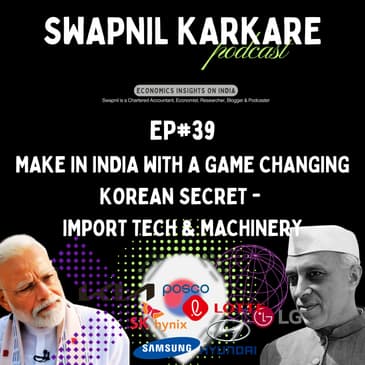
Make in India with a Game-Changing Korean Secret | Import Tech & Machinery

Make in India with a Game-Changing Korean Secret | Import Tech & Machinery

Everyone loves Hyundai. But do you know why Hyundai succeeded while Malaysia’s Proton fell behind? In this video, I unpack the Hyundai vs Proton story — and what it reveals about trade, industrial policy, and why imports aren’t always a bad thing. South Korea became an export powerhouse by importing capital goods — advanced machines, tools, and technologies that helped it build globally competitive industries. Hyundai wasn’t just protected — it was pushed to compete and win in the global market. Meanwhile, countries like India followed the path of import substitution — trying to make everything at home and shielding domestic industries from competition. It may sound like self-reliance, but in practice, it held us back. If Make in India is to truly succeed, we must stop seeing all imports as a weakness. Especially when it comes to capital goods — the very tools that power our growth. I also dig into India’s industrial policy history, the role of business and politics, and how other countries — from Vietnam to China — used capital goods imports as a launchpad for industrialisation. #MakeInIndia #indiaeconomy #IndustrialPolicy #ImportSubstitution #CapitalGoods #IndianManufacturing #HyundaiVsProton #SouthKorea #GlobalTrade #TradePolicy #EconomicDevelopment #EconomicsExplained #EconomicPolicy #Protectionism #SelfReliance #AatmanirbharBharat #EconomicGrowth #Hyundai #Proton #Tariffs #India #Research #R&D #BombayPlan #Modi #Nehru #Trump #politicaleconomy ----------------------------------------------------------------------------------- ⏱️ Time Stamps 00:31 - Global Markets Snapshot 03:33 - US Data Trust Issues 05:22 - Ola, Uber, Rapido in Crisis in India 09:30 - Nagpur To Begin Parallel Distribution in Electricity ----------------------------------------------------------------------------------- Sources & Further Reading: 1. Bombay Plan, Wikipedia - https://en.wikipedia.org/wiki/Bombay_Plan 2. Import substitution industrialisation, Wikipedia - https://en.wikipedia.org/wiki/Import_substitution_industrialization 3. The false promise of import substitution industrialisation in India, Arvind Panagariya, East Asia Forum - https://eastasiaforum.org/2023/12/06/the-false-promise-of-import-substitution-industrialisation-in-india-2/ 4. Hyundai Story, Hyundai - https://www.hyundai.com/worldwide/en/newsroom/detail/driven-to-distinction-the-modern-miracle-of-south-korea-0000000310 5. Proton vs. Hyundai, samcheekong blog - https://samcheekong.blogspot.com/2013/05/a-tale-of-two-cars-proton-and-hyundai.html 6. WITS - Data on Exports and Imports - https://wits.worldbank.org/ ----------------------------------------------------------------------------------- 👉🏼 Follow Me on - LinkedIn - https://www.linkedin.com/in/swapkar Twitter - https://twitter.com/Swap_Kar Instagram - https://www.instagram.com/swap_kar/ Blog - https://econgullyblog.wordpress.com/ Support the channel - https://donate.stripe.com/3cs2aD26u4bB5UYeUUhttps://tinyurl.com/3bav4hks

Everyone loves Hyundai. But do you know why Hyundai succeeded while Malaysia’s Proton fell behind?


In this video, I unpack the Hyundai vs Proton story — and what it reveals about trade, industrial policy, and why imports aren’t always a bad thing.


South Korea became an export powerhouse by importing capital goods — advanced machines, tools, and technologies that helped it build globally competitive industries. Hyundai wasn’t just protected — it was pushed to compete and win in the global market.


Meanwhile, countries like India followed the path of import substitution — trying to make everything at home and shielding domestic industries from competition. It may sound like self-reliance, but in practice, it held us back.


If Make in India is to truly succeed, we must stop seeing all imports as a weakness. Especially when it comes to capital goods — the very tools that power our growth.


I also dig into India’s industrial policy history, the role of business and politics, and how other countries — from Vietnam to China — used capital goods imports as a launchpad for industrialisation.


#MakeInIndia #indiaeconomy #IndustrialPolicy #ImportSubstitution #CapitalGoods #IndianManufacturing #HyundaiVsProton #SouthKorea #GlobalTrade #TradePolicy #EconomicDevelopment #EconomicsExplained #EconomicPolicy #Protectionism #SelfReliance #AatmanirbharBharat #EconomicGrowth #Hyundai #Proton #Tariffs #India #Research #R&D #BombayPlan #Modi #Nehru #Trump #politicaleconomy

-----------------------------------------------------------------------------------

⏱️ Time Stamps

00:31 - Global Markets Snapshot

03:33 - US Data Trust Issues

05:22 - Ola, Uber, Rapido in Crisis in India

09:30 - Nagpur To Begin Parallel Distribution in Electricity

-----------------------------------------------------------------------------------

Sources & Further Reading:

1. Bombay Plan, Wikipedia - https://en.wikipedia.org/wiki/Bombay_Plan

2. Import substitution industrialisation, Wikipedia - https://en.wikipedia.org/wiki/Import_substitution_industrialization

3. The false promise of import substitution industrialisation in India, Arvind Panagariya, East Asia Forum - https://eastasiaforum.org/2023/12/06/the-false-promise-of-import-substitution-industrialisation-in-india-2/

4. Hyundai Story, Hyundai - https://www.hyundai.com/worldwide/en/newsroom/detail/driven-to-distinction-the-modern-miracle-of-south-korea-0000000310

5. Proton vs. Hyundai, samcheekong blog - https://samcheekong.blogspot.com/2013/05/a-tale-of-two-cars-proton-and-hyundai.html

6. WITS - Data on Exports and Imports - https://wits.worldbank.org/

-----------------------------------------------------------------------------------

👉🏼 Follow Me on -

LinkedIn - https://www.linkedin.com/in/swapkar

Twitter - https://twitter.com/Swap_Kar

Instagram - https://www.instagram.com/swap_kar/

Blog - https://econgullyblog.wordpress.com/


Support the channel -

https://donate.stripe.com/3cs2aD26u4bB5UYeUUhttps://tinyurl.com/3bav4hks