

Every career decision begins with a question.
But what if the biggest mistake isn't choosing the wrong answer...
What if it's asking the wrong question?
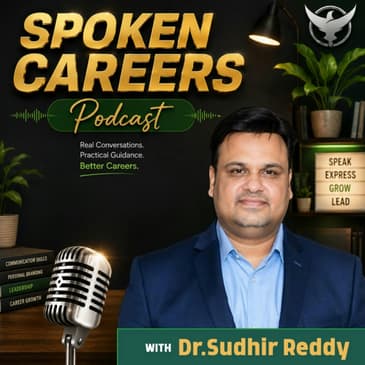
Welcome to the very first episode of The Decision Room—a new Spoken Careers series where real questions from students, parents, and educators become opportunities to learn how to make better education and career decisions.
In this episode, we explore five real-world dilemmas:
• Should you switch colleges after accepting an admission offer?
• Should you choose Computer Science or a specialized degree like FinTech?
• How do you decide between Corporate Law and Litigation?
• How much importance should you give to college cut-offs and rankings?
• Do you really need coaching for entrance exams like IPMAT?
But instead of stopping at the answers, we uncover the hidden questions beneath each decision—and the principles that lead to better choices.
Because Career Decision Intelligence isn't about having all the answers.
It's about asking better questions before life asks you to live with the answers.
One Question to Carry With You:
What's the hidden question behind the biggest decision you're making right now?
If you have a career or education decision you'd like us to explore in a future episode of The Decision Room, send it to Spoken Careers.
Your decision could become a conversation that helps thousands of others.
Explore more insights and future-ready resources at www.spokencareers.com
[00:00:17] Every day, millions of students ask career questions. Which college? Which course? Which career? But what if the biggest mistake isn't choosing the wrong answer? What if it's asking the wrong question? Welcome to Spoken Careers, home of Career Decision Intelligence. I'm Dr. Sudhir Reddy. Welcome to The Decision Room, where we don't just answer career questions. We uncover the better questions hiding underneath.
[00:00:46] Because behind every career question, there's usually a better question waiting to be asked. Let's open today's first decision. Our first decision comes from a student who asked, I've already accepted admission in one college. Now another college has offered me a seat. Should I switch? That's a difficult position to be in. A new opportunity appears. And suddenly, yesterday's confidence becomes today's confusion.
[00:01:13] Before you decide, pause. Ask yourself three things. Will this new option genuinely improve your learning? Will it move you closer to the career you want? And is the advantage significant enough to justify changing direction? Prestige alone isn't a good reason to switch. Purpose might be. But perhaps that's still not the real question. Because underneath every decision, there's another question.
[00:01:43] The hidden question is, which option helps me build the future I actually want? Here's today's decision principle. Don't compare colleges. Compare futures. Let's open our second decision. A parent asked, should my child choose computer science or a specialized program like FinTech? Computer science gives you a broad foundation. FinTech takes you deeper into one industry much earlier.
[00:02:12] Neither choice is automatically better. If your child already has genuine clarity about financial technology, specialization can make sense. But if they're still discovering where their interests lie, a broader degree usually keeps more doors open. But underneath this choice, there's another question. The hidden question is, do I need flexibility or am I ready to specialize?
[00:02:38] Here's today's decision principle. Specialize because you have clarity, not because the title sounds exciting. Let's open our third decision. A law aspirant asked, how do I choose between corporate law and litigation? Many students think they're choosing a specialization. In reality, they're choosing the kind of problems they'll solve every day. Corporate lawyers spend much of their time working with businesses.
[00:03:06] Contracts, negotiations, compliance, litigation is different. Courtrooms, arguments, clients, legal strategy. Neither path is superior. They're simply different ways of practicing law. The hidden question isn't, which branch pays more? It's, how do I want to spend my working life? Here's today's decision principle. Choose the work before you choose the title. Let me open our fourth decision.
[00:03:37] An educator asked, how much importance should students give to college cutoffs and rankings? They're useful, but they're only indicators. A high cutoff tells you many students wanted admission. It doesn't guarantee you'll thrive there. A ranking tells you how an institution compares on certain measures. It doesn't tell you whether it's the right environment for you.
[00:04:04] But underneath the rank, there's another question. The hidden question is, will this college help me become who I want to become? Here's today's decision principle. Admission opens the gate. Growth happens after you walk through it. Our fifth decision comes from a student preparing for IPMAT, who asked, should I immediately join coaching?
[00:04:29] Coaching can be helpful, but only if it solves the problem you actually have. Before enrolling, take a mock test. Identify your strengths. Identify your weak areas. Maybe you need coaching. Maybe you need discipline. Maybe you simply need practice. The hidden question isn't, which coaching institute is best? It's, what support do I actually need? Here's today's decision principle.
[00:04:59] Diagnose first. Decide second. Before we close, here's today's golden minute. Every important decision begins with a question. But wise decisions begin with a better question. Most people spend their lives answering the question that's visible. Thoughtful people learn to discover the question beneath it. That's where clarity begins. That's where confidence grows. And that's where better decisions are made.
[00:05:28] Career decision intelligence isn't about having all the answers. It's about learning to ask better questions before you make important decisions. Before our next conversation, here's one question to carry with you. What's the hidden question behind the biggest decision you're making right now? Some questions deserve silence before they deserve answers.
[00:05:51] If today's decision room helped you think differently, share it with one student, one parent, or one educator. And if you have a career or education question, don't just send us the question. Send us the decision behind the question. Because your question may become a conversation that helps thousands of others make better decisions.
[00:06:15] To explore more insights and future ready resources, visit www.spokencareers.com I'm Dr. Sudhir Reddy. This is Spoken Careers. Home of Career Decision Intelligence. Keep learning, keep growing, walk your path with courage, live it with purpose, and always lead with love.