
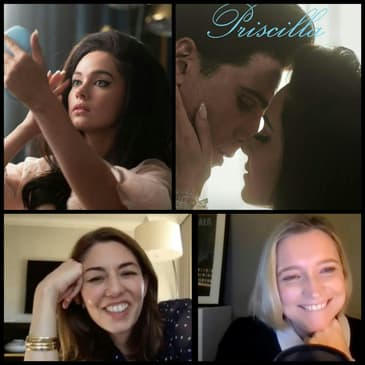

We are honored to welcome writer/director Sofia Coppola to the the show. In this exclusive conversation we talk about adapting and approaching Priscilla Presley's unique story. Why and how this story resonated with Coppola at this moment in her career & life. How she can see Priscilla from several perspectives, her mother's generation and from the perspective of her own teen daughters. Capturing the the essence of Elvis, approaching the complicated aspects of their relationship and much more.
'Priscilla' is out in wide release in the US on November 3rd.
Learn more about your ad choices. Visit megaphone.fm/adchoices
[00:00:00] This is Pop Culture Confidential and I'm Christina Yearling-Biru.
[00:00:15] Thank you so much for joining me for this special episode.
[00:00:19] From the virgin suicides to Marie Antoinette to the bling ring,
[00:00:23] not many have captured the angst, the longing and the exuberance of the teen girl quite as well
[00:00:29] as writer director Sophia Coppola.
[00:00:31] She's also touched on themes like loneliness and connection and lost in translation
[00:00:36] and fathers and daughters in somewhere and on the rocks.
[00:00:40] As we spoke about in our conversation, her films have been a meaningful part of my cinematic life.
[00:00:46] Themes that resonate with me and so many others,
[00:00:49] her music choices and needle drops that speak right to that moment.
[00:00:54] I mean, when the Cures Plainsong dropped in Marie Antoinette,
[00:00:58] I remember almost falling off my chair.
[00:01:01] Her colors, her style, her sense of fashion that so often elevate the fantasy and the themes.
[00:01:08] Of course we all know that she's born into one of the most creative families on the planet.
[00:01:13] Daughter of writer director Francis Ford Coppola and documentary filmmaker and artist Eleanor Coppola.
[00:01:20] Her brother is Roman Coppola and her cousins include Nick Cage, Jason Swartzman, just to name a few.
[00:01:28] Priscilla, her new film based on Priscilla Presley's 1985 memoir Elvis and Me,
[00:01:34] feels in an poignant kind of way like the culmination of her career and all these themes that she's been ruminating on.
[00:01:42] Priscilla was only 14 when she met Elvis and an army base where she was living with her parents.
[00:01:48] Her father was stationed there as was Elvis.
[00:01:52] Very soon she moved alone to Graceland, still only 15-16 years old.
[00:01:58] There she finished high school, later got married and lived a life of absolute wealth and extravagance but in an isolated cage.
[00:02:06] Not unlike Marie Antoinette and other young women that Sophia has explored.
[00:02:11] And talking to her now about Priscilla, when Coppola herself has teen daughters and I have teens was really fascinating.
[00:02:20] Seeing the young Priscilla from several perspectives feels like it made Sophia Coppola the ideal director to tell her unique story.
[00:02:28] And it's a complicated story in many ways, the age difference, the controlling husband.
[00:02:34] And Coppola talks to me about approaching those questions. About Priscilla and Elvis's great love and the strength it took for her to leave and become her own.
[00:02:44] Coppola also talks about looking at other generations, her mother for example for answers and her teens to ask the questions.
[00:02:52] And for those of us interested in diving even deeper into Sophia Coppola's universe she has her first book out. It's called Archive.
[00:03:01] And it covers her whole career. It's a collection of personal photographs, notes from scripts and has a really great chapter on Priscilla.
[00:03:10] Priscilla stars Kayleigh Spani who just won best actress at the Venice Film Festival for her fantastic portrayal as Priscilla.
[00:03:18] And Jacoba Lourady as Elvis in both a charismatic and dark performance.
[00:03:23] Hi, what's your name?
[00:03:26] Priscilla Boyette.
[00:03:27] You like Elvis Presley?
[00:03:32] Of course. Who doesn't?
[00:03:35] Why do the kids miss me too, these days?
[00:03:38] Bobby Daron, Fabian and you.
[00:03:44] Just what is the intent here, Mr. Presley?
[00:03:46] You got women throwing themselves at you. Why my daughter?
[00:03:49] Well, sir, I happen to be very funny in dollars.
[00:03:54] You must remember she's in an array.
[00:03:56] Sophia this is so special for me.
[00:03:59] Your work has been like the soundtrack of my life, like a journey from teen to someone's adult daughter to having teens and every needle drop has been like God.
[00:04:09] Sophia's in my head.
[00:04:11] This one is like a culmination of all that.
[00:04:14] So thank you.
[00:04:15] Thank you.
[00:04:16] Speaking of journey, you've said that characters you've written, you delve into they tend to correspond with phases and transitions in your own life.
[00:04:26] How did Priscilla fit into this stage of your life?
[00:04:30] Yeah, I mean, for me looking at her story maybe think a lot about my mom because she's from the same generation and had similar struggles and roles and expectation as a woman at that time.
[00:04:43] And then having teenage daughters, having such a different attitude about what they would take from a man and like it's it to be in between these two generations.
[00:04:55] That that was interesting to look at and also it was unique for me to be the mother of a 16 year old daughter when I was looking at scenes with the parents with the mother talking to Priscilla about these two old for her.
[00:05:09] And you know, and worrying about her so I could really see this story from both points of view from Priscilla and then also the mother which was unique.
[00:05:20] And in my early teens away that I sort of combatted loneliness was movies and memoirs and I read Priscilla's book quite early.
[00:05:30] I was probably, I think it was 85 so it was by early teens and then I listened to it now when you were going to adapt it and it was so different when I was a teen and now when I'm a mother of teens hearing this book.
[00:05:45] Would your parents have let you go to Graceland?
[00:05:48] I don't think so no way, no way. But I even remember being that age when you think that you're so sophisticated and so grown up and you know it's flattering if someone older guy is talking to you, you think like you know of course I'm special and you know smart or whatever and and then now you know
[00:06:06] being mother of teenagers, you know you have a such a different perspective so but that's so interesting that you read the I didn't read the book and I was young but I could see it being a juicy read as a young girl.
[00:06:19] I would have been much too scaredy cat of a teen to ever do that journey that she did but to read it was fascinating.
[00:06:27] Yeah and I thought that when she talks about she describes like going in his bedroom for the first time and imagine like being in a man's bedroom and then it's Elvis and how big the bed was and she imagined all the women that had been there before so we built that set we made sure that the bed felt really bigger, you know,
[00:06:43] about big and intimidating and it's a black velvet and really try to tell the story from her point of view.
[00:06:49] What you do brilliantly is just that Priscilla is in the details she's in the details in the book too, it's the thing she does the eyelashes she puts on when she's in labor.
[00:07:01] Tell me some of the things that you learned about her through these details.
[00:07:07] Yeah that really brought it to life for me. I love how vivid the story is it makes you really feel like you're there living it with her because of all the detail and so I tried to put as much of the ones that stood out to me as I could and I don't
[00:07:23] think I wish I could have fit in but we couldn't we couldn't do was her that there's she talks about like being like eight months pregnant and writing a motorcycle with the guys because she wasn't going to let being pregnant slower down and she was still trying to enforce you know.
[00:07:39] Yeah right yeah writing for us but just the image of her like on a motorcycle really pregnant I was like oh I wish I had made that and I wish I had seen that but yeah I just like I just that she went so far to be like the ideal
[00:07:52] and then I was impressed that she had the strength to leave and then decide to find for herself who she the weather identity who she was.
[00:08:01] And you focus on her story in terms of Elvis we basically see what she sees even with the fans see she stuck in Germany she sees some things in a magazine almost makes it a paranoid controlling situation for her why did you make that decision to sort of leave his career
[00:08:21] outside yeah I wanted to really just focus on the story that she tells in the book which was them in their personal life and there's I want to have a sense of him and a superstar and you know she talks with there's always women waiting at the gates so she knows that you know she has to always be his ideal because if not there's you know tons of women that would be and just that just to fill out pressure but so I wanted to you know
[00:08:48] to have the sense of him as the superstar but still have that in the distance and really focused in on their intimate story of their relationship.
[00:08:57] But like when he left she didn't hear from him and then she was just seeing things in the tabloids about him with other women and what that must have felt like and really kind of paint the picture of what her experience was.
[00:09:11] Hey it's Kaylee Quoco for price line ready to go to your happy place for a happy price why didn't you say so just download the price line app right now and save up 60% on hotels so whether it's cousin Kevin's Kuzu concert in Kansas City go Kevin or Becky's bachelor at fashion Bermuda you never have to miss a trip ever again so download the price line app today your savings are waiting.
[00:09:41] And she was also this little girl surrounded by a bunch of guys all the time Elvis's friends I remember this anecdote that Mia Farrow told during the Sinatra years that it was the same thing they would be sitting in a Vegas like 2 a.m. when all he and his friends were partying and she would fall asleep on the table because she was so young.
[00:10:02] All these guys always around them and but it does take a certain amount of balls of courage to be a teen in that situation and hang out with just all these guys was there something that intimidated her that you found.
[00:10:17] I think it was hard to always trying to get a moment alone with him and she was always with these guys around and it's very hard for her to be alone with them I think she's always trying to get back to that moment in Germany when it was just the two of them and he was vulnerable and they connected and I think around his friends he had to act you know man with macho and be a dude and so he act differently.
[00:10:36] And it seemed like it was probably fun on some aspects to be one of the guys but then also I think it was hard that she didn't have that much time of him being you know the vulnerable side of Elvis that connected to her and also that she couldn't I was struck by that she couldn't be friends really friends with the wives of these guys because she knew what they were doing when the wives weren't around and so she could never really have a close relationship with them and never be really honest with them.
[00:11:06] So I think it was lonely.
[00:11:08] I thought I thought it must have been hard that she couldn't really be close with them women around her.
[00:11:13] Has she told you was there anyone she could talk to?
[00:11:16] She was found to a path see Elvis's cousin who's in the story and I would have liked to have more in the film because they had some time they would drive around and go get burgers together and stuff but she but yeah but there wasn't either wasn't a lot of people she could really talk to because you know path see Elvis's cousin
[00:11:35] she talks a little bit about her mom or sister but she seems like she had a lot of resources.
[00:11:41] I always wondered how she found the strength to finally leave because I said like you know did you put their business and she was a co-know so I just yeah I wondered how she I think she told me it was really
[00:11:52] she knew that she couldn't raise her daughter in a hotel room in Vegas you know that he was more and more staying away and it sounded like you know for her daughter to have a parented child and she had to make that decision.
[00:12:06] And also she told me she didn't even know what her taste was so the fact that she when she started to spend time on her own her nela and started to meet people and have real conversations outside of him that she started to have other interests and kind of find her own identity.
[00:12:20] There was a love between them it was the lifestyle that didn't work for her ultimately and I think she talks about him not like her wanting to you know every relationship has to grow and evolve and you have to be able to talk about things and that he didn't only have the ability to do that that he was you know just more and more lost in his.
[00:12:39] He's in performing until you know that he wasn't willing to do what you have to do to try to evolve the relationship.
[00:12:49] But Vegas I heard that your dad would go to Vegas for a loan time when he was writing I just thought that was first of all very stressful to go to Vegas and such an Elvis thing to do.
[00:13:02] That's funny he always would go and write his scripts and like Reno or Vegas because you can order food 24 hours so you can just be writing and not think about anything in the order food whenever you need it and also you could they just go out in the middle of the night and go play the game or like it was that note sense of time I'm for a writer that you could get lost and so I used to go visit him in Reno and he was writing and that yeah that's his way of this is writing process.
[00:13:31] In your book you write that this was a complicated relationship of the one between Priscilla and Elvis and such a different time I mean she was 14.
[00:13:41] How did you approach this when you first started thinking about adapting this story?
[00:13:47] I just focused on the book and how to translate her story into a film just really have to suspend any judgment and just have look for the human side to all these characters and have as much empathy as you can.
[00:14:02] I mean I always was thinking through her point of view in her shoes and then tried to approach all the characters that she can you know whether it's her mother Elvis where they were coming from also so they all felt that he developed and human.
[00:14:16] People talked about comparing this to Marie Antoinette of course it's a good comparison of a teen sort of in this incredible situation I was thinking a lot about book ending it with virgin suicides in terms of the parents just.
[00:14:29] I think go and what the parents the ones that let her go and the ones that don't so to speak yeah these are like the two most extreme extreme situations.
[00:14:41] I think they're both too extreme reality but yeah it's hard to imagine I think you know people are like how could anybody let their kid you know let her go live it a great sense pretty hard to imagine but then the way she describes this with a lot of empathy for her parents that what she put them through and that she was so determined and I think she definitely had a real strength about her.
[00:15:06] But it feels like she would have gone I mean there was no way to not let her go and that's what that's what she said her mother knew that if she if she didn't want to go she would have just gone on around so they didn't want to be cut off of her.
[00:15:20] No in order to continue having a relationship with her I guess but I would never have let my team.
[00:15:26] I have a bad and with you the film is definitely pure Americana and I feel like you've dived into this a bit before.
[00:15:35] You've been interested in American celebrity and culture and wealth and your music choices and your family as well.
[00:15:43] I mean their films I mean your father Vietnam and the American mafia maybe for a fetch but if there's a particular with your Italian background if you have another perspective on America and Americana this has been something that you guys have talked about and been interested in.
[00:16:00] No but I think it's exotic to me I didn't grow up you know anywhere near Memphis and like Kaley's from Missouri to grew up with you know Elvis and Priscilla and to me you know they're like a kind of distant icons but but something that I don't I find very exotic.
[00:16:19] Another story but I black hair and more on my go.
[00:16:29] I don't know if I like it.
[00:16:32] I don't mean you won't know if you're lying.
[00:16:36] He's not like you imagine.
[00:16:44] You know there's a lot of rumors about you.
[00:16:49] Was there something you're hiding?
[00:16:52] I don't have a god damn thing to hide.
[00:16:56] I need a woman to understand the things like this might happen. They gonna be here or not.
[00:17:02] Elvis had some precise opinions on women's fashion really he knew or he is opinion anyway that she would disappear with certain patterns and things like that.
[00:17:13] Where do you think this came from and what why did he what was as important to him?
[00:17:19] I think he really learned a lot from working on movies about like what what what didn't and about her makeup and clothes.
[00:17:27] I mean he obviously seemed controlling I think he had for my impression is that he had this kind of like ideal woman in his mind and she wanted to be that you know this fantasy and then you know she was trying to be that but he was almost making her like what he thought his dream woman.
[00:17:46] Yeah he was so opinionated about style I don't know where he got me so he had so much style I don't know where that came from but just as a creative person I think it expressed itself in different ways but yeah he was definitely controlling.
[00:17:58] I just I imagine because as an artist there's a perfectionist side you know wanting to create the world and he had his vision of wasteland and then making her the queen of wasteland it was all under his creative fantasy.
[00:18:13] This is a very particular type of style of course very American and very big and out there how did you approach that yeah for me it was just something I've never done it was so fun to get into like 60s Memphis and the colors and.
[00:18:28] And it's so kind of theatrical so to make it feel real but still in this world and there were so many great references and luckily so many photos of them and home movies and and just all the references of wasteland and kind of textures of the the drapes and the shot carpet and then yeah all the colors of her clothes and how they how they dress then.
[00:18:52] You know said so much about where she was in the story and what her development.
[00:18:57] And you worked with some amazing designers on specific like the wedding dress for example yeah so I was so we're so lucky that Chanel made her wedding dress when it showed up it's you know it's so beautiful and it had to be a big moment because it's an important image of their love story and a Latino made some of his suits and sweaters and both.
[00:19:21] So yeah it was always great when the actors would show up in these costumes and that you just have such a talented team putting it all together to create a world is really you know magic.
[00:19:33] Priscilla seems to have been so supportive and helpful with pictures and with talking to Kaylee and on all these things that she did but there are many things that are quite intimate here.
[00:19:47] That how did she react to certain scenes like the Polaroid scene and even and the wedding scene also was it emotional for her.
[00:19:56] Yeah she seemed she seemed really moved which was I was so nervous to show it to her for the first time and and then after she thought she was really moved and said you know that's what my life felt like my life that's what it was like and she was really touched that it.
[00:20:11] Kaylee was able to convey how she felt and I was so happy that I got right because that was the feeling I got from her book and I thought she described it really well but yeah but i'm also guessing or you know kind of putting my own.
[00:20:22] Imagination into it and so it was really happy that she felt that it was accurate and she was always very willing to answer questions and she went through the script it was really important to me that she feel like it was.
[00:20:34] It felt right to we were representing her story in a way that.
[00:20:38] She had to capture the essence you say you can't go out and find someone who is identical to to Elvis or for you what was that essence that you were looking for yeah I mean no one looks like Elvis he's so.
[00:20:51] He was so unique looking in such a beauty and such a unique way and so I was just trying to find someone that could kind of convey.
[00:20:59] The feeling that she describes and how I imagine that he was so charismatic and that just had that magnetism and which which Jacob really has naturally it so you can just feel it in the way that girls react to him.
[00:21:12] Well Jacob it's his year I just saw so.
[00:21:16] I'm so excited to see that yeah no he's so talented but he really has such magnetism just naturally and but I think he's so has he's so lovable and has a sweet side.
[00:21:28] And a sensitive side that I thought was really important in the way that for silly describes Elvis and their real life and just office vulnerability and and that you get peace.
[00:21:40] Everyone today is so charming so lovable and I thought also with showing this darker side of him too that I didn't want to it was important that he had the lovable side to and to kind of balance them with the roller coaster.
[00:21:53] And that they that she had such a love for him well for her to put up with some of the things you put up with and what about Priscilla casting from me that challenges really defined one actress that could play her from 14 to late 20s and make that change and my cast and people mentioned Kayleigh I was you know I just met with her and I was.
[00:22:14] I'm excited that she really looks she can really pass for 15 and which is pretty striking she's in her 20s and also it was great to have someone that isn't.
[00:22:23] That we haven't seen before and you just kind of you can believe her is so that's not like oh they're so and so as persona I feel like it makes it more believable which I was really glad and and just you know just work with a new talented actress is always exciting.
[00:22:40] And her eyes can feel that longing that longing that waiting by the phone as one did is a teen I mean that's something that that you've depicted in several films.
[00:22:52] Are you good at being alone yourself?
[00:22:55] I am I need to have my alone time but there is I think you're more introspective in that alone time and I think especially as a teenager that kind of those times in your room and you're got to have a quite fatter footing I think like until you have a strong sense of your identity that you're kind of on wildly legs.
[00:23:14] And I think it's you know in that in that moment I think can be hard.
[00:23:19] There's a there's a fun side but also you know the vulnerability and in the finding your way so yeah no I felt connected to that but I know I definitely like when you're writing you're in that mode I mean like I'm alone writing alone and I'm more in touch with my introspective side and but I'm not like that all the time.
[00:23:41] I think you get to be on your friends and colleagues and it's really fun to all be to get working together.
[00:23:47] But there's a particular that I recognize too I moved around a lot in my life and you seem to have been as you call yourself an army Brad on film locations and definitely for Priscilla as well it's a special kind of loneliness that you're you're lonely but yet the same time you have to adapt to new situations did you recognize yourself in her there.
[00:24:09] And I think that's definitely like being the new kid at school. I am definitely related to that because I moved around with my family and I was the new kid at school a lot so I guess I could relate to that being when she's in Germany and she just starting starting a new school again and then nothing so I can I can relate to that.
[00:24:27] Did you understand at an early age what fame was?
[00:24:32] Yeah, I mean not anywhere near the scale of what she experienced but definitely having been you know around that a little bit I could you know imagine that the two sides of it of what it's like to you know be at school and then dip into that world.
[00:24:47] And just I'm just a sense that it's not all it is cracked up to be it's not perfect you know that you still have human struggles even when you're near what seems like you know have this but yeah but that doesn't fame doesn't make your life perfect.
[00:25:01] So I'm always yeah I'm always interested in the kind of fairy tale versus reality and what her life looked like and then what the reality was yeah I didn't I didn't grow anywhere near that level of the champion but I know this small amount I experienced I could I could imagine.
[00:25:16] It helped me fill it in my and as she talked about the moment it hit her this sort of crazy fame.
[00:25:23] I always grew up kind of peripherally around film business I didn't really think about it but for her to just be dropped into it so instantly at that age I thought she was so kind of mature and poised of how she dealt with it she's very discreet she never told anyone about it and she said that he really trusted her because she wasn't talking about him
[00:25:43] and she wasn't you know exploiting that and I said I think he like trusted her and she that was important to her but you know.
[00:25:50] She was so mature there's a thing in your book also besides the fact that she didn't tell anyone about about dating this the most famous magic world there's an email she said to you she lists a few things and that she gave him bongos as a gift.
[00:26:07] Oh yeah and I thought what a 14 year old to think of such an incredibly good gift gifts I mean I don't know what I would have thought about to give my boyfriend some bad aftershave or something.
[00:26:19] Yeah it's true that she was cool.
[00:26:21] I want to live for my own.
[00:26:28] The music in your films has been just such a really important part of my experience with your filmmaking and can you tell me a little bit about how you work with the music on Priscilla?
[00:26:48] Yeah this one was tricky to find our way and I'm really grateful to my husband to on his band and be next they helped me early on when I was starting to work on the script.
[00:26:58] We started making a playlist together and just kind of finding music of that era because it's not it's not really my kind of music that I look really listened to or respond to that kind of like 50s 60s of course there's like so many classics I love girl groups growing up so like the Barnettes and all that love that and full spectre I've always loved so really.
[00:27:17] You know looked at that kind of music and then we just kind of yeah found songs that seem to work together and I wanted it to be have this kind of like swelling romantic melodrama of the story.
[00:27:30] You didn't have the rights to Elvis music but in a way the like the last song i'm not going to spoil what it is but that really it makes it so much better because it's her story and what she's feeling.
[00:27:44] Yeah i'm glad that you know that song at the end it always really important to me always that that's one came to mom when I was first working the script because I was important me that I had a woman's voice at the end because it really felt like this is her starting her story as becoming a woman and there are some Elvis songs I wanted to use of the Hawaiian love song he sang to her on her wedding
[00:28:02] and I always knew that we might not get permission because the state really only worked on projects that they originate there you know just because of the brand they don't want other people messing with that which you can see.
[00:28:14] So so then we had to rethink those so I was I wanted a few but it was okay I always knew that we might not be able to and then it makes you more creative to find other solutions and I remember the Ramones their album with full spectre and we were talking about full spectre so I thought to try that song.
[00:28:31] I think we're always trying to get goosebumps like you know like yeah i'm so glad because um yeah mixing them all together in a way that hopefully they they fit and that's until like Frankenstein but um I love like Crimson and Clover after her first kiss and she's walking down the hall it's just like it how do you show that feeling of um just the effectiveness of your first kiss and it's Elvis and like trying to process that.
[00:28:54] Finally I have to ask you what are you hoping that a younger generation of women seeing Priscilla story today with all its words and all and beauty but what do you hope that they'll take with them.
[00:29:09] You know I just hope I think we can always learn from other people's experiences and I try not to tell people how to feel but I know like my daughter is what we like you know I would never let someone tell me what to wear you know they just came and comprehend that where I know my mother.
[00:29:24] I'm a mother's generation we're all about like you know pleasing a man and then and somehow I'm in between with parts of that you know like kind of a mix so um so yeah I'm curious but it is interesting to hear like a uh we had a young filmmaker live with Neil who 17 was filming a behind the scenes on our set as she had such a different reaction to the story then even me and I because I grew up with you know from that generation and.
[00:29:53] So I mean she just like even like that him dressing her like she you know was so kind of appalled by him dressing her up and where I can still see that the way Priscilla described it as you know fun to have that attention and and you know getting to be this glamorous depiction of his ideal woman you know and um I can really see both sides of that and and what I was really struck with the stories that she had the strength at that time to leave when that was what was everything.
[00:30:22] That was expected to give you fulfillment is you know she had all the goals that a woman was supposed to want at that time and and and that like her own creative expression wasn't even an option and so yeah I'm just I'm more curious what a young thing it's interesting to hear what a young.
[00:30:38] So yeah it's interesting and I think any kind of complicated relationship you know we've all been in and drawn to people that maybe aren't always so healthy.
[00:30:47] Did your daughters change your mind about her after the whole process was done or about not about her but about those aspects of.
[00:30:54] So you know I think it's just interesting for me to see kind of be looking at it from both sides and to be in the middle of that is interesting but I think we always learn from the generation before us and appreciate what they went through and what all the things I'm able to do that wasn't a possibility then.
[00:31:13] I want to thank you so much for this and for the movie and for everything that's really been.
[00:31:18] Yeah it's a nice talking unit where our soundtrack is supposed to come out soon so hopefully that'll be around soon.
[00:31:24] Bye!
[00:31:25] Thank you so much to Sophia Coppola.
[00:31:28] Priscilla is opening wide in the US on November 3rd and Sophia's book Archive is out now and thank you so much for listening.
[00:31:36] This is Pop Culture Confidential, a part of the Evergreen Podcast Network.
[00:31:41] See you next time.
[00:32:11] Truthful, independent, unbiased and essential world news.
[00:32:16] Daily