
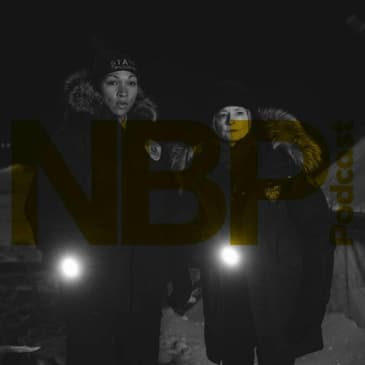
"True Detective: Night Country" garnered some of the best reviews from critics and reactions from fans since the HBO show's acclaimed first season. One of the highlights was the striking, chilling visuals from Academy Award-nominated cinematographer Florian Hoffmeister ("TAR"). Florian was very gracious with his time and went into detail with us on his work for this latest season of the hit miniseries, which you can listen to below. Please be sure to check out the show, which is now available to stream on HBO Max and is up for your consideration in all eligible Emmy categories. Thank you, and enjoy!
Check out more on NextBestPicture.com
Please subscribe on...
SoundCloud - https://soundcloud.com/nextbestpicturepodcast
Apple Podcasts - https://itunes.apple.com/us/podcast/negs-best-film-podcast/id1087678387?mt=2
Spotify - https://open.spotify.com/show/7IMIzpYehTqeUa1d9EC4jT
YouTube - https://www.youtube.com/channel/UCWA7KiotcWmHiYYy6wJqwOw
And be sure to help support us on Patreon for as little as $1 a month at https://www.patreon.com/NextBestPicture
Learn more about your ad choices. Visit megaphone.fm/adchoices
[00:00:00] Shopify grows your business no matter how far or big you grow. Shopify is the global commerce platform that helps you sell at every stage of your business. Whether you're selling your fans' next favorite shirt, or an exclusive piece of podcast merch, Shopify helps you sell everywhere.
[00:00:20] Shopify powers 10% of all e-commerce in the US. Allbirds, Rothy's, Brooklinen, and millions of other entrepreneurs of every size across 175 countries. Plus, Shopify's award-winning help is there to support your success every step of the
[00:00:40] way. Because businesses that grow, grow with Shopify. Sign up for a $1 per month trial period at shopify.com slash income, all lowercase. Go to shopify.com slash income. Now to grow your business no matter what stage you're in. You are listening to the Next Best Picture Podcast,
[00:01:08] and this is Brendan Hodges' interview with the cinematographer for True Detective Night Country, Florian Hoffmeister. What happened in the last case you were working tomorrow? That was good, until it wasn't. Never too late. There was nothing we could do.
[00:01:35] I'm working on this new case. A missing scientist found on the edge of the villages. Frozen solid. What do you want? It's been six years. Why are you here? Because you both know what really happened. You need my help. I've seen that before. Years ago.
[00:02:03] Fine. I'm just going to do this one thing. We're together to close this case, and that's it for the two of us. It is. So you want in or what? Let's start for Night Country by just asking, you know, each season of True Detective is obviously
[00:02:18] very different. But one thing that kind of connects all of them is how they have this like fixed sense of atmosphere, highly specific to where the story is set. So I'm just wondering, you know, how did you go about finding the right look for Alaska for Night Country?
[00:02:35] Good question. Yeah, I mean, it's interesting you say that because creating the atmosphere, I feel that's the backbone of my interest and my... where I will devote a lot of creative energy,
[00:02:52] you know, when I shoot a film. So I mean, the atmosphere wasn't really present in the script. The script was... had lots of... had three things going for it. It was, you know,
[00:03:06] of course, there was the case that was very... and it kind of pulled you through. I read all the episodes. But then there was a feeling of character, you know, like the separation between
[00:03:18] people, the longing for connection. And I felt there was a very strong theme. And then there was the supernatural. So those were the elements that were laid out. And obviously, I thought that the cinematography would devote its attention towards the supernatural as well as to the character,
[00:03:36] but not necessarily to the who's done it. So that was the first thing in my head. And the second step was that I thought, well, if you go to Alaska, and you live in darkness,
[00:03:49] how will this change your perception of light in itself? Because light has suddenly more of a utilitarian thing. You know, it's not about just to make things look nice, or maybe to give you a
[00:04:04] little bit of light in the dark, but to enable you to survive. Because... and I always felt that the film should feel in a way that if you switch off the light, you'll just be swallowed by darkness
[00:04:15] and you'll disappear. So that was one of the other thoughts. And the last one I felt was that, you know, obviously it is a habitat where we as modern industrialized people don't really... can't really exist. So there's a transient nature to all of our dwellings and
[00:04:41] everything we drag up there. You know, it'll... like the way people would live, for example, is they don't throw things away, they have to stack up for the winter, things don't rot. So
[00:04:52] this kind of, you know, this feeling of multiple layers within mostly the design and the mise-en-scene, I thought that there should be a cacophony of colors. You know, you wouldn't... you just use
[00:05:05] every light bulb you have, not necessarily... they might not match, you know, like stuff like that. So there was a cacophony of color, there was a utilitarian feeling of the lighting, and there was this feeling that darkness will swallow you. Those were the things that...
[00:05:21] That was the guiding principle. I'm sure you're asked... you've been asked this all the time, but I still have to ask because I'm so curious. What were the biggest challenges, lighting and shooting in intense cold, but also a place where it's meant to be dark all the time?
[00:05:40] One of the challenges is if you go outside into the open, like into those snowy environments, obviously you have a lot of white around you, which is counterproductive to the attempt to create contrast and darkness. So say for example, you were to light in a more urban environment,
[00:06:00] like... or say not urban, like say you would go in an environment where you're surrounded by blacks or by darker surfaces, you will start to light the actor or the area where the action takes place.
[00:06:14] And you would take care of the environment, but you would always know that the environment would fall off. That would be the natural thing. You would take care of the action and then let the
[00:06:26] rest develop. Now if you switch on a light on an ice field, everything gets bright immediately, but the actor might still not have any light in his face. So I had to kind of recalibrate a bit.
[00:06:37] We did build these big soft boxes that we used, so that worked really well. But that was a bit of a recalibration that took place. Apart from that, I think one of the things of filmmaking is
[00:06:56] that it is quite hard work. You also spend months and months away from your family or your friends because you're in remote places. But it is also very exhilarating and invigorating to be outside
[00:07:11] on an ice field with minus 17 degrees and some northern lights going over your head, you know. So I never really suffer from the harsh bits because I think in exchange you also get a lot of
[00:07:24] beauty. Right. That makes sense. And I'm just wondering then when you're in those environments, you have this kind of these big soft boxes you developed. How does that impact what like what camera selection you're using? How does that impact your lens choices? You know, things like that.
[00:07:41] Yeah, I tried to mostly make those decisions very, very early and not necessarily with the challenges in mind. I mean, I wouldn't choose a very slow lens, for example, obviously knowing that I shoot a lot of darkness. But first was the choice of the camera in this
[00:07:59] particular instance, because having, you know what I said earlier about the atmosphere, I sometimes try to think of metaphors and one of the metaphors I felt was appropriate for this. And I love music and I love people that can make music. I always admire. I think that's
[00:08:18] the perfect art. So I felt that this should feel like you have an elect the highlights would be an electric guitar and it would be like screaming. So I really wanted a super high contrast, which then results in exactly those blacks that seem to swallow you.
[00:08:35] So if you go for a utilitarian lighting approach with highlights being really high and screaming, obviously you want to maintain color in those highlights as long as you can. And ARRI at this
[00:08:49] in this year had put out the ARRI Alexa 35, which, you know, for as a matter of fact, has this amazing role of in the highlights and keeps color information and texture forever. I mean, it's
[00:09:04] it's the first time I think. And that's this is not a promotional bid for ARRI, but I think they very rightly claim. And that's a fact that the camera has a higher dynamic range than celluloid
[00:09:15] ever had in the highlights. So, OK, I thought that's the camera. And I was able to get my hands on a very early singular model that was circulating in London. And I went to a Panavision who I tend
[00:09:30] or who I've worked with a lot. And I just took like six lenses, different ones and just stuck them on really quickly. And there was nothing around. It was literally in one of those test
[00:09:41] rooms and we switched off the light and had a fluorescent on. And I felt that there was immediately a beautiful marriage between old Panavision super speeds and ultra speeds.
[00:09:54] So I felt, OK, that's the best look. So I'm going to go and try and work with that. And then I take these ingredients, I took those ingredients and I try to test quite a lot in prep for numerous reasons.
[00:10:08] One is because I really enjoy trying to find a look or a lot that then you stick to. So I really, I still work as if I would shoot celluloid. I feel that filmmaking gets really interesting and good
[00:10:24] if you make decisions and if you make them early on and stick to it and then forget about it. So it's not about keeping the options. I actually think less options, better place, you know,
[00:10:36] better place, you know, the less you have, the more creative you get. And that and that creates the space, you know, where I think people sometimes say, you know, you think one film,
[00:10:48] you shoot one film and then you make another one. And that just happens, I think, if you if you diminish your options a little bit. So that is one reason for testing, trying to make early
[00:11:00] decisions. And another very, very important testing, a reason to test is that I like to establish a practical communication with the director. I tend to shoot these tests, you know, sometimes by myself, sometimes the director is present as well. But it's a very, very good
[00:11:22] opportunity to to test if the language that you're speaking is actually, you know, the same, because we can talk about this all endlessly. And then, you know, what I think is my concept of
[00:11:37] beauty or even my concept of color, I say this is a beautiful red, but somebody else might say, well, I don't really like that red. So I think you have to get practical very early. So we
[00:11:48] that's I'll do that to establish a communication with the director. And it's a beautiful occasion, because, for example, when I shot tar, we shot a test very, very early. And I showed some of the
[00:12:03] lenses to Todd. And there was one phrase that has stuck with me since, because he said, Oh, those are those look really beautiful. But they look like a movie with a capital M. And I don't want
[00:12:15] to do a movie, this film should be different. So it was that is just to say those are the occasions in which you can then kind of push it further, you know, in the as a creative team. So I started
[00:12:29] testing quite early. And I found that this combination of the lenses and the camera would work and then was beautiful. But I still felt that the contrast was an interesting challenge. And I reached out to another Florian, a gentleman called Florian Martin, who goes by the nickname of
[00:12:56] Uzi, who is the head colorist of Arri. And when we did tar, we had had quite an extensive communication with Arri. Because Todd, for once, is an absolute cinematography aficionado. So, you know, he loves the heritage, he loves the lineage. And he can, you know, he's really
[00:13:19] in love with all those stories and all those also, all those processes and techniques that we have, that we build our filmmaking tools on. And so I knew Florian from back then, and
[00:13:38] I asked him to develop to see if he could build me a LUT that would simulate photochemical, but that would also kind of do the screaming effect. And so he built me this LUT. And we kept
[00:13:54] on testing. And then I realized this is all this going to work. But it's also quite a an extreme way of working. Because obviously, you know, as a cinematographer, I might like the darkness
[00:14:10] that swallows us and I might find screaming highlights, but in the mid ground live the actors, you know, and they have to transport the emotion. So maybe I shouldn't make my life too miserable
[00:14:23] by going so steep that I would have to surround myself with, you know, hundreds of China balls to make it softer. Because obviously, we still had to work at a quite a pace because it's a series,
[00:14:37] you know, so yeah, work considerably fast. And then hence, another element was quite interesting of the Alexa 35, because it's the first time now that we can, you know, you use these things they call textures, and you actually burn them into the file. So it's an unchangeable, you know,
[00:14:58] there's a mood decision you can make that is an unchangeable element of the file. And then hence, I reached out to Florian again, and asked him if you know, I was talking to him about these tests
[00:15:11] and the results. And then I felt there was a problem in those myths. And he said, Well, why don't we build you a texture that you can use, and then we'll take care of this lot because the lot in
[00:15:24] itself was beautiful. But it will, you know, take the edge of the midst, and it will also add some texture in terms of let's call it grain for lack of better words. So those combinations that that
[00:15:37] luck that he built in combination with the texture that I burned in that then became the finished. Wow, that's incredible. And I'm so glad you talked about how contrast was an interesting challenge here. And I love hearing that expression of like electric guitar in
[00:15:55] highlight. I love that. And so I'm wondering, like watching the show, especially the exteriors, where you have all these like layers of shadow, and the illuminated roads, and illuminated stretches of snow, it almost looks like Tarimisu in some frames, you know, it's so like thickly
[00:16:14] differentiated. And it occurred to me while watching that a lot of those light fixtures probably were built for the show, they're probably built for the production. I imagine that there's a collaboration between yourself and you still up as the director of the production designer.
[00:16:28] How true is that? Like, how was it trying to create a look at the for the series, where you could kind of create the lighting theologically in the frame, that could be quite
[00:16:39] expansive in some cases, like I'm thinking even of like the lights that go up to the research center, right? Things like that, where it creates all these powerful lines and differentiating shades
[00:16:50] of light and dark. Yeah, no, I mean, from the start, I said, you know, practicals will be quite crucial on this for two reasons. One is obviously, you know, the practicality of filming. And the
[00:17:03] other is, is there is actually a psychological element to this, because we also were living in that darkness whilst we shot through the winter. And it really happens that, you know, on a Sunday
[00:17:15] on my day off, I, you would get up at like, you know, 10. And it would feel like 530 in the morning, pitch black outside. And it would stay that way until probably two. And then it would,
[00:17:29] it gets a little bit light in the sky, you know, for two or three hours, and then it goes away. So what you tend to do is you almost create your own day and night rhythm. So you would switch on
[00:17:40] practicals. It's not just, you know, like here in Berlin, where I live, I do like my apartment to be quite moody. But there you would just go all in. This would mean that these practicals, you know,
[00:17:54] they would have to kind of tell that story. And that not only, you know, normally on a film set, you have a few and you might switch on one. But there we really had to make sure all of them
[00:18:06] worked. And, and we could really work with the abundance of that. And also the transient, you know, nature of the design would really come to play that you see that people have different
[00:18:16] fixtures, they, you know, they just use whatever they have. The design was a very, very key component of all that. And Dan Taylor, who's the production designer, we talked from early on about
[00:18:29] all the practicals we needed to have. And we had a department that would deal with them, we would talk about them, we would look at them, we would test some of them, because when the LED, you know,
[00:18:38] how do they work? Some of it was just like consumer products, you know, that we brought in from China or whatever. And you have to make sure that they don't flicker and all of this stuff. So
[00:18:48] there was a very discussion from the start. The place in itself, Ennis, was constructed, you know, for two different locations. There's the high street, where the police station is, that was actually a build. I mean, all the streetlights, all the low hanging electrical
[00:19:09] wires, that's a complete build. That's Dan who built this. Then we shot another part of Ennis, the high street where the burger joint is, the Kvovik's place, that is a actually a high street
[00:19:23] in near Katlavik in Iceland, and we used just the lighting that was there. So sometimes it was, you know, in situ, sometimes it was completely built. And then there's also an element, which I think worked quite strongly on this. Some of the stuff, for example, the
[00:19:42] exterior of the Arctic station is CG. So we had a very good VFX supervisor, Barney Kunro, who had a very good and fine hand in creating these digital environments and matching our cacophony of colors. And, you know, that never felt constructed because, for example, there's a shot
[00:20:07] where I think Danvers drives up into the station in the first episode. It's actually only police car that drives up, you don't really know who's in it yet. And the exterior shot was shot
[00:20:21] on the blink, and then time down to darkness, and the lighting was added in post. So there were a few shots when it was just not possible. You know, you can't build an Arctic station of this extent out there. It has to be digital, you know.
[00:20:39] Yeah, that makes sense. And I wanted to pivot by asking that sometimes when I think of your work, I think of your ability to kind of find powerful geometric frames out of unusual locations. You
[00:20:54] wouldn't necessarily expect to see it so ordered in the frame. And that's true of the ship in the Terror, for sure. That's, of course, all over TAR, right? Whether it's symphony halls or even
[00:21:08] a coffee shop, you see those strong geometric frames. You get that again in Night Country, quite often, I thought. Especially like the exteriors. A little bit less so with the interiors, but the exteriors, the way that you're using the roads to cut across the frames or using
[00:21:24] the lights to cut across the frame. Could you talk about an element of your work, assuming that I'm correct in pointing it out? And welcome to Novel Conversations, a podcast about the world's greatest stories. I'm your host, Frank Lovallo. And for each episode
[00:21:44] of Novel Conversations, I talk to two readers about one book. And together, we summarize the story for you. We introduce you to the characters, we tell you what happens to them, and we read from
[00:21:54] the book along the way. So if you love hearing a good story, you're in the right place. Our ninth season is coming this fall. Tune in to hear from some of the all-time great authors, Charles Dickens, Jules Verne, F. Scott Fitzgerald, and more. Subscribe to Novel Conversations wherever
[00:22:10] you listen to podcasts. First of all, thank you for paying such detailed attention. Yeah, I guess that is, I've always been fascinated by, I think it's, I mean, some of the stuff also
[00:22:29] I have to give credit to other people. You know, there was, we did have a second unit, there's a guy called Thomas Thomasson, beautiful DOP in Iceland who went out there and he shot a lot of
[00:22:40] stuff. So some of these exteriors, I actually did not physically compose the stuff myself. But of course there is a conversation, or there are conversations you are having. And one is that I've always, I always think that if you find a way to give an iconic quality to
[00:23:02] the mundane, that's interesting photography. You know, like when somebody stands in a door frame, which is like the most unvisual thing, if you manage to make get this a visual twist, that's interesting. And I think maybe some of the recipes that we all have in our heads about
[00:23:20] filmmaking, I sometimes feel that making the usual feel unusual, and the unusual feel usual, that's a just a position in which a lot of good storytelling takes place, you know. So I would
[00:23:36] talk to Thomas, and there was also a guy in who actually shot some plates in Alaska. His name is DOP, his name is Robert Hunter Baker. And I would encourage the say, listen, go for the iconic,
[00:23:53] you know, try to find a graphic frame and especially the car driving stuff. When I read Issa's scripts, I always start, oh, you have to see these little dots of light traveling across
[00:24:10] the frame and stuff like that. So that's how you communicate. And this is why, you know, how some of these images have been created. But I do feel that I'm interested in finding the iconic
[00:24:26] and the mundane. But it's an interest, I mean, I'm actually thinking about this while we speak, because there are challenges not to overdo it, because then you can suffocate the drama or the emotion. And especially on tar, there was so much restraint that Todd encouraged in the process,
[00:24:52] you know, and we talked about to actually not overdo it, to not, Todd has this beautiful phrase, not guilt, the lily, you know, to really, which in essence, creates something that I found interesting at the experience. You don't do anything and suddenly the frame becomes even
[00:25:10] stronger. You know, there's one little shot in tar that I always found amazing is where Lydia Tarr sits in front of a computer, it's right, it's in the last third. She has already fallen
[00:25:24] into disgrace. She's in New York, she's had this lecture. And she's in the hotel room, she's trying to talk to her. Now, she sees something on the internet. And she's trying
[00:25:38] to get some water from the reception. And by the time she gets to the water from the reception, she hangs up, she stands up. And the only thing you see is the phone that still stays in frame,
[00:25:50] and the frame does not move at all. And suddenly a complete new composition is created by not moving, you know. And I thought that's, I'm fascinated by that. You know, that's what I... No, 100%. And I love that phrase. You know, juxtaposition is a lot of where
[00:26:06] good storytelling takes place. And I think specifically for Night Country, and this, I think retroactively goes to some of your other work, but a lot of your work does depend on opposites. And in this case, you've already talked about how in the case of the
[00:26:23] interiors, in some cases, you would have this concophony of colors, where they could even clash. So these exteriors in Night Country seem to me to very much have this more like a slightly more painterly look. But the interiors, there's a harshness to them. The lighting borders on
[00:26:42] unflattering at times in a way that for me, like what you're talking about with Tar, where like the visual approach to that gives Tar some of its tension. There's a visual tension that
[00:26:54] gives the story tension. And for me, some of the harshness for the way that you had lit the interiors in Night Country gave those scenes a certain type of tension as well. Well, thanks for saying that. I really appreciate it. Because you know, we live in these
[00:27:08] little bubbles. And sometimes you just try to get through the shooting day. But this was my true intent. You know, I always felt that I wanted because one of the great seductive moments of you
[00:27:20] know, you're doing such a beautiful supernatural character study that Isa had conceived on paper is obviously to say this is dark. So we will go dark. And you know, it is, you know, with the
[00:27:32] technology being as amazing as it is these days, you could of course, you could have pushed this into, you know, this super darkness where faces are just barely seen. And I felt this is not the
[00:27:45] right thing for this. I wanted to create this harshness and actually to have a subconscious feel that lighting is not it's not here to beautify. You know, I think that was really
[00:28:01] that was one of the things that I felt it should always, it should feel like we could switch it off any moment. And it would, you know, it would just be dark and black. Right. And especially because
[00:28:14] some of the work is you do on stages as you know, how do you if you go outside and you create this exterior world, how do you the danger and the danger and the maybe the, you know, when I sit
[00:28:31] inside and it's like minus whatever 20 degrees Celsius outside, it of course changes my feeling. So is there a way to photograph it without just creating romantic interiors where we think we are safe? Because obviously, these people weren't safe, you know, right, right. And you do feel
[00:28:55] that very palpably. And I'm glad that you talked about how, you know, this is something that's dark, you go dark, but you didn't want to push it too far. And right now we're in a weird time,
[00:29:06] where a lot of TV shows and some movies, there's been a lot of publicity about this, they can be so dark, that unless you have like a perfect home theater setup, unless you have perfect, perfect
[00:29:16] bandwidth with your internet service provider, it just turns into you know, gray toned mush, you can't really see what's happening. And night country mostly takes place at night, but you always
[00:29:26] feel like you're, you're seeing what you need to write, you can hear very clearly. So how do you do that? Well, I think that you know, that and then as a real, it is intentional, you know, it is part
[00:29:37] of an effort I took on this, because I wanted to free myself of that, you know, that seduction to just go black, or dark. And like you describe it that it's like a mushy darkness, it doesn't take
[00:29:53] you anywhere. I feel that good cinematography, I mean, not good, say the cinematography that I was intrigued by. If you go back to the metaphor of music, I think, you know, a pause in music only
[00:30:06] works if there's some sound left and right. So darkness only works for me, if there is also brightness, either in the frame, or at least before the scene or after the scene. So for example,
[00:30:17] the scenes in the ice ring, we felt that they would have switched on every fluorescent tube in that ice ring, or the police station, they switch on everything. So these places are deliberately almost overlit, you know, if you were to go by what's, you know, considered contemporary
[00:30:34] cinematography, you would have got moody and more interesting, maybe so. And then I think that there is a tradition in cinematography, where portraiture was done by hard light. You know, like, not, you know, maybe 50, 60, 70 years ago, when you know, we were working on fast or people were
[00:30:54] working on slower film stocks, obviously, the lighting was slightly different. And I've always been intrigued by noir, and how, how you can try and find a way to light this way, but not make it
[00:31:09] feel, you know, like period or noirish. So it's exactly, that's what we tried to do. And I think we managed, you know, it worked. I have to say, though, there's one thing. And it takes us back
[00:31:23] to the beginning, where we talked about the LUT. This is only possible if I feel for me, it's only possible, if you push your digital recording, whatever, capturing device into a sphere where
[00:31:38] you can light, if I rock up with a rec 709, or just some flat, technical LUT, and I start lighting this way, obviously go like God, it looks horrible. What are you doing? You know, so you have to
[00:31:50] create a technical environment that is able to, to work with these contrast levels. And yeah, I think that's the crucial bit. Yeah, that makes sense. And I'm generally a huge fan of filmmakers and cinematographers that play
[00:32:08] with pushing the boundaries of digital cinema, you know, rather than necessarily the examples where they try to mimic, you know, celluloid perfectly. I think that's a bit more interesting, right? You know, I think that's, you know, obviously, I started working, I haven't shot celluloid in a
[00:32:26] drama in more than 10 years now, you know, which is a funny development. Because I remember when digital came around the corner, and everybody's saying, Well, have you shot digital yet? And everybody's going, God, you know, I haven't, and will I ever work again? And of course, currently,
[00:32:41] there's, you know, this big wave also beautiful cinematography that's been executed on celluloid again. And it's been also, you know, been talked about this year's Oscar season and stuff. I personally, you know, I find this debate really kind of outdated. We have talked about this,
[00:33:03] literally 10 years ago, and I want to embrace the tools and push them where they could. You know, I did a film many years ago, or not that many, but a few years ago, called Endless with director
[00:33:16] Scott Cooper. You know, Scott had only shot, I think all of his work to that point had been celluloid. And we were talking a lot about it. Because obviously, I love the work that his DOP
[00:33:29] Masa had done. And you know, but for this one, we knew for Endless, we knew that a lot of it would live in the shade. Now the shade is the weakness of celluloid. That's where the grain lives. So if
[00:33:42] you always want like, if you want to be in those great tones at the end of that curve, if you know, you're going to spend most of your storytelling time in that kind of lighting setup, it would be
[00:33:52] foolish to choose it because you'd just be struggling with, you know, a weakness. So we decided to go digital. And I think we did, you know, fairly well. So I think these tools are
[00:34:03] different, and they have all got their own beauty. And I think digital can be pushed so much further. You know, that's why for example, I, amongst many other reasons, adore, you know, the zone of interest. Because, you know, there's somebody who's really pushing the digital field to use
[00:34:23] it as a storytelling element, you know, so yeah. Yeah, no 100%. I love that. I want to be, you know, aware of your time. So I will just ask you one more question. We talked a lot about
[00:34:36] tradition and the heritage of cinematographers, whether the other Florian or you brought up film noir, and I'm a huge noir fan as well. So I'm just wondering who or what era of films, what cinematographers do you look to for the most inspiration in your work?
[00:34:56] Ah, that's a hard question. I know I'm putting you on the spot. No, no, no, no, no. I mean, listen, you know, I grew up in film school when of course, Roger Deakins was one of the, you know, big heroes, and he still is. It was also Christopher
[00:35:13] Doyle, you know. They were really formative at that time. I tend to however, what I want to say is what I found so encouraging about Mr. Deakins is obviously that he has a very distinct voice.
[00:35:35] So it was not necessarily his techniques, because they are his own individual ones in the way that you can recognize his work, you know, immediately. But it was more that there were people that
[00:35:47] clearly had a very personal voice. So it was more an inspiration to try and find what is actually my voice, you know. And that's nothing that especially in the early stages, I would have known immediately
[00:35:59] what that is. But to just try and search for it. And that's what these masters kind of meant to me. You know, there's of course, we all like the same people, Gordon Willis, you know, I loved Storaro, you know, Apocalypse, all that stuff.
[00:36:17] I thought about Willis a lot with Night Country, how it plays in shadows a lot of the time. Oh, okay. There you go. You know, but normally in prep, I tend to rather, you know,
[00:36:30] almost formulate a theoretical idea that I then try to put into action. A lot of it also works in photography, there's a guy that I want to mention, and a Russian photographer called Alexander
[00:36:44] Gronsky, who did a really interesting series about people at the Arctic Circle in Russian mining towns. I think about in the late around 2009, you can find him on the internet. And those photographers, photographies were displaying exactly that crazy contrast that I was thinking about.
[00:37:09] And, you know, I started prep on Night Country, there was one of the great and beautiful contradictions of that in the summer. You know, we started turning over in, I think, late September,
[00:37:21] early October. But I started prep in late July. Now it doesn't get dark in Iceland at that time of the year, it never gets dark, because they've got the endless summer. So it took us, you know,
[00:37:35] till I would say I shot a couple of tests in September, or actually in August, I said to production, we need to start shooting tests, including snow. So we actually drove up a glacier
[00:37:50] and shot at 1130 at night, it got dark for like half an hour before we had to evacuate because there was a gigantic snowstorm up there. So we took the camera into this surreal environment just
[00:38:02] to capture some stuff on you know, to work with snow and work with exposures and stuff in these environments. So there was a long time where we said only in daylight and the photography
[00:38:15] of Alexander Gronski reminded me and inspired, you know, so I work a lot with photography that inspires, I think. Okay. Yeah. Put this to an end, I thought I have to single out another person
[00:38:29] that we didn't talk about in this. And that is Issa Lopez, the director and showrunner. Because she, you know, first and foremost, wrote these beautiful scripts. But also she has a very beautiful sense of emotions. And is a fantastic collaborator. She was really inspiring to work
[00:38:52] with and she brought this sometimes I looked at the sets, and we even though we never talked about it, because she comes from Mexico. And I sometimes looked at it. And I thought, you know what, there's
[00:39:04] all this cacophony of color, the richness, and the richness of the costumes and the the richness of the performance, it almost felt to me like that's Mexican. Because she always said that the Mexicans are very good in enduring pain, right? And comedy and pain live very closely in
[00:39:22] their world. So she was a fantastic person to work for. Yeah, I love that. I was a big fan of the season. Your work is incredible in it. Thank you so much for your time today. It's been an absolute
[00:39:33] pleasure. Well, listen, thanks for having me. It's been a privilege. We talked into you. Thank you so much. Thank you. Yeah, thank you so much for your time, man. I appreciate it. And I will
[00:39:43] be watching whatever you do. Well, you I've been doing a little comedy next. So we'll see how that goes. That will be very interesting for sure. I think about a lot of your work has become,
[00:39:57] you know, varied, obviously, with Night Country and the Terror. They're both set in, you know, freezing environments. But it's fun for film fans, especially as you get a little bit older,
[00:40:09] and I turned 33 in May. So I say older, but when you find new voices, and you were someone who wasn't on my radar until the Terror, I'm sure that's true for a lot of people. And all of a
[00:40:22] sudden, you're like, Whoa, who did? Thank you so much, man. I didn't realize no, I yeah, it's interesting. It also is. I mean, that's subjectively also the feeling that you have working,
[00:40:34] you know, you get some you come in a place where you can express yourself differently and more, you know, it's more conscious. And anyway, I'll try to not let you down on I always try to
[00:40:45] continue doing good work. Yeah, well, if and when we talk again, I'll be sure to hold you accountable to that. I'm kidding. Okay. All right. Enjoy your buddy coming over. Have a great night.
[00:40:54] Okay. Take care, man. Thanks. Bye bye. Hey, everyone. Thank you so much for listening to Brendan Hodges interview with the cinematographer for True Detective Night Country Florian Hoffmeister here on the next best picture podcast. True Detective Night Country is up for your
[00:41:10] consideration in all eligible categories for this year's Emmy Awards and can be streamed in full on HBO Max. You have been listening to the next best picture podcast we are proud to be part of the evergreen podcast network and you can subscribe to us anywhere where you subscribe
[00:41:25] to podcasts. Be sure to leave us a review on our podcast and let us know you think of the show. We really appreciate your feedback and your support, which you can also learn on Patreon for $1 minimum a month exclusive podcast content from us. Thank you all so
[00:41:41] much for listening. As always, we will see you all next time. Bye.
[00:42:27] You've watched them in unforgettable adventures, love affairs, and tragedies. Now it's time to hear their own remarkable stories. From the makers of Death of a Rockstar and Death of a Sports Star. This is Death of a Film Star. And action.
[00:42:49] Starring Heath Ledger, Marilyn Monroe, Chadwick Boseman, Robin Williams, Carrie Fisher, and Bruce Lee. Search for Death of a Film Star in your podcast app. You've seen them tell stories. Now it's time to tell theirs.