
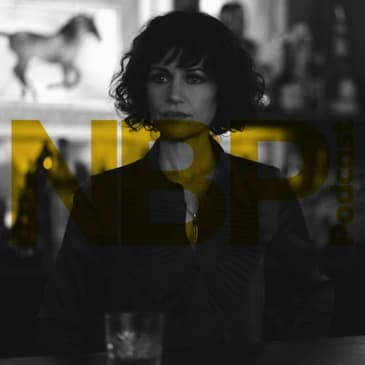

"The Fall Of The House Of Usher" is the latest horror miniseries from acclaimed director Mike Flanagan, the creative mind behind "The Haunting of Hill House," "Midnight Mass," "Hush," "Gerald's Game," "Doctor Sleep" and more. One of his frequent collaborators has been actress Carla Gugino, who always delivers stellar work in all of his projects, but with "The Fall Of The House Of Usher," she recently received a Critics Choice Award Nomination for Best Lead Actress in a Limited Series or Movie Made for Television. Receiving critical acclaim for her performance in miniseries, Gugino was kind enough to spend some time talking with us about her work, her collaboration with Flanagan, and more. Please be sure to check out the show, which is now available to stream on Netflix and is up for your consideration in all eligible Emmy categories. Thank you, and enjoy!
Check out more on NextBestPicture.com
Please subscribe on...
SoundCloud - https://soundcloud.com/nextbestpicturepodcast
Apple Podcasts - https://itunes.apple.com/us/podcast/negs-best-film-podcast/id1087678387?mt=2
Spotify - https://open.spotify.com/show/7IMIzpYehTqeUa1d9EC4jT
YouTube - https://www.youtube.com/channel/UCWA7KiotcWmHiYYy6wJqwOw
And be sure to help support us on Patreon for as little as $1 a month at https://www.patreon.com/NextBestPicture
Learn more about your ad choices. Visit megaphone.fm/adchoices
[00:00:00] Shopify grows your business no matter how far or big you grow.
[00:00:06] Shopify is the global commerce platform that helps you sell at every stage of your business.
[00:00:12] Whether you're selling your fans' next favorite shirt or an exclusive piece of podcast
[00:00:17] merch, Shopify helps you sell everywhere.
[00:00:20] Shopify powers 10% of all e-commerce in the US.
[00:00:25] Allbirds, Rothies, Brooklinen, and millions of other entrepreneurs of every size across
[00:00:32] 175 countries.
[00:00:34] Plus, Shopify's award-winning help is there to support your success every step of the
[00:00:40] way.
[00:00:42] Because businesses that grow, grow with Shopify.
[00:00:46] Sign up for a $1 per month trial period at shopify.com slash income, all lowercase.
[00:00:54] Go to shopify.com slash income now to grow your business no matter what stage you're
[00:01:01] in.
[00:01:02] We took it all.
[00:01:09] We brought them to this night, amber hot and icy cold.
[00:01:17] The rage of the earth.
[00:01:19] We made this curse.
[00:01:20] Carved it in the blood on our backs.
[00:01:24] We did not see.
[00:01:26] We could not, but she did.
[00:01:27] And in the end...
[00:01:28] What will I become?
[00:01:29] Senua's Saga, Hellblade 2.
[00:01:34] Play it now with Game Pass.
[00:01:36] You are listening to the Next Best Picture podcast and this is Cody Derrick's interview
[00:01:41] with the star from the Netflix show The Fall of the House of Usher, Carla Cugino.
[00:01:46] It's time.
[00:01:47] It's time.
[00:01:48] It's time.
[00:01:49] Your honor, no matter how much evidence stacked against them, the Usher crime family stands
[00:02:05] stronger and darker than ever before.
[00:02:09] Anyone comes after us, we will exhaust our arsenal until the threat's neutralized.
[00:02:14] By neutralized do you mean sued into oblivion on the streets?
[00:02:18] Neutralized.
[00:02:19] Like dead.
[00:02:20] Do you guys, we really should get together more often.
[00:02:22] It's just a balm for the soul.
[00:02:23] Hello, this is Cody Derrick with Next Best Picture and I am thrilled to be talking to
[00:02:28] one of the stars of Netflix's The Fall of the House of Usher, Carla Cugino.
[00:02:33] Carla, thank you so much for joining me today.
[00:02:36] Oh, I'm so happy to be here.
[00:02:37] Thank you for having me.
[00:02:38] Of course, literally anytime.
[00:02:42] So just to get started in the show, which I gotta say, I loved.
[00:02:46] I'm here for anything Mike Flanagan does.
[00:02:48] This was no exception.
[00:02:49] He can make a new show every fall and I will watch it.
[00:02:52] No, I'm not alone.
[00:02:55] But in this specific show, you play Verna, who is a mysterious shape-shifting woman
[00:03:00] who haunts the titular Usher family.
[00:03:03] And the amazing thing about this role is that it gives you the chance to play a whole bunch
[00:03:07] of different character types as she morphs into different people to work, to lure her
[00:03:12] victims in.
[00:03:13] And I just want to start by broadly asking what it's just like playing so many different
[00:03:17] characters.
[00:03:18] It was really such an interesting challenge and such an exciting one.
[00:03:22] I think having done this for most of my life, I continue to look for things that I've never
[00:03:27] had the opportunity to do before.
[00:03:29] And it's one of the things that I love about working with Mike Flanagan is that he really
[00:03:33] believes in the transformational nature of actors.
[00:03:36] And so for, certainly for myself, I can speak personally that he's given me opportunities
[00:03:41] each time to do something that I haven't gotten to do before.
[00:03:45] And he's done that so beautifully with so many actors.
[00:03:47] And so that's a thrilling start.
[00:03:50] But it was as I, he was giving me the scripts in real time and I kept sort of seeing as
[00:03:55] these different incarnations of Verna were being revealed.
[00:03:59] And initially I was just so, I was so taken in by the story and it was like a television
[00:04:04] show that you can't binge.
[00:04:05] So I just have to wait till the next script was ready and the next script was ready.
[00:04:09] And then it hit me at one point, oh right, but I have to pull this off.
[00:04:14] The bar is very high.
[00:04:16] And so it really ended up coming down to starting to break down the script in just a very technical
[00:04:21] way initially, which was that there always had to be this sort of golden thread of Verna,
[00:04:25] the hand of fate, the Raven, you know, the sort of executor of karma.
[00:04:30] But then that each one of these incarnations, because she ends up showing up, as you said,
[00:04:35] to each of the family members in this and sort of giving them the opportunity to have maybe
[00:04:39] the most honest conversation of their lives before she's going to take them, before they're
[00:04:43] going to die.
[00:04:45] And whether they make a different decision, which most people unfortunately don't, they
[00:04:51] at least will be able to come face to face with the reality of their lives and maybe
[00:04:55] have a better afterlife, or at least be able to sort of have an honest moment of recognition
[00:05:00] of themselves.
[00:05:00] And it became very clear to me that each one of those incarnations had to be real people,
[00:05:06] had to be deeply human and complex.
[00:05:09] Because again, Mike always wants to go deeper with his storytelling.
[00:05:15] And so a lot of those people actually represent important things like the woman who has to
[00:05:19] get a heart transplant and can't trust anybody in the medical system is so flawed and all
[00:05:23] of those things.
[00:05:24] So if I were to have played that in a way that was sort of a wink, wink kind of thing,
[00:05:28] it would lose the potency of what that actually was.
[00:05:31] So it was about finding the making sure that those characters were deeply human since Verna
[00:05:37] herself is not.
[00:05:39] And then finding the different ways in which they speak and different centers of gravity
[00:05:44] in their body, because oftentimes we were having to do a couple on the same day.
[00:05:48] And so I needed to be able to switch really quickly.
[00:05:50] So did you develop some sort of shorthand with yourself to be able to differentiate
[00:05:54] between these characters?
[00:05:55] Because they're so wildly different, even like you said, similar episodes.
[00:06:00] Yeah, I did.
[00:06:01] I did.
[00:06:01] It was very helpful for me to I recorded the dialects and I would have, as I said, sort
[00:06:08] of a very quick exercise for dropping into where that person might be coming from body
[00:06:13] body center wise.
[00:06:14] And also, it really was helpful.
[00:06:17] The hair and makeup and wardrobe, because they were such wonderful collaborators in
[00:06:23] all of those departments that the second I was able to change physically and see myself
[00:06:27] as that, it's very helpful.
[00:06:29] You said you have a sort of drop in process for each character.
[00:06:33] Is that something you can elaborate on or is that personal?
[00:06:36] Well, no, I mean, you know, I think with this in this particular case, I also had the pleasure
[00:06:42] of working with Terry Notary, who's an amazing movement coach, designed all the apes in Planet
[00:06:47] of the Apes.
[00:06:48] And he's he's amongst many other things.
[00:06:51] But that was really, you know, oftentimes I work from the inside out and sort of where
[00:06:56] the emotional center is of a character.
[00:06:58] And in this case, I started working with him.
[00:07:01] What Mike had suggested him for the work with the Raven body language wise, the cat, the
[00:07:08] chimp, obviously, really, he ended up being such a collaborator.
[00:07:12] On all of the characters, because I ended up finding them sort of physically at the
[00:07:19] same time as what was going on internally.
[00:07:21] I guess I could say an example, again, maybe the example of the person who needed the
[00:07:26] heart transplant.
[00:07:27] One thing that had been written in was that she really had a hard time catching her breath.
[00:07:31] And so I wanted her register to be living in a slightly different or vocal register place.
[00:07:35] But we were able to also find certain physicality that was very helpful for that or Verna herself.
[00:07:41] I really wanted in her most kind of human incarnation, the incarnation of being human
[00:07:45] that's the closest to her, which is the sort of when she's, you know, towards the end
[00:07:48] episodes.
[00:07:48] And when we see her in her black Raven like outfits, I really wanted it to feel like she
[00:07:53] was like smoke coming in and out of a room.
[00:07:56] She doesn't really move in like a person.
[00:07:58] So those were all of the you know, I always make playlists.
[00:08:02] This one was a songs and stuff.
[00:08:03] This one was harder to do that with because there were so many different versions of her.
[00:08:08] And then also Poe is such a great resource, you know, because I obviously was reading
[00:08:12] a lot of Poe.
[00:08:13] I had the great pleasure of being able to recite Poe.
[00:08:16] When do you ever get to do that in a big Netflix horror show?
[00:08:19] You know, they don't let you do that usually.
[00:08:21] So that was also sort of trying to keep the poetry in mind as we were filming was important
[00:08:28] because Poe was so ahead of his time.
[00:08:30] And it was even interesting as I was trying to figure out initially sort of what Verna
[00:08:34] was.
[00:08:34] I know that when before the show came out, a lot of people were saying, you know, is
[00:08:38] Carla Gugino playing a demon?
[00:08:39] And ultimately she's not that at all.
[00:08:41] I mean, she really is the hand of fate.
[00:08:43] But in conversations that I was having with Mike, it was interesting because Poe didn't
[00:08:47] really believe in sort of heaven or hell in that certain kind of way.
[00:08:51] But he did believe in accountability, did believe in obviously he explores guilt and
[00:08:57] consequence a lot in a lot of his pieces.
[00:08:59] So those were more of the things that I was interested in exploring.
[00:09:04] To be clear, I am here for you whenever you decide to play a demon.
[00:09:07] So I haven't done that yet.
[00:09:10] So, you know, there's this.
[00:09:11] Yes, let's get that done.
[00:09:13] We took it all.
[00:09:15] We brought them to our land.
[00:09:18] An endless night, ember hot and icy cold.
[00:09:23] The rage of the earth.
[00:09:25] We made this curse.
[00:09:28] Carved it in the blood on our backs.
[00:09:31] We did not see.
[00:09:32] We could not, but she did.
[00:09:35] And in the end, what will I become?
[00:09:37] Senua's Saga.
[00:09:39] Hellblade II.
[00:09:40] Play it now with Game Pass.
[00:09:42] So Mike Flanagan, this isn't your first project with him.
[00:09:46] You worked on Gerald's game, which you're absolutely incredible in.
[00:09:49] You worked on Haunting of Hill House and Bly Manor.
[00:09:53] And he seemed to have a habit of bringing back actors for projects over and over again.
[00:09:57] Can you tell me what it's like working with him and being part of his troupe?
[00:10:01] Yeah, well, I think he gravitates towards.
[00:10:05] He obviously has impeccable casting taste.
[00:10:08] And I don't mean that about me, but just about all of my amazing actors that I've gotten to
[00:10:12] work with.
[00:10:13] Kate Segal is fantastic and so much fun to work with.
[00:10:16] And it was so kind of cool because in, you know, in Gerald's game, she played my mother
[00:10:21] and the Haunting of Hill House, I played hers, you know, where there's sort of all of these
[00:10:25] wonderful.
[00:10:26] And then obviously in Usher, that chimp sequence was, boy, did I need a partner in crime on
[00:10:31] that one because that was just such a crazy sort of endeavor.
[00:10:35] And I remember just thinking, boy, Mike seems to put me in positions where, because I remember
[00:10:40] as I'm saying this out loud, that I felt this way with Gerald's game too, where there's
[00:10:42] nowhere to hide and you basically can't be subtle.
[00:10:46] Like you can be subtle in different instances, but not in when you're chained to a bed and
[00:10:50] not when you are, you know, playing a chimpanzee.
[00:10:53] So in those things, in those instances, you just have to absolutely trust the filmmaker,
[00:10:57] which thankfully I do, but also your scene partner.
[00:10:59] And so that was great to be able to do with Kate.
[00:11:01] Bruce Greenwood and I obviously also have gotten to collaborate now a couple of times.
[00:11:06] Henry Thomas, I mean, the list goes on.
[00:11:09] It really is.
[00:11:09] I feel so blessed to work with these actors.
[00:11:12] And I think he hires people who are innate storytellers and who are fearless.
[00:11:17] There's not a single actor that I know that isn't willing to try anything.
[00:11:21] And that therefore I think produces something really unique because you're not so often if
[00:11:25] you're in a case where you aren't trusting the filmmaker, you know, I'm adept at directing
[00:11:30] myself.
[00:11:30] I can do it.
[00:11:31] I can have that third eye on myself, but it's not as fun and it's hard to sort of transcend
[00:11:37] in that way.
[00:11:38] So I think that's one of the, Mike has a very strong sense of what he wants.
[00:11:43] He has a really strong vision.
[00:11:45] He obviously writes, directs and edits.
[00:11:47] So he has control over the whole process.
[00:11:50] And I think in this day and age, that's so key because especially as an actor, you come
[00:11:56] into something and you basically give it all and they will do with it what they will.
[00:12:00] And in this case, I know that he will take care of us and that I can try things that
[00:12:07] might be like I can go too far.
[00:12:09] I can try different things that give him all the choices that he needs.
[00:12:13] And I know that he'll sort of pick the right ones.
[00:12:15] So movies are made by committee and television is made by committee so much now.
[00:12:19] And by testing things and by algorithms and by, you know, and all of these things.
[00:12:24] And the truth of the matter is that still a single person's vision coming to the screen
[00:12:30] to me is always the one that speaks to me as an audience as well.
[00:12:34] Something else he's become known for besides working with wonderful actors over and over
[00:12:38] again is these long monologues.
[00:12:40] And I feel like every time he gets a new miniseries, he kind of tests how much longer audiences
[00:12:46] will pay attention.
[00:12:47] But I mean, they're extremely enrapturing.
[00:12:50] And can you talk about what it's like to approach those long written pieces of text as an actor?
[00:12:55] Yeah, yeah.
[00:12:56] The flannel logs, as he likes to call them.
[00:12:59] Yeah, well, it's for me initially daunting because they are weighty and lengthy.
[00:13:07] But also the thing that you realize as an actor is that if you have something that's poorly
[00:13:11] written, it could be three sentences and you cannot remember it.
[00:13:14] You have to work so hard to memorize the material.
[00:13:17] If it's well written, there's some part of you that just clicks in and learns it.
[00:13:21] And that is the case with his writing.
[00:13:23] So I think the key that I've learned for myself with those is to stay extremely present and
[00:13:31] continue to keep discovering throughout them.
[00:13:34] And so this is obviously very unique to each actor.
[00:13:38] But for me, it's learning it so that I know it backwards, forwards, so that in the moment,
[00:13:43] it's never about the memorization or trying to remember, but it's about being able to
[00:13:49] live in it.
[00:13:50] I think that theater has really helped me with that because in theater, you have much
[00:13:53] more rehearsal time.
[00:13:55] But by the time usually you're on stage performing in front of an audience, it's muscle memory
[00:14:00] and it's in your body.
[00:14:01] And you don't really get that very often with film.
[00:14:04] Film to me is like capturing lightning in a bottle.
[00:14:06] You just need to get it once.
[00:14:08] But if you get it that once, that's the take you're going to go with.
[00:14:12] Theater is about exploring the same thing, usually eight shows a week, but rediscovering
[00:14:17] at each moment as if you've never done it before.
[00:14:19] And so I find the monologues that he writes to be a little bit like that, which is the
[00:14:23] more time I can get with them before, the better, so that I can just live and let them
[00:14:28] kind of speak through me for themselves.
[00:14:30] And also, every writer has a different musicality.
[00:14:34] And I think the more you get to work with the same person, you get to understand their
[00:14:38] musicality and you get to sort of, you know, I felt very much that way with Sebastian Gutierrez,
[00:14:43] who I've obviously collaborated with many times as well.
[00:14:46] You start to understand the musicality of people's writing and be able to kind of serve
[00:14:50] that better.
[00:14:51] Unfortunately, we're approaching the end of our time here.
[00:14:54] But before I let you go, as a horror fan, you've worked in a wide variety of genres.
[00:14:59] I first saw you in Spy Kids, a formative part of my childhood.
[00:15:04] Can you tell me what it is about horror that you love working in?
[00:15:08] Well, you know, this is interesting because I think that one sort of secret, maybe it's
[00:15:14] not a secret, but I think good actors know that horror really can offer something very
[00:15:21] unique as a genre, which is as long as you deliver on scares and mystery and all of this
[00:15:28] very... there's a couple of things you have to deliver on, then you can be as smart as
[00:15:32] you want.
[00:15:32] And what I love about Mike Flanagan's version of horror is that it is always has something
[00:15:38] much larger to say.
[00:15:39] I think that usually you can tell the truth in genre, oftentimes more so than you can
[00:15:44] in naturalistic drama.
[00:15:46] And so in this way, you know, it really does allow for the exploration of very large and
[00:15:53] important themes like retribution, accountability, grief, healing.
[00:16:00] The Haunting of Hill House, I think the end of that show is such an unusual end because
[00:16:03] it ends with this sense of hope.
[00:16:06] And that's so rare for horror.
[00:16:08] So to me, you know, there's something about... it's not even like I was a big horror fan
[00:16:13] per se.
[00:16:14] It's just that the first time that I met with Mike for Gerald's Game, I thought, this
[00:16:17] is a filmmaker I want to help tell the story.
[00:16:20] And that's his genre, that's a genre that he really connects to.
[00:16:23] And so now I have a great appreciation of horror.
[00:16:26] And, you know, I mean, The Shining was one of my favorite movies of all time.
[00:16:30] That too.
[00:16:30] But yeah, I think there's an opportunity to really have great characters in horror.
[00:16:35] Couldn't agree more.
[00:16:36] Couldn't have said it better myself.
[00:16:37] Carla Gugino, thank you so much for being here with me today and congrats on another
[00:16:41] excellent performance in The Fall of the House of Usher.
[00:16:44] I'm so excited to see what you do next, especially hopefully with Mike Flanagan again.
[00:16:48] Thank you so much.
[00:16:49] So great to talk with you.
[00:16:50] Have a beautiful day.
[00:16:51] Hey everyone, thank you so much for listening to Next Best Picture podcast.
[00:17:03] The Fall of the House of Usher is up for your consideration in all eligible categories
[00:17:08] for this year's Emmy Awards, including Carla Gugino for Best Actress.
[00:17:13] You have been listening to the Next Best Picture podcast.
[00:17:16] We are proud to be part of the American Podcast Network and you can subscribe to us anywhere
[00:17:20] where you subscribe to podcasts.
[00:17:22] Be sure to leave us a review on Apple Podcasts and let us know what you think of the show.
[00:17:25] We really appreciate your feedback and your support, which you can also lend on over at
[00:17:30] Patreon for a $1 minimum a month, you'll get some exclusive podcast content from us.
[00:17:35] Thank you all so much for listening as always and we will see you all next time.
[00:18:26] History is complicated.
[00:18:28] The story of human progress is long, messy, and riddled with controversies big and small.
[00:18:34] On Conflicted, we dive headfirst into history's most infamous events and contentious figures.
[00:18:41] We try and untangle the good from the bad, the facts from the fiction,
[00:18:45] and the monsters from the misunderstood.
[00:18:48] Was Genghis Khan a murderous butcher or a civic pioneer?
[00:18:53] Did the Allied Powers go too far in firebombing the German city of Dresden at the twilight of
[00:18:58] World War II?
[00:19:00] And how did the Marquis de Sade acquire such a sinister reputation?
[00:19:05] And was any of it true?
[00:19:07] These are just a few of the tough questions we wrestle with and investigate on Conflicted.
[00:19:13] So if you love history or just enjoy a good story,
[00:19:16] please join me, your host Zach Cornwell, for a fascinating new topic each and every month.
[00:19:22] Conflicted, a history podcast is available on Spotify,
[00:19:26] Apple, or wherever else you get your podcasts.
[00:19:29] I hope to see you soon.