
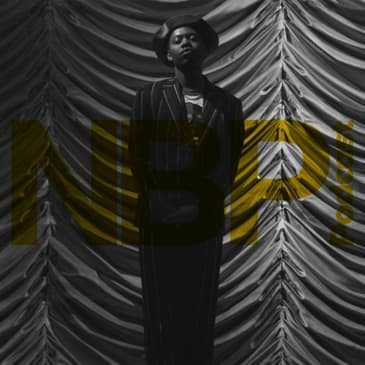
"Slave Play. Not A Movie. A Play." had its world premiere at the 2024 Tribeca Festival just a few days ago and is now streaming on HBO Max. Tony Award-nominee Jeremy O. Harris has taken his acclaimed play "Slave Play" and translated it to the screen in a highly unique way as a deconstruction and commentary on the play itself, making his feature directorial debut in the process. He was kind enough to spend some time talking with us about the production behind his documentary, which you can listen to below. Please be sure to check out the film, which is now available to stream on HBO Max. Thank you, and enjoy!
Check out more on NextBestPicture.com
Please subscribe on...
SoundCloud - https://soundcloud.com/nextbestpicturepodcast
Apple Podcasts - https://itunes.apple.com/us/podcast/negs-best-film-podcast/id1087678387?mt=2
Spotify - https://open.spotify.com/show/7IMIzpYehTqeUa1d9EC4jT
YouTube - https://www.youtube.com/channel/UCWA7KiotcWmHiYYy6wJqwOw
And be sure to help support us on Patreon for as little as $1 a month at https://www.patreon.com/NextBestPicture
Learn more about your ad choices. Visit megaphone.fm/adchoices
[00:00:01] Shopify grows your business no matter how far or big you grow. Shopify is the global commerce platform that helps you sell at every stage of your business. Whether you're selling your fans' next favorite shirt or an exclusive piece of podcast merch, Shopify
[00:00:18] helps you sell everywhere. Shopify powers 10% of all e-commerce in the US. Allbirds, Rothy's, Brooklyn and millions of other entrepreneurs of every size across 175 countries. Plus, Shopify's award-winning help is there to support your success every step of the way.
[00:00:42] Because businesses that grow, grow with Shopify. Sign up for a $1 per month trial period at shopify.com slash income, all lowercase. Go to shopify.com slash income now to grow your business no matter what stage you're in.
[00:01:23] You are listening to the Next Best Picture Podcast and this is Cody Derrick's interview with the director and writer for Slave Play. Not A Movie. A Play. Jeremy O. Harris. Stella, this is beautiful. This is so beautiful. What's it called? I don't know. It's just come to me.
[00:02:10] Presence is biological warfare. Are you even supposed to be talking? What do you think this documentary is about? Slave Play. Slave Play. Slave Play was recently nominated for a record-breaking 12 Tony Awards. I'm making this thing that's in part about Slave Play but also in whole about me.
[00:02:42] Over the next few hours, things are falling to the apart. I'm an actor, okay? I'm not white. I wanted to invite us to truly imagine all of the ways slavery still lives with us. Phillip! Like a dog? Yes, like a dog. No, motherfucker. I'm the pride. Damn.
[00:03:09] Okay, so let's like process. What's your documentary about? Um, you have to wait and see. It's a surprise. Hello, this is Cody Derrick with Next Best Picture and I'm here talking with the director of the new documentary Slave Play. I'm so excited to be here.
[00:03:38] I'm so excited to be here. I'm so excited to be here. We're talking with the director of the new documentary Slave Play, not a movie, a play, Jeremy O. Harris. Jeremy, thank you so much for joining me today.
[00:03:49] Thank you. I'm sorry. It just still feels like really like surreal slash like queer to have my title be director. It's like funny to step into that and hear it. I definitely have some questions about that, so don't worry.
[00:04:03] Now, as the title suggests, this documentary looks at slave play, which is if anybody not listening doesn't know, is your acclaimed play, which was a sensation on Broadway upon its opening in 2019. Now, it's difficult to describe all that your wide ranging film encompasses and I know
[00:04:20] with the play you prefer audiences to go in knowing as little as possible, you say as much in this documentary. So I want to ask you, how would you describe your documentary when you're asked about it?
[00:04:31] I think that I would say that it's about the process of art making and my specific process of making slave play, both like in rehearsal when I started it in 2017 at Yale School of Drama and also in practice in this documentary that I shot in 2021 at William Westbrook
[00:04:49] Studios. So I think it's like an in-process documentary of me looking at this object I made in 2017 and seeing its durability in real time. So that's not a very good long line. It's descriptive though, you know, I think if somebody has already bought in on the concept,
[00:05:11] it doesn't really matter what you're going to say. So yeah, I get that. What inspired you to make this documentary? I'm really curious. I mean, it's less what inspired me and what like forced me to. Basically, this is a gift of 2020, like a weird gift of the pandemic.
[00:05:28] March, basically when Slave Play was closing off Broadway, I mean on Broadway the first time at the Golden Theatre, Chris McCarville, one of my oldest friends came with cameras and just was like, let's document the final performance of the show.
[00:05:41] I think it's something good for you to have for your archive just in case. And for years and years, people had said to me like, Slave Play should be a movie, Slave Play should be a movie or a TV show or whatever.
[00:05:51] And I said, there's an email from me to a big exec being like, Slave Play is not a movie, it is a play. And I very much not wanted to ever sort of like cash out on this play in that way.
[00:06:04] I literally gave it the title I gave it because I wanted it to be like an object for the theater. And so I was excited someone would document this thing that happened that was crazy, that
[00:06:14] made no sense, that was a really unexpected turn in my life from where I expected my life to go. But then we got an opportunity in February after my show closed to go back to Broadway
[00:06:27] again, because another show that was up on Broadway was having to close early because of financing, ticket sales, whatever. And it was this really crazy and rare thing to be able to be asked to go into another Shubert Theater in the 11th hour right before the Tony.
[00:06:41] So I was like, oh, this is really cool. And there was like a sort of financing gap, like a gap that needed to be filled. And I just signed my HBO deal. And I was like, listen, Chris has made a bunch of documentaries with them.
[00:06:54] What if we did a new documentary about going back to a Broadway theater in the same season after we closed? So it starts at the closing night of the show, it's like, oh, it's done. And then it's like, just kidding, we're still going.
[00:07:05] I was like, and then it'll follow us all the way to the Tony's and see what happens there. And so we said yes, we signed the papers. March 15th or March 12th, I think they were supposed to go and sign the papers for us
[00:07:16] to take over the theater and they were going to announce. And then COVID happened. And so the show that was supposed to close early ended up getting to say it closed because of COVID, which is not that dandy because it technically did.
[00:07:30] And I was under contract to make a documentary about moving theaters that was never going to happen. And so I just forgot about this thing I'd signed the contract for. And then after halfway through 2021, I got a knock in my inbox from some execs at HBO
[00:07:50] saying, hey, so what's going on with the doc? Where are we? And I was like, where are we? And from that point on, I got to discover what kind of doc I wanted to make after that.
[00:07:58] And I think that I looked at a lot of the docs I'd watched during 2020 on Criterion and Mubi as inspiration documentaries like Symbiote Psychotaxic Plasm Take One, Shirley Clark's Portrait of Jason.
[00:08:11] So many great, like, you know, I love something I grew up loving were all those like Uta Hagen and, you know, those Inside the Actors Studio type videos. So I was watching a lot of those things and being like, you know, for a whole generation
[00:08:23] of young performers, young actors, these types of videos don't exist anymore. This type of theatrical ephemera doesn't happen. So maybe I can contribute to that. So that's kind of where that came from.
[00:08:35] I just have to ask as a theater dork, did you feel a big difference going from the Golden to the August Wilson? Absolutely. Absolutely. I mean, the architecture of a space changes what a play is. That's kind of what the documentary is also about, right?
[00:08:50] The architecture of a film camera or a studio, it makes a play feel different than it does in the New York Theatre Workshop. Right. But that difference is not, that's a quality that one should celebrate, right? The like, the fact of architecture making such a huge difference.
[00:09:11] I think we're in this argument about that with film right now, about whether or not the architecture of how one witnesses a film actually changes it or not. I think for many film goers, it does. But I think that for many more, it absolutely doesn't.
[00:09:24] Like to watch a film as a screener compared to watching it at a, like on a big screen, doesn't change the feeling of whether or not the film is like, you know, worth your time or not for some people.
[00:09:35] I think that theater necessitates us engaging with that architecture, both in who's in the audience around you and how the building is made up. So being in a much wider theater, like the Augusta Center was an odd way to experience
[00:09:48] a play or to shape it for an audience. But it was very cool. And you're kind of straddling that world that you just talked about because this just had its premiere at Tribeca and it's going to be on Max.
[00:09:58] So people are going to get to experience it in a variety of ways depending on where they were when it first opened. Yeah. I mean, I don't know. I genuinely have been like, I'm scared of it going on Max because I genuinely, deeply,
[00:10:10] truly do not know how I will feel about it, how anyone will feel about it when they're not watching it with an audience. Right? Like how quickly you can turn it off, you know?
[00:10:21] I think what's fun about being in the theater last night, well, what's fun about being in the big theater last night was feeling how many people stayed on the ride and like, and how they've gotten this great payoff in the last 30 minutes, which is like what I try
[00:10:33] to do with a lot of my plays is like, like edgy a bit until the last moment of like, oh my God, and it's either like brain fuckery or like pure joy, you know? Having just reread the play last night. I mean that act three is exactly that.
[00:10:47] So you put it better than I could. Now talking about the actual substance of the film itself, a large portion of the film covers this workshop that you're doing after the plays initial Broadway run.
[00:10:59] And you're leading a group of actors as you explore scenes from your own play. You have multiple actors playing different parts. Can you tell me about the process of putting this workshop together and what you hope to explore with it?
[00:11:10] So that was, I'm so indebted to my producer Natalia for working her ass off to make that happen. You know, Joshua Oppenheimer is a big inspiration for me. And I think that when I was first thinking about like how I was going to make this play
[00:11:24] a documentary, I thought about the fact that I think for many people who met this play after all of the hubbub online or after it was on Broadway and getting nominated for awards, they imagined that like this play was written by some person who had this like
[00:11:39] provocateur sense that if you poke the bear the right way, you could end up on Broadway, you know? And I was like, they couldn't be further from the truth. Like I genuinely thought that my life as a theater artist will be relocated to working
[00:11:54] in small indie, like tiny theaters or having a traveling group of a company that like were devoted to me and my plays and would go to like Avignon or the Ruhr Festival in Germany
[00:12:09] and like, you know, or like the Tokyo Theater Festival and like do the plays there. I genuinely never thought I was an American commercial playwright in any way, shape or form. And the clearest place to experience that or see that would have been to be in the rehearsal
[00:12:24] room was made back at Yale. So the first idea was to cast all of the original Yale actors again and bring them back to the same Yale School of Drama rehearsal room that we rehearsed the play in and recreate that
[00:12:37] rehearsal process like we did, like use the same papers that we used then, use all the same things and fabricate this thing and then sort of rupture it 30 minutes in and reveal that we're like eight years older now and like we're meeting this play in a new way
[00:12:52] and sort of have it become that. And that proved possible because all of those actors are now working and are really successful. And it also was difficult to, I think, like rent out Yale. But Natalia was like, I like this impulse. What if we kept going?
[00:13:06] Like what else could work? I was like, well, I'd love to just be in rehearsal. I want to rehearse the play because I was like, I don't think I want to see people sitting in front of a green screen talking about how genius I am.
[00:13:16] Like if I watched that, I would want to kill myself. So I was like, what I want is to see people wrestling with this text because I think that's what thrills me about theater in general.
[00:13:27] I think that's what I've missed from a lot of theater documentaries was like the sort of like nuts and bolts of how a play gets put up. So after calling, like I think we called like St. Ann's, LaGuardia, we called like every
[00:13:40] acting school in the city, finding out which acting teachers were just kooky enough to let us take their class on a ride for a weekend. Monaco and her class fit all the parameters the best. And we're so grateful to William S.
[00:13:54] Because like they did not need to let us like go crazy. I mean, we had four rooms running the play at the same time, different crews running back and forth, you know, to try to get everything we needed in time, you know?
[00:14:06] And I think the biggest worry was that I would meet a group of actors that were like too hostile to like the idea of failing in front of cameras to actually give us real vulnerability. And that was not, I mean, William S.
[00:14:19] Pritzker's advisor school, there's no fear of failure. They're just pushing, pushing, pushing. And I think you see in the show, in the film, the performances are phenomenal because the kids are so generous, you know? Coming up on 5 Minute News, I'm Anthony Davis.
[00:14:36] You might think it's partisan because maybe it's critical of one side or the other, but it's not, it's just the truth. And I think that's also something that's kind of unusual for Americans listening to the
[00:14:48] radio or to podcasts because the news landscape in the States has been so partisan for so many decades. So 5 Minute News is verified, truthful, independent, unbiased and essential world news daily. So everybody in the workshop is a student at the time?
[00:15:09] Yes, everyone in the workshop is a student of William S. Pritzker and a student of mine as well. That checks out. I feel that willingness to play and I mean, specifically the mind of Nerv et al in those
[00:15:19] scenes where you show the split screens of the actors doing the same lines at the same time. I really, that clicks in. I said my... This documentary, like I said, it has a decent amount of footage of you editing the very
[00:15:31] footage that we're watching, oftentimes immediately after we've just seen it. You really make the role of director in a documentary very apparent, which isn't always the case with documentaries. A lot of times there's questions about what a documentarian even does and that's not the case here.
[00:15:46] Can you talk about the difference though as an authorial voice in the director seat rather than as a writer? Yeah, I mean, I think that like I've had the privilege of working with some amazing directors,
[00:15:57] chief among them, Donny Taymor and Robert O'Hara and Janicza Bravo, who each invited me in to the process kind of like an apprentice because I think they all believed that like my authorial voice was so loud that like there was no doubt that at some point I would
[00:16:16] like engage with directing. So I think they let me see behind the curtain more than I think a lot of other playwrights either want to or get invited to, you know?
[00:16:25] And I think what I learned from them all the time was that like so much of great directing is knowing everything and knowing nothing, you know, and having the best people around you. And I think for me, thinking about my favorite documentaries and like the history of what
[00:16:40] it means to be a Black queer person in the center of a documentary as well, you know, and how rare that is on a sort of canonical level. I really wanted to also like have a sense of like deference or recognition of like the
[00:16:56] artists in the past who maybe didn't get all the flowers they deserved. And I wanted to let them know even if it was just in like a sort of like thematic gesture that like I saw, I heard, I felt, you know?
[00:17:08] So like me entering into the film as director also is like in some ways of me winking at or like giving a hug to William Greaves, you know, the first canonical director of a documentary who is at the center of the doc he's making about making a doc.
[00:17:26] That was the thing. But I think, yeah, I think the thing about being a writer is that you have to know everything once you hand it to someone. And the thing about being a director is that you don't. And that's beautiful.
[00:17:37] So you almost are giving yourself a handshake here then because you're directing something that you wrote. So you're kind of bridging that gap there. Totally. Yeah. Speaking of directing, would you ever want to direct a production of Slave Play yourself? I, you know, it's really funny.
[00:17:51] We're doing Slave Play on Northwestern right now and it's so exciting. And I think that like one of the things I'd really love is to do like a tour of Slave Play around Europe, like this production one last time because it feels like we've gotten
[00:18:03] the band back together and like, you know, we're doing our final tour. We hit the stage. We've always wanted like, you know, it's like we're finally on the West End. But I think, you know, after this production, I love Robert's production.
[00:18:16] He listened to my play so, so well. And all of our designers are so phenomenal. I think that like I'd love to see it happen one last time in Europe, like Paris, Berlin, Amsterdam, Madrid, Rome.
[00:18:29] Literally, if you're reading this, please hit us up and then maybe take it to Australia or Asia somewhere and with whomever has been in the play before who wants to come and join us and then say goodbye to the play for a bit.
[00:18:41] So I say that to say that like I've explored everything I needed to explore with this play. That was like one of my first great gifts. And now I'm excited to see other people interact with it. I don't know that I would ever want to direct it necessarily.
[00:18:54] You bring up the West End production. I was going to ask, this is such a distinctly American piece, obviously. And what I'm really intrigued by is there's this character of Jim who is British masquerading as American.
[00:19:05] And I feel like there's some sort of interesting insight to the play that West End audiences may get through him. I might be editorializing here, but can you talk about what you're hoping that a British audience will get out of this piece that maybe American audience didn't?
[00:19:20] Yeah, I mean, I think that like one of the things we're discovering in our room, and I think Kit Harrington brought this up beautifully in The Guardian this weekend in the piece they just did entitled, like, is the West End ready? Is the UK ready for slave play?
[00:19:33] Is that like, you know, British people don't learn a lot about their relationship historically to slavery in school. That's been something that Josiah said, Aaron said, all of our designers have said, or stage designers, et cetera, have all talked very openly about how sheltered they are from their
[00:19:55] country's relationship to that history, right? On a schooling level. And it's going to be very exciting to see them meet Jim, which is a character that I think in America people like took for granted, but I think they're going to really see him
[00:20:09] as the surrogate of the identity of the nation. And I think that's kind of how Kit's playing him. And it's really, really exhilarating to see what might be learned from that. Because I think that, like, yeah, there's not the exchange that's been necessary for
[00:20:24] between Americans and Brits to understand the wound of colonization, because it's a wound that wounded both of us, right? There's so much whiplash, even oppressing, right? I think that there's so much that we haven't talked about, because our cultures do have
[00:20:38] this big con between us, that I'm excited this play might facilitate some of that conversation for the first time. I'm excited about the op-eds. I'm excited about the tweets. But I can't presage what it's going to be. I'm just looking forward to it.
[00:20:52] Well, I'm sure those op-eds and tweets are going to be rolling in, so you'll get plenty to dissect there. Jeremy, this has been fabulous. We're approaching the end of my time here with you, unfortunately.
[00:21:00] But real fast, I just want to ask, do you have anything in development that you can possibly talk about? Well, I am very excited because I have an amazing production company with my producing partner, Josh Godfrey, who was just at KPERI. We're about to announce soon.
[00:21:19] And we have some really, really crazy projects in the pipeline. And I don't want to spoil them because I want to give them their chance to be announced properly. But I will say this, that I'm not done exploring plays that I've written in a filmic way, is either.
[00:21:37] And I'm not done exploring other people's plays in a filmic way, if that gives you any hint about what might be up for us. Interesting, intriguing. All right. Well, Jeremy, thank you so much.
[00:21:48] This has been a wonderful discussion and best of luck with both your film and the London production of Sleepway. Oh, one thing I can say to you is that I am working on a new TV show with HBO with Janik Zabravo and Tyler Mitchell and Alexis O'Goull.
[00:22:07] I can't say Alexis' last name. I'm bad at it. I can write it and I can spell it. We're writing a new TV show right now that I'm really excited about. It's going to be like this cool limited.
[00:22:16] And then Robert O'Hara and I, with Brontes Purnel, are adapting 100 Boyfriends for FX, which is really cool. Awesome. Well, I'm really excited to see your collaboration with Janik Zabravo again. I mean, Zolo was wonderful. Yeah, I'm so excited. All right. Well, thank you so much again, Jeremy.
[00:22:30] This has been wonderful. Thank you. Thank you. Hey, everyone. Thank you so much for listening to Cody Garrick's in-the-play. Jeremy O'Hara's here on the Next Best Picture podcast. Slave Play, not a movie or play is now available to stream on HBO Max.
[00:22:47] You have been listening to the Next Best Picture podcast and we are proud to be part of the Evergreen Podcast Network. And you can subscribe to us anywhere where you subscribe to podcasts.
[00:22:55] Be sure to leave us a review on Apple Podcasts and let us know what you think of the show. We really appreciate your feedback and your support, which you can also lend on over at Patreon. For $1 minimum a month, you'll get some exclusive podcast content from us.
[00:23:07] Thank you all so much for listening as always, and we will see you all next time.