

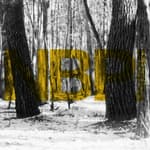
"Evil Does Not Exist" had its world premiere at the 2023 Venice International Film Festival, where it received positive reviews for its direction and writing from Ryūsuke Hamaguchi, and score by Japanese singer-songwriter and musician Eiko Ishibashi. Following their collaboration on the Oscar-winning film, "Drive My Car," the two intended to make a 30-minute short film accompanied by a live score. But as the production got lengthier and the shoot went along, Hamaguchi decided to turn it into a feature film with dialogue, which is the film we have today. Ishibashi was kind enough to sit and talk with us about her latest work which can be listened to below. Please be sure to check out the film, which is now playing in limited release in the U.S. from Sideshow/Janus Films. Thank you, and enjoy!
Check out more on NextBestPicture.com
Please subscribe on...
SoundCloud - https://soundcloud.com/nextbestpicturepodcast
Apple Podcasts - https://itunes.apple.com/us/podcast/negs-best-film-podcast/id1087678387?mt=2
Spotify - https://open.spotify.com/show/7IMIzpYehTqeUa1d9EC4jT
YouTube - https://www.youtube.com/channel/UCWA7KiotcWmHiYYy6wJqwOw
And be sure to help support us on Patreon for as little as $1 a month at https://www.patreon.com/NextBestPicture
Learn more about your ad choices. Visit megaphone.fm/adchoices
[00:00:00] Mo-Do.US
[00:00:03] Visit modo.us for the best free play social casino experience wherever you are.
[00:00:08] Modo offers a huge selection of Vegas style games with free spins, exciting promotions and always generous jackpots.
[00:00:14] You can waste your time with the others or you can win at Modo!
[00:00:17] Register today at modo.us for your free welcome bonus.
[00:00:21] Modo is a social casino, no purchase necessary void where prohibited play responsibly conditions apply. See website for details.
[00:00:26] Mo-Do.US
[00:00:30] You were listening to the Next Best Picture Podcast, and this is Brennan Hodges' interview
[00:00:35] with the composer for Evil Does Not Exist, Aiko Ishigashi.
[00:01:07] Water flows to the lowest point.
[00:01:12] And what we did in the upper level will always flow down.
[00:01:18] Even if you say it's a flood, it's still more beautiful than the water in the city.
[00:01:37] That then kind of evolved into a narrative feature.
[00:01:41] I'm wondering, what did you first have in mind for the project when you approached him
[00:01:46] after your collaboration on Drive My Car?
[00:01:49] When the promoter asked me to do a live performance with the video,
[00:01:57] I think the promoter was thinking about doing a live performance with a abstract image.
[00:02:05] So the idea first came from a promoter who suggested doing a live performance with company visuals.
[00:02:12] I think that that person was thinking of a live performance with some abstract images.
[00:02:17] But for myself, when I thought about the possibility of touring and performing along
[00:02:21] with these images that I would have to do numerous times, I thought that rather than an
[00:02:25] abstract visual, it might be better or more interesting to have a narrative work
[00:02:29] accompanying my music, something where if I had to perform it multiple times,
[00:02:33] I wouldn't get sick of doing it, a project that I could do and keep enjoying.
[00:02:38] When I worked with Hamaguchi on Drive My Car, it was an experience that I really enjoyed.
[00:02:42] And I also think that a lot of his past works were quite musical in nature.
[00:02:47] So in terms of this collaboration, I thought that he would be a really interesting person to work with.
[00:02:51] That's why I approached him.
[00:02:52] Sure, that makes sense.
[00:02:54] And I'm wondering then how did your working relationship evolve for Evil Does Not Exist
[00:03:00] and that collaboration process?
[00:03:02] Because I did read that there was a long gestation period.
[00:03:06] There was a lot of kind of iterative back and forth about what the project could be.
[00:03:10] Walk me through what that process was in discovering what Evil Does Not Exist would be,
[00:03:15] what gift would become, all that sort of stuff.
[00:03:18] That's right. This is a really long story.
[00:03:22] So it's a bit of a long process, but I'll start simply as I can.
[00:03:29] In the beginning, as you said, we did have a back and forth in which we would correspond about what we were mutually thinking about.
[00:03:36] We both did not know what we were going to do.
[00:03:39] So we were just kind of thinking about what we were going to do.
[00:03:42] And then we were just kind of thinking about what we were going to do.
[00:03:46] Back and forth in which we would correspond about what we were mutually thinking about.
[00:03:50] We both did not know what we were going to make or how we were going to make it,
[00:03:53] but we had this exchange over like letters over email where he would say what he was thinking.
[00:03:58] I would say what I was thinking.
[00:03:59] We had this exchange.
[00:04:02] Some of the themes or two of the themes that we were thinking about were the memories of land.
[00:04:07] And then the second one would be garbage in cities, things like that.
[00:04:12] So I made a demo. He made a demo.
[00:04:15] I thought that his was it was a very musical project that he had created and almost too much so.
[00:04:22] So I said to him, I think it would be better if he made something more along the lines of what you usually make your typical kind of work.
[00:04:36] Then in terms of how things went from there, Hamaguchi wrote the script for Evil Does Not Exist.
[00:04:42] He began filming.
[00:04:43] He still had the intention of creating a silent film.
[00:04:46] But when he began filming, he found the actress performances to be so incredible that he decided he would make it into a feature film.
[00:04:53] So as a result, I created music with strings for that and I completed the music for Evil Does Not Exist.
[00:05:03] Following that, we had an editor named Mumsaki who was working on Gift.
[00:05:07] And once I saw that version, the edited version, I began to work on the music for Gift.
[00:05:11] OK, wow. So I have to ask about the music specifically because Evil Does Not Exist is full of all these kind of rich opposites.
[00:05:21] It's serene and beautiful, but it's also incredibly angry and tense.
[00:05:26] And you absolutely feel that tension in the music.
[00:05:30] So I was wondering what the process was for you in finding the sound for the film, which, as you mentioned, often deals with strings.
[00:05:37] There's some electronic elements in there as well.
[00:05:39] How did all that come to be?
[00:05:41] Well, there was a place where I actually filmed.
[00:05:47] It was winter at the time and it was very cold.
[00:05:55] So that kind of coldness was my own music.
[00:06:11] And it's like influenced by music.
[00:06:13] And then, of course, the really beautiful nature that we're surrounded by is something I thought if I could convert that nature into music and to sound, that's what I was trying to do.
[00:06:23] So it was electronic music.
[00:06:25] There was a demo of that that I was using for inspiration when the film was done and I'd seen the edited version.
[00:06:31] I really felt Hamaguchi's anger.
[00:06:34] That was something that was palpable to me.
[00:06:35] And so I was inspired by that, this anger that really came through in seeing the images.
[00:06:40] And that led to the creation of a theme with the strings.
[00:06:43] OK, wow.
[00:06:44] I want to pick up on something you said to convert nature into sound because I read in another interview that Hamaguchi had done that he said you were very interested in lost landscapes.
[00:06:56] And Evil Does Not Exist has kind of a remoteness and distance to it that could be incredibly powerful.
[00:07:02] So what drew you to bring that kind of music to that particular theme?
[00:07:23] So from a long time ago, I've been interested in these sorts of issues.
[00:07:26] And when Japan invaded Manchuria, they were looking for a sort of utopia.
[00:07:31] Meanwhile, at the same time, they were killing people there but looking to create an instant country.
[00:07:35] So this is part of the history that we see not only at that time, but currently all over the world, whether it's Ukraine, Gaza.
[00:07:43] So again, it's this history in relation to land is something I've always been very interested in.
[00:07:49] So that's part of it. But also my discussions with director Hamaguchi, these are themes that would come up and we weren't think we weren't talking about them for the purpose of making a specific work.
[00:07:59] It was just something that interested us.
[00:08:01] This is a theme that influences, that has influenced and will continue to influence my work.
[00:08:06] But I think it was the fact that we shared this interest with these themes that was important.
[00:08:11] Hi, I'm Cristina Yerling Biru, host of the podcast Pop Culture Confidential.
[00:08:17] Join me as I go way behind the scenes with some of the most influential people in entertainment and media.
[00:08:24] Here, actors such as Succession's Brian Cox talk about his favorite characters to play.
[00:08:29] There always has to be a mystery. The audience have to be in a situation where they want to know what's going on.
[00:08:36] Meet studio execs like Pixar chief Pete Docter and learn his secret on how he makes us cry.
[00:08:42] Emotion is our first language.
[00:08:44] And so many others who are defining popular culture, from Obama speechwriter David Litt to Top Chef host Padma Lakshmi.
[00:08:53] We don't often think about food politically or we don't want to, but it really is.
[00:08:59] Join me. Search for Pop Culture Confidential wherever you get your podcasts.
[00:09:07] Yeah, that makes sense. And I want to ask about how Hamaguchi's movies often use silence as a dramatic tool,
[00:09:16] much more so, I think, than many other contemporary directors.
[00:09:20] You know, I'm thinking of the long car rides and drive my car or the many walking through nature scenes and evil does not exist.
[00:09:27] And I'm wondering, like, how much do you keep that in mind as you're writing your music?
[00:09:31] Does that sense of quiet impact the way that you're scoring things like that?
[00:09:41] For myself as well, for films, I don't think music is something you necessarily need.
[00:09:47] So I'm a very big fan of the silences that director Hamaguchi uses, particularly in places where maybe there's no music in film or there's sound.
[00:09:57] It actually gives an opportunity for the audience or the viewer to really think about the importance of the music or the sound to really have a different perception of it.
[00:10:06] But yeah, it's not something that should be relied on in film. In terms of our relationship, myself and the director, we really have trust.
[00:10:14] So that's why I felt comfortable giving him my music. I knew because he's very strict or particular about how he uses music in terms of what scenes it would be used in, how much of it, how far it would be used.
[00:10:26] I really could trust in his judgment and that made me very happy.
[00:10:31] Yeah, that makes sense. And I want to ask about the gorgeous opening theme with the strings, which you've already talked about a little bit.
[00:10:38] But it transforms from eerie to tense to melancholic to calming and then back again.
[00:10:46] It creates all these different layers of emotion really before the film has even really begun.
[00:10:52] It almost reminded me of the opening overtures of like a classic 60s movie.
[00:10:58] What mood were you trying to set with that music?
[00:11:08] When it was finished, I felt something like Hamaguchi's anger, something like a quiet anger.
[00:11:38] When I returned home, I started working on the music and I was able to get it done pretty quickly.
[00:11:44] So when I saw the film, it was something that was very seemingly simple but very complicated in that this title, Evil Does Not Exist, but what is evil?
[00:11:53] We don't know. It's created, it's depicting a world where we don't know what evil is.
[00:11:59] This is really the inspiration I took from creating the score or the song.
[00:12:04] It is a film just full of mystery and ambiguity.
[00:12:09] And that actually kind of goes into something I wanted to ask about, which is Hamaguchi has this reputation, I guess, for making sort of artsy talky movies.
[00:12:19] But what's fascinating to me about his films is that beneath that layer, they often almost play as thrillers.
[00:12:26] And Evil Does Not Exist is part of that too.
[00:12:30] It almost plays as a psychological thriller. There's gunshots in the distance, etc.
[00:12:35] And I've read that you talked about how the great 70s thrillers were a huge influence on you like Clute or The Parallax View.
[00:12:44] And your score here is very different from those movies.
[00:12:48] But I'm wondering how much you kept that sort of thriller element in mind when you were making this film because it is a very tense film.
[00:12:55] You often feel a lot of menace and a lot of that, I think, comes from how your music sets the tone.
[00:13:00] I watch films pretty much on a daily basis. When I'm really tired, the type of film I like is suspense, spy films, science fiction.
[00:13:23] Those are the genres that I enjoy. So I do spend a relatively long amount of time watching film, and I would say that this does influence me.
[00:13:30] And then as you said earlier, Parallax View and someone like Michael Small, who made the music for Clute, were also possibly influences.
[00:13:38] Okay, sure. We only have time for one more question.
[00:13:40] And I want to ask, I haven't seen a gift yet, but I'll be at the concert in Chicago in a couple weeks.
[00:13:48] I'm very excited for that. And I imagine in your head, they're kind of interrelated but still distinct works.
[00:13:56] I'm wondering, do you see them as like one big project across mediums? Do you see them as very different things? How do you think about them in your head?
[00:14:05] I actually think about them as totally different things. For GIFT, of course, this is something, a project that I'm always thinking about the relationship between the images and the music.
[00:14:27] But depending on the venue, the size of the screen is completely different. The capacity of how big the audience is going to be is different. And correspondingly, how I react to that, my improvisational performance is going to be different.
[00:14:40] And I don't know how that's going to turn out until I go to that venue. So that's something that makes this project very interesting.
[00:14:47] In terms of how I sort of envision it, it's almost like we're in the far future. And the narrative from Evil Does Not Exist has been put into GIFT, but it's been reproduced via AI.
[00:14:59] And I'm with the audience on a spaceship and we're going on this journey together. And it's exciting to see how I will physically react to that.
[00:15:07] Okay, wow. That's wonderful. I'm very excited to see the show. Evil Does Not Exist is one of my favorite movies of this year. Congratulations and thank you for your time today.
[00:15:17] Thank you for seeing me. Thank you so much. Bye.
[00:15:22] Hey everyone. Thank you so much for listening to Brendan Humposer for Evil Does Not Exist. Aiko Ishibashi here on the Next Best Picture podcast.
[00:15:33] Evil Does Not Exist is now currently playing in limited release from Janice Films and Sideshow.
[00:15:39] You have been listening to the Next Best Picture podcast. We are proud to be part of the Evergreen Podcast Network, and you can subscribe to us anywhere where you subscribe to podcasts.
[00:15:48] Be sure to leave us a review on Apple Podcasts and let us know what you think of the show. We really appreciate your feedback and your support, which you can also lend on over at Patreon.
[00:15:58] For $1 minimum a month, you'll get some exclusive podcast content from us. Thank you all so much for listening as always and we will see you all next time.
[00:17:07] You can win at Modo register today at M O D O dot us for your free welcome bonus. Modo is a social casino. No purchase necessary. Void were prohibited. Play responsibly condition supplies. See website for details.