
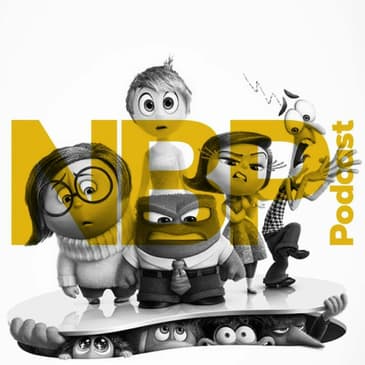
For this week's main podcast review, Nadia Dalimonte, Josh Parham, Cody Dericks, Tom O'Brien, and I are reviewing the latest film from Pixar Animation Studios, "Inside Out 2," starring Amy Poehler, Maya Hawke, Kensington Tallman, Lewis Black, Tony Hale, Liza Lapira, Phyllis Smith & Ayo Edebiri. A sequel to the Academy Award-winning "Inside Out," the film is one not many were asking for, but now that it's here, it has introduced all-new emotions for Riley to deal with as she goes through puberty. What did we think of the animation, the story, and the voice performances? Tune in as we discuss these elements, its awards potential, and more in our SPOILER-FILLED review. Thank you for listening, and enjoy!
Check out more on NextBestPicture.com
Please subscribe on...
SoundCloud - https://soundcloud.com/nextbestpicturepodcast
Apple Podcasts - https://itunes.apple.com/us/podcast/negs-best-film-podcast/id1087678387?mt=2
Spotify - https://open.spotify.com/show/7IMIzpYehTqeUa1d9EC4jT
YouTube - https://www.youtube.com/channel/UCWA7KiotcWmHiYYy6wJqwOw
And be sure to help support us on Patreon for as little as $1 a month at https://www.patreon.com/NextBestPicture
Learn more about your ad choices. Visit megaphone.fm/adchoices
[00:00:00] Shopify grows your business no matter how far or big you grow. Shopify is the global commerce platform that helps you sell at every stage of your business. Whether you're selling your fans' next favorite shirt or an exclusive piece of podcast merch, Shopify helps you sell everywhere.
[00:00:21] Shopify powers 10% of all e-commerce in the US. Allbirds, Rothies, Brooklinen, and millions of other entrepreneurs of every size across 175 countries. Plus, Shopify's award-winning help is there to support your success every step of the way. Because businesses that grow, grow with Shopify.
[00:00:46] Sign up for a $1 per month trial period at shopify.com slash income, all lowercase. Go to shopify.com slash income now to grow your business no matter what stage you're in. Ah, endlich Urlaub. Bald sitzt du entspannt am Strand.
[00:01:10] Aber erstmal musst du morgen früh pünktlich zum Flughafen kommen. Relax. Starte deinen Urlaub stressfrei. Buche deine Fahrt und komme jederzeit pünktlich zum Bahnhof oder zum Flughafen. Auf Nummer sicher gehen? Klick jetzt aufs Banner und buche deine Fahrt. Bequem und günstig fahren.
[00:01:26] Mit der Uber App. Uber vermittelfahrten und ist kein Beförderer. You are listening to the Next Best Picture Podcast and this is our review of Inside Out. This is joy coming to you live in Riley's mind. Make some noise. Alien! Sadness is in the house. It's anger.
[00:01:47] Let me at him. We gotta get our mouth guard, people. Fear. No, no, that's not ours. Disgust. Glad to have her on our team. Our little girl's growing up so fast. Ow. Sorry. It should be nothing but smooth sailing from... Hello! I'm anxiety.
[00:02:08] Where can I put my stuff? A new emotion. Oh, I'm sorry. We wanted to make such a good first impression. What do you mean we? I'm envy. Look at your hair. Oh yeah, not happening. That's on we. On what? It's what you would call the boredom.
[00:02:28] What's your name, big fella? That's embarrassment. Welcome to headquarters, embarrassment. Oh, we're doing a fit. No, oh, no, going high. You got a real sweaty palm there, buddy. Alright everybody, you were just listening to the trailer for Inside Out 2 and the story is as follows.
[00:02:45] Joy, sadness, anger, fear, and disgust have been running a successful operation by all accounts. However, when anxiety shows up, they aren't sure how to feel. The film is starring Amy Poehler, Phyllis Smith, Louis Black, Tony Hale, Liza Lepera,
[00:03:02] Maya Hawke, Ayo Edbiri, Adele Exarchopoulos, Paul Walter Hauser, Kensington Tallman, Diane Lane, and Kyle MacLachlan. It is directed by Kelsey Mann and written by Meg LeFevre and Dave Holston. Here to join me today for this podcast review, I have Nadia Dalibante. Hi everyone. Josh Parham. Hello, hello.
[00:03:28] Cody Derricks. Hello. And Tom O'Brien. Hi everybody. Inside Out, 2015 release, goes on to be one of Pixar's more successful films at the time of its release, gaining critical acclaim, box office success, and an Academy Award for Best Animated Feature.
[00:03:53] Some might say it was the last great Disney Pixar film before they entered into a whole new era over the last couple of years or so, almost a decade really, of sequels and, you know, really leaning in on their IP.
[00:04:08] There's been a few bright spots here and there, but I definitely think that the golden age of Pixar might have ended with the release of Inside Out. We could debate that, you know, back and forth here a little bit.
[00:04:21] Pete Docter was the director of that film at the time of its release. Here we have Kelsey Mann stepping into the director's chair, her directorial debut actually over at Pixar. And we have the continuation of the story of Riley, who is now in puberty, age 13, going
[00:04:39] through changes as she's about to enter high school. It's a natural continuation I think for where the story should go if you were to make a sequel to Inside Out. It's been nine years since the release of that film.
[00:04:54] Some of the voice cast have returned here while we do have some recastings, but I think that the main talking point most of all are the introductions of the new emotions here, which we're going to get into in our spoiler discussion.
[00:05:10] So, starting us off first with Tom O'Brien, because Tom, I know you were a massive fan of the first Inside Out film. What was your anticipation heading into this and what did you ultimately think of Inside Out 2? Okay, it's 2015.
[00:05:28] I'm sitting in a packed theater with kids running around and I'm sitting in my theater seat blubbering like a baby. It was... That first film just kind of knocked me by a two by four. I did not expect to be so emotionally invested in it.
[00:05:46] And finally, just so deeply moved by not only the Pixar tear duct machine that they really put an overdrive here, but just the skill and the imagination in putting a film like this together that never really dealt with subjects as weighty as this before.
[00:06:05] This was June of 2015 and just a few weeks before in May I'd seen Fury Road. And so I was just knocked silly by those two films and I will always remember 2015 for that. So when they announced that Inside Out 2 was going to be made, my initial reaction was
[00:06:24] oh no, no, no, no, please leave it alone. Leave me my memories because I just didn't want... I didn't want a Disney Plus version of it and that's what I was really afraid it was going to be. And I did not know Kelsey Mann.
[00:06:39] His work really hasn't really registered with me too much. When I first heard that there was going to be an Inside Out 2, my heart sank. It was like, oh God, please leave it alone. Leave my memories. But I gave it a shot. Let's see.
[00:06:56] And I got to say I was very, very surprised and very pleased. I think it's a very worthy sequel. It doesn't really reach the heights of the first film. I kind of kept dry eyed throughout while being extremely appreciative.
[00:07:13] I think it brings the same kind of smarts, we're going to say, to the very tricky subject of puberty without sacrificing the laughs. I think by and large the new characters are strong and we'll get into that when we get into our spoiler section.
[00:07:27] But I came away once again with a feeling that this may be one of the smartest series in animation history and I'm really glad this exists. I'm wishing nothing but the best for Inside Out 2. All right, let's hear next now from Nadia Dalamante.
[00:07:48] I enjoyed the first Inside Out a great deal. I loved the concept of the emotions of the characters and the story just kind of opened up conversations to talk about feelings. I think the sequel is pretty similarly mapped out in that way.
[00:08:04] And then you get these layers of adolescence that are, I think, resonating enough to set it apart and make a moving connection. I just saw Inside Out 2 yesterday at a VIP theater and just before it started the theater
[00:08:22] employee first she thanked us for coming and then she said, enjoy feeling your feelings, which was very sweet. And it also turned out to be a pretty accurate summary of Inside Out 2. I think it's a really great embrace of the complex emotions that build our sense of self
[00:08:44] and create who we are through our experiences, whether they're full of the core emotions that we meet in the first movie and then the new emotions that start to form as we get older, which we'll talk about in further detail.
[00:08:56] I also think the movie works pretty well as a sequel. I think it expands on Riley's character in an interesting way and that it's focusing more on how she interacts with the real world.
[00:09:11] I found it really creative and neat to see the inner workings of the relationships, whether it's with her best friends or the hockey team that she wants to join and watching the emotions clash when they're figuring out what she should say, what will make her look
[00:09:23] cool, etc., etc. And there's also something about it that works pretty well as a standalone piece, I think maybe because of the specificity in conveying a preteen experience that speaks to those who've gone through it, those who are currently in that stage and those who
[00:09:41] aren't even there yet. So I think just in that sense, depending on where you are in life, audiences respond to these depths of emotions in different ways. And I was also really impressed by how the movie incorporates anxiety, which I guess
[00:09:57] I expected it to be maybe a little bit more sugarcoated. I was surprised that they were more refreshing and honest and candid about it in terms of the consequences of it when it controls us and just the inevitability of that emotion
[00:10:11] and how it makes us feel alive and human. So overall, I found this movie to be one of the better Pixar movies in recent years. The voice performances are terrific. We'll get into that more later on, but I'm just throwing it out there.
[00:10:25] Amy Poehler was best in show for me. I loved the different layers that she brought to that joy character. And there's something about it that feels like they're almost going back to basics
[00:10:40] and at the same time, there's a little bit of ambition and boldness to some of the direction that the story takes, particularly with the anxiety character. So I just couldn't help but be won over by the core messaging. It resonated a lot with me on a thematic level.
[00:10:57] And when it's not anxiety inducing, it's really entertaining and fun to watch. Hmm. Anxiety inducing. All right. Let's hear next now from Cody Derricks. Like everybody else, I was impressed by the original Inside Out. I don't think it's the greatest achievement of Pixar in the past decade-ish,
[00:11:19] but it's up there. That and Coco and Turning Red, honestly, are some of my favorites of their recent output. And everything else has been kind of lackluster, especially their sequels. Which made me really apprehensive about Inside Out 2,
[00:11:33] but knowing it was a sequel to one of their better films as opposed to, say, one of the Cars sequels, gave me a little bit of hope for a better output from them. Kind of a more prestige title, if you will.
[00:11:45] It was not just an Oscar winner for animated feature, but it was also nominated for original screenplay, which really shows you that there was a level of craft to the storytelling here that isn't found in every single movie.
[00:11:55] And I gotta say, unfortunately, the most surprising thing about Inside Out 2, which is a sequel to a movie that really surprised me in its storytelling methods, is how unsurprising it is. I was really shocked at how much this is just a retread of the first film's story beats.
[00:12:12] Like down to the little bit of a spoiler, ultimate conclusion, and then the end credits. I mean, I don't know. I mean, it's just a lot of stuff. Now, of course, there's something to be said about we experience the same emotional moments in different shades throughout our life.
[00:12:29] I understand that, but that doesn't mean that it makes an interesting story both times. So unfortunately, I was not really taken with this film overall. There are moments where the humor got to me. There's some moments of cleverness, but really nothing.
[00:12:41] And I think that's what makes it so special. I think that's what makes it so special. I think that's what makes it so special. I think that's what makes it so special. There are moments where the humor got to me. There's some moments of cleverness,
[00:12:51] but really it's all overshadowed by those same elements from the first film, which this one does not approach or even overshadow in any way. And I was also not really impressed by the voice acting, unfortunately. I'm seeing a lot of love for Maya Hawke's performance.
[00:13:05] I really don't get that. I didn't think her performance was really anything that hourly impressed me. I think people are really attaching themselves to the character, and I found the performance quite nonspecific. Now, that may be due to the nonspecificity of the direction and writing overall,
[00:13:23] which again just kind of feels like a copy and paste with a few changed details of the first one. But again, I just had a lot more critiques here than I did things to praise, which is the opposite of the first film. All right. All right.
[00:13:37] Nothing wrong with that. I'm sure a lot of us share some of that sentiment. And Josh, what about you? When it comes to the first Inside Out movie, that has always been a film that I've really enjoyed, but never quite to the same level as everybody else.
[00:13:53] I do think it's a very good movie, but it's never ranked particularly high in my own personal rankings of the Pixar films. So when they said there was a sequel coming out, I had kind of mixed emotions about that.
[00:14:07] On the one hand, it's like they're continuing a story that I don't have as much investment in, so there's not as much of a sense of betrayal to make another one as there is for me. But at the same time, Pixar sequels as of late,
[00:14:22] as has been noted, is a little bit of a mixed bag, and we don't always get the best output from it. So I kind of went into this with reserved expectations,
[00:14:32] and I sort of felt like I was going on a bit of a roller coaster with this movie because on the one hand, I really do agree with Cody that if you kind of just step back and look at this actual story,
[00:14:43] it does feel pretty reminiscent of the first movie. It does sort of have very similar inciting incidents in terms of how the plot gets going and the emotional resolutions to many of these characters do also feel similar,
[00:14:57] not just from this movie, but I felt from other Pixar movies as well, and that was kind of frustrating for me. But at the same time, I also felt like the story did try to go into some more complex territory,
[00:15:11] and in doing so, there were actually parts of it where I preferred it to the first one, where I thought that its exploration of this emotional state did feel a lot more nuanced and a lot more clever, to be honest.
[00:15:26] So it's sort of a weird mixture of things that I really didn't like all that much, and other stuff that I thought was executed really, really well. So it kind of evens out to a movie that I liked but didn't love,
[00:15:39] but there are some things in here that I really did appreciate from the storytelling, but I also feel like it's wrapped around a structure that did feel very familiar to me and that did detract a lot,
[00:15:52] even though I still could appreciate some of the things that they were attempting to explore. It's so funny, Josh. As I'm listening to you, we have, I think, pretty much the exact same opinion on this movie. Yep. It's definitely not anywhere near as awe-inspiring as the first film
[00:16:09] on a storytelling level, on a character level, on even an animation level. I was actually, gotta say, kind of let down by the animation in this film in a lot of ways, but there are some moments where it is very clever
[00:16:27] and does remind you of how intelligent the first film was. I do like the freshened up dynamic by adding these new emotions into the story, right? As we get older as individuals, we become more complex human beings, thus more complex emotions,
[00:16:44] and I think the film does a really good job of portraying that, but also, too, kind of growing up with its own audience, if you will. Not to the extent of something like Toy Story did with its sequels,
[00:16:56] but I definitely do get a sense of maybe with a third film in however many years down the line, like this film, well, this, you know, I don't want to say franchise, but these three films potentially, if they do decide to make an Inside Out 3,
[00:17:12] I could see it trying to approach the levels of a Toy Story 3, where Riley now is even older than she is portrayed in this film, and so what emotions is she going through during that time in her life?
[00:17:24] And it might start to go into even more mature and nuanced storytelling in a way that I'm actually quite excited for. So this movie filled me with hope and possibility, and, you know, from a storytelling standpoint, I do agree. It's completely predictable.
[00:17:40] It hits all the beats I expected it to hit along the way. I don't think that's necessarily a bad thing. I think it's all about the execution. I think it's all about, yes, what we're seeing Riley go through,
[00:17:52] like in an isolated, if you took all the emotions pieces out of it and you just watched Riley's journey on this hockey team and these new set of friends and her relationship with her old friends, this is all very, very standard coming-of-age storytelling.
[00:18:08] Like there's nothing here that is anything different than what we've seen before, right? But I do think that seeing these, what seemingly feel like rather mundane or predictable moments play out in a more complex way inside her head
[00:18:28] has always been the appeal of the first film and the second film. And I even love the moments where they peep into the minds of other characters around her, specifically her parents, and you see how their emotions are reacting to Riley.
[00:18:43] So I'm having quite a bit of fun with this movie throughout, but it was missing that one little spark, that one thing to push it over the edge to get me emotional and get me to cry and get me to recognize
[00:18:58] that there was a level of power within this film like the first one or the best that Pixar had to offer. Is it better than some of the other sequels that they've put out recently? Yes, not by much, but yes. And I think overall I'm satisfied with it,
[00:19:19] but I do agree with what Cody was saying earlier too in that it is a bit of a letdown in terms of its structure and how it's essentially doing the same film all over again, just now Riley's a different age essentially.
[00:19:37] And I do hope, like I said, I hope that if there's a third film they try to take it a step further than this. For what we got though, it was perfectly acceptable. It's fine. The animation didn't blow me away.
[00:19:51] The score, you know, Michael Giacchino is no longer the composer here. Like nothing about that blew me away. So there's really not much in this movie that exceeded any expectation that I had, but there were some expectations that were at least met
[00:20:07] and I can't complain too much in that regard. It depends, I guess, on what level of anticipation you're heading into this film with. If you're thinking it's going to be one of the best animated films of the year,
[00:20:18] one of the best Pixar films ever or even come close to the first film, I think you will find yourself very disappointed. But if you go in with the expectation of, hey, the bar has been pretty low for Pixar over the last couple of years,
[00:20:33] I think then you can walk out of it mildly pleased. We promise it will only take a few minutes, but the impact on our podcasts will be tremendous. As a token of our appreciation, we'll randomly select one lucky participant each month
[00:21:07] to win an exclusive merchandise package from Evergreen Podcasts. Head to evergreenpodcast.com slash listener survey to help a show and possibly get some free stuff for doing so. We can't thank you enough for the support. Now back to the show.
[00:21:22] Man, you know, it really is interesting how this movie story really is the first film. And I think that should really be emphasized because there's a moment when, you know, they come up with this new concept of her personality, Riley's personality,
[00:21:39] and there's like all of these memories that collide with each other that make up the sense of self. And when the new emotions come in, that sense of self gets lost, and they have to physically go out and find it.
[00:21:50] And when that happened, I really was sitting there like, oh, so we're just doing the core emotions that were lost again, or the core memories that we got to go out and fetch them. Like this is just the first movie again.
[00:22:02] And the catharsis that we get at the end feels very similar to the message of the first movie as well. And for as much as I was enjoying many elements of this film,
[00:22:15] the central narrative does feel so much like it is a copy and paste job from the first film. And that particular element is the biggest letdown, I think, of this movie. Or even just joy and sadness in the rest of the gang having to get back to headquarters.
[00:22:33] Yeah. And like the physical challenges of navigating through Riley's mind in order to get there and encountering these aspects of her personality and self and core inner workings, if you will,
[00:22:48] where the film then has an opportunity to make some very clever jokes about how do you portray this for kids, you know, and get them to understand this. I mean, it's fun. It's entertaining. I had a good time, but I completely agree.
[00:23:03] To me, it just like I said, it just never blew me away. It did not ever rise above what expectation I had for it simply because, you know, when your storytelling structure is almost beat for beat the exact same as the previous film.
[00:23:20] How can you at that point? Yeah, I think what was lost a little bit for me on this was the wideness of Riley's world in the first one is now compressed entirely into a hockey summer camp.
[00:23:36] And I could see narratively why they would want to do that and really kind of narrowly focus on very specific people and very specific individuals. But I kind of lost that Riley in the world sense that that was one of the strongest things of the first one.
[00:23:57] So I came away from that thinking this was really good. I really enjoyed it. I just wished I had been knocked silly like the first one and knocked me out. I'm going to push back on that just ever so slightly only because I thought about this too, Tom.
[00:24:13] My perception of it is, you know, when you reach this age at Riley's at your world actually becomes hyper focused and smaller because these elements of wanting to fit in or, you know, wanting to be a part of a team or whatever it is like, especially before you end up getting a job and like being an adult in the real world.
[00:24:37] This feels like it is the be all end all like apocalyptic doom scenario. If this doesn't work out, my life is ruined forever type of mentality. So I actually thought that the focus kind of tightening was fitting for the mind of a 13, 14 year old.
[00:24:54] I think that's a very good point. And I kind of like the fact that for all her faults, anxiety does bring out the fact that she's thinking about the long game.
[00:25:04] It's the first time I've ever heard in this particular series that Riley is at the beginning of a new phase of her life. And by narrowing that focus, it does make sense.
[00:25:17] I got to say, I'm going to quote Dan Bear right now and say, I felt attacked by anxiety in this movie. I'm not going to tell you all like when when anxiety is talking about like how I'm here to protect you.
[00:25:34] I'm here to think of all different possibilities and scenarios of it this way. We can plan for the future and you'll be protected and it'll be the right way to go. I was like, holy fuck, that is my personality to a day.
[00:25:47] I will say all my critiques about the general concept of the film, the execution of anxiety as a character I found quite excellent.
[00:25:56] And the best part of the movie for me was the way it shows in that one scene at the control center, which is kind of a nod to that 1984 MacBook commercial or Apple commercial rather.
[00:26:06] It's hilarious, first of all, is that the way to kind of conquer anxiety is to turn it into excitement, which to be a little personal is something I've been trying to do in my own life. Because the physical and internal reaction to anxiety and excitement are practically identical.
[00:26:25] So it really is just a matter of perspective. And showing that on screen, I think was really exceptional and also kind of a nice like teaching point for those a bit younger than us.
[00:26:34] My favorite visual representation was putting anxiety in the massage chair and allowing it to relax a little bit. But recognizing that anxiety is a part of all of our personalities and isn't something that necessarily goes away.
[00:26:52] It's just a matter of how much you allow it to take over you.
[00:26:57] And I thought that portrayal of seeing how anxiety can completely just envelop a human being causing, you know, in that scene, especially where Riley almost has what looks to be like a panic attack of sorts. Yeah.
[00:27:12] I thought that was absolutely incredible because this movie is smart enough to not view anxiety as a villain, like all out. It's smart enough to recognize that it's an obstacle that we have to just simply deal with.
[00:27:28] And occasionally, I don't want to even say overcome, but just understand when to utilize it for better and when to or not when to. But also like having almost an acceptance that sometimes it's just going to take over.
[00:27:48] Also, it was also neat to see in that moment at the control center that Joy was the one who pulled anxiety out of that. And I really liked that contrast of Joy.
[00:28:02] At some point, she kind of goes back to when she controlled, in a sense, Riley's memories and she would cast away the not so good ones to the far back of her mind. And it kind of makes her think of her own emotion differently.
[00:28:19] So I really liked that dynamic there. I just like I don't disagree, but Joy is just learning the same lessons from the first one in a way, which is you can't suppress things. You have to accept all the feelings that come to you.
[00:28:33] And so she kind of starts the movie out where she started the first one out. You know, there's different shades to that. Obviously, she's working better with the core five emotions and they're all working together in harmony.
[00:28:43] But then once the new emotions show up, it's just the same thing all over again. Yeah, I mean, there is that kind of similarity to the first one that makes this one feel a little slight in comparison.
[00:28:56] But I also think that Amy Poehler brings the spark to it that I was looking for. Like it's the emotion. The only time that I got really emotional was when she that character was looking through.
[00:29:13] There's the moment where she's looking at the through the different bad memories and she's kind of reflecting. But then again, that moment kind of feels brushed over and rushed. It kind of feels like we don't really get to live in that moment with that character.
[00:29:28] And the movie just moves on. But that was the standout moment that kind of got me to the point of, OK, now I'm feeling really emotional. Yeah, and Amy Poehler, I agree, is the MVP in the movie for sure. Yeah, the moment that got me with that too.
[00:29:44] And I do like Joy's arc in this movie, even if it does resemble the first film. That line that she has where she says maybe that's what happens when you grow up. You have less joy is something that I mean, that hit home particularly hard.
[00:30:00] I think most of us or at least I hope most of us had very happy childhoods. And as you get older, it is inevitable that you do experience less joy. But that does not mean that joy completely goes away.
[00:30:16] And in some ways, I do think that this film and the first one too, to that extent, also maybe share some similarities with Toy Story in the feeling of the toys being replaced by Andy.
[00:30:28] And so Joy, I think, is so concerned about not being this dominant force in Riley's life. But there is a realization as we get near the end of this film that joy does not completely go away in a person's life.
[00:30:44] It might be less prevalent, but it doesn't actually like fully go away. And I think that's what Joy is most concerned about is not being the dominant force in Riley's life.
[00:30:57] And there's like just sort of this lesson of acceptance and learning how to deal with these new emotions that are now coming into Riley's life.
[00:31:07] And I think there's a really great lesson there for kids, not just in understanding how their own emotions work, but also you can apply this to new friends and acquaintances that you will experience in life. And, you know, how some people will come and go in your life.
[00:31:25] And I think that this movie, you know, on a very simplistic level has some good, you know, some good takeaways in it. There are parts of this story that I actually do think get at some more complexities that I really appreciated.
[00:31:43] And this dynamic that Riley goes through with like her friends, for instance, I did find that navigating that was a really interesting path for the movie to take because it's one of those things where you I don't think it's like this neat binary.
[00:31:59] Like it's sort of presented that way for sure. But there is a deeper kind of dynamic that you can get between somebody who's like trying for this new friendship, but doing so because they are like plotting out what's going to happen later in these ripple effects.
[00:32:12] And that does mean leaving things behind in your past. And especially when you're at this age, it's very complicated and difficult to decide where you want to fall with that.
[00:32:23] And I thought that that presentation was really, really fascinating to me and in some ways was even more engaging for me than stuff that I got in the first movie.
[00:32:31] So there is stuff in this story that while it does have some familiar beats to it, it does go into some territory that I would give it credit for, for seeming like it's a little bit more on a complex level. And I did appreciate that for me.
[00:32:47] Did anyone else here, not to pick on Cody, but did anybody else here feel any similar about the vocal performance from Maya Hawke as Anxiety? It's OK. I know I'm in the minority here. I already got it on Twitter. Don't worry.
[00:33:00] I'll be honest with you. I'm just curious. Like I really just I do want to know because for me, she was my favorite part of the movie personally.
[00:33:10] I and I think I but I but there's one thing that you did say, Cody, that did resonate with me. And I do think it is true. I think I am maybe more in love with the idea of the character than the vocal performance itself.
[00:33:26] And I do think that one is inflating the other maybe just a little bit. And that's where the praise is coming from. I still think she's pretty good at capturing what I would imagine anxiety to sound like.
[00:33:40] I mean, I liked her performance. I did understand, though, where Cody was coming from, because I do think you can read the vocal performance as being a little broad at times and maybe is a little bit nonspecific.
[00:33:55] But at the same time, I think that she fulfills that role really well. I did still like what she brought to it. And yes, maybe the heavy lifting is just from the concept of the character.
[00:34:05] But I thought that she fit into that role in a very compelling way for me. I did not really have the same issue, even though I do understand it to a certain extent.
[00:34:16] I'm probably pretty close to Josh on that. Yes, that the performance is at times stress inducing, but that's what anxiety is.
[00:34:27] And I think that by and large, Maya Hawke really captured that well with, you know, and the other tricky part she had to do was to keep the vocal performance from being villainous. And I think she did that extremely well as well.
[00:34:42] Yeah, that's a really great, great point that, you know, on the one hand, I do agree that there is a kind of nonspecific side of that performance.
[00:34:51] And yet at the same time, that kind of broadness, I think some of that might play into her not necessarily being a hero or a villain. She's kind of in between. And I think she does a really good job.
[00:35:07] She personally, I mean, polar is my my own standout, but I liked her work in this. And I also think that the character itself and the animation of the character slightly outweighs my connection to to anxiety. But I still think she does a pretty good job.
[00:35:30] Yeah, I thought the animation, particularly when anxiety starts getting more frantic and moving really quick. There is one scene in particular where she's moving so, so, so fast that it doesn't look like she's moving at all.
[00:35:46] And there are like these little twitches that they do with the animation to show you that, like, even though it doesn't look like she's moving, she actually is moving still like super supremely fast.
[00:35:57] I thought all of that was extremely well done. But my favorite bit of animation across this entire movie, guys, as somebody who played Final Fantasy as a kid, Lance. Yep. Lance Slashblade. One of my favorite bits.
[00:36:15] Josh, on our Toy Story 3 review, you talked about this moment where Ken's dream house, the elevator had like this janky motion effect to it when he comes down the elevator.
[00:36:27] The way that Lance is animated in this with the glitches and just the overall like movements of the janky, like PS1 old PC computer graphics. Hilarious. I was dying watching everything about this character here.
[00:36:44] Oh yeah. And the pixelation too was another thing that I noticed. His like low resolution image was a marvelous detail. The moment where he walked into the wall and they had to kind of like sidle him along was just perfect. That was the best part. That was perfect.
[00:37:02] If anybody's ever played games from that era, you know what that is. What did you guys think of – I love that I'm talking about the characters that are like not the new characters featured on like the posters or anything.
[00:37:16] But what did you guys think of Bloofy, the 2D animated character from Riley's favorite cartoon TV show? I loved it. It seemed like a commentary on a whole different kind of children's show. And I particularly liked Pouchy. Oh, Pouchy. Yeah. I liked Pouchy.
[00:37:34] The vocal performance of James Austin Johnson as Pouchy was just like – I just wanted an annoying character. But the animation and the voice work just melded so perfectly with it.
[00:37:48] So that when Pouchy wound up at the end with anger, I was like, okay, this is a match made in heaven. But here's the downside to all these secondary characters. None of them, and I mean none of them are Bing Bong. True. True, true, true.
[00:38:06] And I think that that kind of stands in a little bit of a representation of how this film is in many ways the first film but just not as good. And I was thinking a lot about this where Joy gets a great character arc in this.
[00:38:22] Anxiety is a wonderful addition. But what about the impact of all these other characters? Yeah, they serve their purpose of being – the emotion that they are characterized as. But nobody was a true standout for me in the sense of having a major impact on the story. Even sadness.
[00:38:44] I was let down by how sadness did not have any kind of arc in this film and didn't really do much throughout actually. I mean I love Phyllis Smith's vocal performance as always.
[00:38:56] But still, I just felt like so many of these secondary characters, there was room to explore or have them have their own little mini arcs. And the movie just is not interested in that.
[00:39:07] That's the thing is that so many of the new emotions are kind of just a little bit broadened out versions of the old ones.
[00:39:15] And the movie even comments on that because for example like fear is really taken with anxiety and sadness seems to find something akin in embarrassment.
[00:39:24] And you know there's something to be found there in the degree of shading of emotions and how everything kind of comes back to simple emotions at the end of the day when you're assessing your own reaction to something.
[00:39:35] But it does just again draw a comparison to the first film and make me think oh wow this is really just trying to do the same thing all over again.
[00:39:43] It is but I think at the same time what I at least appreciate in this one is that they do try to present anxiety as this antagonist.
[00:39:55] But one that's not like completely a bad guy like you understand what the motivations with that character are and why they're like genuinely trying to help Riley. And I did appreciate that because that was something that the first inside out doesn't really have and not that.
[00:40:14] That necessarily makes it bad or anything but it is an element that is missing for my perspective to give that story a particular sense of momentum and even being like.
[00:40:27] I'm controversial do have some issues with even have that character is implemented like i think it ends with a very big emotional statement that really works but as a character he is always felt very.
[00:40:38] Awkwardly introducing that story from my perspective so this is one of the situations where yes the.
[00:40:45] These new emotions that they introduce are kind of just broad strokes connected back to the old ones but i think their usage within this narrative for me was actually more effective than some of the things they were using in the first movie.
[00:40:59] What you guys think of the replacements here was a pure a tony hale no mandy kaling no bill hader did you guys notice or did it like not bother you would you guys think. I noticed but at the same time like.
[00:41:16] Here discuss what did not really leave that big of an impression on me in the first movie like they were good i appreciated those performances but they weren't like.
[00:41:25] Major characters that if you got new voices i would feel like something was necessarily missing and i think tony hale especially that just seems like a very natural fit for the character so i didn't have any problem with the new voices i understand some disappointment just because we know those other actors and.
[00:41:44] Generally like them but i didn't necessarily feel a huge sense of loss with their absence yeah i think this the i think the if you're gonna make more films i think you need polar and.
[00:41:58] Smith those are the two that you like absolutely need i do feel everybody else's interchangeable unless if they decide to. Make these other characters more important which the first two films just haven't seem to be concerned about.
[00:42:15] Yeah they're kind of the hufflepuff and ravenclaw of the emotions like they're there and they're important but we're not gonna spend a ton of time on them and for focus of story i think that is just fine.
[00:42:26] I think i may have been most disappointed that i went to berry didn't have more to do because when you have a talent like that it seems like you've wasted an opportunity.
[00:42:36] Yeah i mean she was bringing so much to it and i really really loved her vocal delivery but i agree with you like once again it's like. They're just isn't maybe that's the problem maybe that this movie.
[00:42:48] Comparative set up to the first one is just suffering from having too many characters to juggle and supposedly from what i've read they originally had more and they were cut. Yeah i can't fathom that i mean the nine or ten we have here is almost too much.
[00:43:05] Shout out to june squib though as nostalgia.
[00:43:08] I love how she kept on trying to enter the room and they were like no no we're not ready for you yet that was a great bit and that was an example of knowing what you have what's good and the power in withholding it.
[00:43:21] Just like portrayed as like this old grandma honestly if they make a third one i hope they do the same thing like now not yet just hold on it's gonna get even. It's gonna be really a big deal later don't worry.
[00:43:36] And then other side characters here we have adele is on we paul walter hauser embarrassment i didn't even know that that was paul walter hauser to be honest with you when i was watching it but i think embarrassment definitely is.
[00:43:50] One of the emotions that is probably gonna be a fan favorite for a lot of people yeah i can imagine that so.
[00:43:56] Yeah you didn't realize it was him cuz he doesn't speak until the end of the movie like two lines or something so yeah i wonder how much you got paid per word.
[00:44:08] I hope it was a good deal it is disney after all yeah i do think that embarrassment absolutely i mean he has so many.
[00:44:16] I kind of qualities i think people will attach themselves to and he's just a very endearing presence in the movie and you know it sort of turns out to be one of the elements that sort of helps our hero so that also is something that.
[00:44:30] You can really connect with i just also love adela sacroblast anything and even if there's very small presence i just don't gotta kick out of her to a very nonchalant french attitude but see very perfect.
[00:44:44] So i yeah it wasn't much but i did enjoy her to another example of how. How to use a character well and not you know overuse also it's great to that she in a similar way to nostalgia that character was used at the perfect moments.
[00:45:02] Yeah definitely had like some of the more comedic moments that got a great reaction from the audience.
[00:45:08] And animated in a way that emphasizes her character which is really slippery and kind of like language and rolls around i really love that she's like always laying on the couch like on her phone not caring about anything except for when she was there found and everything yes.
[00:45:24] World just stops. Yes. And the way to me she was animated she reminded me of one of those dolly melting clocks just kind of bored boring yourself off to that couch.
[00:45:36] You know this movie could use more of i really miss the presence of riley's mother and father i understand that riley has to go off and do her own thing and she's like in this. Hockey summer camp but at the same time.
[00:45:49] Those moments where we go into the heads of other characters. It's their emotions reacting to riley are some of my favorite bits of both films i always have about that person like i had.
[00:46:05] Even in the first movie that gag actually was one of my least favorite things about that film can i felt the humor was a little bit out of step in terms of.
[00:46:14] This more complex emotional state they were doing it then we just bash cut to basically like sitcom level jokes i didn't really care for that the first movie i think it's a little bit better here although it doesn't reduce some things that i think are a bit.
[00:46:28] Confusing just in terms of why is it that we didn't see the other emotions in the parents heads before because they're older so that introduces. That kind of weird story telling element also find it strange that the emotions and other people's heads have like.
[00:46:45] Hairstyles that represents those characters but riley doesn't that always will feel strange to me i get why they do it but it's an inconsistency that seems.
[00:46:55] Weird and i don't really love it but i do think those kind of ways work a little bit better for me here but i'm still not in love with a lot of that humor that they indulge in those spots.
[00:47:07] It's also a question to me as to why riley's emotions are. Male and female but when you go into the mom and dad's heads it's like really unified around we are all.
[00:47:20] Personas that are anthropomorphize versions of this one character whose head were inside of and you know maybe that's over analyzing it because there's definitely some. Exploration be had there but the film invites those kinds of questions because it is about a movie it's a movie about.
[00:47:38] Delving into the inner psyche so i really just i think it's a question it's probably case of they didn't think about that but you know i'm there inviting these questions i'm asking. Yeah it's a way to simplify the presentation i i find.
[00:47:54] I think it just really comes down to that that when we're in other people's heads we can very easily identified this is their emotions which is supposed to be separate from riley's emotions that from the audience is supposed to be a lot more.
[00:48:06] Complex and interesting so i get it i do find that to be a drawback to the story telling however the one.
[00:48:13] Cutaway joke in that room but i did really love was riley with her friends and all of them are like over analyzing their like tiny micro expressions that was really good i didn't really really love that scene.
[00:48:25] Exactly what i would imagine thirteen year old girls minds to do. You know i saw this get brought up on social media when they ask you guys for your opinion on this. You think this movie is queer coded.
[00:48:38] I definitely was you know getting that the first time we meet this new hockey player that riley is infatuated with and it's painted as. She is really impressed by her skills on the ice which you know read into that we will.
[00:48:55] I think i don't think it's over i think you can go either way and i think that that sends a good message out to a broad audience of not making anyone feel excluded like if you want to believe that this is.
[00:49:08] What we're intending to do here it's the evidence is all there and if you don't want to see it that way you want to just see it as oh she's just a cool girl that riley wants to be friends with you could see it that way too and i think that both versions work for.
[00:49:23] Whoever the audience member is. Yeah right and you know i don't want to shock anybody but as a gay person of twelve thirteen is the age where you start to really.
[00:49:34] Realize things and things start to coalesce around identity so you know make it that we will this is me about a thirteen year old girl. I think narratively it's subtle enough so that the door is open should they want to pursue it. Maybe in another nine years.
[00:49:52] Yeah they'll be they'll be more bold to go forward with it a bit more i don't know how risky they want to get with riley in college or something but you know inside out three is just called coming out. Oh gosh that's a great title actually. You are.
[00:50:09] Alright another thing here i mentioned earlier michael giacchino not doing the score did anybody notice.
[00:50:19] Watching a movie because it's like as soon as i hear the classic theme from the first film i just my brain just instantly thought that he was the composer on this wasn't until afterwards that i found out he wasn't and.
[00:50:31] I am not saying that that in that regard like the score. Was great because it didn't stand out to me as much as the first film did but at least it did a good job of blending itself and not making me realize that it was not him.
[00:50:48] Yeah and i think on that score it's it's a success.
[00:50:52] It didn't really do much to me i'll say it but i found it kind of like an impressive and they return to the original theme a lot which makes sense because it's pretty good but they don't really do much more beyond that.
[00:51:03] It's serviceable i would say like it wasn't something that overly impressed me but i thought it did a fine enough job to. Move the movie along and the person who did the score for this one.
[00:51:17] Kind of looks like is sort of a jacquino protege she's worked on a bunch of other movies that he's done in like the music department so it definitely feels like somebody who is.
[00:51:28] Really trying to avoid his style and especially the sounds that he brought to the first movie it doesn't measure up quite as much to that.
[00:51:36] Although even i would argue that outside of that like main theme like that's the strongest bit of that first movie in the rest of that score in the first film is also just like good but we all remember that theme and.
[00:51:48] And so for me like yes do i think that this particular piece of music is as strong as the first movie no but i also didn't feel like it did it detracted anything that significant either. Alright don't lie to me who cried at the end.
[00:52:07] I did not but i didn't read the first one either and i don't cry most movies so don't use me as a barometer. I didn't cry at the ending but i cried a little bit earlier in the moment when joy breaks off that new sense of self.
[00:52:24] That anxiety created and then they all kind of embrace to form a new the whole news other sense of self. That was the scene i was thinking of okay then yes yeah.
[00:52:37] I could hear some sniffles my audience and i came close i didn't quite get there but i could feel it coming on so i was curious if anybody else if that moment did get to them.
[00:52:47] Well as the self confessed a blubber in this group i came close then too i have to confess but i didn't go all the way but but it doesn't mean that.
[00:52:59] Crying at this is necessarily a value of it so the films worth or not because pixar i cried at some pics are movies that are very good but yeah i didn't quite make it this time.
[00:53:12] I think i would have been more emotional at the ending if i didn't just immediately realize that.
[00:53:19] This is the same conclusion of the first movie that were basically saying you can't separate your emotions in your memories that you need to embrace them all and have this mixture of the good and the bad and that's going to determine,
[00:53:32] like the makeup of your life and it's a very powerful messaging for sure but it really is just the first movie again and not only that but even.
[00:53:43] Like when anxiety is in like that tornado and joy has to go inside of it and talk to anxiety and on this more like human level and get them to calm down even that i was thinking.
[00:53:56] That's the ending to soul like that's like they're not even just taking from the previous inside out movie that taking from other pics are films with this ending so.
[00:54:06] I appreciate the messaging behind it for sure but i think because i did recognize how familiar it was feeling to me that kept me at a distance from going over that that threshold of really getting myself over to the emotional catharsis of it.
[00:54:22] Alright let's get over the final thoughts here anything that we did not mention or something you want to reiterate and i will toss it over first to cody. History is complicated the story of human progress is long messy and riddled with controversies big and small.
[00:54:43] On conflicted we dive headfirst into history's most infamous events and contentious figures. We try and untangle the good from the bad the fact from the fiction and the monsters from the misunderstood.
[00:54:57] Was Genghis Khan a murderous butcher or a civic pioneer? Did the allied powers go too far in firebombing the german city of Dresden at the twilight of world war ii? And how did the marquis de sade acquire such a sinister reputation and was any of it true?
[00:55:15] These are just a few of the tough questions we wrestle with and investigate on conflicted. So if you love history or just enjoy a good story please join me your host Zach Cornwell for a fascinating new topic each and every month.
[00:55:30] Conflicted a history podcast is available on Spotify, Apple or wherever else you get your podcasts. I hope to see you soon.
[00:55:50] The sarcasm that's funny that really got so good as somebody who's you know not sound like a coffee mug your mom would hold but like my first language is sarcasm. That really just spoke to me. I felt seen.
[00:56:03] I love that. I loved anxiety. I thought that was pretty funny and the the brainstorm being an actual storm of ideas. Yeah, those were all pretty damn well well well conceived. I really enjoyed those moments.
[00:56:20] Sarcasm especially how you would shout something over the chasm and it would turn into. Yeah, that was good. Something so sarcastic. Good stuff. Those are the moments I like in both films. I like when they take these complex ideas
[00:56:39] and they break it down in either a way that is easy to explain for kids or it's just really clever. Yeah, I also think the visualization of the sense of self and the beliefs that that was all well done.
[00:56:54] The belief system even if again it kind of is just reshaped elements of the first one, but it was well well rendered. All right, Nadia. I liked the personality islands. Oh yeah. The beginning that was that was cute. It was I think just took me back to my
[00:57:11] preteen years of being obsessed with certain things and having that be my world. Oh, you know what that also just remind me of to I loved the visualization of the stream of consciousness. Yeah, it's like broccoli.
[00:57:32] Yeah, these moments where they are able to expand the world of Riley's mind through these very complex ideas by like just like you said, portrayed them in a way that's easy for kids to understand. It's the stroke of brilliance that makes both of these films stand out.
[00:57:49] There was something that I just thought of that anxiety, the animation of anxiety kind of sort of reminded me of a Muppet in a way. Oh, like animal? Yeah, I was thinking of I was thinking of animal and that energy. Yeah, I could see that.
[00:58:05] But that's pretty much it. Okay, Tom, what about you? One thing that struck me, Matt, was I really appreciated the fact that they didn't make Val and the other members of the hockey team mean girls. Yeah, I was thinking that too.
[00:58:22] Yeah, that would have been so easy, but it would have reflected badly on Riley. No, I think I think the best thing that they did was they illustrated Riley as being the mean girl to her friends, if anything. Yeah.
[00:58:36] And that was a much more powerful route to take because then it, you know, illustrates her growth as a character through the course of the film. Yeah. And the fact that they didn't make the easy choice and dared to make Riley the mean girl
[00:58:53] really kind of showed us other layers of Riley's personality. So that was one of the choices that I was really most impressed with. All right, Josh? I think the only thing that I would bring up is one scene that I thought was really
[00:59:07] interesting that they included, which basically was, I found to be a very odd commentary on how animators are treated, which seemed very strange to include in a Disney animated movie. And it's a good sequence. I really enjoyed it.
[00:59:24] But I definitely had a thought of they're kind of saying like animators are treated really badly and like overworked and overstressed. And this is weird to include in a Disney animated movie right now. So that's a bit of an interesting commentary. Right. Is this a cry for help?
[00:59:40] Yeah, I genuinely thought it was, to be honest with you. I looked at it as one of those things where everyone in the story, like, you know, because these things have to be planned out so early, right?
[00:59:55] You know, because there's so much work that goes into the animation. I'm sure that everybody who worked on that scene probably spoke to each other behind closed doors about what that scene really was about.
[01:00:06] And they just never even they never said it to any executives who watched the movie or they or somebody saw the movie and realized it was too late and they just couldn't cut it out and they decided to just leave it.
[01:00:18] I don't know, but I yeah, I too, Josh, watch that scene and thought to myself, how the hell did they get away with putting this in there? Unless if they had an executive who was just like so laid back and cool and was like,
[01:00:30] yeah, yeah, it works for the story, whatever. Or they just didn't care. Exactly. Not going to treat you any better. Yeah. It was a good sequence. I enjoyed it. I thought it was very fun and creative, but I definitely had that thought of,
[01:00:42] wow, that's really interesting to have this presentation of how animators are treated in particularly a Disney animated film. That's a very unique choice to do. You know, it kind of reminded me of it almost reminded me a little bit of remember when we
[01:00:58] had discussions about the portrayal of the theme park in Dumbo, the Tim Burton version, and we all wondered how the hell did Disney ever allow this? I'm beginning to think that Disney just doesn't give a shit. Yeah, I just don't think they care.
[01:01:12] And that situation I felt was even more egregious because at least here is just like a one off joke, but in Dumbo, that's like the story of that movie. So that was even wilder to me that that was approved to be in that film.
[01:01:26] Okay, I don't really have much else. I think we pretty much touched upon everything that I wanted to discuss here. So I think we're good. Yeah, I think we're good. I don't have any other notes left here. Good. All right.
[01:01:39] So for the grade, as I mentioned earlier, it didn't cry at the end. So no score bump for me. I did enjoy it. It's nowhere near as good as the first film.
[01:01:50] I would say, too, that I do think it's better than lots of other Pixar sequels, but it's not as good as some of the more original films that they've put out in recent years that I really enjoyed films like Coco, Luca, Turning Red.
[01:02:05] Those are movies that are like eight or nine out of ten movies for me. So for this one, I'll give it a seven out of ten. I enjoyed it for what it was. It could have been better.
[01:02:16] But it did what it was supposed to do, and it did it in a way that made sense. So I can't complain too, too much here. It's pretty wild to me, though, how this movie is making the money that it's making.
[01:02:32] I shouldn't be surprised, but the only reason why I am is because of the state that the box office has been in recently. And maybe when people see it, they'll shrug and go, oh, OK, that's all it was. Or maybe they'll just love it.
[01:02:44] And, you know, it will be as beloved as some of the other great Pixar films in a couple of years time. I really don't know. It's like one of those things, though, where the bar just feels like it's been lowered by the studio recently.
[01:02:58] And so comparatively speaking, I can see people embracing this very strongly. But let's not kid ourselves here. This is not the original film. Cody, what about you? So for all my complaints, I did generally enjoy my time watching this movie. So I am a six out of 10.
[01:03:21] The original, I believe, is an eight. So it's obviously a step down, but it's not a step down into this is not worth your time. Nadia? I'm going to go with an eight out of 10.
[01:03:32] It wasn't as impactful as the first one, nor is it in the top tier of Pixar for me. But I had a good time with it for the most part, and I really liked the anxiety characterization. I think that bumped it up a grade for me. Josh?
[01:03:49] I'm going to land at a seven out of 10. There were parts of it that I was actually pretty close to giving it an eight, but I just think that the familiarity of the story ultimately held me back from going in that direction. But I still liked the movie.
[01:04:04] I think there's enough in here that I did really enjoy myself, despite those drawbacks with some of the narrative elements. But yeah, I think it's a good movie still. And Tom O'Brien? Well, for me, the first film was a 10. And so it's a step down for me.
[01:04:21] The point about the familiarity is well taken. And thinking about that for a bit, I thought that might drop it as low as a seven. But then I thought about all the new touches and very clever things we were talking about.
[01:04:39] On the show today, and I'm bumping it up to a light eight. And with the possibility that it may even grow to a stronger eight if it sits well over the months to come. But right now, I'm at an eight.
[01:04:55] That averages out to a seven out of 10 here. Let's talk about the Academy Awards. I think we're at a very interesting place with this here, because on one hand, I could see this film very easily getting in for Best Animated Feature.
[01:05:15] And I mean easily like, hey, Pixar, here's your default spot. Here you go. Moving on. On the other hand, if the rest of the year proves to be exceptional for animation, could I see it getting bumped? I could.
[01:05:36] There's a possibility of that, and I do think that animated feature is sort of morphing, I think, into a more interesting race these days. And you just have to look at last year where you do have a mix of obviously some like studio
[01:05:52] staples, but you've got some new, weirder things in there too. I mean, just look at the winner that we got kind of doing that despite all of the odds it had to beat to do that.
[01:06:04] So I feel like the sensibilities of the category itself are shifting and it's not just the default Disney pick like it used to be. So I do imagine that there's still going to be a lot of support.
[01:06:18] I think also the amount of money this movie is probably going to make is going to be a big indicator for the support that it's going to get. And I think that alone will probably make it somewhat safe for a nomination.
[01:06:32] But we're in interesting territories now with animated feature in a way that I don't think we previously were, and that makes it a much more interesting and exciting race. I don't think it's going to translate into a win at this point just from where I'm sitting,
[01:06:47] but I would be rather surprised if it doesn't get nominated. But it is not guaranteed like it was a couple of years ago. I have two words for you. Frozen 2. Yeah. That's my thinking here right now.
[01:07:04] Like if it could happen to that, it could also happen to this. And speaking specifically of Pixar sequels, you know, the Toy Story ones are really the only ones that the Oscars seem interested in. They didn't go for, for example, Incredibles. I mean, they nominated Incredibles 2.
[01:07:21] I was going to say, yeah. But it lost to another superhero movie somewhat surprisingly based on where the beginning of the season seemed to indicate, but they didn't go for any of the Cars movies, Finding Dory.
[01:07:33] It's just not light year if you want to count that as a Toy Story sequel that failed, obviously. It's a horrendous film, but regardless, there was a time and place where it felt like Pixar was going to get in every year and we're far from that.
[01:07:46] And to Josh's point earlier about last year, Across the Spider-Verse was, you know, predicted by a lot of people to potentially win the category. But it being a sequel probably played a factor in it not winning there either. It's true.
[01:08:00] So it's a massive hurdle for sequels to even be nominated. It is, you know, like you said, Cody, outside of Toy Story, like almost impossible for them to win. So, but I don't think any of us here think that after watching Inside Out too,
[01:08:16] that we thought, oh, that's our best animated feature winner. No. Adobe has been nominating recently. I'm thinking specifically of Robot Dreams. That may be the future of our nominees. And we've got with between indie animated films coming out and movies like The Wild Robot, which look very promising.
[01:08:37] There is a possibility of a bump here. I'd be sad to see because I think this is one of the better Pixar movies that I've seen recently. But yeah, I think it's definitely possibly in the cards. I would predict it for now, personally.
[01:08:54] I think when we release our first set of predictions, I will have it in the five. I just probably wouldn't have it any higher than three is where my brain is at right now at the moment.
[01:09:05] I can tell you right now, Josh and I saw one film at Cannes that if it gets released later this year, Flow, you should all pencil that in for a nomination right away. And Wild Robot already looks good for one.
[01:09:17] So there's a lot of news coming out of Annesy these past couple of days about upcoming animated films that could also be in contention too. So yeah, I think the category is going to be pretty stacked. Not to mention Disney has Moana 2 coming out later this year.
[01:09:32] We still don't know if that's going to exceed expectations and be big for them. So there's a lot of possibilities at the moment right now, and nothing seems entirely certain. You could make the argument that, you know, Pixar being nominated here is a certainty.
[01:09:49] I mean, shit, look at the pummeling that Elemental received last year from critics, and it still managed to get nominated in the end. Yeah, but I think that I think the days of screenplay nominations have come and gone. Mm. Yeah.
[01:10:04] Matt, do you have an idea of what else is on the horizon for this category? Listeners, just to make you aware, Matt did frighten us before this recording by telling us to basically prepare our Oscar predictions soon.
[01:10:15] So I hope you have an idea, Matt, because I sure don't. Yeah, it's Lord of the Rings, The War of the Rohirrim, Cody. That's what I was thinking too, but I wasn't sure. No, no, no.
[01:10:26] I mean, there's a very strong possibility that that could also be a film to watch out for this year. I do think that the Michelle Hazavan-Vicious film that Josh and I saw at Cannes may be
[01:10:43] as like an international slot, but I think Flo was the one that we saw, Josh and I would say has the most Oscar potential personally. Oh yeah. I mean, I was literally thinking like, okay, how is Matt going to say this is how Flo can win?
[01:11:02] Out of all the films I've seen so far this year, I would love for Flo to win personally, but the year is still young. Yeah. But I even said this sort of very early on that this definitely feels like a year where
[01:11:16] there's a lot more fluidity with some off the beaten path selections that I think will make the category much, much more interesting. I think we're going to also see my guess, three international features probably get nominated this year.
[01:11:34] I mean, it doesn't seem like an amazing year for American animation just based on what we've seen and what we know is coming from the big studios. So yeah, if ever there was a time for more international love in this category, I guess it could be this year.
[01:11:48] And we just had one last year. I mean, also too, and you know, lol if this does happen, but you never know guys, they might decide Lion King Mufasa is considered animation this year.
[01:12:02] It would be hilarious if Disney tried to take advantage of what may be a week here in this category by pretending that's animated when for the last one, they were like, what are you talking about? This is live action, obviously. I'm just saying Academy Award winner, Barry Jenkins.
[01:12:18] I wouldn't put it past them that and that would be possible. Yeah, no, crazy. All right. Any other final thoughts? Anybody? No, I think it's just animated feature and that's it. This isn't getting in for screenplay. It's not getting in for score.
[01:12:35] I think it's just going to be that one category and it will be lucky to get that. All right. Well, that'll do it here for our review of Inside Out 2. Nadia tell everyone that's listening right now where they can find you on the internet.
[01:12:48] You can find me on Twitter at Nad Reviews and on Instagram at Nadia Reviews. Josh Parham. You can find me on Twitter and Letterboxd at JR Parham. Tom O'Brien. You can find me on Twitter at Thomas E O'Brien. And Cody Derricks. I'm all over the internet at CodyMonster91.
[01:13:06] And you can find me in Next Best Picture. Thank you so much, everyone, for listening to the Next Best Picture podcast. We are proud to be part of the Evergreen Podcast Network. And you can subscribe to us anywhere where you subscribe to podcasts.
[01:13:19] Be sure to leave us a review on Apple Podcasts and let us know what you think of the show. We really appreciate your feedback and your support, which you can also lend on over at Patreon for $1 minimum a month. You'll get some exclusive podcast content from us.
[01:13:34] Thank you all so much for listening as always. And we will see you all next time.
[01:14:21] Don't you know that you're a grown up? I'm a grown up. Me too. Yep, me too. But you know, these days being a grown up can really suck. Luckily, we're grown ups who grew up in the coolest generation. We had video arcades.
[01:14:32] And also some of the best TV and movies ever made. We lived the origin of awesome consumer electronics. The list goes on and on. Yep, Generation X. Exactly. And we're Gen X Grown Up. Every week, the Gen X Grown Up podcast explores media, tech, toys, games,
[01:14:47] and more from both yesterday and today. Through the eyes of Generation Xers who absolutely love that stuff. You can find us on iTunes or wherever you get your podcasts. Or find us on our website, genxgrownup.com. I think that was good enough. I hope so, man. I'm tired.
[01:15:05] Who listens to a promo on a podcast and then goes and listens to a different podcast? Right. I've never done it.