
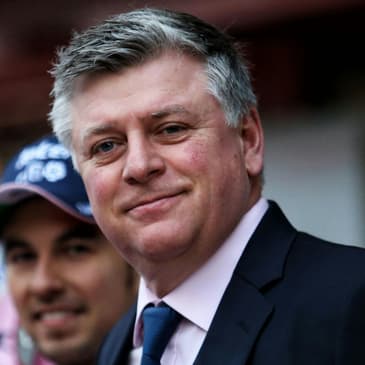

Here's our much-awaited Otmar Szafnauer interview.
The entire interview is so good that we decided to split it into two parts.
In part 1 and on the Inside Line F1 Podcast, Otmar talks to Soumil Arora and Kunal Shah about his journey into Formula 1, how he was interviewed and hired at Force India. At Force India, Otmar worked his magic - the team was called "pound for pound" World Champion and he proudly explains exactly why.
Also known as "best of the rest" for finishing just behind the top-3 teams, Otmar explains the exact budget gap that existed between Force India and the top teams. In fact, Otmar is of the strong opinion that Force India would've been World Champions in Formula 1 had all teams operated on the same budget.
In this episode, he also explains why he decided to move on from Force India / Racing Point & Aston Martin despite saving the team from shutting down only a few years ago.
Otmar has worked with three billionaires - Lawrence Stroll, Subrata Roy and Vijay Mallya. He explains the difference in working styles between Stroll-Mallya and offers a comment on Stroll Sr.'s view that his son Lance is a future World Champion.
If there's one episode that's a must-listen in this off-season, it's this!
P.S.: Part 2 will release on 5th February, 2024.
(Season 2024, Episode 04)
Follow our hosts: Soumil Arora, Kunal Shah and Otmar Szafnauer
Image courtesy: Wikipedia
Learn more about your ad choices. Visit megaphone.fm/adchoices
[00:00:02] Before we begin, I wanted to give a huge shout out to the folks at Amazon Music for partnering with us on this episode of the Inside Line F1 Podcast. But more on this later, right then let's get right into today's episode. Music
[00:00:36] Ladies and gentlemen, we've got Otmar Szafnauer on the show. That's right, the former team principal of the BWT Alpine Formula One team and also of the Sahara Force India Formula One team as well.
[00:00:48] The team that was labeled at one point of time as the pound for pound world champions of Formula One. And Kunal, you have a very special story about Otmar, don't you? He is more than just a random guest we're interviewing on the podcast, is he not?
[00:01:02] Oh yes, absolutely. He's a lot more than a random guest on the podcast. We've had several of them, several paddock personalities but Otmar is somebody who I was very proud to say one of my former bosses at the Force India Formula One team.
[00:01:18] I was lucky enough to be working at the team leading their marketing sponsorship and the junior driver program while Otmar was leading it. And we actually remember Otmar more for the magic he did at Force India rather than the magic he wasn't allowed to do at Alpine.
[00:01:36] But some of you said interesting story of Otmar and here's a really interesting one, something that sort of brings his human side out.
[00:01:45] After I quit Force India, I became an AFI accredited journalist and I was traveling to the races and then of course one of my first races itself I bumped into him. And we ended up chatting about life outside of Formula One.
[00:01:59] And then he said Kunal, but if you're hungry or you want to grab a drink or a coffee just drop into the Force India Motorhome or the Racing Point Motorhome because we'd love to have you.
[00:02:09] And I thought that was very kind of him to still extend that courtesy, Somal. And that's the kind of person Otmar is, a real humble, gentle giant and a giant of the sport he was because he commanded the ship at two really big teams.
[00:02:25] And in this episode which is going to be a two-part episode by the way, Otmar has spoken and given so many insights about what is it like to actually run a midfield team? Like making sure that a team works under budget.
[00:02:37] And that is such a beautiful insight that we also get from this episode, don't be Kunal, about how Force India in that time were the best prepared team for the budget cap and how do you actually run a Formula One team where there's a financial restriction on you?
[00:02:50] Kunal, this is going to be an absolute banger of an episode. I know both of us have heard it and we can't wait to share this with all the people.
[00:02:58] So if there's one thing that people should watch out for the most, one story that comes up to mind, what is it going to be?
[00:03:03] In my head, it's going to be the time where he mentioned all about Force India and also the story of Sergio Perez, how that whole band got together in a way by accident. That was quite fun. Yes, I also loved.
[00:03:16] Now we are really giving away a lot of hints but the story of Pastor Maldonado, he almost made it to Force India. The story of one of the most interesting things, especially in the whole budget cap cost cap era, everybody loves to throw these names.
[00:03:30] But Otmar actually explains what's it like to work under a budget because he's always worked under a budget at Force India, for example. And he explains discretionary budgets and so on, which is very interesting.
[00:03:41] And of course, the final part, which was that why Force India never really had an Indian driver so to say. So lots of pearls of wisdom stories, anecdotes packed into this 45-odd minute episode. Okay, I can't wait any further. Ladies and gentlemen, here's Otmar's staff number.
[00:04:01] So I remember being such a big fan of the way you navigated the way at Force India. I mean, the way the team worked out and yes, I was only just around 10 to 13-odd years old,
[00:04:11] but it's incredible to be able to speak to you about what really worked over there. But before all of that, Otmar, what has it like? What have the last few months been like for you? Away from the limelight? Have you been learning new languages perhaps?
[00:04:23] No, no new languages. At 59 years old, I'm stuck with languages that I know or don't know for that matter. I don't know a lot more than I know. I speak English, I speak German to my dad and Romanian to some of the Romanian cousins.
[00:04:41] So I'm stuck at three. And that's where it'll end for me with languages. I know a few words in Japanese for my eight years at Honda and probably a few words in French just because they are neighbors and I spend a year and a half at Alpine.
[00:05:03] But that's just some words, not a language. Otmar, I was really hoping that you'd say Kunal did a good job teaching me a couple of words in Hindi while at Force India. I wish I could, but I think the problem is all the Indian people speak perfect English.
[00:05:24] You know what I mean? And I find that even with German speakers when I start speaking German to them, if their English is marginally better than my German, they revert to English straight away. But you said you have a hard time getting them back to German.
[00:05:44] Because we tend as humans to communicate in the language that works best for both parties. You know, communication is a two-way street. So I get it. But you said you're 59 and some of our listeners actually wrote in saying
[00:06:02] Otmar had a bet with Matt Bishop that by the time they are 60, one of them is going to have... I have a six pack. Yeah, I have a six pack. How close are you to doing that? Well, I'm about nine months away because that's my 60th birthday.
[00:06:23] Hey, that's a very Lewis-like answer from you about... Remember when Lewis Hamilton was contacted to tell more about the mechanics and the swap? He's like, I'll tell you when I'm 40 years old. We still have 10 more years left to go. Very smart of you. Yeah, and he's nearly there.
[00:06:40] You've got time, Otmar. But Otmar, the first thing that we'd love to bring about on this episode about your story is Force India because we're all such big fans of the work that you did there.
[00:06:51] Would it be fair to say that it was your best work in Formula One and do you miss it a lot? Yeah, look, I really enjoyed the Force India days. I enjoyed the fact that VJ pretty much left the team to be run as I saw fit.
[00:07:12] Yeah, VJ would come to all the races. He rarely spent time in the factory maybe four or five days a year, three days around the Silverstone Grand Prix and a couple of days at Christmas on average.
[00:07:28] There are other times where he was there maybe 10 days a year, came a few other times, but not often. In Formula One, 80%, 90% of the work is done at the factory. 10% of the work is done at the racetrack. It's a culmination.
[00:07:43] The racetrack is the yardstick and the culmination of all the work that you did at the factory. I really, really enjoyed my time at Force India. I enjoyed the autonomy I had to run it like I felt it should be run.
[00:07:57] I enjoyed the fact that I had a free hand to hire the people that I thought would work well together and hire the skill sets that I thought we needed. Ultimately, with the smallest budget by far and the least amount of people by far,
[00:08:15] we ended up finishing fourth a few times. Yeah, we didn't break into the top three, but I think we did a good job with the smallest budget and the smallest amount of team members to finish fourth.
[00:08:30] The year after Force India, when it was racing point, still all the same people, we won a race in Bahrain. We should have won a few races at Force India had it not been for some circumstances that
[00:08:49] I don't want to say out of our control, but out of the team's control. For example, if Holkenberg would have just been patient in Brazil, he had such a fast car there.
[00:09:00] He was 40 seconds ahead of the entire field when the safety car came out and bunched everyone up. He should have easily won that race. But anyway, so I think all in all with the people that we had, the budget that we had,
[00:09:13] we did a good job at Force India. I really missed the sentiment of Force India, obviously, because of what we tried to do, especially under your leadership. You mentioned autonomy as one of those things that made you thrive at Force India,
[00:09:27] but how did you create that magic eventually? Because it's one thing to be given the autonomy. It's actually another thing to deliver on the autonomy, especially with somebody like VJM who can be mercurial of sort at times.
[00:09:43] Well, I remember talking to VJM in even my interview before I went to Force India and I was asking him about the finances of the team and how much money we would have to spend on development and some of the important questions.
[00:09:58] And I remember him saying to me, listen, you worry about the performance of the car. Let me worry about the finances. But more than that, he said, if we continue to not get out of Q1, your time at Force India will be short.
[00:10:15] And that was in my interview. So it was pretty clear that he was all about performing to the highest level that we could. And the nice thing is he left me to it. And then I went about understanding the skill sets that were there,
[00:10:35] some of the decisions that were made relative to performance, the skill sets that we needed, the big things that we had to change. And there were some big things that we changed.
[00:10:48] I remember when I got there everybody was beholden to the wind tunnel that we had in Silverstone. Sorry, in Brackley. It was a 50% wind tunnel. It wasn't 60. It didn't have a MTS rolling road, so you couldn't get the tire shape right. And it had some significant limitations.
[00:11:12] But because the team worked so hard at improving that tunnel and making it as good as it could be, they were beholden to it. They didn't see that doesn't matter how hard you worked. And I know it's kind of like your baby, but it's still not good enough.
[00:11:30] And we should be going to Toyota, for example. There's a tunnel for rent. It was near state of the art at the time. And that's where we should be going. We should be spending the money at Toyota. And it was not insignificant.
[00:11:44] It was 4 million a year that we spent, where the one in Brackley was nearly free. There are some maintenance costs, but relative to 4 million nearly free. But we had to make those decisions. And I pushed them and pushed them and pushed them, and then we went to Toyota.
[00:12:00] And then also some of the personnel and drivers, we had to make sure we got the best we could. And that's what we did. We went after good race engineers, good tire engineers, better aerodynamicists, and step by step we got better, better technical director.
[00:12:20] But most importantly, all those people that we hired, I had a hand in to make sure that they could work together. And the working together bit is something that's hard to measure, but supremely important. That's interesting, right? You had Andrew Green and Steve Steevinsson yourself.
[00:12:42] I remember working with you all closely. There was Mark Rathwini in finance, Robert Furnley of course, VJM himself with all the vision, like you said, we need to get out of more Q1s if you need to retain the job.
[00:12:57] It's very interesting you mentioned an interview with VJM, right? Was there like a formal process? I remember you said this one beyond the grid that you were actually in talks with Martin Wittmarsh from McLaren. And since McLaren was consulting with Force India,
[00:13:12] they were tasked with finding a chief operating officer at Force India. That's how you sort of got referred. But are there any more insights or stories or details in your hiring process with VJM? And I asked specifically because I have a very interesting one,
[00:13:27] but I'm pretty sure you have an even more interesting one given that you were chosen to lead his team. Yes, I went to a place he owned on a small island off a can to interview with him. And I remember I had the first flight in the morning,
[00:13:45] flew into Nice, I think on EasyJet at like 6.45am and got there around 9am. And I took the last flight out, which again was after 9pm that day. And I waited for the interview all day. And it happened with about two hours before my flight.
[00:14:07] So it happened at the end and I think it only happened because I said I'm leaving. And I remember I think Dull Jeet ran over and said, you can't go. VJ still needs to interview you. Why don't we do it tomorrow morning?
[00:14:25] And I said no, I didn't bring any overnight anything. I'm leaving. I'm not going to miss the flight. I'm going. And then suddenly the interview happened. And we negotiated the contract within minutes. You know, TVL made a couple of mistakes. VJ had to correct them.
[00:14:42] And we signed the deal. You know, I could have almost guessed that he would have probably met you just in time for you to reach your airport for your return flight. I would have probably guessed that we've all been in.
[00:14:55] I barely made it because it was an island. So to get off the island, I had to take a boat. And you know, on the other side there had to be a car to get to the airport. And I was in Canfly and out of Nice.
[00:15:06] But I did make it. I didn't make the flight. The difficulty was I booked the last one. So if I didn't make that, that's it. There's no other flight out. But I did make it. But I have to ask you, you know, these are all the fun
[00:15:20] moments that we've had working with VJM. But what were your early impressions? Like when did you know that he is actually very serious about the FOSIN De Formula 1 team? So pretty much straight away. I mean, at the time we were buying technology from McLaren.
[00:15:42] So prior to me getting there, VJ had done a deal to buy gearboxes, hydraulics, rear impact structure, and simulator time on the McLaren simulator. And we spent significant amounts of money with McLaren. But VJ had the impression that we're going to get more.
[00:16:04] And McLaren wanted to give us less, but have the same amount of money as you can imagine. So there are always discussions with McLaren as to, you know, we're paying them a significant amount. And, you know, we're not getting enough for that significant amount.
[00:16:21] We should be getting more. And that's when I realized that, you know, VJ was all about better performance. I mean, he also said it to me if we continue not to get out of Q1, your time at Force India will be short. I mean, that's pretty clear.
[00:16:37] So I realized he was all about performance. And that's what I tried to deliver for him. And you do it through, I think, good leadership of the people that you have in order to give them the psychological safety to take risks to make changes.
[00:16:58] And if the changes don't work, realize that it's okay to try learn from your mistakes and do better next time. And if you create that type of working environment and atmosphere, then people try harder. They help each other. You know, they're not just looking out for themselves
[00:17:16] and stabbing others in the back. They're actually working as a team. And that team effort goes a long, long way, especially when you only have... I mean, when I started there, we had 280 employees. And when I left, it was... Well, actually, when it was purchased by Lawrence Stroll,
[00:17:36] we had 405. So I grew it from 280 to 405. But that growth had to be done strategically and with an eye of hiring all those, I could actually work together. That's showing how the team grew linearly under your leadership. But one of the final questions...
[00:17:56] I remember Martin Brundle said this, and we used this in all our sponsorship presentations, Sadie and myself, right? That for Cindy, it was the best pound for points earned team in Formula One, the best of the rest midfield world champion team.
[00:18:13] I remember this was one of those things of being able to punch more than our weight. And do you believe in this budget cap era where efficiency is the name of the game and people have to optimize a lot of their operations,
[00:18:28] do you believe Force India would have actually benefited in this new Formula One? Absolutely. If for example, the budget cap would have been set to the amount of money that Force India had, we probably would have won the world championship. Because the others had an advantage
[00:18:50] of being able to spend more to get more performance. And that spend wasn't just on development of the car, it was also on tools. On the type of wind tunnel, for example, that they had. You know, on the type of tools they had within the tunnel itself
[00:19:10] to be able to have better aerodynamic development. It was on lap simulation tools to be able to put different inputs into a computer program that then showed you what the lap time would be on driver and loop simulators. So the drivers can actually sit in a simulator,
[00:19:28] you make changes electronically to suspension, arrow characteristics, and see if you can actually drive it faster. All those tools and all those capabilities just lead you to a quicker race car. And we didn't have them. And we didn't have them because of our budget constraints.
[00:19:47] So if you had the budget constraint at the amount of money that we had and you took away the tools that the others had, we would have eaten them. But it is what it is. And when people say we punched above our weight, there's...
[00:20:04] What you really have to look at is everybody has to spend a certain amount of money on their fixed costs for the year. So for example, everyone takes about 100 people to the races, some more, some less, but say average of 100. You've got to buy the flights.
[00:20:22] You've got to buy the hotel rooms. You've got to pay for your catering. You've got to pay for your tires. You've got to pay for car parts. You've got to pay for brakes. You've got to pay your entry fee. There's a certain amount of costs that are fixed
[00:20:38] for everybody. The money that's left over is the discretionary amount that you have to develop the car. And our discretionary amount that we had left over after we spent all the money that we had to spend was a fraction of what the others had.
[00:20:55] And that's really the comparator. You know, when others had 60, 70 million to spend on development a year and we had four, right, that's the significant difference and that is the punching above your weight or pound for pound the best team in Formula One.
[00:21:13] And it's more than just looking at total budget. If our total budget was 90 million and somebody else's was 200 or 180, you say, oh yeah, you had half the budget. Yeah, we have half the budget, but we had one tenth of the discretionary budget
[00:21:29] and that's really what the comparator should be. And not more on that front as well. It makes me want to ask you about the budget cap. Now, ever since the budget cap has come in, we are still seeing the big three teams dominate. Why is that the case?
[00:21:44] Why do you think so? And why are let's say relatively smaller teams like Aston Martin and Alpine perhaps not able to get up there? I think so a couple of things. I think the cars have gotten closer together.
[00:21:58] And even if you look, but that's for a number of reasons. Number one, the budget cap. And number two, the technical regulations as they are today. But I think one of the reasons you still have, you know, the top three teams, it's legacy.
[00:22:13] And it's a little bit about all those, the infrastructure and the tools that I talk about. All of many of those were established before the budget cap came in, you know. And now there's a budget cap on capital expenditure as well.
[00:22:30] So if you want to build a new state-of-the-art simulator at the same time that you want to have a new gearbox dyno, you run out of budget cap and you can't do it. So there's some legacy stuff for sure.
[00:22:46] But also if you look at it and say you remove Red Bull or say you just remove Max, the rest were pretty close. You know, I think Mercedes beat Ferrari by just a few points for second place as an example. And Ferrari had, they not had the,
[00:23:09] you can look back throughout the season, but towards the end had they not had the mishap in Vegas where no fault of their own. They hit drain cover that came up. They would have finished second. And if you remove Max from the equation,
[00:23:27] Sergio was fighting with Lewis for second place till the end. So if you look down, it is a bit closer. And I think as time goes on, it'll get closer even more. So the regulations are different now and the way you generate downforce
[00:23:48] on a Formula One car is different now. So those teams that have a better understanding how to exploit the new regulations just do better. And like I say, some of that is legacy. The people that you have, the tools that you have,
[00:24:05] pre-budget cap allows you to do a better job. Well on that front as well, Atmar, I really have one big question in mind. In the modern day and age, what really is the job of a team principal?
[00:24:17] I mean how much of your time do you commit to sponsors? What proportion of your time goes to managing drivers, to managing engineers, and then above all of that, commercial stuff as well. How do you normally break down your time as a team principal?
[00:24:29] So I think about that all the time. And you have to have good lieutenants as a team principal, very good people running those departments. And it's your job to support them, to create an atmosphere at work where they enjoy coming in every day.
[00:24:51] Create an atmosphere at work where they enjoy performing at the highest level. Make sure you have psychological safety and everybody's pulling in the same direction. And then when there are holes within the organization,
[00:25:06] make sure that you can attract the best people in the world to fill those holes. And when you're expanding an organization to add skill sets that you don't have but you need for either on track performance or the commercial side,
[00:25:22] or there's a free spot for a driver in your team. Make sure you can get A, the best people available. And if they're not available, try to get them anyway. But B, make sure that you've created a place that's so attractive to them they want to come.
[00:25:42] And that's a key to me. Now there's other stuff you need to know. You've got to have good relationships with the FIA. You have to have good relationship with the Formula One group. You've got to understand the sport to a pretty significant level
[00:25:57] so that when you're in Formula One commission meetings, you can represent your team the best and make sure that the others don't take advantage of you. So there's all sorts of things you need to know. But first and foremost, it's about team,
[00:26:10] especially when you have a thousand people working there. You have to create an atmosphere where they all pull together and do their best. With so many different things, Otmar, like managing the FIA, managing the engineers, the drivers, can you ever properly allocate your time?
[00:26:26] Like how much time in a certain day goes to managing drivers? How much of it goes to the media? How much of it goes to the engineers? Is there like a proper formula for that ever? So what I did was drivers, media,
[00:26:42] all those things mainly happened at the circuit because that's where I would see them, mainly, not always but mainly. And when I was back at the factory, I would have one formal meeting a week for all the seniors and then attend other meetings as I saw fit.
[00:27:01] So I'm sure there were other meetings that happened, production meetings, aerodynamic meetings, weekly error reviews. And I would go to those as needed. But I always had, my management style was always to have an open door policy.
[00:27:21] So you didn't need a formal meeting with me to walk through the door and ask a question. And some people needed more of my time than others, but I allowed them to determine how much of my time they needed.
[00:27:36] And some were very good in managing their own departments and only needed strategic help. And others were less good and actually needed help on some of the micro issues that we had, some of the smaller issues. And I didn't mind helping those that needed decision-making help
[00:28:01] and small issues. And I didn't mind allowing those to only come in for strategic issues if that's what they needed. And then, like I said, once a week I would get the seniors together. And that seemed to work well.
[00:28:14] Now, if there are areas where I thought it wasn't working well, then I would spend more time in that area. But that's how I divvied up my time. Very interesting because you mentioned decisions here and maybe I know the answer to this,
[00:28:28] and it's probably best to hear it from you. But who actually made the driver decisions at Force India? Was it you, was it VJM? Was it a discussion with him? How did you approach it? It was a discussion between technical director, chief engineer,
[00:28:45] sporting director had an input, VJ and Bob. Now, I remember hiring Sergio Perez and Nika Holkenberg for that matter. And I can recount the process. We had a seat left late in the year. Sergio Perez was let go late in the year by McLaren.
[00:29:09] We are the only ones with a seat left. It was in Austin, which was late October where Bob was quite far down the road with Moldonado to hire him. Moldonado at the time was a race winner and had substantial amount of sponsorship from Venezuela.
[00:29:30] And I remember going to VJ and saying, I think we need to hire Sergio Perez, not Moldonado. I know it's less money, but for me he's got much greater potential. Look what he's done at McLaren against Jensen but no world champion.
[00:29:46] He was the second half of the season as good as Jensen if not better. And we had the discussion with myself, Bob, Andy Green and VJ. And eventually we came to the conclusion that Sergio Perez was the better bet and we were right. Incredible.
[00:30:09] So if there were disagreements, who actually had the final say? Was it yourself? Was it VJM? Was it Bob Furnley? Because I can imagine there were several drivers available. Yeah, so we had good debates on many things including the wind tunnel that we should be using,
[00:30:26] TMG versus Sauber's tunnel at the time or our own. Ultimately we had to convince VJ. But I can honestly say there is not one big decision that VJ didn't do what I recommended. That's heartening to hear. He always had a great...
[00:30:46] I'm not saying that in an arrogant manner. It's fact. So all the big decisions that we made, we had people come in recommending other things. Every big decision that VJ made was exactly what I recommended. And this brings back some of those board meetings
[00:31:06] we had in Monaco on the yacht. And I can actually vouch for some of this. VJM actually had one of the best years. He knew what exact questions to ask and then he would just empower us to do other things.
[00:31:17] But one of the things that the Indian media loved to put a twist on was for India hiring an Indian driver, right? Do you have stories to share? How close were Nareen and Karun even considered to be drivers for the team? Well, Karun was a family friend.
[00:31:37] So for sure he was considered. Nareen had driven for the team before, I think in the Jordan days. Correct. But VJ was always, always wanted the quickest driver in the car that we could get. Independent of nationality, even if he was Indian. So the first criteria was
[00:32:02] is he the quickest we can get? And so say this never happened but say you had two equally quick drivers and one was Indian and the other one wasn't, was German. He probably would have gone with the Indian driver for sure but we never got there.
[00:32:22] Our consideration of the drivers that we could choose from sad to say but they were always quicker than the Indian drivers that were available. I remember hiring Holkenberg after he was let go at Williams. VJ had a conversation with him. He said Holkenberg was swearing a lot
[00:32:41] and did I know if that was how he always went about his business and he asked me to call him and have a conversation with him. So I did, I called Nico, he didn't swear at all and then I reported back to VJM and I said,
[00:32:56] you know look, I bet he was just upset that Williams pulled the rug out from under him and that's why he was using the language he did but I said with me because the emotion was gone he was perfectly fine and then we hired him
[00:33:12] if you remember as our third driver for a year because we didn't have a spot and then the following year he became our racing driver. He's absolutely brilliant Nico, he's a good human being, he's very straightforward, he's honest, some people mistaken his frankness
[00:33:31] for arrogance, he's not arrogant at all. He's super down to earth and a fantastic racing car driver and I'm glad that he's still in the sport. You know given the Indian GP drivers are now being signed as marketing drivers like Mikshu Marker and the likes
[00:33:48] was there even a consideration to put them as a reserve driver just to say hey we're trying to support an Indian driver of sorts with the Indian team? Yeah for sure, that was a consideration and the other thing if you remember Bob Fernley ran
[00:34:03] the one in a billion program to find an Indian driver Correct. And we went around India and had carding events and then they came to the UK and had more carding events and we ended up with I think three Indian candidates at the end.
[00:34:24] And so yeah, there was an effort made to find the next Indian world champion. It's just we never got there in the end. Yeah I remember I ran the program with Robert Fernley, Anthony Hamilton was involved, Nico was the face of the program in India,
[00:34:45] the one from a billion hard drivers. Yeah Anthony Hamilton was a judge. One in a billion. One in a billion yeah that's what we ran. We had Jehan Daruwala who is now racing in Formula E as one of the brightest prospects that came out of India
[00:35:00] at that time. Yeah he was one of the three and then he had some successes in Formula 2, I watched him race in some of the Formula 2 races, he was a good racer but yeah he came through that program. Atmar when speaking about how you decide who to hire
[00:35:18] you mentioned one very interesting thing that even the technical director of the team is involved in deciding which driver makes it through. Now what to what degree are they involved? What sort of perspectives do they bring in? Are you literally comparing driver styles to the car
[00:35:33] and its behavior as well? Well we decide what type of drivers to hire and we did a couple of things. You know we would have a formula that some other teams used as well where you look at what they've done against their teammate in years past.
[00:35:50] So in the lower formulas who they beat, who they beat in similar cars at other teams you know who they beat so you get a bit of an understanding of their potential. The other thing is if they're coming from other
[00:36:07] Formula 1 teams I would always pick up the phone to their engineers that worked with them for two three years and ask them how quick are they, what are their strengths, what are their weaknesses. Just to build up a bigger picture than just what you would get
[00:36:24] by watching them on track but also watching them on track was important. You know go and look and see and over time you know you get a picture of how they compared versus their teammates, how good their teammates were what kind of car they were in
[00:36:40] what they did in the lower formulas and then you had a pretty good idea of how good they're going to be in your car. So that's driver assessment. I think the bigger thing was is actually attracting the best drivers that were available
[00:36:58] because all the teams wanted the best drivers and if you're a team that finishes fourth or six or seven it's harder to attract the best drivers and if you're a team that finishes first or second and are winning races. That's the harder thing to do and that is
[00:37:15] talking to them, telling what you're going to do in the future, telling them what potential there is and then bring them and then the other thing that we did which sometimes was luck is we held a seat open until quite late and that was a VJ thing
[00:37:34] not so much my style and because we held seats open until quite late we were able to sign people like Sergio who actually had no option once McLaren let him go we were the only option and then Sergio enjoyed driving for us
[00:37:50] because we're actually a pretty good team same with Holkenberg because Williams let him go so late I mean they let him go so late they let him go after the last race and we didn't have a spot for him we were already full but we took him
[00:38:05] and we were able to get him to the third driver so sometimes it was fortuitous but we knew how good those drivers were I remember one of the seasons we actually even had a shootout at pre-season test for Awakened Seat for that season
[00:38:21] I think the shootout was between Adrian and Paul if I remember correctly so we were that late in sometimes confirming a driver I recollect that exactly I remember Adrian Suto I think he was probably brought in by Colin Kullis who was team principal at the time
[00:38:41] that Vijay bought the team correct yes but Atmar what did what was it actually with Chekko that really worked out between Force India and himself because with certain drivers obviously the bigger picture is one thing but was there a certain element of comfort
[00:39:00] that the team was such a small one and that they were able to cater to all of his needs or was it more of a driving style thing that his style just suited the car what do you think really made it work with Sergio in those years
[00:39:11] I think it was a bit of both Chekko felt really comfortable in the team but also the fact that we moved to Pirelli tires and the Pirelli tires were not quite as robust as the Bridgestones and moving to Pirelli Chekko just has this ability to manage rear tires
[00:39:35] really really well among the best I've seen and that helped Chekko so plus we hired good tire engineers and they worked well together so the fact that Chekko had a great ability to manage tires during the race and he felt super comfortable at the team
[00:39:53] and he had really good race craft that worked out well for him and it wasn't really the strongest of relationships at all times especially during administration I'd love to get your take on those whole few months because that must have been very topsy-turvy
[00:40:10] and how did the timelines actually go about with this when did you firstly get to know that you were kind of being pushed into the situation so for me it was pretty clear we went into administration end of July 2018 and it was November 2017
[00:40:30] I thought we were in trouble and then over Christmas as well especially there's a few months winter months where you don't get any money from the Formula 1 group it's just how it's distributed without that money coming in and not having enough sponsorship and the ownership
[00:40:51] that used to subsidize couldn't subsidize anymore I thought we were heading one way and I did my best to try to save it through getting paid sponsorship money early and some other advances advances from Formula 1 group but in the end it was unsustainable it was difficult
[00:41:15] the hardest thing was keeping everybody together making sure that they didn't take other job offers that they had and a lot of the good people had job offers from other teams and my biggest task then was making sure that I could keep them together so that
[00:41:33] if we did go into administration somebody else would come along and actually buy it and that's exactly what happened How close was for India actually to shutting down this was I think a season after I left the team but how close were we to actually shutting down
[00:41:51] the administration what do you think would have happened to the team that would have been it without administration it would have closed its doors wow so it was weeks away that is pretty scary as a team principal trying to lead the troops and even motivate them trackside right
[00:42:10] because on one hand you're trying to save the team but on the other hand you're saying hey let's go and fight for points because those were also the seasons when we finished fourth back to back there was a situation of it going into administration
[00:42:24] and you explained it very well why the strolls actually won they made two bids one for the assets one for the share etc but while the team was being sold while it was sold to the strolls and you knew their ambitions all along did you ever fear
[00:42:43] that the team that you were actually trying to save might actually replace you as the boss you know I'm not naive but I couldn't in those situations consider my well-being my future well-being I had to make all decisions that were best for the team and more importantly
[00:43:10] best for the rest of the employees and you know that's what a good captain does if the ship is going down he's the last to leave the ship you know a little bit like the guy who landed the passenger jet in the Hudson River
[00:43:25] he was a lad he walked every row make sure everybody was off before he got off and that's what good leadership is to me so they're not once did I make decisions that were say best for me and not the team and you of course worked with
[00:43:45] the engineers VJM and then the new owner Lawrence what were the difference in styles and Sahara Shree and Sahara Shree of course thank you yeah yeah and Sahara Shree yes absolutely but what you know what were the key differences of working with Lawrence and
[00:44:05] VJM again you explained it pretty well hands-on hands-off approach yeah the significant differences are VJ was hands-off VJ didn't have a son in the car either so because of it there's less emotion and more objective decision making but the similarities were that both of them
[00:44:31] wanted the best on track performance possible you know they both had that drive to you know we want better we want better we want better so I experienced that from from both parties Lawrence actually spent a lot more money being able to get that performance
[00:44:51] it's not that VJ didn't but Lawrence spent an order of magnitude more ironically the performance at the end of Force India was better than their performing today yeah interestingly 18 Belgian Grand Prix front row for both of your drivers that's how exactly but on that front is Will Otma
[00:45:19] we were all wondering that was in the year administration and we came out of administration with there's a big picture of us the two cars going up O'Rouge and nearly both of them leading the race I mean it's a great great picture
[00:45:39] but that actually makes me ask you questions like complacency do you think that now after Force India got a lot more money in eventually was there a sense of oh we're a financially better off team now so we can slack off a little bit
[00:45:53] was there a sentiment of that sort or was it like okay it's the now you're suddenly facing a power of the problem of abundance rather than a problem of scarcity did that change the mindset in the decision making of the team so my fear was always
[00:46:09] when we grow the business because we have more money so you're building new factories new wind tunnels of campus you're hiring new people the management of change is really really important and how you affect the change you know I look back at other places that built
[00:46:31] new factories, MacLaren for example when they built their new factory because inevitably have some of your time focused on the new factory which isn't making the cargo faster time is finite and if you spend some on the factory you're not spending it
[00:46:53] I'll make the cargo faster if you're a technical director for example and inevitably you go a bit slower and that was my fear was with all the change coming how do we make sure that it doesn't have a big impact on on track performance
[00:47:11] and I don't know the answer to that we'll see in the future but after Aston Martin embarked on new factories and new management I think they were 7th and 5th now we'll see what next year brings but when I was there under racing point we were 4th
[00:47:39] the year of administration we were 7th only because we had all about points taken away we really should have been 4th that year the following year we were 7th and then back up to 4th again and then since then it's been 7th and 5th not as good
[00:47:57] as for us India at the end that's the sentiment that I miss when I track all these teams and one of the things at Aston Martin you mentioned Lawrence's ambition that he had a son in the car how difficult and I still remember this we've interacted fair bit
[00:48:15] even during via play there was once when you said listen Lance doesn't have an end date on his driver contract and that clearly of course meant that his father was the owner of the team and one of the drivers how difficult is it to actually give feedback
[00:48:33] to a driver whose father is actually the owner of the team how critical can you get with somebody like that that's a good question the engineers working closely with Lance have to be sometimes brutally honest to be able to extract the best performance there are other people
[00:48:55] that seem to that help physiotherapist sports psychologist the usual entourage that everybody has or the drivers have to make sure that they're working at the highest level there's also hiring world championships to sit alongside Lance in order for him to be able to see what world champions
[00:49:23] do and how they go about their business to be able to emulate that so all those things are in place and because of it they're going to be better off Lawrence Troll of course has said his ambition is to see Lance become a world champion
[00:49:41] as somebody who's worked with him and as somebody who's then led a rival team against him do you believe Lance actually has the talent ability to go on and become a world champion look I always say that it's impossible for me to predict the future and
[00:50:01] if I could I'd be in Vegas now and I wouldn't be talking to you so the answer for me on that one is time will tell only time will tell huh it's interesting how Otmar gives away so much while also giving away so little and the best part
[00:50:19] is we've got 45 minutes more with him for even more interesting stories that's right folks early next week part 2 of the Otmar staff now a special on the Inside Line F1 podcast is going to be out there and we're going to be talking so much about Alpine about why
[00:50:35] that move didn't quite work out and how Otmar really tried hard and try to make sure that working under budget worked out well for him however there are so many interesting insights in running a Formula 1 team that you'll get from part 2 that will blow your mind
[00:50:49] stay tuned folks thank you so much for listening to this episode of the Inside Line F1 podcast I'll see you right here next week bye bye Thank you so much for tuning into this episode of the Inside Line F1 podcast before we ended I just wanted to say
[00:51:22] a huge thank you to Amazon Music once again for partnering with us on this episode of the podcast