
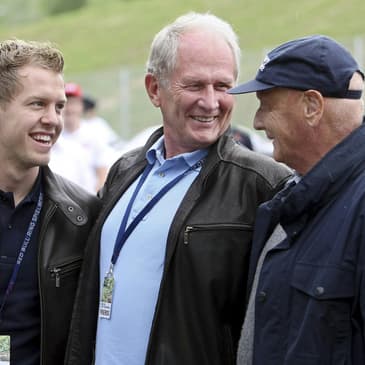
2024 marks 20 years since the inception of Red Bull Racing. Who better than Helmut Marko, one of the main architects of the team, to narrate some stories about the multiple World Championship winning team?
In this episode of the Inside Line F1 Podcast, Dr. Helmut Marko takes Soumil Arora, @f1statsguru and Kunal Shah back in time to discuss the origins of the team, the culture, their almost power unit partnership with Mercedes, Fernando Alonso's rejection, a missed chance with Lando Norris and more.
Note to editors of media houses: When you use quotes from this episode, do remember to credit "Inside Line F1 Podcast" AND embed the episode on your landing page(s). We expect you to follow ethical journalism.
Tune in!
(Season 2024, Episode 45)
Follow our hosts on Twitter: Soumil Arora, @f1statsguru and Kunal Shah
Image courtesy: Red Bull Content Pool
Learn more about your ad choices. Visit megaphone.fm/adchoices
[00:00:18] It is true, it is true. Dr. Helmut Marko is back on the Inside Line F1 Podcast. How cool
[00:00:25] is that? We've been dying to get him back on for such a long time and it's happening
[00:00:30] at last. And this is just part two of a two-part series. We've got another part earlier on
[00:00:36] where we sat down with Dr. Marko after the Dutch Grand Prix to talk about the more present
[00:00:40] affairs about the team. More about how did they end up losing to McLaren at the Dutch GP?
[00:00:46] What's next for the team? How did they approach this whole challenging phase? How did they
[00:00:49] discover Max? What did they think of Kimmy Antonelli and what their benchmarks for Sergio
[00:00:54] Perez should be? That is a part of Part 1. In this episode, we touched down upon the
[00:01:00] 20 years of Red Bull Racing. How did Red Bull become the team that they are today?
[00:01:05] The pivotal moments that got them to victory. The moments that dictate the culture of
[00:01:10] Red Bull Racing and also a few interesting insights on a few drivers that Red Bull wanted
[00:01:14] but didn't get and an engine deal that was about to happen but didn't go through. And
[00:01:19] also what's next for the future of Red Bull Racing? Are they going to list themselves on
[00:01:24] the stock exchange? Are they going to focus on road cars? Here's Dr. Marko to tell
[00:01:28] you about all of that and more. Let's dive in, shall we? Now, Dr. Marko, we have
[00:01:32] you on the podcast to talk about the 20 years of Red Bull Racing. Can you believe
[00:01:37] it firstly? It's been 20. Are you proud of the way the team has come around? And if so,
[00:01:42] what are you most proud of that Red Bull has achieved in the last few years?
[00:01:47] First of all, it was an unbelievable story. Red Bull was a shareholder from Saooba for
[00:01:55] 10 years and majority shareholders but no voting rights and I think the best we achieved
[00:02:04] was the podium. This is amazing. So, and then there was a chance we made a deal with Jaguar,
[00:02:17] with Christian Clean and through these negotiations I was smelling as a chance to get the whole team
[00:02:27] which happened in the end for a very favorable price and Mr. Matishitz was always positive and
[00:02:38] very visionary looking in the future said, yeah, let's try it and these words I remember exactly,
[00:02:45] maybe we can win a Grand Prix. So that's how the story started. And what was the target
[00:02:52] initially? What year did you have in mind for winning the first Grand Prix? Was it 2008 or earlier or
[00:02:58] later? No, no, there was no target. It was just let's try it and the other target was we will do
[00:03:06] it differently. You know, and when we bought Jaguar, we had a lot of changes. We brought an
[00:03:17] energy station, we brought an own magazine, we had some sort of beauty competition and then the end.
[00:03:29] So, and we also hired Christian Horner at that time a very young guy with no formal one experience.
[00:03:38] Yeah, and then the big change came and that was I would say the most important thing was to sign
[00:03:47] Adrian Newey because he was the only one in the team who had championship winning experience
[00:03:56] and he brought all the know-how but also the demands which are necessary to make
[00:04:02] that racing a winning team. I think that was one of the milestones and the next thing was also with
[00:04:12] drivers. We were very proud that we signed Fettel and we signed Per Stappen, both coming out of our
[00:04:20] junior program and that became World Champion. And that is another thing that one of the
[00:04:28] quoting of Monteshichos, we don't buy stars, we make stars. And there's a system if you look at
[00:04:38] football, ice hockey and so on they all have now junior academies or whatever it is called
[00:04:44] and they're trying to build up young sportsmen and bring in to the top in whatever category.
[00:04:52] Hey, this is interesting Dr. Marco. I love the line we make stars and now I want to segue into the
[00:04:59] future by looking at the past because the first star and the only star kind of you guys brought in
[00:05:05] was Adrian Newey and from a management standpoint, you have over a thousand people,
[00:05:10] such a great team unit but I want to ask you does a man make a team or does a team
[00:05:15] make a man? Because with someone like Adrian Newey leaving, surely that's a big pillar
[00:05:21] of the team gone, right? No, you have to make the difference. At that time, nobody had experienced
[00:05:28] how to win races and to win championships. So at that stage a man made a difference. Nowadays,
[00:05:37] the team, as you mentioned we have 2000 people so nowadays the team matters. It's not a single
[00:05:44] man or it changed. You have far more simulation tools, you have so much more data and then the single
[00:05:53] man is not the difference anymore but there was a difference when Newey came.
[00:06:01] But Dr. Marco I also want to understand now that we know Jonathan Wheatley is also leaving
[00:06:05] Red Bull after being a very integral part of the team for nearly two decades.
[00:06:10] He's been very key especially looking after the pit stops. They've been most dominant team over the
[00:06:16] last seven, eight years but in his larger role as a sporting director, how key do you think he was
[00:06:21] in that role and how much was his impact and how difficult is it going to be to replace someone
[00:06:26] like him? It cannot be me, Clee. It was a very important part of the team as you managed,
[00:06:32] as you mentioned our pit stops were a benchmark but not only that the whole way the approach how
[00:06:46] mechanics were trained and also the interaction with the FIA and so on.
[00:06:54] But he's now in the mid 50s and of course he wanted to, he started as a mechanic so it's
[00:07:02] a very astonishing and a very broad career and he wanted to become or get a position
[00:07:11] which is more demanding for him and unfortunately this audio offer came
[00:07:19] which we couldn't match either the position nor the money which was offered and I personally
[00:07:27] understand him that he's taking this chance but for sure it's a loss for us but on the other side
[00:07:35] now we have a very widespread team. We trained young people, we are educating them
[00:07:44] and so we have the possibility, we will put the position of Jonathan on several persons and we believe
[00:07:56] it's where we can handle the situation. And also considering 20 years of Red Bull you've had a very
[00:08:04] decorated 20 years lots and lots of wins over 100 wins over 100 podiums for Max himself
[00:08:11] and several titles in drivers and constructors championships but going back to the initial
[00:08:18] years of Red Bull what were the challenges that the team faced at the time internally probably
[00:08:24] trying and convincing or trying to get a hold of the best talent and probably even externally
[00:08:30] in the sense of being taken seriously as a racing team considering Red Bull is primarily an energy
[00:08:37] drink spread. Yeah that's a complex story as I mentioned first you know we wanted to
[00:08:47] do it differently to be competitive but also have fun so in the beginning we got the image of a
[00:08:56] party team which to a certain amount was correct but they forgot that we also want to win so we had to
[00:09:10] get the OJeguar team was a little bit like a post office you know everything was
[00:09:20] there was no really emotions there was no passion and for racing or for winning you need passion
[00:09:29] so to change that and to convince people that we are serious and also the infrastructure was not
[00:09:38] in any way you know production and always simulator wind tunnel and so on so we had to invest a lot
[00:09:44] but there was a help of Adrian who said you need this this this unfortunately Mr. Mattajic's
[00:09:51] big expensive money which was necessary it was it was quite a big amount of money so
[00:09:59] to get the people and the old people from Jaguar to change their approach to get passion into it
[00:10:07] and yeah that slowly worked and I would say it was done it was a very good job by Christian
[00:10:19] Horner to transfer a midfield team to a winning team but he had also support from Red Bull
[00:10:28] and that and the visionary few of Mattajic's that nearly all the ideas we brought forward
[00:10:37] to him accepted and but in the end we had to deliver fortunately with it
[00:10:45] and you'll continue to keep delivering you know I keep saying in the last 20 years Red Bull is that
[00:10:50] one constructor that is one with different power units with different drivers under different
[00:10:57] rules of formula one itself and I think you are one of the most ruthless rivals for anyone
[00:11:04] to have you get you get half an inch and Red Bull is going to you know take that inch and you know
[00:11:09] expand it into many feats as they go but could you share some behind the scenes stories or
[00:11:16] anecdotes that illustrate the culture within the team because the big thing about Red Bull like
[00:11:21] you've also been narrating is you want to do things differently so how different is that
[00:11:26] culture which is which I have personally experienced in the Milton Keynes factory
[00:11:31] as you know sir but are there any stories that you are able to share
[00:11:34] no it's different stories but one about our approach is for sure first up and first up
[00:11:42] and was 15 years old when we signed him he I think was 16 when he had his first outing
[00:11:52] and that's also Red Bull like on a Friday drive in Sozuko Sozuko is one of the
[00:11:58] most demanding circuits old style and we had a lot of criticism you know dangerous young guy and
[00:12:09] then then blah blah blah and then changed all the rules unfortunately you know you can't like
[00:12:14] be 16 and now all of a sudden they're broken you have to be 18 to drive a formula one car
[00:12:19] and you have to have points and whatsoever so but he said no he is ready I had it
[00:12:26] normally I talk with his young drivers we don't sign a driver without a heavy discussion with him
[00:12:32] but this Max I was sitting down for an hour and then for nearly two hours and there was a very young
[00:12:41] there was a mature young or a mature man in a very young body but his vision what he wanted
[00:12:52] and how he wanted to achieve it that was very clear so for me it was not a risk to put him in
[00:12:59] the formula one car and yes he had some accidents but really everybody when it kind of starts first
[00:13:07] have some accidents but the way I'm going to talk to mother shits we will have the risk
[00:13:12] he's so young you know in US theoretically if he couldn't drive this if you're not 18 and
[00:13:19] things like that so and we go forward and the other story was when 2014 the new engine rules came
[00:13:30] and our engine supplier unfortunately couldn't make a competitive engine so
[00:13:36] and we tried him so there was quite a big rivalry with Mercedes and also our boss was not a big fan
[00:13:51] and he said listen this our engine we can't motivate people anymore because everybody knows
[00:13:59] with his engine you can't win so we had a deal with Mercedes a handshake deal with lauda which was
[00:14:11] not supported by Dotto so the deal didn't happen and then we went to Honda Honda at that stage
[00:14:20] failed to be competitive with McLaren but I had some insider information what they are planning to do
[00:14:30] so we said yes we go ahead we take this risk which I believe it wasn't a risk because I knew
[00:14:40] how much they spent on dinos you know AVL is in parts and so I knew what they spent so there was
[00:14:50] they were serious about it so maybe changed to an engine which at that moment was
[00:14:57] how did I also say F2 style power something like that so that we always took brave decisions
[00:15:08] so a little bit yeah no risk no fun I like that motto no risk no fun and like I keep saying that
[00:15:17] you know 2014 to 2021 2022 were actually the toughest times because Red Bull had the car
[00:15:23] just couldn't get the right power unit and you'll still manage to keep together as a team wait till
[00:15:30] everything fell in place and then of course the the the historic partnership that you've had
[00:15:36] with Honda but Sundaram I know you have a very interesting follow-up question to this story
[00:15:42] yes Dr. Marco you said that Red Bull's philosophy has always been about making or
[00:15:47] building young talent rather than buying the stars but has there ever been a situation where Red Bull
[00:15:54] has really wanted to sign a driver but due to some circumstance or the other it has broken down
[00:16:00] or you've not been able to sign that driver or has there ever been a driver that Red Bull has
[00:16:04] really wanted but just couldn't sign before we started winning I don't know exactly which
[00:16:11] year I think it might have been 2008 or so we had been talking to Alonso but he didn't think
[00:16:18] take us seriously I guess and so yeah didn't happen we had serious discussion and we had a
[00:16:29] contract ready for London Norris for the Alfa D'Aure also at that time and unfortunately they
[00:16:37] found out which they had two contracts and then one was a clause which stopped this cooperation
[00:16:45] with London Norris but the rest as I said we are proud about our two world champions
[00:16:55] I know time is less I know you have to head I know Vicky's been messaging me just the last
[00:17:00] question Dr. Marco we of course I'm pretty sure I'll take more time in your calendar to
[00:17:05] discuss some of these 20 year old stories but if we can just look forward what is next for Red Bull
[00:17:12] Racing because you all have been doing this for 20 years you'll have won races titles bowls there's
[00:17:18] nothing much left to prove in Formula 1 even though I wish you all keep proving how an energy
[00:17:24] drinks company can beat car manufacturers in a sport that involves car racing right
[00:17:28] what is next really I'll pivot into having road cars or any other advanced engineering
[00:17:34] technologies like Williams or list on the stock market or what do you think is the next 20 years
[00:17:40] got in store for Red Bull if you go back in history whenever William started or McLaren started
[00:17:49] not only focus on Formula 1 their performance went down so in our view we have to focus on
[00:17:58] Formula 1 yes we will do the RP 17 which is a very special car designed by Adrian Newey but I think that's
[00:18:12] the one off project we also involved in America's Cup and things other things like that
[00:18:19] but this focus should stay on Formula 1 and I think the next benchmark is we will have our
[00:18:27] own engine which is an enormous enormous project from the financial side as also from the managing side
[00:18:37] so we will be yeah people being our real manufacturer so that will start in 2026 and in
[00:18:48] the future our focus will be on winning races yes winning racing with our own engine
[00:18:55] and make over the benchmark you know as in the beginning we do it differently
[00:19:02] differently and that should be also the aim for the future main goal is winning but do it in a way
[00:19:09] which also gives new fuels gives new side of the sport with the population be different
[00:19:19] and Dr. Marco I'd like to end with a question on you in the next 20 years as Red Bull moves
[00:19:25] to its different dimension moves to a new chapter of its history how do you see your
[00:19:30] role evolving you started off nurturing young drivers setting up the whole team
[00:19:34] what do you think the next few years holds for you as we conclude the episode
[00:19:38] I'm not getting younger so my contract goes to 2026 but as long as I physically and mentally in a
[00:19:51] shape to do my job I enjoy it but naturally I will step back more and more and hopefully find
[00:20:01] a good successor is Sebastian Fettel a possible successor or can I apply
[00:20:11] this has been a fantastic chat Dr. Marco I'll keep like I said keep seeking your time for more
[00:20:18] of your stories because I'm pretty sure there's there's an encyclopedia of stories inside
[00:20:23] all these 20 years that you've literally been the architect of putting together at Red Bull Racing
[00:20:29] okay thanks it was nice to talk to you have a lovely day bye bye
[00:20:36] ah man that was so much fun so much fun listening to Dr. Helmut Marco and I hope that
[00:20:42] that sentiment is also carried by you as you were listening through that episode let us know
[00:20:47] what you make of it by reaching out to us on all of our social media handles but this is
[00:20:52] just the beginning Dr. Helmut Marco has been on the podcast before and hopefully we'll be back
[00:20:57] again but if you love this a lot please please feel free to check out our Ottmar Safna special
[00:21:02] episode that we did a few months ago as well and also one with Mr. Ravi Shasari a cricketing legend
[00:21:07] who was in the Formula 1 paroch and predicted that Lewis Hamilton would win the British GP
[00:21:12] before he actually did apart from that we've also got our regular race previews and reviews
[00:21:17] and all the supporting content around it but thank you for taking out the time folks to
[00:21:22] listen to this episode of the inside line f1 podcast on behalf of Kunal and Sundaram
[00:21:27] this is myself Somal Arora and I'll see you for a few episodes in the future bye bye