
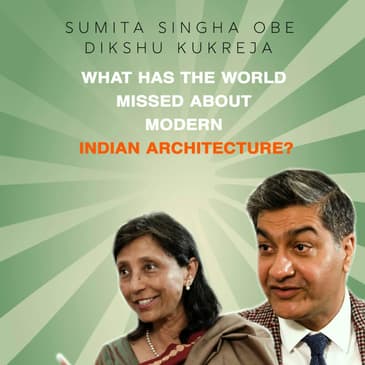

What has the World missed About Modern Indian Architecture?
When we think of Indian architecture our mind gravitates to temples, palaces, and timeless symbols of a rich, ancient past. While these are iconic, the narrative is rapidly evolving, a story the world must not miss.
By 2023, nearly a third of India’s population had already moved to cities. According to the World Bank, by 2036, 600 million people—40% of the population—will live in urban areas, contributing nearly 70% to GDP. Managing this urban shift will be critical for India to achieve its goal of becoming a developed nation by 2047, its 100th year of independence.
India has done it before. Over 4,000 years ago, the Indus Valley Civilisation set the standard for urban planning with thriving cities, advanced drainage systems, and grid layouts.
The question now is: Can India do it again?
The Defining Moment
With urbanisation comes opportunity—and challenge.
India faces critical decisions about sustainability, overpopulation, and balancing the preservation of heritage with the need for progress.
The Big Questions
In this episode of India: A Story in the Making, we dive into pressing questions about India’s architectural journey:
- What challenges does New India face as it urbanises?
- What is modern urban planning getting right—and wrong?
- What has the world missed about India’s evolving architecture?
- How is AI shaping the future of design?
The Experts
To unpack these topics, I speak with two fascinating voices:
- Dikshu C. Kukreja, Director of the CP Kukreja Foundation for Design Excellence: A prominent figure in modern Indian architecture, Dikshu is actively shaping the urban transformation story of India.
- Sumita Singha OBE, RIBA Trustee, Architect, Author, and Educator: Having left India decades ago, Sumita offers a reflective perspective from abroad—on how New India has written its architectural story so far, what it has missed, and what the world needs to understand.
Why This Story Matters
India’s urban journey is the world’s business. The choices made today in its cities will shape global trends in sustainability, design, and climate action. This isn’t just India’s story—it’s a global one.
Tune in to explore the challenges, breakthroughs, and lessons of modern Indian architecture. Whether you’re curious about urbanisation or love stories of transformation, this episode is for you.
FULL VIDEO
You Tube:
https://www.youtube.com/@loveenatandonofficial
PODCAST SMART LINK
https://bingepods.com/podcast/podcast-rn7moe
Loveena Tandon: HOST: SOCIAL MEDIA HANDLES
https://www.linkedin.com/in/loveenatandon/
Twitter/X
https://twitter.com/loveenatandon
https://www.instagram.com/loveenatandonofficial/?igshid=OGQ5ZDc2ODk2ZA%3D%3D
https://www.instagram.com/tandonloveena/?igsh=MW5tOHdlc3cyMGJrOA%3D%3D&utm_source=qr
Learn more about your ad choices. Visit megaphone.fm/adchoices
[00:00:00] Post-Independence, Indian Architecture has not been spoken about
[00:00:03] This amazing thing about India is that it somehow combines modernity with its ancient past
[00:00:10] First we shape our buildings and then our buildings shape us
[00:00:13] We are talking here about generations of Indians where we were told we were not good enough
[00:00:19] You were the man behind the master plan of Ayodhya
[00:00:23] There in that building at the press of a button you have 6000 seats which just go under the floor
[00:00:30] You know the shard?
[00:00:32] The engineer for that was a woman from India, from Mumbai
[00:00:36] In every Indian family the kind of transformation that we have seen I don't think many people on this planet would have
[00:00:43] The first 10, top 10 cities of India the kind of population within those cities is more than the population of half the countries on this planet
[00:00:52] There is a real moral, ethical and sort of social question what happens to architects
[00:00:59] This is India, a story in the making and I'm your host Loveena Tandon
[00:01:05] Hello and welcome to India, a story in the making
[00:01:08] I'm in conversation with two people today who make visions a reality, who sometimes make dreams reality
[00:01:14] And who check and balance on our dreams and realities as well
[00:01:19] And that actually is immortalized
[00:01:22] Yes, I am in conversation with architects
[00:01:25] Dikshu Fukreja Ji whose firm is in the top 100 and top 5 in Asia
[00:01:31] And Sumita Shingho who is a woman in architecture, who is an advisor on various charities
[00:01:39] But has written a book but is now in the UK and practicing
[00:01:43] And this is India's story in the making and we bring India and the UK and the world together
[00:01:48] Asking how India is transforming in their eyes
[00:01:52] So thank you very much for joining us
[00:01:54] But before we explore our question on how India is transforming with the vis-a-vis architecture
[00:02:01] And when we think of India we think of monuments and temples
[00:02:05] But has it moved beyond that and how it is perceived in the eyes of the West
[00:02:10] I want to explore your story
[00:02:12] And what hitched me for you was that you designed my university, JEMU
[00:02:19] That's right, that's right, yes of course
[00:02:22] So Parvamin first
[00:02:24] Of course
[00:02:24] Do you agree?
[00:02:25] I totally agree
[00:02:27] Sumita Ji please tell me
[00:02:28] When I look at a block
[00:02:32] There are two things that happen to me
[00:02:33] One is to look at a place and think of a building
[00:02:37] Of how it looked
[00:02:38] It was an absolute disaster when I was making my house
[00:02:41] And one is a cloth
[00:02:42] How did you come into architecture?
[00:02:46] Tell me your story in Shri
[00:02:47] So I grew up in Karolbagh in New Delhi
[00:02:50] Yes
[00:02:51] And my father wanted me to be a doctor
[00:02:55] Yes
[00:02:55] I was very good at making art
[00:02:57] Me too
[00:02:58] So I said I want to be an artist
[00:03:00] And he said no, you can't be an artist
[00:03:02] So I said okay then I'll choose something that's a combination of science and art
[00:03:08] Which is architecture
[00:03:09] Right
[00:03:10] Studied at the Delhi School of Planning and Architecture
[00:03:12] I did very well there
[00:03:14] SPA
[00:03:14] SPA
[00:03:15] I know I have memories in SPA
[00:03:16] And then I was offered a scholarship to three different places
[00:03:20] Yeah
[00:03:20] Oxford, Cambridge and the AA
[00:03:22] And out of that I chose Cambridge because you know they had a legitimate department of architecture
[00:03:30] And I chose Trinity College which was the place that two prime ministers of India had been to
[00:03:36] That was the only college I'd heard of
[00:03:38] So I chose that
[00:03:39] You sure as well
[00:03:40] Sometimes destiny makes you do the right thing
[00:03:42] Was your father happy or not?
[00:03:44] In the end
[00:03:45] He was very happy until his death he kept my gold medal with him
[00:03:50] I used to show everyone
[00:03:53] And three years after he died I got the OBE the order of the British Empire
[00:04:00] And I wonder now what he would have thought of that
[00:04:03] I do want to ask you about JNU
[00:04:05] JNU has been a project which was designed by my father CP Cucreja
[00:04:10] Yeah
[00:04:10] And that's really what started his design firm so from a two-man practice to today we being 150 or plus professionals is the journey began with JNU
[00:04:21] And he was a young man all of 31 when he won this India's largest and most famous project
[00:04:27] Yeah
[00:04:27] In the late 60s when it was the it was an international jury of architects who selected Mr. Cucreja
[00:04:36] And the one line aspect of JNU was how to transform education or the physical environment of education in India
[00:04:46] And in that sense it has been a trendsetter in many many ways
[00:04:50] Yeah
[00:04:50] And you belong to JNU you studied there
[00:04:53] Brown
[00:04:53] So there you are and I've met many many people who have the fondest of memories including our current finance minister
[00:05:01] Our current foreign minister and many other luminaries in India and world over have been to JNU
[00:05:06] And when I in fact asked them what they feel about it is that they say that you know this is something
[00:05:12] Somebody made a very interesting mention about it and that was quoting
[00:05:19] Prime Minister Winston Churchill from the UK that first we shape our buildings and then our buildings shape us
[00:05:26] And that's what JNU campus is about it has actually shaped people's minds thought processes
[00:05:31] And of course their way of life going forward
[00:05:34] Yes indeed and keeping it very rustic as well and raw in its the way I mean I as you speak
[00:05:43] I am living in my mind the walk from Godawari
[00:05:48] To my school of languages
[00:05:50] Right
[00:05:50] It was just beautiful it just kept keeping that raw and you chiseling that raw
[00:05:57] Absolutely and when you see that in the context of what academic institutions world over being designed at that time
[00:06:04] Including in India
[00:06:05] Yeah
[00:06:05] It was about you know the administration building for example in the physical layout of a university
[00:06:12] The administration building would take the prime position in the university campus because it was meant to control
[00:06:19] Yes
[00:06:20] Or administer a university
[00:06:23] Similarly in the planning on one side of a typical university campus would be the faculty housing
[00:06:29] And on the other opposite side would be the student housing the two shall only meet in the academic buildings and then disperse
[00:06:36] That's not the case
[00:06:36] Yes
[00:06:36] JNU was completely a departure from all of that so administration building doesn't take that role of prominence as does the library
[00:06:44] So just as you go in old towns and you see you know the spire going up and that becoming the center of gravity of the town
[00:06:52] Same way the library here holds as a beacon of knowledge literally the entire campus together
[00:06:58] Yes
[00:06:58] And the students and faculty housing is all intertwined so those 10,000 students that it is planned for
[00:07:05] So the school is dispersed into 16 village clusters so in a very organic fashion you have 600 students and 100 faculty members all living close to each other
[00:07:17] Yeah yeah it does break boundaries and it makes it breaks that you know the ice and you could be meeting on Ganga Dhabha
[00:07:24] Yeah
[00:07:24] Which I am sure it's it just grew on its own
[00:07:29] I think these were that was one of many many organic developments within uh JNU
[00:07:35] Yes
[00:07:36] You have your Partha Sarathi Rock
[00:07:37] I know I didn't want to go there
[00:07:38] Which is considered the public space so to speak
[00:07:41] Yeah
[00:07:42] You know like you have the one height corner here
[00:07:44] Yes
[00:07:44] In London the same way Partha Sarathi Rock is this expression
[00:07:48] Oh
[00:07:49] Yes
[00:07:49] Of new ideas new thoughts and that's what JNU was founded on and in fact when Mr. Kukleja won this competition
[00:07:55] Many uh senior architects from the profession were concerned whether he would be able to deliver
[00:08:01] And therefore they had resistance to his being declared the winner and this news traveled all the way to the then
[00:08:07] Prime Minister Mrs. Indira Gandhi and when she was apprised of this whole uh sort of controversy which was coming
[00:08:15] She uh was uh had erupted she asked that uh you know if my father she mentioned this that if my father uh the late
[00:08:23] Prime Minister Jivalda Nehru was alive he would have chosen a young man he would have been happiest if it was a young man designing a university
[00:08:30] So why not we must give him an opportunity and let's see if he can deliver the first few buildings
[00:08:35] But of course it's history that he went on to design 50 years
[00:08:39] Yes indeed absolutely and you were the man behind uh the master plan of Ayodhya as well
[00:08:46] So what was the challenge there because that was the real game isn't it keeping tradition along with technology
[00:08:54] Which is where we are leading with our next question so tell me a bit more about the master plan
[00:08:59] So I agree with you for for us uh the at CP Cookreja Architects I think the ethos our whole value system is based about
[00:09:08] Not forgetting tradition and our cultural values as we sort of modernize uh I think the two are really really intertwined
[00:09:16] And even in the case of Ayodhya when we were selected to design you know for what uh for over a billion people
[00:09:23] We all understand how important uh Ayodhya how sensitively we feel about it and the kind of importance it plays in our lives
[00:09:30] So this place now was going to be transformed because there was going to be a temple that was coming up and a mosque as well
[00:09:36] And therefore for us as designers as planners my thought process was that we must be able to in in a situation like this
[00:09:45] Represent a secular India something which we all are so proud of so while this is a temple town in many ways
[00:09:51] While it is the town where our lord ram was born but at the same time it is also now looking at how can we show a modern secular India to the world
[00:10:01] So it is about creating not just a global uh uh religious or spiritual destination but also a global tourist destination
[00:10:09] But all on the tenets of sustainable planning and that's what we have gone about doing in Ayodhya
[00:10:15] That everything that's been planned because you're looking at a city and for that we did a lot of studies of international examples like whether it is
[00:10:23] Jerusalem or it's vatican city and many more uh mecca and similarly we did examples uh and case studies and research on indian temple towns
[00:10:33] So whether it is banaras or whether it is amresar or tirupati and there were a lot of learnings from here and those learnings
[00:10:39] Both uh in terms of beliefs and how people move to the point of you know the kind of accommodation people are looking for
[00:10:46] And for me it was very important to plan this as a city which would be an experience for anybody who would visit Ayodhya
[00:10:54] You know many people they would probably spend their life aspiring to dreaming to go and visit that holy place
[00:11:00] So that experience for them for me was very important
[00:11:04] It's not just about visiting a temple and coming back but being able to absorb the tranquility the serenity
[00:11:10] And the significance of that place
[00:11:12] We are here sitting in London and Mr. Kukreja is usually seen in India
[00:11:17] Tohru all over the world and Albania especially
[00:11:22] But um tell me about the exhibition that brings you here to the Nehru Centre where we are sitting
[00:11:28] Uh though it will be telecast a bit later but yet please tell me about your work here
[00:11:34] Well I must say that I'm really glad I'm sitting here with you in this very significant building
[00:11:40] Back in India everybody uh knows about Nehru Centre and wants to be able to be uh part of partake in
[00:11:47] the activities of Nehru Centre but for me it was a great opportunity when we uh we were asked
[00:11:52] um by the Indian Council of Cultural Relations to be able to showcase the work of contemporary
[00:11:58] Indian architecture through the lenses of my design practice C.P. Kukreja Architects to the world
[00:12:03] We have C.P. Kukreja Foundation for Design Excellence and the motive of that foundation is
[00:12:10] to be able to promote the design values to everyone around not just be limited within the design fraternity
[00:12:17] So that brings me here to Nehru Centre the aspect of showcasing contemporary Indian architecture
[00:12:24] architecture an architecture which is um aspiring to be global and is achieving those goals as well
[00:12:30] yet is rooted in tradition and cultural values this is something as a Indian I'm very proud of
[00:12:37] and I like it to be expressed in my work as well that we we while we want to modernize while we want to
[00:12:44] deliver to the world what they might not have seen or so uh up until now you know let's look at it in
[00:12:50] another way Indian architecture is something people marvel about but it's always been our historical
[00:12:56] monuments and palaces and forts yeah post independence Indian architecture has not been spoken
[00:13:02] about very much yes and that is my goal that one is able to showcase to the world that the Indian
[00:13:08] architecture is not only today very innovative uh lasting but is also ingrained in sustainable design
[00:13:16] values now this is where we come to our question which is um it's all about perception in the world
[00:13:24] and for the world India still lies in its villages and its temples while it is making surges and we are
[00:13:33] the top five economies but where are we vis-a-vis architecture how is the world looking and what are
[00:13:40] we doing new I'm I don't think that um people today are thinking about Indian architecture in terms of the
[00:13:49] temples and mosques and mausoleums and forts and that sort of thing they're aware there's a much wider practice
[00:13:56] and I think the perception of India is very different so nobody is going to India like they used to in the 70s
[00:14:04] barefoot you know the hippies used to come to connoct place and you know Maharishi and all this sort of thing yes they some they they do go there but they they recognize this amazing thing about India is that it somehow combines
[00:14:20] modernity with its ancient past you know there's an amazing mixture which you will not find in
[00:14:26] any other country in the world so I think um you know when we talk about India first of all I must
[00:14:34] compliment you for your show I think the podcast that you do and the India story that you bring out
[00:14:39] to millions of people who watch and hear about it is is is a great initiative and I salute you for that
[00:14:45] and I think the same way there are many Indians out there around the world who are very proud of what
[00:14:51] we have you know from where we have risen in a way the journey that myself my parents and my grandparents
[00:14:59] even if we look at the three generations that have gone in every Indian family the kind of transformation
[00:15:05] that we have seen I don't think many people in on this planet would have and from that point of view
[00:15:10] I feel that India is bringing a lot of learnings to the world and one of the important learnings is about our resilience
[00:15:17] it is about our acceptance of diverse thoughts today in a world that we are living in in the war and strife
[00:15:26] that we see all around in the world that is going on look at India it's been a peaceful country
[00:15:32] independent for more than 75 years thriving democracy and how diverse we are when I who belong to the northern
[00:15:42] part of India Delhi I travel and design projects around the world many times you feel you are in a foreign land
[00:15:49] whether I travel to the eastern parts of India or south or west the way people look the way they dress
[00:15:55] and what they eat and wear is completely different yet there is something that is an Indianness that
[00:16:01] holds us together so I think that is a beautiful value that the world must take notice of how are we able
[00:16:07] to live so happily peacefully and work hard and want to prosper we are here not just for ourselves we
[00:16:14] are always looking out for our family we are looking out for our community we are looking out for our
[00:16:19] neighbors these values are something which are very important now when I see it from the architectural
[00:16:24] perspective I think that's the way we also design our buildings so if you look at our contemporary work
[00:16:31] as well and I am not just speaking here about my firm there are wonderful talented architects across India who are
[00:16:37] having similar notions of being able to celebrate elevate what our historical design elements are whether our
[00:16:47] architectural forms whether it is for example in my case what I am in love with is the element of Jali or screen
[00:16:54] that you see in Indian architecture and the way it is used as a means of passive cooling
[00:17:00] as a means of passive energy architecture control so while there are glass buildings which are sort of all over the world
[00:17:08] India has developed its own design vocabulary one of the projects you see in this exhibition is a
[00:17:15] skyscraper called Amba Deep now when that was designed that was in a time when India had early 1990s when our economy had just got
[00:17:23] liberalized so you had the Kochs and multinationals of the world swarming to India and with them
[00:17:29] bringing their own architectural notions and the general public also felt that if we were to embrace
[00:17:34] western architecture maybe that's the path to our modernity in that thought process emerged Amba Deep Tars
[00:17:43] which today by the way is recognized as one of the most notable contributions of 20th century architecture
[00:17:50] architecture now this is a building which is all designed literally like an artwork it's not about
[00:17:56] the glass and steel that you saw everywhere else in the world so it's a building which if only if you see
[00:18:02] the images do you realize its uniqueness so I think there are many many examples like this where Indian
[00:18:07] architecture has made its mark is continuing to make its mark one other project which is today being talked
[00:18:13] about which is again from my own portfolio is a project called Yashubhumi it's the world's third largest
[00:18:21] convention center and as we speak a Lovina there are delegates coming from around the world to come
[00:18:27] and see how this modern building has come up you know there in that building at the press of a button
[00:18:33] you have 6000 seats which just go under the floor and voila you have a flat a hall which can be used in
[00:18:41] multi-purpose manners so many many such unique aspects are happening in India where we are marrying tradition
[00:18:47] with technology because I think when we you your thesis has been on on you know you did it in bingol
[00:18:56] the building is built in a way where it sustains it sustains through all the environments so it's cool
[00:19:03] when it's hot and it's hot when it's cold have looking at our temples and some of our architecture that
[00:19:11] happened one wonders how could this Minakshi temple be made how the hell can one rock in a certain
[00:19:19] temple be carved in in this way have we actually lost something and are we have you not yet found that
[00:19:28] knowledge and yeah well if you look at the Nisdan temple yes that was all made by craftsmen from India
[00:19:36] it's the biggest temple in the whole of Europe now that level of carving you cannot find in Europe
[00:19:43] anymore yeah and that's amazing that that skill is still there and all the other skills the other
[00:19:49] technological skills of you know understanding our structure I'm sure it is there you know we have like
[00:19:57] Mahendra Raj he was a one of the greatest engineers of India and he designed so many structures
[00:20:04] and there are so many other Indian engineers who are working here in the UK so you know they've come
[00:20:12] and worked here so I think that that knowledge is not quite lost you know I I'm not at all unhappy about
[00:20:19] India you know I just feel very proud of India being proud of being an Indian living here because I see
[00:20:25] this global exchange everybody wants to have pair of Indian in yes absolutely but Laveena I'll give you a
[00:20:32] different take on this slightly different from what Sumitra said that yes in India we I would confess lost it
[00:20:39] somewhere but we have regained it too or we are in the process of regaining what has happened is we need
[00:20:44] to look at it from the point of view of history that you know when you are ruled for a couple of centuries
[00:20:51] yes for more than 200 years you are ruled by a colonial power which makes you believe that what you know is not good enough
[00:21:00] we are talking here about generations of Indians who have gone through that phenomena where we were told
[00:21:06] we were not good enough we were not smart enough whatever we did was literally wrong so when you rise
[00:21:13] from that kind of a mentality and you gain independence what the challenges that India was facing back in post 1947
[00:21:21] 47 was not about an architectural identity we had more bigger problems than that we were fighting famine and floods and
[00:21:29] absolutely the basic human necessities had to be first got for the citizens of the country so I think the first couple of decades was literally struggling to stand on our feet this new nation was trying to do that post that is when I think coming in the 70s and that's why JNU is historically a very in post-independent India a very
[00:21:52] important project a turning point yes in Indian architecture because it's considered one of the projects where actually
[00:21:59] actually architecture Indian architecture suddenly felt proud of what we were about we delve deeper into understanding our own identity and creating a built environment out of that so starting from JNU and other projects in that phase is I think where a new phenomena started happening and from there on if you see in through the 80s and then even 90s etc.
[00:22:21] We have developed an architectural style is the last expression I would like to use but an architectural
[00:22:29] vocabulary where we are you know looking at our own traditions looking at our own customs and learning
[00:22:37] from that to develop a new modern Indian architectural language and that is a phenomena not just that
[00:22:43] in my work that we are following but I would salute many other Indian architects who are doing the same and I am happy that you know only now there are people like you and the print media and the digital media and all of that where people are now looking into and recognizing this kind of work which is happening in Indian architecture.
[00:23:04] Going forward I feel that Indian architecture is bright a bright future and a responsibility that we are going to take forth of not just transforming our own country but being able to literally be an inspiration for the global south as I was mentioning earlier that this is how you can develop responsible architecture.
[00:23:24] I will give you a little nugget the SRACH did the engineer for the engineer in India was a woman from Mumbai.
[00:23:33] Despite the fact that we have all this grand knowledge yet our cities seem to be not planned enough while we also have a whole scripture on planning, this is Vaastu Shastra, where have we gone wrong, what are our challenges?
[00:23:54] I think we have gone wrong because we lack discipline. We lack a sense of rigor that
[00:24:02] must come with this knowledge. Yes, we have all the knowledge sitting there, but when
[00:24:06] it comes to execution, we sometimes turn around and ignore things. So, when you see most
[00:24:12] of the cities that we Indian cities today, the kind of challenges they are struggling
[00:24:17] with, well we can always take an I would call it an excuse that climate change is the cause
[00:24:22] of all these floods and you know rain spells and other aspects poor air quality etcetera
[00:24:30] etcetera that Indian cities are facing. But I think we have been irresponsible towards
[00:24:34] it. We have not looked at things at a micro level, we have not looked at them at a macro
[00:24:39] level the way we should have. When I say micro level, I believe that a city can be smart not
[00:24:44] just by calling it smart or by investing billions of dollars into technology, but by first making
[00:24:51] your citizens smarter. For example, in a place like Delhi which is now considered one of the
[00:24:56] most polluted cities in the world, we had a program where we decided the school children
[00:25:02] took on this mission. They were taught about saying no to plastics or saying no to crackers
[00:25:08] during our Christmas or Diwali. That movement became so popular that it really made a big huge
[00:25:16] change in the cities environmental quality. The same way I think we need to smarten our citizens
[00:25:21] that why do we litter outside, why do we choke our drains which come monsoon become the cause
[00:25:28] of urban flooding and many such problems that are there. So, at a micro level I would say community
[00:25:34] awareness and responsibility is important. At a macro level I would say a serious issue the Indian
[00:25:40] cities are facing is urban migration. Unless we are able to control and provide the right livelihood
[00:25:48] to people back in their villages or towns, they will continue to you know migrate to cities. And when
[00:25:55] you have that kind of number of people living in our cities you know the first 10 top 10 cities of
[00:26:02] India the kind of population within those cities is more than the population of half the countries
[00:26:08] on this planet. So, these are the kind of numbers you are grappling with. Indeed. So, what is it that we
[00:26:15] need to do and is it happening now? Are we on the pathway or not? Well, I've…
[00:26:22] When you go, actually for you the question would be when you go back now what difference do you see?
[00:26:28] Actually, I totally agree with you about smarting, smartening up the citizens because actually that's
[00:26:35] got worse. I would say plastic pollution everything has got worse even though plastic bags are banned in
[00:26:41] India since I think 2015 or something like that. You know you just find plastic everywhere in the village.
[00:26:48] I know that our Prime Minister Modi ji goes and picks trash from the beach and I've seen things like
[00:26:53] that and he's always like talking about cleaning the cities but until that actually goes into each
[00:27:00] person's head that this is my responsibility because it's going to ruin my health, my children's health,
[00:27:07] my grandchildren's health. This is not going to change. Indeed. So, when you go back what is the
[00:27:13] difference you see? And so when I go back obviously I'm admiring all the new architecture there which
[00:27:18] was not there during my time. You know the perception of India was very different when I came to the UK,
[00:27:24] you know. So, it's now like wow, you know India, wow, that sort of thing. I'm going there, everything
[00:27:31] is amazing. The even the airport was like that, you know in the old days you remember the airport.
[00:27:37] Of course I do. This is horrible airport. So, everything you know we just go there and we're like
[00:27:42] wow, you know this is amazing. And so I have nothing bad to say. I think it's all very good.
[00:27:49] Fabulous. Except for the plastic pollution.
[00:27:51] Plastic. Because I've worked in nine countries and I would do similar things. I educate children
[00:27:56] and adults on the plastic pollution. We use plastic waste to create things and I've done it
[00:28:01] in several countries like that. I would love to do a project like that in India. And you know I
[00:28:07] think children are our future and if they understand this issue, they will take it up in a passion. They
[00:28:14] will educate their parents. So, if you're talking to someone Dixio here in the UK telling them about
[00:28:20] Indian cities and how good they are and they should come. What would you say of your own living
[00:28:25] experience? What difference have you seen in the country? I think like Sumita has been saying,
[00:28:32] there's a huge sea change from what we used to be. And if I go back to just two generations before me
[00:28:38] and my father narrating this story where his father used to be, you know he used to be a supervisor in
[00:28:46] the construction of projects and out in far-flung areas. And he was given by the British, they had given
[00:28:54] him because he had to move from one side to another. So, he was fortunate to be given a bicycle. And so,
[00:29:00] when his bicycle would be, he would be riding his bicycle through those villages, children would run
[00:29:04] calling it a steel horse. They have not seen a bicycle. Today you see India and you can speak for
[00:29:11] yourself about, of yourself decipher how India has progressed. I mean we are sending people out there to
[00:29:18] the moon and now Mars and what have you. So, the technological leap that has happened in the country and
[00:29:24] continues to happen day in, day out is mind-boggling. So, from my own perspective, I see that our cities,
[00:29:31] while we are talking about these urban challenges that not just Indian cities but many around the world,
[00:29:36] I mean I, as you said, I travel around and I have seen, I did this very interesting television show.
[00:29:41] So, I crept into your territory, Lavena. Very good. I think he'll be very good.
[00:29:47] But I did this television series which was called Tale of Two Cities. Oh yes. And I travelled around the world and I
[00:29:54] engaged in conversations with presidents and prime ministers and some global mayors.
[00:30:00] And I discussed or compared one international city with one Indian city. And all these aspects when
[00:30:08] one went through around the world having these kind of conversations, you realize that Indian cities
[00:30:12] are on the move. There is a lot going there and the kind of change that you see in a city in India or any
[00:30:19] city for example, how do you measure its progress? In an Indian city I would say if you come today,
[00:30:25] like you live in London, if you visit it after every three years or something, you will see,
[00:30:29] you will find places in the city which you cannot recognize. So, that's the kind of transfer,
[00:30:34] rapid transformation that is happening. Is it all happening for the good? That's something we need
[00:30:39] to watch out for. Sustainable and climate change, keeping in check. Because I think when we talk of
[00:30:46] Vastu Shastra, it was all about, however much I know, conserving the environment, sustainable development,
[00:30:55] the buzzwords of today. Do you think we are in line with that now?
[00:31:01] Like I told you earlier that we had lost that knowledge somewhere because our focus was probably,
[00:31:08] you know, had we had got distracted. But today we are beginning to realize all those values that
[00:31:13] have been there in Indian town planning, be it the Indus Valley civilization, the Harappan civilization,
[00:31:19] or whether it is about Indian architecture, the principles of Vastu Shasta, like you said,
[00:31:24] that. And many other principles, you also referred to buildings that you have seen, ancient buildings
[00:31:31] in India, where you know, when it's very hot, the temperature inside is cold and vice versa.
[00:31:36] So, all these principles which today in our terminology we call passive principles of energy
[00:31:42] control have been around. So, we need to really study them once again with that same kind of seriousness,
[00:31:48] and see that how well they had been adapted without the where technology stands today. We were still so
[00:31:55] technologically advanced. So, I think these learnings today you find in contemporary Indian architecture
[00:32:01] is being revisited seriously.
[00:32:03] How is AI impacting the world of architecture? And how do we make the best use of it?
[00:32:10] In the field of architecture, I would say that it's early days in the sense that of course, practices
[00:32:17] around the world are looking and embracing AI. But I think it's more at the moment more cosmetic in
[00:32:23] the sense it has to do with the aesthetics of a building. But going forward, I see that coming a lot
[00:32:29] into the actual engineering design of the building as well. And probably even going further to be able to
[00:32:36] not only grow in leaps and bounds the visualization quality of a building before it's actually built,
[00:32:43] but also all other aspects which we are talking about from a sustainability angle. Being able to
[00:32:48] evaluate all of that within a building, of a building before it's built. AI is going to make quantum leap
[00:32:54] in that aspect too. Could AI now, I don't know so much, but make a design if you tell them? Is there
[00:33:01] something like that already? Oh yes, of course. That is very much there.
[00:33:04] So on your way back now, after interaction, maybe you can just in your phone, dictate the kind of home
[00:33:12] you want and you'll have a design by the time you reach home. So yeah. How sustainable is that?
[00:33:17] Yeah, so that's the point. It might be beautiful to look at or pretty to look at, but I think it's
[00:33:22] a little cosmetic. At the moment, AI has not reached that level or depth of design quality and livability
[00:33:29] and engineering of the building, but I'm sure it's only a matter of time. Well, I think in the UK,
[00:33:35] people are afraid that AI is going to take the work away. The jobs away, yes. The jobs away of architects,
[00:33:41] because you know, as you say, if you can look at your phone and say, you know, design a five bedroom
[00:33:46] house for me or whatever, you know, it'll design it for you, put sustainability, everything, you know,
[00:33:52] technical details, everything. This is the problem, you know, where are humans now in that process?
[00:33:59] So I think there is a real moral, ethical and sort of social question. What happens to architects?
[00:34:08] What happens to architects?
[00:34:12] Because now anybody can design, they have to speak to their phone and you'll get a house done.
[00:34:17] So what happens to architects? How do they evolve? Well, that is the question that is being asked now.
[00:34:22] Well, I'm a perennial optimist. So I would say that the human mind, which has created AI,
[00:34:27] and before that many, many technologies, I don't think much as some people might believe,
[00:34:32] but I would not be one amongst them saying that AI is the technology that is going to overtake human
[00:34:37] mind. I think it will still remain a tool and a tool at best, maybe better than what we've had up until
[00:34:44] so far, but it's just a tool to be able to create what we want eventually to be created. So I'm not
[00:34:52] worried on that account. I only see it as a positive. Brilliant on the positive note,
[00:34:57] we shall go into high five very quickly. Five rapid fire questions about you or India, I don't know,
[00:35:04] but the reward that you have is a high five from me. How's that? Sounds good.
[00:35:10] All right. High five it is. So India for you in one word. Amazing. Awesome. Okay. What's the one building
[00:35:31] that you would have loved to design if you look back anywhere in the world? Well,
[00:35:42] for me, it's actually a small city for the poor secret. Okay. I was also going to say that for me,
[00:35:50] it's not just about the building, but maybe creating a community and urban environment. And I would love
[00:35:55] to do that. And for me, that would be any place in India where I can bring the best qualities from
[00:36:01] around the world and create that completely on a virgin piece of land. So I would say it would be a
[00:36:08] completely new urban town for the future, utopia. Hmm. He's already fetched work for himself.
[00:36:16] What is the one thing that the world doesn't know about the Indian architecture?
[00:36:22] Well, I'd say that recently, the Commonwealth Association of Architects did a survey of number
[00:36:28] of architecture schools. And guess what? Which country was the top? India. 406
[00:36:36] institutions teaching architecture. I don't think many people know this.
[00:36:41] And I would say the values of contemporary Indian architecture, which we've been discussing,
[00:36:45] that you know, there's a lot going on there, which people are not aware of. People are still having
[00:36:50] notions of traditional Indian architecture, but how it's moving in today's world in India is not known.
[00:36:57] What keeps you inspired when you are absolutely down in a project and it's not going well?
[00:37:06] What is the one force that keeps you at it? For me, it is looking back at how my previous work has been
[00:37:15] able to make a difference. So whenever I'm down and out and I feel, you know, despondent with whatever
[00:37:21] that current situation might be, when I look at my past work and the difference it has made and the
[00:37:28] positive silver linings from that, it sort of elevates me. Absolutely. You know, when I'm teaching
[00:37:36] and, you know, I'm talking to the students, their vision, their ideas, their aspirations really is
[00:37:42] like what keeps me going. What do you need to be an architect? One definite thing. Courage.
[00:37:50] A lot of hard work. A lot of argument. A lot of hard work. Okay. Okay. There we are. Shall we?
[00:37:58] There we are. We got that. Thank you so very much. That was very, very interesting indeed.
[00:38:04] For a novice like me, an absolute student. Can I show my cover of my book? It is a Sri Lankan
[00:38:12] architect, Minette de Silva, wearing a sari and going up in her barter shoes. How incredible.
[00:38:19] On top of a scaffolding. It was her first project in 1948. And, you know, I decided there is no Asian
[00:38:26] woman ever in any architecture book around the world. So when this image, you know, I was so pleased
[00:38:32] with this, you know, and this was nominated for an award as well. Very good. That's very interesting indeed.
[00:38:36] Yeah. That's tradition with technology.
[00:38:39] Yes.
[00:38:40] All right. Thank you so very much. It's been absolute
[00:38:45] learning curve for me to understand so much of how cities and can be built and remade immortal.
[00:38:53] How did you like this episode? Please write in to me and thank you. Take care and God bless for
[00:38:57] watching India, a story in the making. Listen to my podcast audio on Apple, Spotify,
[00:39:04] Bingebots or wherever you get your podcasts from and watch the video of the podcast on my YouTube
[00:39:12] channel, Lavina Tandon. New episodes are out every Sunday.