
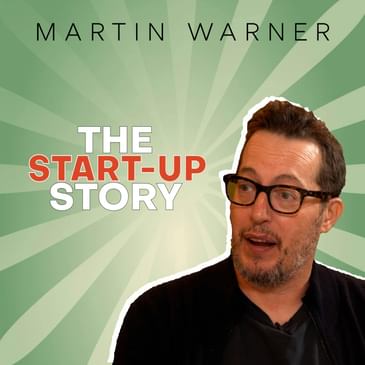

In this episode of India: A Story in the Making, we speak to Martin Warner, an inventor, innovator, educator, bestselling author, film producer, and Cannes Film Festival advisor, often referred to as the "UK's Elon Musk."
Martin delves into his journey from making his first million to his ground-breaking achievements in 3D printing and the sale of his company. He also discusses his bestselling book, The Startup Story, and shares his thoughts on what connects, fascinates, worries, and interests him about India.
If you are someone interested in discovering how the minds of inventors, innovators, and billionaires work, what makes India stand out for them, or just a fascinating conversation with a man who has big achievements and a big heart, this episode is for you.
ABOUT
Martin Warner
Founder of Autonomous Flight, an eVTOL urban air mobility firm. As the founder of Entrepreneur Seminar, Martin has mentored over 250,000 aspiring entrepreneurs worldwide. He is also a National Best-Selling Author, with his book 'The Startup Story' making the USA Today Best Seller Booklist. His achievements include co-founding botObjects, a 3D printing company acquired for $50MM, and making the top 100 global innovators list by Business Cloud.
https://x.com/martinwarner?lang=en
https://www.instagram.com/martinwarnerofficial/?hl=en-gb
Start-Up Ecosystem of India
India is the world’s third-largest start-up ecosystem, with over 125,000 start-ups and 111 unicorns valued at more than $350 billion. The sector is growing at an annual rate of 12-15%, with 2-3 new tech start-ups emerging daily. The proportion of women entrepreneurs has increased to 18% over the past five years. In June 2024, Indian start-ups raised $1.6 billion across 62 private equity and venture capital deals, up from $0.7 billion in June 2023, according to Venture Intelligence.
Did you know?
The average age of a start-up founder in India is 28.
FULL VIDEO
You Tube:
https://www.youtube.com/@loveenatandonofficial
PODCAST SMART LINK
https://bingepods.com/podcast/podcast-rn7moe
Loveena Tandon: HOST: SOCIAL MEDIA HANDLES
https://www.linkedin.com/in/loveenatandon/
Twitter/X
https://twitter.com/loveenatandon
https://www.instagram.com/loveenatandonofficial/?igshid=OGQ5ZDc2ODk2ZA%3D%3D
https://www.instagram.com/tandonloveena/?igsh=MW5tOHdlc3cyMGJrOA%3D%3D&utm_source=qr
Learn more about your ad choices. Visit megaphone.fm/adchoices
[00:00:00] My guest today is a billionaire with a golden heart.
[00:00:03] I wasn't overly sociable, I wasn't overly communicative, I was lost in movies, lost in a few books here and there.
[00:00:11] When did you make your first million?
[00:00:13] Early in my 20s, early 20s. It frustrates the hell out of me when I see that all entrepreneurs fail for the same reasons.
[00:00:21] So I always tell my kids try not to pick things that, particularly in your career, that thin your options.
[00:00:25] I haven't had a week off in 20 years.
[00:00:30] This is India, a story in the making and I'm your host Loveena Tandon.
[00:00:36] Hello and welcome to India, a story in the making.
[00:00:38] If you're curious to chisel the entrepreneur in you and you are curious about what it takes to transform
[00:00:46] an idea into a 500 million dollar exit in 17 months, you're at the right spot at the right time.
[00:00:57] My guest today is a remarkable individual, an innovator, an inventor, an educator,
[00:01:04] an author of the best-selling book, a film producer, advisor at Cannes Film Festival.
[00:01:14] And he's also called UK's Elon Musk. But for me, he is much more than that.
[00:01:23] I saw him in a conference and after he gave a speech and had the interaction,
[00:01:29] so many people circled him. And despite time crunch, he gave time to each one of them,
[00:01:39] listen to them with all his attention and with respect. And when I dug in and my instincts were right,
[00:01:48] I found out that while he was making his billions and his millions, and many people do that,
[00:01:54] he found time to fly and take cross-Atlantic flights to be with his son when it mattered to him,
[00:02:05] or just to do his homework. And for me, that truly makes a great man. With me today is a billionaire with
[00:02:15] a golden heart. That's what Martin Warner is for me. The author of the book, The Startup Story,
[00:02:24] An Entrepreneur's Journey from Idea to Exit. He and his co-partner Tom invented 3D printers that are
[00:02:34] pushing the boundaries in construction space, healthcare and whatnot. Martin, thank you for being
[00:02:43] a part of my show and agreeing to be on it. I was reading a book and I have to confess that I haven't
[00:02:49] finished. Do you know why? Look at my book, I have been marking it. And it is different in the sense that
[00:02:57] it's not, I was hoping to be in how-do and by the end of it, maybe have an exit company. But I found a story.
[00:03:06] And in between you give these golden one-liners and I have to go back. Sure, sure. There's plenty of those
[00:03:14] in the book. And it's an incredible journey. And I want to begin by asking and I want to quote it and
[00:03:19] I've written it here, which you say in your book, sometimes you don't have to find the best opportunities,
[00:03:26] they find you. And you have to be ready, ready for it. Tell me what happened up to the time in your life
[00:03:35] when you wrote this book that made you ready? And you see a lot of things and through a lens,
[00:03:43] you always wanted to be an actor and have seen a lot of, I see Clint Eastwood coming a lot in this book.
[00:03:51] Give us a lens to see your life. This book is, it was released in the US,
[00:03:55] it became a bestseller in October last year. And I was the better part of a year and a bit,
[00:04:02] you know, writing it. What led me to therefore something in what, early 2022,
[00:04:08] was this continual reflection about my life. And I think it goes in stages that what you do in terms
[00:04:14] of building your life in the first stage is very different to how you're kind of parenting and
[00:04:19] trying to get into this transition. So you can ultimately, let's say lead to the third part of
[00:04:23] your life, which you're slowing down and it's a different trajectory. And it's unfortunately
[00:04:26] in a different direction. And if we've done everything right, we're somewhat vicariously
[00:04:31] living our lives through our children or whatever. How old were you when you were doing...
[00:04:35] I think it's a good point to start at that I was 50 when I'd already prepared in my mind that
[00:04:42] this was a story to be told and I'd lined up a publisher. But what really kind of culminated in
[00:04:50] the journey was that I was in this process, this... If I was to look at this wider lens of my life in
[00:04:55] this kind of three chapters, I wanted to start ensuring that the practices of my life meant something.
[00:05:01] And that started with my children. And so I was diarising my life. Now back in the day,
[00:05:05] my mum only had Polaroids and pictures that started black and white to colour and these really old video
[00:05:12] cameras. But now everything can be captured. And I'm a traditionalist. I thought book... I didn't write
[00:05:17] the book necessarily to become a bestseller or to help my education business. I just wanted to pick
[00:05:23] a part of a story that I thought would be really valuable. And I thought my kids would like it. And I
[00:05:27] think the people around me that followed my training and teachings would like it. And it was so that my
[00:05:33] kids look back and say, my father wrote this. And this was... I remember this part of his life,
[00:05:38] even though it was only 17 months. And then it meant that it needed to be instructional.
[00:05:42] And so obviously, if you're a wannabe entrepreneur or an aspiring entrepreneur, or you're struggling
[00:05:46] with entrepreneurship, it's a... I think it's a useful book for people to read. And I had both those
[00:05:54] goals in mind when I wrote it.
[00:05:57] Oh, it's an incredible book to read. Because it at least tells you, as you say, you have to sell the
[00:06:04] idea, the story. And a lot of people sit with that idea for very, very long time, and many ideas,
[00:06:12] and never really go anywhere with it. But like a film, let me rewind a little bit to your childhood,
[00:06:19] and tell me about Martin, the boy.
[00:06:23] I was a bit of an introvert. There was a long period of my time where,
[00:06:29] you know, as a typical, somewhat quiet kid, I was observing my surroundings. I was definitely a little
[00:06:38] odd. Very eccentric, but probably couldn't define what eccentric was. So having normal behaviour,
[00:06:44] like not talking too much, or not having a large friend structure, felt very odd. Moved around a bit,
[00:06:51] very normal family. We weren't rich or anything like that. We never had those kind of privileges.
[00:07:01] And it was a somewhat challenging life.
[00:07:04] Prime man, really single mother.
[00:07:06] Yeah, it was a single mother that found a relationship, still in my life today,
[00:07:14] decades later, which is wonderful. But it was a different time growing up then. There was none of
[00:07:21] this digital media. And so being isolated was being isolated. You had to kind of figure those things
[00:07:26] out. And I think there's a lot of questions over my life and what I might go and do. And I always
[00:07:33] remember, I met this gentleman many years later, who remembered me from primary school. And he said,
[00:07:41] you know, this kid will do things. Once he knows what he wants, he'll achieve big things.
[00:07:47] But he doesn't say much. And if he's not interested, he'll do nothing. It's just the way he is.
[00:07:51] And he remembered me. And I remembered this piece of advice that was passed on. And I said,
[00:07:57] I don't know if I've lived up to that idea, but I'm still searching. And I think back then,
[00:08:02] I was absorbing everything in and trying to understand what the social structure was. I
[00:08:07] wasn't overly sociable. I wasn't overly communicative. I was lost in movies, lost in
[00:08:13] a few books here and there, and lost in this idea that, you know, what was really my calling on my
[00:08:20] life? And I was really driven. I just couldn't figure out what it was. And I think that eventually
[00:08:28] revealed itself, you know, as I kind of grew up with it. It is so interesting because a lot of
[00:08:34] what happens with the moment someone may meet my son or I would meet anyone else,
[00:08:38] I'd say, so what do you want to be? And that child is still flummoxing with the idea.
[00:08:46] How would you answer that question if someone was to ask you and at what stage?
[00:08:51] The question changes depending on what age you are, because I think when you're really young,
[00:08:55] there's nothing better than to kind of dream and wander and to think about the things that really
[00:09:01] excite you. Because hopefully, somewhere along that journey, you're going to be pulled in a
[00:09:06] direction of something that might not be quite that, but it perhaps possesses some of the
[00:09:10] attributes of what you really learned about yourself that you weren't really aware of. We don't
[00:09:14] know much when we're, you know, in a single digits or even our teens, but we hope to be inspired by
[00:09:20] things. So for me, I loved acting so much. I loved the film business. I'm not sure that I was ever
[00:09:26] supposed to be an actor, but like all these things, I wandered in that direction, tried a few things,
[00:09:32] but it led to a wonderful life in the film business, as well as figuring out that actually
[00:09:38] I was an inventor and entrepreneur, which came kind of in a somewhat of a duality.
[00:09:43] So if someone had said to me back then, what do you want to become when I was really young?
[00:09:47] I would have said, what could there be? What can I do? Because back then I was
[00:09:51] starved of opportunity. I couldn't understand it. If I had opportunity, I'd say, well,
[00:09:57] you know, these are the things that I like. And I think when I became a teenager, it became
[00:10:00] very clear of the type of things that I like, that individuality.
[00:10:05] When did it come to you?
[00:10:06] Well, in my early teens, I had strong thoughts about things that I liked. I loved playing chess.
[00:10:11] I liked thinking opportunities. I liked to debate particular subjects that were interesting.
[00:10:19] I always wanted to travel. It wasn't surprising, therefore, that the very... Back then when I
[00:10:23] was a kid, traveling was considered a luxury in a job. But once you got into that part on your resume
[00:10:29] or CV, I found myself traveling all the time. It led to me having a life in America, which I
[00:10:35] wouldn't trade for anything. And whilst it was an unconventional life, I've been able to have
[00:10:41] an existence in two countries and families in two countries. So the advice I say to people that
[00:10:48] to ask the right questions and to ask for help and to ask for opportunity, even if it's just ideas,
[00:10:55] ideas are incredibly valuable if they get us to think. When you get to your teens and you're kind of
[00:11:00] coming out of school, I know people now in their 40s and 50s that are in the wrong jobs that still
[00:11:05] don't know what they want to do. And they're going through some kind of crisis. It's wonderful if you
[00:11:10] can find the attributes of something that you really enjoy, which is really learning the knowledge
[00:11:16] about ourselves. What is it that works? Oh, yeah.
[00:11:18] The need structure of ourselves. And I've noticed there's a pattern and I'll put three things out
[00:11:23] there that I think are super important that you should try and figure out in your teens, but not
[00:11:28] as you're a little kid. You know, being an astronaut or fireman or films is absolutely fine. But later,
[00:11:35] you want to say to yourself, don't do something that you're not absolutely sure you're passionate about.
[00:11:40] And then to ask yourself a question if there's a profession next to the activity, because one's a hobby
[00:11:45] and one's a profession. So if we're trying to figure out career, we need to understand that
[00:11:50] there's a journey. And then the third thing I say to people, and this is the hardest one,
[00:11:53] is try to do something that has longevity because short termism is, it has many, many problems in
[00:12:00] and of itself as a subject. But if we have something that doesn't narrow in its field, so I always say to
[00:12:06] my kids, try not to pick things that, particularly in your career, that thin your options. When you're young,
[00:12:11] you want to take something that has an umbrella of options. So if we go into the world of product management,
[00:12:16] it can lead to all kinds of interesting jobs. And it's the same with hobbies. Hopefully we have a hobby that,
[00:12:22] you know, has a group and it has a structure and it has an outward facing opportunity. Otherwise, life becomes
[00:12:28] self-isolating. And I think that's something that is a bit of an advanced concept because people don't really think about it.
[00:12:35] They fall into something that narrows out quite quickly.
[00:12:39] Hmm. So when did it reveal to you? I mean, you just said it revealed to me. And what and how did it reveal to you?
[00:12:47] Well, you know, a couple of things. First of all, the...
[00:12:48] And what age also?
[00:12:49] Yeah. So when I was young, I was an outright creative and people thought a big picture thinker,
[00:12:56] whether it was at school, you know, I...
[00:12:58] Example?
[00:12:59] I think I looked... So examples that I could see products and I liked to see how they were built. And I
[00:13:04] could understand the use and the application for things that you couldn't touch. And this no
[00:13:09] wonder led to venture capital product, you know, product development, ultimately entrepreneurship.
[00:13:13] But I could not frame any of that. I couldn't tell you any of that.
[00:13:15] Give me an example. Give me an example.
[00:13:17] So a great example was that I saw theater productions moving from film much quicker. And actually,
[00:13:25] when I was young, things like Beauty and the Beast, I saw that production before it was ever out. And
[00:13:30] same with Lion King. And I saw different views of that experience, the park experiences at Disney
[00:13:35] ultimately evolved. And then I saw the digitization of that because I followed the same thought. It
[00:13:40] was a eccentric, creative or theatrical side of my life. It would eventually kind of manifest itself in
[00:13:47] film. These were important. I also saw mobile phones as being smart.
[00:13:53] And how long before? So give us a timeline, sir.
[00:13:57] So if you think about iPhones, even BlackBrizz. So I think of BlackBrizz in my late 20s.
[00:14:02] In my early 20s, the idea of pre-flip phone, I could see higher bandwidth and services coming
[00:14:13] through faster data widths in order to create these applications that we may or may not find useful.
[00:14:20] And in my early days, because I've always thought about productivity, I think about
[00:14:23] the calendar tasks. And I still to this day in AI, think about these principal daily tools. And I saw
[00:14:30] them on the phone. And those now are a small part of everything we do on the smartphone. But it was way
[00:14:39] too early. I mean, the smartphone had many different iterations before it became something that was really usable.
[00:14:45] And I would argue that Apple didn't invent that, but the iPhone really turned it mainstream.
[00:14:51] BlackBrizz had a lot of functionality.
[00:14:52] Yeah. Some of you all went through that Nokia and then BlackBrizz phase in our lives. Oh my God,
[00:14:58] that was like we've arrived if we have that. And so how did you, when it was revealed to you that this is what
[00:15:07] you can do, you can see, you have, you have your visionary. And how did you translate that into your life
[00:15:14] and practical decisions and taking on a subject or a job?
[00:15:19] What was revealed to me was really that I wanted to build things and I wanted to be inspired by things
[00:15:25] and that the early forms of me, I mean, I was accused of, you know, being a maverick and someone that may
[00:15:32] not sit still because he's going to go and want to change things or shake things up. This wasn't great
[00:15:37] for corporate culture. Not everyone, now they want people that shake things up and they even want
[00:15:41] entrepreneurs to be like entrepreneurs, you know, demonstrate the entrepreneurial innovative
[00:15:47] flair. And which years are we talking about? Sorry? Which years are we talking about now?
[00:15:49] In my late teens, early twenties, it went right away throughout my twenties, it just accelerated. So I
[00:15:55] was someone that wanted to invent, wanted to think through things, was always going to follow his own
[00:16:01] passion, didn't really care about the bricks and mortar of a job. Nineties.
[00:16:06] The nineties, for sure. And, and of course that's quite paradoxical because I spent almost nine
[00:16:13] years at JP Morgan, but I went through many jobs, you know, from, from the back office, middle and
[00:16:19] front office to traveling to Wall Street, all over the place to go into the dot com era, you know,
[00:16:25] venture capital, all these different things that happen in one place, M&A. And it, but it informed me a lot
[00:16:31] about who I was, but it also reinforced something really magical later. And that's that this concept
[00:16:37] of an entrepreneur and actually building things is one thing. Being able to control the destiny of
[00:16:42] those things required something more than just working in large organizations. So the revealing
[00:16:48] of, I like to build things. Passion was never a problem because I didn't find things that weren't
[00:16:54] passionate about. Keeping an open mind, having a debate about something that you could one day
[00:17:01] dispassionately let it sell and let it go away because you could start a new chapter
[00:17:05] were attributes that ultimately led me to entrepreneurship. And then I found something
[00:17:09] else that I was obsessive. My personality was that when I locked onto something, there was a persistency
[00:17:15] about myself that was, I mean, it's not, I wouldn't say it was unmatched, but few people
[00:17:22] demonstrate. Of course there are others. And those people I think share the same opportunity. You
[00:17:26] either spectacularly found or you found something and you spectacularly succeed. And so I've done
[00:17:32] that throughout. And when I locked horns with entrepreneurship in my late twenties, I wanted
[00:17:37] to rewrite that subject. I wanted to make it a science. I was that obsessed with it. Ultimately,
[00:17:42] I ended up having a long teaching career in it. All these things were revealed from,
[00:17:48] from ultimately born into build and go into areas that required different sets of tools as I got older.
[00:17:54] Where did that persistence, obsession or drive to unpick and then make it different come from?
[00:18:04] Where was it coming from? Well, I think in my, my, my teens, I didn't understand it, but I,
[00:18:09] I locked horns with what I call micro subjects and started to think about it. I also was trying
[00:18:15] to make money. And, and you know, when you're that young, you know, whether it's working in a
[00:18:18] supermarket and all these things, I was thinking, oh my God, there's gotta be something better here.
[00:18:22] And I was doing a lot of research. In my, in my twenties, I was, I wouldn't call it moonlighting. I
[00:18:30] just had many things going on. And then I learned the valuable lesson that less is more.
[00:18:35] That as much energy as I had and as fast as I was thinking, it didn't matter that you had to
[00:18:42] prioritize and you had to execute. So in my early twenties, I picked up different things
[00:18:47] as I kind of had a job and was trying to figure out how I build stuff and do stuff that I think is
[00:18:53] valuable and interesting. And I was at this point, I might point out in the early twenties, hadn't really
[00:18:59] said that there needed to be some great supportive economic model. And this was more in my mid twenties,
[00:19:05] um, that, that, that I saw it. You're back in my kind of late teens, early twenties, it was,
[00:19:12] well, do you want to be a lawyer and accountant and what job will be around in the future and all
[00:19:15] this business? And so I did a little bit of that because I had no choice and that kind of got the
[00:19:20] jobs going and the jobs got bigger, but the same token, I wasn't going to change who I was.
[00:19:26] I was going to pursue things that I was passionate about. I wanted to build things and I would
[00:19:31] make that work with whatever tools I had. So I made that work in the travel business. I made that
[00:19:36] work in investment banking and eventually I just became an entrepreneur. Ah, I get you now. So,
[00:19:42] because what happens with people is that they have ideas and they have passion and then they have
[00:19:47] limitations of paying a mortgage and one gets stuck in between. How did you make do of that? And this is
[00:19:55] for people like me, people like many others who are listening and figuring out that from normal
[00:20:02] upbringing, from a very not very rich background, you've come to this. How did you manage it in
[00:20:12] quick time? Yeah. And there's multiple paths. And this is, um, when I hear this on some of the
[00:20:18] webinars that when I'm sharing knowledge in these live sessions, I say, that's probably a reason to do my
[00:20:23] program or other programs that think about this transition or what we call the, the orbiting or
[00:20:28] transitionary entrepreneur. So how do you get this epiphany of this great idea, which comes in a number
[00:20:33] of different forms. And when is the right time to consider the, the, the, the, the jump and you have
[00:20:39] different limitations and there's not one path. And so people that are, uh, financially restrained by, uh,
[00:20:46] uh, an income, um, and, and they've not gone and saved enough in order to make that transition or
[00:20:51] create a cushion. I've got to look for a different resourcing model and co-founding it with people
[00:20:56] and share that, that, that kind of, uh, uh, pie, um, or the ratio of that pie in order to get into
[00:21:03] something that they want to do. And so there are actually some methodologies that are not,
[00:21:07] you don't have to reinvent it. I mean, there's actually four different, I won't spend all that time
[00:21:10] right now, but there's four different use cases that people can apply in order to go and seek
[00:21:15] their dreams. But the, the time it takes depends on the steps they've already taken. Because as you
[00:21:21] said, if you're putting food on the table and you've got kids and you want to go and pursue a new,
[00:21:26] you're a new product and you think you've got everything, actually the art is to do that at the
[00:21:32] idea stage. The idea is to, the concept to support the idea is to say how much do you know about the
[00:21:38] product or service? How much have you figured out about what the market is? You've solved the product.
[00:21:43] Is it defensible? What's the economic model? Have you figured out just where those customers are?
[00:21:48] In other words, what's the mini business case? The more we can do without committing hard cash and
[00:21:53] hard time, the better we'll be actually making the transition into entrepreneurship. And that also,
[00:21:59] I have an old saying that life favors the prepared. Even if you haven't prepared yourself for
[00:22:04] entrepreneurship, it's never too late to actually do that preparation while you're doing your,
[00:22:10] your, let's call it your day job, in order to make the second and third step, that transition.
[00:22:16] And some people will do that asynchronously and other people can be courageous enough to do that
[00:22:23] sequentially. In other words, stop and start entrepreneurship. And so there's not one model,
[00:22:29] but they're not limitless. And actually it can be taught and it does require a structure. Otherwise,
[00:22:35] people are smart enough, they can, they can stumble into it. But there's obviously risks.
[00:22:40] And that's where your entrepreneurial seminars come age.
[00:22:44] For me, I, I, I took great product risk because of my confidence in products.
[00:22:50] And therefore I was at times, it makes me feel like the Branson-like era of, you know,
[00:22:55] fly by the seat of your pants. I'd like to think I didn't quite do that. And I always had money. I
[00:23:00] always, I've always conservative enough that I hopefully wasn't going to go bankrupt or put
[00:23:03] myself in trouble. But, but nonetheless, I did take a ton of product risk because a bit like the 3D
[00:23:10] printing business, we thought we were changing the world. We thought every smart home would have a
[00:23:14] 3D printer. And even though we did remarkably well, we thought it was billions and billions
[00:23:19] and billions of dollars. And it wasn't that it needed to be. We thought this was so big that it
[00:23:24] should transform people's lives. Instead, it transformed different parts of industries.
[00:23:28] Yes. Which is, which is great. Which is great.
[00:23:31] Yes. It's had a lot of views.
[00:23:32] My daughter was very excited when I told her that I'm meeting you because she has a 3D printer in her
[00:23:36] school. Yeah. So they're my kids. And it's wonderful because we were able to talk to their
[00:23:42] schools. We were able to share 3D printers with, you know, 3D printers off to them. And we definitely
[00:23:49] had a historic and significant influence in consumer 3D printing or education-based 3D printing. And for
[00:23:58] that, we can, you know, we can be, we can be proud. When did you make your first million? How old were you?
[00:24:05] Early in my twenties, early twenties. I was, when you say first, I didn't make a million in one year.
[00:24:11] It was many years. Yes. That's what, yeah. But tallying over was 23, which was an awful lot of money back then.
[00:24:22] Were you targeting to make that? I was aware of the number, but no, I never thought of things like that.
[00:24:28] Back then from school, first of all, I had to do everything in secrecy because if you didn't,
[00:24:36] if people back there wanted to box you in one place and if you didn't come from anything,
[00:24:41] you, you, you couldn't be judged that way. And so I went out and, you know, sold this and that.
[00:24:48] And one of the biggest things that I did was I became a, what people would call this kind of very
[00:24:52] negative thing that ticket tout, you know, where I would, I figured out this really simple view that
[00:24:57] if I could buy tickets and hold them long enough, I could sell them at a premium.
[00:25:01] You were selling from 11 games and then tickets?
[00:25:04] Well, I sold many other things at 11 and 12 from belts from market stores and God knows what,
[00:25:10] renting Atari games, which was the next big thing. I did everything, anything. I was a trader or back then
[00:25:17] there was a program on TV called Minder. And there was this interesting,
[00:25:21] salubrious character called Arthur Daly. And back then it was a joke to call me because I could
[00:25:26] sell all these things. I was nothing like him, but it wasn't a great analogy either.
[00:25:31] But, but, but I did all these different things in order to make money. But, but I think the great
[00:25:37] secret was that I found out how to sell tickets and how to replenish that money and buy more tickets.
[00:25:44] And I became very reliable at doing that at a time when there was no Live Nation,
[00:25:48] no Ticketmaster, there was no online marketplace. So I never, so me it was survival and looking to do
[00:25:54] more and more. Oh, I see. So you were, so how, how are you looking at money? I mean,
[00:25:59] that was a means for reaching. I wanted to, I wanted to, obviously I wanted to make money because
[00:26:04] I came from, from nothing. And I wanted to do bigger things. And so there were two things in my mind.
[00:26:11] One, what kind of life could I have for a future family? And two, what would I do with that money if,
[00:26:16] if I made it? And slowly I built more and more in order to put myself in a position where I wasn't
[00:26:22] financially constrained. One thing I learned is that if you're financially constrained,
[00:26:26] you narrow your field of thought. It changes everything. Yeah. Right. Not just your timeline
[00:26:32] for acceptance of activity, but also your ability to take risk in the first place. I didn't want to
[00:26:39] have those constraints. And they're really, it's one thing using other people's money, fundraising and all
[00:26:44] the rest of it. But if you're struggling, it was very hard to be open-minded. And I didn't want that
[00:26:49] to be in. And of course, in my early days, and as those risks got bigger and bigger, you find out
[00:26:55] that they're still with you in some form. So your goal is to try and limit them. Otherwise, you can't
[00:27:00] take risk. Very difficult. So if someone who's wanting to be an entrepreneur and is on a day job,
[00:27:08] absolutely bored, or has been a serial entrepreneur and has consistently failed, what are the three or
[00:27:16] five top things you think they need to tell themselves to assess themselves? Whether they've
[00:27:21] started or rethinking it or about to get into it, I think the first thing to realise is that you don't
[00:27:27] have to be the entrepreneur on your own taking all the risk. First of all, decide what model you want
[00:27:33] to be in. And I offer a really simple view about the traits of entrepreneurship. And I think when we're
[00:27:39] at conference, I gave a quick analogy. And that's that entrepreneurs join startups at different forms
[00:27:45] that have got funding and can learn entrepreneurship with others and be part of an entrepreneurial
[00:27:49] venture. And if they succeed with that company, you can get stock options and have a rewarding life.
[00:27:56] Another way of entrepreneurship is you learn something that is very much done already and put your own
[00:28:00] spin on it. And it's probably going to be localised in the beginning. And I use a restaurant as an example
[00:28:06] of that. We'll never, for a while, require anything other than a restaurant. The restaurants will, in some
[00:28:13] form or another, will be around. And again, you can franchise those, spin them off and open up other chains.
[00:28:18] And over time, it can transpose to another rewarding outcome. And the other one is that you can do something
[00:28:24] that has much higher risk. And it requires a lot more capital. And I call that the kind of volcano
[00:28:31] island where you're doing two things. You're mining survival and you're also mining gold or whatever
[00:28:36] it is you're after. And you've got to do that under the other clocks ticking much faster. And the risk
[00:28:40] reward is much greater. So in that instance, you're probably finding something. Therefore, you're a
[00:28:47] founder or a co-founder or a set of co-founders doing something. In the other, you can still be a
[00:28:52] founder or you can join a company. But decide the level of risk. And we're all incomplete. And I'm
[00:28:58] certainly incomplete. And so you don't have to do everything. The first thing is to figure out just
[00:29:03] how much risk you really want to take. Third one is we work in commerce or in industry,
[00:29:09] and we're making that transition over. But you find yourself in that really simple,
[00:29:15] what type of business am I going to enter? Right. And then the next four are traits as an entrepreneur.
[00:29:22] The first one is, if you're going to be an entrepreneur, you're going to take on more
[00:29:26] risk and more stress. And so this idea that the buck stops with you is somewhat true in any three
[00:29:32] examples. Be prepared to take on a little more stress. And that leads to the flip side of the
[00:29:41] coin in my second example, is you have to have a life or a home that doesn't distract you from that
[00:29:47] heightened risk. It's a bit like if you're on medication, lower your stress. Very difficult
[00:29:53] because you've been thrusted upon you. But with entrepreneurship, you can choose. You're going to
[00:29:57] be solving daily problems. And so that's going to be harder or in order of level of magnitude,
[00:30:04] harder than working in industry. And so it helps if you can balance out your life so you're not
[00:30:10] dealing with both. People do it with both, but it's hard. And then there is a fourth one,
[00:30:15] but I think it leads to one of these three. And that's that don't take this journey without an
[00:30:19] enormous, this is a cliched argument, but some people have it, but you can learn it and you can
[00:30:23] just arrive at it. And that's, you need to find the passion, whether it's there because you've been
[00:30:28] drawn towards an idea or you've learned about what someone's doing and you think, wow, my skills are
[00:30:34] valuable here. And you become passionate about it, but without it, it will never, it will never be
[00:30:40] rewarding when you're in those really dark moments. This book is a great example of two entrepreneurs
[00:30:46] that are really passionate about something and desire and interest. Otherwise it's just not
[00:30:51] worth it. It's too hard a journey. And I have two very quick ones, because you've offered four,
[00:30:57] there are two other really important ones and that's that don't do anything alone. And there are great,
[00:31:02] again, there are programs you can, or in fact we have free material, you don't even have to do the
[00:31:06] program to learn when's the right time to find co-founders. Entrepreneurship is not,
[00:31:12] no one becomes successful on their own. So you have to find what you're incomplete at and then
[00:31:17] understand just the basic steps set up right. All this has been made, it frustrates the hell out of
[00:31:23] me when I see that all entrepreneurs fail for the same reasons. How is that possible? When we have so
[00:31:29] many great examples of how to set up the company. And what is the same reason? Well, first of all,
[00:31:35] they hire too quickly. They set up with the wrong structure in place. They run out of money fast
[00:31:40] because they can't monetize customers. And they don't understand the voice of the customer. They've
[00:31:44] not actually figured out who the customer really is. The list goes on, but that's a short list of
[00:31:48] great reasons that everyone fails. And that businesses after five years, 75 to 80 percent or 81 percent in
[00:31:56] America, don't survive. And so those would be the big five things I'd consider. Is everyone an
[00:32:04] entrepreneur or can be, or you have to be a certain kind?
[00:32:09] It's a great question because I believe that there's a demanding set of skills that everyone
[00:32:16] can learn, but not everyone necessarily wants to do it. If you're not cut out for hard work or problem
[00:32:22] solving, or you're not willing to share and work together, entrepreneurship is a hard place to be.
[00:32:29] And so not everyone will end up in business for themselves or necessarily working for a demanding
[00:32:36] startup that's already been well-funded and therefore they're going to be incentivized on
[00:32:40] that growth opportunity. But it seems a very sad world if someone is not allowed the opportunity to
[00:32:48] try. In other words, everyone deserves the opportunity to become an entrepreneur. But I don't believe
[00:32:54] necessary entrepreneurship is necessary for everyone.
[00:32:57] Hmm, I understand. And I see as, oh my God, the stress that you mentioned. How would you deal
[00:33:04] with stress? Even if you love something and passionate about something and you know your way,
[00:33:10] how would you in your down moments have dealt with it?
[00:33:14] I carry, and I think even right now, even Elon Musk, I think that it doesn't matter where you are in
[00:33:20] that pyramid and everywhere you're measuring yourself, whether it's your net worth or level
[00:33:25] of responsibilities. Also our personalities play a big role in the way we look at fear and caution
[00:33:32] and risk. And if we've also got complicated family structures, this doesn't help. So I think it's
[00:33:37] a really complicated question. But I carry as much stress now as I did back then in a different form,
[00:33:44] right? Because I'm, because I maybe, maybe work is a large part of my oxygen. So I, I'm craving
[00:33:53] insights and, and, and, and are very driven and, and I'm motivated by, by, by change and things that
[00:34:00] I'm involved in. But I would say that the three things when I get really stressed is that I try to
[00:34:05] say what's the floor and the ceiling. So what's the worst something can be and what's the ceiling? And am I
[00:34:10] somewhere in the middle? If I'm swimming, then I've probably got a chance that I'll, I'll get there.
[00:34:15] If I'm, if I'm moving towards the floor, well, I know what my lowest risk is. And at that point,
[00:34:20] I've already planned B, C, D. My mind would, so I will say to myself, what's the worst that can happen?
[00:34:27] So how much money have I got for this venture? What's the worst that can happen? Is it going to have,
[00:34:31] have brand risk? And you know, are people's lives going to be upset, which I'm really not comfortable with,
[00:34:35] but, but, but, but I manage. So this is the first thing is I, I, I like to know the worst outcome.
[00:34:42] And I like to think that I could fare those waters, you know, or travel those waters well,
[00:34:47] and swim somewhere above the, the, the, the, the midpoint. The second thing I do is when I'm really
[00:34:52] stuck, I move away, I step away from it all. And you go for a walk. Yeah. And then you come back.
[00:34:58] Correct. So I, I, I walk on, but 15, 17,000 steps a day. I've seen many walks in this book.
[00:35:03] Yeah. I walk a lot and, and, and, and often I'll sit there and I don't need music and I just think,
[00:35:09] and the fresh air, I'm an outdoors person for sure. This is huge. So time away,
[00:35:15] sometimes it requires a day or two. I don't have the luxury of a week. I don't know what a week off is.
[00:35:20] So you've not, there's a lot of people who think, oh, you're a billionaire, millionaire. Now it's not,
[00:35:26] no stress sitting down, have weeks off. That's not your life. I haven't had a week off in 20 years.
[00:35:34] What I have, what I have, I literally, what I have had are holidays with the kids where I'm still
[00:35:40] working. And, and so that's not really switching off. That is providing for your family, making sure
[00:35:45] everyone's happy joining for dinner, but I'm in my mind working, still on call, still doing things.
[00:35:53] And, and that's afforded me a great life. Don't get me wrong. It's not for everyone.
[00:35:57] I don't advocate that. Sometimes I'm deeply envious that people can separate five days and say,
[00:36:03] Saturday and Sunday is my time off. It's, I respect it. I think it's wonderful.
[00:36:08] And maybe my life will be different, but I've never made it work.
[00:36:11] It's just not my life. And then the third thing I do is I say to myself,
[00:36:15] do I really care? And, and, and I love this idea and it's not a flippant view, but,
[00:36:20] and I don't shout it out, but I say to myself, if this particular decision I'm making
[00:36:25] informs me of that floor that I might hit, and maybe it's something worse. Do I really care?
[00:36:31] Like, is it really worth doing? And sometimes when I look at that, I get to look at the polarity
[00:36:36] and say to myself, yeah, I just got to do it.
[00:36:38] I'll just leave it. It's important.
[00:36:39] I'm going to do it. Yeah.
[00:36:40] But in this, I mean, what, what's really amazing is, and I have to go to the next point very quickly,
[00:36:45] but, um, you're working in your mind all the time, I'm thinking, and yet you flew miles away
[00:36:52] and be with your son on the playground and did that homework. When were you doing that with him?
[00:36:57] You're a hundred percent there.
[00:36:58] Mm-hmm. Well, I, I can't say that throughout my life that with the three kids that, um,
[00:37:05] my mind is hyperactive and, uh, it's always thinking about many different things. And it's a strange
[00:37:11] thing that I thought a lot about and not concluded too much. I know, I know that I can get distracted.
[00:37:17] I know that I can think very fast and I've got lots of things going on. And this idea that you can be
[00:37:21] in some kind of meditational thing where you focus on one thing and that's your child.
[00:37:25] I think my brain's just not doing that. What I can say is that my level of effort to focus on my
[00:37:34] children is unbelievable. It is the number one thing in my life by far, and that I am as present
[00:37:42] as I'm physically capable of being with this, with, with what I'm doing at the time. So when I was young,
[00:37:48] I remember my, when our kids loved football and I was a little overweight at the time,
[00:37:52] but I would die on playing in order to make sure he could play football enough.
[00:37:59] Even if that meant, and I thought, God, I just got to lose weight. I'm going to make this easier for
[00:38:03] myself. I couldn't hear too much energy. And, and it was, it didn't matter that, that it,
[00:38:09] I couldn't be there for every, uh, event at school, but boy, did I try to, to do that.
[00:38:18] And that's what it is. Trying. That's, it's trying.
[00:38:21] One year I flew every week between London. I mean, I was jet lagged for a whole year,
[00:38:27] and Virgin's frequent flyer as well, ironically that year. So to imagine that you, you get on a
[00:38:31] plane for 3000 miles every week, you just, you just never get out of the jet lag. That was not
[00:38:37] sensible. And to be with them in the weekend. Yeah. Just, just so I could feel normal at the time.
[00:38:42] I found a better arrangement, but, but, but it felt normal at the time for me.
[00:38:46] Coming to India, which is seen to be the third largest startup capital, seeing people are seeing
[00:38:52] that. And I, I, I'm, I interviewed someone and he said, I have a house in Gujarat, an Englishman.
[00:38:58] And why? Because in Gujarat, in India are the best traders. And that's where I can learn my trade
[00:39:04] from and you know, best entrepreneurs. What is, what is your view? You've been to India,
[00:39:09] tell me your India visit and, and how you see entrepreneurship in there.
[00:39:14] And I, and I preface it with, I've been to Mumbai and I've been to neighboring areas and,
[00:39:19] but I've done a lot about thinking about different products and services and how I work with India.
[00:39:25] I've also had offers for companies from, from Indian companies. Um, and there's a number of
[00:39:30] observations I made and, and, and it's good. I, I, I put them out there so that they can be corrected.
[00:39:36] And so I, I think first of all, there's this, um, innate hunger that comes from just survival,
[00:39:43] right? It's just a big country. Um, it's impoverished in many areas. It struggles, it's every,
[00:39:48] it balances out with China. I mean, they're neck and neck in terms of just the size of around 1.4
[00:39:54] billion, huge. Um, all the challenges of, of, of a continent or subcontinent, right?
[00:40:00] And you can't even begin to understand until you've had some form of interaction. Um, and,
[00:40:06] and even as we talked earlier, the structure of India is, is complicated, but the dialects and
[00:40:11] the way they work with each other, and then the lack of infrastructure in places makes distribution
[00:40:16] hard. It also, the, the political and social economics are difficult. And then therefore,
[00:40:22] if that's the case, finding an economic model to trade with India. So I call it the rule of threes.
[00:40:27] If I want to sell a company to India, it will be a third of the value because of its appeal
[00:40:33] to all of the Indian market, which has already got challenges. But also we can't look at the,
[00:40:40] the, these small little hubs that are doing extreme well, because there is capital, there is success,
[00:40:46] there is industry that has succeeded and it's exceeded by, by and large part of this devotion
[00:40:53] to education is important. We talked briefly about that. It's very clear, an undying hunger that if
[00:40:59] they don't, if they're not hungry for something to improve their lives, they won't get there. And over
[00:41:03] time, larger companies seeing this incredible opportunity in coming to places like Mumbai,
[00:41:10] it's why I found myself there. We're, you know, propelled by large companies that are willing to invest in,
[00:41:15] in, in, in the area. Um, so I, I find it a, a very tricky and, and, and, and challenging market,
[00:41:25] but also has this gigantic opportunity. If they can figure out some of the basic things, it's not,
[00:41:32] it's not how bright the people are or the hunger that is not lacking. I became curious and I started to
[00:41:38] work with, uh, work with, with more Indians and Indian companies and, and then having the privilege, uh,
[00:41:43] for, for them to want to buy my products or indeed a company was, was shocking to me and to, to, to realize that
[00:41:49] there's just this incredible opportunity to kind of link the country up better, uh, and to do more with this
[00:41:56] incredible, uh, set of resources.
[00:41:58] There is seen a lot of buzz about, um, uh, India and how do you, how do you compare as you were comparing?
[00:42:06] Uh, do you also see, um, uh, it is an aspect thing to feel that?
[00:42:12] The, the market itself. I think that, uh,
[00:42:16] The countries.
[00:42:16] Right. It's just to 7.45 billion people and 1.45, I think the 1.15 and it's right there with China. So we,
[00:42:25] you can't ignore markets that are that big, um, and no one's stupid. I don't, I don't bet that the Chinese
[00:42:32] or Indians or English are any more smarter than anyone else. I think humans are just smart. They need opportunity
[00:42:38] and they need safety. So we get some, it's the, uh, the simple structure of, uh, Maslow's hierarchy, right?
[00:42:45] We have to get off the safety needs in order to develop. Um, and so it just represents this incredible opportunity
[00:42:51] because it is developing now. So I think as more infrastructure comes in and more access to education
[00:42:56] and the linking up of the, uh, of, of this economy presents an unprecedented opportunity in terms of
[00:43:05] GDP, that's for sure. Um, and, and, and you can tell just from what it's GP is now to say where China
[00:43:11] is, uh, that it's going to be something that, um, in time will catch up when it does, it's going to be,
[00:43:18] it's going to have an even greater dominance in the market. It also, uh, has an openness to
[00:43:24] dialect and openness to language that places like China don't have. It also has a position in the
[00:43:29] world, trade routes that the British kind of understood a long time ago that it can access
[00:43:36] better than anyone else. Uh, so think about that opportunity as that kind of evolves. So in terms of
[00:43:41] the next big thing, I think it's a question that we all, everyone wants to look at that market and
[00:43:48] access that market and be part of that market sees it. And we see it in certain parts, like certain
[00:43:53] industries like consumption right now. It's versioning, it's moving. Um, it needs to unlock more of those, uh,
[00:43:59] those opportunities, but absolutely huge opportunity.
[00:44:04] You told me that you've grown up, I mean, every, every British person actually really grows up with
[00:44:10] food and people who are Indian and, um, having done business with them. Do you see entrepreneurship
[00:44:16] in it? How do you see with entrepreneurs or Indian entrepreneurs?
[00:44:22] Well, first of all, there's plenty of them. Yes. And by the way, they're, they're not just in India,
[00:44:28] they're everywhere. Yes. And so we're feeling, we're feeling the effects of some of the innovations that are not
[00:44:32] coming from America. They're not coming from China, they're coming from India. And, and so I just see
[00:44:38] that continue a bit like Israel. People, uh, discounted Israel and they've got another, you know,
[00:44:43] sharp amount of entrepreneurs and education. And I think it's just going to expand. And there's
[00:44:49] something about the Indian culture, about latching on to education and insight. You give them with it,
[00:44:54] you give them it, they'll run with it. Yeah. They'll run with it fast. Now imagine if you could apply
[00:44:58] resources to that. And that's why a lot of, and I'm super excited to see this partly in England,
[00:45:03] but a lot in America where venture capitalists are saying, we've got to get on the ground there.
[00:45:09] And we've got to provide capital. Yes. This is huge. Yes. It doesn't matter that, um, in this kind of,
[00:45:14] unfortunately now regionalizing world versus globalizing. Um, so it's becoming more local
[00:45:20] for a lot of reasons. It goes in cycles, right? But, but I think this, this idea that countries want to
[00:45:25] collaborate and help is only going to, um, help entrepreneurs in India. As for the subject of
[00:45:30] entrepreneurship, I think there's too many influences, particularly in cinema as an example,
[00:45:36] where entrepreneurship has become very sexy. Uh, everyone wants to be an entrepreneur. Yeah. So you
[00:45:41] add that to this, this hunger and, and, um, need for education. Look at the size of your country.
[00:45:48] You're going to generate infinitely more entrepreneurs than, than, than England can. Yeah. Um,
[00:45:53] I see, I see expanding fast. Fast. You know, uh, I don't, I had such,
[00:46:00] I would have talked forever because I have yet to finish this book. And the one part that I haven't
[00:46:05] spoken about is the film, the film man in you, the actor in you. Was it right that you wanted to be
[00:46:11] somewhere in Brad Pitt and Clint Eastwood? It was kind of a joke that growing up my, my hero was Clint Eastwood, his movies.
[00:46:22] Yes. And I, uh, became even more in awe of him as a director than, than, than, than kind of the typecast
[00:46:27] roles that he played. Um, but you know, the, the, the, the, the Westerns and the, the, the, the detective, um,
[00:46:33] films were incredible. I, I never, I never really saw myself as any one of those actors directly, other
[00:46:40] than the fact that acting seems so much fun. And I had this creative side of me. I later found that my,
[00:46:45] my life would be behind the camera and it would be doing other things in film rather than, I wasn't
[00:46:50] going to become an actor. I haven't said that. Um, I always, I made a promise that other than my,
[00:46:56] my life in, in AI now that, um, this book, if it became a bestseller, I made this bad gamble that I
[00:47:02] would, uh, adapt it to a screenplay. It was written to be a film as well. It was deep enough with the
[00:47:09] characters and now I've, I've got to live up to that. So we'll see whether I can fly all of my skills.
[00:47:14] Who's going to play you? Well, we don't know. You? No, no, definitely not me. I don't know why it's
[00:47:19] going to, it's going to have, um, someone, um, someone, someone, someone that's already got a pew
[00:47:23] because I've got to worry about the economics of the movie. It just can't be an unknown.
[00:47:29] So we'll see, we'll see what happens. But, but I've made that kind of, um, commitment that,
[00:47:34] that would do it. So I've, I've begun that, that process. Martin,
[00:47:38] you can, and this would be my second last probably question before we go to high five,
[00:47:42] is that you are an, you are, you can see you're a visionary and you are tech creative,
[00:47:51] a very lateral and horizontal combination in life. You can see what's coming.
[00:47:58] I wouldn't call myself a crystal grazer, but I definitely, I've got views on it.
[00:48:03] Yes. You're a visionary without, uh, as being an astrologer and a crystal grazer.
[00:48:08] Just by way of AI is...
[00:48:10] I certainly try to look at it. That's for sure the future.
[00:48:13] Vis-a-vis AI, a lot of people feel scared about it. You're working in it as of now.
[00:48:19] How should we react?
[00:48:23] What, or build a relationship with it? What do you see coming?
[00:48:27] A bit like things that became before, you go right the way back to, you know, the steam train and, and, and the safety issues around it and, and the first airplanes and all the regulation, the internet, and no one even thought of privacy.
[00:48:40] And we've now got this new thing that's, that's magnitude, in order of magnitude is faster.
[00:48:47] So it's going to drive through things quicker, like, like, like, like some kind of, you know, agent that's going to penetrate like you see in the films, like the information's moving 10 times as fast.
[00:48:57] And, and so the ability to worry about the energy and that the compute, we've got these large organizations, trillion dollar organizations now building super chips.
[00:49:07] If that continues, and I worry about being able to sustain that.
[00:49:12] But if that is sustained, then the compute power is going to allow our lives to transform faster than ever.
[00:49:19] Think of, you know, high speed bandwidth, a hundred times the speed of what we've had today.
[00:49:25] What could happen in that is that, that we have to be somewhat cautious around our identities, privacy in general, at large,
[00:49:35] things like trade secrets and the way that we've evolved our traditional legal structures could change.
[00:49:41] The ability to understand life as we see it.
[00:49:44] So it used to be that there was human and there was digital and there was print form.
[00:49:49] Well, now, you know, we could put a camera on us, scan us, and we could get us talking in our own language and create a film with you and I in it.
[00:49:57] And we've got nothing to do with it.
[00:49:58] That requires caution.
[00:50:01] It requires, and this is what the Sagafra strike was about, right?
[00:50:04] The idea that they wouldn't even control the rights once they've done a movie and they weren't even in it.
[00:50:08] So they would be sidestepped by Hollywood.
[00:50:11] But I think that all these things are already here.
[00:50:15] And so the application of them is yet to come.
[00:50:18] How do we deal with it?
[00:50:19] And what do we tell our children?
[00:50:21] I think with all new technologies, the goal of humanity is to exploit them for the good.
[00:50:27] And then to figure out what are the bits that are bad.
[00:50:30] And so it requires really good collaboration at the corporate level and for the government.
[00:50:35] So this is the challenge, right?
[00:50:36] Because we live with different types of governments around the world.
[00:50:39] They've got to, you know, get involved early.
[00:50:42] It's not an area where in the past where there was a slower rate of development, you can leave.
[00:50:48] And the good news is I see lots of communication.
[00:50:51] And I see people like ourselves.
[00:50:54] You know, my Warp Speed company is essentially trying to just take productivity and take all your things like calendar, tools, task manager.
[00:51:04] And through AI, it suggests many, many things that you may not see about your own behavior and the way you're living your life.
[00:51:10] And do things to help you that's smarter.
[00:51:12] And you control all your own privilege.
[00:51:14] In fact, the language model about our own behavior, which is what stores all of your actions, is only relevant to yourself.
[00:51:22] It might tell us that people are not that productive between 1 and 2 a.m.
[00:51:26] If we look at 2 million people.
[00:51:29] But it can only inform us about how to live a more productive life.
[00:51:32] I think different rich applications of AI are coming very fast to do all these different things for us.
[00:51:39] Yeah, and that's where my question is.
[00:51:41] How should we be in control of us when the AI is around?
[00:51:47] What do we need to know and learn?
[00:51:50] I think not everyone.
[00:51:52] The problem is it's a bit like news, right?
[00:51:55] AI is the same thing.
[00:51:56] People don't have the time to vet a story.
[00:51:59] So if we're propagating rubbish, they've given up.
[00:52:03] So what they do is they listen to the popular opinion.
[00:52:06] And that gives rise to popularism.
[00:52:08] AI is somewhat similar in as much that there's so much noise.
[00:52:11] There's so much going on that people don't have the time to become experts.
[00:52:15] So we hopefully surround ourselves and we're not ignorant of the subject.
[00:52:19] And we raise our concerns where we can, whatever part of society we're in.
[00:52:24] If we're in a job and we're doing AI, we look for whether something's healthy or not.
[00:52:28] You know, the whole upset at OpenAI that caused all this controversy was that there was a policy decision on whether they were doing something for the good or the bad.
[00:52:37] We all have a responsibility to speak up about AI.
[00:52:41] And at the corporate levels of people that are involved in this, there is, I think, a corporate responsibility that's not going anywhere.
[00:52:49] I think generally, if there are democracies, they're having those conversations with the government.
[00:52:54] And I think if there's autocracies, they're having a different conversation with the government but still having that conversation.
[00:53:00] I think it's all going to come out there.
[00:53:02] The good news is that I think AI still has an audit control where we'll be able to track, at least for the foreseeable future, what people are doing.
[00:53:12] It's not sentient.
[00:53:13] They're not human beings.
[00:53:14] They are vast algorithms working on compute, which means if there are bad actors out there, we'll be able to track all of this stuff.
[00:53:23] You're positive.
[00:53:24] I'm virtually certain at the moment.
[00:53:25] The minute we start to have this idea that celestial AI, which is for films, this is not of today.
[00:53:33] It's nowhere near today.
[00:53:34] In fact, the language models are quite crude.
[00:53:37] We think they're great, but they're crude in their operation.
[00:53:39] That won't be the case in five, ten years' time.
[00:53:41] But sentient, the idea that they can think for themselves, feel, is a long way off.
[00:53:46] And then the idea that they can clone themselves, we've got to move through.
[00:53:50] It's a bit like me trying to make entrepreneurship a science when it's human.
[00:53:55] Or trying to transcend the boundaries of physics and chemistry with a 3D printer.
[00:54:00] We would have to do the same thing with AI.
[00:54:02] So it's much more that we're going to see more advanced cyber theft.
[00:54:06] Those are challenges.
[00:54:08] The idea that we're going to be able to disrupt elections through more propaganda.
[00:54:13] These things are going to be easier.
[00:54:14] So these are things we want to be aware of.
[00:54:17] But the idea that we're going to use AI in military, well, this is something that's been going on forever anyway.
[00:54:27] To the extent that that will get better, I'm sure.
[00:54:30] But I think that the things we're worrying about today are going to be well understood.
[00:54:34] And as we evolve, people will be unpicking them and looking at the audit control.
[00:54:39] Instead of seeing things that are so isolated, stolen, and then creating havoc elsewhere that we don't have control.
[00:54:45] I think that's still very much sci-fi.
[00:54:48] I think it's not saying that people should overly worry about.
[00:54:51] But things are speeding up.
[00:54:53] This is a technology that is so disruptive.
[00:54:56] But that just gets everyone.
[00:54:58] Hyper-speed entrepreneurship.
[00:55:00] It's moving fast.
[00:55:01] But everyone wants to talk about it.
[00:55:03] So it's going to raise the populace generally smarter than the individual.
[00:55:07] They're going to raise these concerns.
[00:55:09] And you're seeing it already.
[00:55:10] Massive debates in government about it.
[00:55:13] I think that's all healthy.
[00:55:15] And that needs to be in order to arrive at some point, isn't it?
[00:55:19] In some place, I suppose.
[00:55:21] There's going to be regulation.
[00:55:23] And I don't think it's going to be light.
[00:55:24] I think it's going to be heavy over time.
[00:55:27] AI is just a subject.
[00:55:28] But as it splinters out, there's going to be a lot of regulation or revisions to regulation for sure.
[00:55:34] And how would we tell our children actually to navigate this?
[00:55:38] Where do we need to be parents to them?
[00:55:41] You know, the problem is they know more than us.
[00:55:44] Oh, yes!
[00:55:45] That's the challenge, right?
[00:55:46] So when a new technology comes out, they can't break existing laws.
[00:55:51] This is the good news.
[00:55:52] So if an AI app is coming out on the iOS store, Apple has a role to regulate whether it's healthy or not.
[00:55:59] So, you know, a lot of those things are discounted.
[00:56:01] So then when we see tools that are out there, it's generally to help us.
[00:56:06] So imaging tools, video tools, large language models where we can learn about particular subjects.
[00:56:11] The real worry is when they go into school, are they learning smarter?
[00:56:14] Are they cheating the system?
[00:56:16] What practice?
[00:56:16] These are the things.
[00:56:18] Other than that is to get engaged in their lives and understand what they're doing and not find children that are isolated.
[00:56:25] That I think is a bigger challenge.
[00:56:28] AI is just one of those now exciting distractions for kids.
[00:56:33] On that note, so we have a high five India section, Martin, in which I ask you five questions and you answer those questions and your reward is a high five from me.
[00:56:46] Okay.
[00:56:47] Are you ready?
[00:56:48] Yep.
[00:56:48] Brace yourself.
[00:56:49] This is the cans coming your way.
[00:56:51] Okay.
[00:56:52] I'm ready.
[00:56:53] Power.
[00:57:00] India for you in one word.
[00:57:03] Opportunity.
[00:57:04] Okay.
[00:57:06] The country that's most entrepreneurial in your mind, you have seen people, you have seen many countries.
[00:57:14] It's still America just because of the sheer scale and where they started from.
[00:57:19] One quality of an entrepreneur that is a make or break.
[00:57:25] Kindness.
[00:57:27] Really?
[00:57:28] Explain.
[00:57:29] Explain.
[00:57:29] People think it's the obvious traits, but compassion, empathy, working with people, being light,
[00:57:36] is going to get you through more doors.
[00:57:39] Some people talk themselves out of funding because of their insecurity or arrogance to a situation.
[00:57:45] And it's very unfortunate when there's talent.
[00:57:48] Kindness kind of overrides a lot of that.
[00:57:51] What is it about India that the world doesn't get?
[00:57:55] Do you think?
[00:57:56] How hungry they really are.
[00:57:58] They are determined people.
[00:58:01] They are driven.
[00:58:02] And here's the thing.
[00:58:03] A lot of people take parts of American culture.
[00:58:06] These kids want to toss the rule book out the window.
[00:58:09] They think they can do it from YouTube.
[00:58:10] I mean, it's a generalization.
[00:58:13] Indians are willing to learn.
[00:58:16] They're willing to do the hard work.
[00:58:18] And they will take over industries if allowed to.
[00:58:22] And so they should.
[00:58:23] If people don't want to compete, then we give it to people that are capable.
[00:58:28] So, yeah, they're driven.
[00:58:30] Okay.
[00:58:30] What is your driving force?
[00:58:32] There's a sense of doing well for the family and doing things that are purposeful.
[00:58:39] I always seem to go back and forward on this.
[00:58:41] What am I doing today for my family?
[00:58:44] And what am I doing that makes sense?
[00:58:46] And I think I find opportunities that I think are for a good purpose in general.
[00:58:54] And you're a happy man now?
[00:58:55] I am.
[00:58:57] I am.
[00:58:57] Brilliant.
[00:58:58] Thank you.
[00:58:59] There you go.
[00:58:59] There you go.
[00:59:00] You did it.
[00:59:01] Thank you.
[00:59:02] And that's the happy note we want to leave on.
[00:59:05] Thank you so very much, Martin.
[00:59:07] You're welcome.
[00:59:07] I meant every word that I said in the beginning.
[00:59:09] I found you to be an amazing person.
[00:59:12] Thank you.
[00:59:13] And that's what I think is great about you.
[00:59:16] Thank you.
[00:59:18] And thank you for being a part of India's story in the making.
[00:59:23] And thank you for your feedback.
[00:59:26] Please continue.
[00:59:27] You know where to find us, Levina Tandon Official and any other on various other platforms.
[00:59:34] Please listen to our podcast on Apple, Spotify, wherever you get your podcast from.
[00:59:39] And thank you.
[00:59:40] Take care and God bless.
[00:59:42] This is India, a story in the making.
[00:59:45] And I'm your host, Levina Tandon.
[00:59:47] Listen to the show on Apple, Spotify, Audible or wherever you get your podcast from.
[00:59:54] And watch it on my YouTube channel, Levina Tandon Official.