

Christmas in Desi Style
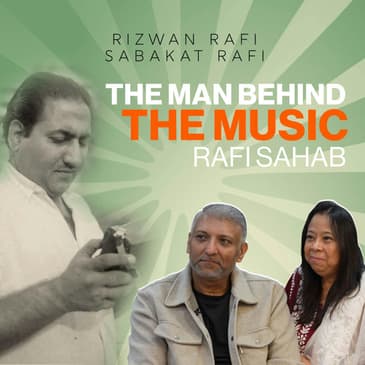
In a true desi-style this Christmas Eve, India: A Story in the Making brings you a heartfelt tribute to the incomparable Mohammed Rafi Sahab on the centenary of his birth—December 24, 1924.
This episode has been nothing short of a joyful journey—immersing myself in Rafi Sahab’s songs, and spending time with his grandson Rizwan and his wife Sabakat, who live in London and run East London Kitchens. What began with a plate of poha and chai flowed into a wholesome dinner of dosa and appam, ending sweetly with paan. It was a meeting full of warmth, delicious food, and stories that lingered in the air long after.
Thank you Rizwan Sahab and Sabakat.
Rizwan Sahab, with kindness and generosity, shared treasures from his past—precious family photographs that hold a world of memories. Through this “rearview mirror” into his family’s history, we were able to weave together an episode brimming with joy, laughter, and moments that tug at the heart.
Life, as they say, is rarely black and white—it thrives in the shades of grey. This conversation, filled with stories that made us laugh and cry all at once, was one of the most enriching experiences.
Join me this Christmas Eve to celebrate the man whose voice brought love, warmth, and magic into every home.
Whether you’re a music lover, a Rafi Sahab devotee, or someone who cherishes life’s golden moments, this is an episode you won’t want to miss. Be ready to time travel to an era lovingly called the golden age of Bollywood melodies.
A special thanks to UK Asian Film Festival for introducing me to Rizwan Rafi and to Bollywood Classics (https://www.youtube.com/watch?v=cemHzxPTNTw ) from where we picked up the music.
FULL VIDEO
You Tube:
https://www.youtube.com/@loveenatandonofficial
PODCAST SMART LINK
https://bingepods.com/podcast/podcast-rn7moe
Loveena Tandon: HOST: SOCIAL MEDIA HANDLES
https://www.linkedin.com/in/loveenatandon/
Twitter/X
https://twitter.com/loveenatandon
https://www.instagram.com/loveenatandonofficial/?igshid=OGQ5ZDc2ODk2ZA%3D%3D
https://www.instagram.com/tandonloveena/?igsh=MW5tOHdlc3cyMGJrOA%3D%3D&utm_source=qr
Learn more about your ad choices. Visit megaphone.fm/adchoices
[00:00:00] This is our heartfelt tribute to Rafi Sahab, who lives in our heart, delights our soul.
[00:00:07] He was always happy. Right yellow, and that's one stripe going from the front to the back. But everybody knew that it was the other bus car.
[00:00:14] But I didn't look, and as the car was going past, my, it went on to the car.
[00:00:20] So one was Rafi Sahab, and one was Karman had his cry.
[00:00:23] The whole Rafi family was in the bus. Newly married.
[00:00:25] I was asked, who is your favorite singer? This is the question asked to all the new bahu's.
[00:00:32] Now onto Rafi Sahab's thing. He going to win this.
[00:00:37] She's still a second of the nation. I love it. This is the Chinese.
[00:00:41] The little combination of the Chinese and Gujarati.
[00:00:45] It's been really an emotional episode, which is first of its time actually, I have to say.
[00:00:50] It would have been lovely for him to be here. Just thankful for all the memories.
[00:00:55] This is India, a story in the making. And I'm your host, Laveena Tandon.
[00:01:01] Hello and welcome to India, a story in the making.
[00:01:04] If you love the golden era of Hindi music, or you are a music lover, this episode is for you.
[00:01:12] Because we are about to give a tribute to a man who was one of the strongest pillars of the golden era of Hindi music,
[00:01:22] Hindi film music or Bollywood as they say.
[00:01:26] And not only a golden voice, but a man with a golden heart.
[00:01:30] Muhammad Rafi Sahab.
[00:01:33] It's his hundred years, a centenary.
[00:01:36] He was born on the 24th, 4th of December 1924.
[00:01:40] And this is a tribute to him from India, a story in the making.
[00:01:45] And with me, to give this tribute and take you through a beautiful journey,
[00:01:53] Rizwan Rafi Sahab is his first grandson, Rizwan Rafi Sahab.
[00:01:58] Thank you.
[00:01:59] I have to call everyone.
[00:02:00] First of all, Godhaniva.
[00:02:01] Thank you very much.
[00:02:02] And if I zone into Hindi once in a while, I'll try and translate because we have UK audience as well.
[00:02:07] But you know, it will happen.
[00:02:09] Because of who?
[00:02:10] I'll be UK then.
[00:02:11] I can talk in Hindi and I can switch to English.
[00:02:14] So, first of all, where are we sitting?
[00:02:16] We are sitting in Rizwan Rafi Sahab in Sabakats or Sabi as they call it.
[00:02:22] How his wife's beautiful EL kitchens, which is East London kitchens.
[00:02:28] This is a special, they make German kitchens and they do bespoke kitchens.
[00:02:33] And I wish I knew them before when I was doing my kitchen, but it didn't happen.
[00:02:38] Or ye may reek.
[00:02:39] It'll be a I wish kind of list.
[00:02:42] So, I'm sitting here because we try to choose a place which is yours and it has a story.
[00:02:48] So, this has a story as well and how they came here.
[00:02:52] A lot of Rafi Sahab's family is here.
[00:02:54] And I would consistently call you Rafi Sahab.
[00:02:57] Can I tell you why?
[00:02:58] Sure.
[00:02:59] Because one of the person, a very close family friend of mine, inspired me to do this episode.
[00:03:06] One time I called him and I knew he was a Muhammad Rafi fan.
[00:03:11] And I said Muhammad Rafi and he was very upset.
[00:03:14] Come, say.
[00:03:15] But then he just told me how and why we should only call him Rafi Sahab.
[00:03:20] That's right.
[00:03:21] And now I have to call you Rafi Sahab.
[00:03:23] No, no.
[00:03:24] I always say to people Dadan Ba was Rafi Sahab.
[00:03:28] I'm just Rizwan.
[00:03:31] Rizwan Ji, shoulder not hurting?
[00:03:33] No, no, no. All good.
[00:03:34] Oh, you're carrying the legacy.
[00:03:35] I know.
[00:03:36] Very heavy legacy.
[00:03:38] Very heavy.
[00:03:38] Very, very. Yes.
[00:03:40] But a lot of has been said about Rafi Sahab.
[00:03:43] But today, can you see all these pictures here?
[00:03:46] We're going to be doing this rare journey of pictures.
[00:03:51] And I'm going to pick one of them now, already.
[00:03:53] So do you know who this person is?
[00:03:56] This person?
[00:03:58] This is this person.
[00:04:01] So this is Rizwan Sahab in Rafi Sahab's hand.
[00:04:07] And he cancelled, he never used to cancel recordings.
[00:04:10] That's right.
[00:04:10] Never.
[00:04:11] He was very punctual and very steadfast about any appointments,
[00:04:15] any rehearsals that he made.
[00:04:17] He would be there even a little bit earlier,
[00:04:20] but he would be there on pack.
[00:04:22] Exactly.
[00:04:22] But he did so for you.
[00:04:24] Tell me the story.
[00:04:25] Be my least beautiful big child.
[00:04:27] I was born back in 1966, October.
[00:04:32] And Dadan Ba, when he got the news that his first grandchild was born,
[00:04:37] he cancelled his recording and came to England to see his first grandchild.
[00:04:43] Of course, any grandparent would be so proud and happy.
[00:04:48] So you guys were already living as you.
[00:04:50] So tell me about your journey here.
[00:04:53] My parents came to England back in 64, 65.
[00:04:58] So you are your parents, Saeed Sahab?
[00:05:01] So my father, Saeed, Saeed Rafi, was the oldest son.
[00:05:05] Yeah.
[00:05:05] And I'm the oldest grandson.
[00:05:08] And it transpires as well.
[00:05:10] My sons, I have two sons grown up now.
[00:05:12] So my oldest son is the oldest great grandson.
[00:05:16] So that's how the lineage carries on.
[00:05:19] The first one continues.
[00:05:20] Okay.
[00:05:21] So tell me, and why here?
[00:05:23] Dadan, he wanted to let his children go and pursue their own different lines,
[00:05:31] dreams, loves, whatever you want to call it.
[00:05:33] So he helped them to come to the UK.
[00:05:36] I think at that time, everyone was like, it was either going to be the UK or America.
[00:05:40] So we got them settled over here.
[00:05:42] My father studied for a little while in the UK.
[00:05:45] And then he went into work.
[00:05:47] He worked for the airlines, Air India.
[00:05:51] Connection.
[00:05:51] Connection.
[00:05:52] Yeah.
[00:05:52] So he worked for Air India for several years when he first came over here.
[00:05:58] And then also then his younger brothers.
[00:06:00] So altogether, there's four brothers, three sisters in the Hanvi.
[00:06:05] So his other two younger brothers, one of them came as well.
[00:06:10] And again, he got into the airline business and was working for airlines as well.
[00:06:14] Right.
[00:06:15] So half of the clan peered in half.
[00:06:18] That's it.
[00:06:18] Yeah.
[00:06:19] Not half.
[00:06:19] Well, no, I think the sons first came over.
[00:06:23] So my father, my chacha, the younger chacha Hamid, he was still very young.
[00:06:28] He was quite young when he came.
[00:06:30] But yeah, the boys came over.
[00:06:31] And then of course, later on when one of my poopies got married, then she came over here as well.
[00:06:37] So you call him Dadabha?
[00:06:40] Dadabha.
[00:06:41] Dadabha.
[00:06:41] Dadabha.
[00:06:41] Yeah.
[00:06:42] Dadabha.
[00:06:43] Okay.
[00:06:43] Oh, Dada.
[00:06:44] But yeah, that was always what I'd say, Dadabha.
[00:06:46] What are your first memories of your dadabha?
[00:06:49] Whenever I was there, the smile on his face.
[00:06:52] He was always happy.
[00:06:54] I cannot remember a single time that I heard him get angry or not be smiling.
[00:07:00] He loved all of the children.
[00:07:02] He loved having the children there.
[00:07:03] Any chance we got to go.
[00:07:07] Yeah.
[00:07:07] And I think that was one of the main things that he was always smiling, always happy and jovial.
[00:07:11] Thank you.
[00:07:12] And how often would you go back to him or he would come here?
[00:07:16] Yeah.
[00:07:17] For us, it would be any of the school holidays.
[00:07:19] So you had Christmas holidays, summer holidays.
[00:07:21] Any chance we got, mum, dad would put us on a flight.
[00:07:25] If mum didn't come with us, we'd just get put on a flight and we'd be off to Bombay.
[00:07:30] And we'd be staying with Dadabha and Dadabha.
[00:07:32] So it was a lovely time.
[00:07:34] We used to go there for lovely holidays.
[00:07:37] And for us, it was just a getaway.
[00:07:39] Getaway from the UK.
[00:07:40] The weather, just the whole atmosphere.
[00:07:43] No, because you got the chauffeurs there.
[00:07:47] Yes.
[00:07:47] Of course, living in the UK, you have to go by bus.
[00:07:51] You have to go by bus.
[00:07:52] Bombay went there.
[00:07:54] You had a driver there.
[00:07:55] You needed to go somewhere.
[00:07:57] You just told the driver,
[00:07:58] here we go, here we go.
[00:07:59] And they looked after us.
[00:08:02] Like the old people, you know that
[00:08:04] the people who have been working with,
[00:08:07] they looked after us.
[00:08:09] So we had no problems.
[00:08:10] Anywhere we wanted to go, off we went.
[00:08:12] And did you have any play with him?
[00:08:15] Because we know that,
[00:08:16] I'm trying to show another set of beautiful pictures.
[00:08:20] We know that Raki Sahib was very fond of badminton.
[00:08:23] He liked himself.
[00:08:24] I think he used to wake up at 5.30.
[00:08:28] Yeah.
[00:08:29] Well, his normal routine wouldn't be,
[00:08:31] because he was a very religious person.
[00:08:32] So he'd be up for Fajr Namaz at 5, 5.30,
[00:08:36] whatever it was at that time in the moment.
[00:08:38] And then he would do his Riyadh.
[00:08:40] He had a very strict routine.
[00:08:43] So whatever it was,
[00:08:44] 3-4 hours of Riyadh.
[00:08:47] And then yeah, whenever he got the chance,
[00:08:49] then he would, yeah,
[00:08:50] if he had the chance and he didn't have recordings,
[00:08:52] whatever, then he'd love to play his badminton.
[00:08:55] And any particular person or club you'd play with?
[00:08:59] Not that I know of.
[00:09:00] He just, whoever was available to play.
[00:09:03] Anyone would beat him or he would beat anyone?
[00:09:05] Oh, I don't know.
[00:09:06] I don't think he was a very competitive person.
[00:09:08] I think he enjoyed playing whatever the games he enjoyed.
[00:09:13] So like you said, badminton he was very fond of.
[00:09:16] He played carom a lot that I remember at home.
[00:09:19] And Patan, yes.
[00:09:23] When it was season in Patan,
[00:09:25] in Mumbai,
[00:09:26] well, in India,
[00:09:27] but in Mumbai,
[00:09:28] when it was season,
[00:09:29] you'd see everywhere.
[00:09:30] And at that time,
[00:09:31] we would go to the terrace.
[00:09:33] And of course,
[00:09:34] you'd be fine Patan.
[00:09:35] And I was lucky enough to help.
[00:09:37] Yeah?
[00:09:38] So what were the instructions
[00:09:39] for Patan Bazi?
[00:09:41] What did you tell us?
[00:09:43] We just had to put the kite in the mirror.
[00:09:46] You'd be fine.
[00:09:47] You'd be fine.
[00:09:48] You'd be fine.
[00:09:49] You'd be fine.
[00:09:49] And wind, unwind.
[00:09:51] And then just help with that.
[00:09:52] So my dad was there at that time as well.
[00:09:55] And they'd be teaching how to balance the kite.
[00:09:58] How to play it.
[00:10:00] So was there any competitor there?
[00:10:03] You said in the bandwinton he never used to play to compete.
[00:10:06] So, yes.
[00:10:09] Dadabha had a distinctive,
[00:10:11] he would always have a black Patan.
[00:10:13] Okay.
[00:10:14] And in the local,
[00:10:15] where we were in Bandra,
[00:10:16] not very far from the house,
[00:10:18] Bandha Deh Saab used to live quite close by.
[00:10:21] And when Patan Bazi started to play,
[00:10:24] you'd see lots of different kites around.
[00:10:26] And one would be Bandha Deh Saab.
[00:10:28] So one goes,
[00:10:29] Rasi Saab's kite,
[00:10:30] then we must have Bandha Deh Saab.
[00:10:31] Now that gets me interested.
[00:10:33] So the story is that Bandha Deh Saab managed to cut Lada's patan.
[00:10:38] He cut Lada's patan.
[00:10:40] Okay.
[00:10:40] So when they met,
[00:10:42] and then Lada was spoke to him,
[00:10:44] he said,
[00:10:45] You've cut the patan.
[00:10:46] And he said that
[00:10:48] We won in the patan,
[00:10:50] but you won in the ganyan.
[00:10:51] Bandha Deh Saab said that
[00:10:53] that patan I might have,
[00:10:55] just for the translation say,
[00:10:57] translated for your...
[00:10:58] So in the kite flying,
[00:11:00] Bandha Deh Saab said,
[00:11:02] maybe I am the boss,
[00:11:03] but in the singing side,
[00:11:05] you're the number one.
[00:11:06] And there are not many people who said that.
[00:11:08] That's right.
[00:11:08] So that is the...
[00:11:09] In Karam,
[00:11:10] did you guys ever play together?
[00:11:12] We would play a little.
[00:11:13] I mean, at that time,
[00:11:14] I was young,
[00:11:14] so you don't have the skill to play.
[00:11:16] To play.
[00:11:16] Yeah. But we learned.
[00:11:19] And one of the things when dad,
[00:11:21] and one mom and dad came here,
[00:11:22] they actually had a Karam board from India,
[00:11:25] and we still have the same Karam board still there.
[00:11:28] Yeah.
[00:11:29] But any family gatherings,
[00:11:30] we have that Karam board still.
[00:11:31] I have it at my house now.
[00:11:33] And we still...
[00:11:34] So, same Karam board.
[00:11:35] I'm sure.
[00:11:36] Or would he be beaten by someone?
[00:11:40] Yeah.
[00:11:42] But I don't think...
[00:11:42] Like I said,
[00:11:43] I don't think he was such a competitive person.
[00:11:45] He was a very humble, fired person.
[00:11:47] Whoever won,
[00:11:48] I think he played it for the sake of playing.
[00:11:50] I'd enjoy it.
[00:11:50] So this has been the most beautiful journeys for me
[00:11:54] to do an interview.
[00:11:56] Because I always research.
[00:11:59] I go and meet the people I came to meet you.
[00:12:02] Can I please say,
[00:12:03] I can see you, Aaman Nawazi?
[00:12:05] Yes.
[00:12:06] And this is all the food that he had.
[00:12:10] And when I came to meet him,
[00:12:11] I came upon our estate for about five, six.
[00:12:14] The year took me for having some dinner.
[00:12:17] He said,
[00:12:18] Aaman Nawazi.
[00:12:20] Hospitality.
[00:12:20] But if we were having Raffi Saab here,
[00:12:23] for example,
[00:12:25] instead of all these ungrisly things,
[00:12:27] what would he have?
[00:12:28] I think his favourite...
[00:12:31] He shouldn't have had it because
[00:12:34] people probably know he was a diabetic.
[00:12:36] He shouldn't have had it,
[00:12:38] but he loved his sweets.
[00:12:39] Oh, sweet.
[00:12:40] Yeah, anything sweet he loved.
[00:12:42] What particular sweet?
[00:12:43] Gulab Jamud.
[00:12:44] He would like.
[00:12:46] And one of the...
[00:12:47] Going on from there,
[00:12:48] just one of the stories,
[00:12:49] when we would be in Bombay,
[00:12:50] all in the house over there.
[00:12:53] So, of course, the kids,
[00:12:54] anything we wanted would be in the fridge.
[00:12:56] Anything sweet, chocolate,
[00:12:58] he would eat it.
[00:12:59] But he would always be where,
[00:13:02] you know, looking...
[00:13:02] If we were eating sweet,
[00:13:05] what would you like?
[00:13:06] But he told me.
[00:13:09] Because he knew that, you know,
[00:13:10] he wasn't supposed to be doing that.
[00:13:12] So in the house, Dati was the boss?
[00:13:14] I think so, yeah.
[00:13:16] Yeah?
[00:13:17] Dada would never...
[00:13:18] Dada Abba.
[00:13:19] Dada Abba would never raise his voice to anybody.
[00:13:23] It was...
[00:13:24] If anything, you'd have to listen.
[00:13:28] Listen it.
[00:13:28] Yeah.
[00:13:29] When he was talking to somebody.
[00:13:30] I think he used to save his voice
[00:13:32] because everyone says that he never...
[00:13:34] I never heard Rabbi Saab speak.
[00:13:37] You know, raise his voice.
[00:13:38] Never.
[00:13:39] Because he had to raise it and send it to the mic.
[00:13:42] Well, I...
[00:13:43] Already he's able to touch that range.
[00:13:45] I always think to myself that it was...
[00:13:47] When he was at home, the switch was off.
[00:13:49] It would be his normal Dada Abba,
[00:13:53] as I would call it.
[00:13:54] But when he went into the studio
[00:13:55] for the recording session,
[00:13:57] that switch was turned on
[00:13:58] and then the voice came out.
[00:14:00] And not only the voice, the actor came out too.
[00:14:02] True, yes.
[00:14:04] He moulded his voice to whoever
[00:14:06] he was going to be singing for.
[00:14:07] Because, as I said,
[00:14:09] when I was researching this,
[00:14:11] it's been the most beautiful journey
[00:14:14] because I've been listening to his songs
[00:14:16] and all the interviews
[00:14:17] and every actor has said
[00:14:19] acting became so easy for them
[00:14:22] because he did half the job on the mic
[00:14:24] from Shami.
[00:14:25] Because he sang for all the leading actors.
[00:14:28] Kulkumar, Shami Kukur, you name it.
[00:14:30] So they were telling you,
[00:14:31] Kumar, but it's been there.
[00:14:31] Mama, it's Shami Kapoor.
[00:14:33] Rishi Kapoor even.
[00:14:35] Tandhir Kapoor even.
[00:14:37] Darminder.
[00:14:38] Darminder, Rajendra Kumar.
[00:14:40] And all of them have said that
[00:14:41] they used to feel it's us singing.
[00:14:45] That's right.
[00:14:46] So at home,
[00:14:49] it seems that, reframe it.
[00:14:52] He was a great actor as well.
[00:14:54] Ugh.
[00:14:55] You got it.
[00:14:56] You got it.
[00:14:56] Well, he actually,
[00:14:57] if you've looked on YouTube,
[00:15:00] he acted in one movie.
[00:15:01] But he sang and he acted in one movie.
[00:15:04] Achah.
[00:15:04] Yeah.
[00:15:05] But I think...
[00:15:06] Then he said it's not right.
[00:15:07] No, no.
[00:15:07] I'll go behind the microphone.
[00:15:09] So, this acting, this music,
[00:15:14] did he bring home?
[00:15:15] What was it like at home?
[00:15:17] No.
[00:15:17] That was the thing.
[00:15:19] I mean, again, like I said,
[00:15:20] I was very young at that time.
[00:15:23] So you didn't see that side of him that,
[00:15:25] you know, we would be lucky if we saw
[00:15:28] any rehearsals or any kind of Ria's going on at home.
[00:15:31] But you never saw any of that,
[00:15:33] that persona of him.
[00:15:35] He was just a dedicated grandfather at home.
[00:15:38] A very quiet family man.
[00:15:41] So how was it like at home?
[00:15:43] Because he would react, Adios.
[00:15:45] And he, because everyone said that he would sleep
[00:15:48] on the song and then come and record it.
[00:15:51] Yeah.
[00:15:51] So what was it like?
[00:15:53] How was it like?
[00:15:54] How was it like?
[00:15:54] It was quiet.
[00:15:57] It was quiet.
[00:15:58] Anyway, you have to enjoy the children.
[00:16:00] But we knew.
[00:16:01] So in the Bangla,
[00:16:03] there was a main hall which had
[00:16:06] two glass sliding doors
[00:16:08] and it had a curtain on the inside.
[00:16:10] So we knew that anytime those doors were closed
[00:16:13] and the curtains were drawn,
[00:16:15] something important was happening in there.
[00:16:17] Be it a meeting, be it Ria's,
[00:16:19] be it some kind of practice or a song.
[00:16:22] So then the children would know
[00:16:23] that you had to be quiet
[00:16:25] and mindful of what was going on in there.
[00:16:27] Other times we would be playing in that hall,
[00:16:29] we'd be running.
[00:16:30] It was a very large hall.
[00:16:32] But within that hall,
[00:16:33] you had all of the memorabilia.
[00:16:36] So his awards were there,
[00:16:37] his records were there.
[00:16:39] There used to be one big glass table
[00:16:42] and inside there,
[00:16:43] there was some of the memorabilia
[00:16:45] inside that as well.
[00:16:46] So it was a real demarcation
[00:16:49] between his work life
[00:16:51] and his home.
[00:16:53] Yeah.
[00:16:53] I wouldn't say he didn't bring it home,
[00:16:56] but yeah,
[00:16:57] if he needed to practice
[00:16:58] or he needed to learn a song,
[00:17:00] then you'd see him sitting,
[00:17:02] gun-gun-a-te-teh,
[00:17:03] trying to get that song
[00:17:04] or the whole,
[00:17:07] how he was going to do that song.
[00:17:10] A lot of people have said that,
[00:17:13] you know,
[00:17:14] he has said,
[00:17:15] you talk about humming,
[00:17:17] that in one of the interviews
[00:17:19] that Suhani Raast Dhalchuki
[00:17:21] was one of his favourite songs.
[00:17:22] Costumable favourites, yeah.
[00:17:23] Would he ever,
[00:17:24] do you remember any humming
[00:17:26] of any particular song
[00:17:27] or would he listen to any person
[00:17:30] you remember him listening to?
[00:17:32] Sorry.
[00:17:32] He was completely,
[00:17:33] yeah, yeah.
[00:17:34] At home it was just,
[00:17:35] unless he had to do something at home
[00:17:37] with regards to a song,
[00:17:39] no.
[00:17:39] No spoke about.
[00:17:41] There is one story that I think
[00:17:42] he had gone to a recording
[00:17:44] and this was the humbleness of him.
[00:17:46] He'd gone to a recording
[00:17:47] to do a song
[00:17:48] and he came home
[00:17:49] and he said to everybody at home,
[00:17:53] you know who I sang the song for today?
[00:17:55] Amita Bacho.
[00:17:57] He's such a great singer,
[00:17:58] he was such a great person
[00:17:59] and he came home humbly
[00:18:01] and he said to my side.
[00:18:02] That's right.
[00:18:03] And actually Amit Ji has a very beautiful story
[00:18:05] on the internet
[00:18:07] and everyone must have seen that
[00:18:09] where how he,
[00:18:10] his show was falling up
[00:18:11] and he went in the plane.
[00:18:14] We've seen the film
[00:18:14] that he said
[00:18:17] please stop the plane
[00:18:18] and they didn't.
[00:18:20] And he came back in San.
[00:18:22] So I think mutual admiration there.
[00:18:24] But I feel that a lot of people
[00:18:27] often say that
[00:18:28] it's a lot of lepotism.
[00:18:31] And people take after the profession
[00:18:34] that you were.
[00:18:35] Yeah.
[00:18:35] Your father or parent isn't.
[00:18:37] He never taught anyone music in the house.
[00:18:40] Never everyone.
[00:18:42] No.
[00:18:42] No.
[00:18:43] Well, from the stories I've been told
[00:18:45] and I've,
[00:18:47] my dad,
[00:18:49] he didn't want his children
[00:18:51] to go into that filmy line
[00:18:53] because he knew number one
[00:18:55] how difficult the industry was.
[00:18:58] The cutthroatness,
[00:18:59] the backbiting
[00:19:00] and the competition that there was.
[00:19:02] So he wanted to push,
[00:19:05] push them away from that.
[00:19:06] He knew how difficult it was.
[00:19:08] But he did say
[00:19:09] that if any of you
[00:19:10] want to go into that line
[00:19:12] to aim to be better than him.
[00:19:14] Oh, that was not possible.
[00:19:16] I'm sorry.
[00:19:17] He's smart, no?
[00:19:17] He was quiet, but really smart.
[00:19:19] Yeah.
[00:19:20] So that's why I think
[00:19:21] that's probably one of the reasons
[00:19:22] that yeah,
[00:19:23] that the sons had come to London
[00:19:25] to pursue their own careers.
[00:19:27] Yes, I see.
[00:19:28] So he was very smart there.
[00:19:29] Because, um,
[00:19:32] his mother,
[00:19:33] oh, was his supporter really
[00:19:35] and then,
[00:19:36] yeah, yeah.
[00:19:36] Father didn't want.
[00:19:38] No, no.
[00:19:38] So, Pardada was
[00:19:40] pretty much
[00:19:41] very against him
[00:19:42] going into this filmy line.
[00:19:44] Again, being from such a religious family,
[00:19:46] he didn't want all this filmy stuff
[00:19:47] and Kana, this, this, this.
[00:19:49] But,
[00:19:49] his brother was, yes,
[00:19:51] he saw the talent that was there.
[00:19:53] He saw the, he heard, you know,
[00:19:54] he knew he had a voice.
[00:19:56] So then he helped him
[00:19:57] and then from Pakistan, from Lahore,
[00:19:59] they came to Bombay.
[00:20:00] And, uh,
[00:20:01] And the journey began,
[00:20:02] which we know that journey of, uh, Shamsun.
[00:20:04] That's all right.
[00:20:05] How he, uh,
[00:20:07] but when he was leaving,
[00:20:09] was your Pardada,
[00:20:10] he,
[00:20:11] he aligned with his wish
[00:20:13] or he still stopped him
[00:20:14] or he gave him some advice?
[00:20:15] He gave him advice
[00:20:16] to say that, um,
[00:20:19] So when,
[00:20:19] this is Rafi Sahib leaving
[00:20:20] and this is his father.
[00:20:21] Yeah.
[00:20:22] So I think basically it was,
[00:20:24] whatever you do in your life,
[00:20:25] always keep your feet counted.
[00:20:28] You know?
[00:20:30] Don't,
[00:20:30] don't be such a big person
[00:20:33] that you forget everything else
[00:20:34] or forget everybody else.
[00:20:35] And I think that's what he did.
[00:20:37] He was very humble,
[00:20:38] um, very charitable.
[00:20:40] And everyone saw that,
[00:20:42] that side of him.
[00:20:43] You, you saw that he was such a quiet person.
[00:20:45] He never, um, openly like you have nowadays,
[00:20:49] his superstar, you know, glitz, glamour, whatever.
[00:20:52] He would just go from home to recording,
[00:20:56] do what he had to do,
[00:20:57] and then come home.
[00:20:58] And there's stories of, um,
[00:21:00] if he was even invited to a party,
[00:21:02] he wasn't very much for going into these,
[00:21:04] and glam parties, this, whatever it was.
[00:21:07] So if he was invited to a party
[00:21:09] or some kind of a function,
[00:21:10] he would get the driver to take him.
[00:21:13] He asked him to drop him off.
[00:21:15] He'd go inside, pay his respects,
[00:21:17] pay his wishes.
[00:21:19] Lefa faddiya and bar.
[00:21:20] Yeah, that's it.
[00:21:21] So his driver, you told me,
[00:21:24] he would ask his driver to just take a turn
[00:21:26] and come back.
[00:21:26] That's it, yeah.
[00:21:27] He was pretty much, yeah.
[00:21:28] He wouldn't, it not, he wouldn't be there for the,
[00:21:30] you know, Lumbi party,
[00:21:31] and this, that, whatever.
[00:21:33] He would just go there to pay his respects
[00:21:36] and show that he's been there.
[00:21:38] And that was it.
[00:21:39] Yeah, the whole,
[00:21:39] because he had to get up at 5.30 in the parade, right?
[00:21:43] Yeah, that's true as all, yeah.
[00:21:44] How would you, if you party,
[00:21:45] you can do that?
[00:21:46] Yeah.
[00:21:48] It's just discipline as well, isn't it?
[00:21:50] So, did, I mean, no one in your family ever go and say,
[00:21:55] Abba, I want to learn the song or I want to,
[00:21:58] so no one even expressed that?
[00:22:00] Not really.
[00:22:01] I think my youngest chacha, Shahid, who's in Bombay store,
[00:22:05] he tried, he done it a little bit,
[00:22:08] but not to that extent, not to that extent.
[00:22:10] It is pretty hard for the children.
[00:22:12] I think so.
[00:22:13] You still carry that legacy, isn't it?
[00:22:15] And you don't carry, you carry it with care.
[00:22:17] Yeah.
[00:22:18] You have to.
[00:22:18] That's how we, yes.
[00:22:19] So, when you go here in, let's say there are 100 years of Rafi Saab,
[00:22:24] which we are celebrating and that's why we are doing Man Behind the Music.
[00:22:29] So, when you go elsewhere and you even want to sing,
[00:22:34] are you able to sing?
[00:22:36] Thinking of Grandson?
[00:22:39] It's always going to be the case.
[00:22:40] They hear, you're the grandson Rafi.
[00:22:42] You must be a good singer.
[00:22:44] That's the first question I'm asked, is do you sing?
[00:22:47] That's the first question.
[00:22:48] I have to unfortunately say, I don't.
[00:22:50] Well, I don't, but I tried.
[00:22:53] You started a little bit, but not to less.
[00:22:56] It's just for a little bit of personal enjoyment.
[00:22:58] My pleasure was always listening to the songs.
[00:23:01] But up until a few years ago, I've started to branch out Elizabeth,
[00:23:05] if you want.
[00:23:07] So you've mustered the courage, not?
[00:23:09] Courage, yeah.
[00:23:10] To say, okay, I have this legacy, but so what?
[00:23:13] I can still enjoy the songs.
[00:23:14] I still have a bit of a voice.
[00:23:15] Also, my wife tells me, have a bit of a voice.
[00:23:18] That's very good.
[00:23:19] That's very fabulous.
[00:23:21] So we will listen to you a little bit later on.
[00:23:26] But going through these pictures now,
[00:23:29] another thing you told me he enjoyed was his cars.
[00:23:33] Very much, very much.
[00:23:34] If any chance he got, to be honest with cars,
[00:23:37] he loved the cars, but he didn't drive.
[00:23:39] Ah.
[00:23:40] What was his story behind the cars?
[00:23:43] He just loved the cars, I think.
[00:23:44] Any particular, any...
[00:23:46] No, what...
[00:23:47] Whatever new models that were available there,
[00:23:51] and he liked, he would be looking to buy one or get one.
[00:23:55] And then the driver would take him around.
[00:23:58] There was...
[00:23:59] So the car that he bought at that time was a left-hand drive car.
[00:24:04] Now in Bombay, driving a left-hand drive car is...
[00:24:08] Driving in Bombay is difficult as it is.
[00:24:10] With a left-hand drive car, the driver just wasn't able to...
[00:24:15] Yeah, drive it.
[00:24:16] So...
[00:24:18] Rather than sort of...
[00:24:20] He managed to get someone else to do the driving for him.
[00:24:24] But then because the driver was not doing what he...
[00:24:27] His job, he...
[00:24:28] To keep his livelihood going,
[00:24:30] He then bought him a car, a taxi.
[00:24:34] And then he managed to still make a living.
[00:24:38] So he would distribute half of it outside...
[00:24:42] Would you have...
[00:24:43] Dadi on the other side?
[00:24:45] No, I think she knew...
[00:24:46] He was...
[00:24:49] Just a very charitable person.
[00:24:51] He would never look at what he was taking out of his pocket.
[00:24:54] His hand was going in his pocket.
[00:24:56] Whatever came out, he would...
[00:24:57] He had gone to a recording.
[00:25:01] Again, this is when I must have been very young, but I've heard the story.
[00:25:04] He went to a recording.
[00:25:06] And when he was going there,
[00:25:08] The lift man was there.
[00:25:10] So he chatted.
[00:25:11] They were getting in the lift and he was chatting.
[00:25:13] He asked him how he was.
[00:25:14] And the lift man started explaining that,
[00:25:17] Yes, my daughter is getting married soon.
[00:25:18] And I'm in the process of getting things sorted out.
[00:25:22] So anyway, Dadaba went...
[00:25:23] He'd done the recording.
[00:25:25] And at that time when the recordings were done,
[00:25:27] pretty much it wasn't...
[00:25:28] The director, producer, whoever it was.
[00:25:31] He was given the director,
[00:25:32] and he went to a house.
[00:25:34] And he won't open it.
[00:25:37] Whatever was given,
[00:25:38] that was it.
[00:25:39] He knew.
[00:25:40] So then when he was coming out,
[00:25:44] with my...
[00:25:45] What time?
[00:25:45] My mamu.
[00:25:46] He was like his...
[00:25:49] Zai...
[00:25:50] Zai mamu.
[00:25:51] So his personal assistant, just...
[00:25:53] It was his brother-in-law as well.
[00:25:56] Your daddy, amma's brother,
[00:25:58] also his manager, also your mamu,
[00:26:01] and also his everything.
[00:26:03] Exactly, yeah.
[00:26:04] So when they were coming out,
[00:26:06] he said,
[00:26:07] Well, Lefafa?
[00:26:08] He said,
[00:26:09] Don't worry, we'll...
[00:26:10] So he didn't ask anything else.
[00:26:11] But it transpires that Lefafa,
[00:26:14] when he was going in the lift,
[00:26:15] he'd actually given it to the lift man.
[00:26:18] I can see your eyes right now.
[00:26:23] But yeah, it's just those types of stories.
[00:26:25] And it transpires that we, as a family,
[00:26:29] didn't know how charitable he was
[00:26:31] until he passed away.
[00:26:33] Because people then,
[00:26:35] at that time, they were getting
[00:26:36] money orders, checks, whatever,
[00:26:38] however it was distributed.
[00:26:40] But then when he passed away,
[00:26:43] of course these things stopped.
[00:26:44] You know, he had a secretary
[00:26:47] that would help him sort all these things out.
[00:26:48] But when he passed away, all these things stopped.
[00:26:50] And then suddenly one or two people,
[00:26:53] a person had got in touch,
[00:26:55] and came with the house and said,
[00:26:59] this money didn't come,
[00:27:00] this money didn't come.
[00:27:01] And then we realised, okay, you know,
[00:27:03] he was sending people these charitable monies.
[00:27:06] But nobody really knew at all.
[00:27:10] He was out on a walk one day with a friend,
[00:27:14] and someone approached him.
[00:27:17] So he had a hand in his pocket
[00:27:18] and gave him the money.
[00:27:19] And then his friend who was walking with him,
[00:27:22] he said,
[00:27:23] Ranfri Sahib,
[00:27:25] how much money did he give?
[00:27:27] And he said,
[00:27:28] if God has given me whatever.
[00:27:31] Without something.
[00:27:34] Yeah, that's how charitable he was.
[00:27:37] We do get emotional.
[00:27:39] There were fond memories for me at that time.
[00:27:42] Spend short time,
[00:27:44] but you carry that in your heart.
[00:27:45] Yeah.
[00:27:46] The point is,
[00:27:47] do people expect you to be that charitable as well?
[00:27:51] We try, we try as much as we can.
[00:27:54] I think too.
[00:27:54] When we say,
[00:27:55] come in your ear, six minutes there,
[00:27:57] you know what,
[00:27:57] can we have that spit?
[00:27:59] We push, rapi sa,
[00:28:00] for my...
[00:28:03] Yeah, so...
[00:28:03] I have to make you laugh, that's fine.
[00:28:06] You told me about an incident of him getting a car from here.
[00:28:09] Yes.
[00:28:10] Yes.
[00:28:11] So, any chance that he used to get...
[00:28:13] When he travelled to England,
[00:28:15] if he saw a new model or something,
[00:28:17] he was interested.
[00:28:18] Yeah, he would try and get it sorted out.
[00:28:21] So it would fit back.
[00:28:22] So at that time,
[00:28:23] there was a...
[00:28:25] the Audi 100.
[00:28:27] There was a new model of an Audi 100.
[00:28:29] So he got this ship to India.
[00:28:31] And it was a blue colour.
[00:28:34] I remember it was distinctive,
[00:28:35] like a sort of dark sky blue colour.
[00:28:38] We were going for my chacha's wedding.
[00:28:42] We're driving to Indore.
[00:28:44] The majority of the family,
[00:28:45] we were all in the bus.
[00:28:47] My dada, daddy, chacha, mamu,
[00:28:50] they were in the Audi.
[00:28:52] Now, kids being kids,
[00:28:54] we were in the bus.
[00:28:55] And you used to get these...
[00:28:57] Yeah, what do you mean?
[00:28:59] In tepa, you'd throw it on the floor and then...
[00:29:01] So we were sitting on the bus
[00:29:03] and the kids were...
[00:29:06] And what happened was,
[00:29:07] I didn't look
[00:29:08] and as the car was going past,
[00:29:10] my...
[00:29:10] It went onto the car.
[00:29:13] Oh, that's great, sir.
[00:29:14] That's it.
[00:29:15] That's it.
[00:29:17] So we stopped somewhere
[00:29:19] to have something to eat
[00:29:20] and I said,
[00:29:20] Oh, that's it.
[00:29:21] I'm going to get firing from daddy.
[00:29:23] I'm going to get this.
[00:29:24] But daddy quietly said,
[00:29:25] You should do it with your hand.
[00:29:26] Do it with your hand.
[00:29:27] So we did it.
[00:29:28] That was it.
[00:29:29] You know, it wasn't like...
[00:29:31] Had it been me,
[00:29:33] I...
[00:29:35] So...
[00:29:36] With that...
[00:29:37] And that was how he was.
[00:29:40] Never any kind of anger...
[00:29:43] But how many disciplined kids did?
[00:29:46] I think daddy was...
[00:29:48] I think daddy was...
[00:29:48] Yeah, daddy.
[00:29:48] She was the bad...
[00:29:49] Very smart.
[00:29:50] Daddy would...
[00:29:51] I think you'd hear daddy's voice
[00:29:52] more in the house than that was.
[00:29:54] But we knew it.
[00:29:55] I mean, again, daddy wasn't...
[00:29:57] She wasn't so...
[00:29:59] Gusewali.
[00:30:00] But she...
[00:30:02] He spoiled you?
[00:30:03] With gifts?
[00:30:05] Yeah.
[00:30:05] Yeah, I think so.
[00:30:06] When we were little,
[00:30:07] we'd get toys and things.
[00:30:09] You know,
[00:30:09] if he was coming from anywhere,
[00:30:11] if he was around the world,
[00:30:12] if he'd gone on some kind of a...
[00:30:14] show or trip,
[00:30:15] whatever it was,
[00:30:16] we'd get gifts and things.
[00:30:17] I got a story now to tell you.
[00:30:19] Okay.
[00:30:20] Which is that...
[00:30:21] My camera person is also crying.
[00:30:26] And somehow I never knew that
[00:30:28] he had met the first tour
[00:30:30] that he came to Birmingham.
[00:30:31] Okay.
[00:30:32] I'm told by him.
[00:30:35] And he doesn't want to come
[00:30:36] in front of camera.
[00:30:37] It's not that I don't want him
[00:30:38] to come in front of the camera.
[00:30:39] I'm dead.
[00:30:39] So,
[00:30:41] the show was not full.
[00:30:43] Yeah.
[00:30:43] It was...
[00:30:44] And Rafi Sahab happened to be
[00:30:46] one person
[00:30:47] who actually brought Hindi music
[00:30:48] and this whole concept
[00:30:50] of shows abroad.
[00:30:51] Yeah.
[00:30:53] To reality.
[00:30:54] And it was a show in Birmingham
[00:30:55] and not Town Hall.
[00:30:57] And not many people turned up
[00:30:59] because it was an afternoon thing.
[00:31:01] or whatever it was.
[00:31:03] And...
[00:31:04] Mohinder Ji told me,
[00:31:05] there were 30 people there.
[00:31:07] And when he went on the stage,
[00:31:09] he asked how many people
[00:31:11] have paid for this show.
[00:31:13] And only five, six people
[00:31:14] raised their hands.
[00:31:17] And he said,
[00:31:19] your money will be returned to you.
[00:31:21] Yeah.
[00:31:21] I can imagine.
[00:31:22] Yeah.
[00:31:23] I can imagine.
[00:31:23] Exactly that.
[00:31:25] My God.
[00:31:26] Yeah.
[00:31:28] With that kind of legacy,
[00:31:30] my show would definitely have.
[00:31:31] I know.
[00:31:34] Anyhow.
[00:31:35] Oh, this...
[00:31:36] I love this piece,
[00:31:38] too picture.
[00:31:39] See?
[00:31:40] Of him relaxing at home.
[00:31:42] That's how...
[00:31:42] that's how I would remember Dada.
[00:31:44] Oh, this is how you remember Dada.
[00:31:45] Yeah.
[00:31:46] And then this is getting ready for...
[00:31:48] Oh yeah.
[00:31:48] So what was his relaxation?
[00:31:51] Well, at the house,
[00:31:52] at the bangla,
[00:31:53] we had like a veranda courtyard area
[00:31:56] at the back of the house.
[00:31:57] So anytime he wasn't busy
[00:32:00] with recordings and like this,
[00:32:02] he would be quietly sitting there.
[00:32:05] Just reminiscing.
[00:32:07] Time pass, reading,
[00:32:08] reading paper,
[00:32:09] listening to...
[00:32:10] I have a very...
[00:32:12] a photographer,
[00:32:13] he's just listening to a radio.
[00:32:15] But yeah, he just used to enjoy
[00:32:17] the time there.
[00:32:19] We...
[00:32:20] Especially for myself,
[00:32:22] when I was there,
[00:32:23] I didn't realize,
[00:32:24] at that age,
[00:32:25] I didn't realize
[00:32:25] what a...
[00:32:27] superstar,
[00:32:29] a men's person he was.
[00:32:31] We used to go out
[00:32:35] for drives
[00:32:35] and we'd see crowds
[00:32:37] coming to the car
[00:32:39] and...
[00:32:40] sorry, just going back
[00:32:40] with regards to the car.
[00:32:41] At that time,
[00:32:42] he had one car over there,
[00:32:44] which everyone has a Fiat in Bombay.
[00:32:47] At that time.
[00:32:47] At that time.
[00:32:48] But his Fiat was distinctive
[00:32:50] because it was bright yellow
[00:32:51] and it had one stripe.
[00:32:53] Yeah, it has one stripe
[00:32:55] going from the front to the back.
[00:32:56] So everybody knew that
[00:32:57] if this car was around,
[00:32:59] it was the other bus car.
[00:33:01] So...
[00:33:02] And we used to wonder that,
[00:33:03] you know,
[00:33:03] the children were driving around
[00:33:05] and all these crowds
[00:33:06] are coming off,
[00:33:07] thinking what's happening,
[00:33:08] what's happening.
[00:33:09] And then slowly...
[00:33:10] They knew it was Rafi Sahab's car.
[00:33:12] And you are going for ice cream
[00:33:13] in Puchkar Nereka.
[00:33:15] That was one of the things, yes.
[00:33:17] So, when Dadabha wasn't with us,
[00:33:19] of course,
[00:33:19] the kids would say,
[00:33:20] yeah, chalo, we need to go
[00:33:21] go get this or do this.
[00:33:23] So we'd ask the driver.
[00:33:24] And we'd be back in the back,
[00:33:26] music would be on a little bit,
[00:33:28] window would be down a little.
[00:33:29] And you'd see all these people
[00:33:30] still looking,
[00:33:31] that's Rafi Sahab's car,
[00:33:32] that's Rafi Sahab's car again.
[00:33:34] I'd like to say yes,
[00:33:35] but maybe...
[00:33:37] Maybe not.
[00:33:37] Who said that in the family?
[00:33:39] You have someone who
[00:33:40] had the courage to...
[00:33:42] Yeah, yes.
[00:33:44] So, when I got married,
[00:33:47] there is a...
[00:33:48] quite a funny story.
[00:33:49] So when I got married,
[00:33:50] from Bombay,
[00:33:51] we all went,
[00:33:52] the whole family went by bus
[00:33:54] to Wapi,
[00:33:55] where my wife is from.
[00:33:57] And the wedding ceremony
[00:33:58] took place there.
[00:33:59] So we had our nikah,
[00:34:00] and the reception was over there.
[00:34:02] The next day,
[00:34:03] we were all coming back to Bombay
[00:34:04] to have the walima
[00:34:07] in Bombay.
[00:34:08] So now,
[00:34:10] everyone was in the bus,
[00:34:11] the whole family,
[00:34:12] the whole Rafi family
[00:34:13] was in the bus,
[00:34:14] and our wife.
[00:34:17] Newly married?
[00:34:18] Newly married.
[00:34:19] Woman?
[00:34:19] Yes.
[00:34:20] Of?
[00:34:22] Of...
[00:34:22] Yeah, you but of what age?
[00:34:24] Oh, at that time,
[00:34:26] I was what, 30,
[00:34:27] she was 25.
[00:34:28] Oh.
[00:34:28] Yeah.
[00:34:30] So,
[00:34:31] when we were sitting on the bus,
[00:34:33] getting ready,
[00:34:33] well, we'd actually started,
[00:34:34] we'd already started the journey.
[00:34:36] But then everyone,
[00:34:37] of course,
[00:34:37] is asking questions.
[00:34:39] So one of the main questions,
[00:34:41] they said,
[00:34:41] we asked this to all the bahu's,
[00:34:43] who is your favourite singer?
[00:34:46] So this is this young,
[00:34:48] first time,
[00:34:50] introducing to the family
[00:34:51] in such a big way.
[00:34:53] What is her answer?
[00:34:54] Shall I let her answer?
[00:34:56] Go on,
[00:34:57] should we get the bahu?
[00:34:58] Yeah, why not?
[00:34:59] Come on, let's get the bahu.
[00:35:00] Please.
[00:35:02] Go on,
[00:35:03] this is the bahu,
[00:35:04] sitting in that bus.
[00:35:06] This is Savalgit Mabat.
[00:35:08] And they run this beautifully well kitchen.
[00:35:11] So she was sitting in the bus,
[00:35:12] she's asked the question by Repi Saab's family,
[00:35:17] who is your favourite singer?
[00:35:18] Because that's a customary question.
[00:35:21] I was actually told by Rizwan Chachi,
[00:35:25] that this is the question asked to all the new bahu's coming into the,
[00:35:31] becoming part of the family.
[00:35:33] And I was asked,
[00:35:34] who is your favourite singer?
[00:35:36] Now,
[00:35:37] I didn't know how do I address him.
[00:35:39] Do I address him as Muhammad Rafi,
[00:35:42] or do I address him as,
[00:35:44] hmm?
[00:35:44] Hmm?
[00:35:45] Oh, I address him as Dada bus.
[00:35:48] So I didn't know.
[00:35:49] I panicked.
[00:35:50] And because I panicked,
[00:35:52] I just said,
[00:35:53] Kishore Kumar.
[00:35:57] And at that time,
[00:35:58] I think everyone said,
[00:35:59] stop the bus.
[00:36:01] Everyone.
[00:36:02] Everyone.
[00:36:02] I don't know how to get out of the bus.
[00:36:05] We can't want to get out of the bus.
[00:36:08] But she said,
[00:36:09] yeah.
[00:36:11] I have been really welcomed into the family.
[00:36:14] No, but you,
[00:36:14] you don't know who is.
[00:36:15] No, no, no.
[00:36:17] No, I wouldn't let her go in there.
[00:36:18] I wouldn't let her go in there.
[00:36:21] Yeah.
[00:36:22] But,
[00:36:24] but even to this day now,
[00:36:25] she still,
[00:36:26] she still enjoys.
[00:36:27] I still like Kishore Kumar.
[00:36:29] She still loves Kishore Kumar.
[00:36:30] Yeah.
[00:36:30] And Kishore Kumar's playback is a refugee.
[00:36:34] Yeah.
[00:36:35] And actually,
[00:36:36] you know,
[00:36:36] sometimes when the,
[00:36:38] there's one six and,
[00:36:39] sometimes we sort of,
[00:36:40] I join or we do it together.
[00:36:42] And I'll say,
[00:36:44] should we do Kishore Kumar?
[00:36:45] Who is that?
[00:36:48] Yeah.
[00:36:49] I think to this,
[00:36:49] so far,
[00:36:50] since I started my singing career,
[00:36:52] whatever it sounds,
[00:36:53] I've just been singing that,
[00:36:54] there's songs.
[00:36:55] I've not sung any other songs.
[00:36:57] Because I like this.
[00:36:57] Do you have to listen to Kishore Kumar ji on the slide?
[00:37:01] No, no, no.
[00:37:02] I,
[00:37:03] she doesn't open it.
[00:37:04] I took it.
[00:37:05] I said,
[00:37:06] these are good numbers.
[00:37:07] You know,
[00:37:07] you can listen to it.
[00:37:08] because he's just okay.
[00:37:10] So in the entire family,
[00:37:11] you have been accepted now.
[00:37:13] Yes, of course.
[00:37:14] Of course.
[00:37:16] I actually wish that,
[00:37:18] when I joined the family,
[00:37:20] he was still alive.
[00:37:21] And I,
[00:37:22] you know,
[00:37:22] I would have had time to spend with him.
[00:37:25] I would have actually loved to be,
[00:37:27] when he was there as well.
[00:37:29] Which I really,
[00:37:30] really miss.
[00:37:30] Because,
[00:37:31] apart from him,
[00:37:33] I've met everyone,
[00:37:34] even daddy,
[00:37:36] everyone else.
[00:37:38] Apart from Hamish.
[00:37:40] About Hamish.
[00:37:41] So my Hamish,
[00:37:42] I passed away.
[00:37:43] We would have planned you into a Rafi-sa band.
[00:37:48] But you,
[00:37:49] you have a very interesting meeting story,
[00:37:53] isn't it?
[00:37:54] Arranged?
[00:37:55] Well, yeah.
[00:37:56] It was,
[00:37:57] it was an arranged marriage.
[00:37:59] My mommy,
[00:38:00] who was in Bombay,
[00:38:01] she knew Subakit's family very well.
[00:38:05] And at that time,
[00:38:07] my mom and my sister had gone to Bombay,
[00:38:09] to start the ball rolling as it were,
[00:38:12] to find someone for me.
[00:38:13] And now,
[00:38:14] they went,
[00:38:15] they,
[00:38:16] they went to visit.
[00:38:17] And I think,
[00:38:19] you want to tell?
[00:38:19] We just arranged love at first sight.
[00:38:21] They were, yeah.
[00:38:22] So, initially it was,
[00:38:24] mom,
[00:38:25] Vizwan's mom and,
[00:38:26] my sister,
[00:38:27] they came over.
[00:38:28] And I didn't know actually,
[00:38:29] they came to see me.
[00:38:31] So,
[00:38:32] it was very casual.
[00:38:34] But later,
[00:38:36] who,
[00:38:36] the,
[00:38:37] Swans photo and everything.
[00:38:39] I think,
[00:38:40] we said,
[00:38:40] okay,
[00:38:41] we'll meet up.
[00:38:41] He then came to Bombay,
[00:38:44] because that's where I'm from.
[00:38:46] And,
[00:38:47] it was actually love at first sight.
[00:38:49] I think so.
[00:38:50] It was...
[00:38:52] It's true,
[00:38:53] yeah.
[00:38:53] it had to be love at first sight,
[00:38:55] otherwise,
[00:38:56] husband and Mari talking together,
[00:38:58] you know,
[00:38:58] creating big business,
[00:38:59] that's not possible.
[00:39:00] But,
[00:39:00] that's the thing.
[00:39:01] And Rafi Ji had nothing to do with it.
[00:39:03] It was...
[00:39:04] He's one...
[00:39:05] Yeah.
[00:39:06] His love story has come to be.
[00:39:07] But how was the love story with Tadi Umma and...
[00:39:11] Would he...
[00:39:13] The man who sang this romantic song.
[00:39:17] I know,
[00:39:18] I never saw anything like that at first sight.
[00:39:20] He was,
[00:39:20] he was very loving,
[00:39:21] yes.
[00:39:22] You know,
[00:39:23] birthdays,
[00:39:24] this, this, this,
[00:39:25] the flowers would be there,
[00:39:26] the romance would be there.
[00:39:28] But there was not,
[00:39:29] not,
[00:39:30] not,
[00:39:30] how he was singing in the movies,
[00:39:32] that kind of romance was not there.
[00:39:34] It was...
[00:39:34] So how,
[00:39:34] how would it show the affection?
[00:39:36] How would,
[00:39:37] that affection be shown?
[00:39:39] To, to,
[00:39:41] to...
[00:39:42] I think,
[00:39:43] at that time,
[00:39:44] you know,
[00:39:44] adults wouldn't show that type of...
[00:39:46] I like...
[00:39:47] The affection is,
[00:39:49] you don't eat the girl,
[00:39:49] you don't eat the girl.
[00:39:52] That's,
[00:39:53] that,
[00:39:53] that was...
[00:39:54] That's a good thing,
[00:39:55] of course.
[00:39:56] That was the thing at that time.
[00:39:58] So,
[00:39:59] it was a hand in hand,
[00:40:00] arms, this, this, this, this.
[00:40:02] But yeah,
[00:40:02] you could see the affection there.
[00:40:04] You saw the love.
[00:40:05] Yeah, it is,
[00:40:05] it is.
[00:40:06] Her, her,
[00:40:07] her caring for him,
[00:40:08] you know,
[00:40:09] she knew,
[00:40:09] that his,
[00:40:10] his health was like that.
[00:40:12] His diabetes,
[00:40:13] whatever.
[00:40:14] So she'd always been,
[00:40:15] I wouldn't say that,
[00:40:16] but,
[00:40:17] she's a good one.
[00:40:18] And that is affection.
[00:40:20] That's it.
[00:40:20] I think that is when the,
[00:40:21] that's true.
[00:40:22] Compassion comes.
[00:40:23] And,
[00:40:24] oh, let me go through that picture.
[00:40:26] Sorry.
[00:40:27] What is this one?
[00:40:28] So that's,
[00:40:29] my two chachas,
[00:40:31] younger chachas.
[00:40:32] Oh, so here,
[00:40:32] they are singing.
[00:40:33] Well,
[00:40:34] I think, yeah,
[00:40:34] maybe doing something,
[00:40:35] but yeah.
[00:40:37] So that is,
[00:40:38] Khalid and Hamid Chacha.
[00:40:40] Okay.
[00:40:40] Yeah.
[00:40:41] And they are,
[00:40:43] in the studio.
[00:40:44] Yeah,
[00:40:44] that would have been at the house in the,
[00:40:47] this is in the,
[00:40:47] the main hall.
[00:40:49] And yeah,
[00:40:49] I suppose,
[00:40:50] trying to sing something,
[00:40:52] or he's trying to,
[00:40:52] trying to get them to sing something.
[00:40:54] But yeah,
[00:40:54] love the picture.
[00:40:56] Ah,
[00:40:56] and,
[00:40:57] we've been told by so many,
[00:40:59] I've heard so many,
[00:41:02] interviews where he said that,
[00:41:04] there was one song,
[00:41:05] Babu ki Duaayan Leti Jaap.
[00:41:06] Yes.
[00:41:07] And ki aankhe bharai jase,
[00:41:08] abhi hum sab ki bharai jase.
[00:41:11] Yes.
[00:41:11] it was,
[00:41:13] engagement that they had done of,
[00:41:15] one of this daughter.
[00:41:17] Yes, yeah, yeah.
[00:41:17] So, my youngest Pupuy,
[00:41:19] Yasmin Pupuy.
[00:41:20] So,
[00:41:20] it was her,
[00:41:23] nikah,
[00:41:23] the wedding was going to happen.
[00:41:25] And then just a few days before,
[00:41:27] he'd actually,
[00:41:28] sung this song as well.
[00:41:30] Ah,
[00:41:30] and this is Yasmin.
[00:41:32] This is what I got that we were,
[00:41:34] I pointed to,
[00:41:35] so this is the picture.
[00:41:36] And this,
[00:41:36] then this,
[00:41:37] this is the,
[00:41:39] so this is my,
[00:41:39] younger chacha Hamid.
[00:41:41] So this was at his wedding.
[00:41:42] And,
[00:41:43] this is all the family.
[00:41:44] So,
[00:41:45] my youngest Pupuy,
[00:41:46] Yasmin.
[00:41:47] Yasmin Pupuy is the one,
[00:41:49] who,
[00:41:50] who,
[00:41:51] Yes, yeah.
[00:41:53] But in the picture here,
[00:41:55] this is my,
[00:41:56] Hamid Chacha,
[00:41:57] and Fauziya Chachit,
[00:41:58] whose wedding it was.
[00:41:59] So this is the youngest Chacha Shahid.
[00:42:01] And so he,
[00:42:02] he's,
[00:42:03] he wasn't married there,
[00:42:04] and she wasn't married.
[00:42:05] And then,
[00:42:07] Khali Chacha,
[00:42:09] and Dolly Chachi.
[00:42:10] And then this is my dad,
[00:42:11] and my mum,
[00:42:12] Said and Zakia.
[00:42:13] And then Nasreen Pupuy,
[00:42:15] and Maraj Mamu.
[00:42:17] And then,
[00:42:18] Parin Pupuy,
[00:42:19] and Afta Kuppan.
[00:42:20] And of course,
[00:42:20] Dada and Ladi.
[00:42:22] Of course.
[00:42:23] And this is the,
[00:42:23] last wedding here?
[00:42:25] No, no, no.
[00:42:26] He attended Yasmin Pupuy's.
[00:42:28] He was there for Yasmin Pupuy's wedding.
[00:42:29] And then?
[00:42:30] That's it.
[00:42:31] So,
[00:42:32] such a big family.
[00:42:34] Yeah, well,
[00:42:35] he'd help.
[00:42:35] Cast everybody.
[00:42:36] Yeah, yeah, yeah.
[00:42:37] I mean,
[00:42:37] like I said,
[00:42:38] he got the sons settled.
[00:42:41] He'd help and do whatever he had to do.
[00:42:43] I suppose,
[00:42:43] you know,
[00:42:44] whatever he could do to help them,
[00:42:46] he would do.
[00:42:47] So...
[00:42:48] And for a man who came with nothing?
[00:42:50] Very true.
[00:42:52] He always said,
[00:42:53] whatever he had,
[00:42:54] was given by Allah.
[00:42:55] Anything and everything was given by Allah.
[00:42:59] His voice,
[00:43:00] whatever he got.
[00:43:01] Many years ago,
[00:43:02] again.
[00:43:03] He was with Narshaad Sahib,
[00:43:06] but he wasn't the main singer.
[00:43:08] He was actually like a chorus,
[00:43:10] in the chorus,
[00:43:11] chorus singer.
[00:43:12] So,
[00:43:13] for some reason,
[00:43:14] the song or the...
[00:43:16] had to be cancelled.
[00:43:17] And now Dada had come there
[00:43:19] to sing at this.
[00:43:21] And he,
[00:43:22] once everyone had slowly gone and finished,
[00:43:24] he was still waiting there.
[00:43:26] And he,
[00:43:28] Narshaad Sahib then approached him and said,
[00:43:30] I'll be there.
[00:43:31] I'll be there waiting.
[00:43:32] So,
[00:43:33] he said,
[00:43:33] I used my last rupiah
[00:43:35] to come to the recording.
[00:43:37] And,
[00:43:39] I'm waiting to see whatever else I can do.
[00:43:41] So then Narshaad Sahib,
[00:43:42] actually gave him,
[00:43:44] a rupiah,
[00:43:45] to then make his way home.
[00:43:47] But he didn't spend that.
[00:43:48] He kept it in his pocket,
[00:43:49] and he walked home.
[00:43:54] It is hard to carry this thing.
[00:43:56] What do you,
[00:43:57] what do you imbibe of that in your life?
[00:44:02] I think,
[00:44:03] I,
[00:44:04] I always say that,
[00:44:05] people have asked me,
[00:44:07] oh, I want to sing like Rafi Sahib.
[00:44:10] I want to,
[00:44:11] you know,
[00:44:12] this is my aim.
[00:44:13] I want to sing like Rafi Sahib.
[00:44:14] I want to be like Rafi Sahib.
[00:44:15] But I said,
[00:44:16] I explained to him,
[00:44:17] no one can be like Rafi Sahib,
[00:44:20] singing wise.
[00:44:20] He was unique.
[00:44:22] There's not going to be anybody else.
[00:44:23] But,
[00:44:24] the man that he was,
[00:44:26] his personality,
[00:44:27] his charity,
[00:44:28] I say be like that.
[00:44:30] So,
[00:44:31] be humble.
[00:44:33] Have your feet on the ground.
[00:44:35] You know,
[00:44:35] respect others.
[00:44:37] Something that his father taught you.
[00:44:40] That's right.
[00:44:40] You still carry that in your legacy.
[00:44:43] That's right.
[00:44:43] And so,
[00:44:44] in a minute,
[00:44:44] I think you've managed to,
[00:44:46] you're coming around to singing is because of,
[00:44:50] your wife is doing.
[00:44:52] Yeah,
[00:44:53] a little bit of pressure from there.
[00:44:54] I have,
[00:44:54] I have very good friends who have encouraged me as well.
[00:44:58] So,
[00:45:00] I was originally born and brought up in West London.
[00:45:03] If people know the UK,
[00:45:06] a small town called Bedfont,
[00:45:09] very close to Heathrow Airport.
[00:45:11] So,
[00:45:11] my childhood,
[00:45:13] was growing up there.
[00:45:15] But,
[00:45:16] probably about,
[00:45:17] maybe,
[00:45:18] six years,
[00:45:19] seven years ago,
[00:45:20] we moved,
[00:45:20] with business,
[00:45:21] we moved to the east of London.
[00:45:23] And this is the,
[00:45:24] this is the picture of your Bedfont.
[00:45:26] That's right.
[00:45:26] Yes.
[00:45:27] And there's one more.
[00:45:28] Oh,
[00:45:28] this one is with,
[00:45:29] with the,
[00:45:30] Daddy.
[00:45:31] Daddy.
[00:45:31] Yeah.
[00:45:31] So,
[00:45:32] this is outside my parents' house.
[00:45:33] You can see that's my dad in the background.
[00:45:36] Again,
[00:45:37] my two chachas,
[00:45:38] my dad,
[00:45:42] my dad,
[00:45:42] my dad,
[00:45:42] my dad,
[00:45:43] and again,
[00:45:44] the car.
[00:45:46] Which car is this?
[00:45:46] That's a Mercedes 180.
[00:45:48] Mercedes 180.
[00:45:50] It was a red,
[00:45:50] red colored one.
[00:45:54] Oh,
[00:45:55] I hate this bunny.
[00:45:56] So,
[00:45:57] and this was,
[00:45:57] this is right outside the house.
[00:45:59] Where my mother's,
[00:46:00] yeah.
[00:46:00] Red font house.
[00:46:01] Yeah.
[00:46:01] So,
[00:46:02] just in the corner,
[00:46:04] well you can't see the house,
[00:46:05] but just over here.
[00:46:06] And my mom still lives there.
[00:46:08] Still same house.
[00:46:09] Your mother.
[00:46:09] My mother still lives in the same house.
[00:46:11] And you still?
[00:46:12] Yeah,
[00:46:12] yeah.
[00:46:12] We still go there.
[00:46:14] We still visit.
[00:46:14] But when you have these family gatherings,
[00:46:16] and you sit down now,
[00:46:19] how do you remember?
[00:46:20] What is it?
[00:46:22] Do you ever talk or do you,
[00:46:24] it's too emotional?
[00:46:25] We do.
[00:46:26] I mean, no.
[00:46:26] We talk.
[00:46:27] We have the fond memories of going to India,
[00:46:33] the picnics we used to go on.
[00:46:35] There was,
[00:46:35] whenever we all used to get together,
[00:46:38] if there was any occasion that we managed to,
[00:46:40] all of us go there together,
[00:46:42] then there would always be,
[00:46:43] on one trip,
[00:46:44] or once a year,
[00:46:46] there would always be a trip to Khandala,
[00:46:51] Mud Island,
[00:46:52] or the beach,
[00:46:55] Puna.
[00:46:56] So there was always some kind of a trip.
[00:46:58] And then that's where Dada could relax,
[00:47:01] and then be away from the limelight,
[00:47:04] and then just be a family man.
[00:47:06] But still not sing?
[00:47:07] No.
[00:47:08] So he sang for no one in the house?
[00:47:10] Oh?
[00:47:13] I would have been like this,
[00:47:14] if you had a son of a student.
[00:47:16] I know.
[00:47:16] I know.
[00:47:17] Never insisted also,
[00:47:19] no one insisted.
[00:47:19] I don't think so.
[00:47:20] No.
[00:47:20] I think they knew that.
[00:47:22] He wants to.
[00:47:23] Yeah.
[00:47:23] He wants to just relax.
[00:47:24] At home he just wanted to be the loving father,
[00:47:27] the loving grandfather,
[00:47:29] and be with the family,
[00:47:31] be with the children.
[00:47:32] When a bahu comes to the house,
[00:47:34] Yeah.
[00:47:35] Even if you said,
[00:47:36] Kishul Kumar is your favourite singer,
[00:47:40] how are you introduced into the legacy of the family?
[00:47:44] What is it that you carry now?
[00:47:47] Often.
[00:47:48] I find everyone,
[00:47:50] everyone,
[00:47:51] the family members,
[00:47:53] very humble.
[00:47:54] They never showed that attitude that,
[00:47:57] you know,
[00:47:57] we are a family of the big,
[00:48:00] you know,
[00:48:01] Patrafi South.
[00:48:02] So I've never felt that.
[00:48:04] Very welcoming family.
[00:48:07] And actually my,
[00:48:09] like,
[00:48:10] my mother-in-law,
[00:48:11] always said that,
[00:48:13] Tata Bha whenever he got something,
[00:48:16] if he would give that to all the bahu's equally.
[00:48:19] He never had,
[00:48:20] he was no partial to one bahu.
[00:48:23] Yeah.
[00:48:23] I think he was a very God-fearing man.
[00:48:25] Yes.
[00:48:25] And everything,
[00:48:27] I remember everyone saying,
[00:48:29] so anyone,
[00:48:30] anyone told him,
[00:48:31] to sing very well.
[00:48:32] And he'd point,
[00:48:33] he'd point to the,
[00:48:33] that's it.
[00:48:34] Yes.
[00:48:35] And I,
[00:48:35] he valued that,
[00:48:37] clearly he had a God-gift and a tarot.
[00:48:39] How do people who come to know about the,
[00:48:43] where you come from,
[00:48:44] the family and the man,
[00:48:46] how do they react?
[00:48:48] First thing they asked me,
[00:48:49] oh, so you must sing.
[00:48:49] You must sing.
[00:48:50] How much?
[00:48:51] When the family weddings happen.
[00:48:53] Yeah.
[00:48:54] Only Rafi South song play,
[00:48:56] or other things I doubt.
[00:48:57] No.
[00:48:57] Pretty serious.
[00:48:59] And when we have gatherings,
[00:49:00] like family,
[00:49:02] like once,
[00:49:03] I remember when we were in,
[00:49:04] uh,
[00:49:05] uh,
[00:49:06] Raffi mentioned,
[00:49:07] and it was,
[00:49:08] uh,
[00:49:09] yeah.
[00:49:10] So we had family gatherings,
[00:49:12] all of us,
[00:49:13] everyone.
[00:49:14] And then we started,
[00:49:15] uh,
[00:49:16] playing a,
[00:49:17] uh,
[00:49:18] and it's like,
[00:49:18] my side of the family.
[00:49:20] And obviously Rafi's side of the family.
[00:49:22] It was like,
[00:49:24] everyone's singing.
[00:49:24] And actually they do have good boys.
[00:49:27] Uh,
[00:49:28] all of them like,
[00:49:28] puppies,
[00:49:29] chachas.
[00:49:30] You know,
[00:49:30] they do and they sing.
[00:49:32] They're like very dedicated singers.
[00:49:34] And whereas us,
[00:49:35] we just like,
[00:49:36] sing,
[00:49:39] Sorkumar songs.
[00:49:40] And we,
[00:49:41] we did one.
[00:49:45] What is it is dance,
[00:49:48] Can't drop this legacy.
[00:49:49] Never will I tell you.
[00:49:51] Never will I tell you.
[00:49:54] Never will I tell you.
[00:49:55] um,
[00:49:55] I remember,
[00:49:55] the son's cat.
[00:49:58] He used to sing.
[00:49:59] Remember,
[00:50:00] yeah.
[00:50:00] Then,
[00:50:01] sorry,
[00:50:01] when I got married,
[00:50:02] I came into the family and we used to have cat things.
[00:50:05] Um,
[00:50:05] he used to sing really,
[00:50:07] really well.
[00:50:07] And I used to say that you should actually sing.
[00:50:11] He had a good voice.
[00:50:12] Yeah.
[00:50:14] He used to say,
[00:50:14] I don't know how to say that.
[00:50:16] He used to say,
[00:50:16] he said,
[00:50:17] he's too sorry.
[00:50:18] None of the children put to it.
[00:50:22] and I,
[00:50:22] I mean,
[00:50:23] ever since when we got married,
[00:50:25] Soakut will always say,
[00:50:26] you have a very eloquent voice.
[00:50:28] You know,
[00:50:28] you have a very good voice,
[00:50:29] speaking voice.
[00:50:30] And I've,
[00:50:31] I've never been one to be nervous.
[00:50:33] I can speak in front of a crowd.
[00:50:34] I can hold myself.
[00:50:35] But I never thought that,
[00:50:37] yes,
[00:50:37] I'm going to do the singing side of it.
[00:50:39] My voice,
[00:50:39] if I talk to someone,
[00:50:40] I can talk.
[00:50:41] You know,
[00:50:42] if it's a crowd of people,
[00:50:43] if it's a speech or a wedding,
[00:50:45] this is,
[00:50:45] I can talk and whatever.
[00:50:47] But it,
[00:50:47] I never thought that I could take that extra step
[00:50:49] and start singing.
[00:50:50] What you have now.
[00:50:51] Personally,
[00:50:52] I have.
[00:50:52] So,
[00:50:53] I want to add one more thing here.
[00:50:56] So when we got engaged,
[00:50:57] we were engaged for night once.
[00:50:59] And every time he used to call me,
[00:51:01] all over the phone.
[00:51:02] And I used to just sit there
[00:51:03] and it used to sound so good.
[00:51:04] You know,
[00:51:05] the way he used to sort of talk.
[00:51:07] Abbas,
[00:51:08] I used to actually listen to you now.
[00:51:10] With pity,
[00:51:11] I didn't have anything to record it.
[00:51:14] But now you have him singing like,
[00:51:16] what romantic song he sings for her.
[00:51:19] Go on,
[00:51:20] tell me what's your song.
[00:51:40] I need to have the lines.
[00:51:41] I need to have the lines.
[00:51:45] I need to have the lines.
[00:51:49] I need to have the lines.
[00:51:50] I need to have the lines.
[00:51:54] I need to have the lines.
[00:51:55] Go on.
[00:51:55] Okay, go.
[00:51:56] Kisho.
[00:51:58] What's wrong?
[00:51:59] No.
[00:51:59] No.
[00:52:01] No.
[00:52:01] No.
[00:52:03] No.
[00:52:04] You can sing Kisho.
[00:52:07] I don't know honestly.
[00:52:09] I don't know.
[00:52:10] I don't know.
[00:52:11] Yeah.
[00:52:12] Never mind.
[00:52:13] So on this,
[00:52:14] we will move on to our high five intersection.
[00:52:17] Okay.
[00:52:18] Five questions.
[00:52:20] Usually you don't have to relax.
[00:52:22] It's not a rapid five.
[00:52:23] It has to be one.
[00:52:24] Yeah.
[00:52:24] But the reward in the end is the best.
[00:52:27] Okay.
[00:52:27] It's a high five.
[00:52:30] So is it between us or is it you and us?
[00:52:36] She's very clean.
[00:52:38] Yes.
[00:52:40] She likes to do it.
[00:52:41] I can see that.
[00:52:43] I can see that.
[00:52:45] By the way, can I just say she's a mix of a Chinese and an Indian household.
[00:52:50] Yeah.
[00:52:52] Grand combination, I have to say.
[00:52:56] So okay.
[00:52:57] High five India.
[00:53:04] India for you in one word.
[00:53:06] I'll start with her because she comes from India and you have lived all your life here.
[00:53:11] India for me, it's
[00:53:13] Mera Bharat Mahat.
[00:53:18] A lovely place to visit.
[00:53:20] Fond memories.
[00:53:22] Fond memories.
[00:53:23] Okay.
[00:53:23] I'll choose that.
[00:53:25] What is it about India that the world doesn't get right?
[00:53:30] I think in everyone like the perspective is India is dirty.
[00:53:36] That's the perspective everyone thinks about if you speak to foreigners.
[00:53:39] But it actually isn't.
[00:53:42] If you go to, yes, there are parts which are, but if you go to, you know, rural areas or you go to hilly areas like Kashmir.
[00:53:51] It's so pretty.
[00:53:52] Where I come from, Daman.
[00:53:54] Daman is really, really good.
[00:53:56] You have Arabian Sea.
[00:53:59] You have Arabian Sea.
[00:53:59] It's really good beaches.
[00:54:01] It's very clean.
[00:54:02] It has Portuguese culture in it as well.
[00:54:05] So I think that needs to be sort of said more rather than, it's not order.
[00:54:12] Exactly.
[00:54:17] I think that's the harmony in the culture and religions.
[00:54:24] That needs to be there.
[00:54:26] If we can break down those barriers, it would be so, so much better.
[00:54:30] Yeah.
[00:54:31] Okay.
[00:54:32] Now onto Rafiza.
[00:54:34] I'm going to win.
[00:54:37] Wait, she still is a singer.
[00:54:40] I love it.
[00:54:42] This is the Chinese.
[00:54:45] And the Gujarati.
[00:54:46] I have a lethal combination of Chinese and Gujarati.
[00:54:53] That's why she said that.
[00:54:55] Okay.
[00:54:56] Okay.
[00:54:58] There was any song that could dip this pride Rafiza out?
[00:55:02] Would you think of anything?
[00:55:05] And it can be a Rafiza song.
[00:55:08] It can be a Kishore Kumar song.
[00:55:11] I actually like where the song,
[00:55:18] That it really touches me.
[00:55:21] Whenever I hear that song, it really touches me.
[00:55:24] That someone actually sang for him.
[00:55:27] And you know, the way it was.
[00:55:31] I think for me,
[00:55:35] I think the way he, he, the way he portrayed certain songs,
[00:55:39] he was a religious man.
[00:55:41] He never drunk.
[00:55:42] He never smoked.
[00:55:44] But if you listen to some of the filmy,
[00:55:48] the Nashai songs.
[00:55:49] And the way it came across.
[00:55:51] You think, how can the person who doesn't even know these things,
[00:55:55] sing like that?
[00:55:58] My favourite is,
[00:55:59] He was a person who is a person who is a person.
[00:56:01] I don't know.
[00:56:02] My favourite is,
[00:56:04] He was an emotion.
[00:56:05] He wasn't, he could be romantic.
[00:56:08] He could drink.
[00:56:10] And he could sing like so many heroes.
[00:56:14] And none of it he presented in the house.
[00:56:16] Yes.
[00:56:17] I know.
[00:56:18] It's like,
[00:56:19] I always say it's like a switch.
[00:56:21] You turn that switch on,
[00:56:22] and then the person was there.
[00:56:25] Yes, of course.
[00:56:26] There are a lot of rumours.
[00:56:28] There is a thing,
[00:56:29] yes or no, you have to tell me,
[00:56:31] that he sang so many bhajams,
[00:56:33] and so many shabal.
[00:56:38] And there was a,
[00:56:39] I was speaking through internet,
[00:56:41] and I came across this thing,
[00:56:43] that whenever he used to sing bhajan,
[00:56:45] he would convert.
[00:56:46] And Sonu Nigam said that.
[00:56:48] Not Sonu Nigam said,
[00:56:50] but the video said that he said.
[00:56:52] Okay.
[00:56:53] So...
[00:56:53] No, no.
[00:56:54] He was 100% true,
[00:56:56] dedicated to his religion,
[00:56:58] Muslim religion.
[00:56:59] And it was just that,
[00:57:01] his dedication.
[00:57:02] That's right, yeah.
[00:57:02] And I've, like you said,
[00:57:03] I've not heard the story,
[00:57:05] but I've heard from friends,
[00:57:07] I've heard from people who have talked,
[00:57:09] saying that yes,
[00:57:10] when he sang a bhajan,
[00:57:11] when he sang a naat,
[00:57:12] that it sounded like,
[00:57:14] someone from that religion was singing it.
[00:57:17] You know,
[00:57:18] a religious person was singing it.
[00:57:20] But he,
[00:57:21] it was his dedication to his art.
[00:57:23] One thing that you would,
[00:57:25] want to take from his life,
[00:57:27] and you take,
[00:57:28] and that has added,
[00:57:31] to your life.
[00:57:32] Following his footsteps,
[00:57:33] the way he was.
[00:57:34] Of.
[00:57:35] Of.
[00:57:36] Of being,
[00:57:37] a grounded person,
[00:57:38] a charitable person,
[00:57:40] a humble person.
[00:57:42] I think,
[00:57:43] in this day and age,
[00:57:44] I think,
[00:57:45] that's a good thing to do.
[00:57:46] When I come to your house,
[00:57:48] you know,
[00:57:48] EL Kitchens next time,
[00:57:51] at Pranayik's house,
[00:57:52] I didn't mention charity, okay?
[00:57:55] So, yeah, Asam.
[00:57:57] Well, what is the one thing,
[00:57:58] that you feel,
[00:57:59] that you have to carry as a legacy?
[00:58:01] Again,
[00:58:02] the same,
[00:58:03] he was very humble,
[00:58:04] and very down,
[00:58:06] grounded.
[00:58:07] Humility.
[00:58:08] Yeah.
[00:58:08] Definitely.
[00:58:10] If Rafi ji was,
[00:58:12] in today's time?
[00:58:13] I always think this question.
[00:58:15] I wish,
[00:58:16] true,
[00:58:17] I feel like,
[00:58:18] I wish he was here.
[00:58:19] I wish he was here.
[00:58:20] Yeah.
[00:58:20] But then,
[00:58:21] part of me thinks,
[00:58:22] the way the music industry is now,
[00:58:24] the way the songs are,
[00:58:25] the lyrics are,
[00:58:27] I don't know if he'd be singing,
[00:58:28] but I don't know,
[00:58:29] those type of songs would still be there.
[00:58:31] He was asked that question several times.
[00:58:33] But this was always,
[00:58:35] 60s is modern for people who were in their 45s,
[00:58:40] or 70s.
[00:58:41] 70s is modern for 60s, you know?
[00:58:43] So, this question was still there then.
[00:58:46] True, true.
[00:58:47] But I think that era was completely different.
[00:58:50] You had people who were poets,
[00:58:52] writing the songs.
[00:58:54] Sheer Shairi,
[00:58:55] the love and dedication they had for those songs,
[00:58:59] is completely different to now.
[00:59:01] Okay, my last one.
[00:59:02] What is the one thing you miss the most about him?
[00:59:08] His presence, I think.
[00:59:11] Just being there.
[00:59:12] Your last memory or thing?
[00:59:16] Last memory.
[00:59:17] When we were there visiting,
[00:59:18] unfortunately we'd gone there to celebrate,
[00:59:22] because Dada passed away during Ramzan,
[00:59:24] in 1980.
[00:59:26] So the plan and the idea was that the children,
[00:59:29] so myself, my sisters, my mum,
[00:59:31] we went out there during Ramzan.
[00:59:34] And then my dad and everybody else would follow later on,
[00:59:37] nearer to the end of Ramzan.
[00:59:38] But it wasn't meant to be.
[00:59:40] And he couldn't reach,
[00:59:41] despite being in Air India and all his airlines,
[00:59:44] he couldn't reach a father.
[00:59:46] Could.
[00:59:47] So he'd already,
[00:59:49] so the decision was made,
[00:59:51] I mean we were children and young,
[00:59:53] but the decision was made because
[00:59:54] they wanted to get the chanaza
[00:59:56] and the funeral done as soon as possible.
[00:59:59] It's always done over there.
[01:00:00] So, they made the decision that,
[01:00:02] look, go ahead with it.
[01:00:04] If we'll get there in time,
[01:00:05] we'll get there.
[01:00:05] But you were there?
[01:00:06] I was there, we were there.
[01:00:08] That's true.
[01:00:09] You actually got lost.
[01:00:10] I almost got lost in there.
[01:00:12] Of course.
[01:00:13] So, when the whole thing happened,
[01:00:16] when he passed away,
[01:00:17] so then it was a case of,
[01:00:18] you know, how everything gets organised.
[01:00:21] So, the janaaza was at the local masjid in Bandar,
[01:00:25] at the big masjid there.
[01:00:26] And now the body was taken on a,
[01:00:31] what do you want to call it,
[01:00:32] like a truck,
[01:00:33] what was the lake you get there?
[01:00:35] So, then the janaaza and the ma'am was done there.
[01:00:38] And normally that trip from the house to the masjid
[01:00:42] should only take,
[01:00:43] not even 10 minutes.
[01:00:45] A few hours were taken because of the crowds
[01:00:48] and how long it took to go.
[01:00:50] And then from there,
[01:00:52] going from the masjid to the kabristan,
[01:00:55] again, from Bandar to Juhu,
[01:00:57] shouldn't take you more than 15-20 minutes.
[01:00:58] But then again, that still took the same thing.
[01:01:01] And I almost got lost.
[01:01:02] So, I was there because my chacha was there,
[01:01:04] Shahid, who was the only man there.
[01:01:07] My mamu was there,
[01:01:08] Miraj Mamu and everybody.
[01:01:10] So, I was told, stay with chacha.
[01:01:12] Whatever happens, stay with chacha.
[01:01:14] Remember, I'm 14 years old with all this going.
[01:01:18] So, when the body was being taken on a truck,
[01:01:20] whatever happened, I lost hold of chacha, whatever.
[01:01:24] And the whole crowds and this was going on.
[01:01:27] And luckily, someone found me
[01:01:28] and they managed to put me with the rest of the truck.
[01:01:33] With the body that was being taken, yeah.
[01:01:36] So, it was a very emotional time.
[01:01:40] I still have vivid memories of that, you know,
[01:01:42] the crowds.
[01:01:44] Raining and the crowds.
[01:01:46] I remember watching it on TV, actually.
[01:01:49] The whole...
[01:01:50] Now, last, you...
[01:01:53] Anything that you want to say
[01:01:54] that you could not say to your dadapa.
[01:01:58] Just him.
[01:01:59] Closet.
[01:02:00] Anything.
[01:02:01] This is his first...
[01:02:05] Rancid.
[01:02:06] Yeah.
[01:02:06] On his hundred years.
[01:02:08] It would have been lovely for him to be here.
[01:02:12] Just thankful for all the memories.
[01:02:16] Thank you for giving us these memories.
[01:02:20] Yeah.
[01:02:21] Sharing such pieces of history and pieces of your heart, Rizwanzaa.
[01:02:29] I am so thankful to you.
[01:02:32] Thank you very much.
[01:02:33] Thank you very much.
[01:02:34] Thank you so very much.
[01:02:36] It's been...
[01:02:40] Emotional.
[01:02:41] No?
[01:02:42] No.
[01:02:43] It's been really an emotional episode,
[01:02:48] which is first of its kind, actually, I have to say.
[01:02:52] And I have...
[01:02:54] It touched my heart and my soul,
[01:02:56] and I'm so grateful to you,
[01:02:59] and I'm thankful that I did this.
[01:03:01] This is our heartfelt tribute to Rafi Saab,
[01:03:05] who lives in our heart,
[01:03:08] who delights our soul,
[01:03:12] and somehow, though he will never know us,
[01:03:16] we will always know, love, and remember him.
[01:03:19] Thank you ever so much for watching and listening to India,
[01:03:24] a story in the making.
[01:03:26] Please do be in conversation with us.
[01:03:31] Thank you so very much in accordance.
[01:03:32] Thank you.