
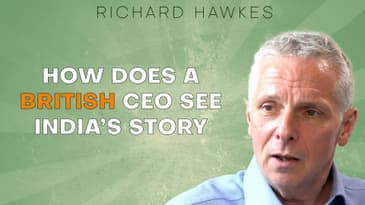

“The only decision we should make about India from the UK is not to make decisions about India from the UK,” said Richard Hawkes, CEO of the British Asian Trust, when he stepped into the role.
In this episode of India: A Story in the Making, we uncover how a British leader who once knew nothing about India has grown to deeply love the country—to the extent that he finds inspiration in its chaos, enjoys hours in traffic, and applies the concept of jugaad (finding creative solutions with limited resources) in his daily life.
Richard shares his unique perspective on what is it about India—its energy, its contradictions, its challenges—that drives him? He believes India’s evolving social sector holds valuable lessons for the world.
We also ask Richard about his remarkable journey—how he has consistently held top leadership positions throughout his career, his leadership hacks, and how young people passionate about the social sector can find meaningful work and build fulfilling careers.
For anyone interested in leadership, social change, social finance, or understanding India’s complex story, this conversation offers fresh insights and practical takeaways.
FULL VIDEO
You Tube:
https://www.youtube.com/@loveenatandonofficial
PODCAST SMART LINK
https://bingepods.com/podcast/podcast-rn7moe
MORE ABOUT:
Richard Hawkes
linkedin.com/in/richard-hawkes-4710a512
https://www.britishasiantrust.org/about/work-with-us/meet-our-team/our-people/richard-hawkes/
British Asian Trust
https://www.britishasiantrust.org/about/
Loveena Tandon: HOST: SOCIAL MEDIA HANDLES
https://www.linkedin.com/in/loveenatandon/
Twitter/X
https://twitter.com/loveenatandon
https://www.instagram.com/loveenatandonofficial/?igshid=OGQ5ZDc2ODk2ZA%3D%3D
https://www.instagram.com/tandonloveena/?igsh=MW5tOHdlc3cyMGJrOA%3D%3D&utm_source=qr
Tik Tok
https://www.tiktok.com/@loveenatandon
Learn more about your ad choices. Visit megaphone.fm/adchoices
[00:00:00] He's been on leadership positions all his life in the charity sector For me, I think anybody who wants to be in that sort of leadership position needs to be thinking about people all the time When you think of India, what's the one thing that comes to your mind? Jugaad Jugaad indeed Jugaad is my favorite word There was a huge Indian community that I just didn't know anything about
[00:00:26] The first couple of times I went to Alainabad and for me the roads were just absolute chaos There were animals on the roads, nobody was driving on the right side of the road There were bikes and cars going in every direction, just people popping their horn all the time I think I've learned from people in India every single time I've been The only decision we should make about India from the UK is not to make decisions about India from the UK This is India, a story in the making and I'm your host Loveena Tandon
[00:00:54] Hello and welcome to India, a story in the making If you are interested in the nuances of charity sectors, specifically in South Asia and in that India and the UK Then this is the episode for you But more than that, if you're interested to find out how to be in the leadership position Dealing with a lot of culturally different people with different backgrounds, culture backgrounds Then this is the space for you as well because the person today I am talking to is
[00:01:23] Born and bred in England, very much an Englishman And can you imagine? He knows the meaning of jaguar And I know a lot of you might not understand what it is But I'm going to make you understand what really it is in English Apart from that he's been on leadership positions all his life in the charity sector A big name in the charity finance, social finance as well So I want to understand all of that from him
[00:01:50] Richard Hawkes, CEO of British Asia Trust Thank you very, very much for your time Thank you very much for having me, Laveena Thank you First of all, Richard, when you told me you know what jaguar is I absolutely fell from my chair because I haven't been able to explain what that really means to my children as well Please do me that favour See, Jiran is my favourite word
[00:02:20] It just sums up so much about the way that India works About the way that people are always trying to find creative solutions to problems And creative solutions to different challenges And it just, there isn't an equivalent word in the English language, I don't think But it's just a great word when you know, when people are looking to be creative To be, you know, well that's the word, isn't it?
[00:02:49] To be creative, to find solutions, to really think about things in a very different way And they often just come up with really great solutions for problems that people wouldn't have thought about It means people trying to think creatively and to come up with solutions for challenges or solutions for problems By being a little bit, by being a bit creative, by just thinking in a very different way Different way, just like you've done with the camera
[00:03:16] The camera person forget, or Moindarji forgot the thing And now he's done, mounted his camera on the line Yeah, exactly, exactly You know, so there's a problem And a solutions focused country, I think people are always, you know, whatever their, whatever their Situation in life, I think people are always trying to come up with positive solutions for things in India It's been a great learning for me Have you ever used it personally in your life in any situation? Oh, I mean, I
[00:03:45] I try every day to think in a different way and to think of different ways of doing things And so, you know, my job I'll often get There'll often be challenges and you just So for me, it's part of the culture of the organization to just try and keep thinking creatively Out of the box Out of the box Constantly think creatively, be solutions focused Yes, perfect So tell me, I was, we've spoken and I've read about you
[00:04:14] You grew up in Wolverhampton? Yeah Tell me about your childhood a little bit Growing up and leading to this charity world Yeah Which is where you have been always So I'd say, so I grew up in Wolverhampton I was, that's a city in the Midlands For anybody who doesn't know It's quite an industrial city I was very lucky I grew up in a very comfortable background It was a very privileged background in many ways
[00:04:42] But Wolverhampton is also One of the, one of the cities in the UK that has a very large Indian community So I had Indian friends, but I didn't know a lot about them and a lot about the Indian culture And so there were, you know, there's a lot of, especially Sikhs live in Wolverhampton But I think until recently, so certainly when I was a child growing up The communities weren't very integrated The communities lived very separately
[00:05:12] And so to my shame really, I just, I, there was a huge Indian community But I just didn't know anything about Indian people Whereas now, when I go back to see my, my dad, for example, who lives in Wolverhampton There are Indian families that live in the same road, the same, live across the road And I, I spend hours talking to them about the journeys that they're, they've been on
[00:05:36] Or that their parents came on in terms of migrating and then setting up in the, in the UK And so now I'm absolutely fascinated by it But as a child, I think the communities were very separate And so I, I didn't really A lot has moved on A lot has changed A lot has changed indeed And I think many of the people would not have visited India as many times as you have, in fact How many? Yeah, so I've, I've been to India more than 70 times
[00:06:04] So, which I know I'm very lucky to have done, but yeah And you love it? Oh, I love every single time I go Every single time I go, I learn something new I see something different I think I've had a brilliant time every single time I've been Yeah Oh, how wonderful I am going to come to this 70, 75 times very soon But let's just go through the moment when you realized you wanted to be in the Charities sector Was it in the college?
[00:06:33] No, actually So I've been, I was involved in the Student Union I've been elected to be the leader of the Student Union at Manchester University I was then elected to be the National Secretary of the National Union of Students So I was involved in, for four years full time, in representing students and Realizing the power of a collective voice, the power of collective action
[00:07:01] And that together we can make the world a different place I was then very fortunate I went to work for the United Nations in Vienna And I was working in the Youth and Student Unit There, it was during that time That the war then happened in Yugoslavia In what was Yugoslavia And I got very involved in work with displaced students and young people from From Bosnia, Croatia As a result of the war
[00:07:30] And after that I realized that In the world there are There are a lot of people who are living in very unfortunate circumstances Very disadvantaged, living in poverty And so on, there are other people that have power There are other people that have money And that in the not-for-profit sector you can bring all of that together And so if you're working in a charity or in the not-for-profit world You can work with the people who are living in
[00:08:00] In pretty terrible situations at times And then try and be a link between them and people that can make decisions And people that have money to make things happen And so that was when I wanted to work in the charity site Was there any particular incident that actually connected you Made you realize that this is where I belong? Actually, when I was in the students' union
[00:08:26] There was a time when there were two Kurdish students Actually came to talk to me And they wanted to tell me about the situation in Iraq What the situation was like for Kurds living with Saddam Hussein How persecuted they were And again, to my shame, I didn't know anything about this I'd only heard about Saddam Hussein through the media I didn't know much about it But these two students, they kept making me realize
[00:08:55] That I was in a position where I could do something about it And so that was, I was in my early 20s And up in the old point What did they say to you? Well, they can't say that I could use the platform that I got As the president of the student union To raise awareness, to be supportive To talk to people about that situation And I hadn't, I'd never realized the sort of agency that I had And that ability to be able to support other people And so it was a real eye-opener for me
[00:09:23] That there were people who were living in awful circumstances In a totally different part of the world But they believed that there was something I could do That would support and help them And so that was quite an early age to realize that You know, we have this sort of power and influence And ability to help change other people's lives to the better And so I think that was probably the moment when I realized Actually, this is something that's really important This is what, did you do something that, to help, I mean to raise? Yeah, I did loads
[00:09:53] I raised a lot of awareness about what they were doing When I became national secretary of the national union students I'd stayed in touch with them There was a national group I spoke at their conferences I promoted their issues And I helped make some of those international issues Raise awareness of them So that more students who might not necessarily think About those kinds of issues Started to become more aware of them Yes, that made you I think that's what happens So sometimes if you can make a difference
[00:10:22] And that's where you thought that this is where I belong Yeah, no, exactly And so you've been through a lot of journeys through the charity sector And then you arrived at British Asian Trust Yeah Tell me about your work here and specifically in India Yeah, so I've been very lucky I've had some great jobs in the charity sector I've been chief exec of a number of organizations Most of the time I've worked in international development
[00:10:51] And most of that time India has been one of the countries that I've worked in So that's why I had the pleasure of going so many times over the last 30 years And the opportunity with the British Asian Trust So I started here about eight years ago now And it just had the most potential that I'd ever seen in any organization The whole ethos and the DNA of the organization was very different to any other charity that I'd That I'd come across
[00:11:19] The ambition, the scale of ambition, the people that were involved I just thought there was going to be a huge learning opportunity here And an organization that had huge potential to make a massive difference And so I'm very lucky to get that job at that time And then be part of the journey ever since Yeah, King Charles I still have to learn King Charles is the patron Yes And I came to your function, I heard him at that time
[00:11:47] How far is he involved and what kind of stuff? What has been your experience in dealing with him? Yeah, so the king, when he was the Prince of Wales He helped set the organization up So originally it's been his idea He's passionate about South Asia He's passionate about doing good and changing the world He's passionate about the British Asian community And so it was his idea to create this organization
[00:12:15] And he worked with a number of very successful British Asians To set up the organization So he is officially what's called our royal founding patron And he's actively interested He's been supportive throughout the whole of the eight years That we've been going He wants information about what we're doing He has ideas about what we're doing He's brilliantly supportive of things
[00:12:41] And he always wants to know about the visited projects He's visited schools He's hugely supportive of our social finance work And so he's taught at events about things like that So that's what I've been That's what I had the pleasure of focusing on with him And he's there Brilliant Social finance, you brought me to it Very quickly, I want to touch about And you have worked hugely in this sector Tell me more about social bonds
[00:13:10] Or the development bonds and the social finance And how do you bring the traditional investment into social finance? Yeah, so social finance is I would summarize it as It's just a different way of financing And delivering development programs and charitable activity And so there's a sort of the traditional approach Is to raise philanthropy And then give out grants to organizations
[00:13:38] For the work that everybody has agreed that they should do In effect, social finance is a way of using And is a way of delivering results that both have Financial benefits and social outcomes And so we've done a number of what are called development impact bonds And they're actually not that complicated You focus at the start on what's the outcome that you're trying to achieve
[00:14:06] And then you use different kinds of money to pay for those results But someone else finds the capital that will allow the work to happen in the first place So what it is, is it focuses everyone on impact and outcomes And so it enables you to raise more money But to get that money focused only on success
[00:14:34] And then there are people that will Will get a financial return on their investment Or people that, you know, the products The projects overall will deliver a social outcome, a social return So there's benefits to all of the different people that are part of the structure Indeed Indeed And in this world today when there is so much of financial You're all stretched financially The countries are stretched because of the wars going on How do we, what are the challenges you face?
[00:15:04] And how do you drive this point that this is where finance should be used? Yes So the great thing with development impact bonds and social finance is that People only pay if it is successful And so it's a results-based financing structure So people are only paying for success So if you're, for example, a government and you want to pay for education Then you would only pay once people have achieved the qualifications
[00:15:32] Or the learning objectives that you want to achieve If it's a, if you set up, we've got a development's impact bond that's all about jobs And the people who pay only pay when the young people secure a job And when they're still in a job And so it's not like paying for a training program When you then don't know if somebody's going to get a job or not You only pay once someone gets a job
[00:15:59] So for me, what this does is it de-risks that funding It means that government funding or donor funding is totally de-risked And people are only paying for success So in a world where there are demands, more demands on funding To have a structure that takes away any risk and these people are only paying for success Means that you're making all of those funds much more efficient And much more effective As opposed to paying for things that might not work
[00:16:28] And how do you get on the social stock exchange? And how does that... There's no return to investment, but there is a social impact of that Yes, so there's a social stock exchange in India now There used to be a social stock exchange in the UK as well And I think there are one or two others around the world So what that does is it basically enables us As the British Asian Trust in India to be listed as part of something
[00:16:59] Where people that want to invest in creative programs will see that this is a way of doing it And so it helps to develop awareness about the work that we're doing And it helps to attract funders that might want to get involved in that work And it goes through checks and balances that people can be assured that the money is Yes, so you've got to... There are criteria that has to be fulfilled and due diligence that has to be fulfilled And then to get listed
[00:17:24] So you've got to have the credibility and you've got to have demonstrated the impact of what you're doing for sure So we come back to so many times now you go to India Your British Asian Trust runs a lot of programs there Tell me your experience of the social sector in India So I love the social sector in India And I thought for many years there's so much that the social sector in the UK can learn from the sector in India
[00:17:54] And I would say that over the last 15 years or so it's changed enormously So I think when I first started working in India 30 years ago It was very, what I would call a more traditional approach There were lots of founder-led NGOs There were thousands, hundreds of thousands of NGOs And people were trying to mainly raise money from outside India
[00:18:22] And so people would be writing applications to donors that were outside India If you jump forward to today, there's a lot of money in India There are a lot of people that want to fund good work in India There are a lot of Indian philanthropists in India There's the Indian CSR legislation for corporates So there's an increasing amount of funding within India To fund good work and the not-for-profit sector
[00:18:50] And I think the not-for-profits themselves have totally changed in terms of the way that they exist The way that they seek to focus on impacts and results There's a much more dynamic approach And so it's really changed over the last 30 years But more so over the last 15 When it used to be more traditional It used to be more old-fashioned Let's apply to funds outside India Whereas now there's a much more dynamic culture
[00:19:20] People are much more focused on being efficient and effective Focused on results, focused on outcomes People are seeking investment There's a much more social entrepreneurial approach Rather than a sort of old-fashioned charity approach And it means that the results of what's happening are often absolutely amazing And so the impact that's been made as a result of a much more dynamic approach Is absolutely tremendous
[00:19:47] And that links to the fact that there's now much more money available within India That's just totally changed the whole narrative And the whole way that development works Indeed So what is the reason behind this change What is the impact of the economy in the last 15 years or 10 years? So I think there's been a number of drivers The one, India has been globally successful with its economy And so that there are far more middle class people now in India than there were
[00:20:17] quite a couple years ago So there are far more successful people there There are far more philanthropists now in India So there are more people in India that want to give away money to good causes The CSR legislation that was introduced That's also shifted people's thinking And a lot of corporates now recognize that they got responsibilities to not only give 2% of the profits towards CSR But to also think about their footprints and their impacts
[00:20:47] And their environmental and their social impacts And so all of those things have combined Together with the fact that as India has become a much more successful country Then a lot of the big development agencies around the world They've got other priorities if they're going to focus on poorer countries And they don't need to put their funds towards India So what that has meant is that India has taken control of its own destiny much more Including in the social sector So that combination of all of those things
[00:21:15] The corporate changes, more middle class people, more funding in India A desire for Indian people to address the causes and the issues in India themselves That combination of all of those things has driven this change How brilliant You have worked forever in charity Forever Yeah, well from very well time Since you were a giant in the university And so you've seen the charity sector in the UK And you've seen the charity sector in India
[00:21:45] And you've seen the attitudes of people Is there any different change, similarity, dissimilarity or something Between the two attitudes? Or is... I think the attitudes in India have changed a lot So I think over the last 30 years The nature of the organisations The kinds of organisations that exist There's the fact that things are much more about social enterprise Social entrepreneurial focus on impact People seeking investments
[00:22:14] Focus on results outcomes That's had a purpose in their business And certainly that But if you look at the UK charity sector It hasn't changed anywhere near as much So the UK charity sector is now still pretty similar to how it was 30 years ago So I've worked in the sector for 30 years And there hasn't been as big a change As certainly as there has been in India In the attitudes of people Does...
[00:22:43] Is there any difference between how people of different countries approach the charitable? Yes, for sure there are different approaches And I think that's impacted by what's the role of the state You know, so if you look at... If you look at some of the Scandinavian countries, for example They don't need as many charities Because the state is providing quality education, quality health People have different opportunities in life
[00:23:12] So you don't need a charity sector to sort of step in And do a lot of that work There are some countries where you still need a strong charity sector Because the gaps in what the state is providing are too great And so charities need to be in there providing that And so that then has an impact on the way that the wider public think about charities And so I think in a country like the UK There's a huge amount of charitable giving
[00:23:39] And that, you know, the general public are hugely generous in the way that they give funds I think in a country like India Increasingly people are thinking about the social sector and thinking about not-for-profits But I think there's still that wider journey to go on for the much larger population In terms of people automatically wanting to get to charity all the time What is it that the charity sector in the UK can possibly learn
[00:24:08] Or from the new, growing, different approach of Indian sector? So I think in the private sector If there's no demand for what the private sector is producing Then those companies cease to exist And in the Indian social sector I think if organizations If people don't want to support them And they can't raise funds
[00:24:36] And there's no clear purpose for them Then they cease to exist Whereas I think in the UK there's a lot of charities that are into self-preservation And self-sustaining And rather than people being brutally honest and saying Well, we were set up 70 years ago Do we need to exist in exactly the same way as we did 70 years ago? Do we actually need to exist at all? And there's also
[00:25:05] There's a lot of duplication in the UK charity sector There are lots of charities that are doing very, very similar work And that's often driven by founders or trustees Or chief executives That don't want to collaborate as much as they can And so there should be more mergers The sector could be more efficient You know, if you've got to pay two chief executives To do two different jobs of two charities that are very similar
[00:25:35] There could be a big saving there In only having one chief executive And bringing those charities together Be more frugal And be more creative in how you spend and use your money We should be absolutely resource about Every penny that's given to a charity Should be maximised for the impact that the charity seeks to exist And I think in the UK there's a lot of duplication of overheads There's a lot of duplication of charities
[00:26:03] People will often set up a new charity Rather than looking and seeing Is there another charity that we could join hands with And maybe have an appeal in somebody's name Rather than setting up a different charity Yes, indeed So I think there are different ways of doing it Doing stuff, yes, indeed And this whole question about funding to India What's your view on that? Yeah, so I think there are There are lots of people that want to support and develop us in India
[00:26:29] However successful India has been and continues to be as a country And I think that's a lot of people that want to support and support And I think that India is increasingly solving those challenges itself But there are still people, especially in the Indian diaspora, that want to support Developments and keep building India and making it a more successful company
[00:26:55] We also saw during COVID when the oxygen crisis happened in India That the British Asian Trust, we were able to galvanize support And we raised 10 million pounds to support oxygen in an emergency situation in India So there are still definitely times when reaching acts to the wider diaspora And to people that want to support India is going to be the right thing to do And so I think it's, you know, certainly for the time being
[00:27:24] It's, you know, it's absolutely right that people are able to do that Any proud moment of any story that sticks or hits at you when you think of your work? Yeah, you know, honestly, there are things like that happen every time I go I go when I have the good fortune In my job, I get to see the impact of the work that we're making
[00:27:48] I get to visit the programs, visit the projects, see the kids that we've been providing education for See the kids that are getting jobs as a result of having a better education And so for me, it's just constantly that When you're being part of a program that might have helped children that have been trafficked And then you see them in a school environment and they're, you know, they're turning their lives around When you see young women who didn't have a chance of getting a job
[00:28:17] And they've been through a training program and they're now in a job or they're set up their own business It's the most rewarding thing you can possibly be involved in Longest period that you've stayed in India and what's been your experience? But usually people just will say, oh, I can smell India before I touch India And they get put off by the kiosk What was your first reaction when you went for the first time? So the very first time I went was about 30 years ago
[00:28:43] And I remember I started off in Mumbai And it was, I just couldn't believe the noise, the chaos, the sounds, the colours, the smells And I just absolutely loved it And even now, I'm rarely happier than just watching India
[00:29:08] And so most people, for example, hate the traffic in Mumbai You know, and even with Sea Link, there's still a lot of traffic in Mumbai You can put me in a car in Mumbai and I'll just more than happily watch out of the window Watch the world happening, watch what people are doing, watch those lives Put me on a train in India and I just watch out of the window, watch what's going on in the villages, the towns as you go through I just find it absolutely fascinating, there's always interesting things going on
[00:29:39] So that... How is this speaking to you when you watch? What is it that is doing to you that makes you interested? It's just telling me that people are doing... I'm fascinated by the lives that people are leading, you know, that you see in the cities You'll see people, you know, people have set up businesses on the side of the road People are, you know, you've got, you know, hairdressers and barbers just, you know, sitting on the side You've got amazing shops, now you've got incredible, you know, super stores and all of that, you know
[00:30:08] So the diversity of it all, the proximity of, you know, different people's lives and just the way that people are making things happen You know, as an outsider when you're first there, you know, I remember being in Ahmedabad The first couple of times I went to Ahmedabad And for me, the roads were just absolute chaos There were animals on the roads, nobody was driving on the right side of the roads There were bikes and cars going in every direction, just people popping their horn all the time
[00:30:38] And yet it worked, so now it worked And so there's that sort of somehow these things happen and it just, you know, so it's not chaotic It just appears like that But it's the noises and the smells and the sounds are just, they're so enriching and so fascinating And so for me, that's every time I've been, it's been like that, yeah How has it changed or impacted you in any way? Me as a person? Yes
[00:31:06] I think I've learned from people in India every single time I've been I think, I always remember the first couple of times I went, how interested everybody was in me And that was not about me at all, it was about them It was because they were just interested in difference, in finding out about things That curiosity And so, and for me, I just absolutely loved it
[00:31:33] And so that's made me more curious and more, you know, that's why I love just sitting in traffic rooms and looking out the window and just trying to work out what's going on How's that happening? What are they doing? Yeah, how is kiosk working? Yeah, and also, and the other thing is, I always remember one of my first visits to India I was in rural Gujarat and I'd gone to visit a family in a village in Gujarat that had a disabled child
[00:32:05] And I sat with the community and it got to sunset time And the whole community came out and everyone was sitting in the middle of the village And the village elders were talking about things and the kids were playing and the adults were all talking to each other And it was just absolutely amazing And somebody turned to me and asked me, is this what happens in London at sunset? And it just made me realize the strength of community Yeah
[00:32:34] The strength of community that doesn't happen in London There are lots of people in London who don't even know the names of their next door neighbor Yeah And yet here, in what was supposed to be poverty It was actually richer because of the nature of the people And you just saw the strength of that community And that family that had the disabled child were fully part of the community Everybody was looking out for that family
[00:33:00] Everybody was making sure that child was part of the village and part of the community And that struck me right, you know And that's had a massive impact all my life, just seeing that in India Okay, I want to ask you some leadership hacks, Richard, before we go to our high-five section Great And you have been always on the top of your game And in the leading positions in every organization What is the secret behind that?
[00:33:30] Despite the fact that you're working with culturally diverse people So I think I've been really lucky I was elected president of my student's union I became national secretary of the national union of students I was appointed to be the chief executive of an international disability organization When I was quite young Part of it, I genuinely think is In most other parts of an organization Apart from being the chief exec You have to have brilliant skills
[00:34:01] I'm not sure I'm particularly skilled in any of those areas I couldn't be the finance director I couldn't be the programs director I don't know enough about monitoring and evaluation I don't know You know I say all of those areas There are real experts in those different areas How would you get yourself in that position? What do you think? Well, for me it's been more I've been very fortunate to be in those leadership positions And then obviously I've learned about leadership
[00:34:29] Some thinking leadership must tell that I am there to lead I can make everyone work And to a common goal What is it growing up? I feel there must be something A kind of confidence Well, I think my family and friends would probably say That came from being an eldest child That always wanted to be in charge There probably is some truth in that But I think for me it's about
[00:34:59] I enjoy taking on responsibility I enjoy the pressure of responsibility And when you're a chief executive It can be a very lonely place to be And there's a lot of responsibility And that can be quite stressful at times And it can be quite pressured And I sort of relish that challenge of doing that So now obviously throughout my life
[00:35:27] I've adapted the way that I lead And the way that I work according to my own experience The organisation and so on But ultimately I think I've always relished that challenge Of accepting that ultimate responsibility So if someone was, let's say in your position Wanting to apply in the charity sector What is your leadership toolkit? Yeah, so So, well first of all To apply to the charity sector
[00:35:56] Increasingly it's quite challenging To get into the charity sector But I've never known anyone who wanted to work In the charity sector Who hasn't been able to do so in the end And so there are lots of ways of getting into the charity sector I think the other thing is People need to really wrap up There are some brilliant jobs and brilliant careers Within the charity sector So you can be a finance director You can be a lawyer You can be a pilot and work in the charity sector
[00:36:24] And so you're working for organisations that have got a purpose to do good As opposed to maybe working in another sector So the opportunities are absolutely enormous There are great careers And it's hugely satisfying And so anybody who wants to get into it Ultimately can if they work out the way of doing that To get into a leadership position It's got to be about the interpersonal skills About the abilities to connect with people
[00:36:53] The ability to really understand people And what motivates people So for me that's always what gives me the most satisfaction When you're leading an organisation You're trying to get all of the people in the organisation Galvanised behind a particular vision Motivated Wanting to work Wanting to come into work every day Wanting to enjoy themselves And so for me I think anybody who wants to be in that sort of leadership position Needs to be thinking about people all the time
[00:37:23] And how you're working with people How you're understanding people How you're building those relationships with people When you're interviewing someone What makes them hireable in your What do you think that they should portray That will make you Yeah, you are hired So there's a number of things that you're looking for And I think the important thing to remember is that No one person is better than another person
[00:37:52] And so when I'm recruiting I'm not looking for who's the best person I'm looking for who's going to be the best fit for this job And in this organisation And that could be very different people And so for some roles I will need a qualified accountant Because in that finance role you need somebody who's got those qualifications And so I would be really looking in some roles for the technical experience
[00:38:22] The technical skills that people have got In terms of personal things, is there something that stands out? So again, it really does depend on the job There are in any organisation There will be a huge variety of different personalities There will be some people that are really introverts There will be some people that are really extroverts And all of that is totally fine And so it really depends on the job
[00:38:48] If I'm recruiting for a position where it's somebody who needs to be out supporting And engaging with our supporters And talking to our supporters all the time And building those relationships Then I'm looking for a different kind of personality Yeah Then if I'm recruiting somebody who needs to do research or write applications Yes For example, that's a different kind of personality And so I don't think there's a sort of blanket response there
[00:39:18] It really depends on the role Yeah But if a child is wanting to work possibly in the charity sector What are the kinds of traits that they should have? Okay, so I'm quite unusual here So I look on the one hand I think academic qualifications are hugely important And I would encourage anybody to do as well as they can In their academic qualifications Because that will open up more opportunities for them
[00:39:44] However, for me, I don't really look too much at the academic qualifications That somebody might have I'm far more interested in the kind of things that somebody might have done The kinds of experiences that they've got The way that they approach different situations and scenarios So if I was interviewing a young person And there was somebody who'd been traveling Got a job while they were traveling Done some voluntary work
[00:40:13] That for me would be really, really important Because it would show me much more about their personality Their aptitude The kind of approach to things You know, academic qualifications Life experience Yeah Yeah Wonderful, thank you When you think of India, what's the one thing that comes to your mind? Jugaad Jugaad indeed
[00:40:44] Okay, when you came onto this job or any job What is the one advice you'd give to people who want to work In the charity sector or maybe in your job? The solution to India's issues or problems? Okay, if anybody Anybody who wants to work in India You've got to realize that We know nothing in the UK And the solutions for India will be developed in India So the very first job that I had I was asked to give us
[00:41:13] After I'd been there three months I was asked to present a strategy for India And my presentation said The only decision we should make about India from the UK Is not to make decisions about India from the UK And I would absolutely stick to that That our role is to play a role in trying to empower and enable The people who are going to be most directly affected by anything that you do
[00:41:39] To have the strongest say in those decisions that are made What is the one thing about India that people don't get and misunderstand from here? The people Just I don't think that most people I don't think people realize that there are people living in so many different circumstances In India and a lot of the time
[00:42:09] You can go to rural India and people are living very poor simple lives But they can be very very happy And the strength of those communities is is is that amazing And so of course there are lots of people in India living in pretty awful circumstances And awful situations But as a rule most of the people that I've met in the 30 years And the 70 odd visits to India have just been absolutely incredible And I think just understanding that that the strength of the people that
[00:42:37] The desire of the people to be supportive to build those relationships is just brilliant And happiness is not dependent on money all the time Happiness is very rarely dependent on money I would say I think there are unfortunately most people think that that money is going You know is going to make them happier But a lot of people it doesn't make them happier Of course money can give you opportunities and give you choices But it's then what you do with this
[00:43:06] A lot of people are a lot happier when they start giving their money away Yeah, I know I remember we went to India in Bandha very recently And those people didn't have any electricity in the house They used to get up with the sun and yeah And then sundown they'll sleep and my son was very upset and I thought no actually did you see Actually, they are looking living the life that we all want to live after earning so much And it's very easy I think people do this all the time They they make judgments about other people's quality of life
[00:43:34] And what we do is is look at somebody else's life and then apply that to ours You know, so I used to work in disability And there are lots of people that think oh, it would be How awful it must be to be a wheelchair user Most wheelchazers I know lead great lives And are perfectly happy and love their lives And people make assumptions about other people's quality of lives And we should never do that You know that there are people that are living very different lives
[00:44:01] And actually sometimes the you know if you look at people living in rural parts of India The simplicity and the strength of the community is much better than anything that that we've got Yes, absolutely true Okay, the one food that you most enjoy Indian And dal Can you make it? No I'm rubbish at cooking But I love I love Bicker heavier dal
[00:44:31] The Kali dal, maki dal We are all I love it I love all Indian food, to be honest I love it I I That's enough that you You know, I can be anywhere in India and I'll Eat the food anywhere and I've always been absolutely fine Have you sat down on the floor on hand? Yeah, yeah, yeah, of course, yeah Oh, brilliant, okay Yeah One Leadership quality in you that has got you where you are And Curiosity
[00:45:01] Curiosity Yeah, so constantly Wanting to know more Wanting to understand Wanting to understand people Asking questions all the time I think, yeah Brilliant Thank you very much, Richard Are you ready? I'm ready Ow! There you are All very high five No, thank you very much, Richard Richard Hawkesford CEO of British Asian Trust Trust But he is He mares a lot of hats And he has done a lot of work
[00:45:28] So do find out about him and the work that the trust does And I want you to be Finding out about what all you want us to bring on this platform for you Stay connected with us Thank you so very much Listen to my podcast audio on Apple, Spotify, Bingebots or wherever you get your podcasts from
[00:45:52] And watch the video of the podcast on my YouTube channel, Lavina Tandon New episodes are out every Sunday