
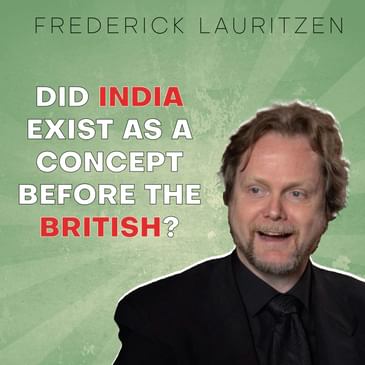
In this episode of India: A Story in the Making, we speak with Frederick Lauritzen, a historian at the Scuola Grande di San Marco, Venice. Frederick draws on meticulously documented historical facts to address this enduring debate.
Frederick Lauritzen, a scholar of Classics from New College, Oxford, and Columbia University, brings more than just expertise to the table—his genuine love for history lights up the conversation. As we journey with him, his personal story touches the heart, reminding us of the universal values that unite us and the diversity that enriches our world.
If you're the kind of person who loves seeing today's world through the vivid stories of the past, tracing the unexpected links between India, Greece, and Britain, this episode will offer a journey that speaks to both your curiosity and your heart.
ABOUT
Frederick Lauritzen
Frederick Lauritzen is a distinguished historian at the Scuola Grande di San Marco, Venice, with expertise in Byzantine literature and philosophy. He holds degrees in Classics from New College, Oxford, and Columbia University, and is widely recognized for his work as an editor and scholar. Lauritzen has presented at nearly 100 international conferences and has authored numerous critical editions and scholarly works, contributing significantly to the fields of Byzantine Platonism and Christian philosophy.
FULL VIDEO
You Tube:
https://www.youtube.com/@loveenatandonofficial
PODCAST SMART LINK
https://bingepods.com/podcast/podcast-rn7moe
Loveena Tandon: HOST: SOCIAL MEDIA HANDLES
https://www.linkedin.com/in/loveenatandon/
Twitter/X
https://twitter.com/loveenatandon
https://www.instagram.com/loveenatandonofficial/?igshid=OGQ5ZDc2ODk2ZA%3D%3D
https://www.instagram.com/tandonloveena/?igsh=MW5tOHdlc3cyMGJrOA%3D%3D&utm_source=qr
Learn more about your ad choices. Visit megaphone.fm/adchoices
[00:00:00] I was not very good in math so I ended up by doing ancient Greek.
[00:00:04] Has there been collaboration in the past between India and Greece?
[00:00:07] Very basically.
[00:00:08] It's an unfair assessment to India but I think it's, ironically, it's an unfair assessment
[00:00:14] to the British.
[00:00:16] It is true that what is interesting in the case of Greece and India is that authenticity
[00:00:23] or a sort of genuine self-perception is linked with an ancient past.
[00:00:32] The reason why the English have any contact with India is because of Charles II's wife.
[00:00:38] So the Sanskrit texts are talking about the same problems that the Greek texts at the
[00:00:45] same time are.
[00:00:46] All this packed knowledge of studying from Kalidas to Guptas and to everybody when
[00:00:51] you reached India, what was your thought about the country?
[00:00:57] This is India, a story in the making and I'm your host, Loveena Tandon.
[00:01:02] Hello and welcome to India, a story in the making.
[00:01:06] Today we're going to talk about something very interesting which is debated quite a
[00:01:12] lot which is, India as a concept is pre-British or not.
[00:01:19] Did India as a concept exist before the British came to India?
[00:01:26] Also we'll explore what's in the name, India or Parade, all this conversation that happens
[00:01:32] but with someone who is a historian.
[00:01:36] But more interestingly for me, someone who was born to an American father and a Northern
[00:01:45] Irish mum in Venice and then studied in Oxford and then studied in Columbia and then stayed
[00:01:54] all over the place and went back to teach in Venice.
[00:02:00] I have to read this which is, Scuola Grande di San Marco, Venice and also associated with
[00:02:08] Hellenic Institute of Venice.
[00:02:12] Yes, Patrick now reads it.
[00:02:14] Is that right?
[00:02:15] Yes absolutely.
[00:02:16] Welcome.
[00:02:19] What's in a name?
[00:02:20] There is a lot in a name.
[00:02:22] I really like to try at least to pronounce the names correctly.
[00:02:27] So tell me again about your institute, how to say it well.
[00:02:32] Yes it's called Scuola Grande di San Marco.
[00:02:35] Scuola Grande di San Marco, brilliant.
[00:02:39] And it was originally a charitable institution in the 13th century and then it progressed and
[00:02:45] now has become a foundation which also deals with research and cultural events and we have
[00:02:52] moments of teaching as well.
[00:02:54] So that's what I collaborate with them and also with the Hellenic Institute which is
[00:03:01] the only research centre of Greece abroad.
[00:03:06] But what is very interesting is that Frederick, you'll allow me to call you Frederick right?
[00:03:14] Because I can't call Lauritse the whole time.
[00:03:18] I think I'm done.
[00:03:20] Okay this time I hope.
[00:03:23] Is that his expertise is in Byzantine period and he did a paper for which he went all
[00:03:32] the way to India, JNU where I come from, Jawaharlal University, Delhi and we will talk about that
[00:03:40] paper but before that I want to talk about your journey Frederick.
[00:03:46] Tell me about this whole global mix that is happening in you.
[00:03:50] Let's understand you first before I go into the concept.
[00:03:53] Yes well the single most important thing for me is that I was born in Venice so
[00:03:59] that's really where I feel at home and that's really where I grew up.
[00:04:03] So I grew up in Italy but in a city with no cars we have canals and sort of streets so
[00:04:10] it's a different atmosphere and the past is very important there so maybe that's also
[00:04:16] what shaped my interests as well as my parents, my father's a historian as well.
[00:04:24] So yes American and I grew up in Venice and then went to university in Oxford at
[00:04:30] New College where I read greats so I studied ancient Greek and Latin languages
[00:04:36] and also philosophy and history and from there I went to New York to
[00:04:41] Columbia University where I spent six years for my PhD, a wonderful time and
[00:04:47] then slowly went back to Venice through Paris and through another city in Italy
[00:04:54] called Bologna and now I'm back in Venice.
[00:04:59] So having travelled in so many places you were a real mix of what made you study
[00:05:09] Greek and Latin? Was it not enough that you were already such a mix?
[00:05:15] Well that's actually one of the great privileges of growing up in Italy.
[00:05:18] In Italy the Italian language derives from Latin so when you study Italian it's
[00:05:25] important to learn Latin to improve your knowledge of Italian very basically but
[00:05:31] the Romans are always talking about the Greeks so when you start reading
[00:05:35] about reading in Latin they're always telling you what the Greeks are doing
[00:05:39] So in Italy it's very normal to study Greek and Latin.
[00:05:44] They're not specialist subjects, they're subjects that many Italians have
[00:05:50] studied for five years at high school.
[00:05:53] Latin is almost obligatory for everyone so that's an ancient language
[00:05:58] and then Greek is for the people who tend to be more literary rather than
[00:06:03] scientific. We have two main choices which is what they call the
[00:06:08] Dicello Classico where you study Greek and Latin or the Dicello
[00:06:11] Gentifical where you do Latin plus more math and more sciences.
[00:06:17] I was not very good in math so I ended up by doing ancient Greek but luckily
[00:06:22] that's the subject that I fell in love with and I just continued studying it
[00:06:28] and enjoying it. I still like reading ancient Greek literature for pleasure
[00:06:32] it's not just research and work.
[00:06:36] So Italy kept you though you had an American father and you had a Northern Irish mother
[00:06:43] Oxford could hold you back, Colombia could keep you.
[00:06:47] Well no it's not that Italy kept me I'd like feeling a link with all these places
[00:06:53] but as I have a small child who's nine years old it's easier for him to go
[00:07:01] out in the street with no cars. He can play free and that's the way I grew up.
[00:07:08] So for me that's very nice it means that in this phase of my life and our life
[00:07:15] as a family we are in Venice and that suits us very nicely.
[00:07:20] I enjoyed my time in Oxford and at Columbia obviously
[00:07:24] it's... Oxford is an incredible university in a wonderful town.
[00:07:28] New York is a very special city that I felt privileged to have lived in
[00:07:34] and then living in Paris as well was very nice for four years
[00:07:38] and then Bologna gave me a different insight into Italian life
[00:07:43] with tremendous opportunities and discoveries of the way Italy works
[00:07:50] which sometimes is surprising seen from abroad.
[00:07:53] Really? Tell me more. How does it work differently?
[00:07:57] Well Italy is a wonderfully friendly place so when you're in the work environment
[00:08:05] you're often sharing very good moments with your colleagues.
[00:08:10] Sometimes the work is difficult but you can always get around it with
[00:08:14] a joke or light comment. It's a very pleasant way of working even if
[00:08:20] you're doing something difficult. What is remarkable with Italians is that
[00:08:25] some of them are truly workaholics so you very often run the risk
[00:08:32] of entering the world of non-stop work which is something that we don't think
[00:08:38] about when we look at Italy from abroad. So you have this delight
[00:08:42] comments and then people working seven days a week
[00:08:46] Wow until the late hours and they don't...
[00:08:50] That category of Italians doesn't go on holiday. They just don't think of it.
[00:08:57] For them their life is their work and so sometimes working in that environment
[00:09:02] is rather challenging. I'm not entirely Italian.
[00:09:07] In fact I'm half American, half North American so that can be
[00:09:14] challenging that real... What's your son?
[00:09:18] What's your son like? I mean he's...
[00:09:20] Well he's trilingual. He speaks three languages so he's got a superpower.
[00:09:25] He means he could communicate with most people he meets who are not
[00:09:30] How does he feel as in what do you feel like?
[00:09:34] I mean what do you feel like? I mean you said that you are...
[00:09:37] Well I'm British but I my city is Venice so that doesn't bother me in any way.
[00:09:48] It's not a problem it's just an unusual mix.
[00:09:52] But it means that people say are you Italian? I say well no I'm not.
[00:09:57] My family comes from somewhere else. Do I feel at home in Italy? Yes.
[00:10:02] But Venice is my city like if someone comes from Rome they're not Venetian.
[00:10:06] I am. It's really that simple.
[00:10:10] I found it very interesting when you said that you chose a city where there were no cars.
[00:10:16] Yes absolutely well that's that's I grew up without...
[00:10:19] I found it quite challenging when I went to Venice to say well do people open the door
[00:10:25] and do they how do they set foot on water? How does it work really every day living just...
[00:10:32] In the old days which is a couple of centuries ago the front door was facing the canal because
[00:10:38] that's where you would... So instead of cars you will have canoes?
[00:10:42] Oh it's exactly well no you'd have gondolas.
[00:10:44] Gondolas everyone will have a gondola but no that's the that's in the old days and that's
[00:10:48] when people you know owned an entire palace and rather wealthy what people do now is that
[00:10:53] they use the the entrance which gives on to the street so at the back of the and
[00:10:58] so we walk around everywhere. People own cars?
[00:11:02] No well they do but they don't use it that much because the car is somewhere else.
[00:11:07] Environment better because of that?
[00:11:09] Yes the air is better I mean you notice it if you come from from Paris for example
[00:11:15] you notice it even staying just a few days outside of Venice the air is really really
[00:11:21] not as not as good and you're on the sea so you have the the breeze from the sea
[00:11:28] it's it's a very natural environment. Last question on Venice then I think we'll move on but
[00:11:34] we've heard that Venice the water is going to the city is going to what's the word I'm looking for
[00:11:42] Venice as a city will sink yes. Well they've been saying it for for a long time I think my
[00:11:50] great great grandmother wrote home when she came to Venice and she said you must come quick Venice
[00:11:56] could sink well hasn't happened yet so we're just living here and now and at the moment it's there.
[00:12:03] I also took my children to Venice and say come on come on the city.
[00:12:11] But there's a human aspect which is remarkable about Venice because cars are very isolating
[00:12:16] when you enter a car you're in your own world when you go out of your front door in Venice
[00:12:23] you have a problem because you'll automatically bump into the people you like and the people you
[00:12:28] don't like all the time so you're you're immediately seeing people and then you say ah I forgot to
[00:12:38] ask him something let's have coffee together and so you the Italians very often go to a bar
[00:12:43] and they'll stand up and have an espresso you don't sit down it's not like in France so you
[00:12:48] stand up have a coffee five minutes exchange one or two ideas and then move on. Ah it's time for us
[00:12:57] to move on too but this is very very interesting to me it was a great digression I think now
[00:13:04] moving on your interest in India and when I say um when I say India did India as a
[00:13:13] concept exist before the British or not? Yes well in the the the the short answer is that the the
[00:13:23] word India referring to everything south of the Himalayas is present in Greek texts from 2500 years
[00:13:32] ago so there's a historian Herodotus who's also known as the father of history and the father
[00:13:40] of lies as a result he actually refers to India specifically and his information was filtering
[00:13:46] from Persia because at that time the Persian Empire was very large and on one side it bordered with India
[00:13:53] and on the other side it bordered with Greece so that's why the Greeks use the word India it's
[00:14:00] a Greek word India. Oh India is a Greek word. So clearly it existed before the British left
[00:14:07] India or even before they arrived there it's an ancient word ironically that's why the British
[00:14:15] used it because it was the only correct term for the place but it was a Greek word derived from
[00:14:24] Sanskrit referring to the Hindus River which in Sanskrit is Sindhu so with an S and the S was
[00:14:32] dropped and replaced with an H by the Persians by the Iranians the Greeks couldn't pronounce the H
[00:14:40] so they dropped it and became India and that's the term that was used and so India without an S
[00:14:49] or an H is the Greek form specifically. Interesting before we go more into this I wanted to know
[00:14:57] your interest in the paper that you did because you your expertise is in Byzantine. Yes exactly and
[00:15:06] what made you write a paper and what paper was that please tell everybody. Well there has been
[00:15:15] an acceleration in
[00:15:19] collaboration between Greece and India in the last two years and among the aspects
[00:15:31] which the two countries want to collaborate on was the question of culture so the first question
[00:15:37] is has there been collaboration in the past between India and Greece very basically so a
[00:15:44] conference was organized in JNU which was the first episode in exactly the first episode in this
[00:15:50] series of conferences with a Greek delegation and an Indian delegation and myself and my wife as well
[00:15:59] and it was throughout the ages it talked about the time from let's say the Greco-Indian kingdoms
[00:16:07] and the period of the Gupta Empire then later the Mogul Empire so it covered a large framework. The
[00:16:17] hole that was missing was the period of Byzantium and the reason why I proposed the paper and why
[00:16:23] it's interesting is that the Greeks did have contacts with India when India became predominantly
[00:16:32] Hindu and that was specifically in the Byzantine era so the Byzantines the Byzantine Empire is
[00:16:42] defined by when the Roman Empire decided to move its capital from Rome in Italy to Constantinople
[00:16:49] which is now Istanbul in Turkey. When they moved there moving east they had an interest in
[00:16:55] the links with the east including India and they established diplomatic embassies that's
[00:17:02] very probably how chess reached the west because obviously chess is an Indian game
[00:17:10] the Chhatrangya and the Byzantines used a Greek word derived from Sanskrit so the game was coming
[00:17:19] from India not from Iran so that's so there are elements of direct connection
[00:17:28] but what's extraordinary is that it's a connection not specifically with the
[00:17:32] Buddhist world as it had been before but specifically with a new precisely Gupta Empire
[00:17:41] with different interests and specifically with Vishnu etc with other focus let's say.
[00:17:51] So when someone says to you that India as a concept did not or geographical concept did
[00:17:58] not exist before the British arrived in the unified India what would be your historical
[00:18:04] reference response with historical reference? Well I think that's really that's I think it's
[00:18:11] to be honest it's very unfair assessment it's an unfair assessment to India
[00:18:18] but I think it's ironically it's an unfair assessment to the British because the
[00:18:25] geographic concept of India was known from the earliest times the fact that India went
[00:18:32] through different political phases is a different point India was always India in the Greek text and
[00:18:39] it was there it was not somewhere else Italy has a parallel history Italy has always existed as
[00:18:49] a place that one refers to Italy but it was unified in 1860 so it became a country with
[00:18:57] single legal system let's say later on but it was referred to as Italy in the 14th century long before
[00:19:06] and everyone knew that was that was Italy so somehow it's it's not always a problem.
[00:19:13] Give me references in the Byzantine text that would prove what you're saying and give us
[00:19:19] stories that is most interesting actually. I guess well the the thing is that we have a wonderful
[00:19:25] we have a and give a timeline what timeline are we talking? Well the period the the paper I gave I
[00:19:31] talked from the fourth century to the 11th century so that's the time when the Roman Empire dropped
[00:19:36] paganism and became Christian right so it's the creation of Christianity with the emperor
[00:19:41] Constantine but there are two anecdotes I would say there was an emperor in the 10th century
[00:19:49] who clearly understood that his son was not very good at following the court ceremonial.
[00:19:56] Too many court ceremonies were going on so he wrote a book describing them all so we have
[00:20:02] the book of the ceremonies one of these ceremonies describes how to greet the embassies from India
[00:20:11] and how to write to them when you write a polite letter you would say you know
[00:20:18] the two emperors Constantine the Romanos which gives a date around 920 AD so it's interesting
[00:20:26] so it's before the Sultanate of Delhi but after the Gupta Empire so it's an interesting phase
[00:20:33] and there were direct links Constantinople India say they would write and say to
[00:20:41] to the ruler of India our dear friend and then they would continue their official letter
[00:20:47] but he had the official term the designation was our beloved friend so there were good relations
[00:20:56] and part of the reason was the difficulty that the Byzantines had in the people in India had
[00:21:04] of keeping the trade routes open when there were Persians and people in the Arabian peninsula
[00:21:12] in the middle that's the reason why the Byzantines and the Indians were in touch
[00:21:18] what was the difficulty precisely the fact that the the Persians and the people in the Arabian
[00:21:26] peninsula would not allow trade to happen they would block the ships or they would take the
[00:21:34] goods and sell them on themselves and so the the Byzantines and the Indians were trying to keep
[00:21:41] trade routes open one of the famous trade routes was the one that used the monsoons
[00:21:50] that allowed direct navigation and rather quick navigation from southern India all the way to
[00:21:58] let's say Somalia approximately and then Ethiopia and then up so how would they find
[00:22:06] how did they find a way out of not being looted in that peninsula what was the alternative
[00:22:12] well it became more and more difficult but there is evidence of commerce because in the
[00:22:17] Delhi museum there is a coin from 1045 which for some reason people haven't really studied
[00:22:24] but if you have a coin from 1045 that's a coin that didn't exist in 1042 I know it's obvious
[00:22:32] but it means that it was created after a certain date and then it reached India so there was commerce
[00:22:40] there was trade what are the most extraordinary aspects is that we see that's actually the
[00:22:47] only time we have a real influence of Greek on Sanskrit there are Greek words that enter
[00:22:52] Sanskrit and its astronomical terms there's a great Indian astronomer from the sixth century
[00:22:59] who starts using Greek names of planets and Greek names for measurements of the planets
[00:23:07] and he writes this in a book called the romaka siddhanta so the Byzantine wisdom
[00:23:15] and there's another book called the paulisa siddhanta which means the wisdom of Paul a Paul came from
[00:23:23] the Byzantine Empire so it's clear there was a connection and they knew it it's just us
[00:23:29] we're not very good we forgot things that are interesting we are good at forgetting
[00:23:34] but that's the problem with history yeah and remember the wrong things we forget the right
[00:23:38] things and that's a funny thing because it's a it's a contact and friendship between two nations
[00:23:45] that are distant but are intellectually curious of one another though the life of Buddha was
[00:23:53] translated into Greek we had stories that were also translated into Greek from from Sanskrit
[00:24:01] so there were contacts I always imagine people at an embassy what happens once you've said what
[00:24:09] you need to say that's so important well you go out and you have dinner with your newly acquired
[00:24:14] friends and you start telling stories you say this is the story that's come out most recently
[00:24:20] this is the game we play like chess this is what we play and that's I think that's also a form
[00:24:26] of communication very interesting you said Shatranj yeah is the word the game came from India
[00:24:34] but at what period I mean we often associate Shatranj with the Islamic period yes but it's a
[00:24:44] Sanskrit word it means the four the four corners so in Sanskrit so it's not that thing they paid
[00:24:51] Mahabharat didn't they yes exactly so there are images there are miniatures showing chess in a
[00:24:59] Hindu context specifically so the Greek word doesn't seem to come from Shatranj it seems to come more
[00:25:07] from from the an earlier form of the same word which is Shatranj
[00:25:24] Shatranj is the Persian form but in Persian it doesn't mean anything in Sanskrit it does
[00:25:32] so that's also that that's very typical of the Greek world too words have meaning
[00:25:38] so every culture is ancient every culture has a distant past but not every culture writes it down
[00:25:46] the Indians and the Greeks have this aspect in common of writing and referring to what interests
[00:25:52] them over the centuries we have ancient texts from India we have ancient texts from Greece
[00:25:59] not every culture does that so there's an interest in language in communication
[00:26:05] and sometimes saying you know we know better so we're going to write it down
[00:26:10] but that's an interesting way of dealing with one's own culture
[00:26:16] um very interesting to hear that India is a concept had the way and the manner in which it existed
[00:26:22] but today when um when you say Bharat yes and in words is India when we say when you hear
[00:26:32] this whole thing about India edging to change their name to Bharat how does it speak to you
[00:26:38] because you have studied this well the thing is that there are countries that are referred to from
[00:26:46] there's a way of referring to oneself and then there's a way other people refer to you
[00:26:51] in Greece for example most European languages refer to Greece with a word that sounds like
[00:26:58] Greece, Grecia in Italian, Gürza in Serbian or words like that in Greece it's called
[00:27:06] helas or elada that's how the Greeks refer to themselves so that's why we talk about
[00:27:12] Hellenistic or uh Hellenic because that's how the Greeks refer to themselves Armenia is another
[00:27:19] case uh we tend to talk about Armenia but they refer to themselves as Haya Stan or Hai
[00:27:27] so the words which are very different so if India prefers to refer to itself as Bharata with a very
[00:27:35] ancient uh denomination which appears in the Mahabharata and in various uh ancient texts
[00:27:42] in classical Sanskrit that's India's choice and it's it's right uh Turkey recently has
[00:27:51] changed by law its name to Turki so one's no longer allowed to refer to Turkey, it's Turkey
[00:27:59] even in English one should say Turki so I think it's the right of every country to refer to
[00:28:06] themselves as they want there is a slight uh colonial aspect if that's what the debate is
[00:28:13] about because India is what in Greek you'd call an exonym it's uh it's the name you give I've seen
[00:28:21] from abroad it's what the Greeks refer to when they reached India when they would communicate with
[00:28:27] Indians they'll say you are India but it's their word and so it is so this whole thing I think
[00:28:37] we feel and it is happening a lot in the world where they just want to
[00:28:45] authenticate their identity if you like isn't it and stamp as their own do you see a kind of an
[00:28:55] identity crisis or some why why is there so much changing of names wanting to change that name
[00:29:02] and authenticating that identity yes I think that it's the yes there's there's an aspect where people
[00:29:13] get they're they're troubled to see other countries speaking about them in a different way or
[00:29:23] the the perception of not being treated as an equal is a is a strange perception because
[00:29:31] whenever you're dealing with another country whichever country you are
[00:29:35] they're bound not to understand you because they're a different country it's just that simple but
[00:29:41] sometimes it feels offensive and that that is completely understandable but that's something which
[00:29:50] I mean in Europe one sees that a lot you know the the French with the Belgians they're like
[00:29:56] you don't understand me or the Germans with the French or the Italians within
[00:30:01] Italy itself each region is always making jokes in front of other regions
[00:30:08] it is true that what is interesting in the case of Greece and India is that authenticity or a
[00:30:17] sort of genuine self-perception is linked with an ancient past so if you find the ancient way of
[00:30:28] referring to yourself we must stick with that because I think what's interesting is and that's
[00:30:35] why I'm interested in India and Greece is the idea that the future is colored by the past
[00:30:42] so that is a very interesting idea we don't want to repeat the same mistakes
[00:30:49] yes there's an element of we were there before we know how it's going to go but it's having a
[00:30:55] precedent is very important you don't want to in one's own life one chooses to do things based
[00:31:05] on the mistakes once done in the past yes I was about to actually ask you what interested you
[00:31:11] in studying the Greek and India connection or Greece and India connection really
[00:31:18] and yes well this this extraordinary connection I didn't realize that there was
[00:31:25] direct contact between the two cultures the thing which is very striking I
[00:31:33] studied a lot of ancient Greek and the closest language to ancient Greek is actually Sanskrit
[00:31:40] so there are just extraordinary amount of parallels between the two languages
[00:31:46] and so that is something astonishing in itself and by the way it's it's something which the
[00:31:55] some of the British who went to India cheated a bit because when they reached India
[00:32:02] they could study Sanskrit because they'd studied a lot of ancient Greek before
[00:32:07] so they it was not entirely impossible they weren't struggling with a very difficult language
[00:32:14] that task was made a bit easier that's why one started having English people
[00:32:18] who would know Sanskrit because the leap was not that that big so that contact is extraordinary
[00:32:27] and also the fact that both cultures think that the most important aspects of civilization
[00:32:33] come from them so yes that's the whole idea of we were the most ancient actually in the world which
[00:32:41] is really growing a world that is really becoming global and one finding scrounging for your own
[00:32:50] identity and saying you know what we were the ancient civilization which is with
[00:32:57] is where all this rhetoric and narrative is coming from maybe yes but I think that
[00:33:03] what is really quite extraordinary and maybe a source of that something that one should
[00:33:10] think about is the fact that there are now the countries that really divided into two groups
[00:33:15] you have the countries like Greece and India who who think the past is extremely relevant
[00:33:22] for their own identity and for the future and the contact with other cultures
[00:33:28] and then there are people there are countries that think that we must eliminate everything to do
[00:33:33] with the past because that is an obstacle to the future so well in many countries in Europe
[00:33:43] the study of history and geography has become optional really yes and it's well in in France
[00:33:52] and in Germany and that creates a problem because when you hear people for example
[00:34:00] in the Indian foreign ministry like the foreign minister of India they will talk about
[00:34:05] the geographic position of India and the fact that that defines
[00:34:11] India's policy or they will talk about the past of India as defining the policy
[00:34:19] but India is confronting countries that are saying geography in history don't count
[00:34:25] so that means that you have people at the same table who are speaking two different languages
[00:34:30] and that's difficult because it's not a question about being different it's a question they're speaking
[00:34:37] two different languages so they can't they can't bridge the differences because they're not speaking
[00:34:44] together but why no interest in history and geography because they think of it as a problem
[00:34:52] which is a is something that blocks the moving forward ashamed no not ashamed they just think it's
[00:35:03] irrelevant how is it why I know it's very difficult for us to understand but that's why it's
[00:35:12] it's very usual to meet people who don't know well sometimes also in this country in the UK
[00:35:21] history is problematic I could give a very concrete example given the question of India
[00:35:31] few few people are interested or are aware that the reason why the English have any contact
[00:35:38] with India is because of Charles II's wife was Portuguese and therefore had a Bombay
[00:35:50] Bombay was a Portuguese colony that's the only reason why the English have any contact
[00:35:55] and link with India is because of the Portuguese wife of Charles II but that means that England
[00:36:02] depended on the Portuguese trade routes which were much older and rather important for India
[00:36:11] even for Sri Lanka and even for Calcutta for different cities not just Mumbai or Bombay so
[00:36:20] that's something which is very important today now but
[00:36:27] that it's not being considered a Portuguese colony that's important in this aspect is South Africa
[00:36:35] so that has an Indian connection too so that's why history is important when you studied India for
[00:36:43] your paper and your research was it what is it that you learned about it that was new fresh
[00:36:51] or amazing or something that you well I was uh well what I was really astonished by was obviously I had
[00:37:01] to uh to a crash course reading some classical Indian literature which was not Vedic so something
[00:37:09] more recent so Kalidasan poets like that and what surprised me very much was the Indian
[00:37:16] theater from the classical Sanskrit period yeah exactly so then so these were genres that I was
[00:37:26] interested in so a type of literature I like literature very much rather than history and
[00:37:32] the other thing which I was curious about was Kalidasa talks about the Ragu dynasty and the
[00:37:40] question of the conquests in the northwest and the invasions from there and the fact that he talks
[00:37:47] about peoples that came from the northwest called the Huna that the Byzantines had problems with
[00:37:54] all the way in the west in Europe so the Sanskrit texts are talking about the same problems
[00:38:02] that the Greek texts at the same time are but at a huge distance so these vast migrations
[00:38:09] of people north of the Himalayas and how they reach Europe, Hungary, Turkey and how they affect India
[00:38:20] all the way to to Delhi but the Greeks and the Indians are writing about the same people
[00:38:26] and who are these people so that the technical called the well they used to be called the
[00:38:31] heftalight hunts then it goes on but there are what is it today uh today it's the people
[00:38:37] who speak languages like like Turkish or Uzbek or Kazakh or Turkmen so it's really a very wide area
[00:38:45] but also Hungarian in English we talk about Attila the Hun as a symbol of someone who
[00:38:51] was really quite a strong leader well Attila the Hun is the same as Huna the people who were
[00:38:59] in the area of Afghanistan and let's say Pakistan and who were trying to enter
[00:39:08] in the area around Delhi effectively and that Kalidasa writes about my god so the problem of
[00:39:18] all these turkeys and and and and and all all these people where Pakistan is today and everywhere
[00:39:26] the problem of them entering Delhi what is today done the foreign minister of India pointed it out
[00:39:34] that one has to just step back and say geography is geography the Himalayas are very difficult to cross
[00:39:42] which is why it's the land of snow isn't it and so what's very important in that chain of
[00:39:51] mountains is that there's a dip the famous northwest passage which is the it's the only real
[00:40:00] route of access and that's that's how it is it's interesting that there are Sanskrit texts that
[00:40:08] talk about this wow so what problem we had at the time of time when Kalidas wrote we pretty
[00:40:17] much have the same kind of is that right to say that it's not it's not it's not a problem it's the
[00:40:23] fact that that's where I think it's important to make a distinction we're not saying there is
[00:40:30] the same problem we're saying there are the same dynamics there's only one way to go
[00:40:36] north of India and it's that way or there's only one way of entering India
[00:40:40] and it's that way that's how it is and it's always been like that and you're not going to move the
[00:40:48] mountains so obviously the great poets the great writers write about that the Greeks do the same
[00:40:56] they describe geographic situations or movements of people Alexander the great conquest of Persia
[00:41:05] it's very interesting because he showed that once you get going you you can just move along until
[00:41:13] you reach the Hindust River and then it's more complicated okay my last bit you with all this
[00:41:20] packed knowledge of studying from Kalidas to Gupta and to everybody when you reached India
[00:41:26] what was your what what is your thought about the country oh I loved it to be honest it was
[00:41:32] my dream since a long time to go to India and it was I was expecting to have a wonderful time
[00:41:41] and it was better than what I expected because did you like the kiosk the smell the sound
[00:41:47] yes but also I like the fact that people were very the people I met were very polite
[00:41:53] so it was easy to to interact and it was relaxed calm and and there was this you could tell that
[00:42:05] there's this background which is always there you know this a long past is something that
[00:42:12] sometimes is a relaxing element because you feel more sure of yourself if you have a longer past
[00:42:20] I want to end up by saying tell me in few lines
[00:42:27] your response to people who want to debate the fact that India was unified the way it was
[00:42:34] by the Britishers yeah I'm not sure that's the the case I mean the way the the English and the
[00:42:42] British and then the UK entered India and then established a presence there was not really systematic
[00:42:51] it's a very complicated story and also from a British point of view it's very complicated how it went
[00:43:01] so they weren't they didn't enter to create a concept they just happened to be there
[00:43:09] thank you so very much and on that note there is a rapid high five a section in which I will ask you
[00:43:17] some rapid questions don't look so sad no no there's a reward I'll give you a high five
[00:43:25] fantastic
[00:43:35] um what is India for you in one word calm calm really people find it chaotic you found calm there
[00:43:45] yes why what was it precisely that there's a I've been to other countries which seems
[00:43:54] chaotic and they were created anxiety having a different way of organizing things does not mean
[00:44:02] chaos how wonderful how wonderful I wish more people see this well what is the one thing about
[00:44:13] India that western people do not get that it's it's a it's a universe I mean the fact that you have
[00:44:23] so many different types of culture and traditions and populations living within India
[00:44:32] means that from my point of view India does not have time to deal with other cultures because
[00:44:39] you're busy trying to figure out all your different internal dynamics so I think that's the main thing
[00:44:47] that is difficult to see from abroad it's not the United States it's not Australia it's just
[00:44:53] an immensely compact set of different worlds so I think that's what's difficult for an outsider
[00:45:01] to understand what is it about your studying so much of history Greek Latin and so much about
[00:45:10] so many cultures taught you which you apply in your own life that a language reflects a culture
[00:45:23] so a language is is a good way of having the basic what in America you call the one-on-one course
[00:45:32] to a different culture that maybe you don't know so studying language seeing what how people express
[00:45:39] themselves really gives you a small insight into a world you don't know so I think that's
[00:45:48] that's therefore you should conserve your language isn't it yeah it means that language is is important
[00:45:54] but it means one shouldn't have a rationalistic view of language you're not imposing we must be
[00:46:02] different and regular it's not that it's the fact that even funny expressions jokes can tell you
[00:46:10] more about another people than reading a whole history book
[00:46:17] India is really moving very fast it's the race to the economy it's in the top five and all of that
[00:46:25] what is the one thing you feel they should retain in this race to be becoming modern
[00:46:32] and well the short answer would be their roots so obviously I think a way a way of unifying
[00:46:41] a country with so many different cultures is to find cultural aspects which are in common
[00:46:47] to most people in in India and to focus that at a school level so that everyone knows
[00:46:55] a set of things that makes them say I guess you went to school in another region or another state
[00:47:03] you know that too but you are common and what would that common be for you you think
[00:47:09] well obviously I tend to focus on ancient languages I mean most languages in India
[00:47:15] so you think everyone should learn Sanskrit yeah yes I mean obviously that's my point but
[00:47:22] what I was very interested in is is that in India you have a law protecting all the ancient languages
[00:47:30] so I think you've declared six languages as being ancient it's not a question of everyone
[00:47:36] learning the same thing protecting languages protecting culture yes it's and it gives access
[00:47:42] to the past so it allows people who are young to actually read about their roots there are some
[00:47:49] cultures that have strongly modernized their language to the extent that they can't read
[00:47:54] their past texts and that sometimes is a way of really distancing oneself from the past but that's
[00:48:01] not what should happen with India yeah maybe India should stick with its roots that will actually
[00:48:09] is a pathway to many languages even European isn't it yes exactly but it's become less
[00:48:16] less usual in Europe to do that very few people study the past languages in Europe now
[00:48:22] which is a problem because culturally Greek and Latin played a huge role and it's one of
[00:48:28] few aspects that unifies all the European continent indeed okay my very last one yes
[00:48:35] having studied so much so many histories so many languages lived in so many places
[00:48:42] what is the one unifying thing you find in human nature are all humans what are they connected by
[00:48:54] or is there anything or are we defined by our culture or whether environment we live in
[00:48:59] well I think the the the culture and the environment plays a very very big role
[00:49:06] but I think one one tends to forget that the very basic interest of the person is
[00:49:13] a Trump's even culture so one can communicate with people from different cultures because
[00:49:21] sometimes they want to communicate with you so this can build bridges but also break barriers
[00:49:29] hmm what is that one connecting factor in human nature I think everyone's just trying to have a
[00:49:37] good life so the question is the definition so how do you achieve that and sometimes conflicts
[00:49:46] derive from different definitions of what a good life is and sometimes these conflicts are unnecessary
[00:49:56] other times they're unavoidable but sometimes it's just we're just creating problems for no reason
[00:50:02] because most of us are not really looking for a fight or a problem most of us just want to have
[00:50:11] a normal life a comfortable life uh to aspire to achieve what they think is important
[00:50:19] but that again boils down to the good life so the human nature is to have a good comfortable life
[00:50:27] yes not not comfortable in the lazy sense but in the sense that you know it means you can look
[00:50:33] after the people you you care for or that your friends around you are also happy because
[00:50:40] it's very distressing to have someone that you love who's sad or someone who's a friend
[00:50:45] who's in trouble okay and this is just an extra but I do want to I always ask one
[00:50:51] what of our ancient history informs our present character or national character or a character
[00:51:00] and a human being so how would you say an Indian person what defines an Indian person one character
[00:51:06] or a Greek or a Roman in uh well I think the the the roots play an absolutely
[00:51:14] huge role that there was a very funny definition of common sense common sense are the prejudices
[00:51:20] you acquire before the age of 18 which is an interesting way of looking at it it means
[00:51:27] that each country has its own common sense based on what they've been taught at school
[00:51:32] or taught by the families or by their friends before the age of 18 then after 18 you travel and
[00:51:39] you retain the common sense that you had where and how you grew up so the the way you studied
[00:51:48] the past at school or at home is very important because it really shapes the automatic response
[00:51:56] not the logical thought out one but your instinct yeah you told me once that you know studying in
[00:52:03] Italy is different to studying in Oxford the way they approach exactly and it's it's one how how
[00:52:08] tell us quickly well I was delighted to study in the different systems the the Italians have
[00:52:17] the Italians are very creative and very uh abolient in many ways so what they focus on
[00:52:25] is achieving a great amount of knowledge they need data they're always looking for elements
[00:52:33] to know to explore the world because they're curious uh in Oxford there was an interest
[00:52:41] more in in uh in focusing on how to interpret uh that point of view but that sometimes
[00:52:49] interpretation depends on common sense which is a problematic issue and then in Colombia
[00:52:56] and Colombia in New York the one thing which anyone who's lived in the United States
[00:53:03] I think appreciates is the enthusiasm whatever one thinks of the US in good or bad
[00:53:11] America is very often enthusiastic so they will approach a new subject
[00:53:15] India thinking it's it's very interesting uh India well uh India I don't uh I've never lived there
[00:53:25] but the impression I get is is uh there's a tremendous curiosity about the outside world
[00:53:34] there's a curiosity to be about the outside world while not while not having that outside world
[00:53:44] alter the basic culture as long as we can have our samosa jalebi something familiar
[00:53:52] as long as you can have your familiar aspect there's a curiosity but the economic expansion
[00:53:58] and the political expansion and diplomatic efforts show an interest in the world outside
[00:54:05] which as I said India is very big it's not it's not necessary you have so many things going
[00:54:11] on within India but this is a phase of great expansion of curiosity on a lighter note as I was
[00:54:18] saying that we wherever we go we'll make sure that we carry our culture and we carry our food yes
[00:54:26] oh that's very good thank you so very much that was ah I was not very hard
[00:54:32] thank you very much Frederick
[00:54:35] Lauritsian yes no
[00:54:36] Laurit say it again Lauritsen Lauritsen when you say it then I can say it yes
[00:54:42] Frederick Lauritsen yes Lauritsen okay get it thank you Frederick
[00:54:51] Lauritsian yes again didn't get it say it once more Lauritsen Lauritsen yes thank you very much
[00:54:58] Frederick has helped us given us historical context why India as a concept existed before
[00:55:05] the British arrived there and he himself loves it for its calm what do you love it for please do
[00:55:12] write into me and if you aspire to go there why would you want to anything all your thoughts
[00:55:18] are very very welcome please write into us follow our subscribe like as they say our
[00:55:23] YouTube channel LaVina Tandon official on Twitter and on LinkedIn I can be found as LaVina Tandon on
[00:55:30] and on Instagram it is LaVina Tandon official or Tandon LaVina so please stay connected and for
[00:55:39] the podcast any podcast platform that you follow please tune in to India a story in the making
[00:55:45] thank you take care and god bless listen to my podcast audio on Apple Spotify
[00:55:51] binge ports or wherever you get your podcast from and watch the video of the podcast on my
[00:55:59] YouTube channel LaVina Tandon new episodes are out every Sunday