

✔️Basic of Stock Market (New Edition)
https://www.rachanaranade.in/products...
---------------------------------------------------------------------------------
NSE IPO is here! 📈
In this video, we take a closer look at the National Stock Exchange (NSE), its business model, key revenue streams, financial performance, valuation, industry outlook, key risks and IPO details. From transaction charges and options revenue to listing, data services, clearing & settlement and Nifty licensing, understand how NSE actually makes money.
Watch till the end to understand the NSE IPO better. Disclaimer: This video is for educational purposes only and is not a recommendation to buy, sell or subscribe to any security. What is covered? 00:00- Introduction
02:55 -What does the company do?
12:13 -Industry analysis
13:12 -Financials, peer comparison & valuation
15:40 -Risks & litigations
Learn more about your ad choices. Visit megaphone.fm/adchoices
[00:00:00] Oh, meine Zehen bringen mich um. Diese Schuhe sind viel zu eng. Trägst du immer noch diese spitzen Dinger? Ich meine, sind nicht alle Laufschuhe so geformt? Nein, du brauchst Altras. Altra? Altras sind geformt wie deine Füße mit einer fußförmigen Zehenbox. Einfach viel bequemer. Bezwinge deinen Lauf mit Hallenzehen. Okay, das klingt traumhaft. Mehr Komfort, Kraft und Dynamik. Alles durch die Passform. Altra versteht das einfach. Altra, stay out there.
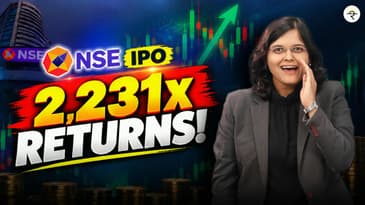
[00:00:30] Hey folks, CA Rachana Ranade here and I welcome you all to the IPO summary video of NSE Limited. One of the most awaited IPOs is what I may say. Now, if you have read the thumbnail, it says 2,231 times returns. You'll be like, how on earth is this even possible? I'm sure you might have one friend at least who might have bought the shares of this company in the unlisted space.
[00:00:54] Maybe about Rs. 2000 and the IPO price band that has come up is 1,700 to 1,785. How can that be such a massive return? Is the thumbnail wrong? No. Now, I'll tell you something which is given as a disclosure in the RHP right on page number one. And that's about the list of selling shareholders and at what price they had bought this company's shares. Now, if you have a look at this, this is the very first page.
[00:01:24] I'm scrolling down. Of course, I'm sure you already know about this, that there is no fresh issue in this IPO. It's a complete offer for sale. Okay, so this is the list of selling shareholders that you can see on screen right now. And the returns that I've mentioned is for SBI. Why have I taken only for SBI? This is like the largest selling shareholder. And look at their weighted average cost of acquisition. 80 paisa. And now they're going to sell these many number of shares at 1,785.
[00:01:53] Well, they have been holding the shares for almost 33 years. And that's what can be the magic of long-term investing. But now, if you are wanting to know about the company, what does the company do? Where does it generate its revenue from? Is it just an exchange that is earning fees only from the transactions that happen on the exchange? Or is it way more than that? What is the industry analysis? What does the peer comparison look like? How does the valuation look like? Are there any risks? Are there any litigations?
[00:02:23] All these pointers is what we're going to understand in this video. So it's going to be a very interesting and important video. Keep on watching it till the end. Before we move on, I'm happy to share that I have launched the latest edition of my Basics of Stock Market course yesterday itself. And if you check that there are many, many extra pointers in this new edition. If you see that I have talked about how to analyze IPOs using AI tools. How to generate two-pager summary for big RHPs which are 500 or 600 pages plus.
[00:02:53] That has been taught in this course. I have talked about how to use these platforms. Be it something like TradingView or Screener or MoneyControl. Key pointers have been taught in this course. I have talked about the latest changes like CAS in this course. I have talked about something like an ETF investing strategy in the course. And there are in all 80 plus beginner friendly concepts. So if you want to start your stock market learning journey, this is the course you begin with. Don't forget to use the coupon code CRRYT while you enroll for this course.
[00:03:25] Now let's start with a very basic question as to what does the company do? Simple. See whenever you want to buy or sell shares, from where do you buy it? Don't say through the broker or from the broker. You ultimately buy or sell it from a shop. You want to buy shares, you have to visit a shop. You want to sell shares, you have to visit a shop. Which shop is that? That shop is nothing but the exchange. You need not physically go to the shop to buy and sell shares. The everything is done electronically.
[00:03:50] And to execute that transaction, you need an intermediary who is a broker. Okay. So ultimately, if you ask me what is a stock exchange, it's nothing but like a marketplace, an online marketplace where you can buy and sell shares. It's as simple as that. Right. Now, if you want to understand the business model, how does NSE actually make money? There are eight different, different revenue streams. But the biggest revenue stream for them is transaction charges. So if you happen to see a contract note, that's how it will look like.
[00:04:21] In the contract note, you will be able to see that there are certain transaction charges which are led by whom? By the exchange. So you can imagine whenever you buy or sell through a stock exchange, you have to pay a transaction fee to the exchange. So whether you buy or whether you sell, pay the exchange. Whether you incur a loss or you make a profit, pay to the exchange. So it's irrespective of profit or loss, the exchange is going to make money. Okay. How much percentage of their total revenue comes from transaction charges?
[00:04:51] It is 78.65%. Is that a big chunk of their total revenue? Answer is yes. And out of this, transaction charges of what? Transaction charges can be further broken down into transaction charges which are from cash market, from futures, from options and even from mutual funds. And there's a very small chunk for others. But again, if you see the maximum chunk is coming from what? Options.
[00:05:18] Options accounts for almost 10,000 crores out of the total 13,057 crores of the transaction charges. But this number is extremely important because if I were to compare this with the total revenue from operations, this number comes to almost 60% from revenue from operations. Keep this in your mind. I'm going to come back to this number in some time. So this is the first set of revenue transaction charges. Second number is listing services.
[00:05:44] Any company which comes up with an IPO typically lists on both exchanges, BAC, NSE. The moment you want to list the stock on the exchange, you will have to pay a listing fee. Now, listing fee accounts for 2.12% of the total revenue of NSE, which is the third one. Third one is data center and RAC charges. Now, what is this all about? See, if I'm talking about big brokers, if I'm talking about HFTs, HFTs are like high frequency
[00:06:08] traders, they want to ensure that their servers are located as close as possible to NSE servers. Now, you can visualize it something like this, that there is a broker who has a server in Pune versus there is a broker who has a server right inside NSE or right next to NSE servers is a better one, right? Now, whenever an order is placed, which one will be executed faster? The one which has vicinity to NSE servers, right?
[00:06:38] And that is the reason why big brokers or high frequency traders, they are like, we are ready to pay the charges. But we want our servers right next to NSE servers, physically located. Okay. And for that, do you think NSE is going to give the service free of charge? Of course not. Anyone who wants their server located right next to their servers, they're going to say, pay us money. And this data center and RAC charges are about 1.24% of their total revenue. As I mentioned, this is what?
[00:07:08] This is actually the physical cabinet current that they are charging. And who is going to pay? Only typically big brokers or high frequency traders. The next one is data connectivity charges. And this accounts for almost 6.8% of their total revenue. Now, what is this data connectivity charges? Now, you can imagine something like this. Okay. Server is there right next to NSE server. Agreed. The broker server. But for it to connect to the main trading terminal, you can imagine that there is a pipe. There is a line.
[00:07:38] That will also have to be used by the brokers. And for that, they will have to pay the rent for using that line, for using that pipeline that connects the servers to NSE's terminal. Right? Now, you can imagine like this. If the pipeline is narrow, rent is going to be paid for everyone. I mean, charges are going to be paid by all. Be it a big broker, be it a small broker. Basically, all trading members will need it. Right? Wherever is the server, they need to get connected to NSE. So, they are going to pay the charges. Agreed.
[00:08:07] No second thoughts on that. But do the charges vary? Answer is yes. If you can imagine like this. If the pipeline is broader, basically, they want more orders to flow in. Okay? At a fast pace, then the charges are high. If the pipe that the broker rents or pays charges for is narrow, less number of orders can go through at one time. And in such cases, charges will be on a lower side. But is this an important source of revenue for NSE?
[00:08:33] Because as I mentioned, it accounts for 6.8% of the total revenue. The next one is data feed and terminal services. Now, what is the data feed all about? It's nothing but the market data itself. See, whenever you want to check the prices of stocks, typically, you may visit some other websites or the broker's website. Now, NSE is providing that data. NSE is providing that data to, as I mentioned, it could be banks. It could be brokers. It could be even banks also. It could be funds. It could be media.
[00:09:03] It could be apps. Okay? All these. Now, is NSE going to say, we are giving you the data? We are giving our data to you to display? Yes. Okay? So, for that, data feed and terminal charges are charged by NSE. And that accounts for 2.83% of their total revenue. Okay? Next one, number six revenue is about index licensing. That accounts for just 0.91%. See, basically, NSE has Nifty as the index, right?
[00:09:31] And there'll be a lot of mutual funds which will have Nifty 50 index fund or Nifty Next 50 index fund, whatever. So, they are using the name Nifty, all these mutual fund houses, right? And for that, they'll have to pay a licensing fee to Nifty, which accounts for barely 1% of the total revenue. Next one is clearing and settlement fees, which is 1.51% of the total revenue. Now, what is this clearing and settlement? See, simple. Whenever I buy a stock, money has to go from my account.
[00:09:58] Next day, the stock has to actually come to my account, T plus one settlement. Now, who ensures that money will actually get paid? Those shares will actually come into my account. That is nothing but clearing and settlement. And for that also, money is charged and the exchange earns money out of that. Okay? Finally, it's number eight, other operating revenue. That's like other income kind of a thing, which is a broad bucket. That accounts for 5.07% of the total revenue. Okay?
[00:10:25] So, all in all, if you were to check, that's how the numbers stack up. If I were to check only the yearly data, you can see transaction charges stand at 78.65% as of 2026. And this number, if you see on a yearly basis, has dropped from 82.07% to 79.55% to 78.65%.
[00:11:12] In all these three years, which one was the most important point? The multi-asset class is concerned or cash equity is concerned. Equity derivatives is concerned. And for listing platform, it is at number two. Look at the market share also. For cash market, 93% market share. Equity futures, 99.72% market share. That's as good as a monopoly. Equity options, 68.48%. Look at the reach. They are available over 99% of the pin codes available in 1400 plus cities, 3000 plus listed
[00:11:40] entities under them. Trading infra, clearing infra numbers are also amazing, right? Now, if you look at the company structure, this is also interesting because many people feel NSE is just like a stock exchange and nothing else. But they also have a lot of subsidiaries. They have associates as well. For example, National Coal Exchange of India Limited is like their 100% subsidiary. Even if you look at the associates, power exchange India or receivable exchange India, Indian gas exchange.
[00:12:09] So it's not only equity related exchange. Now, even if you look at NSCIX, which is like the gift city, it's present in gift city. That also has two more subsidiaries, 100% subsidiaries. So all in all, if you look at the overall structure, it's very wide. Not only exchanges, of course, NSDL, there they have a stake of 15%. They also have an NSE foundation, which is like 100% subsidiary. Social stock exchange, it's like a 40% holding in this.
[00:12:39] So all in all, it's a very well diversified company structure. Now, if you look at the industry analysis, I'm going to go based on segment to segment. Cash market turnover and equity futures turnover. The past CAGR has not been given in the RHP, but future CAGR is expected at 14 to 16% and 16 to 18% respectively. If I talk about equity options premium turnover, this is something where we must pay attention
[00:13:03] because from financial year 16 to 26, it was growing at 47.5% CAGR. But the future CAGR is expected at only 9 to 11%. And why am I stressing so much? Because the transaction charges from options turnover is the maximum. If you remember, that was almost 60%, right? So this is an important point to be understood. Corporate bond turnover, previous and future CAGR is more or less similar.
[00:13:31] Index funds and ETF AUM was growing at 18.6% and it's expected to grow at 20 to 25%. That's about the industry analysis. In the next segment, we'll talk about the financials and peer comparison. Now, let's look at the financials. If you check revenue from operations has increased from 24 to 25, but has dropped from 25 to 26. Even if you look at the profit before tax, it has increased from 24 to 25, but has dropped from 25 to 26.
[00:13:57] If I were to check the overall CAGR from 25 to 27, revenue CAGR is at 5.98%. EBITDA CAGR is at 11.76% and PAT CAGR is at 11.37%. Now, if I look at the KPIs, KPIs is key performance indicators. And if you expect that I'm going to read out this whole thing, that's not going to happen. I'm just going to tell you some few KPIs out of these. And I'm not going to read out the numbers. You can very well do that. I'm just going to tell you the overall understanding thought process.
[00:14:24] See, unique registered investors, obviously higher the better. Listed entities on the exchange, obviously higher the better. And if you check, this number has been increasing. Now, if you check the trading matrix, average daily trading volume, obviously higher the better. Has it increased from 24 to 25? Yes, has dropped in 26. And exactly same pattern you can see for equity futures and same pattern you can see even for options, equity options, premium value as well as notional value.
[00:14:51] Now, listing matrix, number of IPOs getting listed, main board, of course, higher the better, right? So, main board has been increasing. For SME, there was a small drop in 26. If I'm talking about financial matrix in here, if I talk about the data center, rack charges, data connectivity, data feed and terminal services, obviously all three will be higher the better. Licensing services, clearing settlement also higher the better. Now, if you see for these five pointers, for the first one, it has been increasing. Second one, increasing. Third one, you can see more or less similar.
[00:15:21] In the fourth and fifth one, again, is more or less increasing. Fifth one, of course, that you can see a small drop. For valuation, if you see now, this is interesting. Revenue for NSE is way higher as compared to its only listed peer, which is BSE. By the way, their profit is also way higher as compared to BSE. But if I'm talking about the EPS, EPS is for NSE, it's lower than BSE. Return on net worth, NSE is lower than BSE. Net asset value per share, NSE is lower than BSE.
[00:15:50] And the PE is also lower as compared to BSE. But this peer comparison is like very basic level. If you want a deep dive of how BSE versus NSE stack up, I want you all to tell me in the comment section, just type out NSE versus BSE. More number of comments is equal to higher the chances that I will do a separate video on it. Now, let's move on with the risks. The company has very clearly mentioned that if the overall volume and value of transactions
[00:16:15] drops, that will adversely impact their business, financial conditions, results from operations, cash flows, and prospects. Why have they said that? Because we have already discussed this, right? 78.65% of their total revenue comes only and only from transaction charges. So number of transactions, if they drop down, it's going to impact their business. Now, out of the transactions, if you remember, maximum revenue was being generated from turnover of options, trading of options. How much was that?
[00:16:44] Operations, the revenue from operations from options was 60.22% of their total revenue. So they are saying this is one of the key risks that if the options turnover drops, can that impact their business? Answer is yes. The next one, they are saying that if they are unable to onboard new trading members or if they are not able to hold back to their top customers, that can impact their business. And what do they actually mean by that?
[00:17:10] If you check as a 2026, their top 10 customers contributed to 46.78% of their revenue. So any customer out of these leaving their exchange and trading on some other exchange can definitely impact their business. The next two are about this company, NSE Limited, working in a highly regulated environment. I'm sure everyone knows SEBI is the regulator for exchanges. And if I'm talking about Gift City, then IFSCA is the regulator. So what are they saying?
[00:17:38] That because we are in a highly regulated business, they are saying that we are subject to periodic inspections. There can be certain warning letters which are issued, certain advisory letters that are issued. And they said that this has happened in the past and there is no assurance that such further communications will not be issued. Now, what happens is that if certain warnings are issued and let's say from these observations, if certain enforcement actions take place, if certain monetary penalties are levied, can that impact their business? Answer is yes.
[00:18:06] They are saying it could have a material adverse effect on their business reputation, financial conditions, results of operations, cash flows and their prospects. So all this happens because they are in a highly regulated environment. The last one is an OK types pointer because of course their IT infrastructure has to be pretty strong. But they are saying that if there is any disruption, any failure, any inadequacies in the IT infrastructure, then it can also impact their business. Ultimately, talking about the litigations, I always check criminal proceedings, criminal proceedings against the company. There are 17.
[00:18:36] Aggregate amount involved is 25,842 millions. And against their directors, 10 criminal proceedings amounting to 25.18 millions. Talking about the IPO details, price band is 1,700 to 1,785. Zero rupees as fresh issue. Offer for sale is 100% 22,561 crores. And that's where we had started the whole discussion, right? That it's an entire offer for sale. We did talk about SBI as one of their selling shareholders.
[00:19:01] But I hope through this whole IPO summary video, you found a lot of value. You understood a lot about the company. And if you did, please don't forget to smash the like button. Please don't forget to share this video with your friends. I'll see you in the next one. Till then, take care. Chai Hind and bye-bye. You might have come across such advertisements on various social media platforms. Please note, all of these are fraudsters promising unbelievable returns through stock tips. I don't provide any calls or advisory services.
[00:19:29] I provide only educational content through my social media handles and through my website Rachinaranade.com and Rachinaranade.in.