
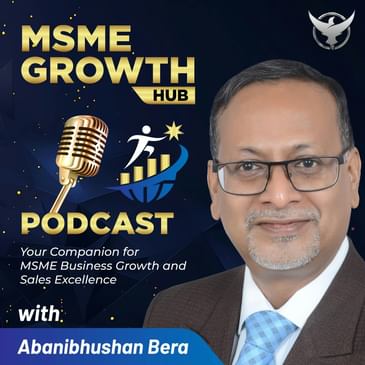

In this episode of MSME Growth Hub Podcast, I share my personal experiences and lessons learned about crafting business plans that work. From the importance of clarity and research to the need for flexibility and execution, this episode provides actionable insights for building a plan that aligns with your vision and drives results.
Through real-world examples and practical tips, we explore how to simplify your plan, integrate financial projections, and create an execution roadmap. Whether you’re launching a new venture or refining an existing plan, these lessons will help you turn ideas into actionable strategies. Remember, a business plan is not just a document—it’s the foundation of your success.
If you have not yet joined MSME Growth Hub Community, please visit website https://msmegrowthhub.com & be a lifetime member by subscribing to bronze membership just by paying INR 999. You will have life time access to the course on 3 secrets of MSME Revenue Growth, Free one 1-to-1 session with me & ticket for joining weekly LIVE sessions for lifetime and finally learning on the go through mobile app on both android & iOS.
#BusinessPlanning #MSME #Entrepreneurship #FinancialPlanning #VisionAndMission #EmpowerBizPodcast #GrowthStrategy
[00:00:00] Welcome to Episode 7 of Season 4 of MSME Growth Hub Podcast. I am Abanibhusan Bera, your host and today I will share my personal experiences and lessons learned about crafting a business plan that delivers real results. Crafting a Business Plan is one of the most critical steps in entrepreneurship. It's your blueprint for success but it's also a process filled with challenges, revisions and insights.
[00:00:30] In this episode, I reflect on the strategies, mistakes and adjustments I have considered along the way. My goal is to provide you with actionable lessons you can apply to your own planning process whether you are just starting or refining an existing plan. Now let's dive into what it really takes to craft a business plan that works. Lesson 1. Clarity is Everything
[00:00:59] When I started crafting business plans, I often struggled with over-complicating ideas. I wanted to include everything thinking that more details should impress stakeholders. But I quickly learned that clarity and focus are far more effective. What I learned? A great business plan clearly defines your goals, target audience and strategies.
[00:01:24] It's not about length. It's about being concise and impactful. For example, for one of my early ventures, my business plan initially ran over 50 pages. It was packed with unnecessary jargon and lack clear focus. After considering this fact, I condensed it into a 15-page document with key points.
[00:01:51] I found it easier to communicate my vision and gain buy-in from stakeholders. Recently, I created a business plan for one of my clients and that gave that so much of clarity. Now they have a plan in place for next 5 years. Now here is actionable insight. Break your plan into digestible sections. Use visuals like charts and graphs to simplify complex ideas.
[00:02:22] Lesson 2. Research is Non-Negosable One of the most valuable lessons I have learned is the importance of thorough research. A business plan built on assumptions is bound to fail. Your strategies should be backed by data and real-world insights.
[00:02:42] And that's why in my next venture, I did a market research on my target audience on understanding what is their pinpoints and challenges and what I could do to solve their problems. What I learned? Conducting market research helps you understand your industry, competition and target audience. Research also highlights risks and opportunities enabling better decision making.
[00:03:10] Now here is a pro tip. Use tools like Google Trends, Statista and customer surveys to gather actionable data. Lesson 3. Flexibility is Key Your business plan should be a living document. I have learned that plans rarely unfold exactly as expected. Market conditions change. Customer needs evolve and new challenges arise. What I learned?
[00:03:39] Being busy with your plan can lead to missed opportunities or delayed responses to challenges. Regularly revisiting and updating your plan ensures it stays relevant. Here is a pro tip. Schedule quarterly reviews of your business plan to make necessary updates and align it with current realities. Lesson 4. Financial planning is more than numbers.
[00:04:05] When I first approached financial planning, I thought it was all about crunching numbers. But over time, I have learned that your financial section needs to tell a story. A story of how your business creates value and generates sustainable growth. What I learned? Your financial plan should include realistic projections such as revenue forecasts, cost fractures and profit margins.
[00:04:34] Investors and stakeholders look for coherence between your financial plan and overall business strategy. Now, here is a pro tip. Work with a financial advisor or use tools like QuickBooks to ensure accuracy and completeness. Lesson 5. Execution is the real test. Even the best business plan means little without execution.
[00:05:00] I have seen too many entrepreneurs spend months perfecting their plans but falter when it comes to implementation and me also is no different. What I learned? A business plan should include an execution roadmap with timelines, milestones and assigned responsibilities. Tracking progress ensures accountability and helps you adapt to unforeseen obstacles.
[00:05:28] Now, here is an example. Currently, I am doing a consulting for a small enterprise who represents multiple global brands. I had created their business plan and that is basically a plan which can last for almost three years now.
[00:05:49] That roadmap is created but when I am continuing my consulting engagement, I found that execution implementation is a problem. So, here is a pro tip. Use project management tools like Trello or Asana to keep your execution plan on track. Common mistakes to avoid. Let me delve into this subject which is very, very important. Now, here are the three things. First, ignoring feedback.
[00:06:17] Share your business plan with mentors, peers or advisors for constructive input. Number two, overlooking risks. Include a risk management section to show you are prepared for challenges. And number three, being too general. Specificity in your goals, strategies and financials makes your plan actionable. Now, here is a use case. Crafting a plan for an imaginary emissary.
[00:06:45] Scenario is like this. Imagine you are launching an eco-friendly cleaning product line targeting urban households. Here is how you could craft your plan based on my relations. First is vision and mission. Your vision could be to lead the market in sustainable home cleaning solutions.
[00:07:07] Your mission could be to provide affordable eco-friendly products that deliver exceptional cleaning power. Number two is market research. You can use surveys to identify key customer pain points like harsh chemicals in traditional cleaners. And analyze competitors to identify gaps in pricing and packaging. Number three, financial planning.
[00:07:36] Include detailed revenue projections based on market size and pricing strategy. And highlight plans for reinvesting profits into R&D. And number four, the most important one is execution plan. So, here could be the roadmap. Month one, two, three, product development, packaging design. Month four to six could be marketing rollout with social media campaigns and in-store promotion.
[00:08:06] Month seven to twelve should be expanding distribution to regional markets. Now, what's the outcome can be expected? A cleared, actionable plan that aligns with your vision, addresses market needs and sets you up for growth. Now, here is the key takeaways and final thoughts. Crafting a business plan is more than a one-time task. It's an ongoing process that evolves with your business.
[00:08:36] Here are the key takeaways from today's episode. First, clarity is everything. Simplify your plan to focus on the most impactful details. Number two, research is non-negotiable. Back your strategies with data and insights. Number three, stay flexible. Treat your plan as living document that adapts to change. Number four, focus on financials. Tell a story with your numbers and ensure they align with your goals. And finally, number five, execution with precision.
[00:09:04] Include a detailed roadmap with clear timelines and responsibilities. Your business plan is your guiding star. Use the lessons we discussed today to craft a plan that not only impresses on paper but also delivers results in the real world. Thank you for tuning into this episode of MSME Growth Hub podcast. If you have not yet joined MSME Growth Hub community, please visit website mhmegrowthhub.com
[00:09:32] and be a lifetime member by subscribing to Broad Membership just by paying Indian rupees 999. You will have lifetime access to the course on three secrets of MSME Revenue Growth, free one one-to-one sessions with me and a ticket for joining weekly live sessions for lifetime and finally learning on the go through mobile app and both Android and iOS. See you next time where we will explore
[00:09:59] another important topics related to your business growth. Until next time, keep planning, keep adapting and keep growing.