
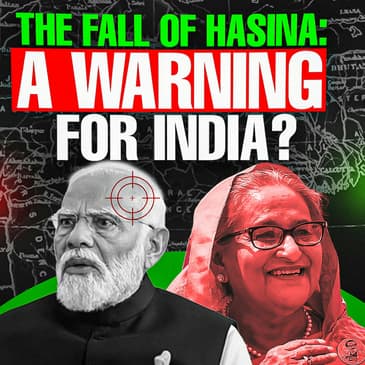
In this episode of Bharatvaarta podcast, Roshan engages with geopolitical experts Ruchir Sharma and Surya Kanegaonkar to discuss the ongoing political, social, and economic turmoil in Bangladesh following Prime Minister Sheikh Hasina's deposition. The experts examine the geopolitical interests and meddling of powers like the USA and China, rise of Islamist movements, and implications for India's security and foreign policy. Historical contexts and potential scenarios for Bangladesh's interim government are discussed, along with India's strategic response. Additionally, the conversation broadens to address the need for structural reforms in India, drawing parallels with countries like China, Yugoslavia, and Rwanda, and highlighting the risks of secessionism, federal architecture, and sovereignty.
Topics:
00:00 Sneak peak
01:50 Introduction
03:46 Discussion on Bangladesh's Political Turmoil
07:06 Economic Factors and Political Instability
12:01 US Involvement and Regime Change
28:30 China's Role and Regional Dynamics
45:12 Historical Context and Current Implications
01:02:14 History of Military Interventions
01:04:15 Modern Geopolitical Dynamics
01:07:50 India's Strategic Challenges
01:11:00 Potential for Foreign Influence in India
01:19:47 Economic and Political Reforms in India
01:25:26 Lessons from Global Examples
01:55:58 Future of India-Bangladesh Relations
02:00:42 Conclusion and Final Thoughts
Guest bio:
Surya Kanegaonkar is a trader specializing in natural resources, geopolitics, and economics, with bylines in major publications like The Hindu and CNN News18. He is an alumnus of Imperial College and Warwick University, currently based in Zug, Switzerland. He is also a returning guest of the podcast.
Twitter: https://x.com/suryakane
Ruchir Sharma is an international affairs and social entrepreneurship expert across India and Europe and commentator in the media, having been quoted in the New York Times, and contributing to the Huffington Post, FirstPost, Swarajya, and Russia Insider, with a keen interest in the BRICS, European politics, and international terrorism. Ruchir is also a returning guest of the podcast.
Twitter: https://x.com/ruchirsharma_1
[00:00:00] You can sanction the country, you can refuse to have relations with them, you can blockade their ports, you can declare a no-fly zone.
[00:00:05] It's not a nuclear power like Pakistan. What are they going to do? Choke the country and bring them to their knees and you tell them that it's conditional upon the protection of minorities and the restoration of democracy in the country.
[00:00:17] How Sina was received by the Chinese, I think this was a clear indication that her policy of trying to balance multiple powers was not going to work. Her proximity to India, I think that irked the powers of Beijing.
[00:00:37] The US collects client states like Pokemons, you know, they need this pathological need and desire to collect as many as they can.
[00:00:47] The same way Amit Shah wants to get as many seats in parliament as possible.
[00:00:51] We have to remember that the Islamists are ideologically committed. So they are the most useful foot soldiers for any great power to create and to seed and create chaos and eventually use that chaos to either contain countries or simply use them to destabilize and break countries.
[00:01:15] It's not enough to just break down the states. What we should do is strip them of legislative power. Why do we need legislative assemblies acting as mini parliaments? Why do we need chief ministers acting like the rajas of a beat state as their fiefdom?
[00:01:32] You will draw the flak, the ire of pretty much every so-called democratic regime in these Western countries. Do you have the courage, number one, to push back against it, call a spade a spade and say that we don't care?
[00:01:50] Namaste and welcome to another episode of the Bharatwarta podcast. The focus for today's discussion is the situation in Bangladesh. Of course, we're all seeing dramatic visuals of what is happening there.
[00:02:03] July, August of this year has been a tumultuous time for the country. Just last week, August 5th, the Prime Minister, Sheikh Hasina, was deposed and she flew to India.
[00:02:14] We're going to talk about the social, political and the economic condition in Bangladesh leading up to this and the future ahead.
[00:02:22] My guests today are two fantastic Bharatwarta guests, extraordinaires.
[00:02:30] Ruchir Sharma is an international affairs and social entrepreneurship expert across India and Europe.
[00:02:36] Of course, Ruchir is a staple on geopolitics. He's appeared on multiple different podcasts and is fairly popular on Twitter as well.
[00:02:44] My other guest, also popular on Twitter, is Surya Kanegonkar. He's been on Bharatwarta earlier discussing the Pegasus episode that happened well before.
[00:02:58] He's a commodities investor and a columnist and his focus areas are natural resources, international trade, geopolitics and economic security.
[00:03:08] This was a wonderfully nuanced discussion and as I mentioned in the podcast, it is a podcast of podcasts.
[00:03:15] You will find multiple different rabbit holes that you can go down on, quite a few red pills and, you know, unfortunately black pills as well.
[00:03:24] So yeah, I hope you like this.
[00:03:26] Hey Ruchir, hey Surya, welcome back to the Bharatwarta podcast. It's been a long, long time. Great to have you guys back.
[00:03:33] Thank you. Appreciate you for hosting this.
[00:03:36] Thanks for thinking of us. Good to be back.
[00:03:40] Awesome. So, well, I mean, there's no dearth of content these days, right?
[00:03:44] There's a ton of things happening and specifically I want to talk about everything that's happening with Bangladesh, right?
[00:03:52] So Surya, opening question to you.
[00:03:54] You know, we've all seen Sheikh Hasina's exit on August 5th.
[00:03:59] I want to trace back to a few days, perhaps weeks or months leading up to it.
[00:04:04] What were like the main triggers for this?
[00:04:07] If you could just set the context for this conversation, that'd be awesome.
[00:04:11] Sure, Roshan.
[00:04:12] I think this is actually quite a tectonic shift in India's neighborhood.
[00:04:17] There was clearly pressure on the Hasina government, which was building since 2021.
[00:04:25] One, we have seen sanctions on some of her paramilitary forces, which were involved in crackdowns on terrorist groups by the U.S.
[00:04:38] So those sanctions were imposed.
[00:04:41] We've seen many comments from Washington about the quality of democracy and the sort of authoritarian control, apparently, that Hasina has been exercising over Bangladesh.
[00:04:58] Now, the extent to which this would have gone, probably people expected it, that there could be some sort of effort to destabilize the government.
[00:05:11] That did happen in some ways during the elections, but she managed to hold on.
[00:05:16] Then you ended up seeing some student groups, which were backed by BRAC, which was an institution which got funding from the Gates Foundation and USAID.
[00:05:34] They were actively involved in these so-called pro-democracy protests.
[00:05:39] And as we can see that as this escalated, as the violence escalated, the Motley group of protesters included other members of the political class, including people from members of the Jamaat, and basically lumpen elements who were pushed into action.
[00:06:01] Now, I don't think that it's really a two-dimensional sort of picture out there.
[00:06:07] We need to look at it from the point of view of how other elements which are there in the Bangladeshi military, which perhaps were more sympathetic to Hasina, ended up turning and buckling under pressure.
[00:06:23] There were – and Hasina herself has talked about U.S. pressure to set up a military base in St. Martin's Island.
[00:06:33] And the sort of impact that would have had the levers people were pulling to try and achieve that outcome from – especially from outside and in the West.
[00:06:43] It was not just the U.S.
[00:06:44] There were elements in the U.K.
[00:06:45] We've seen the media play up certain aspects of this regime change as something that's very positive.
[00:06:51] And it's been a coordinated effort which we've seen culminate in this.
[00:06:56] And it will continue to grow – the narrative will continue to grow in this sort of pro-Western way going forward.
[00:07:04] Right.
[00:07:05] A quick follow-up to you, right?
[00:07:06] I mean, the Bangladesh economy was touted to be like, you know, an example for the rest of us to follow and so on.
[00:07:15] Right.
[00:07:16] What really went wrong?
[00:07:18] I mean, of course, there was COVID and post that, this whole rejigging of supply chains and perhaps lesser demand and whatnot.
[00:07:25] But, you know, how did it come to a point where people are so disgruntled that they want to overthrow government?
[00:07:32] I think that there are two aspects of this.
[00:07:35] One is the political aspect where people were feeling that – there clearly is a very pro-BNP, pro-Jamaat sentiment in Bangladesh.
[00:07:43] And they have been suppressed in some ways by the – they were suppressed by the Abami League.
[00:07:50] And in some – it was a binary option in some ways for India who to support because you really don't have any other elements besides the Sinai government and maybe some in other parts of the military who you could kind of support.
[00:08:04] But the pressure cooker that was building and that kind of exploded in some ways because there was economic problems out there.
[00:08:14] You see – it saw the overall GDP grow.
[00:08:16] But inflation hit Bangladesh particularly hard.
[00:08:21] India stepped in to try and ease that financial burden to a large extent and try to guarantee supply of electricity to make sure that the Indian currency could be used more freely.
[00:08:36] And it did ameliorate the situation to some degree.
[00:08:41] But it could not revive the economy.
[00:08:45] The economy itself has not been diversified to the extent that it's required to insulate it from major external shocks.
[00:08:52] And we have seen, for example, in Pakistan, in Sri Lanka and Bangladesh, currency crises.
[00:09:01] Because their central banks and the sort of monetary and fiscal policies that they adopt do not have – are not calibrated to deal with these kinds of the magnitude of external shocks that we have seen.
[00:09:15] So India has been the stabilizing force for Bangladesh and for Sri Lanka.
[00:09:22] But from the political angle, if you see that this gave an opening for foreign powers to come in to settle scores, to enact the regime change that they would like, and create the geopolitical outcomes that those regime changes would end up delivering.
[00:09:45] So I think that we have to look at the economic and political aspects together.
[00:09:51] And the limitations of India's foreign policy in the region.
[00:09:58] And also what the interests are from abroad.
[00:10:01] Right.
[00:10:02] So the economy was more like a forcing function to the political instability that was already afoot, right?
[00:10:09] Yes.
[00:10:10] Right.
[00:10:11] What's also characteristic of the Bangladeshi economy is wage suppression.
[00:10:16] That even though the GDP went up, the GDP per capita went up, that doesn't mean it translated into wages.
[00:10:22] That meant productivity went up.
[00:10:24] So they were selling high-value exports primarily to the West.
[00:10:29] So the EU is Bangladesh's main trading partner.
[00:10:33] So that's 21% of their total trade.
[00:10:36] And because Bangladesh is considered an LDC, a least developed country, it benefits from the most favorable regime possible in terms of its trade relations with the European Union.
[00:10:50] But in order to make that profitable, wages in Bangladesh have been suppressed for a very long time.
[00:10:56] And you can see that in their consumption patterns, that even though they're more or less the same level at GDP per capita to India, if you look at consumer goods, washing machines, air conditioners, if you look at the sales of passenger cars, if you look at appliances, it's much, much lower.
[00:11:15] So the quality of life, the standard of living for Bangladeshi citizens is much lower, despite the industrial sector being in theory more productive or more profitable, so to speak.
[00:11:29] And that leads to frustrations.
[00:11:32] So that leads to inflation, which is a lot of the things that we're talking about, like Surya said, with inflation, that then it causes social frictions.
[00:11:41] But I've seen reports from a longer period talking about the BNP and its support abroad, its support in the diaspora, its support in Western capitals.
[00:11:53] And they were waiting for the right moment to seed this sort of color revolution.
[00:12:00] Right. So Richard, Surya mentioned regime change.
[00:12:05] Right now, from the outside, maybe we're connecting too many dots, but then think about it, right?
[00:12:10] There's political instability, which was perhaps fomented further.
[00:12:14] There's a certain media narrative that is building up.
[00:12:18] And then you see these so-called spontaneous protests erupting, right?
[00:12:24] I mean, all of this we have seen in other parts.
[00:12:26] And, you know, on hindsight, everything was quite well orchestrated, right?
[00:12:31] I mean, so do you think that the U.S. sort of orchestrated all of this down to the last detail?
[00:12:39] That's it's not just I who think that that's what Sheikh Hasina herself has said.
[00:12:44] That's what the Awami League leadership has said in the run up to these events and afterwards as well.
[00:12:51] So in the preceding months, a number of ministers from the erstwhile ruling party, the Awami League, were attacking U.S. diplomats and Western journalists who are focusing on Bangladesh,
[00:13:08] saying that they were a hand in glove with the BNP and with the Jamaat al-Islami, that they were looking to destabilize Bangladesh by putting sanctions on senior government officials and military officials that they can't visit the West, they can't visit the U.S.
[00:13:24] And this was getting more and more tense, this relationship between not just the Bangladeshi government and the U.S. embassy in Dhaka,
[00:13:38] but also with Western media, so the proxies of the U.S. administration.
[00:13:45] But it got more and more tense, as you saw a few months ago, Sheikh Hasina mentioned publicly that there are plans afoot by the U.S.
[00:13:57] to carve out a Christian state from Bangladesh, India and Myanmar, similar to East Timor is what she said.
[00:14:06] And she claimed that back in January, she was offered an easy re-election if she permitted a foreign nation to establish an air base in Bangladesh.
[00:14:16] Now, she didn't disclose the country's name, but there's only one country that manipulates elections in such a way and makes these sorts of regime change threats and asks for these concessions in return.
[00:14:33] So, and she ruled out it being China.
[00:14:37] She ruled out it being Pakistan.
[00:14:38] She ruled out it being India because she said the offer came from a white man.
[00:14:43] So then that's quite clear.
[00:14:46] So that means it's the U.S.
[00:14:49] Or, you know, sometimes to do their dirty work, you have countries like Germany or Canada who do it to give plausible deniability.
[00:14:57] So this has been in the works for a while.
[00:15:01] In addition to that, at the time of recording earlier today, Sheikh Hasina released the speech that she had intended to make on her last day
[00:15:11] before she was forced out of the prime ministership.
[00:15:16] So as I recall, when she was pressured to resign, she asked to do a broadcast to the nation.
[00:15:25] But the Bangladeshi military said that there wasn't enough time and she needed to be evacuated before the protesters stormed Ganbhavan.
[00:15:34] And I think it's called the prime minister's residence.
[00:15:37] So she didn't have the chance to record that.
[00:15:39] Today, she released the full transcript of what she was going to say.
[00:15:43] And in that, she said, and I quote,
[00:16:13] So that's it from the horse's mouth.
[00:16:15] You know, it doesn't matter what I think or anyone else thinks.
[00:16:18] When, you know, Sheikh Hasina herself has documented it, it doesn't come out of nowhere.
[00:16:23] It's come out over a long period of months.
[00:16:26] Then, you know, it's very clear which direction she's pointing in.
[00:16:29] There was a fantastic article in Swarajya, which discussed in detail this plan to carve out a Christian state
[00:16:37] from parts of Bangladesh in Northeast India and Myanmar.
[00:16:42] And if we see one of the quotes from one of the officials, senior officers of Bangladesh's NSI,
[00:16:53] who's been working with the Indian agencies on counterterrorism.
[00:16:57] I quote here,
[00:16:59] The Kukichin groups are amassing weapons in Bangladesh and making strategic alliances with Islamist terror groups
[00:17:05] like the Jamaatul Ansar Fil Hindal Sharqiyah.
[00:17:09] They're also slowly gathering international attention by alleging that the Kukichin people in Bangladesh
[00:17:15] are a heavily persecuted lot.
[00:17:17] The Kukichins are doing the same in Manipur and have already succeeded in projecting themselves
[00:17:22] as a people who are persecuted because they are Christian.
[00:17:26] Many Christian communities and groups across the West, especially across the world,
[00:17:31] especially in the West, have started extending support to the Kukichins in Manipur and Bangladesh.
[00:17:36] Now, we see that this is this has been a big thing, a major theme, even in the European Union.
[00:17:45] We have seen people in the EU Parliament raising this issue about Manipur,
[00:17:49] about the supposed persecution of Christians,
[00:17:55] when the reality is that the demographics of our Northeastern states are getting changed
[00:18:01] because a part of Myanmar, which is really not under the control of the junta,
[00:18:10] the military, is kind of dominated to some extent by all kinds of foreign-backed factions,
[00:18:16] which are involved in evangelical activities.
[00:18:22] They are pushing people across the border and creating ethnic conflicts.
[00:18:28] Now, the extent to which India can go out officially to name the perpetrators behind these subversive activities,
[00:18:38] and there are probably limits to it, strategic limits to it.
[00:18:44] But what we see is that within the Indian media commentariat,
[00:18:50] there are many who refrain from naming those who should be named based on very clear evidence.
[00:18:59] And that should really be a point of concern for us,
[00:19:02] because within our country, if we have analysts, people in the media,
[00:19:09] who are unwilling to discuss the truth,
[00:19:14] then it means that there's something that we need to address within the country before also we even address issues outside.
[00:19:22] Because we cannot allow our narrative, we should be having a national narrative for what's going on.
[00:19:28] Right? I mean, that's what I would expect.
[00:19:32] Yeah. Yeah.
[00:19:33] So I'll come to the Indian response, you know, particularly of the left and liberal types here.
[00:19:39] Right? But again, one follow-up question to Ruchir.
[00:19:43] Right? So what is the larger intent behind all of this?
[00:19:46] You know, I mean, is it that the US wants like a client state in this region?
[00:19:51] Does it want to sort of have instability so that, you know,
[00:19:56] they can use it as some kind of a leverage as a bargaining chip to sort of keep India in check?
[00:20:02] Or, you know, they're looking at it purely transactionally.
[00:20:05] I mean, it could be like a military base on an island,
[00:20:09] or it could be some kind of a Christian state and so on and so forth.
[00:20:13] Well, I think the first two are very plausible that the US collects client states like Pokemons.
[00:20:22] You know, they need this pathological need and desire to collect as many as they can.
[00:20:27] The same way Amit Shah, you know, wants to get as many seats in parliament as possible,
[00:20:31] you know, 300, 400, 1 to 500.
[00:20:33] And the US, you know, sees the world in these terms that there's client states, potential client states and rogue states.
[00:20:43] Now, Bangladesh, you know, they felt was at risk of being a rogue state because they weren't playing nicely.
[00:20:50] You know, they didn't want to give a military base on St. Martin Island.
[00:20:55] They were quite close to India and reasonably close to China as well.
[00:21:00] So then the best way to convert a potential rogue state into a client state is through regime change.
[00:21:07] And this is quite similar.
[00:21:09] There's a number of commentators who have noted the parallels of what's happened in Bangladesh
[00:21:13] to what's happened in Ukraine in 2014 with the Maidan movement, with the Euro Maidan, as it was called,
[00:21:21] which similarly turned a country that was ostensibly neutral and, I'd say, mildly pro-Russian
[00:21:30] into a US garrison and client stage that is committing, well, let's say, demographic and military suicide,
[00:21:39] as we speak, on behalf of the US.
[00:21:41] And you see, you know, Americans saying, oh, this was the best investment ever without shedding
[00:21:46] a single drop of American blood, we're bleeding out the Russians.
[00:21:50] Now, that brings us to the second theory you said that, you know, is it to create this sort
[00:21:58] of garrison?
[00:21:58] Is it to destabilize India?
[00:22:01] And yes, it opens up another front.
[00:22:03] You know, India already has a number of hostile neighbors.
[00:22:07] So Pakistan is one, China has another.
[00:22:10] And so far, the Indian government has been working very hard and in close coordination with Sheikh
[00:22:17] Hasina to keep relations there quite strong.
[00:22:20] Now, if this leads to an Islamist takeover or BNP or Jamaat-e-Islami takeover of Bangladesh,
[00:22:28] it opens up a third front, which distracts the Indian defense preparations in the Himalayas,
[00:22:37] which covers both Pakistan and Kashmir.
[00:22:40] And that means resources and attention have to be diverted to the Eastern border, which is already
[00:22:47] sensitive demographically and politically because of the Trinambul Congress being in power
[00:22:52] in West Bengal, which has cultivated a large and lumpen and violent cadre through the, let's say,
[00:23:05] the assimilation of illegal Bangladeshi immigrants.
[00:23:09] So that opens up a hornet's nest.
[00:23:12] Now, this has the potential to destabilize India at will because you have three different theaters
[00:23:18] in which this can take place.
[00:23:21] And it can cause complete policy paralysis because it gives them veto power over not just India's foreign policy,
[00:23:31] but domestic policy.
[00:23:33] If we do anything that can be perceived to be hostile to Western interests or Chinese interests,
[00:23:41] for that matter, if we do anything that is designed for domestic power consolidation
[00:23:47] or power projection geopolitically within our region, within the Indo-Pacific or within the larger Eurasian sphere,
[00:23:56] then these are levers that can be used against us to make us back down.
[00:24:01] And so that's quite a big risk.
[00:24:04] And then the third one where purely transactional, if it were purely transactional,
[00:24:09] they would just offer to pay the new regime to rent that island as a base.
[00:24:15] Then the question of creating a Christian Protestant evangelical garrison state wouldn't arise.
[00:24:24] Because then, you know, if you already got everything you wanted by renting a military base
[00:24:29] or leasing that island for 99 years, what's the need to then punish that country
[00:24:34] by carving districts out of it to create a new one?
[00:24:38] So then it's ideological that they know that these rebels in these three countries are being,
[00:24:49] you know, since they're Protestant and evangelical, they're getting their funding from U.S. churches,
[00:24:53] from churches in Texas and the U.S. South.
[00:24:56] And they will be loyal to these churches, which very often are CIA fronts.
[00:25:04] So it's, I think that means it's not just transactional.
[00:25:10] It's an ideological component to it.
[00:25:13] I would like to add one point to this.
[00:25:16] It's, this is the, there's another interesting element is when you look at the north,
[00:25:21] western Burma and northern Burma, they're some of the largest drug producing regions in the world.
[00:25:28] And in fact, ever since the Taliban retook control of Kabul and actually over the last few years,
[00:25:39] you've seen the drug production decline significantly out there.
[00:25:43] The center of production has now moved to Myanmar and also into parts of northeast India,
[00:25:50] which is actually fueling a lot of narco-terrorism.
[00:25:55] If we go back in time and look at the drug production in Bangladesh, sorry,
[00:26:02] in Afghanistan during the American occupation, it surged.
[00:26:09] It surged to new highs.
[00:26:11] And then only when the Taliban retook control, it started declining
[00:26:14] because it was in the Taliban's interest not to allow these sort of crops to be used in exchange,
[00:26:20] to be exchanged for money and be used to destabilize the Taliban rule itself.
[00:26:25] But the reason why, one of the reasons why the drugs trade is a very important one for supporting terrorism
[00:26:35] and supporting insurgencies is because it stays, these sort of trades go off outside the budget.
[00:26:43] You don't actually have to support this in the sort of way which you would traditionally
[00:26:48] in sort of, you know, part of your foreign policy.
[00:26:52] And because they're off the books, now you see the theater shift.
[00:26:57] And these are self-funded terrorist networks now.
[00:27:05] And you have a Christian separatist network, which is getting revived.
[00:27:10] After several years, after the BJP decided to pay special attention to the Northeast,
[00:27:18] a lot of what the effort that was put in, resources and relationships,
[00:27:24] in developing relationships in the region, now that has come under pressure.
[00:27:29] It's a big power play as well, where the United States is able to show that
[00:27:34] no matter what you do in your country, we can change the circumstances around
[00:27:41] to the point that we can undo goodwill that you have built.
[00:27:46] We can undo the sort of economic leverage that you may have,
[00:27:51] either in Bangladesh or in some other parts of the region.
[00:27:54] And we can destabilize it to the point that you simply cannot win.
[00:27:59] It's a mind game as much as it is a geopolitical game.
[00:28:04] And that's something we need to understand because policymakers,
[00:28:08] strategic thinkers who are planning the next phase of India's,
[00:28:13] you know, economic and geopolitical strategy,
[00:28:17] would feel that they would have to recalibrate their plans based on what we see.
[00:28:24] And the sort of history of their wins and losses.
[00:28:30] So do you think China sat this one out or they're kind of opportunistically using what's happening for their benefit?
[00:28:38] I don't think Sheikh Hasina was, you know, well received as well, right,
[00:28:42] on our last visit to China and there was some sort of a friction as well.
[00:28:47] So yeah, talk us through that relationship and how that perhaps factored in this.
[00:28:52] I think that the Chinese wanted to expand their naval presence in the Bay of Bengal.
[00:29:00] And this in some ways is a direct contest between the US and China for that sort of presence.
[00:29:06] And neither of these powers are welcomed by India in its backyard.
[00:29:12] So India doesn't have that sort of leverage to kind of squeeze them out necessarily,
[00:29:17] but hold down the sort of region for as long as they possibly can.
[00:29:23] And that's what they did.
[00:29:25] But when you look at how the Chinese were, how Hasina was received by the Chinese,
[00:29:30] I think this was, it was a clear indication that her policy of trying to balance multiple powers
[00:29:38] was not going to work.
[00:29:41] Her proximity to India was also, especially over the Dista issue.
[00:29:48] I think that irked the powers of Beijing and they probably would have gotten understanding
[00:29:57] of what is actually happening in Bangladesh,
[00:29:59] that she may not last for very long in that seat of power.
[00:30:08] And in some ways, this was an inevitability that she was going to, at some point,
[00:30:15] either resign or move out of politics.
[00:30:18] It was going to happen.
[00:30:20] The forces that were going to take over were going to be more Islamist in nature,
[00:30:27] which in some ways suits the Chinese,
[00:30:30] but not entirely because we do have some concerns the Chinese have over ETIM
[00:30:38] and, you know, some of the Islamist groups,
[00:30:41] which can kind of work with them in destabilizing Western China.
[00:30:48] So, I think this is, they probably, I mean, I have no way to say this for certainty,
[00:30:56] but they probably are on the back foot,
[00:30:59] but they do have influence in Bangladesh, economic influence,
[00:31:06] some sort of strategic depth.
[00:31:09] It's not like India doesn't as well because of its geography
[00:31:13] and the fact that it has power lines, oil pipelines in that place
[00:31:19] where there are contracts given to people of influence.
[00:31:23] Whether now they are those,
[00:31:25] the beneficiaries of those economic arrangements in Bangladesh
[00:31:30] are just going to move from the Avami League to other groups in the country.
[00:31:38] Now, those groups will still end up negotiating with India
[00:31:41] and India is basically surrounded, it just surrounds Bangladesh.
[00:31:45] So, it is going to be the dominant force just by, in terms of geography.
[00:31:51] But now what has happened is that it might somehow be about India
[00:31:58] and the U.S. coordinating a few aspects of the development
[00:32:04] and the path that Bangladesh will take going forward
[00:32:07] with the U.S. having an upper hand and a veto in that process.
[00:32:12] And this can be used to counter the Chinese.
[00:32:16] So, they in some ways do feel on the back foot.
[00:32:19] But we have to remember that the Pakistanis have been used by the U.S.
[00:32:25] because the Jamaat has been influenced significantly by Pakistan
[00:32:31] and their agencies.
[00:32:34] So, now Pakistan is essentially a semi-client state of China.
[00:32:41] So, when you look at it like this,
[00:32:43] that the only loser in this, really strategic loser, is India.
[00:32:48] India and, to some extent, the Chinese.
[00:32:50] And Pakistan is going to be the balancing factor out here.
[00:32:54] Just as they played the bridge between the U.S. and China in the 1970s
[00:33:00] to bring those two countries together.
[00:33:02] Now, they are playing this role where they arbitrage between Beijing and Washington,
[00:33:07] even in third countries.
[00:33:10] Right.
[00:33:11] Sometimes, I think the most valuable thing about Pakistan is their geopolitics, right?
[00:33:16] So, they somehow figure a way to get in between these things
[00:33:19] and use it to their leverage.
[00:33:22] That's because their elites have been cultivated.
[00:33:27] Their elites have been used to advance the goals of foreign powers in the subcontinent.
[00:33:39] And we have to remember that the Islamists are ideologically committed.
[00:33:45] So, they are the most useful foot soldiers for any great power
[00:33:51] to create and to seed and create chaos
[00:33:56] and eventually use that chaos to either contain countries
[00:34:01] and ultimately create the geopolitical outcome they want in a certain region
[00:34:07] or simply use them to destabilize and break countries.
[00:34:13] So, this has been a policy of the United States, even in Soviet Afghanistan.
[00:34:22] Pakistan essentially grew on American patronage from the 1950s
[00:34:26] when they were part of Seattle, Sento.
[00:34:29] They were a major non-NATO ally.
[00:34:33] They continue to be a major non-NATO.
[00:34:35] They were armed with a nuclear weapon.
[00:34:37] They did not develop that nuclear weapon indigenous.
[00:34:41] They have been bankrolled for decades
[00:34:46] with billions and billions of dollars
[00:34:48] that elite have spent their money abroad
[00:34:52] buying assets off other, say, politicians or people of influence,
[00:34:58] bidding up, say, real estate prices in the West
[00:35:00] in some parts of, say, central London and New York.
[00:35:03] So, the money gets recycled.
[00:35:05] The money that is spent by the West in Pakistan
[00:35:08] is taken out in many cases and put back in Western countries,
[00:35:11] benefiting the group of people who are actually setting policy.
[00:35:17] Now, it is a laundromat
[00:35:20] where ultimately the people don't matter.
[00:35:23] They just need brute force and ideology to control the people.
[00:35:27] Now, this same sort of situation can be created in Bangladesh.
[00:35:32] And you essentially have not a carbon copy,
[00:35:36] but some version of Pakistan on our Eastern Front.
[00:35:41] Right.
[00:35:42] Bit of a tangential question, right?
[00:35:43] But I'll ask it anyway.
[00:35:45] You know, we see two types of America, right?
[00:35:48] The one type of America that can't tell its head from its rear,
[00:35:53] right, that let the Trump shooting happen the way it did,
[00:35:58] apparently because of a slope, right?
[00:36:01] They can't seem to control their homelessness or, you know,
[00:36:05] drug abuse problems and, you know,
[00:36:08] are taking a heck of a lot of time for simple infrastructure things like,
[00:36:12] you know, a subway station or a bus station or a bridge and so on and so forth.
[00:36:17] Right.
[00:36:17] And then we see this other type of America that you guys are talking about, right?
[00:36:24] That such diverse interests like, you know, let's say the evangelicals and the neocons
[00:36:30] and the war machines and everything coming together in this like solid, uniform policy
[00:36:37] towards, you know, one strategic goal as such, right?
[00:36:41] Like which of these two?
[00:36:43] I mean, how do you pair both of these?
[00:36:45] Right.
[00:36:45] Perhaps, I mean, Ruchar, you can take this and Surya, you can add.
[00:36:50] Well, I'm sure you've heard of the saying, the purpose of a system is what it does.
[00:36:55] So if the U.S. is incapable of solving homelessness, incapable of stopping school shootings,
[00:37:04] incapable of maintaining and building infrastructure,
[00:37:07] but it is capable of having an omnipresent, all-powerful foreign policy
[00:37:13] where they can intervene in other countries as they please with very little short-term repercussions,
[00:37:20] then it means that is the intended purpose of it.
[00:37:23] Everything is working the way it should for them.
[00:37:28] Domestic, say, the domestic issues around the prosperity and well-being of their citizens
[00:37:37] and their infrastructure is not a priority.
[00:37:40] That's, it doesn't get them votes, it doesn't get them attention,
[00:37:43] it doesn't get them rewards.
[00:37:45] And that's also something that is decentralized.
[00:37:48] So a lot of this delivery happens in terms of local government,
[00:37:52] it happens in terms of state government.
[00:37:54] So the federal government in Washington, D.C. can have a hands-off attitude to that,
[00:37:59] that it's someone else's problem.
[00:38:01] But when it comes to foreign policy, there's this blob, as they call it.
[00:38:05] The core policymaking units, the policymaking elite, are all on the same page.
[00:38:12] So they all see America as this unique and special shining city on a hill
[00:38:21] that is surrounded by chaos and barbarism.
[00:38:24] And the only way to tame that is to literally go and tame and domesticate these wild animals
[00:38:30] and turn them into your pets, turn them into your client states.
[00:38:32] So that is what is incentivized, and hence all of their efforts go towards it.
[00:38:40] Now, regardless of which party is in power, this stays the same,
[00:38:45] because both parties at the end of the day believe the same founding myth around the U.S.
[00:38:54] and believe in the U.S.'s special self-appointed role as the world's policeman.
[00:39:00] So even if they try to, the Democrats will put a human face on it and say,
[00:39:05] or they're intervening because of human rights and democracy or values,
[00:39:09] whereas Republicans will say we're doing it to protect Christians
[00:39:12] or we're doing it to protect ExxonMobil's drilling rights.
[00:39:17] But at the end of the day, the outcome is the same.
[00:39:19] So when there's bipartisan policy consensus on that, they deliver.
[00:39:25] On domestic issues, then they can pretend to have all sorts of fights
[00:39:28] and both of them do nothing.
[00:39:30] And then there's constantly issues to fight your cultural wars and political wars about.
[00:39:38] Right.
[00:39:39] Okay.
[00:39:40] Back to Bangladesh.
[00:39:42] What do you guys think an interim government will be like?
[00:39:46] I think Mohamed Yunus has accepted that he would be the leader.
[00:39:53] I don't know whether the opposite will be true.
[00:39:56] I mean, the people will accept him.
[00:39:59] And also, I don't know how long this interim government will last
[00:40:02] before there is free and fair elections again.
[00:40:06] But Surya, what do you think this interim government will be like?
[00:40:11] This interim government, if we see the names that have been put out so far,
[00:40:15] it seems to be a very well pieced together group of individuals who,
[00:40:21] you know, you have some people who, some professors,
[00:40:24] some, you have a Nobel laureate, obviously, who's the,
[00:40:27] who's going to be the prime minister.
[00:40:29] And you have activists, members of the student community.
[00:40:34] And then you have some Islamists as well, token individuals.
[00:40:39] But the, and you have some Hindus as well, Hindus and Chakmas.
[00:40:44] Now, this is for optics, let's be honest,
[00:40:49] because these, many of these individuals don't have a lot of political power
[00:40:54] themselves.
[00:40:55] As we know, with all states in the subcontinent,
[00:40:58] and pretty much around in most parts of the world,
[00:41:01] unless you really have leverage within the society,
[00:41:03] through groups that you influence, who can affect ground realities,
[00:41:10] right from your villages to your, to your neighborhoods in your cities.
[00:41:15] If you cannot control that, you do not have power.
[00:41:23] So these individuals who form this government will be effectively toothless
[00:41:28] in many ways.
[00:41:30] Why will, the real question is,
[00:41:32] where is the incentive for anyone to listen to what Muhammad Yunus says?
[00:41:39] The only reason that they will listen to what he says is if
[00:41:42] the foreign powers that have been involved in this regime change operation
[00:41:46] have control to some extent, have leverage over
[00:41:51] those groups like, say, the Jamaat, or other groups within,
[00:41:55] within Bana, they say some student groups,
[00:42:00] to make them accept the terms that Yunus puts forward for any issue,
[00:42:06] because nobody will listen to him.
[00:42:11] So, this shows that when you have this sort of government,
[00:42:15] will continue to be directed by foreign governments,
[00:42:19] and their individuals who have influence on the ground.
[00:42:25] And this is a veneer of law and order.
[00:42:29] Under the hood of this,
[00:42:32] I fear that there could be systematic persecution
[00:42:36] on a very large scale of Hindus,
[00:42:39] to the point that the final objective
[00:42:43] of 1970s, 1971 Operation Searchlight,
[00:42:47] will be completed.
[00:42:47] If that does happen,
[00:42:50] and you see mass-scale ethnic cleansing,
[00:42:52] while there's an interim government that is
[00:42:57] painted by the international press,
[00:43:00] and the international government says,
[00:43:01] it's a very secular, democratic government,
[00:43:04] and under their watch,
[00:43:06] this happens.
[00:43:08] It's something India should be prepared for,
[00:43:11] as a possibility.
[00:43:13] We're already seeing systematic persecution of Hindus.
[00:43:17] Hindus.
[00:43:18] And we must remember that the Hindus,
[00:43:22] at one point,
[00:43:22] constituted 24% of Bangladesh's population in 21,
[00:43:27] systematically declined to around 10% to 15% about 20 years ago,
[00:43:32] where that 15% is not a small number.
[00:43:35] It kept the Avami League in power in some ways.
[00:43:40] It was the swing vote.
[00:43:43] I mean,
[00:43:43] it was a loyal vote,
[00:43:44] but it was going to be the one that will always be loyal,
[00:43:48] in some ways,
[00:43:49] to a large extent,
[00:43:50] to non-Jamaat groups,
[00:43:53] non-BNP groups.
[00:43:55] So,
[00:43:56] when this community is pushed out,
[00:44:00] ethnically cleansed,
[00:44:03] the country of Bangladesh
[00:44:06] becomes an even more effective client state.
[00:44:09] Right.
[00:44:11] I'll get to the specifics of,
[00:44:13] you know,
[00:44:14] this targeting of Hindus in Bangladesh,
[00:44:16] but,
[00:44:18] again,
[00:44:19] just a,
[00:44:19] seems like kind of a unique thing,
[00:44:21] right?
[00:44:21] How much 1971 factors in present-day politics
[00:44:24] in Bangladesh,
[00:44:26] and considering that
[00:44:28] they're about 25 years younger than us,
[00:44:31] right?
[00:44:31] So,
[00:44:32] 1971 matters more to Bangladesh
[00:44:34] than 1947 matters more to us
[00:44:36] in India,
[00:44:37] right?
[00:44:39] Richard,
[00:44:40] I mean,
[00:44:40] what could be the reasons for that?
[00:44:41] I mean,
[00:44:42] of course,
[00:44:43] you know,
[00:44:43] Sheikh Hasina herself
[00:44:45] has like a direct connection with that.
[00:44:48] I mean,
[00:44:48] her father and rest of her family,
[00:44:51] except for perhaps her sister,
[00:44:53] were massacred,
[00:44:54] following that,
[00:44:56] right?
[00:44:56] And she has been in power
[00:44:58] for about five terms now.
[00:45:00] But,
[00:45:00] that aside,
[00:45:01] and of course,
[00:45:02] I mean,
[00:45:03] you know,
[00:45:03] going back to
[00:45:04] why this whole thing started
[00:45:06] or what triggered this,
[00:45:07] it was about
[00:45:08] reservations
[00:45:09] for those freedom fighters
[00:45:10] from that time,
[00:45:12] right?
[00:45:12] So,
[00:45:13] why does it factor
[00:45:14] so much
[00:45:15] in present-day Bangladesh,
[00:45:17] Ruchir?
[00:45:20] So,
[00:45:21] currently,
[00:45:22] in Bangladesh,
[00:45:23] they're relitigating
[00:45:24] their past.
[00:45:25] So,
[00:45:25] their foundational myth
[00:45:26] around how Bangladesh
[00:45:28] was created
[00:45:29] in the 70s
[00:45:30] and what happened
[00:45:31] in that transition
[00:45:33] period.
[00:45:34] So,
[00:45:35] as we know,
[00:45:36] the trigger
[00:45:37] for the
[00:45:38] secession
[00:45:39] of East Pakistan
[00:45:39] from the Pakistani
[00:45:40] project
[00:45:42] was
[00:45:43] multi-layered.
[00:45:44] So,
[00:45:45] the
[00:45:46] elites of Pakistan
[00:45:47] have,
[00:45:49] well,
[00:45:50] the elites
[00:45:50] of the Pakistan
[00:45:51] movement
[00:45:51] were rich
[00:45:52] landowning
[00:45:53] zamindars
[00:45:54] from
[00:45:55] UP and
[00:45:56] Bihar,
[00:45:57] who
[00:45:58] then
[00:45:58] migrated
[00:45:59] to Pakistan
[00:46:00] and got
[00:46:01] sidelined
[00:46:01] by the
[00:46:02] so-called
[00:46:02] martial race,
[00:46:03] the
[00:46:04] Pakistani
[00:46:05] Punjabis,
[00:46:05] the West
[00:46:05] Punjabis
[00:46:06] who dominated
[00:46:07] the military.
[00:46:08] And,
[00:46:08] initially,
[00:46:09] Pakistan
[00:46:09] had a
[00:46:10] provincial
[00:46:10] system.
[00:46:12] Then,
[00:46:13] they had
[00:46:13] a two-unit
[00:46:14] system
[00:46:14] where West
[00:46:15] Pakistan
[00:46:15] and East
[00:46:16] Pakistan
[00:46:16] were equal.
[00:46:17] The big
[00:46:18] risk
[00:46:18] in the eyes
[00:46:19] of the
[00:46:21] generals
[00:46:21] in Rawalpindi
[00:46:22] was that
[00:46:23] they would be
[00:46:24] outpopulated
[00:46:25] and outnumbered
[00:46:26] within
[00:46:26] greater
[00:46:27] Pakistan
[00:46:28] by
[00:46:28] Bengali
[00:46:29] speaking,
[00:46:30] East
[00:46:30] Pakistanis,
[00:46:31] who they
[00:46:32] saw as
[00:46:33] half-Hindu
[00:46:34] and an
[00:46:35] inferior race
[00:46:35] because of
[00:46:36] their physical
[00:46:37] features
[00:46:37] and because
[00:46:38] of their
[00:46:38] proximity
[00:46:39] in cultural
[00:46:40] traditions
[00:46:41] and the way
[00:46:41] they dressed
[00:46:42] and the way
[00:46:42] they spoke.
[00:46:43] So,
[00:46:44] Bengali,
[00:46:45] even if you
[00:46:46] see today,
[00:46:47] Awami League
[00:46:47] politicians
[00:46:48] speak Bengali
[00:46:49] in a very
[00:46:50] Bhadralok
[00:46:51] style,
[00:46:52] in a
[00:46:53] Sanskritized
[00:46:54] style.
[00:46:54] They use
[00:46:55] really
[00:46:55] classical
[00:46:56] words as
[00:46:57] very pleasant
[00:46:58] to hear.
[00:46:59] But then
[00:46:59] that was
[00:47:00] seen as
[00:47:00] a sign
[00:47:00] of these
[00:47:01] people being
[00:47:01] half
[00:47:02] mushrik,
[00:47:03] half
[00:47:03] idolatrous.
[00:47:04] And that's
[00:47:05] what led
[00:47:06] to Operation
[00:47:07] Searchlight
[00:47:08] where the
[00:47:10] Pakistani
[00:47:10] army,
[00:47:11] dominated by
[00:47:12] West
[00:47:13] Punjabis,
[00:47:14] sought to
[00:47:15] purge
[00:47:16] East Pakistan
[00:47:17] of the
[00:47:20] inferior race
[00:47:21] or in
[00:47:23] extreme
[00:47:23] terms to
[00:47:24] cure their
[00:47:25] inferior race.
[00:47:26] So,
[00:47:27] the
[00:47:27] governor of
[00:47:29] East
[00:47:30] Pakistan
[00:47:30] was
[00:47:31] Lieutenant
[00:47:32] General
[00:47:32] AAK
[00:47:33] Niazi
[00:47:33] and in
[00:47:35] a meeting
[00:47:36] with the
[00:47:37] military
[00:47:37] leadership
[00:47:38] under his
[00:47:39] command,
[00:47:40] he said
[00:47:40] in front
[00:47:40] of all
[00:47:41] of them,
[00:47:42] I will
[00:47:43] change the
[00:47:44] race,
[00:47:49] the lineage
[00:47:50] of this
[00:47:51] bastard
[00:47:52] community,
[00:47:54] this bastard
[00:47:54] race,
[00:47:55] nation.
[00:47:55] And upon
[00:47:57] that,
[00:47:58] one of
[00:48:00] the
[00:48:00] Bengali
[00:48:01] Muslim
[00:48:02] military
[00:48:03] officers
[00:48:03] present
[00:48:04] there,
[00:48:04] he left
[00:48:05] the room
[00:48:05] and shot
[00:48:05] himself
[00:48:06] because he
[00:48:06] didn't want
[00:48:07] to take
[00:48:07] part in
[00:48:07] what was
[00:48:07] going to
[00:48:08] happen next.
[00:48:08] So,
[00:48:09] what happened
[00:48:09] next was
[00:48:10] a purge
[00:48:10] of the
[00:48:11] Hindu
[00:48:11] community,
[00:48:12] which was
[00:48:13] 22%
[00:48:14] of East
[00:48:15] Pakistan,
[00:48:16] of the
[00:48:16] intellectuals,
[00:48:17] of the
[00:48:18] left-leaning
[00:48:20] political
[00:48:20] leadership.
[00:48:21] And it
[00:48:22] took a
[00:48:23] while,
[00:48:23] it took
[00:48:24] many months
[00:48:25] for
[00:48:26] international
[00:48:27] mobilization
[00:48:28] to come
[00:48:28] in from
[00:48:29] India,
[00:48:30] from the
[00:48:30] Soviet
[00:48:31] Union,
[00:48:31] from East
[00:48:31] Germany.
[00:48:33] And in
[00:48:33] the end,
[00:48:33] it was
[00:48:34] only after
[00:48:34] the monsoons
[00:48:35] that military
[00:48:36] intervention
[00:48:36] was possible.
[00:48:37] And so
[00:48:38] the
[00:48:39] Mukti Bahani,
[00:48:40] the homegrown
[00:48:41] rebels within
[00:48:42] the country
[00:48:42] who declared
[00:48:43] independence,
[00:48:44] so they
[00:48:45] were supported
[00:48:46] by the
[00:48:46] Indian
[00:48:46] army.
[00:48:47] It was a
[00:48:49] massive victory
[00:48:49] for the
[00:48:50] Mukti Bahani
[00:48:51] and the
[00:48:51] Indian
[00:48:51] Republic.
[00:48:53] 93,000
[00:48:54] prisoners of
[00:48:55] war,
[00:48:55] were taken
[00:48:56] from West
[00:48:56] Pakistani
[00:48:56] forces.
[00:48:58] And that
[00:48:59] was the
[00:49:00] creation of
[00:49:00] Bangladesh,
[00:49:01] which was
[00:49:01] created as
[00:49:03] a repudiation
[00:49:04] of this
[00:49:05] West
[00:49:06] Pakistani
[00:49:06] Punjabi
[00:49:08] racial superiority.
[00:49:09] So it
[00:49:10] was about
[00:49:10] Bengali being
[00:49:12] the
[00:49:14] ethnolinguistic
[00:49:14] identity and
[00:49:15] not Islam.
[00:49:16] So it
[00:49:17] was created
[00:49:18] initially as
[00:49:18] a secular
[00:49:19] republic.
[00:49:20] and they
[00:49:22] chose the
[00:49:22] term
[00:49:22] Bangladesh
[00:49:24] to make
[00:49:25] it
[00:49:25] inclusive,
[00:49:26] that it
[00:49:26] wasn't just
[00:49:26] for
[00:49:27] Bengalis,
[00:49:27] it was also
[00:49:27] for
[00:49:28] chakmas,
[00:49:28] it was
[00:49:28] also for
[00:49:29] tribals.
[00:49:30] Now,
[00:49:31] a few
[00:49:31] years later,
[00:49:32] within three
[00:49:33] to five
[00:49:33] years of
[00:49:34] the
[00:49:35] declaration
[00:49:35] of
[00:49:36] Bangladesh,
[00:49:37] of
[00:49:37] Mujibur
[00:49:37] Rahman
[00:49:38] being the
[00:49:39] new leader
[00:49:40] of this
[00:49:40] new country,
[00:49:41] he was
[00:49:42] deposed
[00:49:42] in a
[00:49:42] military
[00:49:43] coup,
[00:49:44] by
[00:49:44] Zia
[00:49:44] Rahman,
[00:49:46] who
[00:49:46] over the
[00:49:47] next few
[00:49:49] years,
[00:49:49] Islamized
[00:49:50] the society
[00:49:51] because that
[00:49:51] was a
[00:49:52] useful
[00:49:52] ally to
[00:49:52] them.
[00:49:53] And a
[00:49:53] lot of
[00:49:54] these
[00:49:54] razakars,
[00:49:56] as they
[00:49:56] were called,
[00:49:57] the
[00:49:57] collaborationists,
[00:49:58] so very
[00:49:59] often Bihari
[00:50:00] Muslims who
[00:50:00] had moved
[00:50:01] to East
[00:50:02] Pakistan,
[00:50:03] or radicalized
[00:50:04] sections of
[00:50:04] Bengali Muslim
[00:50:05] society,
[00:50:07] they escaped
[00:50:08] punishment
[00:50:08] and became
[00:50:09] very loyal
[00:50:10] to this
[00:50:11] BNP
[00:50:12] party that
[00:50:12] Raman
[00:50:14] created,
[00:50:14] which was
[00:50:14] an Islamist
[00:50:16] party.
[00:50:17] So then
[00:50:17] with time,
[00:50:18] the People's
[00:50:18] Republic of
[00:50:19] Bangladesh,
[00:50:22] despite being
[00:50:23] founded as a
[00:50:23] secular country,
[00:50:25] adopted Islam
[00:50:25] as a
[00:50:28] state religion,
[00:50:29] which is
[00:50:30] very bizarre.
[00:50:30] So it's not
[00:50:31] an Islamic
[00:50:31] republic,
[00:50:32] still a
[00:50:32] people's
[00:50:32] republic,
[00:50:33] but with
[00:50:34] a state
[00:50:34] religion,
[00:50:36] but claims
[00:50:36] to be
[00:50:36] secular.
[00:50:37] So this
[00:50:38] led to
[00:50:38] a lot
[00:50:39] of confusion
[00:50:40] and social
[00:50:42] turmoil
[00:50:42] about what
[00:50:43] does it
[00:50:43] mean?
[00:50:44] What did
[00:50:44] we fight
[00:50:45] this war
[00:50:45] for?
[00:50:46] Was it
[00:50:46] to create
[00:50:47] a secular
[00:50:49] Bangladesh
[00:50:50] which is
[00:50:51] about Bengali
[00:50:52] pride and
[00:50:52] heritage,
[00:50:53] or was it
[00:50:54] to make
[00:50:55] our own
[00:50:56] brand of
[00:50:56] military
[00:50:57] dictatorship,
[00:50:58] which was
[00:50:59] distinct from
[00:51:00] Pakistan but
[00:51:01] plays the
[00:51:01] same role and
[00:51:02] can leverage
[00:51:03] the same
[00:51:03] international
[00:51:04] support to
[00:51:04] develop
[00:51:05] itself,
[00:51:06] or to at
[00:51:08] least seek
[00:51:08] rents.
[00:51:09] Now, in
[00:51:10] order to
[00:51:11] purge
[00:51:12] society off
[00:51:13] these radical
[00:51:14] elements who
[00:51:15] attach themselves
[00:51:16] to the
[00:51:17] military regime
[00:51:18] after
[00:51:19] 1974, 75,
[00:51:22] 76,
[00:51:24] the government
[00:51:25] had brought
[00:51:25] in this
[00:51:26] quota and
[00:51:27] government
[00:51:27] jobs and
[00:51:28] universities for
[00:51:29] the descendants
[00:51:29] of freedom
[00:51:30] fighters so
[00:51:31] that you
[00:51:32] cultivate
[00:51:33] patronage,
[00:51:34] so you
[00:51:34] as the
[00:51:35] state are
[00:51:35] giving
[00:51:36] patronage to
[00:51:37] what you
[00:51:37] see are
[00:51:38] the good
[00:51:38] guys,
[00:51:38] the ones
[00:51:38] who fought
[00:51:39] with the
[00:51:40] Mukti Bahani
[00:51:40] and not
[00:51:41] the Razakars,
[00:51:42] not the
[00:51:42] collaborators
[00:51:43] who helped
[00:51:44] the Pakistanis
[00:51:45] in identifying
[00:51:46] their neighbors
[00:51:47] and lynching
[00:51:48] them or
[00:51:50] purging
[00:51:51] intellectuals
[00:51:52] and Hindus
[00:51:52] and other
[00:51:53] minorities.
[00:51:55] So that's
[00:51:56] the social
[00:51:59] fabric as
[00:52:00] things stand
[00:52:01] and it's
[00:52:01] being pulled
[00:52:02] in two
[00:52:02] different ways.
[00:52:03] So Sheikh
[00:52:05] Hasina and
[00:52:05] the Awami
[00:52:06] League tried
[00:52:07] quite hard
[00:52:08] to crack
[00:52:08] down on
[00:52:09] this.
[00:52:09] They banned
[00:52:10] the BNP,
[00:52:11] they held
[00:52:11] elections
[00:52:12] without Islamist
[00:52:13] parties within
[00:52:14] it, but
[00:52:14] they also
[00:52:15] tried to
[00:52:15] co-opt
[00:52:16] some clerics
[00:52:18] to support
[00:52:20] their brand
[00:52:22] of politics
[00:52:23] which met
[00:52:24] with limited
[00:52:25] success.
[00:52:27] But essentially
[00:52:27] that's the
[00:52:28] social
[00:52:29] political
[00:52:30] background of
[00:52:31] where we are
[00:52:32] today,
[00:52:32] still
[00:52:33] re-litigating
[00:52:34] the first
[00:52:35] five to
[00:52:35] ten years
[00:52:36] of their
[00:52:36] independence
[00:52:37] because they
[00:52:38] see-sawed so
[00:52:39] much from
[00:52:39] being an
[00:52:40] integral part
[00:52:41] of Pakistan
[00:52:41] to being a
[00:52:42] brand new
[00:52:43] country with
[00:52:43] a new
[00:52:43] identity and
[00:52:44] then falling
[00:52:45] back with a
[00:52:46] military coup
[00:52:46] and losing
[00:52:47] whatever they
[00:52:48] gained to
[00:52:49] become again
[00:52:50] a militarized
[00:52:52] Islamist
[00:52:53] garrison state.
[00:52:54] right.
[00:52:56] Surya, you
[00:52:57] mentioned the
[00:52:58] targeting of
[00:52:59] the Hindu
[00:52:59] minority, right?
[00:53:01] We saw that
[00:53:02] in the
[00:53:02] protests
[00:53:03] pretty much
[00:53:04] it was
[00:53:05] kind of
[00:53:06] secular, at
[00:53:06] least.
[00:53:06] I mean, it
[00:53:07] seemed like
[00:53:07] it, right?
[00:53:07] I mean, you
[00:53:08] had people
[00:53:09] from different
[00:53:11] religions come
[00:53:12] together and
[00:53:14] protest whatever
[00:53:15] was happening.
[00:53:16] But then since
[00:53:18] then what has
[00:53:18] happened is like
[00:53:19] a systematic
[00:53:20] targeting of the
[00:53:21] minority, right?
[00:53:24] Why do you think
[00:53:25] that happens,
[00:53:26] right?
[00:53:26] I mean, this
[00:53:26] whole, and
[00:53:28] also is it like a
[00:53:28] template thing,
[00:53:29] right?
[00:53:29] I mean, the
[00:53:29] left-hand Islam,
[00:53:30] you know, you
[00:53:31] have this unholy
[00:53:32] alliance.
[00:53:33] Is this what
[00:53:34] awaits, you
[00:53:35] know, some
[00:53:36] of the left-hand
[00:53:38] Islam alliances
[00:53:39] in other parts of
[00:53:40] the world, you
[00:53:41] know, when it
[00:53:42] reaches its
[00:53:42] eventuality?
[00:53:44] I think that you
[00:53:44] raised a very
[00:53:45] important point
[00:53:46] here, Roshan,
[00:53:46] because this
[00:53:48] alliance between
[00:53:49] the left and
[00:53:51] the Islamist
[00:53:51] and the sort
[00:53:53] of revolution
[00:53:53] that they can
[00:53:54] create, we
[00:53:55] saw that in
[00:53:56] 1979 in
[00:53:58] Iran.
[00:53:59] And what
[00:54:03] came after
[00:54:04] was a complete
[00:54:05] purge of all
[00:54:06] the communists
[00:54:07] and anybody
[00:54:08] who was
[00:54:08] secular and
[00:54:09] who's had this
[00:54:10] hope of a
[00:54:12] inclusive and
[00:54:13] tolerant Iran.
[00:54:15] So they
[00:54:16] swung from
[00:54:18] being a
[00:54:18] monarchy,
[00:54:19] which was
[00:54:20] clearly not
[00:54:21] the most
[00:54:21] efficient and
[00:54:24] egalitarian
[00:54:25] system, to
[00:54:26] an Islamist
[00:54:27] system.
[00:54:29] And which
[00:54:31] I think you
[00:54:33] kind of see
[00:54:34] that same
[00:54:36] impulses here
[00:54:39] in Bangladesh.
[00:54:40] now, the
[00:54:43] way that this
[00:54:44] can be controlled
[00:54:46] is in
[00:54:47] some ways
[00:54:47] by the
[00:54:48] military,
[00:54:49] which is
[00:54:50] what the
[00:54:51] Pakistanis have
[00:54:51] done.
[00:54:51] They said
[00:54:52] they were
[00:54:53] going to go
[00:54:54] for a
[00:54:54] secular state
[00:54:54] in the
[00:54:55] beginning,
[00:54:55] and then
[00:54:55] they quickly
[00:54:56] moved into
[00:54:57] the zone
[00:54:58] of being a
[00:54:59] military
[00:54:59] dictatorship,
[00:55:00] where they
[00:55:01] never let
[00:55:02] the Islamists
[00:55:05] control the
[00:55:05] government.
[00:55:06] government.
[00:55:06] If you
[00:55:07] see the
[00:55:08] Islamist
[00:55:09] parties in
[00:55:09] Pakistan,
[00:55:10] they only
[00:55:12] get a certain
[00:55:12] share,
[00:55:13] they have an
[00:55:13] influence,
[00:55:14] they can
[00:55:14] control mobs
[00:55:16] on the
[00:55:16] street,
[00:55:17] but ultimately
[00:55:19] the military
[00:55:20] and the
[00:55:22] agencies that
[00:55:23] are under
[00:55:24] its purview
[00:55:26] end up
[00:55:26] having assets
[00:55:27] in pretty
[00:55:28] much all
[00:55:28] political parties
[00:55:29] and controlling
[00:55:30] affairs.
[00:55:30] Now,
[00:55:31] the same
[00:55:32] sort of
[00:55:32] situation
[00:55:33] can end
[00:55:33] up
[00:55:33] happening
[00:55:33] in
[00:55:34] Bangladesh,
[00:55:35] where you
[00:55:36] have a
[00:55:37] puppet
[00:55:38] civilian
[00:55:39] government,
[00:55:40] and then
[00:55:41] you have
[00:55:41] other forces
[00:55:43] together,
[00:55:43] which end
[00:55:44] up controlling
[00:55:44] these groups.
[00:55:45] Now,
[00:55:46] the persecution
[00:55:46] of Hindus
[00:55:47] as a part
[00:55:48] of this
[00:55:49] is,
[00:55:50] you will
[00:55:51] see that
[00:55:51] for the
[00:55:52] 7.5%
[00:55:53] or 7%
[00:55:54] of Hindus
[00:55:54] that are
[00:55:55] there in
[00:55:55] Bangladesh
[00:55:56] today,
[00:55:57] they will
[00:55:57] be driven
[00:55:57] down to
[00:55:58] around 2,
[00:55:59] 2.5%
[00:56:00] to a
[00:56:01] negligible
[00:56:02] number,
[00:56:03] so that
[00:56:04] they basically
[00:56:05] have zero
[00:56:06] capability of
[00:56:07] gathering together
[00:56:08] like we saw
[00:56:09] in protests
[00:56:09] in some
[00:56:10] parts of
[00:56:11] Bangladesh
[00:56:11] now.
[00:56:12] They will
[00:56:12] not have
[00:56:13] any
[00:56:13] international
[00:56:13] voice,
[00:56:15] and they
[00:56:16] can be
[00:56:16] completely
[00:56:16] squeezed
[00:56:17] and persecuted
[00:56:18] to the
[00:56:19] point that
[00:56:19] they have
[00:56:20] no actual
[00:56:22] role in
[00:56:22] domestic
[00:56:23] politics.
[00:56:24] That means
[00:56:25] that India's
[00:56:25] influence,
[00:56:26] as the
[00:56:27] U.S.
[00:56:28] would like
[00:56:28] to see,
[00:56:28] has basically
[00:56:29] been removed.
[00:56:33] And this
[00:56:33] is particularly
[00:56:34] important if
[00:56:35] you look at
[00:56:35] the map of
[00:56:36] Bangladesh and
[00:56:37] the distribution
[00:56:37] of the
[00:56:38] demographics,
[00:56:40] you see in
[00:56:41] the Rangpur
[00:56:41] division in
[00:56:42] the north,
[00:56:43] near the
[00:56:43] chicken's neck
[00:56:44] area,
[00:56:44] there's a
[00:56:44] significant
[00:56:45] Hindu
[00:56:45] population.
[00:56:46] If they're
[00:56:46] expelled from
[00:56:47] that area,
[00:56:48] then the
[00:56:49] chicken's neck
[00:56:50] becomes even
[00:56:51] more vulnerable.
[00:56:52] If you look
[00:56:53] at down
[00:56:53] south near
[00:56:54] Chittagong,
[00:56:55] Cox's Bazaar,
[00:56:56] there are pockets
[00:56:57] where there
[00:56:58] are large
[00:56:58] Hindu
[00:56:59] communities,
[00:56:59] pockets of
[00:57:00] large Hindu
[00:57:00] communities.
[00:57:01] Now,
[00:57:01] if those are
[00:57:02] removed and
[00:57:03] pushed back
[00:57:03] into some
[00:57:05] of the
[00:57:05] states in
[00:57:06] the northeast,
[00:57:07] now that
[00:57:08] area which
[00:57:08] is between
[00:57:09] the border
[00:57:10] of the
[00:57:10] trijunction
[00:57:11] between
[00:57:12] Bangladesh,
[00:57:13] India,
[00:57:16] and Burma,
[00:57:17] that area
[00:57:18] will end
[00:57:20] up being
[00:57:21] vacant of
[00:57:22] any Indian
[00:57:23] influence.
[00:57:23] Now,
[00:57:24] this essentially
[00:57:25] contains India
[00:57:25] in some
[00:57:26] ways.
[00:57:27] So,
[00:57:28] whatever
[00:57:29] decisions have
[00:57:30] to be
[00:57:30] made,
[00:57:30] we'll have
[00:57:31] to consider
[00:57:32] the longer
[00:57:32] term implications
[00:57:33] of American
[00:57:34] presence in
[00:57:36] the region,
[00:57:37] the proliferation,
[00:57:39] the systematic
[00:57:40] expulsion of
[00:57:41] Hindus,
[00:57:41] and,
[00:57:42] and I think
[00:57:43] this is one
[00:57:43] thing which
[00:57:43] we have not
[00:57:44] talked about,
[00:57:45] and actually
[00:57:45] nobody really
[00:57:46] on social
[00:57:46] media has
[00:57:47] discussed,
[00:57:48] the potential
[00:57:49] for conversion
[00:57:51] of Hindus
[00:57:52] to Islam,
[00:57:54] and weaponizing
[00:57:55] those individuals
[00:57:57] for advancing
[00:57:58] jihad,
[00:57:59] not just in
[00:58:00] India,
[00:58:00] but in other
[00:58:00] parts of the
[00:58:01] world.
[00:58:02] We have seen
[00:58:02] this with,
[00:58:03] for example,
[00:58:04] Pernaki
[00:58:04] Pratacharya.
[00:58:05] We have seen
[00:58:06] this with,
[00:58:07] there's another
[00:58:07] individual,
[00:58:08] I forgot his
[00:58:08] name.
[00:58:09] He was a
[00:58:10] Hindu,
[00:58:10] born in
[00:58:11] the early
[00:58:11] 80s.
[00:58:14] He was
[00:58:15] converted to
[00:58:15] Islam in
[00:58:16] Japan,
[00:58:18] and he
[00:58:18] came back,
[00:58:19] and then
[00:58:20] he was
[00:58:21] supportive,
[00:58:21] he was
[00:58:22] supporting
[00:58:22] the Islamic
[00:58:23] state.
[00:58:24] Now,
[00:58:25] we have a
[00:58:26] very different
[00:58:26] challenge in
[00:58:27] Bangladesh,
[00:58:28] because when
[00:58:28] you see a
[00:58:30] group of
[00:58:31] people,
[00:58:31] the original
[00:58:32] point was on
[00:58:33] leftists and
[00:58:34] Hindus joining
[00:58:35] the protests,
[00:58:36] now when they
[00:58:37] get massacred,
[00:58:38] and they get
[00:58:38] driven out,
[00:58:40] or if they're
[00:58:41] kept within
[00:58:41] a cage,
[00:58:43] they don't
[00:58:43] have many
[00:58:44] options for
[00:58:45] survival,
[00:58:46] some will
[00:58:46] convert.
[00:58:48] And those
[00:58:49] people will
[00:58:50] be the
[00:58:51] foot,
[00:58:51] so they
[00:58:52] will be the
[00:58:52] most aggressive
[00:58:54] in waging
[00:58:55] war against
[00:58:56] India.
[00:58:58] This is
[00:58:59] something which
[00:58:59] needs to be
[00:59:00] discussed in
[00:59:01] more detail,
[00:59:02] and the
[00:59:03] risk of,
[00:59:04] and there's
[00:59:04] another major
[00:59:05] risk that's,
[00:59:06] that,
[00:59:06] you know,
[00:59:07] this is
[00:59:08] slightly left
[00:59:09] afield of
[00:59:10] your original
[00:59:10] question,
[00:59:11] and perhaps
[00:59:12] maybe a good
[00:59:13] point for us
[00:59:13] to start our
[00:59:14] next point of
[00:59:16] our discussion.
[00:59:18] We have
[00:59:19] tens of
[00:59:19] millions of
[00:59:20] illegal
[00:59:20] Bangladeshis and
[00:59:21] Rohingyas in
[00:59:22] India.
[00:59:23] Were they the
[00:59:24] advance force
[00:59:26] that was
[00:59:26] pushed in?
[00:59:28] Was the
[00:59:29] NRC and
[00:59:30] CAA targeted
[00:59:31] by Western
[00:59:32] governments
[00:59:33] and the
[00:59:33] media with
[00:59:34] the intention
[00:59:35] of
[00:59:35] preventing
[00:59:36] India from
[00:59:37] identifying
[00:59:38] illegals,
[00:59:39] so that when
[00:59:40] there is a
[00:59:41] regime change
[00:59:41] in Bangladesh
[00:59:42] and when the
[00:59:42] Jamaat does
[00:59:43] hold control
[00:59:44] over finances
[00:59:46] and communication
[00:59:47] lines and
[00:59:49] border security
[00:59:50] in Bangladesh,
[00:59:52] you end up
[00:59:53] having groups
[00:59:55] of people in
[00:59:56] India who
[00:59:56] are just
[00:59:57] waiting for
[00:59:58] instructions from
[00:59:59] their people
[01:00:00] back home.
[01:00:04] And where
[01:00:05] have they been
[01:00:05] settled?
[01:00:06] In all major
[01:00:07] cities.
[01:00:09] India's
[01:00:09] holiest
[01:00:11] pilgrimage
[01:00:11] sites.
[01:00:13] In border
[01:00:14] areas like
[01:00:14] Jammu and
[01:00:15] in the
[01:00:16] valley, near
[01:00:17] the border
[01:00:18] with China,
[01:00:19] in southern
[01:00:20] states where
[01:00:22] there is
[01:00:22] PFI presence
[01:00:23] in Kerala,
[01:00:25] parts of
[01:00:25] Tamil, you
[01:00:27] have seen
[01:00:27] this across
[01:00:29] India and
[01:00:30] there has
[01:00:30] been very
[01:00:31] little effort
[01:00:32] to remove
[01:00:33] these illegals
[01:00:33] and when
[01:00:34] there is
[01:00:35] any talk
[01:00:35] of removing
[01:00:35] them.
[01:00:37] India has
[01:00:38] been told
[01:00:39] that there
[01:00:39] was an
[01:00:40] impending
[01:00:40] genocide of
[01:00:41] Muslims,
[01:00:41] when there
[01:00:42] is actually
[01:00:43] a genocide
[01:00:43] of Hindus
[01:00:44] taking place
[01:00:44] today in
[01:00:45] Bangladesh
[01:00:46] under the
[01:00:46] watch of
[01:00:48] a US
[01:00:48] installed
[01:00:49] regime.
[01:00:51] Right.
[01:00:54] Richard, can
[01:00:55] India do
[01:00:56] something about
[01:00:57] the situation
[01:00:57] of Hindus
[01:00:59] in Bangladesh?
[01:01:00] We are
[01:01:01] seeing some
[01:01:02] very shocking
[01:01:03] visuals coming
[01:01:03] out of
[01:01:04] there.
[01:01:06] And the
[01:01:07] intent behind
[01:01:08] CIA also
[01:01:09] was to
[01:01:10] sort of
[01:01:10] take in
[01:01:11] these folks
[01:01:12] and also
[01:01:14] be the
[01:01:15] last refuge
[01:01:16] for Hindus
[01:01:17] everywhere.
[01:01:18] And truly
[01:01:19] be that
[01:01:20] motherland
[01:01:20] as such.
[01:01:23] What should
[01:01:23] India's
[01:01:24] response be
[01:01:24] to this
[01:01:25] situation?
[01:01:27] So,
[01:01:28] there is
[01:01:29] a difference
[01:01:30] in what it
[01:01:30] should be
[01:01:31] and what
[01:01:31] it can
[01:01:32] be.
[01:01:33] So,
[01:01:34] what it
[01:01:34] should be,
[01:01:35] you know,
[01:01:35] there is an
[01:01:35] established
[01:01:36] precedent in
[01:01:37] terms of
[01:01:37] what to
[01:01:38] do in
[01:01:39] situations
[01:01:39] like this.
[01:01:41] So,
[01:01:42] in 1971
[01:01:42] when this
[01:01:43] happened and
[01:01:44] there was
[01:01:45] a genocide
[01:01:46] and pogroms
[01:01:47] of the
[01:01:49] Bangladeshi
[01:01:50] Hindu community
[01:01:50] and of
[01:01:51] the intellectuals
[01:01:53] and left
[01:01:53] leaning secular
[01:01:54] ecosystem
[01:01:55] within East
[01:01:56] Pakistan.
[01:01:57] Then India
[01:01:58] supported the
[01:01:59] homegrown
[01:02:00] liberation
[01:02:01] force,
[01:02:01] the Mukti
[01:02:02] Bahini,
[01:02:02] first of
[01:02:03] all,
[01:02:03] did that
[01:02:04] for a
[01:02:04] number of
[01:02:04] months.
[01:02:05] Then behind
[01:02:06] the scenes
[01:02:06] got countries
[01:02:07] like the
[01:02:07] USSR and
[01:02:08] East Germany
[01:02:09] on board.
[01:02:10] and then
[01:02:10] after the
[01:02:11] monsoon
[01:02:11] ended,
[01:02:12] intervened
[01:02:13] militarily.
[01:02:14] Now, this
[01:02:15] took time.
[01:02:17] It took
[01:02:17] diplomatic
[01:02:18] finesse.
[01:02:19] You needed
[01:02:19] to cover
[01:02:20] yourself at
[01:02:22] the UN.
[01:02:22] You needed
[01:02:23] to cover
[01:02:23] yourself in
[01:02:23] terms of
[01:02:24] support from
[01:02:27] other countries.
[01:02:28] Back then,
[01:02:29] there was a
[01:02:30] block that
[01:02:31] was friendly
[01:02:31] to us and
[01:02:32] antagonistic
[01:02:33] towards the
[01:02:33] sponsor of
[01:02:34] Pakistan and
[01:02:36] the perpetrators
[01:02:37] of that
[01:02:37] genocide.
[01:02:38] In addition
[01:02:38] to that,
[01:02:39] there are
[01:02:39] also examples
[01:02:40] of other
[01:02:41] countries in
[01:02:42] the developing
[01:02:43] world that
[01:02:43] intervened
[01:02:44] militarily in
[01:02:46] their neighbors
[01:02:46] when reports
[01:02:48] of extreme
[01:02:50] radical
[01:02:52] regime
[01:02:53] conducting
[01:02:54] genocide took
[01:02:54] place.
[01:02:55] For example,
[01:02:56] in Uganda,
[01:02:57] how was
[01:02:57] Idi Amin
[01:02:58] removed in
[01:02:59] the end?
[01:02:59] He was
[01:03:00] removed because
[01:03:01] the neighboring
[01:03:01] country,
[01:03:02] Tanzania,
[01:03:02] invaded and
[01:03:04] deposed him.
[01:03:06] Pol Pot
[01:03:06] in Cambodia,
[01:03:08] he was
[01:03:08] supported by
[01:03:09] both China
[01:03:10] and the
[01:03:10] US.
[01:03:11] Even
[01:03:11] though he
[01:03:11] was a
[01:03:11] communist,
[01:03:12] because he
[01:03:12] was such
[01:03:13] an extreme
[01:03:13] communist
[01:03:14] and did
[01:03:17] great work
[01:03:18] in discrediting
[01:03:19] the ideology
[01:03:19] in neighboring
[01:03:20] countries,
[01:03:21] because Vietnam
[01:03:22] was also
[01:03:23] communist,
[01:03:23] China was
[01:03:24] also communist,
[01:03:25] Lao next
[01:03:26] to it,
[01:03:27] to the north
[01:03:27] was also
[01:03:28] communist.
[01:03:29] By creating
[01:03:31] this genocidal
[01:03:31] regime in
[01:03:32] the Khmer Rouge
[01:03:33] and Cambodia,
[01:03:35] they were
[01:03:35] very happy,
[01:03:36] the US and
[01:03:36] China,
[01:03:37] that was
[01:03:38] their second
[01:03:39] Pakistan.
[01:03:40] In the end,
[01:03:41] how was
[01:03:41] Pol Pot
[01:03:42] removed?
[01:03:42] It was
[01:03:42] because Vietnam
[01:03:43] invaded.
[01:03:43] Vietnam
[01:03:44] invaded and
[01:03:44] intervened and
[01:03:45] deposed the
[01:03:46] Khmer Rouge,
[01:03:46] got rid of
[01:03:47] Pol Pot,
[01:03:47] and put in
[01:03:48] a normal
[01:03:50] government
[01:03:51] afterwards.
[01:03:51] these three
[01:03:55] countries
[01:03:55] did so
[01:03:56] without the
[01:03:58] need of
[01:03:58] this new
[01:03:59] invention of
[01:04:00] responsibility
[01:04:01] to protect
[01:04:02] the UN,
[01:04:04] or invoking
[01:04:05] human rights,
[01:04:06] or saying
[01:04:07] that they're
[01:04:07] doing it
[01:04:09] for humanitarian
[01:04:10] purposes.
[01:04:11] They just did
[01:04:11] it.
[01:04:14] now that
[01:04:15] power has
[01:04:16] been
[01:04:16] crystallized and
[01:04:18] removed from
[01:04:19] developing countries
[01:04:20] and given to
[01:04:20] the West,
[01:04:21] because they
[01:04:21] claimed that
[01:04:22] they invented
[01:04:22] it in the
[01:04:23] 90s when
[01:04:24] they started
[01:04:24] intervening to
[01:04:25] save their
[01:04:26] pet dogs in
[01:04:27] Yugoslavia,
[01:04:29] in Kosovo,
[01:04:31] the province
[01:04:32] of Serbia,
[01:04:33] or wherever
[01:04:35] they felt
[01:04:36] that they could
[01:04:36] intervene,
[01:04:37] in Libya
[01:04:38] or in
[01:04:39] Syria.
[01:04:42] this is
[01:04:43] something we
[01:04:43] have done in
[01:04:44] the past,
[01:04:44] and other
[01:04:45] countries
[01:04:45] friendly to
[01:04:46] us have
[01:04:46] done as
[01:04:47] well.
[01:04:49] Now,
[01:04:50] that's not
[01:04:51] something one
[01:04:51] can do right
[01:04:51] away,
[01:04:52] for many
[01:04:53] reasons,
[01:04:54] one of
[01:04:54] which is,
[01:04:56] like I
[01:04:56] mentioned,
[01:04:56] even back
[01:04:57] in 1971,
[01:04:58] we had to
[01:04:58] wait for
[01:04:58] the monsoon
[01:04:59] to end in
[01:05:00] order for
[01:05:00] a military
[01:05:01] intervention
[01:05:01] to be
[01:05:02] feasible,
[01:05:02] and we
[01:05:03] needed to
[01:05:03] get at
[01:05:04] least one
[01:05:05] superpower on
[01:05:06] our side.
[01:05:07] Now,
[01:05:07] at the
[01:05:07] moment,
[01:05:08] there are
[01:05:09] two
[01:05:09] superpowers,
[01:05:10] but not
[01:05:10] the one
[01:05:11] that was
[01:05:12] friendly to
[01:05:12] us and
[01:05:12] supported us
[01:05:13] in the
[01:05:14] past.
[01:05:15] So,
[01:05:15] Russia is
[01:05:15] no longer
[01:05:16] a superpower,
[01:05:16] it's a
[01:05:16] regional power,
[01:05:17] and it
[01:05:17] has its
[01:05:18] hands tied
[01:05:19] with its
[01:05:20] engagement
[01:05:20] in Ukraine.
[01:05:22] China
[01:05:24] has kept
[01:05:25] its cards
[01:05:27] close to
[01:05:27] its chest,
[01:05:28] it hasn't
[01:05:28] really come
[01:05:29] out in
[01:05:30] favor or
[01:05:31] against
[01:05:31] what's
[01:05:31] happening
[01:05:32] in
[01:05:32] Bangladesh
[01:05:33] so far,
[01:05:34] I'm pretty
[01:05:34] sure they're
[01:05:35] pragmatic and
[01:05:35] will find a
[01:05:36] way to work
[01:05:36] with whoever
[01:05:37] comes to
[01:05:38] power.
[01:05:39] Also,
[01:05:39] because the
[01:05:41] US and
[01:05:41] China are
[01:05:42] co-invested in
[01:05:42] a broader
[01:05:43] goal,
[01:05:43] even though
[01:05:44] they dislike
[01:05:45] each other in
[01:05:45] terms of
[01:05:46] trade and
[01:05:46] they have
[01:05:47] frictions around
[01:05:47] Taiwan,
[01:05:48] they both
[01:05:49] agree that
[01:05:49] they should
[01:05:49] be the
[01:05:50] only two
[01:05:50] superpowers
[01:05:51] and a
[01:05:53] third
[01:05:53] superpower
[01:05:54] shouldn't be
[01:05:55] allowed to
[01:05:55] arise,
[01:05:55] a third
[01:05:56] regional power
[01:05:56] shouldn't be
[01:05:57] allowed to
[01:05:58] rise.
[01:05:58] So,
[01:05:59] they're both
[01:05:59] invested in
[01:06:00] keeping India
[01:06:00] down and
[01:06:01] they're both
[01:06:01] invested in
[01:06:04] being pragmatic
[01:06:05] about who
[01:06:05] they work
[01:06:06] with.
[01:06:06] It doesn't
[01:06:06] matter if
[01:06:06] it's a
[01:06:07] dictatorship,
[01:06:07] it doesn't
[01:06:08] matter if
[01:06:08] they're
[01:06:08] anti-communist,
[01:06:09] pro-communist,
[01:06:10] secular,
[01:06:10] Islamist.
[01:06:11] The Chinese
[01:06:12] have even
[01:06:12] said Pakistan
[01:06:14] is their
[01:06:15] Israel,
[01:06:16] that it's
[01:06:17] their attack
[01:06:17] dog who
[01:06:18] can do
[01:06:18] dirty work
[01:06:19] for them.
[01:06:21] And because
[01:06:21] of that,
[01:06:22] Pakistan
[01:06:22] doesn't say
[01:06:23] anything about
[01:06:25] minority
[01:06:25] rights in
[01:06:26] China,
[01:06:27] although it
[01:06:27] feels like
[01:06:28] it has
[01:06:28] the right
[01:06:30] to do so
[01:06:30] about India
[01:06:32] or other
[01:06:34] countries
[01:06:35] friendly to
[01:06:36] India.
[01:06:37] So,
[01:06:38] that's what
[01:06:39] we could
[01:06:40] do.
[01:06:41] But then
[01:06:41] again,
[01:06:42] it would
[01:06:42] take months
[01:06:43] to wait
[01:06:43] for a
[01:06:44] military
[01:06:44] operation
[01:06:44] to be
[01:06:45] feasible.
[01:06:46] In that
[01:06:46] time,
[01:06:47] you would
[01:06:48] also have
[01:06:48] the opportunity
[01:06:49] to see
[01:06:49] what happens
[01:06:50] in the
[01:06:50] US elections.
[01:06:51] If
[01:06:52] Kamala
[01:06:53] Harris
[01:06:53] wins,
[01:06:54] then it's
[01:06:56] going to
[01:06:57] be
[01:06:57] difficult
[01:06:58] to
[01:07:00] intervene,
[01:07:01] difficult
[01:07:01] to gather
[01:07:02] diplomatic
[01:07:03] support.
[01:07:04] If
[01:07:04] non-interventionists
[01:07:06] in the
[01:07:06] Trump camp
[01:07:07] come to
[01:07:07] power,
[01:07:08] then it
[01:07:09] gives
[01:07:10] countries
[01:07:10] in the
[01:07:10] developing
[01:07:11] world a
[01:07:11] lot more
[01:07:12] leeway
[01:07:12] to pursue
[01:07:13] their
[01:07:14] self-interest
[01:07:14] because you
[01:07:15] are less
[01:07:16] likely to get
[01:07:16] a moralistic
[01:07:17] lecture.
[01:07:18] Or even
[01:07:18] if you
[01:07:18] still get
[01:07:19] a moralistic
[01:07:19] lecture,
[01:07:20] it won't
[01:07:20] translate into
[01:07:21] anything
[01:07:21] more than
[01:07:22] a few
[01:07:23] sanctions.
[01:07:24] They're not
[01:07:24] going to
[01:07:24] come and
[01:07:24] invade you.
[01:07:25] They're not
[01:07:25] going to
[01:07:25] come and
[01:07:26] do a
[01:07:27] regime
[01:07:27] change
[01:07:28] because it's
[01:07:29] a waste
[01:07:29] of effort
[01:07:30] for them.
[01:07:30] They want
[01:07:31] to focus
[01:07:31] on domestic
[01:07:32] consolidation
[01:07:33] and their
[01:07:33] economic
[01:07:34] trade
[01:07:34] rivalry
[01:07:35] with China.
[01:07:36] It's
[01:07:37] quite
[01:07:37] possible
[01:07:37] that
[01:07:39] our
[01:07:39] policymakers
[01:07:40] are waiting
[01:07:41] to see
[01:07:41] how that
[01:07:42] pans out.
[01:07:43] Because
[01:07:43] military
[01:07:44] kinetic
[01:07:44] action is
[01:07:45] not
[01:07:45] possible
[01:07:45] until
[01:07:46] November
[01:07:46] and
[01:07:46] November
[01:07:47] is when
[01:07:47] the
[01:07:47] election
[01:07:47] will
[01:07:56] in
[01:07:57] the
[01:07:58] second
[01:07:59] term
[01:08:00] of
[01:08:00] the
[01:08:01] Modi
[01:08:01] administration.
[01:08:02] Since
[01:08:02] 2019-2020
[01:08:04] onwards,
[01:08:06] there were
[01:08:07] two things
[01:08:07] that happened.
[01:08:08] One was
[01:08:09] in response
[01:08:10] to border
[01:08:11] aggression
[01:08:12] by China
[01:08:12] on the
[01:08:13] Indo-Tibetan
[01:08:14] frontier,
[01:08:15] we entered
[01:08:16] an
[01:08:17] intelligence
[01:08:17] sharing
[01:08:18] agreement
[01:08:19] with the
[01:08:20] US,
[01:08:22] which
[01:08:22] they
[01:08:23] now hold
[01:08:24] as a
[01:08:25] sword of
[01:08:25] democracy
[01:08:26] above us
[01:08:26] that if
[01:08:27] we
[01:08:27] ever
[01:08:28] take
[01:08:28] domestic
[01:08:29] decisions
[01:08:30] or policies
[01:08:31] that
[01:08:31] they don't
[01:08:32] like,
[01:08:33] they threaten
[01:08:33] to cut
[01:08:34] us off
[01:08:34] from
[01:08:35] their
[01:08:35] intelligence
[01:08:36] sharing,
[01:08:37] which
[01:08:38] means a
[01:08:38] lot of
[01:08:39] policies
[01:08:40] that have
[01:08:41] domestic
[01:08:41] support,
[01:08:42] CAA,
[01:08:44] NRC,
[01:08:45] the farm
[01:08:45] laws,
[01:08:46] were all
[01:08:47] withdrawn
[01:08:50] in the
[01:08:50] face of
[01:08:51] manufactured
[01:08:52] opposition,
[01:08:53] foreign-funded
[01:08:53] opposition
[01:08:54] through
[01:08:55] street
[01:08:55] power.
[01:08:56] The other
[01:08:57] change was
[01:08:58] that Trump
[01:08:59] lost power
[01:08:59] and Biden
[01:09:00] came in
[01:09:01] and empowered
[01:09:02] a lot of
[01:09:02] these
[01:09:02] interventionist
[01:09:03] policymakers
[01:09:05] who,
[01:09:06] as you've
[01:09:07] seen,
[01:09:07] have basically
[01:09:07] set the
[01:09:08] world on
[01:09:08] fire in
[01:09:09] Ukraine,
[01:09:11] in Gaza,
[01:09:13] now they're
[01:09:14] trying to
[01:09:14] do so in
[01:09:14] Iran,
[01:09:15] they're
[01:09:16] trying their
[01:09:16] best to
[01:09:16] do it in
[01:09:17] Taiwan as
[01:09:17] well,
[01:09:18] and they've
[01:09:18] done
[01:09:19] successfully
[01:09:19] in
[01:09:20] Bangladesh.
[01:09:21] Because of
[01:09:22] that,
[01:09:23] it feels
[01:09:23] like we've
[01:09:25] had policy
[01:09:25] paralysis for
[01:09:26] the past
[01:09:26] four years
[01:09:27] in India.
[01:09:30] If you
[01:09:31] can change
[01:09:32] either of
[01:09:32] these two
[01:09:33] limitations
[01:09:35] by some
[01:09:36] sort of
[01:09:37] creative
[01:09:37] diplomatic
[01:09:38] arrangement
[01:09:39] with China
[01:09:40] that makes
[01:09:41] us no longer
[01:09:41] dependent on
[01:09:42] the US
[01:09:42] for intelligence
[01:09:43] on that front,
[01:09:44] or by
[01:09:45] doing a
[01:09:47] regime change
[01:09:47] of our
[01:09:47] own and
[01:09:49] getting a
[01:09:49] friendly face
[01:09:50] in the
[01:09:50] White House
[01:09:50] who respects
[01:09:52] our sovereignty
[01:09:53] and says
[01:09:54] it's not
[01:09:54] our place to
[01:09:55] comment on
[01:09:56] the domestic
[01:09:57] issues of
[01:09:58] other countries,
[01:09:59] then it's more
[01:10:00] likely to see us
[01:10:01] doing that.
[01:10:02] But if those
[01:10:02] two things
[01:10:03] don't change,
[01:10:04] even though
[01:10:04] there's many
[01:10:05] things we
[01:10:06] could do
[01:10:06] and should
[01:10:07] do,
[01:10:07] I don't
[01:10:07] know if it
[01:10:08] will translate
[01:10:08] into what
[01:10:09] we will
[01:10:09] do.
[01:10:10] Very well
[01:10:11] put.
[01:10:13] You know,
[01:10:14] one of the
[01:10:14] things is
[01:10:15] that while
[01:10:16] we've been
[01:10:16] watching the
[01:10:17] events unfold
[01:10:17] in Bangladesh,
[01:10:18] there's kind
[01:10:19] of an
[01:10:19] eerie
[01:10:19] resonance
[01:10:20] to whatever
[01:10:21] has happened
[01:10:22] in India
[01:10:23] in terms
[01:10:24] of,
[01:10:25] let's say,
[01:10:25] these protests,
[01:10:26] whether it
[01:10:26] was the
[01:10:27] farm laws,
[01:10:28] the CA,
[01:10:28] NRC,
[01:10:29] etc.,
[01:10:30] or this
[01:10:31] fomenting
[01:10:31] of political
[01:10:33] instability,
[01:10:34] all these
[01:10:35] non-state
[01:10:36] actors,
[01:10:37] the NGO
[01:10:37] types,
[01:10:38] you know,
[01:10:39] jumping in
[01:10:39] the fray
[01:10:39] and so
[01:10:40] on,
[01:10:40] right?
[01:10:40] So,
[01:10:41] I guess,
[01:10:41] you know,
[01:10:42] the question
[01:10:42] everyone
[01:10:42] really has
[01:10:44] is,
[01:10:45] can something
[01:10:46] like this
[01:10:46] ever happen
[01:10:47] in India?
[01:10:48] You know,
[01:10:49] or,
[01:10:50] you know,
[01:10:50] I think the
[01:10:51] better way
[01:10:51] to put it
[01:10:51] is,
[01:10:52] what is
[01:10:52] the likelihood
[01:10:52] of such
[01:10:53] a regime
[01:10:54] change being
[01:10:54] orchestrated
[01:10:55] in India?
[01:10:56] You know,
[01:10:56] Surya,
[01:10:56] you could
[01:10:56] take this
[01:10:57] and,
[01:10:58] Rochar,
[01:10:58] you can
[01:10:58] add.
[01:10:59] Sure.
[01:11:01] I think
[01:11:01] that
[01:11:04] you can
[01:11:04] have foreign
[01:11:05] involvement
[01:11:05] clearly,
[01:11:06] in domestic
[01:11:07] affairs
[01:11:07] because India
[01:11:08] is a
[01:11:08] democratic
[01:11:08] society.
[01:11:10] It's got
[01:11:10] its technology
[01:11:12] platforms,
[01:11:13] which are
[01:11:13] imported from
[01:11:14] other countries,
[01:11:15] whereas
[01:11:16] algorithms
[01:11:17] are controlled
[01:11:18] by foreign
[01:11:19] private
[01:11:20] organizations,
[01:11:21] which also
[01:11:22] are important
[01:11:23] to the
[01:11:24] U.S.
[01:11:25] government,
[01:11:25] those companies
[01:11:26] themselves.
[01:11:36] being used
[01:11:37] being used
[01:11:37] as a tool
[01:11:38] for overthrowing
[01:11:40] governments
[01:11:40] or to enforce
[01:11:41] policy paralysis
[01:11:44] to prevent
[01:11:45] an economy
[01:11:46] from growing.
[01:11:46] You take a look
[01:11:47] at the farm
[01:11:48] laws.
[01:11:48] They were
[01:11:49] opposed
[01:11:49] by pretty
[01:11:50] much every
[01:11:52] major
[01:11:53] Western,
[01:11:54] even conservative,
[01:11:58] financial publication,
[01:11:59] which was
[01:12:01] quite surprising
[01:12:02] until the
[01:12:03] protests
[01:12:03] resulted in
[01:12:05] the farm
[01:12:07] laws being
[01:12:07] withdrawn,
[01:12:07] after which
[01:12:08] they rude
[01:12:08] the policy
[01:12:10] paralysis
[01:12:11] itself.
[01:12:13] You saw
[01:12:14] the Western
[01:12:15] press playing
[01:12:16] a very
[01:12:17] clear role
[01:12:18] in supporting
[01:12:19] Kalistani
[01:12:20] separatists
[01:12:21] at the same
[01:12:22] time as
[01:12:22] they criticized
[01:12:24] the Indian
[01:12:25] government
[01:12:25] for reforms,
[01:12:26] while at the
[01:12:27] same time
[01:12:28] they would
[01:12:28] say that
[01:12:29] India must
[01:12:29] reform for
[01:12:30] it to become
[01:12:30] an able
[01:12:32] partner of
[01:12:33] the United
[01:12:33] States.
[01:12:34] So
[01:12:35] everything
[01:12:36] seems a
[01:12:36] bit
[01:12:36] contradictory
[01:12:37] here,
[01:12:38] given their
[01:12:39] policy of
[01:12:40] their strategic
[01:12:41] partnership
[01:12:41] with India,
[01:12:43] one can only
[01:12:44] deduce that
[01:12:45] going by
[01:12:46] history,
[01:12:46] we see
[01:12:47] that no
[01:12:48] democracy
[01:12:49] in the
[01:12:49] world has
[01:12:50] ever grown
[01:12:50] to challenge
[01:12:51] the United
[01:12:51] States,
[01:12:52] has ever
[01:12:53] become a
[01:12:53] superpower.
[01:12:54] You look
[01:12:55] at Japan,
[01:12:56] Germany,
[01:12:57] after World
[01:12:58] War II,
[01:12:58] they were
[01:12:58] rebuilt
[01:12:59] essentially
[01:12:59] with American
[01:13:00] support.
[01:13:01] Germany
[01:13:02] under the
[01:13:02] Marshall
[01:13:02] Plan,
[01:13:03] Japan
[01:13:04] was
[01:13:04] allowed
[01:13:05] to
[01:13:05] rebuild
[01:13:06] its
[01:13:06] industries
[01:13:07] because
[01:13:08] it could
[01:13:09] get
[01:13:10] tariff-free
[01:13:10] access to
[01:13:11] the US
[01:13:11] market.
[01:13:12] You saw
[01:13:12] these
[01:13:12] countries
[01:13:13] grow into
[01:13:14] industrial
[01:13:15] powerhouses.
[01:13:18] You saw
[01:13:19] Korea as
[01:13:19] well after
[01:13:20] the Korean
[01:13:20] War,
[01:13:20] South Korea
[01:13:21] developing,
[01:13:22] but again
[01:13:22] with American
[01:13:23] presence on
[01:13:24] its soil.
[01:13:25] Japan with
[01:13:25] American
[01:13:25] presence on
[01:13:26] its soil.
[01:13:26] Germany with
[01:13:27] American
[01:13:27] presence on
[01:13:28] its soil.
[01:13:30] These
[01:13:30] countries,
[01:13:31] besides,
[01:13:31] okay,
[01:13:31] Korea now
[01:13:32] to some
[01:13:32] extent has
[01:13:33] its own
[01:13:33] military
[01:13:34] industrial
[01:13:35] complex,
[01:13:35] Japan is
[01:13:37] deeply
[01:13:38] plugged into
[01:13:39] the American
[01:13:41] security
[01:13:43] architecture,
[01:13:44] Germany is
[01:13:45] a part of
[01:13:45] NATO.
[01:13:46] So no
[01:13:46] major
[01:13:48] industrial
[01:13:48] powerhouse
[01:13:49] as a
[01:13:50] democracy
[01:13:50] has ever
[01:13:51] grown to
[01:13:53] the size
[01:13:54] of even
[01:13:55] half of
[01:13:55] China.
[01:13:57] The Soviet
[01:13:58] Union grew
[01:13:58] not as a
[01:13:59] democracy,
[01:14:00] China grew
[01:14:00] not as a
[01:14:01] democracy,
[01:14:01] and one
[01:14:02] of the
[01:14:03] reasons we
[01:14:03] are told
[01:14:03] repeatedly
[01:14:04] as Indians
[01:14:05] that we
[01:14:05] do not
[01:14:06] have
[01:14:06] democracy
[01:14:07] is because
[01:14:08] we are
[01:14:08] actually
[01:14:09] attempting
[01:14:09] and having
[01:14:12] ideas of
[01:14:13] potentially
[01:14:13] becoming a
[01:14:14] global power.
[01:14:16] And they
[01:14:16] also know
[01:14:17] that the
[01:14:17] only way
[01:14:18] that you
[01:14:19] can prevent
[01:14:20] the country
[01:14:20] from becoming
[01:14:21] a global
[01:14:21] power is
[01:14:22] by using
[01:14:23] democracy,
[01:14:24] using elements
[01:14:24] that are
[01:14:25] friendly,
[01:14:25] that have
[01:14:26] extraterritorial
[01:14:28] allegiances,
[01:14:28] whether they
[01:14:29] are cultivated
[01:14:31] religious
[01:14:32] groups,
[01:14:34] minority
[01:14:34] religious
[01:14:35] groups,
[01:14:35] who are
[01:14:35] being
[01:14:36] converted
[01:14:36] in some
[01:14:36] cases,
[01:14:38] by
[01:14:38] foreign
[01:14:40] funded
[01:14:40] religious
[01:14:40] organizations,
[01:14:42] they will
[01:14:43] be used
[01:14:43] to
[01:14:45] prevent
[01:14:46] a government
[01:14:47] from being
[01:14:48] able to
[01:14:48] take certain
[01:14:48] kinds of
[01:14:49] decisions.
[01:14:51] And you
[01:14:51] see this
[01:14:52] with the
[01:14:52] Khalistanis,
[01:14:53] largely
[01:14:53] foreign
[01:14:54] funded
[01:14:54] with a
[01:14:54] domestic
[01:14:55] group,
[01:14:55] which can
[01:14:56] bring a
[01:14:58] government
[01:14:58] to a
[01:14:59] standstill
[01:15:00] on critical
[01:15:01] reforms,
[01:15:02] which would
[01:15:02] add 1-2%
[01:15:03] of GDP
[01:15:04] per year.
[01:15:06] India's
[01:15:07] baseline
[01:15:07] of GDP
[01:15:08] growth
[01:15:08] would be
[01:15:08] up at
[01:15:09] around
[01:15:09] 8%
[01:15:10] today.
[01:15:11] Baseline.
[01:15:13] On top
[01:15:13] of which
[01:15:14] any other
[01:15:14] reforms
[01:15:14] could take
[01:15:15] us to
[01:15:15] at least
[01:15:16] 10,
[01:15:16] which would
[01:15:17] make India
[01:15:18] become,
[01:15:19] get to
[01:15:19] the size
[01:15:20] of China
[01:15:20] within,
[01:15:21] potentially,
[01:15:22] within 25
[01:15:24] years.
[01:15:26] You will
[01:15:26] have,
[01:15:27] what would
[01:15:27] this mean
[01:15:28] for both
[01:15:28] China and
[01:15:28] the United
[01:15:29] States,
[01:15:29] that there's
[01:15:29] a third
[01:15:30] power in
[01:15:30] Asia,
[01:15:32] and that
[01:15:32] third power
[01:15:33] will have
[01:15:34] a mind
[01:15:34] of its
[01:15:34] own,
[01:15:35] more
[01:15:36] importantly,
[01:15:37] will
[01:15:38] control
[01:15:40] the Indian
[01:15:41] Ocean.
[01:15:43] If China
[01:15:44] controls
[01:15:44] the Western
[01:15:46] Pacific,
[01:15:46] India
[01:15:47] controls,
[01:15:47] or can
[01:15:48] basically
[01:15:48] control large
[01:15:50] parts of
[01:15:50] the Pacific,
[01:15:51] India controls
[01:15:52] the Indian
[01:15:52] Ocean,
[01:15:53] where is
[01:15:53] the United
[01:15:54] States?
[01:15:56] This idea
[01:15:57] of RIC
[01:15:58] is never
[01:15:58] coming into
[01:15:59] fruition,
[01:16:00] because of
[01:16:01] the India-China
[01:16:02] conflict.
[01:16:03] Because China
[01:16:04] believes that
[01:16:05] there can be
[01:16:05] only one
[01:16:05] tiger on
[01:16:06] the mountain,
[01:16:07] which means
[01:16:08] that India
[01:16:08] needs to
[01:16:10] become a
[01:16:11] junior partner,
[01:16:13] F at all,
[01:16:15] with accepting
[01:16:16] that the
[01:16:17] Five Finger
[01:16:17] Strategy will
[01:16:18] be something
[01:16:20] that the
[01:16:20] Chinese can
[01:16:21] execute at
[01:16:22] will,
[01:16:22] and it has
[01:16:23] to accept
[01:16:23] this kind
[01:16:24] of status
[01:16:26] as a country
[01:16:27] which should
[01:16:28] never develop
[01:16:28] to become
[01:16:29] the size
[01:16:30] of China,
[01:16:31] because that
[01:16:32] would show
[01:16:32] the Chinese
[01:16:33] political system
[01:16:34] in a poor
[01:16:35] light to
[01:16:35] the Chinese
[01:16:35] citizens.
[01:16:36] So therefore
[01:16:37] India itself
[01:16:38] is being
[01:16:39] cornered,
[01:16:40] both by
[01:16:40] China and
[01:16:41] by the
[01:16:41] United States.
[01:16:42] And if you
[01:16:42] look at the
[01:16:43] literature
[01:16:43] produced by
[01:16:44] think tanks
[01:16:44] in the
[01:16:45] US,
[01:16:45] they talk
[01:16:46] about
[01:16:47] unipolarity
[01:16:48] and
[01:16:48] bipolarity.
[01:16:49] They
[01:16:50] reject,
[01:16:51] outrightly
[01:16:51] reject
[01:16:52] multipolarity,
[01:16:53] which is
[01:16:53] something that
[01:16:54] the Indian
[01:16:54] establishment
[01:16:55] has been
[01:16:55] touting as
[01:16:56] something which
[01:16:56] will become
[01:16:57] a reality,
[01:16:58] but they
[01:16:59] are creating
[01:17:00] the outcomes
[01:17:01] in our
[01:17:02] neighborhood
[01:17:02] to make
[01:17:04] sure it
[01:17:04] does not
[01:17:05] become a
[01:17:05] reality,
[01:17:06] because India's
[01:17:07] sovereignty and
[01:17:08] territorial integrity
[01:17:09] can be
[01:17:10] compromised
[01:17:10] at will
[01:17:11] through the
[01:17:12] sponsorship of
[01:17:13] insurgencies,
[01:17:14] through holding
[01:17:16] India hostage
[01:17:17] to Islamist
[01:17:19] terrorism,
[01:17:20] to Christian
[01:17:21] separatism,
[01:17:22] to the
[01:17:23] subversion of
[01:17:23] democracy by
[01:17:26] their
[01:17:26] groups which
[01:17:28] are operating
[01:17:29] within the
[01:17:30] Indian
[01:17:30] democratic
[01:17:30] system.
[01:17:32] So,
[01:17:34] we are
[01:17:35] seeing this
[01:17:36] happen and
[01:17:36] unfold in
[01:17:37] front of
[01:17:37] our eyes.
[01:17:38] We have
[01:17:38] a bureaucratic
[01:17:40] establishment
[01:17:41] which does
[01:17:42] not have
[01:17:42] enough
[01:17:43] guardrails
[01:17:44] imposed by
[01:17:45] the
[01:17:46] government
[01:17:47] to prevent
[01:17:48] it from
[01:17:48] being subverted
[01:17:49] by foreign
[01:17:50] powers.
[01:17:51] workers.
[01:17:52] You have
[01:17:53] bureaucrats
[01:17:53] with families
[01:17:56] in the
[01:17:57] United States
[01:17:57] or in
[01:17:59] Germany or
[01:18:01] in parts of
[01:18:01] the world
[01:18:02] which do
[01:18:03] not necessarily
[01:18:03] have India's
[01:18:04] which are not
[01:18:05] cooperating with
[01:18:06] India on
[01:18:07] many issues.
[01:18:08] There are
[01:18:09] many bureaucrats
[01:18:09] who would
[01:18:10] want to
[01:18:11] get,
[01:18:12] you know,
[01:18:13] post-retirement
[01:18:14] jobs in
[01:18:15] certain
[01:18:15] well-paying
[01:18:17] think tanks.
[01:18:20] Why will
[01:18:21] they pass
[01:18:21] those
[01:18:21] opportunities
[01:18:22] up for
[01:18:24] pushing an
[01:18:24] Indian line?
[01:18:25] They cannot
[01:18:25] do that if
[01:18:26] they take
[01:18:26] these roles.
[01:18:28] If their
[01:18:28] children are
[01:18:29] getting
[01:18:31] scholarships
[01:18:31] at Ivy League
[01:18:32] universities or
[01:18:34] if even
[01:18:34] there is a
[01:18:34] promise of
[01:18:35] these
[01:18:37] bounties
[01:18:38] of gold
[01:18:39] for bureaucrats,
[01:18:41] why should
[01:18:41] they align
[01:18:42] with the
[01:18:42] Indian
[01:18:42] state?
[01:18:43] And this
[01:18:43] is exactly
[01:18:44] where the
[01:18:45] Indian
[01:18:45] government
[01:18:46] needs to
[01:18:46] come in
[01:18:47] to reform
[01:18:47] its own
[01:18:48] incentive
[01:18:49] structure
[01:18:50] to prevent
[01:18:51] this sort
[01:18:52] of subversion
[01:18:53] from happening.
[01:18:54] Now the
[01:18:55] question arises,
[01:18:56] if you start
[01:18:57] implementing
[01:18:58] these kind
[01:18:58] of reforms,
[01:19:00] you will
[01:19:01] draw the
[01:19:01] flack,
[01:19:02] the ire
[01:19:03] of pretty
[01:19:03] much every
[01:19:04] so-called
[01:19:05] democratic
[01:19:05] regime
[01:19:06] in these
[01:19:07] Western
[01:19:08] countries.
[01:19:09] Do you
[01:19:10] have the
[01:19:10] courage,
[01:19:11] number one,
[01:19:13] to push
[01:19:13] back against
[01:19:14] it,
[01:19:15] call a
[01:19:15] spade a
[01:19:15] spade,
[01:19:16] and say
[01:19:16] that we
[01:19:17] don't
[01:19:17] care
[01:19:17] whether
[01:19:18] you
[01:19:18] call it
[01:19:19] democratic
[01:19:19] or
[01:19:19] anti-democratic,
[01:19:20] we're doing
[01:19:21] it for
[01:19:21] our benefit,
[01:19:22] for our
[01:19:22] interests.
[01:19:23] And if
[01:19:23] there are
[01:19:24] some economic
[01:19:24] costs for
[01:19:25] this,
[01:19:26] we're willing
[01:19:26] to take
[01:19:26] those economic
[01:19:27] costs.
[01:19:29] Because
[01:19:30] ultimately,
[01:19:31] this is a
[01:19:31] question of
[01:19:32] putting the
[01:19:32] cart before
[01:19:33] the horse.
[01:19:34] If you
[01:19:34] do not
[01:19:35] have a
[01:19:36] very strong
[01:19:36] domestic
[01:19:37] system,
[01:19:38] you will
[01:19:38] never be
[01:19:39] able to
[01:19:39] deliver on
[01:19:40] the economy,
[01:19:41] create the
[01:19:41] economic outcomes
[01:19:42] domestically,
[01:19:43] which will
[01:19:43] actually become
[01:19:44] attractive for
[01:19:45] foreign
[01:19:46] investments.
[01:19:47] Why is
[01:19:48] Vietnam an
[01:19:49] attractive
[01:19:50] destination for
[01:19:51] foreign
[01:19:51] investments?
[01:19:52] It is because
[01:19:53] it is a
[01:19:54] communist state
[01:19:55] which controls
[01:19:55] land and
[01:19:56] labor laws
[01:19:56] very aggressively
[01:19:58] and it
[01:19:59] can be a
[01:20:00] hub for
[01:20:00] re-exporting
[01:20:01] Chinese goods
[01:20:02] to the
[01:20:02] United States.
[01:20:05] Why is
[01:20:06] India,
[01:20:06] India is doing
[01:20:07] that with
[01:20:08] Apple products,
[01:20:09] importing
[01:20:09] electronics,
[01:20:11] some electronics,
[01:20:11] and then
[01:20:12] exporting some
[01:20:12] of it to
[01:20:13] the United
[01:20:13] States and
[01:20:15] Western
[01:20:15] world.
[01:20:16] But it is a
[01:20:17] tiny share of
[01:20:18] the pie.
[01:20:19] You want to
[01:20:19] grow an
[01:20:19] industrial base
[01:20:20] of your own,
[01:20:21] you need to
[01:20:22] have an
[01:20:22] independent
[01:20:22] mind of
[01:20:23] your own,
[01:20:24] an independent
[01:20:25] economic policy
[01:20:25] that is
[01:20:26] outside the
[01:20:27] neoliberal
[01:20:27] framework.
[01:20:28] The neoliberal
[01:20:29] framework,
[01:20:30] the so-called
[01:20:30] free market,
[01:20:32] has been
[01:20:33] established by
[01:20:34] the United
[01:20:34] States to
[01:20:36] keep
[01:20:38] unipolarity
[01:20:38] in place.
[01:20:40] And why
[01:20:41] do I say
[01:20:41] this?
[01:20:42] And I'm
[01:20:42] going
[01:20:42] slightly
[01:20:43] drifting a
[01:20:44] little bit,
[01:20:44] but I think
[01:20:44] it's a
[01:20:44] very important
[01:20:45] point.
[01:20:47] The U.S.
[01:20:48] is preserving
[01:20:48] its hegemony
[01:20:51] by making
[01:20:52] sure that
[01:20:53] other countries
[01:20:54] buy into
[01:20:55] their version
[01:20:56] of the free
[01:20:57] market where
[01:20:58] the rules of
[01:20:58] the free
[01:20:59] market are
[01:20:59] set by
[01:21:00] the U.S.
[01:21:03] And they
[01:21:04] did this
[01:21:05] with China,
[01:21:05] but then they
[01:21:06] had a
[01:21:06] transaction with
[01:21:07] China.
[01:21:07] China would
[01:21:08] sell them
[01:21:09] cheap goods
[01:21:10] because it
[01:21:12] could abuse
[01:21:12] human rights
[01:21:13] in exchange
[01:21:15] in many ways
[01:21:16] for being able
[01:21:17] to drive the
[01:21:17] cost of goods
[01:21:18] down to
[01:21:19] the point
[01:21:21] that it
[01:21:22] could become
[01:21:23] very attractive
[01:21:24] for Western
[01:21:25] countries to
[01:21:26] purchase.
[01:21:27] They could
[01:21:27] contain
[01:21:27] inflation
[01:21:29] through the
[01:21:30] 1980s.
[01:21:31] They could
[01:21:31] keep their
[01:21:32] interest rate
[01:21:32] policy in line.
[01:21:34] China became
[01:21:35] the biggest
[01:21:36] beneficiary to
[01:21:37] corporate America
[01:21:38] and the
[01:21:38] corporate West
[01:21:39] because of
[01:21:41] the interest
[01:21:41] rate policy
[01:21:42] that these
[01:21:42] countries could
[01:21:43] adopt.
[01:21:44] The Federal
[01:21:44] Reserve could
[01:21:45] adopt and
[01:21:46] then later on
[01:21:47] the ECB,
[01:21:47] the first
[01:21:48] European countries
[01:21:49] and then the
[01:21:49] ECB could
[01:21:49] adopt.
[01:21:51] India is not
[01:21:52] being able to
[01:21:53] provide that
[01:21:54] use case to
[01:21:57] the world.
[01:21:58] China is
[01:21:59] adapting itself
[01:22:00] to continue to
[01:22:01] provide that use
[01:22:01] case to the
[01:22:02] world by
[01:22:03] exporting cheap
[01:22:04] goods, by
[01:22:05] building this
[01:22:06] industrial
[01:22:06] overcapacity
[01:22:07] and being
[01:22:09] able to push
[01:22:10] cheap goods
[01:22:10] across the
[01:22:11] world while
[01:22:11] India is not
[01:22:12] able to do
[01:22:13] this.
[01:22:14] India's use
[01:22:14] case for
[01:22:15] either China
[01:22:16] or the
[01:22:16] US is
[01:22:18] extremely
[01:22:18] limited.
[01:22:19] It's
[01:22:20] extremely
[01:22:21] limited.
[01:22:22] And therefore
[01:22:23] we find
[01:22:24] ourselves
[01:22:26] being
[01:22:27] shown a
[01:22:28] dream.
[01:22:29] There's
[01:22:29] like this
[01:22:30] pot of gold
[01:22:30] at the end
[01:22:31] of the
[01:22:31] rainbow and
[01:22:32] everyone is
[01:22:32] chasing this.
[01:22:34] You cannot,
[01:22:35] you will have
[01:22:36] to accept that
[01:22:37] you will not
[01:22:38] become a
[01:22:39] developed country
[01:22:40] because of
[01:22:42] Western
[01:22:42] investments in
[01:22:44] India.
[01:22:45] It is not
[01:22:46] going to
[01:22:46] happen.
[01:22:47] You will
[01:22:48] have to
[01:22:48] become a
[01:22:49] developed
[01:22:49] country by
[01:22:50] making
[01:22:50] yourself
[01:22:53] extremely
[01:22:54] valuable to
[01:22:54] the world.
[01:22:55] Right now
[01:22:55] you're not
[01:22:56] valuable.
[01:22:56] You're only
[01:22:56] valuable in
[01:22:57] parts and
[01:22:57] that's why
[01:22:58] you're getting
[01:22:58] FDI only
[01:22:59] in parts.
[01:23:00] A trickle
[01:23:01] of FDI
[01:23:01] 20 billion
[01:23:02] dollars here
[01:23:03] there.
[01:23:04] That's about
[01:23:04] it.
[01:23:05] China was
[01:23:06] pumping its
[01:23:07] economy with
[01:23:08] FDI for
[01:23:08] more than
[01:23:09] 40 years.
[01:23:11] You're not,
[01:23:12] you've not
[01:23:12] even gotten
[01:23:12] off the
[01:23:13] ground.
[01:23:13] Which is
[01:23:13] why when
[01:23:14] you think
[01:23:15] there are
[01:23:16] some parts
[01:23:16] of your
[01:23:16] establishment
[01:23:17] that believe
[01:23:17] that you
[01:23:17] might get
[01:23:18] off the
[01:23:18] ground,
[01:23:19] you are
[01:23:19] told that
[01:23:20] look,
[01:23:20] we can
[01:23:21] change a
[01:23:21] regime in
[01:23:21] your
[01:23:21] neighborhood,
[01:23:22] we can
[01:23:22] spread
[01:23:22] terrorism
[01:23:23] in your
[01:23:23] country,
[01:23:23] we can
[01:23:24] attempt a
[01:23:24] regime change
[01:23:25] inside
[01:23:26] New Delhi
[01:23:27] and you
[01:23:28] can do
[01:23:28] nothing.
[01:23:29] Because you
[01:23:30] are dependent
[01:23:30] on our
[01:23:30] technology
[01:23:31] platforms,
[01:23:31] you're
[01:23:31] dependent on
[01:23:32] our FDI
[01:23:33] and you're
[01:23:33] dependent on
[01:23:34] our intelligence.
[01:23:37] Yeah.
[01:23:39] I mean,
[01:23:40] that scene
[01:23:41] where the
[01:23:43] Khalistani guy
[01:23:44] changed the
[01:23:45] flag at the
[01:23:45] Red Fort,
[01:23:46] that was a
[01:23:47] bit of a
[01:23:47] black pill
[01:23:47] for me,
[01:23:48] actually.
[01:23:50] We all
[01:23:51] know that
[01:23:51] the Indian
[01:23:52] state has
[01:23:53] its limitations
[01:23:54] and so on
[01:23:54] and so forth,
[01:23:55] but that
[01:23:56] to me
[01:23:56] was,
[01:23:57] I mean,
[01:23:58] it was
[01:23:58] terrible,
[01:23:58] really
[01:23:59] terrible.
[01:24:00] So,
[01:24:01] Richard,
[01:24:01] you've just
[01:24:01] heard Surya
[01:24:03] paint a
[01:24:03] rather grim
[01:24:04] picture and
[01:24:05] also show
[01:24:06] us what
[01:24:07] the odds
[01:24:07] are against
[01:24:08] us.
[01:24:09] What do
[01:24:10] you think
[01:24:10] we could
[01:24:10] do,
[01:24:11] should do
[01:24:11] and will
[01:24:12] do
[01:24:12] eventually?
[01:24:15] I think
[01:24:16] Surya did
[01:24:16] a very
[01:24:16] good job
[01:24:17] of
[01:24:18] enumerating
[01:24:18] the
[01:24:19] structural
[01:24:21] limitations
[01:24:21] that our
[01:24:22] state has
[01:24:23] and in
[01:24:24] terms of
[01:24:25] both the
[01:24:26] tools that
[01:24:26] it has
[01:24:27] in its own
[01:24:28] hands,
[01:24:28] but also in
[01:24:28] terms of
[01:24:29] the incentive
[01:24:29] structure it
[01:24:30] provides for
[01:24:30] people to
[01:24:31] support it.
[01:24:32] But there's
[01:24:33] many people
[01:24:33] who want
[01:24:34] to support
[01:24:34] India,
[01:24:35] both within
[01:24:36] the bureaucracy
[01:24:37] and outside
[01:24:37] the country,
[01:24:38] but the
[01:24:40] country itself,
[01:24:40] the republic,
[01:24:41] state institutions
[01:24:42] don't appreciate
[01:24:43] or seem to
[01:24:44] want that
[01:24:44] support because
[01:24:46] it's a
[01:24:46] status quo
[01:24:47] power.
[01:24:47] It's happy to
[01:24:48] keep things
[01:24:48] the way they
[01:24:49] are and
[01:24:49] bribe any
[01:24:50] restive
[01:24:51] sections of
[01:24:52] the population
[01:24:52] to not
[01:24:53] rebel and
[01:24:54] then they're
[01:24:54] very proud,
[01:24:55] oh look,
[01:24:55] for 75
[01:24:57] years,
[01:24:59] 77 years
[01:24:59] since
[01:25:01] independence,
[01:25:02] we've kept
[01:25:03] our territory
[01:25:03] intact and
[01:25:05] we've remained
[01:25:05] a democracy
[01:25:06] as if that's
[01:25:06] some great
[01:25:07] achievement.
[01:25:08] Yay,
[01:25:08] we survived.
[01:25:09] You shouldn't
[01:25:09] be surviving,
[01:25:10] you should
[01:25:10] be thriving.
[01:25:11] Cockroaches
[01:25:11] survive a
[01:25:12] nuclear holocaust.
[01:25:14] That's not
[01:25:15] something to
[01:25:15] be proud of.
[01:25:16] It shouldn't
[01:25:17] be about,
[01:25:18] oh, we
[01:25:18] did just
[01:25:18] enough to
[01:25:19] survive.
[01:25:21] And that's
[01:25:22] something that
[01:25:23] only structural
[01:25:24] reform can
[01:25:26] address.
[01:25:26] But it was
[01:25:28] Kwame Nkrumah,
[01:25:29] the first
[01:25:30] prime minister
[01:25:31] and then the
[01:25:31] first president
[01:25:32] of an
[01:25:33] independent
[01:25:33] Ghana who
[01:25:34] said the
[01:25:35] best way to
[01:25:35] learn how
[01:25:36] to be a
[01:25:36] sovereign state
[01:25:37] is to
[01:25:37] start being
[01:25:38] a sovereign
[01:25:38] state.
[01:25:39] So you're
[01:25:40] not going
[01:25:40] to just
[01:25:41] sit around
[01:25:41] and observe
[01:25:42] what the
[01:25:42] others are
[01:25:42] doing and
[01:25:43] be like,
[01:25:44] oh yeah,
[01:25:44] I took some
[01:25:44] good notes
[01:25:45] and you
[01:25:45] don't apply
[01:25:45] it.
[01:25:46] You have
[01:25:47] to learn
[01:25:47] from the
[01:25:48] best.
[01:25:48] You have
[01:25:48] to learn
[01:25:49] from good
[01:25:49] examples,
[01:25:50] you have
[01:25:50] to learn
[01:25:50] from bad
[01:25:50] examples.
[01:25:51] What made
[01:25:52] China great
[01:25:52] today?
[01:25:54] During the
[01:25:55] Dengus
[01:25:55] period,
[01:25:55] they watched
[01:25:56] very closely
[01:25:57] what happened
[01:25:58] to the
[01:25:58] Soviet Union
[01:25:59] and the
[01:25:59] Soviet bloc
[01:26:00] in the
[01:26:00] late 80s
[01:26:01] and early
[01:26:01] 90s,
[01:26:02] and they
[01:26:03] studied that
[01:26:03] extensively,
[01:26:04] what mistakes
[01:26:05] did they make
[01:26:06] that led to
[01:26:06] their collapse,
[01:26:07] that led to
[01:26:07] their power
[01:26:09] being pulled
[01:26:10] out from
[01:26:10] underneath them
[01:26:11] and they
[01:26:13] have reoriented
[01:26:14] their state
[01:26:15] to ensure
[01:26:15] that that
[01:26:16] never happens
[01:26:16] to them.
[01:26:17] So the
[01:26:18] Chinese
[01:26:19] People's
[01:26:19] Republic of
[01:26:20] China and
[01:26:21] the Communist
[01:26:21] Party of
[01:26:22] China have
[01:26:23] two motivating
[01:26:25] factors in
[01:26:25] terms of
[01:26:26] negative
[01:26:26] experiences.
[01:26:27] One is
[01:26:28] what they
[01:26:28] call the
[01:26:28] century of
[01:26:29] humiliation,
[01:26:29] that China
[01:26:30] was never
[01:26:30] fully colonized,
[01:26:31] but it
[01:26:32] was economically
[01:26:33] colonized and
[01:26:34] it was pumped
[01:26:35] full of
[01:26:35] opium that
[01:26:37] degraded and
[01:26:37] demoralized
[01:26:38] their society
[01:26:38] and they
[01:26:39] consider that
[01:26:40] an aberration,
[01:26:41] that Chinese
[01:26:41] history is
[01:26:42] glorious,
[01:26:43] where we were
[01:26:44] the middle
[01:26:44] kingdom,
[01:26:44] the center of
[01:26:45] the world,
[01:26:46] the richest
[01:26:46] country,
[01:26:46] traded with
[01:26:47] everyone,
[01:26:48] everyone else
[01:26:49] was our
[01:26:49] vassal and
[01:26:50] they paid
[01:26:51] tribute to
[01:26:51] our monarch,
[01:26:52] except those
[01:26:53] hundred years
[01:26:54] when the
[01:26:54] Westerners came
[01:26:55] and humiliated
[01:26:55] us.
[01:26:57] In fact,
[01:26:57] colonization
[01:26:58] would have
[01:26:58] been preferable.
[01:26:59] The Japanese
[01:27:00] did try to
[01:27:00] colonize China
[01:27:02] during the
[01:27:02] Second World
[01:27:03] War and
[01:27:04] it was that
[01:27:04] experience that
[01:27:05] galvanized
[01:27:05] Chinese society
[01:27:06] and gave
[01:27:07] them a
[01:27:08] reason to
[01:27:10] unite and
[01:27:11] drive out
[01:27:12] the foreigners.
[01:27:13] And so
[01:27:14] for that,
[01:27:15] they say
[01:27:15] that they need
[01:27:16] to ensure
[01:27:17] that they
[01:27:18] never have
[01:27:19] a century
[01:27:19] of humiliation
[01:27:20] again,
[01:27:21] but also
[01:27:21] they restore
[01:27:22] their position
[01:27:22] as the
[01:27:23] middle
[01:27:23] kingdom.
[01:27:24] And the
[01:27:24] other is
[01:27:25] to make
[01:27:25] sure that
[01:27:25] what was
[01:27:27] done to
[01:27:27] the Soviet
[01:27:27] Union
[01:27:28] doesn't
[01:27:28] happen to
[01:27:28] them and
[01:27:30] they lose
[01:27:30] their newly
[01:27:31] acquired
[01:27:32] superpower
[01:27:32] status.
[01:27:33] Now,
[01:27:34] I don't
[01:27:35] know if
[01:27:35] anyone in
[01:27:36] the Indian
[01:27:36] policymaking
[01:27:37] establishment
[01:27:38] has thought
[01:27:39] on these
[01:27:40] lines because
[01:27:41] there is a
[01:27:42] very good
[01:27:43] parallel to
[01:27:44] India's
[01:27:44] experience and
[01:27:45] that's
[01:27:45] Yugoslavia.
[01:27:46] The Socialist
[01:27:47] Federal Republic
[01:27:48] of Yugoslavia
[01:27:48] is very
[01:27:49] similar to
[01:27:50] India in
[01:27:50] terms of
[01:27:51] its foundational
[01:27:52] history,
[01:27:53] in terms of
[01:27:54] its structural
[01:27:55] weaknesses,
[01:27:56] and in terms
[01:27:56] of what it
[01:27:57] offered to
[01:27:57] the world.
[01:27:58] So this
[01:27:59] is a
[01:27:59] federal
[01:27:59] republic
[01:28:00] that was
[01:28:01] created
[01:28:01] after the
[01:28:03] war.
[01:28:04] It was
[01:28:05] a non-aligned
[01:28:07] country that
[01:28:08] advertised
[01:28:09] itself to
[01:28:10] the world as
[01:28:11] the bridge
[01:28:11] between
[01:28:11] east and
[01:28:12] west.
[01:28:12] Because
[01:28:13] we're not
[01:28:14] aligned and
[01:28:15] we have
[01:28:15] good relations
[01:28:16] with both,
[01:28:16] we can
[01:28:17] put one
[01:28:18] foot in
[01:28:18] one boat
[01:28:18] and one
[01:28:19] foot in
[01:28:19] the other,
[01:28:20] and they
[01:28:22] would extort
[01:28:23] concessions
[01:28:24] from both.
[01:28:25] So they
[01:28:25] would get a
[01:28:25] lot of
[01:28:26] foreign
[01:28:26] investment
[01:28:27] from the
[01:28:28] US, which
[01:28:29] they pumped
[01:28:29] into their
[01:28:30] economy,
[01:28:31] which was
[01:28:31] great.
[01:28:32] It became
[01:28:33] the richest
[01:28:33] country in
[01:28:34] southeastern
[01:28:34] Europe.
[01:28:35] They had
[01:28:36] infrastructure
[01:28:37] that even
[01:28:38] Greece, a
[01:28:38] western-aligned
[01:28:39] country on
[01:28:40] the southern
[01:28:40] border, didn't
[01:28:41] have.
[01:28:41] They had
[01:28:42] malls, they
[01:28:42] had escalators,
[01:28:43] they had
[01:28:43] highways, they
[01:28:45] had a very
[01:28:46] strong industrial
[01:28:48] sector, ship
[01:28:49] building, steel
[01:28:52] auto
[01:28:52] manufacturing.
[01:28:54] But then
[01:28:56] when the
[01:28:57] money dried
[01:28:58] up, when the
[01:28:58] investment dried
[01:28:59] up, then they
[01:29:00] needed loans
[01:29:01] from the
[01:29:01] west.
[01:29:02] And these
[01:29:02] came with
[01:29:03] conditions.
[01:29:04] They came
[01:29:04] with really
[01:29:05] strict
[01:29:06] conditions.
[01:29:07] The interest
[01:29:07] rates were
[01:29:08] high and
[01:29:09] once the
[01:29:10] country was
[01:29:10] no longer
[01:29:11] useful to
[01:29:11] the west
[01:29:12] as a
[01:29:12] bridge.
[01:29:13] Once under
[01:29:15] Reagan and
[01:29:16] Gorbachev, the
[01:29:17] east-west
[01:29:17] tensions went
[01:29:19] away through
[01:29:20] detente and
[01:29:21] they'd start to
[01:29:21] work together,
[01:29:22] then they
[01:29:23] didn't need a
[01:29:25] helpful, non-aligned
[01:29:26] country to
[01:29:27] sort out their
[01:29:28] differences or to
[01:29:29] act as a
[01:29:30] conduit.
[01:29:31] And they said,
[01:29:31] all right, it's
[01:29:32] time to pay up,
[01:29:32] pay back the
[01:29:33] loans.
[01:29:34] And they
[01:29:35] forced Yugoslavia
[01:29:36] to reorient their
[01:29:38] economy to paying
[01:29:39] back these
[01:29:39] loans.
[01:29:40] That was given
[01:29:40] through the
[01:29:41] Washington
[01:29:41] institution,
[01:29:42] through the
[01:29:42] IMF,
[01:29:43] through the
[01:29:44] World Bank,
[01:29:45] directly from
[01:29:46] the U.S.
[01:29:47] And that led
[01:29:48] to hyperinflation,
[01:29:50] it led to a
[01:29:50] deterioration in
[01:29:51] living standards,
[01:29:52] and this
[01:29:54] coincided with
[01:29:55] the death of
[01:29:55] Tito, who
[01:29:56] was also
[01:29:56] this god-king
[01:29:58] figure.
[01:30:00] Now, everyone
[01:30:02] was getting
[01:30:02] along quite well
[01:30:04] until these
[01:30:05] economic pressures
[01:30:07] were artificially
[01:30:07] placed on the
[01:30:08] country.
[01:30:09] If you were a
[01:30:11] secessionist, you
[01:30:12] were locked up
[01:30:13] in jail.
[01:30:14] End of story.
[01:30:15] But then, when
[01:30:16] the state started
[01:30:18] losing its
[01:30:18] capacity,
[01:30:19] started losing
[01:30:19] its legitimacy
[01:30:20] because it
[01:30:21] wasn't delivering
[01:30:21] material outcomes,
[01:30:23] these frictions
[01:30:23] became higher,
[01:30:24] and the cost of
[01:30:25] throwing these
[01:30:26] separatists in
[01:30:27] jail became a
[01:30:29] lot higher as
[01:30:30] well, in terms
[01:30:30] of diplomatic
[01:30:32] intervention from
[01:30:33] other countries.
[01:30:35] people think
[01:30:36] that the
[01:30:37] country broke
[01:30:37] up because
[01:30:39] Orthodox
[01:30:39] Christians,
[01:30:40] Catholics, and
[01:30:40] Muslims are
[01:30:42] ancestral enemies
[01:30:43] and are incapable
[01:30:44] of getting along.
[01:30:45] No, those
[01:30:46] divisions had
[01:30:48] been papered
[01:30:48] over, and
[01:30:49] then the
[01:30:49] cracks were
[01:30:50] reopened by
[01:30:51] Western
[01:30:51] interventionism,
[01:30:53] who then said
[01:30:54] to the
[01:30:54] separatist
[01:30:55] leaders, if
[01:30:56] you declare
[01:30:57] an independent
[01:30:58] Croatia, if
[01:30:59] you declare an
[01:31:00] independent
[01:31:00] Slovenia, all
[01:31:01] those debts
[01:31:02] that are owed
[01:31:04] by Yugoslavia,
[01:31:04] they still
[01:31:05] belong to the
[01:31:05] capital city,
[01:31:06] they still
[01:31:06] belong to
[01:31:07] Belgrade, they
[01:31:07] become their
[01:31:08] problem.
[01:31:08] We'll wipe it
[01:31:09] all off for
[01:31:09] you, you
[01:31:10] join NATO,
[01:31:11] you join the
[01:31:11] EU, we'll
[01:31:12] give you
[01:31:12] funding, we'll
[01:31:13] give you arms,
[01:31:14] we'll give you
[01:31:14] diplomatic
[01:31:15] recognition the
[01:31:16] moment that you
[01:31:16] declare independence.
[01:31:17] And that's how
[01:31:18] they dismembered
[01:31:19] the country.
[01:31:21] And Serbia
[01:31:22] tried to keep
[01:31:23] the country
[01:31:24] together and
[01:31:25] was villainized
[01:31:26] for it.
[01:31:27] And even
[01:31:27] today, it's
[01:31:28] seen as the
[01:31:29] big villain of
[01:31:29] that region,
[01:31:31] nation, despite
[01:31:31] having done
[01:31:33] what it could
[01:31:33] to maintain
[01:31:35] that multi-ethnic,
[01:31:37] multi-linguistic,
[01:31:38] happy socialist
[01:31:40] federal country.
[01:31:41] And this is
[01:31:41] what the West
[01:31:43] has in mind
[01:31:43] for India.
[01:31:44] By opening
[01:31:45] these fronts,
[01:31:46] it's the first
[01:31:47] step in their
[01:31:48] long-standing
[01:31:49] balkanization
[01:31:49] plan to turn
[01:31:51] India into
[01:31:51] six or seven
[01:31:52] smaller
[01:31:53] authoritarian
[01:31:54] republics that
[01:31:56] when Washington
[01:31:56] cracks the whip,
[01:31:58] they do what
[01:31:59] they're told.
[01:32:00] When they say
[01:32:00] jump,
[01:32:01] these, you
[01:32:02] know, the
[01:32:04] new Dravidan
[01:32:05] or the
[01:32:06] new Khalistan,
[01:32:06] they'll say,
[01:32:07] how high,
[01:32:07] master?
[01:32:08] That's what
[01:32:09] they want.
[01:32:09] And I
[01:32:11] don't know if
[01:32:11] our policymakers
[01:32:12] are visionary
[01:32:13] enough or
[01:32:15] understand risk
[01:32:16] management to
[01:32:17] have studied
[01:32:17] what went
[01:32:18] wrong and
[01:32:18] not repeat
[01:32:19] those mistakes
[01:32:20] or to
[01:32:20] insulate
[01:32:21] ourselves from
[01:32:22] creating a
[01:32:23] situation where
[01:32:24] it's easy to
[01:32:25] break us up
[01:32:26] and it's
[01:32:27] easy to
[01:32:29] heighten
[01:32:29] these fault
[01:32:30] lines.
[01:32:31] The purpose
[01:32:32] of the
[01:32:32] republic
[01:32:33] shouldn't
[01:32:33] just be to
[01:32:34] survive,
[01:32:34] it should
[01:32:35] be to
[01:32:35] thrive,
[01:32:35] it should
[01:32:36] be to
[01:32:36] create
[01:32:37] the
[01:32:38] circumstances,
[01:32:39] to create
[01:32:39] an enabling
[01:32:40] environment
[01:32:40] where poverty
[01:32:41] is impossible,
[01:32:42] dignity is
[01:32:43] guaranteed to
[01:32:44] people,
[01:32:45] where people
[01:32:45] are proud of
[01:32:46] their ancestors
[01:32:46] and their
[01:32:47] heritage,
[01:32:48] and where
[01:32:48] there's a
[01:32:49] collective sense
[01:32:49] of purpose
[01:32:50] of what we
[01:32:51] are as a
[01:32:51] nation and
[01:32:52] where we're
[01:32:52] going.
[01:32:53] This is what
[01:32:53] Vietnam has
[01:32:54] done, this
[01:32:54] is what China
[01:32:55] has done,
[01:32:56] this is what
[01:32:56] every successful
[01:32:58] developing country
[01:32:59] that has made
[01:33:00] progress in the
[01:33:00] last 40 years
[01:33:01] has done,
[01:33:02] and we only
[01:33:03] adopted economic
[01:33:04] reforms in the
[01:33:06] early 90s,
[01:33:07] under duress,
[01:33:08] because our arms
[01:33:08] were forced,
[01:33:09] but we didn't
[01:33:09] take the
[01:33:09] political,
[01:33:11] social,
[01:33:11] or philosophical
[01:33:12] reforms that
[01:33:14] these other
[01:33:14] countries took
[01:33:15] alongside,
[01:33:16] and as a
[01:33:17] result,
[01:33:18] we're constantly
[01:33:18] on the
[01:33:19] back foot,
[01:33:20] half the
[01:33:20] time we're
[01:33:20] not even
[01:33:21] playing at it,
[01:33:21] to use a
[01:33:22] cricket metaphor,
[01:33:23] we're just
[01:33:23] leaving the
[01:33:23] ball when it
[01:33:24] comes,
[01:33:24] we're not
[01:33:24] even on the
[01:33:25] back foot
[01:33:25] and defending
[01:33:26] and blocking
[01:33:26] the ball,
[01:33:27] we just let
[01:33:27] it pass to
[01:33:28] the keeper
[01:33:28] and hope to
[01:33:29] survive.
[01:33:30] So the
[01:33:31] Indian state
[01:33:32] today is like
[01:33:33] Ajit Agar
[01:33:34] batting in
[01:33:35] 1999 in
[01:33:37] Australia,
[01:33:38] but you've
[01:33:39] got out for
[01:33:40] duck so
[01:33:40] many times
[01:33:41] that now
[01:33:42] you just
[01:33:43] need to
[01:33:44] not get
[01:33:44] out for
[01:33:45] duck,
[01:33:45] block,
[01:33:46] block,
[01:33:46] leave the
[01:33:47] ball,
[01:33:48] eventually you
[01:33:48] score one
[01:33:49] run and
[01:33:49] the whole
[01:33:49] stadium
[01:33:50] claps for
[01:33:50] you on
[01:33:51] the next
[01:33:51] one.
[01:33:51] Wow,
[01:33:51] he scored
[01:33:52] one run,
[01:33:53] he didn't
[01:33:53] get out.
[01:33:54] That's the
[01:33:55] Indian state.
[01:33:56] I want to
[01:33:57] add a couple
[01:33:58] of points
[01:33:58] to what
[01:34:00] Richard said
[01:34:01] and I think
[01:34:01] that he
[01:34:02] made some
[01:34:03] fantastic
[01:34:03] points in
[01:34:04] this.
[01:34:09] where the
[01:34:10] British
[01:34:11] really
[01:34:11] carved out
[01:34:12] their first
[01:34:13] real sphere
[01:34:14] of influence
[01:34:14] in the
[01:34:15] subcontinent.
[01:34:15] It was in
[01:34:16] Bengal,
[01:34:17] at the
[01:34:17] mouth of
[01:34:17] the
[01:34:17] Ganga,
[01:34:18] right?
[01:34:19] So the
[01:34:22] Northeast
[01:34:23] has always
[01:34:24] been an
[01:34:26] area which
[01:34:27] got a lot
[01:34:29] of attention
[01:34:29] from evangelical
[01:34:31] groups from
[01:34:32] the 1940s,
[01:34:33] from
[01:34:34] independence
[01:34:34] onwards.
[01:34:35] This was
[01:34:36] always eyed
[01:34:37] as the
[01:34:37] first domino
[01:34:38] for the
[01:34:40] Indian
[01:34:40] Republic to
[01:34:41] fall apart
[01:34:41] because,
[01:34:43] and alongside
[01:34:44] there has
[01:34:45] been efforts
[01:34:46] to spread
[01:34:48] this,
[01:34:49] spread
[01:34:50] Christianity
[01:34:50] in Punjab
[01:34:52] more recently
[01:34:54] and in
[01:34:55] the South,
[01:34:57] specifically
[01:34:58] in Tamarnad
[01:34:59] and in
[01:35:00] Andhra.
[01:35:03] And this
[01:35:05] has been
[01:35:06] done with
[01:35:07] the idea
[01:35:07] of slowly
[01:35:08] building around
[01:35:09] a 10%
[01:35:10] base population
[01:35:12] which,
[01:35:14] also there's
[01:35:15] been activities
[01:35:16] in Charkhand,
[01:35:17] in Chhattisgarh,
[01:35:18] in Bihar,
[01:35:19] for very long
[01:35:20] to cultivate
[01:35:21] a group of
[01:35:22] people across
[01:35:23] the country
[01:35:23] who will,
[01:35:25] win that
[01:35:26] first domino
[01:35:27] if it falls
[01:35:28] in the
[01:35:29] Northeast,
[01:35:30] can start
[01:35:31] pushing for
[01:35:32] secessionism
[01:35:33] using the
[01:35:34] existing
[01:35:35] so-called
[01:35:36] federal
[01:35:37] architecture
[01:35:37] that,
[01:35:38] when they
[01:35:39] talk about
[01:35:40] stronger
[01:35:40] federalism
[01:35:41] in India,
[01:35:42] better,
[01:35:42] better sort
[01:35:43] of devolution
[01:35:44] of power
[01:35:44] to the
[01:35:45] states.
[01:35:47] In fact,
[01:35:48] these states
[01:35:49] are unwieldy
[01:35:49] states and
[01:35:50] Ruchat has
[01:35:50] talked about
[01:35:51] this in
[01:35:51] previous
[01:35:52] podcasts.
[01:35:54] There's
[01:35:54] been a book
[01:35:54] also written
[01:35:55] on this
[01:35:56] by another
[01:35:57] author
[01:35:57] where we
[01:35:58] talk about
[01:35:58] breaking up
[01:35:59] the states
[01:35:59] into several
[01:36:00] small
[01:36:01] administrative
[01:36:01] units
[01:36:02] because you
[01:36:03] de-risk
[01:36:03] the,
[01:36:04] from,
[01:36:05] you reduce
[01:36:06] the probability
[01:36:07] of balkanization
[01:36:07] when you,
[01:36:09] when you give
[01:36:10] the power
[01:36:10] to local
[01:36:11] authorities
[01:36:12] and,
[01:36:13] and kind
[01:36:13] of take
[01:36:14] away the
[01:36:15] power from
[01:36:15] these family
[01:36:16] parties that
[01:36:17] are running
[01:36:17] large states
[01:36:19] and from
[01:36:20] these power
[01:36:20] centers which
[01:36:21] actually do
[01:36:22] not deliver
[01:36:22] much good
[01:36:23] to their,
[01:36:24] to,
[01:36:25] to,
[01:36:25] to large
[01:36:26] parts of
[01:36:26] their state.
[01:36:27] They benefit
[01:36:28] small parts
[01:36:29] of their
[01:36:30] state wherever
[01:36:30] economic
[01:36:31] activity is
[01:36:31] taking place
[01:36:32] and that
[01:36:34] those areas
[01:36:34] continue to
[01:36:35] grow and
[01:36:37] broad-based
[01:36:38] economic
[01:36:39] development does
[01:36:40] not happen
[01:36:40] and the
[01:36:41] feudal structure
[01:36:43] of democracy
[01:36:43] continues to
[01:36:45] persist where
[01:36:46] patronage is
[01:36:47] given by
[01:36:49] a certain
[01:36:51] set of
[01:36:52] established
[01:36:53] political
[01:36:53] forces.
[01:36:55] When you
[01:36:55] break down
[01:36:56] the states
[01:36:56] into smaller
[01:36:58] units,
[01:36:59] there's much
[01:37:00] more competition
[01:37:00] that gets
[01:37:01] induced and
[01:37:02] the stranglehold
[01:37:04] that these
[01:37:04] regional parties
[01:37:05] sometimes have
[01:37:06] over domestic
[01:37:08] political affairs
[01:37:08] starts changing.
[01:37:10] You have new
[01:37:11] political forces
[01:37:11] that come into
[01:37:12] play and
[01:37:13] when this
[01:37:15] happens you
[01:37:16] reduce the
[01:37:16] probability of
[01:37:17] major sorts
[01:37:19] of efforts
[01:37:20] to destabilize
[01:37:21] the country
[01:37:22] from outside.
[01:37:22] side.
[01:37:24] You take
[01:37:25] a look at
[01:37:26] for example
[01:37:27] Maharashtra
[01:37:28] as a state
[01:37:29] with more
[01:37:30] than 100
[01:37:30] million people
[01:37:32] could easily
[01:37:33] be split
[01:37:34] into four
[01:37:35] or five
[01:37:35] or more
[01:37:35] states,
[01:37:36] three at
[01:37:37] least.
[01:37:38] But the
[01:37:39] economic
[01:37:39] center which
[01:37:41] basically
[01:37:41] bankrolls
[01:37:42] these political
[01:37:44] parties will
[01:37:45] be located
[01:37:46] only in one
[01:37:47] part of the
[01:37:47] country.
[01:37:48] And one
[01:37:49] part of the
[01:37:50] state or
[01:37:51] rather one
[01:37:52] state and
[01:37:52] now the
[01:37:53] other states
[01:37:53] will have to
[01:37:54] pull their
[01:37:55] weight and
[01:37:56] try to
[01:37:56] develop.
[01:37:57] Now it
[01:37:59] becomes much
[01:38:00] harder for
[01:38:00] foreign forces
[01:38:01] to come in
[01:38:01] to destabilize
[01:38:03] a very,
[01:38:03] to kind of
[01:38:04] carve out a
[01:38:05] large state
[01:38:06] out of this.
[01:38:07] When I talked
[01:38:08] about the
[01:38:08] domino effect
[01:38:09] from the
[01:38:09] northeast,
[01:38:10] the first
[01:38:10] two states
[01:38:11] which will
[01:38:11] end up
[01:38:12] really pushing
[01:38:12] for secessionism
[01:38:14] are Punjab
[01:38:14] and Tamil Nadu.
[01:38:16] And then
[01:38:17] you will
[01:38:17] start seeing
[01:38:18] other states
[01:38:18] getting destabilized
[01:38:20] along the
[01:38:20] way.
[01:38:21] And then
[01:38:22] you start
[01:38:23] seeing your
[01:38:24] two Islamist
[01:38:27] client states
[01:38:29] Pakistan and
[01:38:30] Bangladesh
[01:38:31] pushing
[01:38:32] further and
[01:38:33] further using
[01:38:34] their proxies
[01:38:35] inside the
[01:38:36] country to
[01:38:36] create more
[01:38:37] anarchy.
[01:38:38] India was
[01:38:39] never
[01:38:40] emphasized to
[01:38:41] last for as
[01:38:41] long as it
[01:38:42] has lasted
[01:38:43] by western
[01:38:44] powers.
[01:38:45] They never
[01:38:46] thought that
[01:38:46] it would
[01:38:46] even continue
[01:38:47] till date.
[01:38:48] The binding
[01:38:49] force of
[01:38:50] India is
[01:38:51] Hinduism.
[01:38:52] Whether
[01:38:53] anyone likes
[01:38:54] it or not.
[01:38:55] The reason
[01:38:56] why we are
[01:38:57] told repeatedly
[01:38:58] by the
[01:38:59] foreign press,
[01:39:00] by foreign
[01:39:00] governments and
[01:39:01] the local
[01:39:01] media that
[01:39:04] anything
[01:39:05] related to
[01:39:06] Hinduism being
[01:39:08] this glue
[01:39:09] that sticks
[01:39:10] the country
[01:39:10] together is
[01:39:11] somehow an
[01:39:13] affront to
[01:39:14] secularism,
[01:39:14] which is
[01:39:15] supposed to
[01:39:15] be the
[01:39:15] real binding
[01:39:16] force of
[01:39:17] the country
[01:39:18] that is
[01:39:19] repeated to
[01:39:19] us ad
[01:39:21] nauseam
[01:39:21] because that
[01:39:23] is a tool
[01:39:24] for breaking
[01:39:25] the country
[01:39:25] in the long
[01:39:26] run.
[01:39:29] And when
[01:39:30] we look at
[01:39:31] the textual
[01:39:33] evidence from
[01:39:36] other countries
[01:39:37] when they study
[01:39:38] India and
[01:39:39] when they talk
[01:39:39] about how the
[01:39:40] world order
[01:39:41] will be shaped
[01:39:42] and when I
[01:39:42] go back to
[01:39:43] this point of
[01:39:43] unipolarity and
[01:39:44] bipolarity and
[01:39:45] no
[01:39:45] multipolarity,
[01:39:46] we see that
[01:39:47] the final
[01:39:48] effect of
[01:39:48] this will
[01:39:49] fall on
[01:39:50] the largest
[01:39:51] country which
[01:39:52] can potentially
[01:39:53] become the
[01:39:55] next China,
[01:39:55] can at least
[01:39:56] command 50-60%
[01:39:58] of Chinese
[01:39:58] GDP within
[01:39:59] the next 25
[01:40:00] years, maybe
[01:40:01] 20 years,
[01:40:02] or maybe even
[01:40:04] surpass China
[01:40:05] in the next
[01:40:06] three, four
[01:40:07] decades,
[01:40:08] potentially,
[01:40:08] depending on
[01:40:09] how its
[01:40:09] reforms are
[01:40:11] implemented.
[01:40:12] It is told
[01:40:13] repeatedly that
[01:40:14] you cannot
[01:40:16] have a state
[01:40:16] capitalist system,
[01:40:17] you have to
[01:40:18] adopt a
[01:40:18] neoliberal
[01:40:18] system where
[01:40:19] you integrate
[01:40:20] with the rest
[01:40:20] of the world.
[01:40:21] You play by
[01:40:22] the rules
[01:40:22] that the
[01:40:22] West sets
[01:40:23] for you
[01:40:24] because you
[01:40:25] want to
[01:40:25] become an
[01:40:26] exporter and
[01:40:27] you want to
[01:40:27] develop your
[01:40:27] economy.
[01:40:29] And a
[01:40:30] state capitalist
[01:40:31] system requires
[01:40:32] a slightly more
[01:40:33] authoritarian
[01:40:34] mode of
[01:40:35] government.
[01:40:36] You cannot
[01:40:37] adopt that
[01:40:37] because that
[01:40:38] is really what
[01:40:38] delivers prosperity
[01:40:39] to the
[01:40:40] masses.
[01:40:41] You have to
[01:40:42] adopt a
[01:40:42] system which
[01:40:43] will perpetually
[01:40:44] hobble you.
[01:40:45] Your internal
[01:40:47] systems, your
[01:40:49] bureaucratic
[01:40:49] system, your
[01:40:50] judiciary are
[01:40:51] all operating
[01:40:53] on a Western
[01:40:55] operating system,
[01:40:56] just like how
[01:40:57] your narratives
[01:40:58] are being
[01:40:59] disseminated using
[01:41:00] Western technology
[01:41:02] platforms.
[01:41:04] When we talk
[01:41:05] about decolonization,
[01:41:06] it is something that
[01:41:07] is related to
[01:41:07] India's national
[01:41:08] security in the
[01:41:09] long run.
[01:41:09] It is about
[01:41:10] its long-term
[01:41:10] existence.
[01:41:11] And when we
[01:41:12] talk long-term,
[01:41:12] we talk about
[01:41:13] in our
[01:41:14] lifetime,
[01:41:15] within the
[01:41:16] next 20 to
[01:41:16] 30 years.
[01:41:18] When Romana
[01:41:19] Papar said
[01:41:19] that we may
[01:41:20] not last as
[01:41:21] a unified
[01:41:21] entity by
[01:41:24] 2047,
[01:41:25] she said
[01:41:26] something to
[01:41:27] this effect.
[01:41:27] Now, she's
[01:41:28] essentially
[01:41:30] parroting the
[01:41:30] line that has
[01:41:31] been said
[01:41:34] behind the
[01:41:35] scenes in
[01:41:35] Western capitals
[01:41:35] decades.
[01:41:38] So, do
[01:41:39] you want to
[01:41:40] stand up to
[01:41:40] this?
[01:41:41] Do you want
[01:41:42] to actually
[01:41:43] say that
[01:41:44] democracy is
[01:41:44] not a
[01:41:45] showpiece?
[01:41:46] It is
[01:41:46] something that
[01:41:47] is used and
[01:41:48] can be
[01:41:48] altered, its
[01:41:50] system can be
[01:41:50] altered to
[01:41:51] serve India's
[01:41:52] objectives.
[01:41:54] Not to
[01:41:55] try and it
[01:41:56] is supposed to
[01:41:57] serve our
[01:41:58] security
[01:41:58] interests.
[01:41:59] This idea
[01:41:59] that when
[01:42:03] today's
[01:42:03] leader of
[01:42:04] the opposition
[01:42:04] before had
[01:42:05] said that
[01:42:05] India is a
[01:42:06] negotiation,
[01:42:08] this is how
[01:42:09] India has
[01:42:10] constantly
[01:42:10] survived from
[01:42:11] day to
[01:42:11] day because
[01:42:12] it believes
[01:42:13] that it
[01:42:13] is only a
[01:42:13] negotiation.
[01:42:14] You constantly
[01:42:15] negotiate but
[01:42:16] you can keep
[01:42:17] doing this when
[01:42:18] you are poor
[01:42:18] but when you
[01:42:20] start getting
[01:42:20] slightly richer
[01:42:21] and slightly
[01:42:22] more powerful
[01:42:23] and you may
[01:42:23] have some
[01:42:24] ambitions,
[01:42:25] then you are
[01:42:26] told that
[01:42:26] then this
[01:42:27] negotiation is
[01:42:28] actually a
[01:42:29] negotiation to
[01:42:30] balkanize the
[01:42:30] country.
[01:42:32] It is not a
[01:42:33] negotiation to
[01:42:34] keep the
[01:42:34] country together.
[01:42:36] So you
[01:42:37] need some
[01:42:38] major reforms
[01:42:40] and if those
[01:42:41] reforms are
[01:42:42] not implemented
[01:42:44] and you are
[01:42:46] not willing to
[01:42:46] take the
[01:42:47] violence that
[01:42:47] comes in
[01:42:48] response to
[01:42:49] those reforms
[01:42:50] because there
[01:42:50] will be
[01:42:51] violence from
[01:42:51] some small
[01:42:52] pockets.
[01:42:53] In a
[01:42:53] country of
[01:42:54] 1.4 billion
[01:42:54] if a few
[01:42:55] hundred thousand
[01:42:56] riots,
[01:42:57] it is something
[01:42:58] that the
[01:42:58] Indian state
[01:42:58] should be
[01:42:59] able to
[01:42:59] deal with.
[01:43:01] If you
[01:43:02] don't have
[01:43:02] the stomach
[01:43:03] to deal
[01:43:04] with violence
[01:43:06] then you
[01:43:06] will never
[01:43:07] take that
[01:43:08] leap to
[01:43:08] the next
[01:43:08] stage.
[01:43:09] You will
[01:43:10] never get
[01:43:11] onto that
[01:43:11] hockey stick
[01:43:11] growth.
[01:43:13] You will
[01:43:13] never make
[01:43:14] yourself that
[01:43:14] useful to
[01:43:15] other countries
[01:43:16] that they
[01:43:16] will say
[01:43:17] they will
[01:43:18] lay off
[01:43:19] and they
[01:43:19] will start
[01:43:20] investing a
[01:43:20] bit.
[01:43:27] to keep
[01:43:28] taking
[01:43:29] these big
[01:43:31] decisions
[01:43:31] and shifting
[01:43:34] the Overton
[01:43:35] window,
[01:43:36] making it
[01:43:36] more difficult
[01:43:37] and that's
[01:43:38] how you
[01:43:38] actually throw
[01:43:39] other countries
[01:43:39] off balance
[01:43:40] to prevent
[01:43:41] them from
[01:43:41] actually
[01:43:42] constraining
[01:43:42] you.
[01:43:43] Right now
[01:43:44] you're
[01:43:44] getting
[01:43:44] strangled
[01:43:46] and not
[01:43:47] one person
[01:43:48] in the
[01:43:49] Indian
[01:43:49] establishment
[01:43:50] is willing
[01:43:50] to call
[01:43:50] out the
[01:43:51] United States
[01:43:51] for what
[01:43:52] they are
[01:43:52] doing.
[01:43:55] Ultimately
[01:43:55] it is
[01:43:56] common people
[01:43:57] who will
[01:43:57] have to
[01:43:57] come out
[01:43:58] onto
[01:43:58] podcasts
[01:43:58] and talk
[01:43:59] about it
[01:43:59] with a
[01:44:00] certain
[01:44:00] amount
[01:44:00] of reach
[01:44:01] but will
[01:44:01] it reach
[01:44:02] the masses?
[01:44:06] Because
[01:44:06] ultimately
[01:44:08] their
[01:44:08] American
[01:44:09] capital
[01:44:09] is the
[01:44:11] most
[01:44:11] seductive
[01:44:12] thing
[01:44:12] that is
[01:44:13] there
[01:44:14] in India
[01:44:15] today
[01:44:15] because
[01:44:16] everybody
[01:44:16] wants
[01:44:17] material
[01:44:18] prosperity.
[01:44:19] When you
[01:44:19] have a
[01:44:19] section of
[01:44:20] society
[01:44:21] which is
[01:44:22] not
[01:44:22] interested
[01:44:22] in material
[01:44:23] prosperity
[01:44:23] which is
[01:44:24] interested
[01:44:24] in hijacking
[01:44:25] democracy
[01:44:26] along with
[01:44:27] their
[01:44:28] friends on
[01:44:29] either side
[01:44:30] of the
[01:44:31] country
[01:44:32] you have
[01:44:33] another
[01:44:33] group
[01:44:33] which is
[01:44:34] literally
[01:44:34] a puppet
[01:44:35] of western
[01:44:35] countries
[01:44:36] another
[01:44:37] demographic
[01:44:38] and you
[01:44:39] are going
[01:44:39] to get
[01:44:40] cornered
[01:44:40] from the
[01:44:40] inside
[01:44:41] using
[01:44:41] democracy.
[01:44:42] So how
[01:44:43] do you
[01:44:43] change
[01:44:44] the system
[01:44:44] as I
[01:44:45] talked
[01:44:45] about
[01:44:45] you know
[01:44:46] and as
[01:44:47] Richard had
[01:44:47] mentioned
[01:44:47] before
[01:44:48] breaking
[01:44:48] the states
[01:44:49] up
[01:44:50] instituting
[01:44:50] administrative
[01:44:51] reform
[01:44:51] bureaucratic
[01:44:52] reforms
[01:44:53] changing
[01:44:53] the incentive
[01:44:54] structures
[01:44:55] and reducing
[01:44:55] risk.
[01:44:57] Yeah I
[01:44:58] would also
[01:44:58] say that
[01:44:59] you know
[01:45:00] since you
[01:45:00] mentioned
[01:45:00] my
[01:45:01] writings
[01:45:02] about this
[01:45:03] which have
[01:45:04] been published
[01:45:04] in one of
[01:45:05] Rajiv Malhotra's
[01:45:06] latest books
[01:45:07] so the
[01:45:08] power of
[01:45:08] future
[01:45:09] machines
[01:45:09] you can
[01:45:09] read my
[01:45:10] consolidated
[01:45:10] thoughts
[01:45:11] there about
[01:45:11] how to
[01:45:12] engage on
[01:45:12] this
[01:45:12] constitutional
[01:45:14] reform.
[01:45:16] It's not
[01:45:17] enough to
[01:45:17] just break
[01:45:18] down the
[01:45:18] states.
[01:45:19] What we
[01:45:20] should do
[01:45:20] is strip
[01:45:20] them of
[01:45:21] legislative
[01:45:21] power.
[01:45:22] Why do
[01:45:22] we need
[01:45:23] legislative
[01:45:24] assemblies
[01:45:25] acting as
[01:45:25] mini
[01:45:26] parliaments?
[01:45:27] Why do
[01:45:27] we need
[01:45:28] chief
[01:45:28] ministers
[01:45:29] acting like
[01:45:30] the
[01:45:30] rajas of
[01:45:31] each state
[01:45:32] as their
[01:45:33] fiefdom?
[01:45:33] We have
[01:45:34] 750
[01:45:35] districts
[01:45:36] districts
[01:45:37] and we
[01:45:37] should have
[01:45:38] only a
[01:45:39] relationship
[01:45:40] between the
[01:45:41] central government
[01:45:42] and the
[01:45:42] district level
[01:45:43] administration.
[01:45:44] You should
[01:45:44] have district
[01:45:44] level democracy.
[01:45:45] You should be
[01:45:46] able to
[01:45:46] elect your
[01:45:48] city mayor.
[01:45:50] elected
[01:45:52] president,
[01:45:53] an executive
[01:45:54] president.
[01:45:55] You should
[01:45:56] be able to
[01:45:56] choose your
[01:45:58] district magistrate
[01:45:59] that's just
[01:46:00] an IAS
[01:46:00] officer.
[01:46:01] You should
[01:46:02] be able to
[01:46:02] elect your
[01:46:03] district
[01:46:03] administrator,
[01:46:04] your prefect,
[01:46:06] who is like
[01:46:06] the executive
[01:46:07] president of
[01:46:08] your district
[01:46:09] so that
[01:46:11] each
[01:46:13] district,
[01:46:14] each citizen
[01:46:14] has an
[01:46:15] experience of
[01:46:15] direct democracy.
[01:46:16] They're not
[01:46:16] disconnected by
[01:46:17] multiple layers
[01:46:18] and levels of
[01:46:19] policymaking.
[01:46:20] You also
[01:46:21] neutralize the
[01:46:22] threat of an
[01:46:23] entire state
[01:46:23] seceding because
[01:46:24] no single
[01:46:25] district has
[01:46:26] the power to
[01:46:27] do that.
[01:46:27] If they do,
[01:46:28] you can easily
[01:46:29] crush it.
[01:46:30] That's one
[01:46:31] point I just
[01:46:32] wanted to
[01:46:32] elaborate on.
[01:46:34] The other
[01:46:34] where Surya
[01:46:35] mentioned about
[01:46:36] having this
[01:46:37] what I would
[01:46:38] call a
[01:46:38] light culture
[01:46:39] in German,
[01:46:40] a leading
[01:46:40] culture.
[01:46:41] The leading
[01:46:41] culture of
[01:46:42] many countries
[01:46:43] is well
[01:46:44] established.
[01:46:44] For example,
[01:46:46] the US,
[01:46:47] yes,
[01:46:47] it is a
[01:46:48] secular
[01:46:48] country.
[01:46:48] It has
[01:46:49] separation of
[01:46:50] church and
[01:46:51] state,
[01:46:52] but that's
[01:46:52] not done to
[01:46:53] protect the
[01:46:54] state from
[01:46:54] the influence
[01:46:55] of the
[01:46:55] church.
[01:46:55] It's done
[01:46:55] to protect
[01:46:56] the church
[01:46:56] from the
[01:46:58] influence of
[01:46:59] the state.
[01:47:00] And
[01:47:00] culturally,
[01:47:01] it is a
[01:47:02] Protestant
[01:47:03] country.
[01:47:04] I remember
[01:47:04] there's a
[01:47:05] Pakistani
[01:47:08] commentator
[01:47:09] on social
[01:47:10] media,
[01:47:11] on Twitter,
[01:47:13] who said,
[01:47:14] and it was
[01:47:14] a really
[01:47:15] good quote,
[01:47:15] that everyone
[01:47:17] in the US
[01:47:18] is a
[01:47:18] Protestant,
[01:47:19] even Jews
[01:47:20] and Muslims,
[01:47:21] even Catholics.
[01:47:23] You might
[01:47:23] think that
[01:47:24] you're a
[01:47:24] Catholic,
[01:47:25] you might
[01:47:25] think that
[01:47:25] you're a
[01:47:25] Muslim,
[01:47:26] you might
[01:47:26] think that
[01:47:26] you're a
[01:47:26] Jew,
[01:47:27] but if
[01:47:27] you're an
[01:47:28] American,
[01:47:28] you are a
[01:47:28] Protestant
[01:47:29] by default
[01:47:29] because you've
[01:47:30] been conditioned
[01:47:30] to think in
[01:47:31] a certain
[01:47:31] way,
[01:47:32] and you've
[01:47:33] actually been
[01:47:33] disconnected
[01:47:34] from the
[01:47:35] core theology
[01:47:36] of your
[01:47:36] belief system.
[01:47:37] And that
[01:47:38] is also
[01:47:38] true of
[01:47:40] India,
[01:47:40] that despite
[01:47:40] being a
[01:47:41] secular
[01:47:41] republic,
[01:47:43] society
[01:47:43] does have
[01:47:44] a Hindu
[01:47:45] leading
[01:47:45] culture.
[01:47:46] And although
[01:47:47] I don't agree
[01:47:48] with what the
[01:47:48] RSS says,
[01:47:49] that all
[01:47:49] Indians are
[01:47:50] Hindus,
[01:47:51] including
[01:47:52] Muslims and
[01:47:52] Christians,
[01:47:53] but I would
[01:47:54] say it in a
[01:47:55] different way,
[01:47:55] that just like
[01:47:56] Jews and
[01:47:57] Catholics and
[01:47:58] Muslims in
[01:47:58] America are
[01:47:59] Protestants by
[01:48:01] default,
[01:48:01] by association
[01:48:02] without
[01:48:02] realizing it,
[01:48:03] Indian
[01:48:04] Muslims and
[01:48:04] Indian
[01:48:05] Christians are
[01:48:05] not fully
[01:48:06] Muslim,
[01:48:06] and they're
[01:48:06] not fully
[01:48:07] Christian.
[01:48:07] And you
[01:48:08] can ask
[01:48:08] any
[01:48:09] theologist
[01:48:09] from Iran
[01:48:11] or from
[01:48:11] Saudi Arabia
[01:48:12] or from
[01:48:13] the Vatican
[01:48:14] what they
[01:48:14] think and
[01:48:15] they'll say
[01:48:15] the same,
[01:48:15] because if
[01:48:16] they were,
[01:48:17] they would
[01:48:17] be easily
[01:48:18] assimilated into
[01:48:19] those countries,
[01:48:19] but they're
[01:48:20] not.
[01:48:20] They're seen
[01:48:21] as half
[01:48:21] Hindu,
[01:48:22] because
[01:48:23] culturally
[01:48:23] they are.
[01:48:24] And it's
[01:48:24] only recently
[01:48:25] that they've
[01:48:25] been radicalized
[01:48:26] through foreign
[01:48:27] money into
[01:48:29] seeing themselves
[01:48:30] as fully
[01:48:32] crystallized,
[01:48:34] separate
[01:48:34] ethnicity
[01:48:35] identity.
[01:48:37] The leadership
[01:48:38] that was
[01:48:39] exposed to
[01:48:40] the West,
[01:48:40] so people
[01:48:41] like Sayyid
[01:48:42] Ali Khan
[01:48:43] who created
[01:48:44] AMU,
[01:48:45] and then
[01:48:45] the Jinnas
[01:48:46] and the
[01:48:47] Shaukathalis,
[01:48:49] they became
[01:48:50] radicalized
[01:48:51] because they
[01:48:52] were given
[01:48:52] support and
[01:48:53] patronage from
[01:48:54] the British
[01:48:54] and from
[01:48:55] the larger
[01:48:56] West.
[01:48:56] and now
[01:48:57] that support
[01:48:58] has multiplied
[01:48:59] because it
[01:49:00] comes not
[01:49:01] just from
[01:49:01] the West,
[01:49:02] it comes
[01:49:02] from the
[01:49:03] Vatican,
[01:49:04] it comes
[01:49:04] from evangelical
[01:49:05] churches,
[01:49:06] it comes
[01:49:06] from the
[01:49:07] Middle East
[01:49:08] and no
[01:49:09] longer just
[01:49:09] from Saudi
[01:49:10] Arabia or
[01:49:11] Iran or
[01:49:11] from the
[01:49:12] Emirates,
[01:49:13] it comes
[01:49:13] from Qatar,
[01:49:13] it comes
[01:49:14] from Malaysia,
[01:49:14] it comes
[01:49:14] from Turkey,
[01:49:15] who are
[01:49:16] all fighting
[01:49:17] to create,
[01:49:18] you know,
[01:49:19] to make
[01:49:20] Muslims more
[01:49:21] Muslims or
[01:49:21] to make
[01:49:22] Christians more
[01:49:22] Christians because
[01:49:23] they know
[01:49:23] that our
[01:49:24] minorities are
[01:49:25] part of a
[01:49:26] larger Hinduized
[01:49:27] society and
[01:49:28] they're trying
[01:49:29] their best to
[01:49:29] alienate them
[01:49:30] from them and
[01:49:31] reward them
[01:49:31] for secessionism,
[01:49:33] which is
[01:49:33] unfortunate because
[01:49:34] our state,
[01:49:36] our society
[01:49:37] should be
[01:49:37] creating a
[01:49:38] pull factor
[01:49:38] that keeps
[01:49:39] people engaged
[01:49:39] with their
[01:49:40] roots,
[01:49:40] with their
[01:49:40] ancestors,
[01:49:41] with their
[01:49:41] broader
[01:49:42] engagement with
[01:49:43] the rest of
[01:49:44] society,
[01:49:44] but instead
[01:49:45] as Surya
[01:49:46] said,
[01:49:47] the state
[01:49:47] sees itself
[01:49:49] as this
[01:49:50] mediator between
[01:49:51] these communities
[01:49:52] who are negotiating
[01:49:53] with each other
[01:49:54] and you have to
[01:49:54] bribe the
[01:49:55] troublemakers to
[01:49:56] shut up and
[01:49:57] play nicely
[01:49:58] rather than
[01:50:00] creating a
[01:50:01] shared narrative
[01:50:02] of saying,
[01:50:03] this is us
[01:50:03] and we're
[01:50:04] going forward.
[01:50:05] And the best
[01:50:05] example to
[01:50:06] learn from is
[01:50:07] Rwanda.
[01:50:08] I hope we
[01:50:09] don't ever
[01:50:09] reach the
[01:50:10] stage that
[01:50:11] it took Rwanda
[01:50:11] to fix the
[01:50:12] colonial fissures,
[01:50:14] the Belgians
[01:50:15] created in
[01:50:15] their society,
[01:50:16] but Rwanda
[01:50:17] today,
[01:50:18] under Paul
[01:50:18] Kagame,
[01:50:19] has solved
[01:50:20] all the
[01:50:20] issues that
[01:50:21] India has
[01:50:21] been facing
[01:50:22] for the
[01:50:22] last 70
[01:50:22] years and
[01:50:23] he did
[01:50:23] it because
[01:50:24] he had
[01:50:24] the
[01:50:24] willingness
[01:50:24] to get
[01:50:25] his hands
[01:50:25] dirty.
[01:50:26] It's a
[01:50:27] very rare
[01:50:27] example where
[01:50:28] the victims
[01:50:28] of the
[01:50:29] genocide
[01:50:29] won the
[01:50:30] civil war
[01:50:30] because they
[01:50:31] had an
[01:50:31] appetite to
[01:50:32] do it.
[01:50:32] They didn't
[01:50:33] just sit
[01:50:33] back and
[01:50:33] let themselves
[01:50:34] get
[01:50:34] massacred.
[01:50:35] Their
[01:50:35] diaspora
[01:50:35] came back
[01:50:36] from Uganda,
[01:50:37] came back
[01:50:37] from the
[01:50:37] neighboring
[01:50:37] countries,
[01:50:38] won the
[01:50:39] war,
[01:50:39] and
[01:50:39] reshape
[01:50:40] society
[01:50:41] in a
[01:50:42] way that
[01:50:42] this would
[01:50:43] never happen
[01:50:43] again.
[01:50:44] They removed
[01:50:45] any reference.
[01:50:46] It's illegal
[01:50:47] for the
[01:50:47] government of
[01:50:47] Rwanda and
[01:50:49] it's illegal
[01:50:49] for citizens
[01:50:50] to ask
[01:50:50] them what
[01:50:51] their ethnicity
[01:50:51] is or to
[01:50:52] give people
[01:50:53] different levels
[01:50:54] of access
[01:50:55] to government
[01:50:56] services or
[01:50:57] legal rights.
[01:50:58] Everyone is
[01:50:59] one citizen.
[01:51:00] They practice
[01:51:01] their faith.
[01:51:02] They can be
[01:51:03] proud of their
[01:51:03] ethnicity in
[01:51:04] their private
[01:51:04] life, but
[01:51:05] it should not
[01:51:06] affect your
[01:51:06] relationship with
[01:51:07] the state and
[01:51:07] with each other.
[01:51:11] It's a very
[01:51:11] good point.
[01:51:12] In fact,
[01:51:13] this should
[01:51:13] be done
[01:51:14] in India
[01:51:15] in some
[01:51:16] way with
[01:51:18] strong,
[01:51:18] powerful local
[01:51:19] leaders.
[01:51:20] When you break
[01:51:20] the states
[01:51:21] up, all
[01:51:21] your local
[01:51:22] leaders have
[01:51:22] to be
[01:51:23] strong enough
[01:51:24] to make
[01:51:25] sure that
[01:51:25] these sorts
[01:51:26] of reforms
[01:51:26] are implemented.
[01:51:28] Then it is
[01:51:28] driven by a
[01:51:29] national project,
[01:51:31] a national
[01:51:31] mission.
[01:51:33] Instead of
[01:51:35] trying to
[01:51:35] treat the
[01:51:36] country as
[01:51:37] a negotiation,
[01:51:38] you try and
[01:51:38] you're not
[01:51:39] homogenizing.
[01:51:40] You're trying
[01:51:40] to create a
[01:51:42] sense of
[01:51:42] stronger social
[01:51:44] trust.
[01:51:45] Social trust
[01:51:47] and also
[01:51:47] the relationship
[01:51:51] between the
[01:51:51] state and the
[01:51:52] people.
[01:51:52] That social
[01:51:53] contract needs
[01:51:54] to be
[01:51:54] strengthened.
[01:51:55] Right now,
[01:51:57] the systems in
[01:51:57] place are
[01:51:58] designed only
[01:51:59] to perpetuate
[01:52:01] the power
[01:52:02] that exists
[01:52:05] with the
[01:52:07] bureaucracy
[01:52:08] primarily,
[01:52:09] which treats
[01:52:10] the people
[01:52:10] as subjects
[01:52:11] of a
[01:52:12] sort of
[01:52:14] neocolonial
[01:52:14] state.
[01:52:15] This is
[01:52:16] something
[01:52:16] Richard has
[01:52:17] talked about
[01:52:17] a lot in
[01:52:18] his previous
[01:52:19] discussions.
[01:52:19] I encourage
[01:52:20] people to
[01:52:20] watch those
[01:52:21] podcasts as
[01:52:22] well.
[01:52:23] Unless you
[01:52:25] reform this,
[01:52:27] territorial
[01:52:27] integrity and
[01:52:28] sovereignty,
[01:52:29] as I
[01:52:29] mentioned in
[01:52:29] my previous
[01:52:30] bit, will
[01:52:31] not be
[01:52:31] guaranteed in
[01:52:32] the long
[01:52:32] run.
[01:52:35] When you
[01:52:35] talk about
[01:52:36] charting your
[01:52:36] own path,
[01:52:37] I think
[01:52:37] there are
[01:52:38] some
[01:52:38] policymakers
[01:52:38] in India
[01:52:39] who get
[01:52:39] this,
[01:52:40] that we
[01:52:40] want to
[01:52:40] chart our
[01:52:41] own path,
[01:52:41] we want to
[01:52:42] be a
[01:52:42] balancing
[01:52:42] power,
[01:52:44] and then
[01:52:45] we want to
[01:52:45] grow right
[01:52:47] now in the
[01:52:47] shade of
[01:52:48] the US
[01:52:48] and China,
[01:52:49] but then
[01:52:49] eventually
[01:52:49] become a
[01:52:50] tree of
[01:52:51] our own,
[01:52:51] a pole
[01:52:51] of our
[01:52:52] own,
[01:52:52] with our
[01:52:53] own shade
[01:52:53] that we
[01:52:54] have over
[01:52:54] our
[01:52:55] neighborhood
[01:52:55] and re-establish
[01:52:57] the Indo
[01:52:58] sphere,
[01:52:58] perhaps,
[01:52:59] through this.
[01:53:00] But this
[01:53:00] is to
[01:53:01] prevent this
[01:53:02] if you
[01:53:02] see what
[01:53:03] has happened
[01:53:03] in Bangladesh,
[01:53:03] this was a
[01:53:04] perfect example
[01:53:05] of an
[01:53:07] attempt to
[01:53:07] show that
[01:53:08] you are not
[01:53:09] capable of
[01:53:10] doing this
[01:53:10] and we
[01:53:11] will actively
[01:53:12] work against
[01:53:13] any effort
[01:53:14] for you
[01:53:15] to make
[01:53:17] yourself into
[01:53:17] another pole
[01:53:18] in the world
[01:53:18] as another
[01:53:20] tree with
[01:53:20] its own
[01:53:20] shade.
[01:53:22] This is
[01:53:23] like,
[01:53:23] look at the
[01:53:24] process of
[01:53:25] integration that
[01:53:26] India has
[01:53:26] been trying
[01:53:27] to,
[01:53:27] it's
[01:53:27] Act East
[01:53:27] policy.
[01:53:28] It's not
[01:53:29] been able to
[01:53:29] get off the
[01:53:30] ground to the
[01:53:30] extent that it
[01:53:31] should have
[01:53:31] because of
[01:53:32] insurgencies in
[01:53:33] the Northeast.
[01:53:34] Infrastructure
[01:53:35] connectivity has
[01:53:35] always held
[01:53:36] hostage to
[01:53:37] this.
[01:53:38] Your investments
[01:53:39] in Bangladesh
[01:53:40] are now under
[01:53:41] question.
[01:53:42] I mean,
[01:53:42] yes,
[01:53:43] you will
[01:53:43] continue to
[01:53:43] have leverage
[01:53:44] because of
[01:53:45] just how
[01:53:46] geography works,
[01:53:47] the
[01:53:48] but that
[01:53:50] influence when
[01:53:51] it starts
[01:53:51] waning,
[01:53:53] also with
[01:53:54] the help
[01:53:55] of radicalization
[01:53:57] and the
[01:53:59] reemergence
[01:54:00] of
[01:54:00] pan-Islamist
[01:54:03] subcontinental
[01:54:04] radicalization
[01:54:05] which is now
[01:54:06] going to
[01:54:06] accelerate because
[01:54:07] of what
[01:54:07] happened in
[01:54:08] Bangladesh.
[01:54:09] You're seeing
[01:54:09] an effort
[01:54:10] to box
[01:54:11] the country
[01:54:12] in and
[01:54:13] to limit
[01:54:13] its aspirations.
[01:54:15] And if
[01:54:15] India does
[01:54:16] not become
[01:54:17] a 20
[01:54:19] trillion,
[01:54:19] 30
[01:54:20] trillion,
[01:54:20] 20
[01:54:21] trillion
[01:54:21] economy,
[01:54:21] does not
[01:54:22] double its
[01:54:22] GDP at
[01:54:23] least on
[01:54:24] average for
[01:54:25] over the
[01:54:26] next 20 to
[01:54:27] 25 years,
[01:54:28] it risks
[01:54:30] these major
[01:54:31] problems.
[01:54:32] The same
[01:54:32] problems that
[01:54:32] were there in
[01:54:33] Bangladesh,
[01:54:33] it started
[01:54:34] off with
[01:54:34] economic issues
[01:54:35] as well,
[01:54:36] which kind of
[01:54:37] combined with
[01:54:38] political issues
[01:54:39] and ended up
[01:54:40] in regime
[01:54:40] change,
[01:54:41] you can
[01:54:41] end up
[01:54:42] having this
[01:54:43] on a local
[01:54:43] level and
[01:54:44] also if the
[01:54:45] country is not
[01:54:46] able to
[01:54:46] accelerate on
[01:54:47] a pan-India
[01:54:48] basis,
[01:54:49] you can have
[01:54:50] this on a
[01:54:50] national level.
[01:54:51] And this is
[01:54:52] one of the
[01:54:52] issues when
[01:54:53] you talk
[01:54:53] about can
[01:54:55] regime change
[01:54:56] happen in
[01:54:57] the long run
[01:54:57] in India?
[01:54:58] It could
[01:54:58] happen with
[01:54:59] a puppet
[01:54:59] government being
[01:55:01] installed through
[01:55:01] the proliferation
[01:55:03] of false
[01:55:04] narratives through
[01:55:05] American tech
[01:55:06] platforms,
[01:55:07] or it could
[01:55:08] be the
[01:55:09] slower burner
[01:55:10] where the
[01:55:12] country is
[01:55:12] constricted and
[01:55:13] then slowly
[01:55:15] you create
[01:55:15] the Bangladesh
[01:55:16] sort of
[01:55:17] conditions,
[01:55:18] but on a
[01:55:19] pan-India
[01:55:19] basis,
[01:55:20] which will
[01:55:20] take much,
[01:55:20] much longer.
[01:55:22] I think
[01:55:22] that's perhaps
[01:55:23] the most
[01:55:23] comprehensive
[01:55:24] answer anybody
[01:55:25] has heard
[01:55:26] for the kind
[01:55:28] of question
[01:55:28] that I asked
[01:55:29] you.
[01:55:30] But look,
[01:55:31] it's easy to
[01:55:32] get overwhelmed
[01:55:33] when you hear
[01:55:34] phrases like
[01:55:35] structural reforms
[01:55:36] and, of
[01:55:38] course, the
[01:55:38] depth and
[01:55:39] nuance of
[01:55:39] the things
[01:55:40] that you
[01:55:40] brought up,
[01:55:41] but it
[01:55:41] also means
[01:55:42] there are
[01:55:42] just so
[01:55:43] many levers
[01:55:44] for us
[01:55:44] to really
[01:55:46] improve our
[01:55:47] productivity or
[01:55:49] sovereignty,
[01:55:50] so on and
[01:55:50] so forth.
[01:55:52] So I tend
[01:55:53] to look at
[01:55:54] it slightly
[01:55:55] more optimistically.
[01:55:59] To bring
[01:56:00] the discussion
[01:56:00] to a close,
[01:56:01] let's get
[01:56:03] back to
[01:56:03] Bangladesh.
[01:56:04] Bangladesh,
[01:56:05] I'd love
[01:56:05] to hear a
[01:56:06] quick comment
[01:56:06] on how
[01:56:07] India-Bangladesh
[01:56:08] relations will
[01:56:09] be like going
[01:56:10] forward.
[01:56:12] Of course,
[01:56:13] Sheikh Hasina
[01:56:13] is here in
[01:56:14] India and
[01:56:15] perhaps not
[01:56:16] the best thing
[01:56:17] for us because
[01:56:18] she's been
[01:56:19] painted as
[01:56:19] an India
[01:56:20] stooge at
[01:56:21] this point,
[01:56:21] which she
[01:56:21] definitely
[01:56:22] wasn't.
[01:56:24] But what
[01:56:26] do you think
[01:56:26] will happen
[01:56:26] going further?
[01:56:28] How will we
[01:56:29] negotiate with
[01:56:30] this new
[01:56:31] government?
[01:56:32] And considering
[01:56:33] also that
[01:56:34] Bangladesh,
[01:56:35] of course,
[01:56:35] we have the
[01:56:36] largest border
[01:56:37] with Bangladesh,
[01:56:38] right?
[01:56:38] So just some
[01:56:40] quick thoughts
[01:56:41] from either of
[01:56:42] you.
[01:56:42] Yeah,
[01:56:43] just two lines
[01:56:44] on this.
[01:56:45] I think that
[01:56:46] we will have to
[01:56:47] let the chips
[01:56:48] fall where
[01:56:49] they are and
[01:56:52] then we will
[01:56:53] reassess,
[01:56:53] we'll look into,
[01:56:54] it's not like
[01:56:55] India has lost
[01:56:57] communication
[01:56:57] channels inside
[01:56:58] Bangladesh.
[01:56:59] that's not
[01:56:59] true.
[01:57:01] It has lost
[01:57:02] some communication
[01:57:02] channels,
[01:57:03] but it is
[01:57:04] very possible
[01:57:05] for India
[01:57:05] to continue
[01:57:07] to negotiate
[01:57:08] with people
[01:57:09] in Bangladesh
[01:57:10] and also
[01:57:11] with the
[01:57:12] US because
[01:57:13] it's not like
[01:57:14] India does
[01:57:14] not have
[01:57:15] leverage in
[01:57:17] certain domains,
[01:57:19] especially in
[01:57:20] relation to
[01:57:21] China,
[01:57:22] US and
[01:57:22] China.
[01:57:23] My point
[01:57:23] earlier about
[01:57:24] how India
[01:57:25] and the
[01:57:26] US will
[01:57:26] kind of
[01:57:26] negotiate
[01:57:27] certain
[01:57:28] aspects of
[01:57:29] how
[01:57:29] Bangladesh
[01:57:29] is going
[01:57:30] to operate.
[01:57:31] I think
[01:57:31] that holds
[01:57:32] true and
[01:57:33] it may not
[01:57:34] be,
[01:57:34] it's not
[01:57:35] going to be
[01:57:35] an easy
[01:57:35] process,
[01:57:36] but stability
[01:57:39] in this
[01:57:40] new sort
[01:57:41] of emerging
[01:57:42] garrison
[01:57:42] state is
[01:57:43] ultimately
[01:57:44] kind of
[01:57:44] what we
[01:57:44] would like
[01:57:45] to see.
[01:57:47] Monitoring
[01:57:47] how the
[01:57:48] Hindu
[01:57:48] community
[01:57:49] and
[01:57:50] Muslim
[01:57:50] Avami
[01:57:50] supporters
[01:57:53] are being
[01:57:53] treated
[01:57:54] will
[01:57:55] come into
[01:57:56] focus
[01:57:56] over the
[01:57:56] next
[01:57:57] few
[01:57:57] months.
[01:57:58] I guess
[01:57:59] that as
[01:57:59] a new
[01:57:59] reality
[01:58:00] comes into
[01:58:01] being,
[01:58:02] India
[01:58:03] will recalibrate
[01:58:03] its northeast
[01:58:04] strategy.
[01:58:05] It will
[01:58:05] also have
[01:58:05] to decide
[01:58:07] how it
[01:58:07] will deal
[01:58:08] with a
[01:58:09] new set
[01:58:10] of internal
[01:58:10] security threats
[01:58:11] because you
[01:58:12] will not
[01:58:13] have a friendly
[01:58:14] government
[01:58:14] which will
[01:58:14] crack down
[01:58:15] on terrorism.
[01:58:16] So given
[01:58:17] that,
[01:58:18] we would
[01:58:18] have to
[01:58:18] deal with
[01:58:19] the internal
[01:58:19] security threats
[01:58:20] and the
[01:58:21] problems of
[01:58:22] illegal migration
[01:58:23] that have
[01:58:24] grown over
[01:58:25] the years
[01:58:25] in accordance
[01:58:26] with that.
[01:58:27] If we have
[01:58:28] the appetite
[01:58:29] to deal
[01:58:29] with that,
[01:58:30] then perhaps
[01:58:31] we would be
[01:58:32] able to
[01:58:33] secure
[01:58:33] ourselves
[01:58:34] and kind
[01:58:34] of ring
[01:58:35] fence
[01:58:35] ourselves
[01:58:36] from some
[01:58:36] of the
[01:58:37] fallout
[01:58:37] of this
[01:58:38] problem.
[01:58:39] Right.
[01:58:40] Last word
[01:58:40] to you,
[01:58:41] Richard.
[01:58:41] All right.
[01:58:42] What I
[01:58:42] would say
[01:58:43] is if we
[01:58:44] think we
[01:58:44] are a
[01:58:45] supervisor
[01:58:45] or an
[01:58:46] aspiring
[01:58:46] supervisor
[01:58:47] and we
[01:58:47] wish to
[01:58:48] act like
[01:58:49] one,
[01:58:49] we need
[01:58:49] to start
[01:58:49] acting like
[01:58:50] one,
[01:58:51] at least
[01:58:51] in our
[01:58:51] backyard,
[01:58:51] as a
[01:58:52] regional
[01:58:52] power.
[01:58:53] So think
[01:58:53] of what
[01:58:54] would other
[01:58:54] countries do
[01:58:55] if this
[01:58:55] happened on
[01:58:56] their
[01:58:56] doorstep
[01:58:56] to a
[01:58:58] country
[01:58:58] that is
[01:58:59] a fraction
[01:58:59] of your
[01:58:59] size,
[01:59:00] that has
[01:59:02] only a
[01:59:03] couple of
[01:59:03] seaports
[01:59:04] and which
[01:59:05] was dependent
[01:59:06] on you
[01:59:07] for protection
[01:59:09] until
[01:59:11] recently.
[01:59:12] So if
[01:59:13] you really
[01:59:14] want to,
[01:59:15] you can
[01:59:17] blockade
[01:59:17] their
[01:59:17] ports,
[01:59:18] you can
[01:59:18] apply
[01:59:19] sanctions
[01:59:19] on the
[01:59:19] country,
[01:59:20] you can
[01:59:20] refuse
[01:59:20] recognition,
[01:59:21] you can
[01:59:21] say that
[01:59:21] Sheikh
[01:59:22] Hasina
[01:59:22] remains
[01:59:23] the
[01:59:24] legitimate
[01:59:24] leader
[01:59:25] of this
[01:59:25] country,
[01:59:26] you can
[01:59:26] ask her
[01:59:28] for permission
[01:59:28] as the
[01:59:29] prime minister.
[01:59:30] Unfortunately,
[01:59:31] she resigned.
[01:59:33] If she had
[01:59:33] been deposed
[01:59:34] and hadn't
[01:59:35] resigned herself,
[01:59:36] we could
[01:59:36] say that
[01:59:37] she has
[01:59:38] invited us
[01:59:39] as the
[01:59:39] head of
[01:59:41] government
[01:59:41] to intervene.
[01:59:43] Sadly,
[01:59:43] that's not
[01:59:44] the case,
[01:59:44] but you
[01:59:44] can sanction
[01:59:45] the country,
[01:59:45] you can
[01:59:46] refuse to
[01:59:46] have relations
[01:59:46] with them,
[01:59:47] you can
[01:59:47] blockade
[01:59:47] their ports,
[01:59:48] you can
[01:59:48] declare a
[01:59:49] no-fly
[01:59:49] zone.
[01:59:49] It's not
[01:59:49] a nuclear
[01:59:50] power like
[01:59:50] Pakistan.
[01:59:51] What are
[01:59:51] they going
[01:59:51] to do?
[01:59:52] Choke
[01:59:52] the country
[01:59:53] and bring
[01:59:53] them to
[01:59:54] their knees
[01:59:54] and tell
[01:59:56] them that
[01:59:57] it's conditional
[01:59:58] upon the
[01:59:58] protection of
[01:59:59] minorities and
[02:00:00] the restoration
[02:00:00] of democracy
[02:00:01] in the
[02:00:01] country.
[02:00:02] And the
[02:00:03] more the
[02:00:04] Americans and
[02:00:05] the Germans
[02:00:05] and the
[02:00:05] Canadians
[02:00:06] squeal,
[02:00:07] there's tons
[02:00:08] of them in
[02:00:08] our country,
[02:00:09] pick up
[02:00:09] on it
[02:00:10] random,
[02:00:10] throw them
[02:00:10] in jail,
[02:00:11] no trial
[02:00:11] for six
[02:00:12] months,
[02:00:12] do one
[02:00:13] every day,
[02:00:13] every day,
[02:00:13] every day,
[02:00:14] one German
[02:00:14] in jail,
[02:00:15] one Canadian
[02:00:16] in jail,
[02:00:17] one American
[02:00:18] in jail.
[02:00:19] The more
[02:00:19] they scream,
[02:00:20] the more
[02:00:20] you do
[02:00:21] it.
[02:00:21] And then
[02:00:22] this is
[02:00:22] what Iran
[02:00:23] would do
[02:00:23] if this
[02:00:24] happened
[02:00:24] on its
[02:00:24] doorstep.
[02:00:25] This is
[02:00:25] what Russia
[02:00:25] would do
[02:00:25] if it
[02:00:26] happened
[02:00:26] on its
[02:00:26] doorstep.
[02:00:26] This is
[02:00:27] what China
[02:00:27] would do.
[02:00:28] Forget
[02:00:28] this is
[02:00:29] what Vietnam
[02:00:29] would do.
[02:00:30] This is
[02:00:30] what Rwanda
[02:00:31] would do.
[02:00:31] This is
[02:00:32] what Venezuela
[02:00:32] would do.
[02:00:33] Are we
[02:00:34] lower than
[02:00:35] Rwanda?
[02:00:35] Are we
[02:00:35] lower than
[02:00:36] Venezuela?
[02:00:36] Are we
[02:00:37] a sovereign
[02:00:37] country?
[02:00:38] Act like
[02:00:38] one.
[02:00:40] Okay.
[02:00:41] On that
[02:00:42] inspiring note,
[02:00:44] we're going
[02:00:44] to bring
[02:00:45] this discussion
[02:00:45] to a close.
[02:00:47] Going into
[02:00:48] this conversation,
[02:00:49] I was
[02:00:51] expecting a
[02:00:52] lot of
[02:00:52] nuances,
[02:00:52] but I
[02:00:53] just couldn't
[02:00:54] estimate the
[02:00:55] number of
[02:00:55] rabbit holes
[02:00:56] would go
[02:00:56] down.
[02:00:58] This was
[02:00:58] just
[02:00:59] absolutely
[02:00:59] wonderful.
[02:01:01] Thank you
[02:01:02] so much,
[02:01:02] Surya and
[02:01:02] Ruchir,
[02:01:03] for being
[02:01:03] part of
[02:01:04] this.
[02:01:05] Really,
[02:01:06] I think
[02:01:06] we'll be
[02:01:06] coming back
[02:01:07] to this
[02:01:07] many times
[02:01:08] over in
[02:01:09] the years
[02:01:10] ahead for
[02:01:10] sure.
[02:01:11] Thank you
[02:01:12] again.
[02:01:14] Look forward
[02:01:15] to hosting
[02:01:15] you guys
[02:01:15] again.
[02:01:16] Absolutely.
[02:01:17] Thank you
[02:01:17] so much.
[02:01:19] Thanks so
[02:01:19] much for
[02:01:19] inviting us
[02:01:20] and for
[02:01:21] the great
[02:01:21] questions,
[02:01:22] the great
[02:01:22] conversations
[02:01:23] and discussions.
[02:01:24] It was
[02:01:24] really,
[02:01:24] really
[02:01:24] fruitful.
[02:01:25] I think
[02:01:26] we have
[02:01:26] a lot
[02:01:27] of topics
[02:01:27] now for
[02:01:27] further
[02:01:28] conversations.
[02:01:29] Absolutely.
[02:01:29] I think
[02:01:29] one of
[02:01:30] them can
[02:01:30] be
[02:01:30] internal
[02:01:31] security
[02:01:31] going
[02:01:32] forward.
[02:01:32] Yeah,
[02:01:33] this is
[02:01:33] like a
[02:01:33] podcast
[02:01:34] of
[02:01:34] podcasts,
[02:01:34] I think.
[02:01:35] Yes.
[02:01:37] All right,
[02:01:38] guys.
[02:01:39] Thanks.
[02:01:39] Thank you.
[02:01:40] All right.
[02:01:41] That brings
[02:01:42] us to the
[02:01:42] end of
[02:01:43] another
[02:01:43] fascinating
[02:01:44] episode.
[02:01:44] Both
[02:01:45] Ruchir and
[02:01:46] Surya did
[02:01:47] not disappoint.
[02:01:47] We had
[02:01:48] many different
[02:01:49] nuanced
[02:01:49] perspectives on
[02:01:50] a wide
[02:01:51] range of
[02:01:51] things.
[02:01:52] If you
[02:01:52] like this
[02:01:53] content,
[02:01:53] don't forget
[02:01:54] to share
[02:01:54] and subscribe.
[02:01:55] We are
[02:01:55] at
[02:01:56] Bharatwarta
[02:01:56] on all
[02:01:57] social media
[02:01:57] platforms.
[02:01:58] Do follow
[02:01:58] us and
[02:01:59] share our
[02:01:59] content as
[02:02:00] well.
[02:02:01] I will
[02:02:01] see you
[02:02:02] on another
[02:02:03] episode of
[02:02:04] Bharatwarta.
[02:02:05] Until then,
[02:02:05] do stay
[02:02:06] safe,
[02:02:06] take care,
[02:02:07] and jai.
[02:02:07] ahead.